Bench Top Drill Press Buying Guide: How to Choose the Best Model

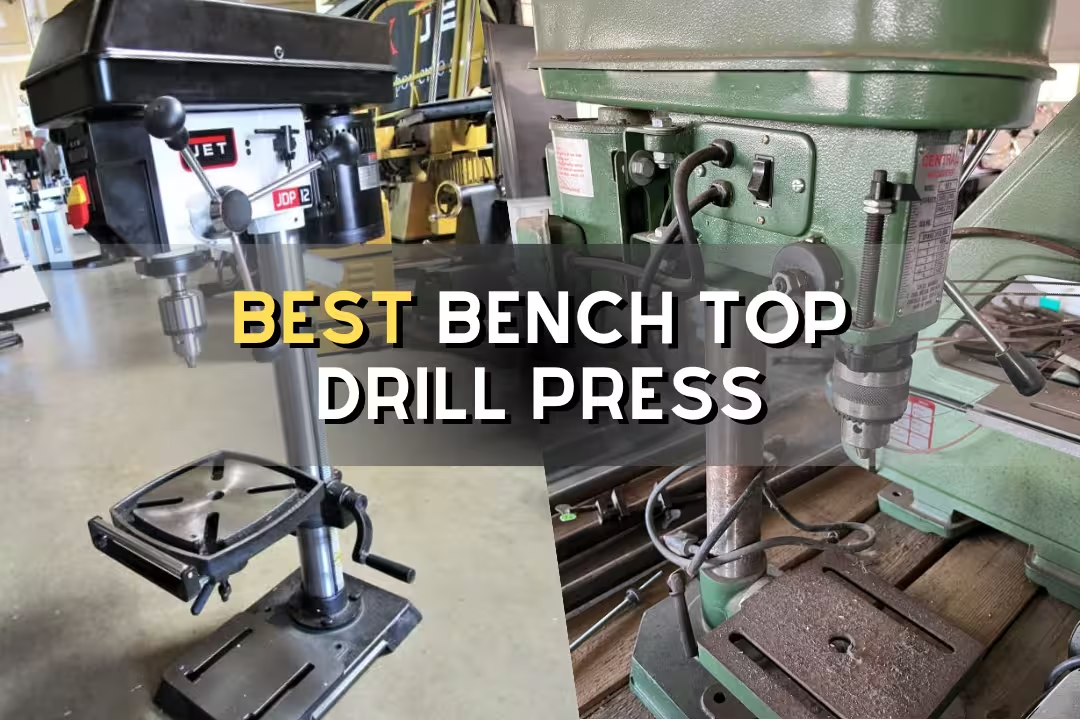
A bench top drill press is a compact, bench-mounted drilling machine that drives a bit straight down with controlled speed and depth for repeatable, accurate holes. Compared with a handheld drill, it holds the work steady on a table, reduces bit wander, and makes clean, consistent drilling in wood, metal, and plastics much easier.
Table of Contents
Bench top drill press basics
What it is
A benchtop drill press (often called a benchtop or small drill press) is a stationary tool with a motor, spindle (quill), chuck, and adjustable table. You lower the quill with a feed handle, so the bit enters the material square and at a controlled rate, which is hard to duplicate by hand when the bit first “bites” and tries to skate.
In real shop use, the biggest advantage is repeatability: set the fence/stop once, then drill matching parts that line up later at assembly. That matters for shelf pin holes, hardware bolt patterns, and any job where you’d feel that ugly “step” when parts don’t align.
Benchtop vs handheld drill
A handheld drill is fast and portable, but it’s easy to drill off-angle holes when the bit grabs or the work shifts. On a drill press, the column and quill keep the bit vertical, and the table supports the work so your hands aren’t fighting twisting torque when the bit breaks through the bottom.
Beginners often clamp “lightly” and rely on hand pressure; that’s when a board suddenly spins, smacks knuckles, and leaves a crescent-shaped burn mark. Use real clamps and a backer board—your hands should feel zero rotation from the workpiece.
For clamping setups that actually hold, I use quick F-clamps for wood and a drill-press vise or step clamps for metal; this guide to types of clamps helps match clamp style to the job without crushing soft stock.
Key specs glossary
Product listings throw a lot of terms at you, so here’s the short list that affects how a bench top drill press behaves in daily use: swing, spindle travel, chuck capacity/taper, speed range, and spindle-to-table distance. These are the specs that decide whether you can drill the hole you want without sketchy setups like stacking blocks under the work.
| Spec | What it controls in real use |
|---|---|
| Swing | Max center-to-edge reach (twice throat depth); limits how far from an edge you can drill in a wide panel. |
| Spindle travel | How deep you can drill in one pull; short travel forces awkward re-positioning for deep holes. |
| Chuck size | Smallest/largest shank the chuck can grip (often 1/16″ to 1/2″ or 5/8″). |
| Taper | How the chuck mounts (JT/MT); affects upgrade options and how well it stays seated under load. |
| Speed range | Low RPM for metal/large bits; high RPM for small bits/clean wood holes. |
| Spindle-to-table | Max height for thick work or tall jigs; often the hidden limitation on benchtop units. |
For a deeper run-through of drill press types and what those specs mean across machines, Drill presses explained: types, key specs, choosing the best one is a solid reference. Keep in mind that published numbers don’t show how smooth the quill feels or how much the table flexes.
Bench top vs floor drill press
Size and swing
The simplest difference is reach: floor presses usually have more swing and more spindle-to-table height, so you can drill larger panels and thicker stacks without gymnastics. A benchtop unit is still plenty for most shop tasks, but you’ll feel the limit when you try to drill centered holes in wide cabinet sides or large circles with a circle-cutting jig.
Swing can be confusing: an “8-inch” press doesn’t drill an 8-inch-deep hole; it means roughly 4 inches from column center to bit center. If you mostly drill near edges, an 8-inch small drill press is fine; if you drill hardware patterns in wider panels, 10–12 inches stays less frustrating.
Portability and weight
A benchtop press usually lands in the 34–85 lb range, so you can move it with careful lifting and a clear path. That’s a real benefit in one-car garages where the “shop” shares space with yard tools, and you need to slide the drill press to the end of a bench for long stock clearance.
Weight cuts both ways: light machines are easier to move but transmit more vibration into the bench, which you can feel as a tingling buzz in the feed handle and hear as a rattly hum at certain speeds. Bolting the base down and adding a thicker top (or a sacrificial MDF layer) usually calms that down.
Power and capacity
Floor presses tend to have more torque and better low-speed control for big Forstner bits, hole saws, or frequent metalwork. Many benchtop models still handle mild steel fine if you run the correct RPM, use cutting fluid, and feed steadily instead of forcing the bit until it squeals.
A common beginner mistake is treating motor amps like a promise of performance while ignoring speed selection and feed pressure. If the bit chatters in metal, back off, slow down, and use a center punch—chatter work-hardens some steels and makes the next attempt worse.
Best use cases
A bench top drill press shines for woodworking joinery, shelf pins, dowel holes, jigs, and light metal brackets where you want straight holes and repeatable depth. If you do production runs, thick steel, or big diameter drilling all day, a floor press saves time and reduces stalls.
- Choose benchtop for: small shops, occasional metal, precise repeat holes, and movable setups.
- Choose floor press for: large panels, tall fixtures, heavy drilling, and frequent low-RPM work.
Key specs to compare first
Swing and capacity
Start with swing because you can’t “upgrade” reach later. If you drill 3/4-inch plywood sides, a 10–12 inch swing gives you more room for fences and stops without the column getting in the way.
Capacity is partly marketing, so read it as “comfortable range,” not a dare. Big bits in hardwood can stall a smaller machine; the sound changes from a smooth cutting hiss to a strained groan, and you’ll smell hot resin if you push too hard.
Spindle travel
Spindle travel is the depth you get per pull of the handle, often around 2 to nearly 4 inches on benchtop presses. Short travel isn’t a deal-breaker for through-holes, but it gets annoying for counterbores, deep Forstner work, and step drilling where you want one controlled feed.
Edge case: if you drill deep holes in wood with brad points, chips pack in the flutes and heat builds fast. Peck drilling (down a bit, up to clear chips) keeps the hole clean and prevents the bit from burning and leaving black, shiny scorch rings.
Chuck size and taper
Chuck size tells you what shanks it grips; many benchtops top out at 1/2 inch, while some go to 5/8 inch. If you already own reduced-shank bits, a 1/2-inch chuck still covers a lot, but metalworking sometimes benefits from the extra grip and stiffness of larger tooling.
The taper (JT or MT) matters when a chuck pops loose mid-cut—usually right when the bit grabs and your stomach drops. Clean both tapers with solvent, seat the chuck with a firm press (not a hammer blow), and avoid side loads like sanding drums that can pry a poorly seated taper loose.
Speed range and control
Speed range decides what materials feel easy versus sketchy. Wood likes higher RPM for small bits and cleaner edges; metal needs lower RPM to stop overheating, dulling, and blueing the bit.
Five-speed pulley systems are dependable and cheap, but you’ll actually change speeds less than you think if it’s a hassle to open the cover and move belts. Variable speed gets used more in practice because you can fine-tune RPM when the cut “sounds wrong,” like that squeal you hear right before a bit starts rubbing instead of cutting.
Spindle-to-table distance
Spindle-to-table distance is the silent limiter on benchtops. Tall drill jigs, vises, and stacked work can eat that space fast, leaving you unable to fit the bit, the work, and the clamp under the chuck at the same time.
If you plan to add a larger auxiliary table, check clearance early; a thick MDF top plus a fence might cost you 2 inches of working height. This is one reason I like a purpose-built drill press table design that stays thin but stiff.
Features that affect accuracy and comfort
Motor power and torque
More torque helps most at low RPM with large bits, hole saws, and metal. A smaller press can still drill clean holes if you slow down, sharpen bits, and feed gently; trying to “muscle through” is what makes belts slip and leaves that hot rubber smell after a stall.
If you drill steel often, keep a dedicated set of sharp bits and touch them up before they get round. A sharpening stone is handy for quick edge maintenance on layout tools and deburring, but for twist drills I still rely on a proper drill sharpener or a practiced hand on a grinder.
Cast iron stability
Cast iron base and table add mass, which reduces vibration and helps holes stay round instead of slightly oval. On lighter benchtops, you’ll sometimes see the bit “paint” the hole as the head vibrates; the proof shows up as a fuzzy edge in wood and a chattery, rippled finish in metal.
One trick that works better than people expect: bolt the drill press through the bench into large fender washers, then add a thin rubber pad only under the bench feet, not under the machine. Soft pads directly under the base can let the press squirm, which hurts accuracy.
Table tilt and swivel
Table tilt helps with angled holes and simple bevel drilling without building wedges. The pain point is re-zeroing: if the angle scale is off (many are), you’ll drill a “close enough” angle that becomes a fit issue later.
Workaround: use a digital angle gauge or a reliable square to set 90° and scribe a reference mark. After that, returning to square takes seconds, instead of wasting time drilling test holes and wondering why parts don’t seat flush.
Laser and LED aids
Lasers and LEDs help most in dim garages where overhead lights cast harsh shadows around the bit. A laser is a setup aid, not a precision guarantee; I still bring the bit down until it almost kisses the layout mark, then lock the table and fence.
Expect occasional misalignment if the head vibrates or the laser mounting is flimsy. If you find yourself chasing the line, ignore the laser and use a center punch, then “spot” the hole with a small bit before jumping to the final size.
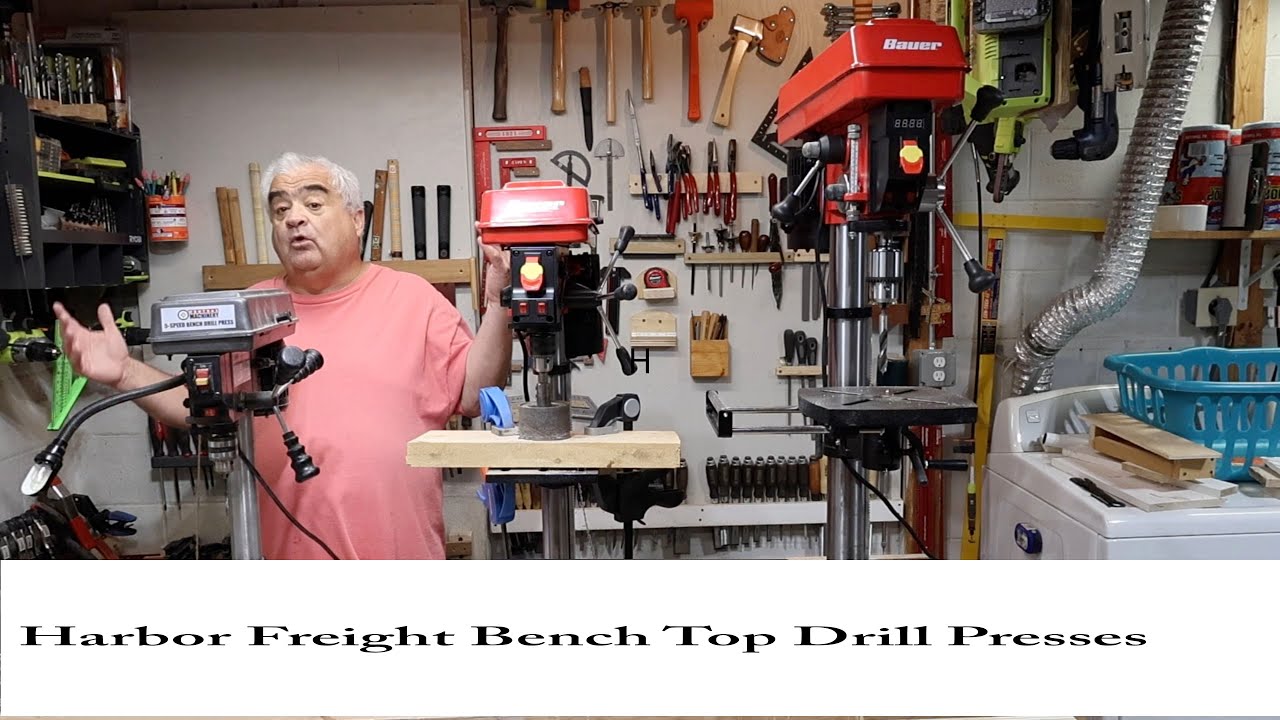
Depth stop and safety switch
A good depth stop is what makes a bench top drill press feel like a production tool. It prevents drilling too deep on blind holes, and it keeps counterbores consistent so screw heads sit flush instead of one sitting proud and catching your fingertip later.
Don’t defeat the safety switch or leave the chuck key in—those are the two mistakes I see most. Get in the habit of touching the chuck after tightening (to confirm the key is out) and using a big paddle switch you can slap off with your palm if something grabs.
Choosing the best bench top drill press
By workspace size
If your shop shares a garage bay or apartment workspace, start with a small footprint model and plan a bench spot where you can stand square to the feed handle. A shaky bench is worse than a small drill press; if the bench rocks, the bit will chatter and the hole will wander.
A solid bench matters more than beginners expect, since the drill press can amplify flex into vibration. This overview of woodworking workbenches is a good reference for building or picking a bench that doesn’t rack under load.
By wood vs metal
For wood, you’ll care about higher top-end speeds for cleaner small holes, plus a stable table for fences and stop blocks. For metal, you’ll care about a low enough RPM, steady torque, and the ability to clamp a vise without losing too much working height.
Common mistake: drilling metal dry with too much speed until the bit dulls, then blaming the machine. Use cutting oil, slow the RPM, and peck drill; if chips come off as powder instead of curls, the bit is rubbing and heating.
Multi-speed vs variable speed
Multi-speed pulley presses are simple and reliable, which is why they dominate budget picks. Variable speed is faster to adjust, which means you’ll actually use the correct RPM when switching from a 1/8-inch pilot hole to a 1-inch Forstner bit.
Trade-off: variable speed systems can add electronics and belts that need correct tension. If you hear a rhythmic slapping sound, stop and check belt alignment; running misaligned belts can chew them up and add wobble that shows up as off-round holes.
Budget tiers and value
Entry-level presses often hit the sweet spot for a home shop, but expect to spend time on setup: squaring the table, checking chuck runout, and tightening fasteners. Mid-range and premium presses usually buy you smoother quill travel, better tables, and easier speed changes—stuff that directly affects daily comfort.
For spec examples and feature callouts, manufacturer pages can be useful for cross-checking speed ranges and swing. The WEN 4214T 12-inch variable speed drill press listing is a good example of the kind of details to compare across brands without guessing.
Best bench top drill press picks by need
Budget small drill press picks
If you want a small drill press for light woodworking, plastic, and occasional metal brackets, these compact 8-inch benchtop options keep the footprint small and the learning curve friendly. They’re also easier to store on a bench where you can still use the surface for assembly.
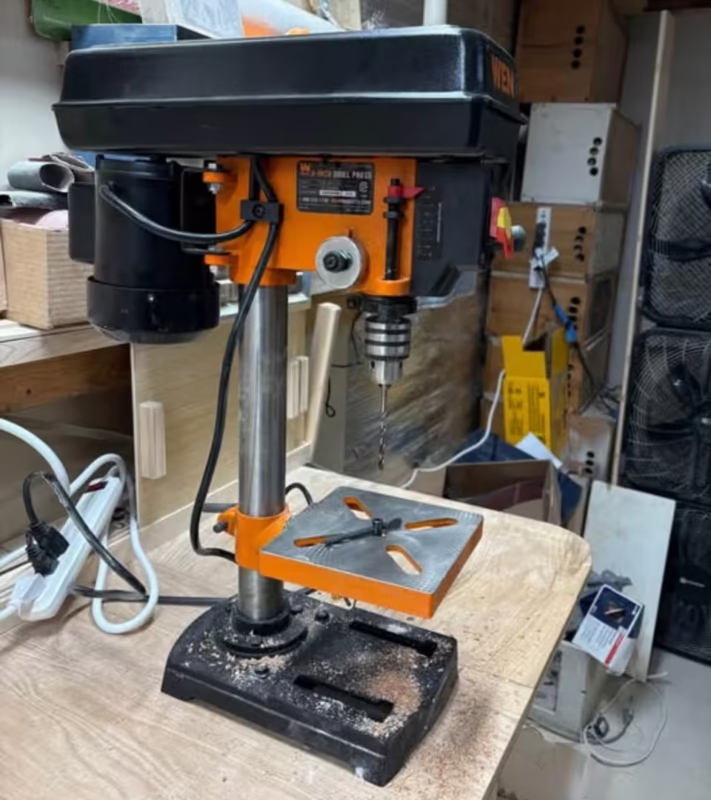

WEN 8-inch 5-Speed Benchtop Drill
- Compact 2.3 amp motor delivers steady drilling power
- Five-speed range adapts to different bit sizes and materials
- Heavy cast iron construction minimizes vibration for cleaner holes
- Small benchtop footprint fits tight workspaces and garages
- Great choice for hobbyists and light shop projects
 Buy on Amazon

WEN 8-inch Benchtop Drill Press
- Reliable 2.3 amp motor for everyday drilling tasks
- Five selectable speeds for versatility across materials
- Cast iron base and head reduce wobble for accurate holes
- Compact design makes it easy to mount on a workbench
- Ideal entry-level tool for DIY and hobby projects
Buy on Amazon

VEVOR 8-inch Multi-Speed Drill Press
- 2.3 amp induction motor provides reliable, quiet operation
- Five selectable speeds from 750 to 3200 RPM for versatile drilling
- Worktable tilts 0 to 45 degree for bevel drilling
- Built-in LED work light improves visibility at the bit
- Compact tabletop design fits small workspaces and hobby benches
Buy on Amazon
Watch for the most common budget pitfall: a flexy table and mediocre factory alignment. If the holes look slightly torn on one side, stop blaming the bit and check table squareness, then clamp the work and add a backer board to prevent breakout.
Versatile 10–12 inch picks
For the best balance of capacity and convenience, 10–12 inch models are where most people find the best bench top drill press value. The extra swing helps with jigs and wider stock, and the stronger motors handle larger bits with less stalling.
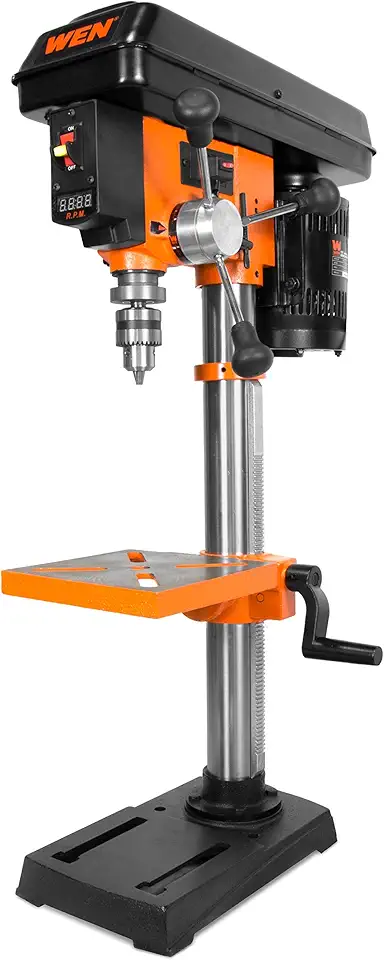
WEN 10-inch Variable Speed Drill
- Durable 5 amp motor delivers consistent torque for common tasks
- Variable speed control allows precise RPM adjustment
- Cast iron construction reduces vibration for cleaner results
- Laser alignment feature helps center holes quickly
- Well suited for woodworking metalworking and general shop use
Buy on Amazon
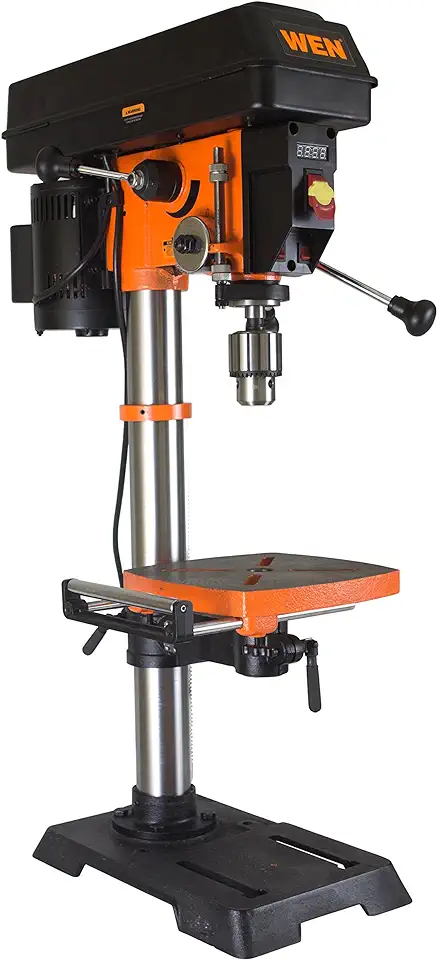
WEN 12-inch Variable Speed Drill Press
- Powerful 6.2 amp motor handles tougher drilling jobs
- Variable speed control enables accurate RPM selection
- Robust cast iron construction improves stability and precision
- Built-in laser and LED work light enhance alignment and visibility
- Spacious 12-inch swing accommodates larger workpieces
Buy on Amazon

JET 12-inch Benchtop Drill Press
- Reliable half horsepower motor delivers steady power for demanding tasks
- Variable speed lets you dial in the ideal RPM
- Large 12-inch swing handles bigger stock and projects
- Sturdy professional construction built for long-term durability
- Excellent choice for serious hobbyists and light professional work
Buy on Amazon
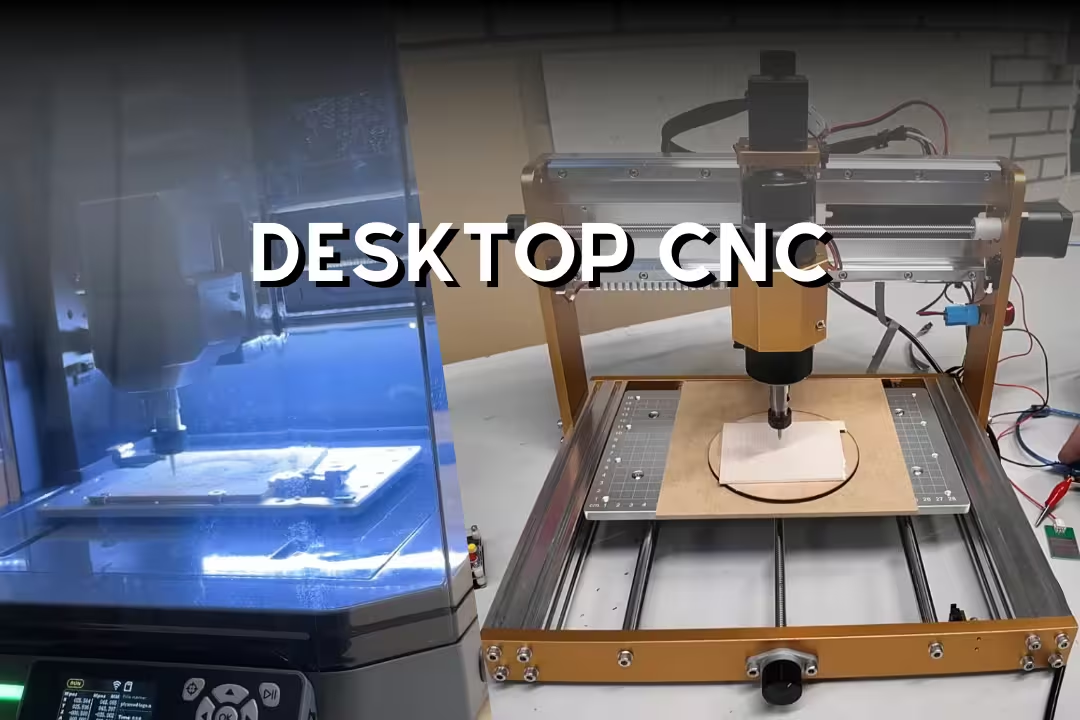
Mid-range presses can still disappoint if you skip the basics: bolt it down, check chuck seating, and verify runout before drilling precise patterns. If you’re pairing a drill press with other small-shop machines, a benchtop press complements tools like a desktop CNC for hole patterns, with the drill press handling clean counterbores and hardware fit-ups.
Specialty feature picks
If you care about one standout feature—like a bright guide light, more torque, or frequent angled work—these options lean into those use cases. Specialty features don’t replace setup, but they do reduce fatigue when you drill lots of holes back-to-back.

SKIL 10-inch Laser Drill Press
- Strong 6.2 amp motor delivers smooth drilling performance
- Five-speed settings handle a range of materials and bit sizes
- Integrated laser alignment improves drilling accuracy
- Built-in work light enhances visibility in low-light shops
- Sturdy benchtop design provides reliable repeatable results
Buy on Amazon
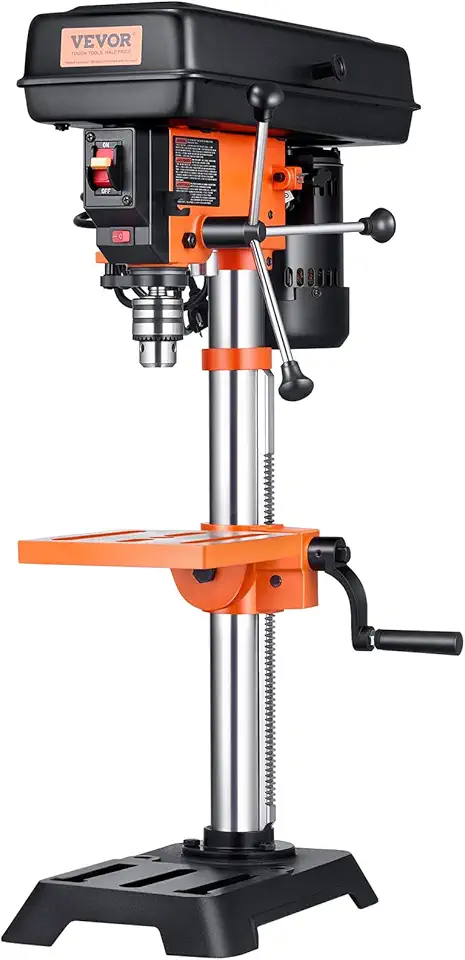
VEVOR 10-inch Tilting Drill Press
- 3.2 amp motor suitable for wood and metal drilling tasks
- Five-speed gearbox covers common drilling applications
- Worktable tilts 0 to 45 degree for angled drilling
- Heavy cast iron frame increases rigidity and reduces vibration
- Great choice for small shops and hobby projects
Buy on Amazon

WEN 10-inch 5-Speed Drill Press
- Robust 6.2 amp motor provides high torque for demanding jobs
- Five-speed pulley system adapts to different materials and bits
- Heavy cast iron construction boosts stability and precision
- Laser and LED work light improve alignment and visibility
- Generous worktable supports a wide variety of projects
Buy on Amazon
Don’t get tricked by feature overload: a laser won’t fix a loose table clamp, and an LED doesn’t stop tear-out. If holes look ragged in plywood, add a backer, slow the feed, and use sharp brad points—your ears will hear the cut turn from crunchy to smooth.
Setup, maintenance, and common issues
Bench mounting tips
Mounting decides how a bench top drill press feels. Bolt it through the bench with fender washers, then check that the bench top doesn’t bow; a hollow-core surface or thin plywood can flex and act like a drumhead.
Leave clearance behind the press for belt cover access and for long stock. If your bench is tight, rotating the press slightly can improve handle swing without sacrificing work support.
Reducing vibration
If the machine “walks” or you feel a buzzy handle, start with the obvious: bolt tightness, belt tension, and pulley alignment. Vibration often shows up at a specific speed; if one pulley step shakes badly, inspect that pulley for wobble or a set screw that’s barely biting the shaft.
Another pro fix is isolating the bench, not the drill press: add mass to the bench shelf (bags of sand work), and level the bench feet. The sound change is obvious when it’s right—less rattly ringing, more of a steady motor hum.
Chuck wobble checks
Chuck wobble (runout) makes holes oversized and ruins countersinks. Before you return a machine, remove the chuck, clean the taper, reseat it, then test again with a straight shank bit or an inexpensive dial indicator if you have one.
Beginners often tighten the chuck in one hole only; that can clamp slightly crooked. Use the chuck key in all three holes (if your chuck has them) so the jaws tighten evenly.
Quill lubrication
The quill should move with smooth drag, not grit. If it feels sandy, clean exposed quill surfaces, then use a light machine oil sparingly; too much oil attracts dust and turns into paste that makes the return spring feel jerky.
If the quill doesn’t return cleanly, check the return spring tension and confirm nothing is binding at full travel. A sticky return can pull your work upward at breakthrough, which is when bits grab and leave ugly blowout.
Overload prevention
Overloading happens when speed, bit size, and feed don’t match, and you hear the motor bog while the belt squeals. The fix is simple: lower RPM, sharpen the bit, and reduce feed pressure so chips come off as curls, not dust.
If you drill lots of big holes in wood, consider drilling a pilot, then stepping up sizes, or switching to a sharp Forstner bit at the right speed. For metal, clamp harder than you think you need and use a vise; a spinning workpiece is the fastest way to get cut or ruin the hole.
Practical Notes From Real-World Use
The hidden frustration with many benchtop models is setup drift: after a few projects, the table clamp loosens slightly, the fence gets bumped, and accuracy slowly disappears. I fix that by adding a simple stop block system, re-checking table squareness monthly, and keeping a dedicated square at the drill press so I don’t “eyeball it” when I’m in a hurry.
Another real issue is dust and chips getting where you don’t want them. Fine MDF dust feels like dry flour in the air and ends up in the belt cover; oily metal chips stick to everything and can scratch finished wood parts if you use the same table for both without cleaning. A quick vacuum, a wipe-down, and a sacrificial top keep mixed-material work from turning into a mess.
Lastly, the biggest surprise for new owners is how much clamping changes outcomes. If you clamp firmly, a modest bench top drill press drills straight, clean holes; if you don’t, even a nicer press can grab, chatter, and leave you with a hole that’s slightly shifted off your layout line.
FAQs
What Is A Good Size For A Benchtop Drill Press?
A 10-inch benchtop drill press Is A Good, Versatile Size For Most Hobbyists And Light Workshop Tasks.
It balances capacity and footprint, letting you drill through larger stock than smaller 6-8 inch models while still fitting on a bench. If you only work on tiny parts or in very tight spaces, a compact 6-8 inch model may suffice; for heavier metalwork consider a floor model.
Is A Small Drill Press Good Enough For Metal Drilling?
Yes — a small drill press can be good enough for light metal drilling such as thin sheet metal or small rods.
Use sharp high-speed steel or cobalt bits, slow speeds, plenty of cutting fluid, and a secure clamp to prevent workpiece wandering. For thicker or harder metals, upgrade to a larger, more rigid machine for safety and accuracy.
How Much Spindle Travel Do I Need On A Bench Top Drill Press?
Aim For At Least 2 To 3 Inches Of Spindle Travel For Typical Benchtop Use.
More travel lets you drill thicker stock and use larger drill bits; less than 2 inches limits capacity. For general woodworking and light metalwork, 2-4 inches is fine; heavy drilling benefits from more travel or a floor machine.
Is Variable Speed Better Than A 5-Speed Pulley Drill Press?
Yes, variable speed Is Generally Better Because It Offers Easier, Finer Control Across The Whole Range.
Variable speed (via electronic control) lets you set the optimal RPM quickly without changing belts; 5-speed pulley systems are durable and simple but less convenient. Consider variable speed for versatility and a pulley system if you prefer mechanical simplicity and longevity.
How Do I Reduce Vibration On A Benchtop Drill Press?
Reduce vibration by securely bolting the drill press to the bench, using a solid base, and maintaining the spindle and bearings.
Ensure the workpiece is firmly clamped, use sharp balanced bits, tighten belts and pulleys, and add rubber pads or a damping mat under the base. Replacing worn bearings or belts also significantly reduces vibration.