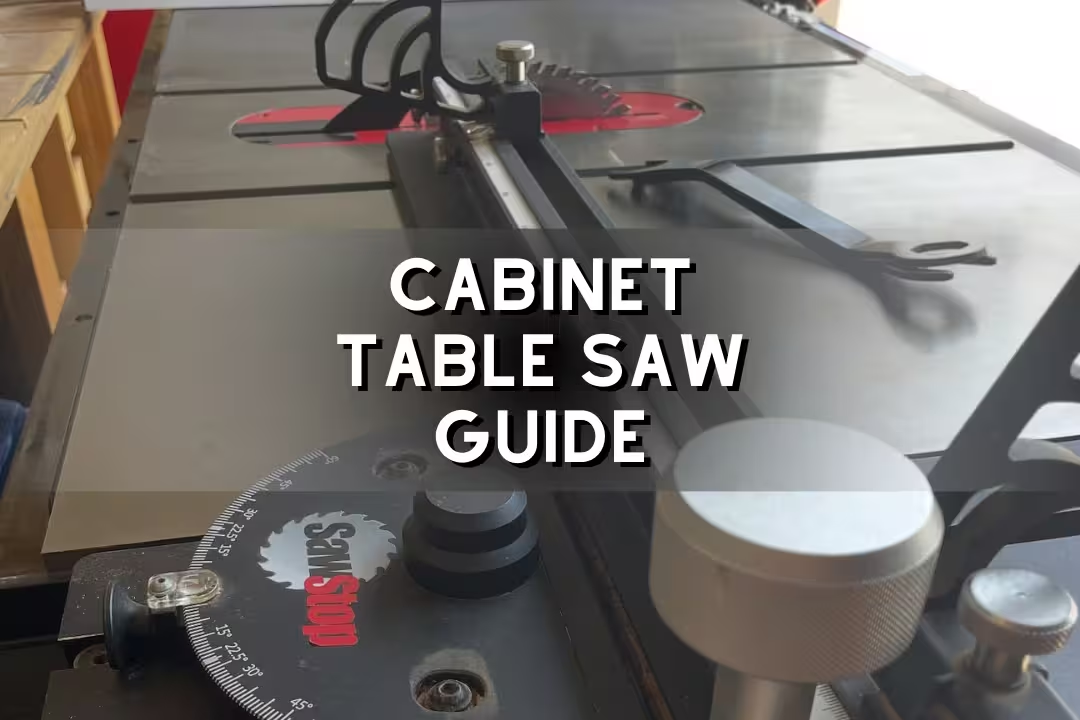

Which table saw gives pro-level cuts without extra fuss? Small mistakes at the saw cost time and money. The right tool makes your work faster and safer. This guide points to the best table saw picks pros trust. It highlights compact portable units and solid budget options so you can choose what fits your work.
Table of Contents
The best table saw depends on your main work: ripping sheet goods, trimming hardwood, or moving between jobsites. This guide compares pro-trusted saws, explains the specs that change real cuts, and helps you pick the right model for 2026.
Best table saw: Quick picks
If you want one safe bet, start with a 10-inch jobsite saw that has a stable stand, a square fence, and 30+ inches of rip capacity for plywood. Most buyers end up happiest when they choose based on work type first, then price.
What pros trust
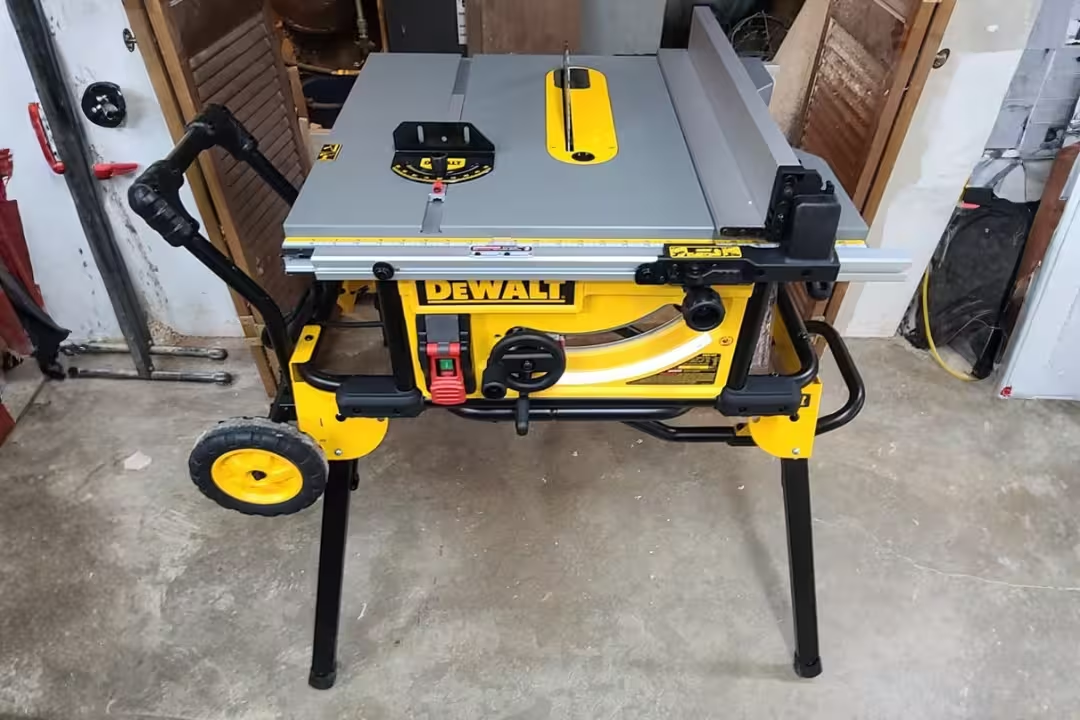
Pros stick with saws that hold alignment after a bumpy truck ride, lock the fence parallel every time, and keep parts available for years. The DEWALT DWE7491RS shows up in many shop and jobsite roundups for reliability and capacity, while SawStop leads the pack for injury prevention in higher-budget setups.
For a quick third-party benchmark, see This Old House best table saws for a comparison-style view of mainstream options.
Specs that matter
Ignore marketing numbers and focus on what changes cut quality: a strong motor (often 15-amp on jobsite saws), a fence that locks square, and enough rip capacity for the panels you actually cut. A good dust port and a smooth bevel adjustment save setup time on repeat jobs.
| Spec | What “good” looks like |
|---|---|
| Motor / Speed | 15A jobsite motor; roughly 3,650–4,800 RPM for clean rips |
| Rip capacity | 26″ minimum; 30–32″ if you rip plywood often |
| Fence system | Locks parallel without measuring; easy micro-adjust |
| Stand | Wheeled or gravity-rise if you move it; wide stance if you don’t |
| Safety | Riving knife + guard; flesh-sensing brake if budget allows |
| Dust collection | 2″ port (common) connected to vac; shrouded blade helps |
Best table saw models pros trust in 2026
The picks below cover the most common needs: one top all-around jobsite saw, one premium safety saw, one precision-and-portability option, a torque monster for tough stock, and several value picks that still cut straight. Each one can be the best table saw for the right user.
DEWALT DWE7491RS (Top Overall Pick)
If you need one saw that covers remodeling, built-ins, and regular plywood ripping, the DWE7491RS fits the job with a 32-1/2-inch rip capacity and a rolling stand that’s fast to set up. Its rack-and-pinion fence makes repeatable rips easier for beginners, while pros like the 48oo-rpm feel for clean cuts when the blade is sharp.
Practical tip: pair it with a high-quality 40T or 50T combination blade and treat the factory blade as a backup. That single swap usually improves tear-out control more than any accessory.
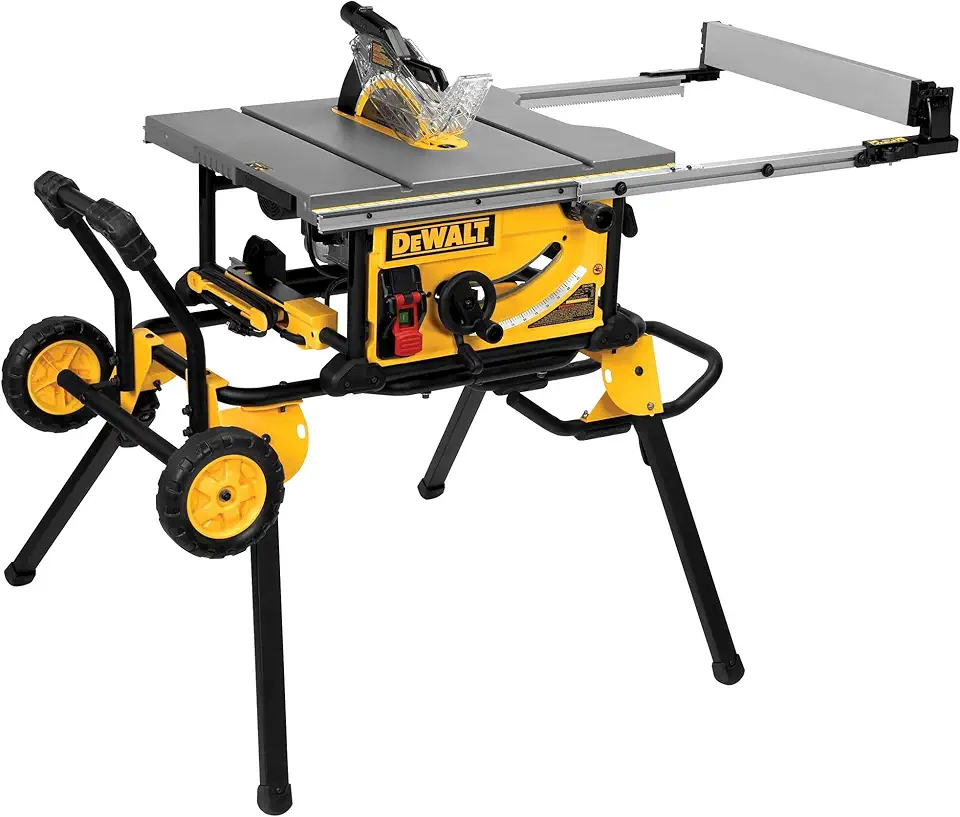
DEWALT 10-Inch Table Saw with Rolling Stand
- Powerful 15 Amp motor with 4800 RPM for fast, consistent cuts
- 32-1/2-inch rip capacity handles full sheet goods and long rip cuts
- Foldable rolling stand for quick setup and easy transport between jobs
- Rack-and-pinion fence for accurate, repeatable alignment
- Tool-free adjustments and integrated dust collection for cleaner, faster workflow
 Buy on Amazon
SawStop JSS-120A60 / JSS 1.5HP (Best-in-Class Safety)
If you work around tight deadlines, distractions, or a shared shop, SawStop’s flesh-sensing brake can stop the blade fast enough to reduce severe injuries. You pay more up front and you’ll replace the brake cartridge after an activation, yet many owners treat it as cheap insurance compared with medical bills and downtime.
Set it up right: use the guard when the cut allows, keep the riving knife installed for non-through cuts, and practice push-stick habits until they’re automatic. If you also run other shop machines, add a simple “switch-off check” routine like you would with a router table setup.

SawStop Compact Table Saw
- Patented safety system stops the blade on skin contact
- 10-inch blade with durable construction
- Rack & pinion fence for accurate cutting
- Quick-tilt bevel with micro-adjustments
- Portable and jobsite-ready with on-saw storage
Buy on Amazon
Bosch GTS15-10 (precision + portability)
The Bosch GTS15-10 stands out for crews that roll the saw in and out all day because the gravity-rise stand makes one-person transport realistic. It also gives you a 32-1/8-inch rip capacity with a fence system built to stay square after repeated moves.
Dial-in tip: check fence-to-miter-slot parallel once, then mark your most-used fence positions with thin tape on the rail. That makes fast repeat rips easier and reduces measuring errors in the field.
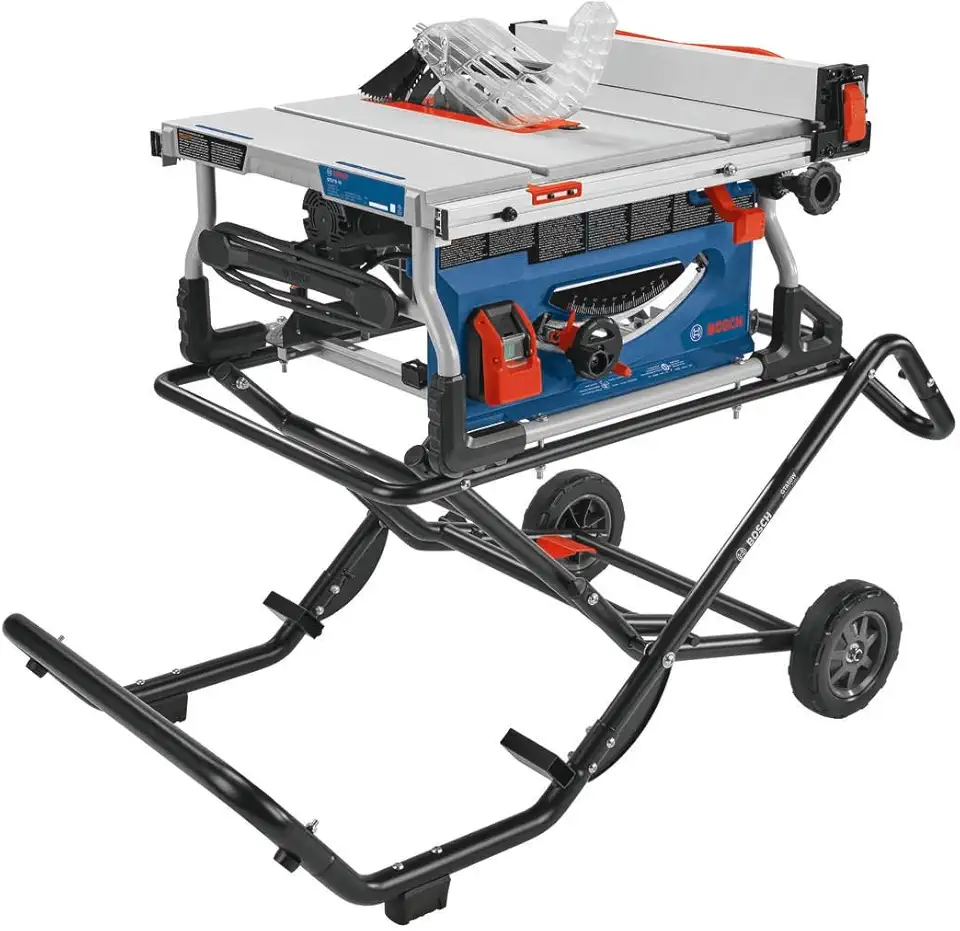
BOSCH 10-Inch Portable Table Saw with Gravity-Rise Stand
- Gravity-rise wheeled stand for smooth one-person setup and transport
- Powerful motor designed for professional cutting performance on the jobsite
- 32-1/8-inch rip capacity accommodates large panels and long workpieces
- Precision fence system for accurate, straight cuts every time
- Durable build and dust collection port to keep the workspace cleaner
Buy on Amazon
SKILSAW SPT99-11 (High Torque Worm Drive)
Worm drive table saws feel different under load, and that’s the point: they keep pulling through thick hardwood, wet framing lumber, and long rips where lighter saws bog down. Choose this style if your pain point is stalling and burn marks, not portability alone.
Jobsite habit that helps: support long stock with rollers or a simple outfeed table so you aren’t lifting while feeding. Better support improves cut quality and reduces kickback risk on wide boards.

SKIL 10-Inch Heavy-Duty Worm Drive Table Saw
- Worm drive gearing for high torque and steady cutting under load
- Heavy-duty construction built for demanding jobsite use
- Large table surface and robust fence for accurate rip cuts
- Folding stand for easier transport and secure setup
- Onboard storage keeps blades and tools handy for faster work
Buy on Amazon
Metabo HPT C10RJS (Strong All Around Performer)
Metabo HPT often lands with people who want a capable saw that doesn’t demand premium pricing. It’s a smart pick if you need balanced performance across trim, shelving, and light framing, and you’d rather spend the difference on blades, a shop vac, or better clamps.
Accessory move that pays off: add one or two reliable F-style clamps and clamp a stop block to the fence for repeat crosscuts using a miter gauge. If you need clamp ideas, use this types of clamps guide to match the clamp to the job.

Metabo HPT C10RJS Jobsite Table Saw
- 15-amp motor with soft start and electric brake
- Large 28-3/4 x 22 table with up to 35-inch rip capacity
- Fold & roll stand with wheels for easy transport
- Includes 10″ 40-tooth carbide blade and accessories
- Precise rack-and-pinion fence with bevel cuts
Buy on Amazon
Evolution (budget multi-material)
If you cut mixed materials and hate swapping blades, Evolution’s multi-material approach can be a money-saver, especially under $500. Many models include a TCT blade meant for wood and metal, plus a stable stand that helps with repeat cuts on jobsite parts.
Use a dedicated blade per material when finish matters most, but keep the multi-material blade for rough work and demo-friendly tasks. For a deeper look at this style of saw, see Evolution table saw review (731 Woodworks).
Here are a few popular value-friendly options and multi-material picks to compare side by side.

SKIL 10-Inch Jobsite Table Saw with Folding Stand
- Robust 15 Amp motor delivers reliable cutting power for jobsite tasks
- Folding stand provides stable support and compact storage
- Large table and fence system for accurate rip and cross cuts
- Portable design with easy setup for one-person operation
- Integrated blade guard and onboard tool storage for safer, organized work
Buy on Amazon
SKIL 10-Inch Heavy-Duty Worm Drive Table Saw
- Worm drive gearing for high torque and steady cutting under load
- Heavy-duty construction built for demanding jobsite use
- Large table surface and robust fence for accurate rip cuts
- Folding stand for easier transport and secure setup
- Onboard storage keeps blades and tools handy for faster work
Buy on Amazon
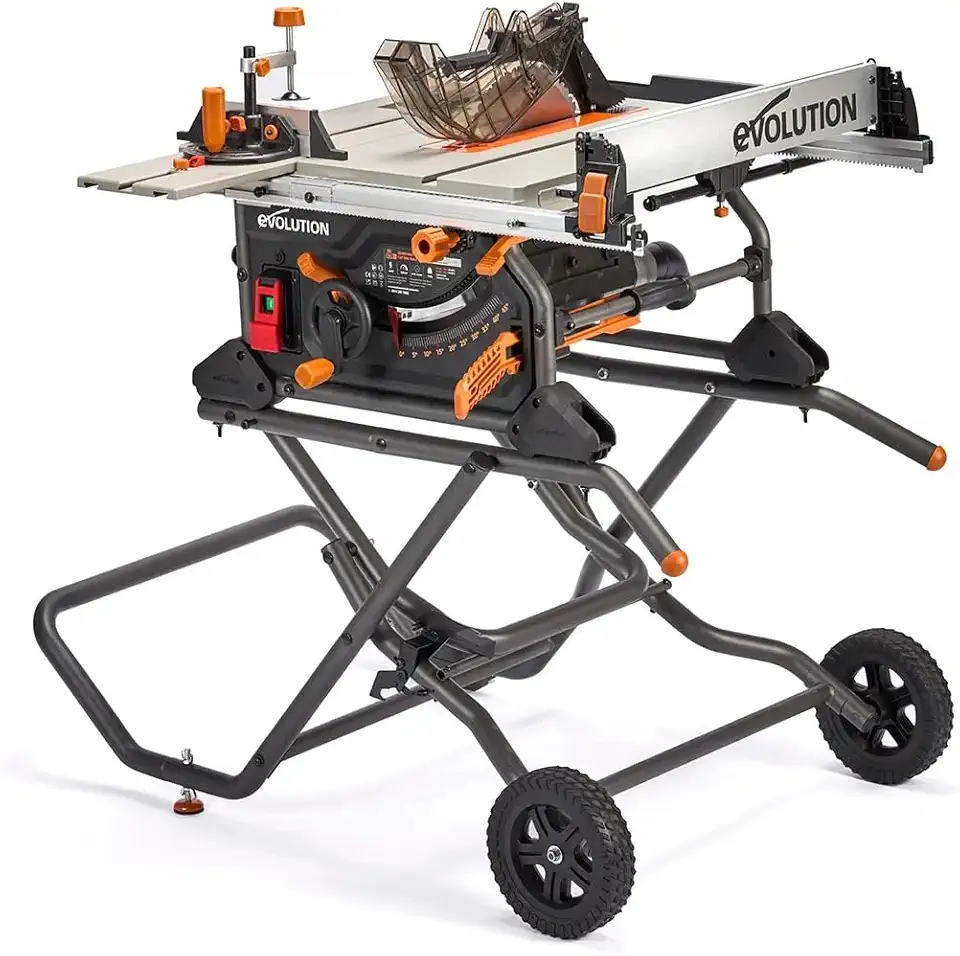
Evolution 10-Inch Multi-Material Jobsite Saw with Wheeled Stand
- 15 Amp motor engineered for cutting wood, metal and other materials with ease
- Multi-material TCT blade reduces blade changes across different jobs
- 26-inch rip capacity handles larger workpieces and sheet goods
- Wheeled scissor stand simplifies transport and rapid deployment
- Precision fence and stable table for consistent, accurate cuts
Buy on Amazon
Best portable table saw options
The best portable table saw is the one you can move safely by yourself and still trust for straight cuts. Look for solid carry points, a stand that doesn’t wobble, and a fence that returns to the same setting after transport.
What to prioritize
Start by measuring the tightest path the saw must fit through (van doors, basement stairs, side gates), then compare that with the saw’s folded size and weight. After that, choose based on stand design: gravity-rise and wheeled stands work best for daily moves, while simple folding stands fit small garages.
- Pick a fence that locks parallel without “bumping” it into place
- Choose at least 24–26 inches of rip if you break down plywood often
- Check onboard storage for guard, riving knife, and push stick so parts don’t get lost
- Plan dust control early: a shop vac hookup beats sweeping piles off the floor
Compact pro picks
These smaller saws work well for punch-list carpentry, trim, flooring, and quick setup jobs where a full-size rolling stand feels like overkill. They’re also a smart second saw if your main unit stays in the shop for fine work.
Here are compact options that fit tight spaces while still giving real jobsite performance.

DEWALT 8-1/4-Inch Compact Jobsite Table Saw
- Compact, lightweight design for easy transport and tight jobsite access
- 15 Amp motor offers strong cutting performance for a compact saw
- Precision fence and miter gauge for reliable alignment and repeatable cuts
- Tool-free blade changes speed up setup and maintenance
- Sturdy build with integrated carries and balanced footprint for stable operation
Buy on Amazon

DEWALT 8-1/4-Inch Table Saw with Stand
- Portable 8-1/4-inch saw paired with a stable stand for fast jobsite setup
- Capable of bevel cuts up to 48 degrees for versatile joinery and trim work
- Compact footprint makes it easy to carry and position in tight spaces
- Accurate fence and easy adjustments for consistent, clean cuts
- Durable construction designed for everyday jobsite use
Buy on Amazon

SKIL 8-1/4-Inch Compact Jobsite Table Saw
- Compact, lightweight design ideal for tight spaces and quick jobs
- 15 Amp motor delivers solid cutting performance for a small saw
- Simple setup and breakdown for fast jobsite mobility
- Compatible with separate folding stand for added stability when needed
- Accurate fence and miter gauge for clean, repeatable cuts
Buy on Amazon
Best budget table saw picks under $500
A sub-$500 saw can still do clean work if you accept a few tradeoffs: more plastic parts, simpler miter gauges, and fences that may need extra setup. Put money where it counts—blade quality and fence alignment—before buying extras.
What to expect
Most budget jobsite saws use a 15-amp motor and can rip framing lumber fine, yet they often ship with a basic blade that leaves rough edges. Plan to tune the fence, verify the riving knife alignment, and add outfeed support so longer boards don’t tip and bind—small tuning steps that raise accuracy fast.
Best budget models
If your priority is value, start with Ridgid R4518 for a jobsite-ready feel, then compare Evolution if you want multi-material cuts, or SKIL if you want a simple saw for weekend projects. If you already own other versatile tools, pairing a budget table saw with a CNC router (for repeated shapes) can stretch your budget further than jumping to a premium saw right away.
Spend your first upgrade dollars on a better blade and better work support. A budget saw with a sharp blade and stable outfeed beats an expensive saw fed poorly.
Shop setup best practice
Best table saw brands to know
The best table saw brands earn their spot by keeping fences consistent, stands stable, and replacement parts available. Brand matters most when you rely on the saw for income or you want the same feel across multiple jobsites.
DEWALT
DEWALT’s jobsite line is popular because the rack-and-pinion fence makes quick, repeatable adjustments easier than many slide-style fences. If you want one widely supported option with strong resale value, DEWALT is often the safe pick.
Bosch
Bosch stands out for mobility features like gravity-rise stands and a fence feel many crews trust for straight rips. It’s a strong match for contractors who set up and break down daily and need fast transport without babying the tool.
SKIL & SKILSAW
SKIL covers value-focused saws for DIY work, while SKILSAW targets demanding cuts with worm drive torque. Pick SKIL for price and simplicity; pick SKILSAW when your main issue is heavy ripping.
SawStop
SawStop leads on safety with flesh-detection braking, which changes the risk profile of table saw work. It’s a smart buy for shared shops, schools, and pros who want max protection without relying on perfect habits every cut.
Ridgid, Metabo HPT, Evolution
Ridgid and Metabo HPT often price well for jobsite use while keeping decent build quality. Evolution is worth a look if your work includes mixed materials and you value one-blade flexibility for rough jobs.
Affordable alternatives
Ryobi and some store brands can fit occasional use, yet you’ll usually give up fence quality and long-term parts support. If you go this route, reduce risk by using a good blade, setting up solid outfeed support, and keeping push tools close so your hands stay farther away.
How to choose the best table saw
Picking the best table saw gets easier when you tie each spec to a real task: plywood ripping needs capacity and support, finish carpentry needs a reliable fence, and daily transport needs a stand you can operate alone. Use the sections below as a checklist before you buy.
Power and RPM
Most jobsite saws run 15 amps, and that’s enough for a lot of hardwood cutting if you feed at the right pace and keep a sharp blade installed. Higher RPM can help reduce burning on clean rips, yet blade choice and feed rate still control cut quality more than any number on the box.
Rip capacity
Rip capacity tells you how wide you can cut a sheet when the fence is set far from the blade. If you rip plywood often, target 30–32 inches so you can halve a 4×8 sheet with fewer awkward setups and less panel wrestling.
Fence accuracy
A fence that locks parallel is the difference between a confident cut and constant measuring. Rack-and-pinion designs help beginners because the fence moves straight without being bumped into alignment, while good T-square fences reward careful setup with repeatability.
Portability and stands
If you’ll move the saw weekly or daily, buy the best stand you can afford because it affects both safety and speed. Wheeled stands reduce carrying strain, while wide-leg stands reduce tipping when you slide heavy sheets across the table—two details that prevent bad cuts and injuries.
Safety systems
At minimum, use a riving knife to reduce kickback and keep the guard installed for through cuts when possible. If you’re upgrading shop safety across tools, apply the same discipline you’d use with a chainsaw mill: stable support, clear feed path, and no distractions near the cutter for consistent habits.
Dust collection and bevel range
Dust collection matters more than comfort; it keeps your view clear and reduces cleanup that slows work. Check for a dust port that matches your shop vac and a bevel range that matches your common tasks—many jobsite saws reach 45 degrees, while some go to 48 for trim-friendly bevel cuts.
FAQs
What Is The Best Table Saw For Beginners And DIYers?
A 10-inch portable or compact jobsite table saw with a stable, accurate fence is usually the best choice for beginners and DIYers. Choose a model with a riving knife, blade guard, simple height and tilt adjustments, and a sturdy stand for safety and repeatable cuts. A 15-amp motor handles plywood and common hardwoods while keeping cost and complexity reasonable.
Which Table Saw Is Best For A Small Workshop Or Garage, Portable Or Cabinet?
For a small workshop or garage, a compact hybrid or jobsite (portable) table saw usually offers the best balance of power and footprint. Hybrids provide cabinet-like stability and dust control in smaller spaces, while portable models save floor area and can be stored or moved when needed. If you have dedicated space and need maximum accuracy, a cabinet saw is worth the footprint trade-off.
Should I Buy A Contractor, Hybrid, Or Cabinet Table Saw For Woodworking?
Choose a hybrid or cabinet saw for serious woodworking, while contractor and jobsite models suit casual hobbyists and lighter projects. Cabinet saws deliver the best power, stability, and dust collection for heavy use and precise joinery; hybrids offer many of those benefits at lower cost and reduced size. Contractor and jobsite saws prioritize portability and are fine for basic ripping and crosscutting.
What Features Matter Most When Choosing A Table Saw (Motor Size, Fence Accuracy, Safety)?
The most important features are an accurate fence system, adequate motor power, and safety devices like a riving knife and effective blade guard. Fence accuracy controls how straight and repeatable your cuts are, motor size determines what thickness and species of wood the saw can cut without bogging down, and safety features reduce kickback risk. Also check table flatness, miter gauge quality, and dust collection.