Delta Table Saw Guide: Compare Models, Specs, and Features

A Delta table saw is a 10-inch table saw line that ranges from portable jobsite units to heavy contractor saws and larger cabinet-style options, built around rip capacity, table stability, and motor type. If you’re choosing between Delta table saws like the delta 36-725t2 and 36-6020, match the saw to your space, sheet-good needs, and how often you move it.
Table of Contents
This guide breaks down Delta’s lineup, calls out real spec differences that affect cut quality, and flags beginner mistakes that cause kickback, bad rips, and crooked dados. You’ll also see where a delta 10 inch table saw shines, and where it can feel limiting in daily shop work.
Delta table saw lineup overview
Delta’s lineup splits cleanly into three buckets: portable jobsite saws, contractor saws (hybrid shop/jobsite), and heavier cabinet/industrial models. Most buyers land on a 10-inch saw with a 15-amp motor, then pick based on table material (cast iron vs aluminum) and fence style.
Portable vs contractor
Portable Delta table saws prioritize mobility: lighter frames, folding wheel stands, and faster setup. You feel more vibration through the table on a light saw, and you’ll notice the sound is sharper and higher pitched—especially when pushing wet framing lumber that wants to pinch the blade.
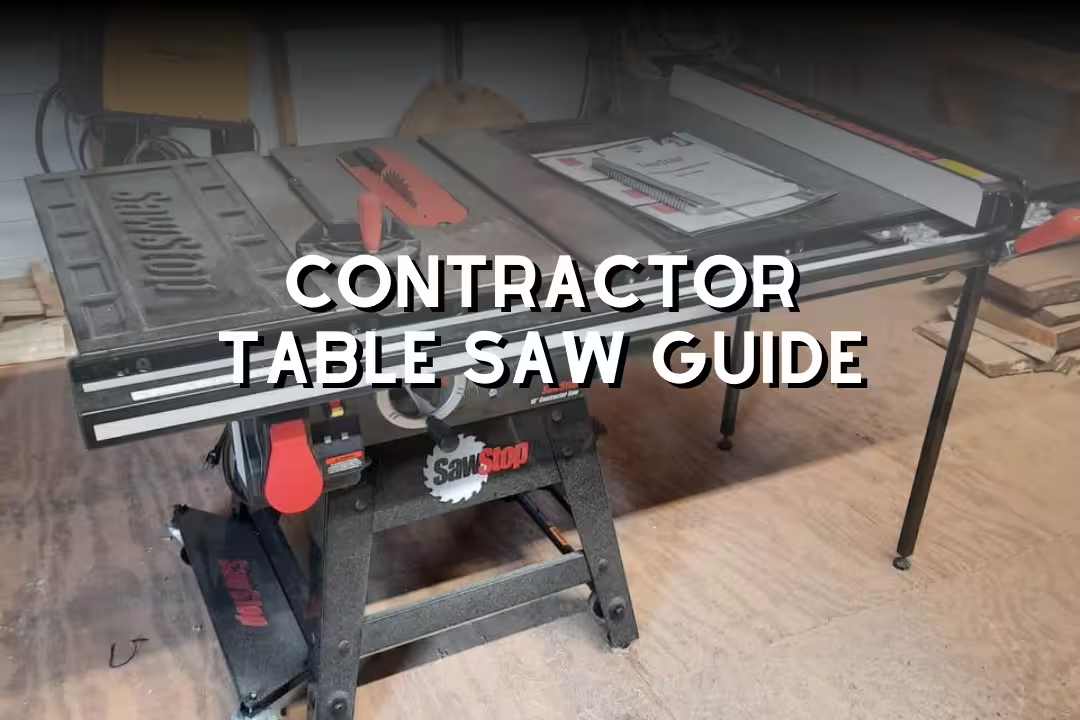
Contractor Delta table saws prioritize stability: heavier cast-iron tops, longer rails, and fences that stay square when you lock them down. That added mass is what keeps a thin rip from wandering, but it also means you plan your shop footprint (or commit to a mobile base) instead of “tucking it away.”
Industrial cabinet options
Delta’s cabinet/industrial class is about production work: more rigid trunnions, enclosed bases, and bigger rip capacities meant for repeated plywood breakdown without the saw shifting. These saws punish weak floors—if your slab isn’t flat, you’ll chase fence-to-miter-slot alignment longer than you expect.
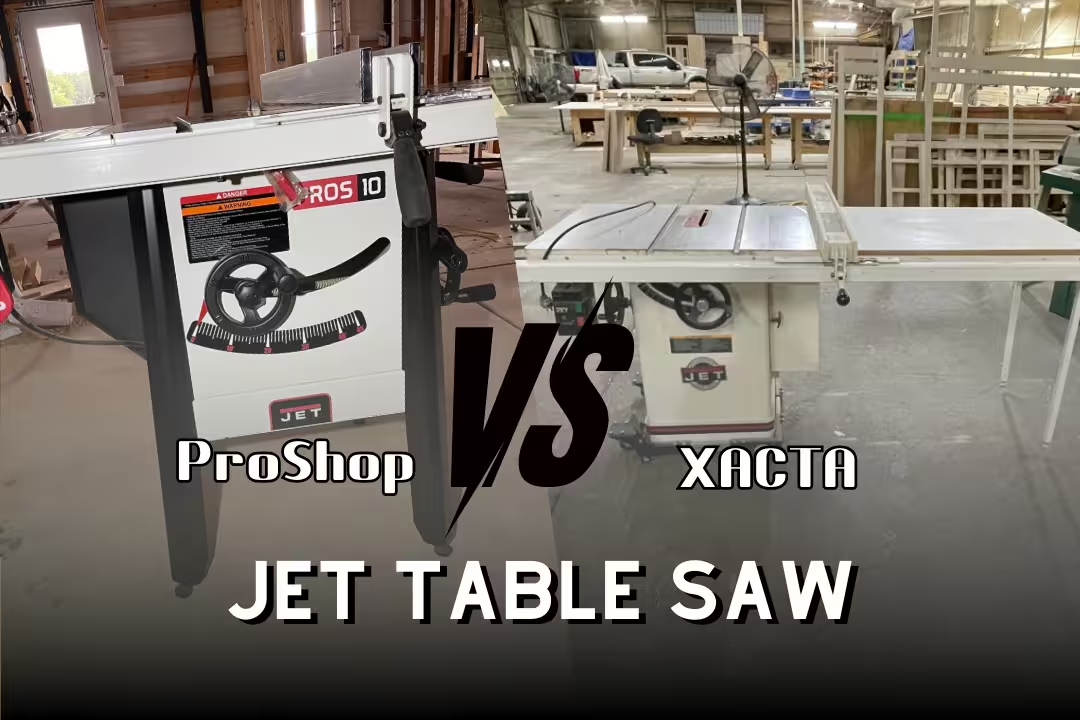
If you’re comparing brands, you may also want our breakdown of the Jet table saw line for a sense of what “shop-first” designs look like across the market. Delta’s value tends to show up in fence-and-table size per dollar, while premium brands often feel smoother at the handwheels.
Common 10-inch specs
A typical Delta 10-inch table saw uses a 5/8-inch arbor, tilts to 45°, and targets about 3-1/2-inch max cut depth at 90°. Rip capacity often lands between 25 and 30 inches on consumer models, then jumps to 50+ inches on extended-rail contractor and cabinet versions.
Don’t over-focus on RPM alone. Blade speed matters, but the way the motor holds speed under load (and how stable the table feels while feeding stock) is what decides whether your cut face feels glassy or looks like it was “chewed” with tiny washboard marks.
| Spec (10-inch class) | What it changes in real use |
|---|---|
| Arbor size: 5/8 in | Blade and dado stack compatibility without adapters |
| Max cut depth @ 90°: ~3.5 in | 2x material on edge, thick hardwood rips, tenon shoulders |
| Rip capacity: 25–30 in (typical) | Sheet goods workflow and how often you need a track saw |
| Table material: cast iron vs aluminum | Vibration, noise feel, and how often the fence stays true |
Delta 36-725T2 specs and features
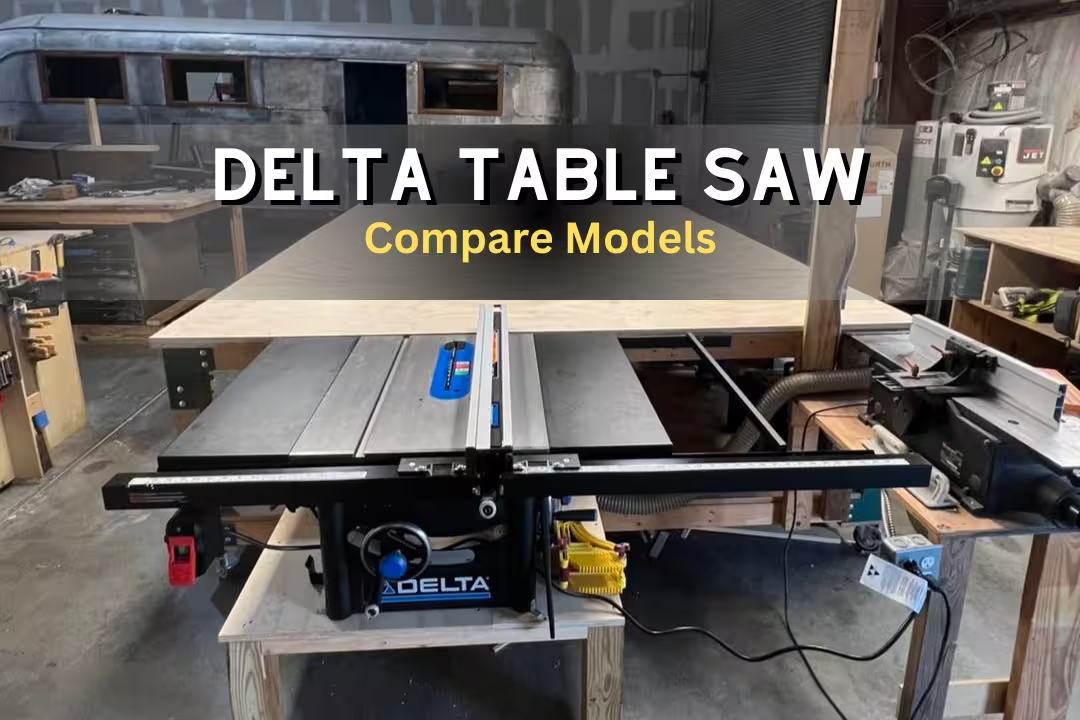
The delta 36-725t2 is the Delta contractor-style saw that keeps coming up for mixed shop and jobsite use because it blends cast iron, a solid T-square fence, and a rolling stand. It’s a good fit when you want “shop feel” without stepping up to a full cabinet saw.

Delta Contractor 10-inch Table Saw
- Robust cutting performance for jobsite and shop use
- stable fence system for accurate rip cuts
- roomy table surface supports larger workpieces
- easy blade adjustments and bevel control for versatile cuts
- durable construction built for long-term use
 Buy on Amazon
Motor and RPM
The 36-725T2 runs a 15-amp enclosed induction motor around 3,600 RPM, built to stay composed in thicker stock and wider dados. In use, that motor feels less buzzy than a small high-RPM jobsite saw; you get a steadier push through 8/4 hardwood, with less “chatter” telegraphed into the cut face.
A common beginner mistake is assuming induction means “can’t stall.” Feed pressure still matters: push too hard and you’ll hear the pitch drop, then smell that hot-wood scent as the blade starts rubbing instead of slicing. The workaround is boring but effective: sharper blade, slower feed, and a quick check that the fence is parallel to the blade.
Cut and rip capacity
Delta lists a 3.5-inch depth of cut at 90° and about 2-1/4 inches at 45°, with roughly 30 inches of right-side rip and 15 inches left. That 30-inch rip is the difference between breaking down many plywood panels on the saw versus having to rough-cut first with a track saw or circular saw.
Edge case: cutting bowed plywood. Even with 30 inches of rip, a bowed sheet can “steer” into the blade and close the kerf, raising kickback risk. I deal with it by using outfeed support, keeping the riving knife on, and starting with a reference edge jointed straight if accuracy matters.
Table and wings
The cast-iron top (about 27.13 x 20.24 inches) gives the saw its “planted” feel, and the wings extend your support area for wider work. When you slide a melamine panel across cast iron, it has that cool, slightly gritty glide that tells you the surface is holding the work flat instead of bouncing it.
Watch a common setup trap: wing alignment. If a wing sits even a hair low, narrow parts can catch at the seam and twitch sideways mid-cut. The pro fix is to use a straightedge across the whole top and shim the wing bolts until you can’t feel the seam with your fingertips.
T-square fence
The T-square, 3-point locking fence is the big deal on this saw. A fence that locks solid without toeing in is what keeps rips consistent over a long board; if the back end drifts, you’ll see burn marks and hear that angry squeal as wood rubs the blade plate.
If you want a deeper fence-only guide, see our table saw fence article. The short version: verify the fence is parallel (or a hair open at the back), and don’t trust the scale until you’ve calibrated it to your blade kerf.
Stand and mobility
The rolling stand uses an easy-lift caster system that makes the 36-725T2 more realistic in a one-car garage. It still isn’t a “grab-and-go” tool; you feel the mass when you pivot it, and it’s happiest rolling on smooth concrete, not gravel or ladder-rut dirt.
New owners often store it parked with weight on one wheel and then wonder why the saw feels like it developed a wobble. My workaround is simple: park it flat on all contact points, and recheck stand fasteners after the first few moves because vibration can loosen hardware during early use.
Dust port and warranty
Dust collection uses a 2.5-inch port, which mates easily to a shop vac or small extractor. If you’ve ever done a long rip in MDF without collection, you know the taste: fine, dry dust that coats your tongue and makes your throat scratchy—collection reduces that fast.
Delta lists a 5-year limited warranty for this model on official product info; confirm details on the Delta 36-725T2 product page. One practical note: keep your proof of purchase and don’t toss the box too early—some warranty claims go smoother when you can provide model/serial photos and packaging labels.
Delta 36-6020 portable saw specs
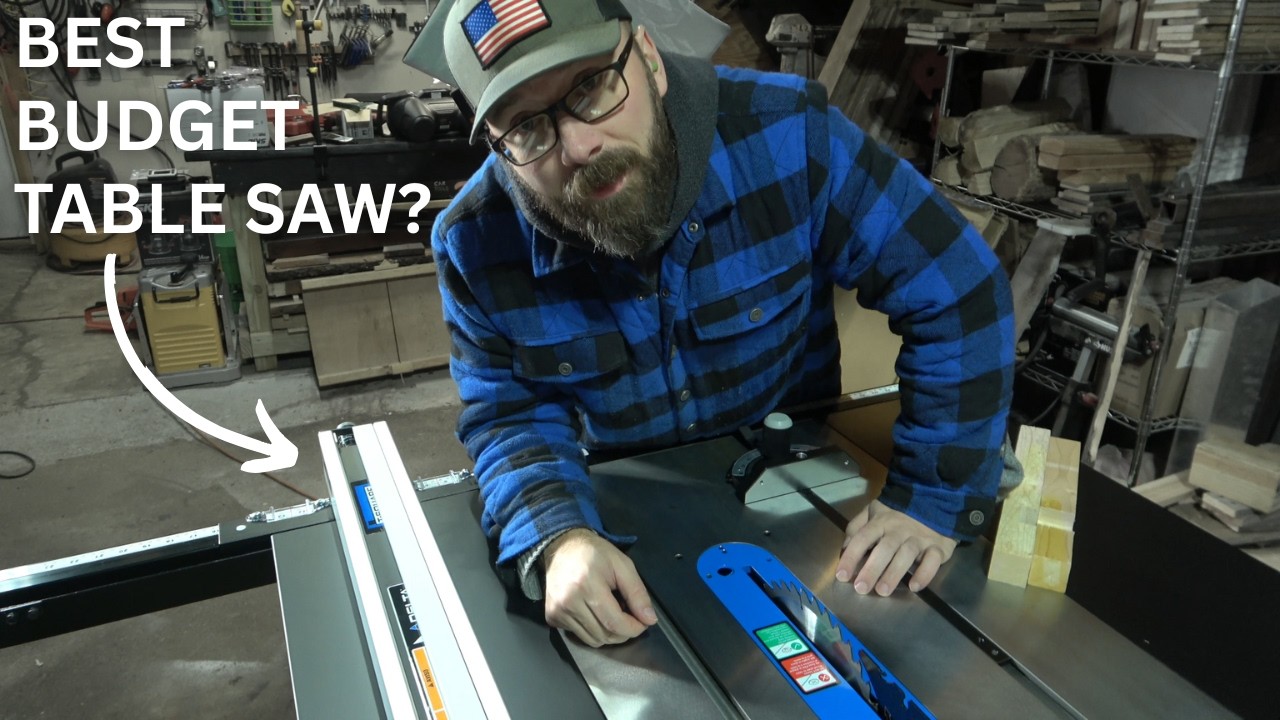
The 36-6020 is a portable delta table saw package built around a folding wheel stand and an aluminum top. It’s the one I point at people who need to roll in, cut, roll out—without committing floor space full-time.

Delta 10-inch Portable Contractor Table Saw
- 15 amp powerful motor for tough cuts
- 25 in rip capacity right &
- 12 in left
- Aluminum table top with extension support
- Retractable blade for easy cleanup
- 2.5 in dust port for clean work area
Buy on Amazon
Motor and RPM
The 36-6020 uses a 120V 15-amp motor with a higher listed blade speed around 5,000 RPM. That higher speed can leave a cleaner surface in softer woods, yet it also makes the saw sound more piercing; hearing protection stops being optional after the first few minutes of continuous ripping.
A common field problem is voltage drop on long extension cords. The saw may feel “weak” and start scorching cuts. The fix is a heavier-gauge cord, shorter run, or moving to a circuit that isn’t already loaded with compressors or heaters.
Cut, bevel, dado
Specs include a 3.5-inch cut depth at 90°, about 2.5 inches at 45°, left-tilt bevel to 45°, and dado support up to 13/16-inch width using an 8-inch dado set. In practice, portable saw dados work best when you slow your feed and keep the stack sharp; forcing it makes the motor note sag and the dado floor turns fuzzy.
Beginner mistake: forgetting throat plate clearance with a dado stack. Use the correct insert (or a proper zero-clearance dado insert), then spin the blade by hand before powering on so you don’t discover contact the loud way.
Aluminum table
The aluminum top has an anti-friction coating and a large working surface for its class. Aluminum feels warmer to the touch than cast iron, and it dents more easily; if you drop a clamp or slam a sheet corner, that ding can become a snag point that telegraphs into thin stock.
The workaround is to keep a hard-wax routine for smoother feed and to dress small burrs carefully. Avoid aggressive sanding that strips coatings unevenly; I use a fine stone lightly on high spots, then re-wax the area so panels slide without that “sticky catch” halfway through a rip.
Folding wheel stand
The folding stand and semi-pneumatic wheels are built for transport, including bumps and thresholds. The best test is rolling it one-handed: if it tracks straight and doesn’t twist, you’ll fight the fence less because the base isn’t racking under load.
One issue I’ve seen is storing it horizontally in a cramped trailer with other tools pressing on the stand. Later, the stand won’t latch square. The fix is to store it with nothing loading the frame and to periodically check that the hinge points stay clean of grit that grinds and loosens hardware.
Miter gauge and slots
The included miter gauge has common detents, and the saw uses two miter slots sized around 3/8 x 3/4 inch. That’s fine for basic crosscuts, but it can limit aftermarket gauges or sled runners that assume a full 3/4-inch standard slot width.
The pro move is to check accessory fit before you buy, or make runners to match your slot with UHMW. If you’re building sleds, sneak up on runner thickness so the sled slides without side play but doesn’t bind once sawdust builds up in the slot.
Weight and warranty
The saw-and-stand package is about 76 pounds, which is light enough to lift into a truck with help, yet heavy enough to feel stable once deployed. That middle weight is why it’s popular for remodel work: you can move it, then still rip trim stock without the whole unit skating.
Warranty is listed at 5 years in common spec listings; verify the current terms with the retailer documentation for your exact SKU. For a quick spec reference, see the product listing details from circlesaw.com.
Delta contractor model variants compared
Delta contractor variants can look similar in photos, yet the rail length, table width, and total mass change how the saw behaves. If your work leans cabinet parts and sheet goods, extra rip width matters more than a small difference in motor label.
Delta 36-5000
The 36-5000 is a contractor-format baseline model: 10-inch, left-tilt, and aimed at shop installs that still want a smaller footprint. In day-to-day use, this class of saw rewards careful leveling; if the stand isn’t planted, you’ll notice the fence “tells on you” with tapered rips.
Delta 36-5052
The 36-5052 steps up with more table width and extension capability, which helps when you’re supporting wide panels without awkward roller stands. The trade-off is storage: the rails stick out far enough that walking around the saw becomes a shop-layout issue.
Delta 36-5100
The 36-5100 sits in the middle with a larger top and more mass than entry variants, which typically means better cut feel on long rips. Extra weight helps the saw resist twisting when you’re feeding a heavy hardwood plank that wants to drag to the outside of the fence.
Delta 36-5152
The 36-5152 is where the lineup starts acting like a panel saw substitute, with up to a 50-inch right rip capacity on extended setups. One mistake I see is people buying this much rip width without upgrading outfeed support; wide capacity without support invites “panel drop,” which twists the work at the end of the cut and can kick back.
| Model | What usually changes | Who it fits best |
|---|---|---|
| 36-5000 | Standard rails, smaller footprint | Smaller shops doing solid wood parts |
| 36-5052 | Wider table/extension capability | Mixed work with occasional sheet goods |
| 36-5100 | More mass/table area | Frequent ripping where stability matters |
| 36-5152 | Long rails, big rip capacity | Cabinet parts, plywood workflows |
If you want a bigger picture of what contractor designs compete on, our contractor table saw guide lays out what separates a good fence-and-rail system from a frustrating one.
Contractor vs portable vs cabinet Delta table saws
Choosing between portable, contractor, and cabinet Delta table saws comes down to motor type, table size, and how often you need to move the saw. Specs tell part of the story, but the “feel” during a cut—vibration, feed smoothness, and fence confidence—is what you live with.
Power and motor types
Portable saws often run higher RPM universal/gear-drive setups, while contractor saws like the 36-725T2 use an induction motor. Cabinet saws step up to true horsepower ratings and often run 240V circuits, which changes everything about sustained ripping in thick hardwood.
A mistake is expecting a 120V 15-amp saw to behave like a 240V cabinet saw in 8/4 maple all day. The workaround is workflow: break stock down closer to size first, use a rip blade, and keep the blade clean so pitch buildup doesn’t steal power.
Table stability
Cast iron brings calm to the cut. Aluminum brings portability. If you’ve ever fed a 6-foot board and felt the table “sing,” you already know why stability matters: vibration shows up as tiny chatter marks that sanding can’t fully hide in open-grain woods.
Rip capacity range
Rip capacity spans from compact jobsite limits to 50–60+ inches on long-rail setups. A useful rule: if you cut plywood weekly, wide rip capacity saves time; if you cut plywood monthly, a track saw plus a 30-inch saw can be a smarter space trade.
Footprint and storage
Portable units win on storage, folding and rolling into corners or laying flat on a shelf. Contractor and cabinet saws win on setup repeatability—once dialed in, you don’t disturb alignment nearly as often, which saves real hours over a year.
Best use cases
Portable saws fit trim, decking, and remodel punch lists. Contractor saws fit furniture parts, built-ins, and small cabinetry runs. Cabinet saws fit batch work, where doing 40 identical rips without fence drift is the whole point.
If you’re still comparing tool categories, our miter saw vs table saw piece helps clarify which cuts belong on which tool so you don’t buy extra saw capacity to solve a crosscut problem.
Key features that matter when choosing
Most frustration with any Delta table saw comes from the fence, arbor setup, and adjustment repeatability—not the motor label. I look for features that make accurate setups fast, because if a saw is annoying to set, people skip safety parts and rush cuts.
Fence accuracy
A fence needs to lock square and stay put when you bump it with a sheet edge. If the scale reads 6 inches but the cut is 5-31/32, your workflow slows down into constant measuring. That’s why a T-square style fence is a buying divider on Delta contractor saws.
Arbor and blades
Delta’s common 5/8-inch arbor size makes blade selection easy, but blade choice still decides cut quality. A cheap combo blade can burn cherry and leave fuzzy end grain in oak. A sharp 24T rip blade makes thick ripping feel like pushing through butter, with long, warm ribbon shavings instead of dusty grit.
Dado compatibility
If you cut dados for shelves, confirm the saw supports a full 13/16-inch stack and that you can get (or make) the right insert. A mistake is buying a dado set before checking the saw’s arbor length; some saws accept the width on paper but leave too few threads for a safe nut engagement.
Adjustments and scales
Look for adjustments you’ll actually use: a bevel handwheel that doesn’t bind, a height mechanism that doesn’t “drop” after locking, and readable scales. A small trick that saves time is setting up a repeatable calibration routine: square the blade to the table, then set 45°, then calibrate the fence scale last, so one change doesn’t spoil the next.
- Verify fence-to-miter-slot parallel before trusting the scale
- Raise the blade higher for thick rips to reduce burning and effort
- Use a dedicated rip blade for hardwood and a fine blade for plywood
- Keep a zero-clearance insert for cleaner edges and less tearout
Safety and dust collection essentials
Table saw injuries happen fast, and most close calls come from kickback, poor support, and reaching near the blade during shutdown. Treat safety parts as standard equipment, not optional add-ons that live in a drawer.
Riving knife and pawls
A riving knife keeps the kerf from closing behind the blade, which is one of the main kickback triggers. Anti-kickback pawls can help on some cuts, yet they can snag delicate surfaces; I use them for rough lumber and remove them for finished faces, while keeping the riving knife installed.
Common mistake: swapping blades and forgetting the riving knife thickness match. If the knife is thicker than the blade plate, stock binds; if it’s too thin, it won’t control the kerf well. The fix is choosing blades that match the intended knife or keeping the correct knife in the saw’s accessory storage.
Blade brake basics
Many Delta saws include a blade brake that helps the blade stop within seconds. That reduces the temptation to “just grab the offcut” while the blade coasts. It doesn’t replace safe habits: keep hands away, use a push stick, and wait until the blade is fully still.
Switch access
A big, easy-to-hit switch matters more than people expect. In a problem cut, you want your knee or thigh to slap the off switch without searching. Beginner mistake: stacking scrap or cords where you can’t reach the switch quickly—clear that area before each session.
2.5-inch dust port
A 2.5-inch dust port works fine with a shop vac, but the hose can tug the saw or kink during a long rip. I route the hose so it arcs smoothly and doesn’t pull at full extension, then I add a simple hook or bungee on the stand to carry the hose weight. For why fine dust control matters, see CDC/NIOSH wood dust guidance.
The safest table saw cut is the cut that’s supported, aligned, and planned before the motor starts.
Shop rule that prevents most kickback setups
Delta table saw accessories and add-ons
The right accessories improve accuracy and reduce risk, especially on portable saws where keeping stock tight to the fence is harder. If you want a full checklist of compatible upgrades, see our table saw accessories guide.
These add-ons are worth adding early because they solve the problems that frustrate new owners most: dust, thin ripping control, and repeatable pressure against the fence.

Automatic Dust Collector Switch
- Automatically turns dust collection on and off with tool power detection
- load sensing prevents accidental overloads
- adjustable on and off delays for smoother operation
- simple inline installation with most power tools and table saws
- helps maintain a cleaner, safer workspace
Buy on Amazon

FeatherPRO Featherboard Safety Gauge
- EVA feather fingers reduce kickback and improve workpiece control
- compatible with table saws, router tables, and band saws
- gentle grip protects delicate stock while holding it steady
- quick to clamp and adjust for repeatable setups
- enhances safety and yields cleaner edge cuts
Buy on Amazon

Thin Rip Jig Guide for Table Saw
- Designed for making consistent narrow strip cuts quickly
- fast setup for repetitive thin ripping tasks
- compatible with T slots that are three eighth by three quarter inch in size
- durable construction holds steady for cleaner edges
- improves efficiency and repeatability on table saws and router tables
Buy on Amazon
Practical Notes From Real-World Use
The biggest surprise with many Delta table saws is how much cut quality changes with support gear. The saw can be aligned perfectly, then a sagging outfeed situation makes rips come out tapered because the board droops and twists at the last second.
I’ve also seen “mystery burning” that wasn’t a dull blade at all—it was fence toe-in after a bump. The tell is burn only on one side of the kerf and a tight, squealing feed. The quick fix is re-square the fence, then mark your rail so you can spot if it drifts over time.
Portable models can be frustrating with long, heavy hardwood. The saw feels light, the stand flexes a touch, and your hands sense every vibration through the stock—like a faint buzz in your palms. The workaround is clamping a temporary outfeed table, adding side support, and using a featherboard so your body isn’t doing all the sideways pressure.
One more real constraint: dust ports clog faster than people expect when ripping wet construction lumber. Chips clump and you’ll see dust burp out around the throat plate. I stop and clear it before continuing, because poor collection turns into heat buildup and worse visibility right where you need to watch the cut line.
If you’re still deciding across categories, compare Delta options against our broader best table saw roundup, then sanity-check your choice against your real workflow: sheet goods frequency, storage limits, and whether you’ll actually roll the saw out or leave it set up.
FAQs
Is The Delta 36-725T2 A Good Contractor Table Saw For A Home Shop?
Yes — the Delta 36-725T2 is a capable contractor table saw for a home shop.
It offers a sturdy cast-iron top, a reasonably accurate fence system, and a motor size well suited to general woodworking and trim projects. For hobbyists it balances portability and performance, though advanced users should confirm dust collection and dado compatibility for heavier production work.
What Is The Rip Capacity And Dado Capacity On Delta 10 Inch Table Saw Models?
Rip capacity varies by model but commonly ranges from about 24 to 50 inches on Delta 10-inch table saws.
Dado capacity depends on arbor and throat clearance; many Delta 10-inch models support stacked dado sets up to roughly 13/16 inch but some contractor versions limit to 1/2 inch or require a thin-kerf setup. Always check your specific model’s specifications before buying blades or dado sets.
What Are The Main Differences Between The Delta 36-725T2 And Delta 36-6020?
The 36-725T2 is generally a more portable contractor-style saw while the 36-6020 is a heavier-duty, shop-oriented model.
The 36-6020 typically has a larger table, more robust trunnions, and higher rip capacity; the 36-725T2 focuses on compactness and value. Differences also appear in fence quality, weight, available motors, and dust control — check spec sheets to match the saw to your workflow.
Do Delta Table Saws Use A Standard 5/8-Inch Arbor For Blades And Dado Stacks?
Yes — most modern Delta table saws use a 5/8-inch arbor suitable for standard blades and many dado stack setups.
Always confirm your model’s specification because a few older or industrial-scale saws use a 1-inch arbor or require adapters. Use the correct flanges and hardware and follow torque specs to ensure safe operation.
How Do Delta Table Saw Dust Ports Work With A Shop Vac Or Dust Collector?
Delta table saw dust ports are designed to connect to a shop vac or a dust collector but often require an adapter to match hose diameter.
Common port sizes on Delta saws range from about 1-1/4 inch to 2-1/2 inch; suction effectiveness depends on collector CFM, shrouding, and whether the cabinet is enclosed. Use a properly sized hose, a shroud or throat adapter, and a blast gate to improve collection performance.