DeWalt Router Table Guide: Compatibility, Top Tables, and Setup

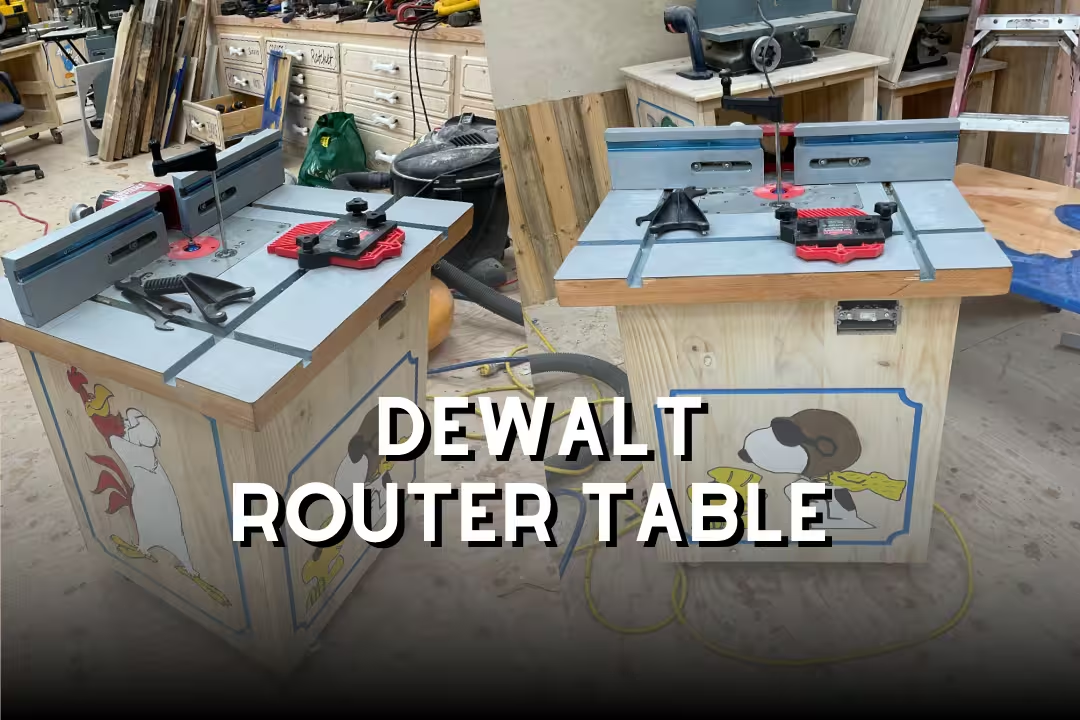
A DeWalt router table is a router table (or tabletop insert) that can mount DeWalt routers safely and accurately, most often via a pre-drilled insert plate that matches the router base. The best results come from confirming your exact DeWalt model and base style (fixed vs plunge), then choosing a table/plate that keeps the bit centered, the fence stiff, and dust controlled.
Table of Contents
If you’re pairing a dewalt router and table for the first time, start with compatibility before you compare features, because “universal” plates still miss certain hole patterns and base diameters in the real shop.
DeWalt router table compatibility first
Compatibility decides whether your table runs smooth or fights you every setup. I treat it like a three-part check: the router’s base (fixed/plunge), the insert plate hole pattern, and whether you can adjust height from above the table without half-disassembling the setup.
Quick compatibility chart
This chart focuses on common DeWalt models and what you’ll usually need to mount them. Use it to shortlist a router table for dewalt router shopping list before you get pulled into fence features and accessories.
| DeWalt router model | Best mounting approach | Common “gotcha” to check |
|---|---|---|
| DWP611 / DCW600B (compact) | Compact-friendly plate (often acrylic) or a table with a true universal plate | Plate opening size (bit clearance) and screw spacing |
| DW616 (1-3/4 HP fixed base) | Universal plate or a plate drilled for DW616/DW618 family bases | Above-table height adjustment support varies by table |
| DW618 (2-1/4 HP fixed base) | Heavier benchtop/cabinet table + plate that won’t flex | Motor diameter and base pattern differences vs compact routers |
| DW618PKB kit (fixed + plunge) | Mount the fixed base in the table; keep plunge base handheld | People try table-mounting the plunge base and hate the ergonomics |
| DCW620 (cordless, newer design) | Check plate drilling and clearance before buying the table | Battery/handle clearance under the table can hit braces |
DeWalt fixed-base mounts
A fixed base is the easiest way to build a stable dewalt router table setup because it resists rocking and it’s simple to lock in depth. With DW616 and DW618-style routers, the motor release and depth ring make table work predictable, but only if the plate sits flush and the base screws don’t bottom out.
A common beginner mistake is using screws that are too long for the insert plate. The screw “feels tight,” but it’s actually bottoming in the router base or hitting the motor housing, which can leave the base slightly cocked and create a tiny wobble you’ll feel as a faint buzz through the tabletop.
Insert plate fitment
Insert fitment is where universal claims break down. A plate can match the hole pattern and still fail if it flexes, sits proud, or sags at one corner, which shows up as inconsistent round-overs and a “chattery” sound when the bearing meets end grain.
For compact routers like DWP611/DCW600B, it’s common to use a dedicated plate size like 11.875″ x 7.875″ x 3/8″ (with a 1-5/8″ bit hole), which is listed clearly by crafted elements plate listing. If your table’s cutout doesn’t match that footprint, you’ll need either a different plate or a reducer ring solution, not “a little sanding,” because uneven support telegraphs into the cut.
DeWalt routers commonly used in tables
Most table setups land in two camps: compact palm routers for light profiling, or mid-size fixed-base routers for panel-raising and heavier stock removal. Picking the right motor changes how much you fight burn marks, bit chatter, and depth drift across a long run.
DW616 overview
DW616 is a strong pick for a starter router table for dewalt router setup because it’s simple and predictable in a fixed base. DeWalt lists it at 1-3/4 HP max motor HP, 11.0 Amp, and 24,500 RPM on the product page at DeWalt DW616 specifications.
In real cuts, that speed can leave a glassy edge on maple when the feed rate is steady, but it also punishes hesitation. If you pause for even a second, you’ll smell that sweet scorch and see a brown shadow that sanding doesn’t fully erase on some hardwoods.
DW618 overview
DW618 steps up power and gives you more headroom for bigger bits, which matters when the fence isn’t perfect or the stock isn’t flat. DeWalt lists it as 2-1/4 HP max motor HP with soft start and EVS, up to 24,000 RPM on DeWalt DW618 specifications.
The trade-off is weight and torque reaction under the table. A lighter benchtop can “talk back” with a dull thrum when you spin up, which is a clue you should stiffen the stand, add mass, or move up to a cabinet-style table.
DWP611/DCW600B overview
DWP611 (corded) and DCW600B (cordless) excel for small edge profiles, hinge mortises, and template work, and they can work in mini tables too. The limitation is bit size: once you start pushing large diameter bits or deep cuts, you’ll feel the router load up and you’ll hear a sharper pitch change that signals it’s time to take multiple passes.
One mistake I see is trying to make a compact router behave like a full-size shaper in a table. The workaround is to use sharp bits, reduce depth per pass, and add featherboards so your hands aren’t hovering near the cutter while you fight stock that wants to lift.
DCW620 overview
DCW620 is the cordless option people want for jobsite routing, and it can be table-friendly if the plate and under-table clearance cooperate. The risk is clearance: battery placement and base shape can collide with the table’s cross braces or dust box, so measure before you commit to a cabinet enclosure.
Anti-rotation shutoff features on newer designs can be a safety net, but you still need proper feed direction and restraint. If a workpiece catches, the table doesn’t “forgive” like freehand routing; it can yank the stock fast enough to sting your fingertips and leave that hot, gritty feeling from fine dust on your skin.
DW618PKB combo use
DW618PKB is a practical dewalt router and table pairing because you can dedicate the fixed base to the table and keep the plunge base for handheld mortising and inlay. Home Depot lists this kit as a 12 Amp corded 2-1/4 HP fixed and plunge base router kit at DEWALT DW618PKB listing.
A common misstep is swapping bases mid-project and losing your depth reference. The pro move is to keep one base “zeroed” for the table, then mark your bit stick-out with setup blocks so you can return to the same profile without test-cutting half a board.
Router table types for DeWalt routers
Table type matters as much as the router. The bigger the bit and the harder the wood, the more you’ll notice flex, fence drift, and vibration that can turn a clean edge into washboarding.
Mini benchtop tables
Mini tables are great for compact routers and quick chamfers, especially in small shops where you don’t want a full cabinet. A 3D-printed mini table format exists for DeWalt models like DWP611 and DW616/DW618 with the right base, and it’s typically used for light profiling rather than heavy joinery; you can see an example at mini router table for DeWalt.
The edge case is heat and load: long runs in dense hardwood can warm the bit and soften some plastics slightly, which shows up as a faint “smear” feeling when you touch the table surface near the insert opening. If you go this route, keep passes shallow and treat it as a detail station.
Portable tables
Portable tables are a solid middle ground for a garage shop: bigger work surface, real fence faces, and a leg set that’s better than clamping plywood to sawhorses. The trade-off is stability when you’re edge-routing long boards; add outfeed support or you’ll feel the board “lever” and the cut will taper.
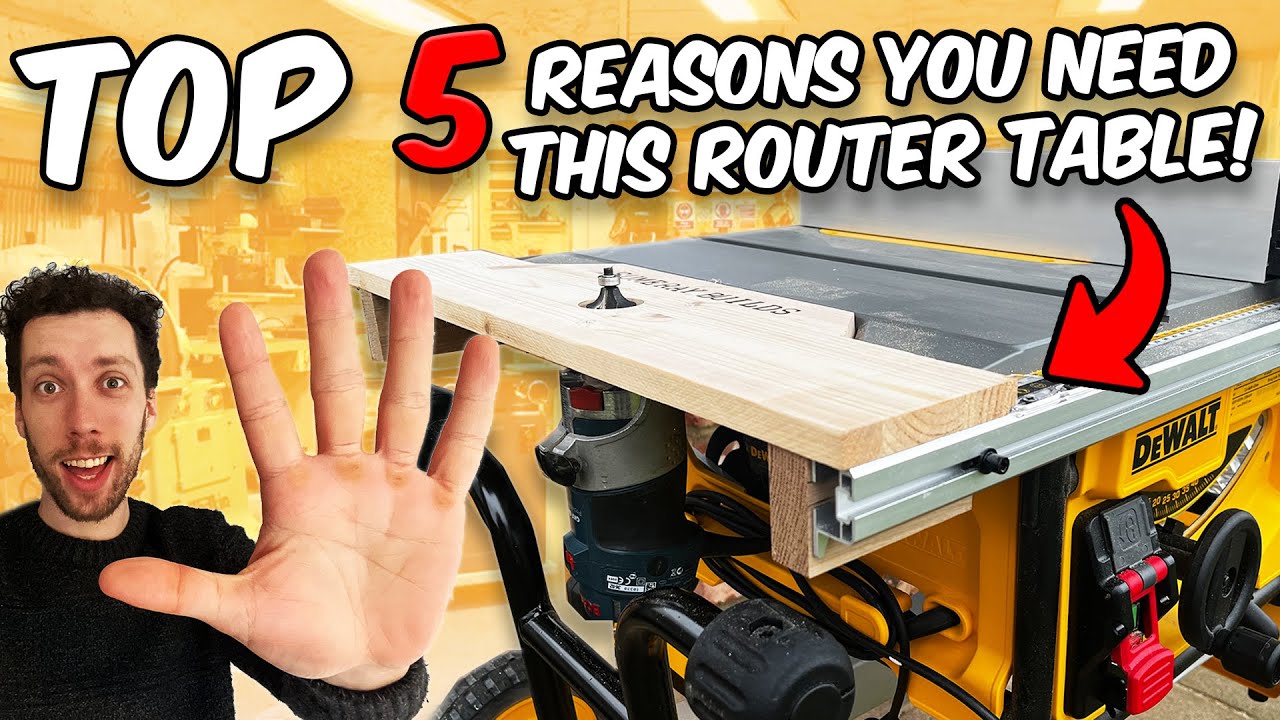
Watch how the fence and stock support behave in real use, then copy that idea with roller stands or extension wings. The goal is a steady feed where your hands feel in control, not like you’re catching a falling plank while the bit is spinning.
Cabinet-style tables
Cabinet tables shine with DW618-class routers and bigger bits because the mass damps vibration and the enclosure helps dust capture. If you plan to add a lift later, read our guide on a router lift so you don’t buy a table cutout that blocks your upgrade path.
One risk with enclosed cabinets is overheating and chip recirculation when the dust port is undersized. If you open the cabinet after a long routing session and get a warm, dry puff of dusty air, you need better airflow or a stronger extractor, because packed chips can rub a bit and leave burn trails.
DIY bench inserts
A DIY bench insert can be the best value if you already have a flat workbench and you’re comfortable cutting a clean recess for a plate. The upside is stiffness and working height; the downside is getting the plate perfectly coplanar, because even a paper-thin lip causes stock to catch and leaves a tiny “tick” you can feel through the board.
The workaround is to use leveling screws (or shims) at all corners and midpoints, then confirm with a straightedge in multiple directions. If you want a broader overview of table styles before you cut your bench, start at our router table guide.
Best router table for DeWalt router picks
These picks focus on what matters for DeWalt compatibility: a stiff top, a fence that stays square after adjustment, and an insert plate system that won’t turn mounting into a weekend project.
Here are three popular options people compare when shopping for the best router table for dewalt router use.

Bosch RA1181 Compact Router Table
- Sturdy benchtop for DeWalt fixed bases
- universal plate
 Buy on Amazon
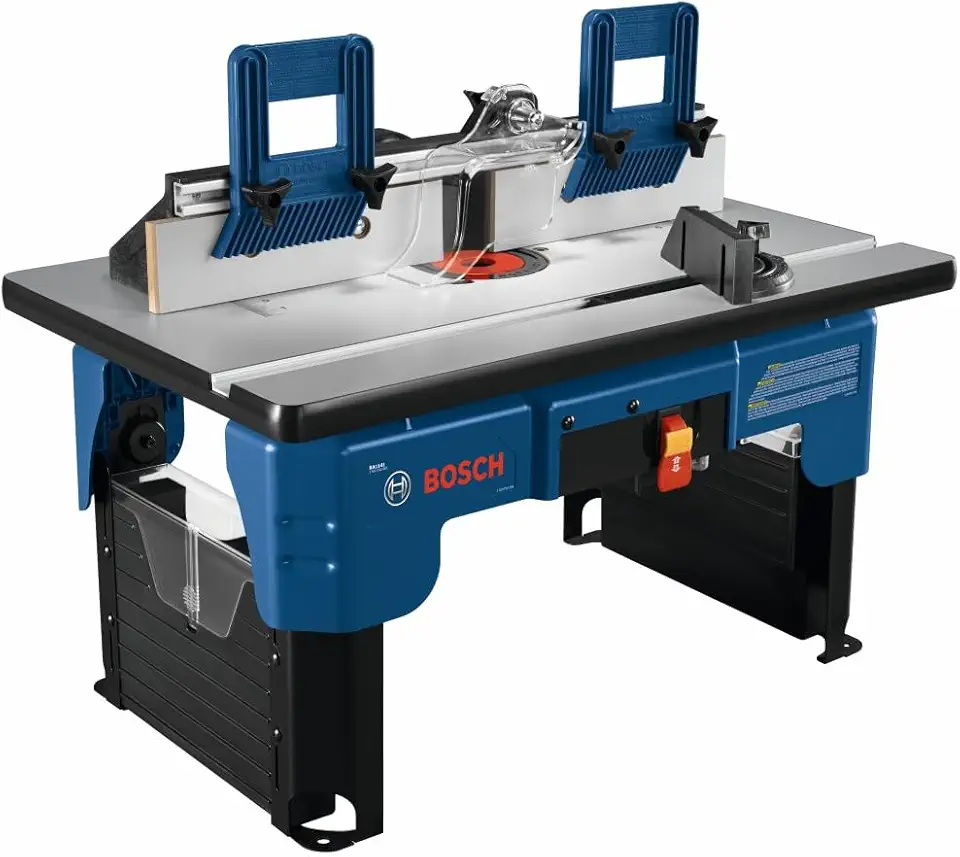

If you want deeper model-by-model notes on Bosch tables, compare fence design and plate systems in our Bosch router table breakdown and match the plate to your DeWalt base before you buy.
RYOBI universal router table option
This is the “make it work with most routers” path, which can be smart if you run mixed brands or plan to change routers later. The upside is flexibility; the risk is spending extra time centering and re-centering whenever you remove the router for handheld use Ryobi Universal Router Table-A25RT03.
Kreg pro-grade benchtop table
A pro-grade benchtop table pays off when you need the fence to stay put after repeated adjustments and when you want cleaner miters and cope cuts using the slot. Expect a more “dead” feel in the cut, where the table doesn’t ring or buzz, and the stock glides with less drag.
If you’re comparing Kreg’s fence and plate approach across their lineup, our Kreg router table article lays out which features translate into cleaner joinery versus convenience features that don’t change cut quality.
Router insert plates and DeWalt accessories
If you already have a table, an insert plate upgrade can be the fastest way to improve accuracy and reduce vibration. The key is matching the plate to your router base and cutout, then locking down flatness so the stock doesn’t snag.
Acrylic plate for compact routers
Acrylic plates are popular for compact routers because they’re easy to machine and you can see reference lines through them. The limitation is edge durability: if you overtighten screws, you can spider-crack the countersink, and you’ll feel a slight ridge around the screw head that can telegraph vibration into the table during a fast pass.
The pro workaround is to snug screws in a crisscross pattern and stop the second you feel resistance rise. If you need thread security, use a tiny drop of medium threadlocker on the screw threads instead of adding torque, because extra torque is what breaks plates.
Aluminum precision insert plate
Aluminum plates handle heavier routers and bigger bits better because they resist flex and hold leveling screws more reliably. The cut feels calmer: less “tinny” ringing and more of a low hum at steady RPM.
Plunge base and safety PPE
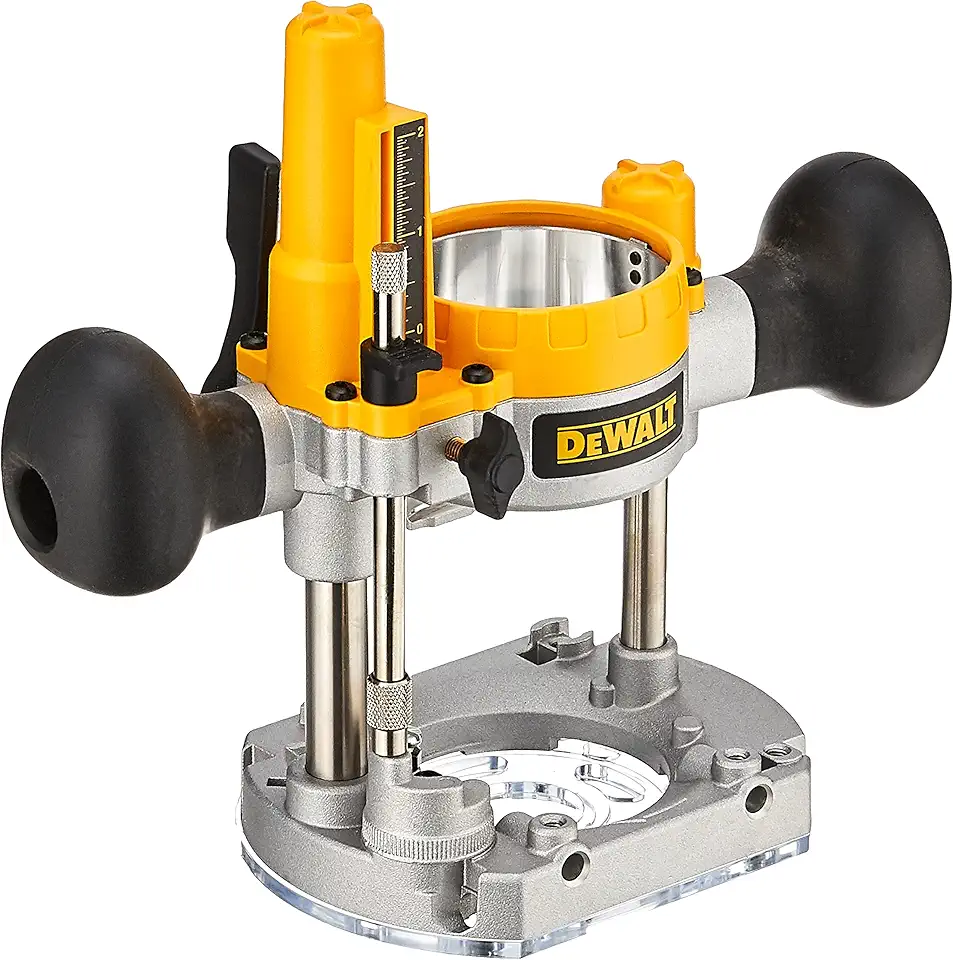
A plunge base is useful for handheld work that complements a table setup, like stopped dados and inlays, while the fixed base stays dedicated under the table. Eye protection matters more than people expect because routing dust is so fine it feels gritty and drying on your eyes within minutes.
These add-ons pair well with a DeWalt routing workflow.

DeWalt router table setup and safety
Good setup makes routing feel controlled, with a steady feed and clean sound instead of rattles and surprise grabs. Most problems trace back to centering, collet habits, or stock support that’s too short for the workpiece.
Mounting and centering
Centering affects cut quality more than people think, especially with guide bushings and larger bits. If the bit isn’t centered in the plate opening, you’ll hear a faint “tick” at speed on some setups and you can get uneven clearance that traps chips on one side.
My routine is to loosely install screws, center with a cone (or centering pin), then tighten incrementally. If your plate has slop and won’t stay centered, swap to precision screws or add thin shim washers so the base can’t drift under vibration.
Collet and shank checks
Collet technique prevents bit slip, which is one of the scarier table failures. Insert the bit shank fully, then pull it out about 1/16″–1/8″ before tightening so it doesn’t bottom out; bottoming out can feel tight but reduces clamping where it matters.
Beginners often clamp onto dusty shanks. Wipe the shank with solvent on a rag, blow out the collet, then tighten firmly; if you see dark rings on the shank later, that’s a slip clue and you should replace the collet or stop taking deep passes.
Depth adjustment use
Depth control is where the table starts saving real time. Use test pieces and sneak up on the profile; once you feel the bearing kiss the edge and the cut sound evens out, lock the base and mark the setting so you can return to it after a bit change.
Depth drift usually comes from not locking the base or from an insert plate that flexes under load. If you cut a profile, then the next board feels slightly tighter against the fence and sounds harsher, stop and check for movement before you ruin a full batch.
Dust collection basics
Dust collection isn’t just for cleanliness; it improves visibility and reduces heat. A fence port plus under-table collection keeps chips from packing around the bit, which is what turns a clean cut into a scorched edge that smells like toasted wood and leaves the surface sticky-warm.
If you can only do one thing, connect the fence port and use a shop vac with a clean filter. If you notice dust spraying out the front of the fence, close gaps with simple brush strips or tape so the airflow pulls chips where you want them.
Anti-rotation and kickback
Kickback happens fast in a router table because the bit can grab and accelerate the workpiece. Use featherboards, keep the fence square, and always feed against the cutter rotation; feeding the wrong direction can make the board skate forward so suddenly you feel a sharp tug in your wrists.
- Use push blocks on narrow stock and keep fingers away from the bit path.
- Take multiple passes in hardwood instead of one deep cut.
- Stand slightly to the side so you’re not in the line of fire if the stock launches.
- Check that the fence faces are parallel so the workpiece can’t wedge.
Practical Notes From Real-World Use
The biggest surprise for new table users is how small setup errors show up in the cut. A plate that’s proud by even a thin edge can catch a board mid-pass, which feels like the stock suddenly hits a speed bump, and that momentary hesitation leaves burn and chatter you can’t sand out cleanly.
I’ve also seen “universal” fences flex just enough that a repeated cut slowly changes size across a batch. The fix is simple but not obvious: set the fence, then push firmly sideways on the outfeed face; if it moves, add a backer, clamp a stiffener, or step up to a heavier table before you try joinery that needs repeatability.
Bit changes can turn into a headache if the table doesn’t support easy above-table access. If you find yourself scraping knuckles under the top and you come away with that metallic-dust smell on your hands, you’ll work faster by dedicating a fixed base to the table and leaving it there, then using a second base for handheld routing.
Finally, don’t underestimate how helpful table support gear is. When long boards droop off the side, you subconsciously lift them, your feed rate changes, and the profile shifts; pairing your router station with simple outfeed ideas from our table saw accessories guide can stabilize workflow without buying another machine.