Horizontal Panel Saw Buyer’s Guide: Pick the Right Beam Saw

Thinking about a horizontal panel saw for your shop? A beam saw can speed cuts and reduce material waste. This guide explains how these machines work and which parts matter. Read on to learn what to check before you buy and how to pick a model that fits your space and production needs.
Table of Contents
A horizontal panel saw is built to cut full-size sheet goods fast and accurately on a flat table. This guide explains how beam saws work, what features matter, and how to buy the right horizontal beam saw for your shop.
Horizontal Panel Saw Overview
Beam saw definition
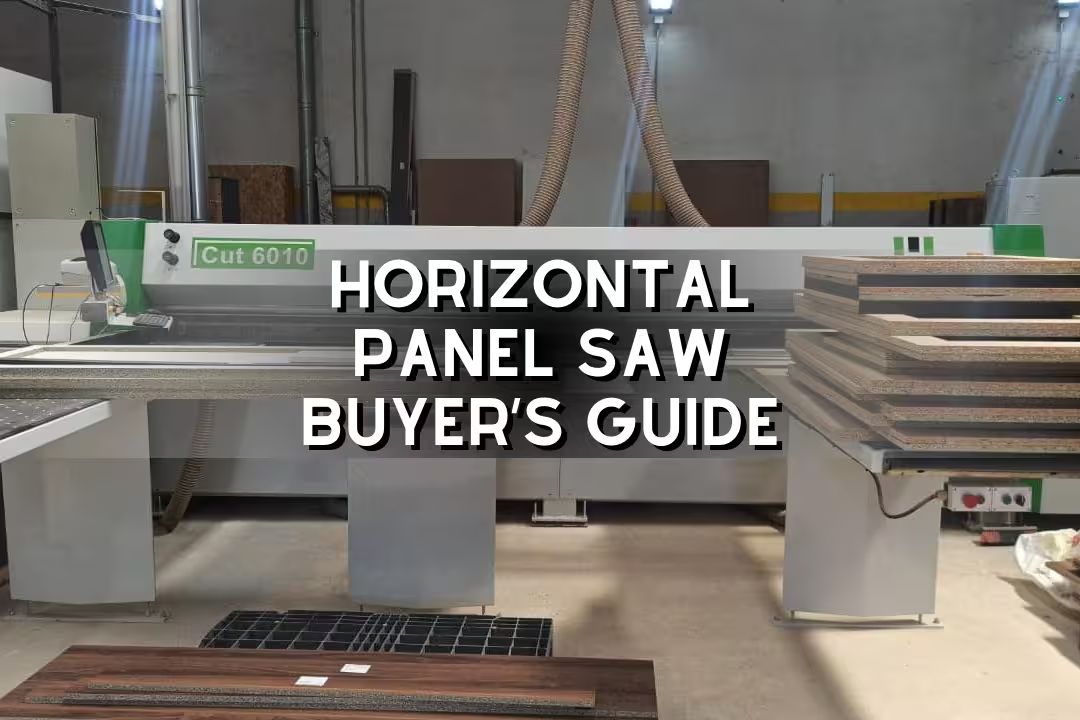
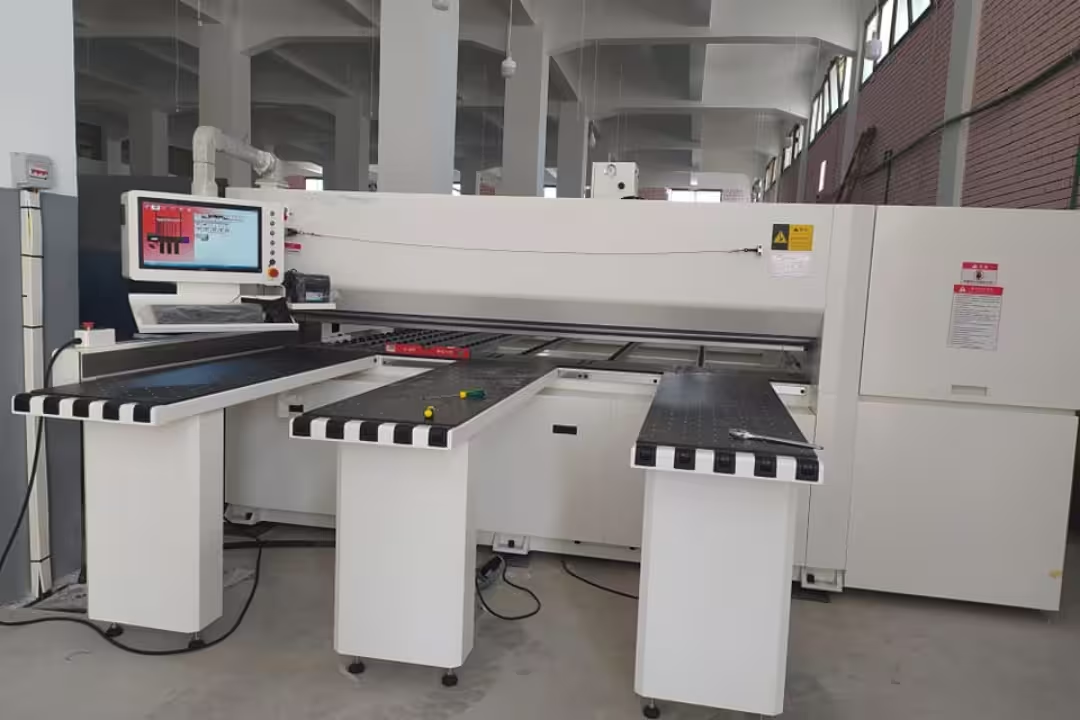
A beam saw (also called a horizontal beam saw or horizontal panel saw) is a panel-sizing machine where you place sheets flat on a table and the machine moves the material through a fixed cutting area. The “beam” name comes from the pressure beam that clamps panels so the pusher can move stacks safely and repeatably.
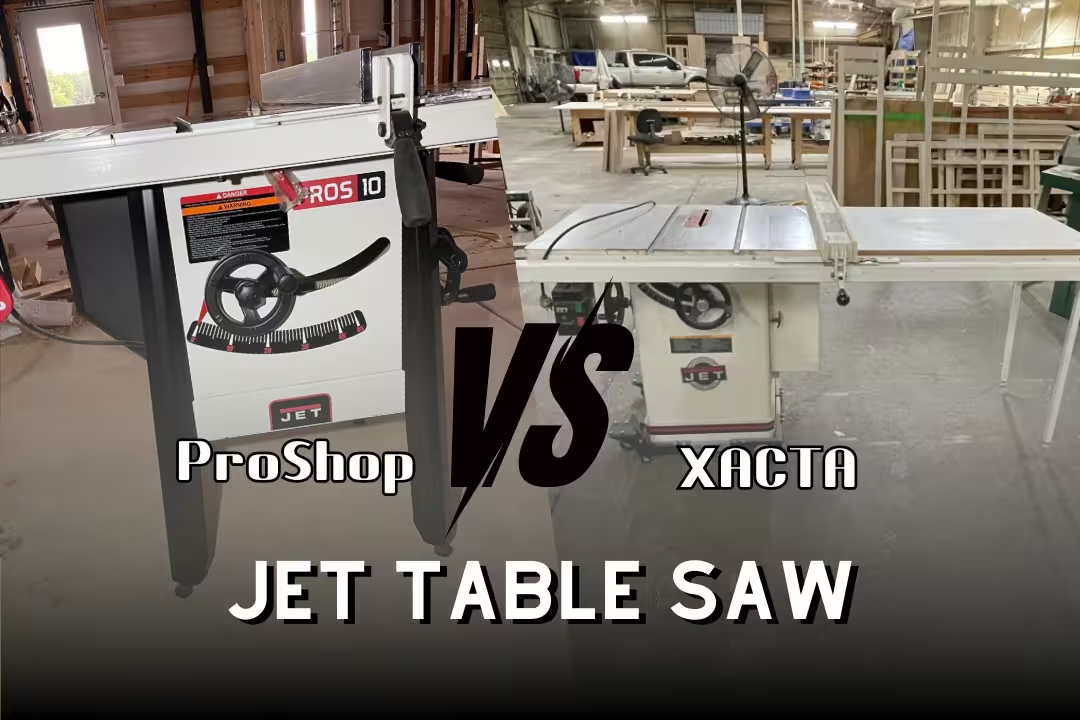
This style fits cabinet shops and production work because it handles large plywood, MDF, melamine, and particleboard sheets without wrestling them upright. If your workflow already uses a good rip fence on a table saw, you’ll still notice the horizontal panel saw’s sheet control and repeatability on big parts.
How it cuts
Most horizontal panel saws use a programmed pusher to feed the panel (or stack) under a pressure beam, then into the main blade for crosscuts or rip cuts. The operator loads the sheet, sets the cut list (manual stops or CNC), and the machine positions the panel to the exact dimension before the cut.
A scoring blade can cut a shallow kerf first, then the main blade follows to leave a clean edge on brittle laminates. That’s the big reason these machines are popular for melamine and veneered panels where tear-out ruins parts.
Core components
A typical horizontal beam saw includes a main blade (often 300–430 mm diameter), a scoring blade, a sliding carriage or saw unit, and a programmable pusher system. Many machines also add air-float tables so sheets glide into position with less effort and fewer surface scratches.
- Main saw unit with primary blade for full-depth cuts
- Scoring unit to reduce chip-out on laminates
- Pressure beam for clamping single sheets or stacks
- Programmable pusher/grippers for positioning to dimension
- Rip/crosscut fences, stops, and program entry (manual or CNC)
Typical capacities
Cutting size depends on model, but common capacities range from about 3,100 × 3,100 mm up to 4,500 mm cutting length for longer programs and production layouts. Blade projection is often roughly 68–130 mm, and some setups can stack-cut up to about 200 mm total thickness when the clamp and motor are sized for it.
| Spec area | Common range you’ll see |
|---|---|
| Main blade diameter | 300–430 mm |
| Blade projection (approx.) | 68–130 mm |
| Program/cut length | ~3,100–4,500 mm |
| Stack thickness (machine-dependent) | Up to ~200 mm |
| Main motor (typical) | ~3–25 HP (varies by class) |
Horizontal Panel Saw vs Beam Saw
Same machine terms
In most shops and catalogs, horizontal panel saw and beam saw mean the same machine type. “Beam saw” highlights the pressure beam clamp that holds material while the pusher positions panels for repeat cuts and stack processing.
Horizontal vs vertical
A vertical panel saw stores sheets upright and the saw travels through the panel, which saves floor space and works well for breaking down single sheets. A horizontal beam saw takes more space, but it’s built for high output, easier automation, and stack cutting without fighting gravity.
Accuracy and edges
Beam saws with CNC positioning often hit repeatability in the ±0.2–0.5 mm range, which is a practical difference you’ll feel when parts go straight to edgebanding or CNC nesting. Pair that with a scoring blade and you get splinter control on melamine and veneers that’s hard to match with manual breakdown methods.
If edge quality is a constant pain point, check scoring adjustment access and whether the saw supports fine scoring offsets. That small setup detail often determines whether you get crisp edges or spend time reworking parts.
Throughput and optimization
Throughput is where horizontal machines earn their keep: they can process far more parts per shift than manual methods because positioning is automated and stack cutting is normal. Optimization software also helps reduce scrap by building efficient cut patterns, which can turn material savings into a real margin gain on every job. For more context on safe, repeatable shop ripping setups, see this guide on a table saw fence.
Key Horizontal Panel Saw Features
Motors and blades
Main motors commonly land around 3–11 kW for many production-class machines, with larger systems going higher for heavy stacks and tough materials. Look for stable blade speed under load, easy blade changes, and documentation on recommended tooth geometry for plywood vs MDF, since blade choice controls cut quality as much as horsepower.
Scoring blade
A scoring unit is worth paying for if you cut melamine, HPL, or prefinished panels because it reduces chip-out on the bottom face. Check whether scoring width is adjustable and whether the scoring arbor is easy to dial in, since fast setup time matters when materials change.
CNC automation
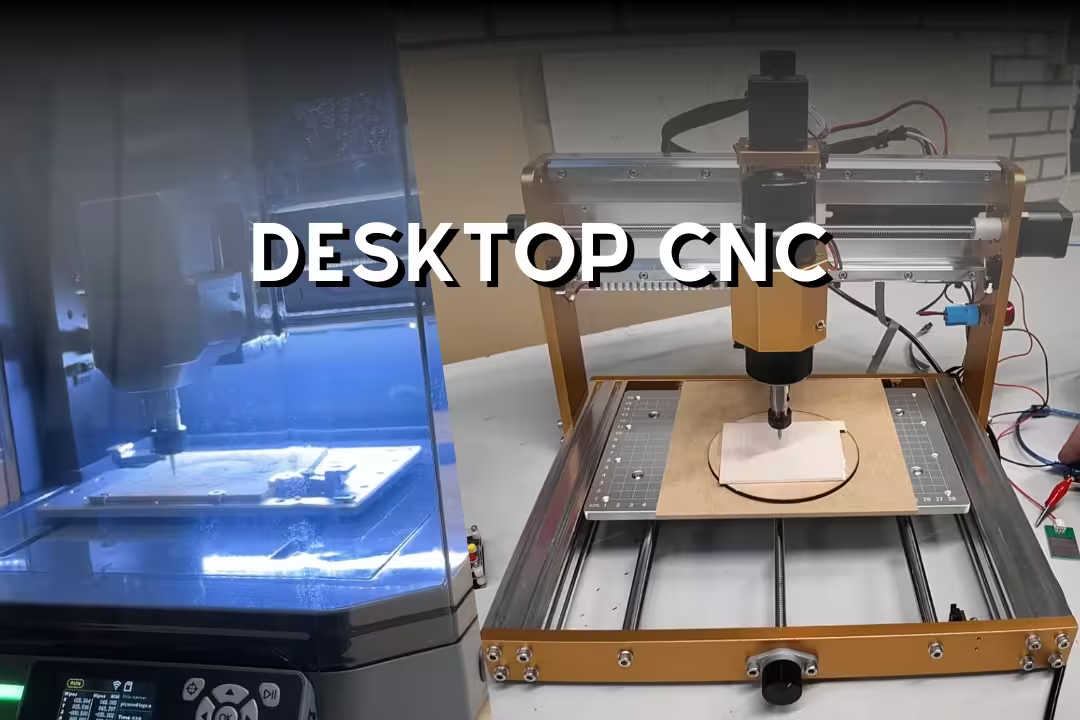
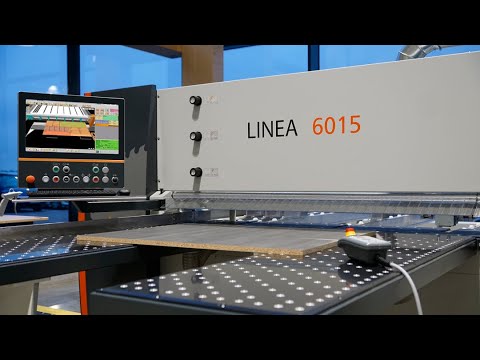
CNC control ranges from basic programmable stops to full optimization with barcode labels, job queues, and production reporting. If you already run nested-based work, pairing a beam saw with a CNС workflow can reduce handling by sending clean, square blanks right to machining; this overview of a CNC router helps if you’re planning that wider process.
Tables and fences
Air-float tables reduce effort and protect surfaces, which matters when one operator loads 4×8 sheets all day. Pay attention to fence squareness adjustment and how easily you can verify stops, since small errors compound across a full cabinet cut list.
Clamping pressure beam
The pressure beam clamps the work so the pusher can move panels without drift, which is key for stack cuts and repeat sizing. Look for smooth clamp action, consistent pressure across sheet width, and a beam face that won’t mar delicate finishes, because panel grip affects both accuracy and rework.
Dust collection
Good extraction helps cut quality, keeps rails cleaner, and reduces airborne dust where the operator loads sheets. Check hood design at the main blade and scoring unit, then match the required airflow to your dust collector so pickup stays strong during long cuts.
Build and rails
Rails and guides affect long-term accuracy because they govern how smoothly the saw unit and pusher travel. Favor machines with heavy frames, protected linear bearings, and easy lubrication points so you can keep motion smooth after years of dust and production use.
Electrical options
Smaller shops may need 230V single-phase options, while production beam saws often use 380V/3-phase (or regional equivalents) for higher-power motors. Confirm breaker size, startup current, and whether you need a phase converter so power limits don’t block the install.
Buying a Horizontal Beam Saw
Space and footprint
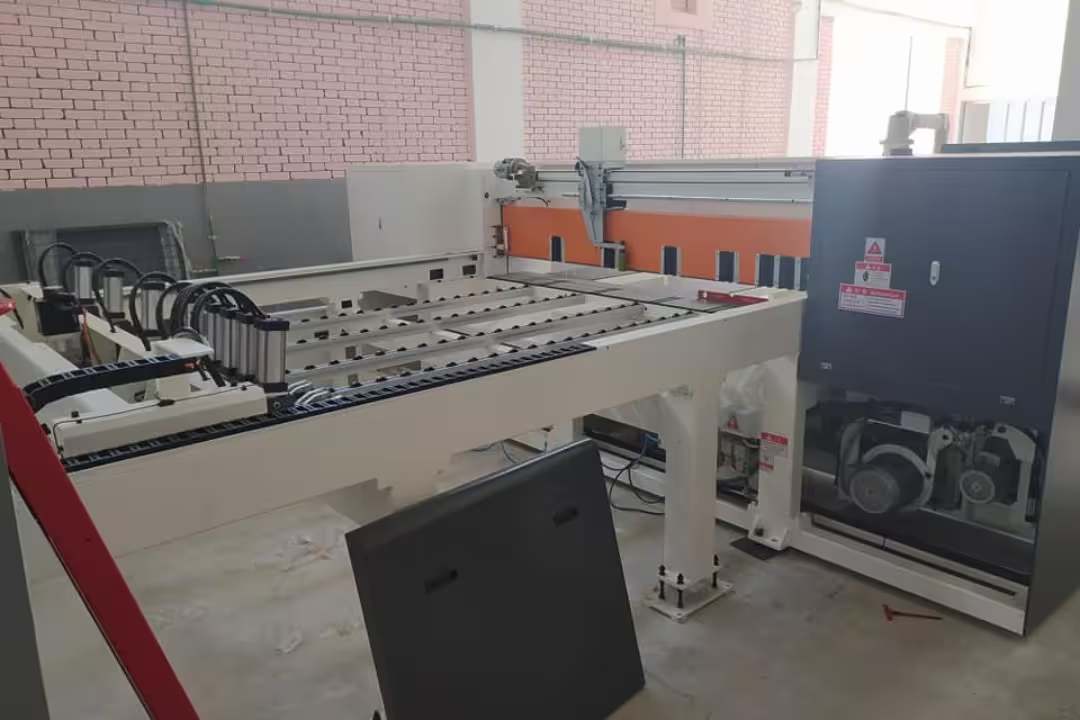
Measure the full working footprint, not just the machine base, since you need infeed/outfeed clearance for full sheets and room for staging stacks. Many horizontal panel saw installs end up needing a long bay (often 10–14 ft of cutting length area or more), plus safe walkways around the operator side.
Panel size and thickness
Match the max program length and pusher stroke to your largest panels, then check blade projection at 90° for your thickest stack. If you cut both thin melamine and thick butcher-block style panels, prioritize a machine with fast changeover for scoring settings and clamping height.
Production volume fit
High-volume cabinet and casework shops benefit most from CNC beam saws because optimization and repeatability reduce labor per part. Lower-volume shops can still win with a simpler horizontal panel saw when it removes bottlenecks upstream of joinery, edgebanding, or a router sled flattening workflow; see this router sled guide if you mix solid wood prep with sheet work.
Power requirements
Light-use machines may run fine around 3–5 HP, while production units often land in the 15–25 HP class for sustained stack cutting. Confirm your service capacity, voltage, and compressed air supply (for clamps and air tables) so site readiness doesn’t delay start-up.
Top Brands and Models
Hendrick series
Hendrick models such as the HM3, HK5 RL, and HC6 are often listed with configurations that suit plastics and wood production, including higher horsepower options and pressure-beam stack processing. If you quote one, ask for details on pusher programming, clamp zones, and service access for daily cleaning.
SCM Gabbiani
SCM’s Gabbiani line is common in cabinet production, with CNC programs aimed at repeat sizing and optimization. When comparing trim levels, check what’s included in the software license, labeling, and whether the scoring unit and air tables are standard or options.
Holz-Her/HOMAG lines
Holz-Her and HOMAG beam saw offerings (such as SAWTEQ series machines) tend to target production environments with higher feed rates and strong automation support. Price aside, evaluate local support coverage and parts lead times because downtime risk can outweigh small feature differences.
Cantek and Schelling
Cantek and Schelling models often appear in shops that want computerized sizing without stepping into the highest-end automation packages. Bring sample materials (especially melamine) to demos so you can judge scoring performance and edge finish in real cuts.
Price range examples
Market pricing varies by capacity, automation, and condition, but used/new-equivalent listings often span roughly $14,000 to $67,000 for recognized beam saw classes. Treat any listing as a starting point and budget for tooling, install, electrical work, and training time before you lock the number.
Horizontal Panel Saw Cost and ROI
Entry-level pricing
Entry-level and more manual horizontal panel saws often fall around $8,000–$20,000, depending on capacity and scoring. This tier can make sense if you mainly need clean breakdown and square parts without full optimization, and you can accept more hands-on loading and measurement control.
Mid-range CNC pricing
Mid-range CNC beam saws commonly land around $30,000–$50,000 with features like programmable fences, scoring, and longer pusher strokes for production patterns. This tier often hits the best balance for small-to-mid cabinet operations that want repeat output without full factory automation.
Industrial pricing
Industrial systems can run $60,000+ when you add high horsepower, advanced software, labeling, and material handling options. These machines pay off when you run daily production schedules and want stable cycle times with less operator intervention.
Throughput payback
ROI usually comes from four levers: labor saved per sheet, waste reduced by optimization, fewer remakes from chipped edges, and faster job completion. If a beam saw doubles throughput in your bottleneck area and reduces scrap, it can turn into measurable payback in months rather than years for busy cabinet shops.
Safety for Horizontal Panel Saws
Guards and riving knives
Keep blade guards in place and use the correct riving knife or splitter setup recommended by the manufacturer to reduce contact risk and pinch hazards. Never defeat guards to “make a quick cut,” since exposed blades create severe injury risk.
For practical safety guidance on woodworking machines, review the OSHA machine guarding overview and align your shop rules with those principles.
Clamping and handling
Let the pressure beam and pusher do the work, and keep hands out of the feed path during clamp cycles. Use air tables, lift assists, or team lifts for heavy sheets so material handling doesn’t become the hidden hazard.
PPE and training
Wear eye protection, hearing protection, and avoid loose clothing that can snag. Train every operator on program entry, clamp zones, emergency stops, and lockout procedures so operator errors don’t become repeat incidents.
Inspection routines
Start each shift with quick checks: guard position, E-stop function, air pressure, dust pickup, and obvious damage on cords or hoses. Log findings so you can spot small issues early and protect safe uptime during busy weeks.
Maintenance and Accessories
Daily and weekly care
Clear dust from tables and rails daily using a vacuum (avoid blasting debris into bearings with high-pressure air unless the maker allows it). Add lubrication on the schedule your manual specifies, and check blades for pitch buildup so feed load stays consistent.
Monthly inspections
Inspect belts, chain drives, pneumatics, sensors, and electrical cabinets monthly, then tighten fasteners that work loose under vibration. Confirm dust duct joints and blast gates seal well because poor extraction shortens component life and hurts cut quality.
Accuracy longevity
Protect accuracy by keeping rails clean, checking pusher alignment, and verifying squareness with a routine test cut and measurement log. If you see drift, fix it early by checking gripper wear, fence calibration, and blade runout so repeatability doesn’t slowly fade.
Recommended accessories
These accessories can help with panel prep and straight cutting when you’re breaking down sheets outside the saw or supporting smaller jobs.
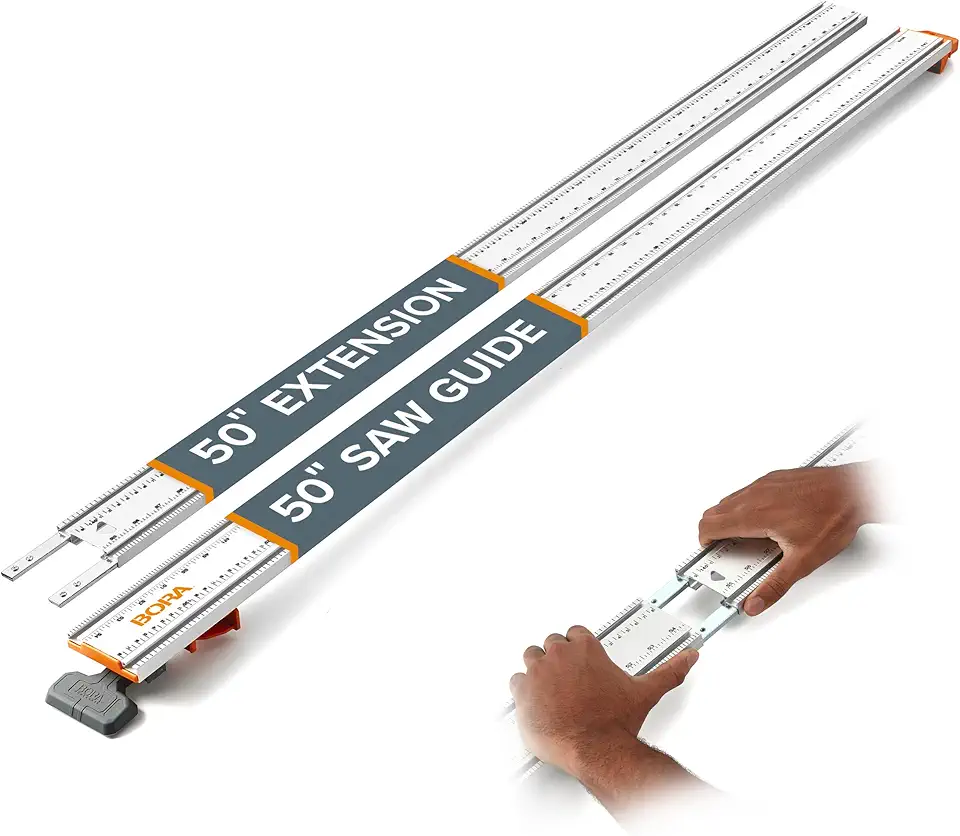
BORA NGX 100-inch Straight Cut Guide
- Aluminum rail system provides long, straight cuts up to 100-inch with extension
- Secure clamp edge keeps the guide stable for repeatable accuracy
- Lightweight yet rigid design reduces flex for cleaner cuts
- Compatible with most circular saws for versatile workflows
- Easy setup and extension make cutting large panels fast
 Buy on Amazon
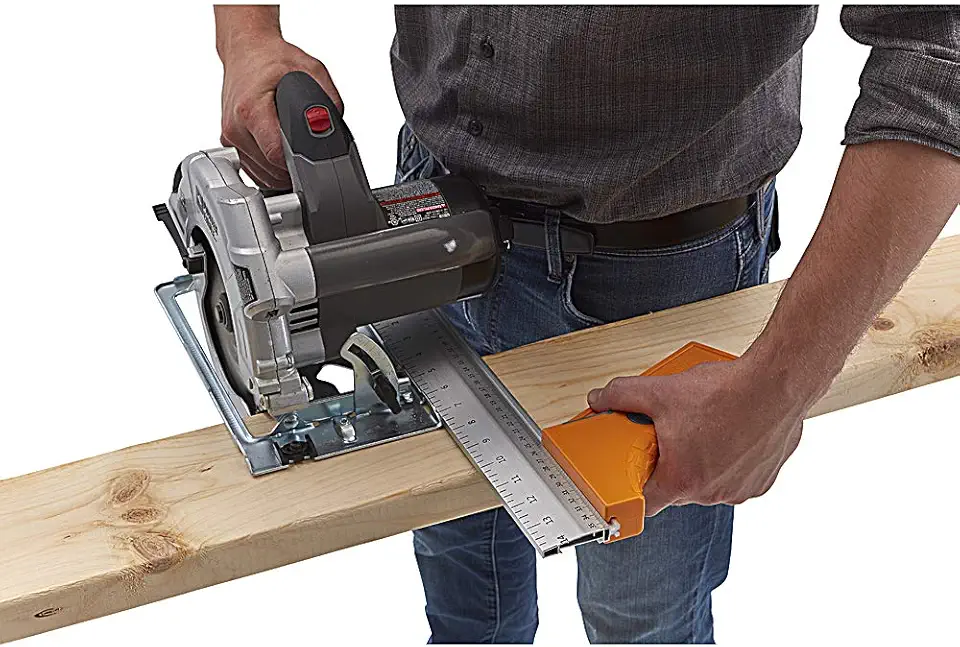
BORA Quickcut 16-inch Circular Saw Guide
- Rigid aluminum rail and angle assist produce straight, accurate cuts every time
- Compact 16-inch length is ideal for small panels and trimming tasks
- Solid clamp attachment keeps the guide steady during cuts
- Built-in angle assist simplifies bevel and repeat cuts
- Lightweight and portable for quick setup on the jobsite
Buy on Amazon

Kreg Rip-Cut Circular Saw Guide
- Creates straight, controlled rip cuts with standard side-blade circular saws
- Quick mounting and adjustment ensures accurate fence alignment
- Durable design stands up to repeated shop and jobsite use
- Works with a variety of lumber widths for flexible ripping
- Lightweight and portable for easy transport and storage
Buy on Amazon
FAQs
What Is A Beam Saw?
A beam saw is a large, automated cutting machine designed to make straight, precise cuts in sheet materials like wood, MDF, plywood, and laminates. It uses a moving saw head mounted on a rigid beam with a fixed table to feed panels, enabling fast, repeatable crosscuts and rip cuts. They are common in furniture and cabinet shops and range from semi-automatic to fully CNC-controlled models for production.
Beam Saw Vs Panel Saw — What’s The Difference And Which Should I Buy?
A beam saw excels at high-volume, automated panel cutting with excellent repeatability, while a panel saw is simpler and better suited for smaller shops or occasional cutting. Beam saws have moving saw heads on a beam with large tables and higher throughput, whereas panel saws are more compact, often manual, and cost less. Choose a beam saw for production speed and precision, or a panel saw for lower cost, space savings, and occasional use.
How Do I Maintain, Align, And Change The Blade On A Beam Saw For Accurate Cuts?
Keep the saw clean, check bearings and guides, align fences and squaring systems, and use the correct sharp blade installed per the manufacturer’s torque and orientation. Regularly verify blade parallelism with a dial indicator and confirm table, fence, and conveyor alignment to maintain true, repeatable cuts. Always lock out power, wear PPE, and follow the machine manual when changing blades.
What Safety Precautions And Best Practices Should I Follow When Operating A Beam Saw?
Always follow machine lockout/tagout, wear appropriate PPE, and keep hands clear of the blade and moving parts. Use push sticks, guards, anti-kickback devices, and a properly adjusted fence; never reach over the blade or attempt unsupported one-person lifts of large panels. Train operators on emergency stops, dust control, and correct feeding techniques to reduce accidents.