Jet Table Saw Buying Guide: Compare ProShop vs XACTA

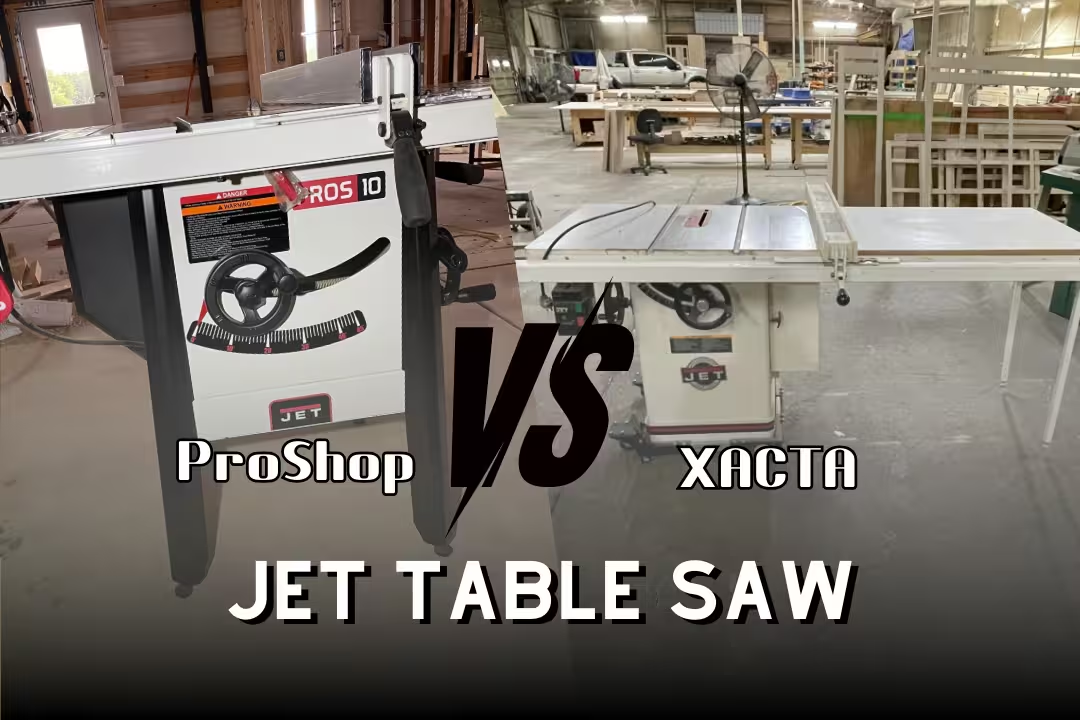
A Jet table saw is a shop-focused table saw built for flatter tables, steadier fences, and cleaner cuts than most portable saws. Jet’s lineup centers on the ProShop (1.75 HP hybrid/contractor feel) and XACTA Deluxe (3–5 HP cabinet) designs, with rip capacity and power being the two specs that change how the saw behaves day to day.
Table of Contents
If you’re comparing jet table saws to other brands, start with what you cut most: narrow hardwood parts vs full sheet goods, and occasional weekend use vs all-day production runs. Getting that wrong is the fastest way to end up with nuisance stalls, burned edges, or a fence you don’t trust.
Jet table saw lineup at a glance
Jet’s range splits cleanly into a ProShop family meant for smaller shops and mixed-duty work, and the heavier XACTA Deluxe cabinet saws built for repeatable accuracy under load. The “right” choice is less about brand loyalty and more about whether you need 115V convenience or 230V stamina, plus how often you rip wide panels.
ProShop series
The ProShop series sits in a sweet spot for many home and small pro shops: enough mass and table flatness to feel like a shop saw, but without the wiring demands of a full 3–5 HP cabinet unit. Jet lists ProShop table saw builds and variants on jettools.com (accessed February 2026), which helps when you’re cross-checking rip capacity packages and included fences.
In real use, a ProShop “table saw Jet” setup shines when you’re doing furniture parts, face frames, and occasional plywood breakdown with support stands. The trade-off shows up on thick rips in hard maple where feed rate has to slow, and you’ll feel the blade start “singing” if you push stock too fast without a sharp, proper-tooth-count blade.
XACTA Deluxe series
XACTA Deluxe models are the step up when you want the saw to stay calm during long rips, heavy dado work, and repeat production cuts. Machine Atlas summarizes the Jet Deluxe XACTA cabinet saw class and typical specs (motor size and format) in its overview of the line at Machine Atlas (accessed February 2026), which is useful for quick side-by-side checks before you verify the exact model manual.
What you notice first is reduced vibration: the cut sounds lower and steadier, and the workpiece glides with less chatter as it passes the blade. That steadiness matters most on glue-line rips and veneered panels where a tiny oscillation turns into visible washboarding after finish hits.
Contractor vs cabinet styles
Contractor-style and hybrid designs prioritize easier access, lighter weight, and friendlier power needs, while cabinet designs prioritize mass, dust control, and trunnion stability. Beginners often buy by rip capacity alone, then get surprised by how much better a cabinet saw holds alignment after moving it on a mobile base or after a seasonal humidity swing.
A simple decision rule works: if you’ll run 8/4 stock weekly or cut wide hardwood panels often, a cabinet saw’s power and trunnion rigidity saves time and frustration. If you’re in a garage shop sharing circuits with a dust collector, a hybrid/ProShop style is easier to live with, and you can put budget into a better blade, a router station, or a tuned fence—see our guide to best table saw setups for how those choices change results.
Jet 10 table saw specs that matter
Most buyers searching “jet 10 table saw” really want the specs that predict cut quality: horsepower, arbor speed, fence behavior under pressure, and how well dust is pulled from below the blade. The mistake I see most is focusing on peak HP and ignoring voltage, circuit load, and the boring stuff like belt tension and table wing flatness.
Motor HP and RPM
Jet 10″ saws commonly run around 4,000 RPM at the arbor, and that speed supports clean crosscuts when the blade is sharp and matched to the task. Fine Woodworking’s hybrid saw review highlights how feature-packed hybrids can be (including safety and dust improvements) and why real cut performance depends on blade choice and feed control, not marketing numbers alone, at Fine Woodworking (June 2019).
More HP doesn’t automatically mean better cuts; it means the saw keeps blade speed up when the kerf loads with thick hardwood. If you’ve ever felt a board start to “push back” and heard the pitch drop mid-cut, that’s the moment a 3 HP cabinet saw stays composed while a smaller motor needs a slower, steadier feed to avoid burn marks.
Voltage and amps
Many ProShop configurations are 115V friendly, while XACTA cabinet saws usually want 230V for 3–5 HP motors. The beginner trap is plugging a 115V saw into a long, undersized extension cord; the motor feels “fine” at no load but bogs in a real rip, and that’s when the cut starts wandering and heat builds at the tooth line.
If you’re sharing a circuit with dust collection, nuisance breaker trips can show up at startup when both motors kick. A clean workaround is a dedicated circuit for the saw plus a soft-start dust collector (or a delayed-start switch), which keeps voltage sag from stealing torque right as the blade meets the wood.
Rip capacity options
Rip capacity determines whether you can halve sheet goods without gymnastics: 30″ works for a lot of cabinet parts, while 50–52″ is the difference between easy panel handling and wrestling plywood on a helper stand. If you’re building built-ins often, it’s hard to overstate how much wide rip capacity reduces setup time and measurement mistakes.
Edge case: a 52″ rail set can be a liability in a tight shop because it becomes a hip-check hazard and steals staging space. In cramped rooms, I’d rather keep 30″ rails and break down sheets with a track saw first, then move to the table saw for final sizing and joinery.
Cut depth at angles
Common 10″ configurations land around 3-1/8″ at 90° and about 2-1/8″ at 45°, which covers most furniture work and a lot of framing-grade tasks. The mistake is assuming bevel cuts behave like 90° cuts; bevel ripping increases the tendency for the offcut to press into the blade, so a riving knife and consistent featherboard pressure matter more.
Another gotcha shows up with thick bevels: a dull blade will burn faster at 45° because more tooth is rubbing. If you smell that sharp, slightly sweet “hot wood” odor and see smoke wisps, stop and swap to a clean, sharp blade or reduce tooth count for the cut.
Table and wing materials
Cast iron tables damp vibration and stay flatter across seasons, while steel wings resist impact damage and can be plenty stable if they’re braced well. The real-world difference is tactile: cast iron feels “dead” under your palm and stock slides with a smoother, heavier glide once waxed, while steel wings can feel a touch more “ringy” when the saw is working hard.
| Spec that changes results | What it affects in the cut | Common pitfall |
|---|---|---|
| Motor HP (1.75 vs 3–5) | Maintains blade speed in thick rips and dado stacks | Forcing feed rate and causing burn or drift |
| Rip capacity (30″ vs 50–52″) | Panel handling, repeatability on cabinet sides | Buying wide rails with no shop space to support sheets |
| Table/wing material | Vibration, flatness, “feel” pushing stock | Ignoring wing alignment and creating a snag point |
| Dust port and cabinet shape | Airflow, cleanup time, motor cooling | Weak collector causes dust packing under the blade |
ProShop jet table saws compared
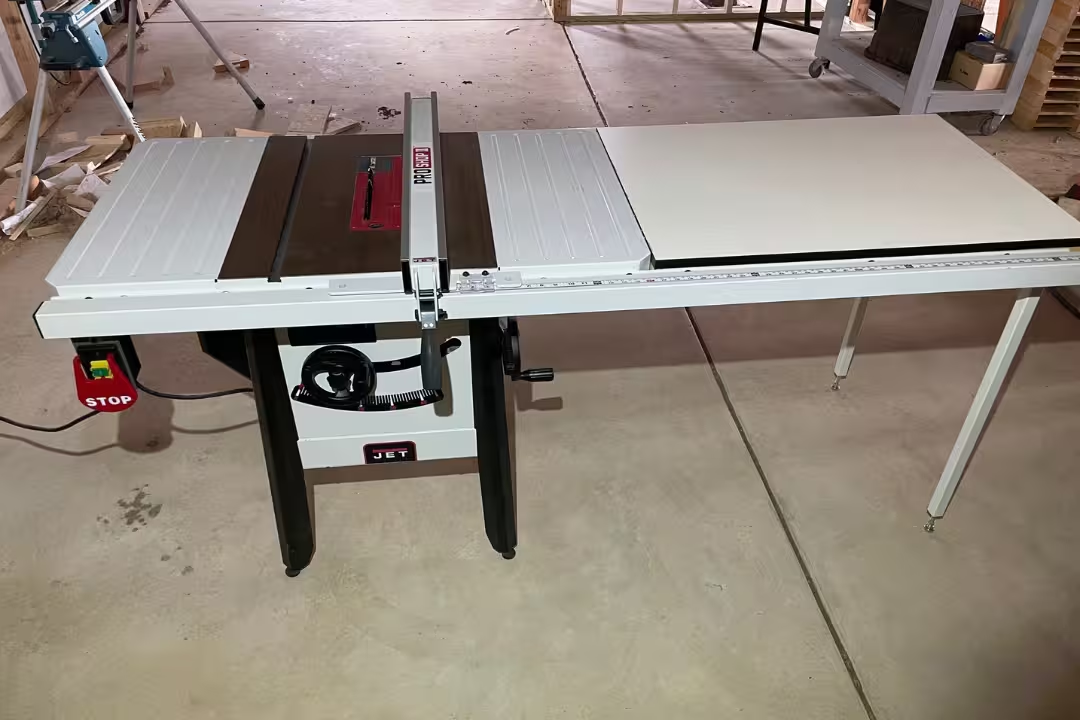
The ProShop family is where most “first serious shop saw” buyers land, because it brings a stable table and a real fence while staying realistic for home wiring. People also like ProShop units when they want a cleaner, more repeatable alternative to a jobsite saw but still need the saw to move occasionally on a base.
Compact 30-inch rip
A 30-inch rip package is a practical default for small shops: you can rip most cabinet parts after rough breakdown, and the shorter rails keep the saw footprint manageable. This configuration feels more “nimble” when you’re doing a lot of narrow rips and crosscuts, since you aren’t walking around long rails or supporting a wide extension area.
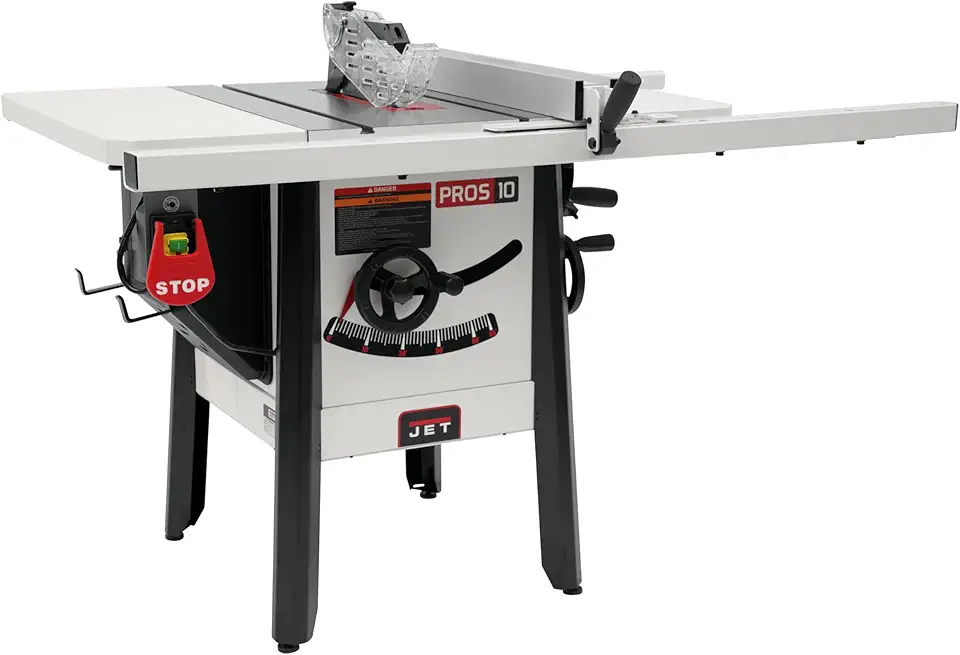
Jet ProShop 10 inch Compact Saw
- Powerful 1.75 HP motor for consistent cuts
- 30 inch rip capacity handles sheet goods and long boards
- Steel wings provide a flat, durable work surface
- Precision fence and miter gauge for accurate ripping
- Easy blade changes and dust port for cleaner operation
 Buy on Amazon
Long 52-inch rip
The 52-inch rip versions are built for sheet goods and large casework, but they demand infeed/outfeed planning to stay safe. A common beginner mistake is thinking the saw will “hold” a floppy 3/4″ plywood sheet; without outfeed support, you’ll feel the panel start to lever down and twist, and that’s when the cut can bind or the offcut can tip toward the blade.
Pricing varies by retailer and configuration; for example, one retailer listing shows the JPS-10 ProShop with 52″ rip and 1.75 HP at $1,999 on ISC Sales (price shown on listing, accessed February 2026). Treat prices like a moving target and compare freight, lift-gate, and return terms before you click “buy.”

Jet ProShop 10 inch Long Rip Saw
- Generous 52 inch rip capacity for large panels and long stock
- Cast wings for a stable, flat table surface
- 1.75 HP motor delivers steady cutting power
- Accurate fence and miter gauge for precise work
- Integrated dust port and easy setup for shop efficiency
Buy on Amazon
Steel wings durability
Steel wings can be a smart pick if your saw gets bumped, rolled, or used in a mixed-purpose garage where things occasionally hit the table. The win is impact resistance; the compromise is that you need to be picky during setup, because wing alignment controls whether stock glides cleanly across the seam or catches and shifts right before the blade.
The fix I use is simple: loosen the wing bolts, use a straightedge that bridges the joint, then snug bolts in a cross pattern while re-checking. If you feel a “tick” under your fingertips when sliding a board over the seam, it’s not “good enough” yet—keep adjusting until it feels continuous.

Jet ProShop 10 inch Rip Master
- 52 inch rip capacity tackles large ripping jobs with ease
- Durable steel wings resist warping and offer long life
- 1.75 HP motor maintains smooth cuts under load
- Precision fence ensures straight, repeatable rips
- Tool-free adjustments and dust collection ready
Buy on Amazon
Jet XACTA table saws compared
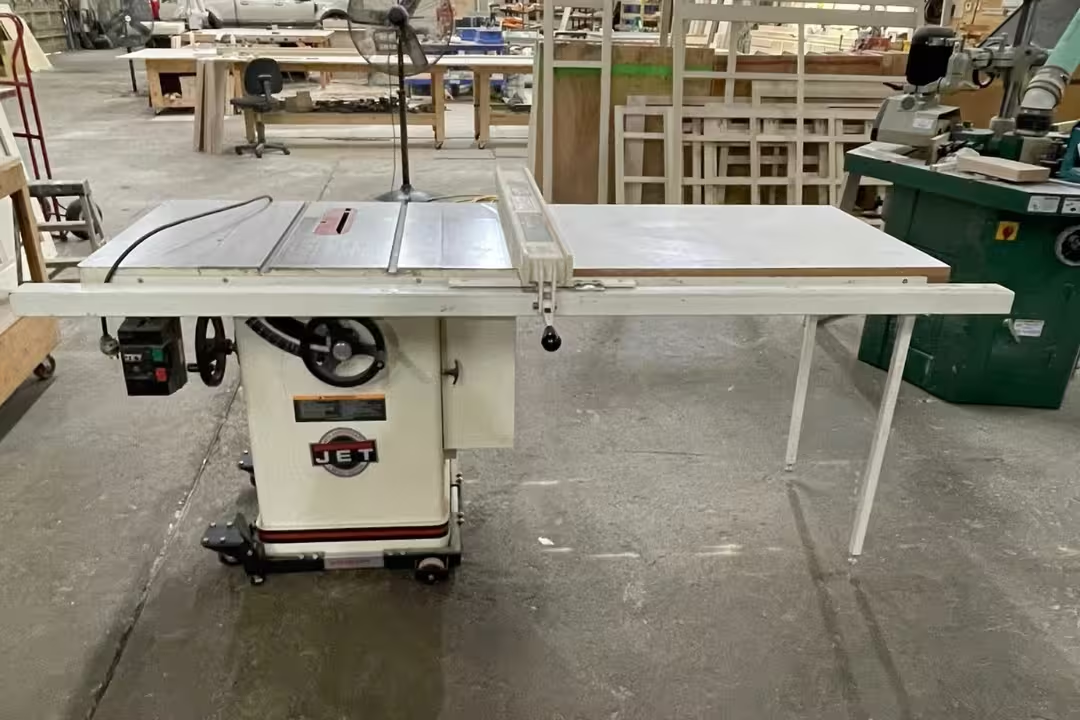
XACTA Deluxe models are the choice when you’re feeding thicker stock, batching parts, and you want the saw to behave the same at 9 a.m. and 4 p.m. That consistency comes from mass, cabinet-mounted trunnions, and motors that don’t feel “on the edge” during long rips.
3 HP 30-inch rip
A 3 HP, 30″ rip cabinet setup hits a strong balance for many shops: plenty of power for hardwood and dado stacks without taking over the room. If you mainly mill solid wood and your plywood work is already broken down, this is the configuration that keeps your footprint sane while still giving you that calm cut feel.
3 HP 50-inch rip
Moving to 50″ rip changes workflow more than it changes cut quality: you stop doing awkward flip cuts and start referencing one fence position for big panels. The pitfall is support—if you don’t add outfeed and side support, the extra rip width just makes it easier to start unsafe cuts with a panel that’s drifting off level.
5 HP industrial 50-inch rip
A 5 HP industrial cabinet saw earns its keep in continuous work where you can’t babysit feed rate for every cut. You feel the difference when ripping thick stock: the motor note stays steady, the cut stays clean, and the saw doesn’t telegraph strain through the stock the way smaller motors do.
One real-world constraint: 5 HP often means stricter electrical needs and more serious dust collection expectations, or the cabinet becomes a dust “drum” that packs fines around the shroud. Budget for the electrical run and a collector that can keep airflow strong, or you’ll own a great saw that’s annoying to use.
Here are the XACTA options people cross-shop most often:
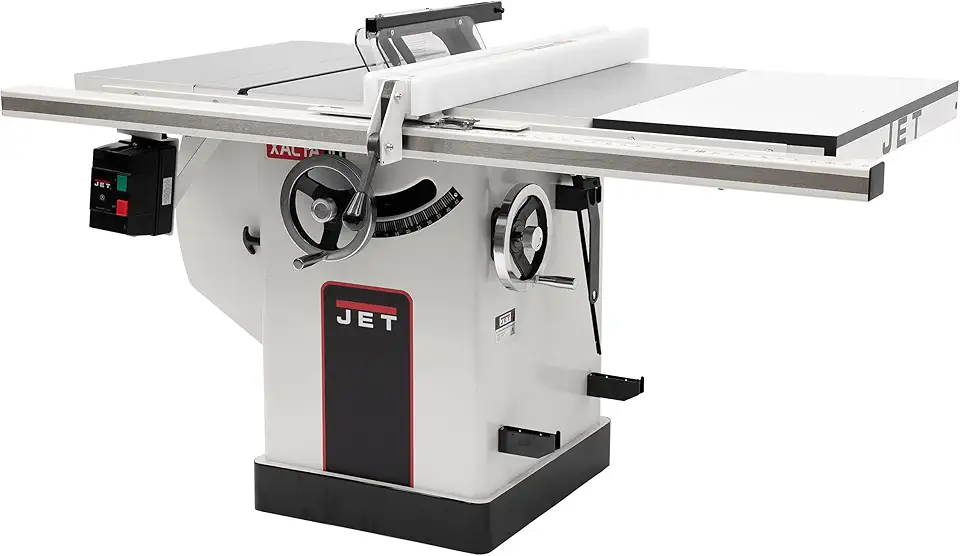
Jet XACTA 10 inch Deluxe Saw
- Robust 3 HP motor for heavy woodworking tasks
- 30 inch rip capacity for versatile ripping
- Deluxe XACTA fence system for repeatable accuracy
- Cast table and components for stability and reduced vibration
- Built-in dust collection and easy adjustments for shop use
Buy on Amazon

Jet XACTA 10 inch Long Rip Shop Saw
- Powerful 3 HP motor for heavy cutting and throughput
- 50 inch rip capacity for wide panels and large workpieces
- XACTA fence gives smooth, accurate fence travel
- Heavy cast components reduce vibration for clean cuts
- Easy maintenance and dust port for shop cleanliness
Buy on Amazon
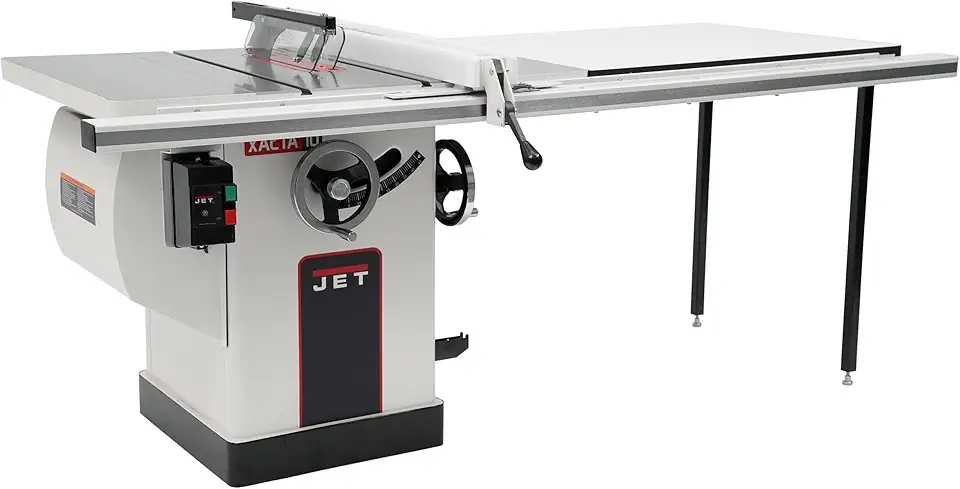
Jet XACTA 10 inch Industrial Saw
- Massive 5 HP motor for continuous heavy-duty performance
- 50 inch rip capacity for industrial ripping needs
- XACTA fence system for superior accuracy and control
- Rugged construction and cast table for stability
- Effective dust collection and easy service access
Buy on Amazon
Jet vs DEWALT: shop stability vs portability
This comparison comes up constantly: Jet’s strength is shop stability—flat tables, heavier builds, and fences meant to stay square—while DEWALT jobsite saws win on quick setup and transport. Picking the wrong category usually shows up as daily friction: either you’re hauling a heavy saw you don’t need to move, or you’re trying to do fine furniture joinery on a stand that flexes.
When Jet wins
Jet wins when you want repeatable accuracy and less vibration, meaning cleaner edges straight off the blade and fewer “mystery” fit issues during glue-up. If you’re upgrading your workflow, pair a stable saw with smart add-ons like better push blocks, zero-clearance inserts, and featherboards—our table saw accessories guide breaks down what actually changes safety and cut consistency.
When DEWALT wins
DEWALT wins when portability is the job: remodel work, punch-list trim, or any day you’re rolling the saw across uneven ground and setting up fast. A jobsite saw’s compromise is feel—lighter tops transmit more vibration into the work, and you can sense the difference as a faint buzz through your palms while guiding a long rip.
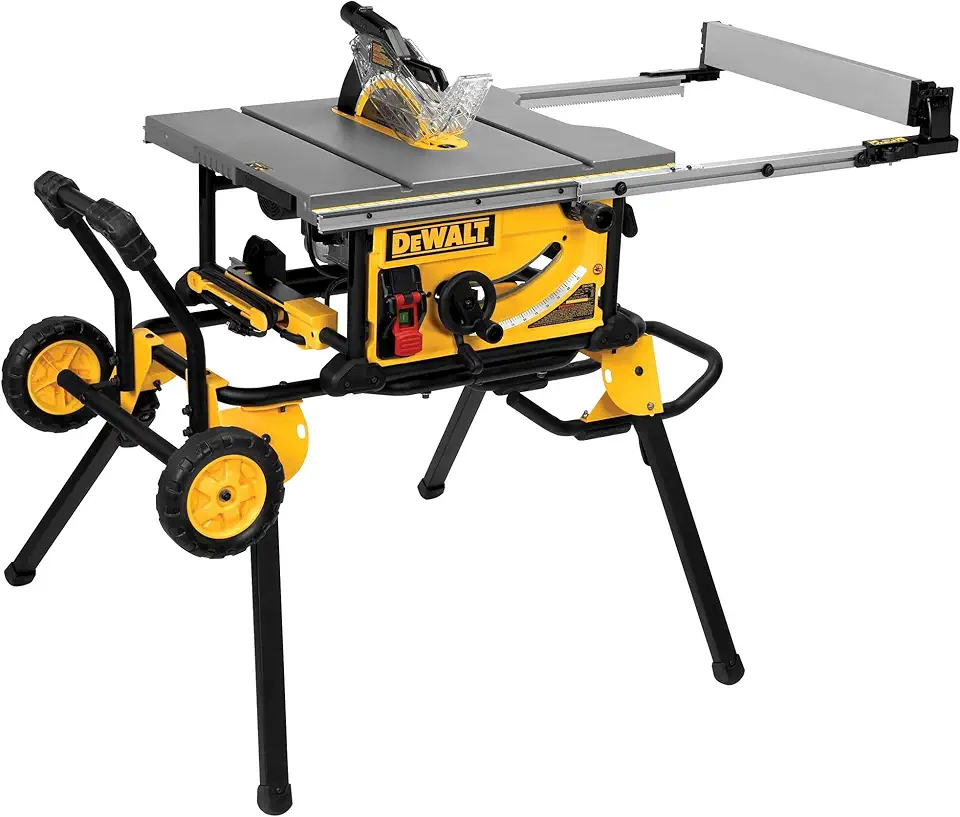
DEWALT 10 inch Rolling Jobsite Saw
- 15 amp motor delivers professional power at the jobsite
- Foldable rolling stand for fast setup and easy transport
- 32 and a half inch rip capacity supports larger cuts on site
- Rack and pinion fence for quick, accurate adjustments
- Onboard storage and tool access for convenience
Buy on Amazon
Jet table saw parts, accessories, and upgrades
Shoppers looking up jet table saw parts are often fixing a saw that “cuts fine” but feels annoying: a guard they stopped using, a fence face that drags, or a throat plate that lifts. Getting the right parts matters because table saw problems compound—one loose insert becomes a chip-out issue, then becomes a binding issue, then becomes a safety issue.
Safety and guarding parts
Keep the riving knife aligned and matched to blade thickness, or it can pinch stock and trigger the exact binding it’s meant to prevent. The common novice mistake is running a thin-kerf blade with a thicker riving knife; the cut closes onto the knife and you feel the board suddenly drag halfway through the rip.
If you’re hunting replacements, verify your exact model and revision before ordering, since “same name” saws can change guard mounts between runs. For fence-specific improvements and setup checks, our table saw fence breakdown helps you spot when a fence needs adjustment vs when it’s worn or damaged.
Dado and non-through setups
Dado and non-through cuts demand the right throat plate and a low-profile riving knife when applicable. A classic mistake is forgetting to swap to a dado insert and running a wide stack with a standard opening; offcuts can dip, catch, and kick back with shocking speed.
After installing a dado stack, spin the arbor by hand before power-up and listen for any faint tick that signals contact with the insert or shroud. That five-second check prevents a lot of “why is my saw suddenly loud?” moments.
Fence and miter upgrades
A better fence and miter control often improves results more than chasing extra horsepower, because it reduces setup drift and repeat cuts. If your miter gauge has slop, you can feel the workpiece “click” side to side in the slot; that tiny movement turns into gaps in miters and shoulders that don’t meet cleanly.
Workaround: add a miter bar with expansion discs or set screws to remove play, then wax the slot lightly so the gauge slides without stiction. Watch out for over-tightening, which makes the gauge bind mid-stroke and encourages you to steer the cut.
Rip extension paths
Rip extensions solve one issue and can create another: you gain width, but you also add a long reference surface that must stay square and level. If the extension droops even slightly, sheet goods will “hunt” toward that low spot, and you’ll see the cut line start to wave as you compensate without realizing it.
Plan for shop support the same day you add width: an outfeed table, a side roller that doesn’t steer, or a slick auxiliary panel surface. If you’re already building other stations, tying the extension into a router table layout can save floor space and keep work supported through the cut.
Jet saw bench and mobile base
A jet saw bench or mobile base makes sense when your shop shares space with vehicles or other tools, but it changes alignment habits. The beginner mistake is rolling the saw by pushing on the rails; that can twist the fence system slightly over time and can knock your parallelism out just enough to start burn marks on one side of the kerf.
- Lock casters, then re-check fence-to-miter-slot alignment after the first few moves.
- Push a mobile saw from the cabinet base, not the rails or extension table.
- Add an outfeed surface before you add wide rails, so big panels don’t tip.
- Keep a spare throat plate on hand; a warped insert causes surprising cut issues.
Setup, dust collection, and maintenance
A Jet saw feels “premium” when setup and maintenance are done right, and feels frustrating when small checks get skipped. The dirty secret is that most accuracy complaints trace back to alignment, airflow, or belt tension—things you can fix without buying upgrades.
Dust port and airflow
Dust collection isn’t just cleanliness; it affects visibility, heat, and how long parts stay accurate. If airflow is weak, fines build under the blade and you’ll smell that dry, dusty “hot MDF” odor on sheet goods as the cut zone heats and the dust swirls instead of evacuating.
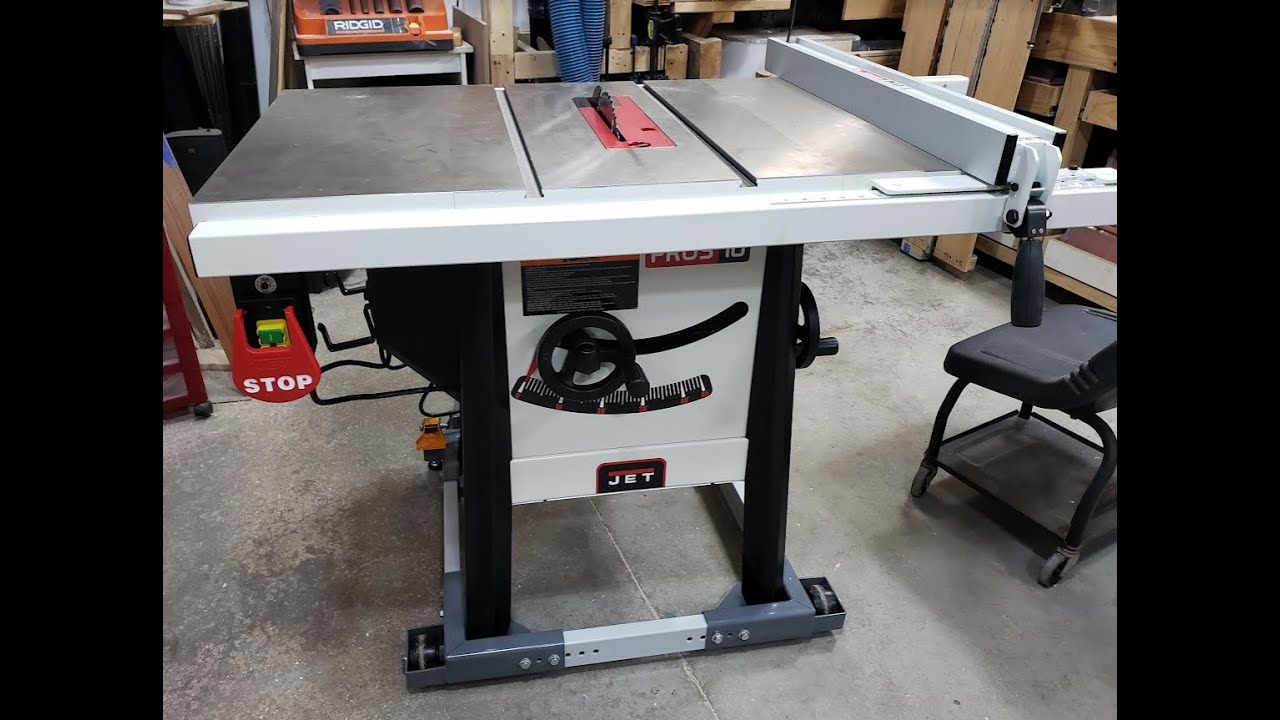
Belt tensioning checks
Belt tension controls vibration and power transfer, and it drifts with time and temperature. Too loose and you’ll feel a slight shudder at startup and hear a soft slap; too tight and the saw can sound higher-pitched and “busy,” while stressing bearings.
A smart check is to make one repeat rip on straight hardwood, then feel the cut face: if you get alternating glossy/dull bands, vibration is often part of the story. Re-tension, then re-check blade-to-slot alignment because tension changes can slightly shift motor position on some mounts.
Arbor lock and blade changes
An arbor lock speeds blade swaps, but it can also tempt people to rush. The mistake is swapping blades with pitch build-up on the flange; that grime prevents the blade from seating flat, and the saw suddenly develops wobble you can’t “tune out.”
Clean the flange and the blade contact area until it feels squeaky-dry under a rag, then snug the nut firmly without over-torquing. If a blade change suddenly adds vibration, stop and inspect seating before you blame the new blade.
Switch and reset safety
A magnetic paddle switch and reset logic help prevent unintended restarts after a power blip, which matters in busy shops. Don’t bypass safety behavior to “save time”; that habit shows up later as a near-miss when someone restores power and the saw lurches unexpectedly.
If your saw won’t start, don’t jump straight to replacing parts—check breaker, outlet voltage under load, and switch condition in that order. Many “dead saw” cases end up being a weak receptacle or a tripped overload that feels like a major failure until you test it properly.
CSA and P65 notes
CSA listings and safety labels are worth reading because they tell you what the saw was tested for and what accessories are assumed in the design. Product listings for Jet ProShop configurations often call out CSA certification and California Prop 65 warnings; verify what applies to your exact model and region before installation, using your manual and the retailer’s documentation.
Practical Notes From Real-World Use
The biggest surprise with many shop saws is how much performance depends on “unsexy” setup: leveling wings, squaring the fence, and supporting long stock. I’ve watched perfectly good saws produce wandering rips because the outfeed was 1/8″ low; you could feel the board’s weight shift right at the end of the cut, and the operator unconsciously pulled the stock sideways to save it.
Dust collection also disappoints if the hose run is too small or too long; the cabinet looks enclosed, but fines still escape and leave a gritty layer that you feel when wiping the table. The workaround that actually helps is shortening hose runs, avoiding sharp elbows, and sealing obvious cabinet leaks so airflow goes through the blade area instead of pulling shop air through gaps.
One more issue shows up during “quick mobility”: rolling the saw, cutting, then rolling it again without re-checking alignment. Even if the saw stays accurate, your confidence drops when cuts stop matching yesterday’s settings, so I keep a simple routine—check fence parallel, check 90° stop, make one test rip—before committing expensive hardwood to a long batch.
FAQs
Is A Jet Table Saw Worth Buying For A Home Workshop Compared To SawStop Or Bosch?
Yes — a Jet table saw Is Often A Good Value For A Home Workshop When You Prioritize Affordability, Solid Performance, And Easy Maintenance Over Advanced Safety Systems.
Jet delivers accurate cuts for hobbyists and DIYers; SawStop adds flesh‑detecting safety and Bosch may offer different motor designs or portability, so choose based on your budget, safety priorities, and the features you need.
How Do I Align The Fence, Blade, And Miter Gauge On A Jet Table Saw For Accurate Cuts?
Start By Making Sure The Blade, Fence, And Miter Gauge Are Parallel And Square To The Table Using A Combination Square Or Dial Indicator.
Zero the fence with a test cut against the blade, adjust the fence rails or trunnions as needed, and confirm miter gauge accuracy with a shop square; repeat checks after each adjustment until cuts are consistent and true.
What Blade Size, Arbor, And Types Of Blades Are Compatible With A Jet Table Saw?
Most Jet Table Saws Use A 10‑Inch Blade With A 5/8‑Inch Arbor, While Some 12‑Inch Models Use A 1‑Inch Arbor — Always Check Your Model Plate For Exact Specs.
Compatible blade types include combination, ripping, crosscut, thin‑kerf, and dado stacks (if the saw supports them); match blade diameter, arbor size, and kerf to the saw and follow manufacturer guard and torque guidelines.
Where Are Jet Table Saws Made?
Jet Table Saws Are Manufactured By The JET Brand (JPW Industries) With Production And Assembly Across Several Countries, Commonly Taiwan And China, And Some Models Or Assemblies May Be Done In The USA.
To Know The Exact Origin For A Specific Model, Check The Product Label Or Official Product Page Which Lists Country‑of‑origin And assembly details.