Miter Saw Table Saw Combo Guide: Compare Top 2-in-1 Saws

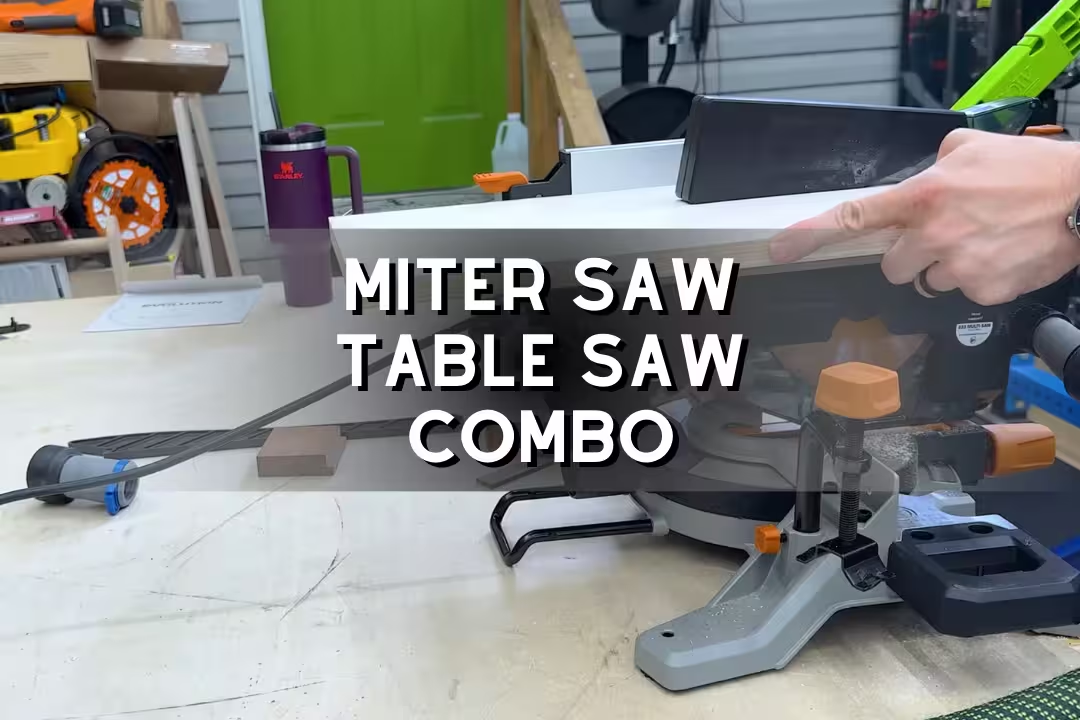
A miter saw table saw combo is a 2-in-1 machine that switches between a miter saw for crosscuts/angles and a table saw for ripping. It saves floor space and setup time, but you give up some cutting capacity and the “best-of-both” feel you get from two dedicated saws.
Table of Contents
What a miter saw table saw combo is
2-in-1 design
A true miter and table saw combo shares one motor and one blade system, then re-orients the cutting action so you can either pull down like a miter saw or feed stock through like a small table saw. In the shop, that means one footprint on a bench or stand instead of two separate tool stations.
The big mechanical catch is that combo designs must compromise somewhere: table height, fence length, and guarding all have to work in two positions. That’s why many units feel “compact-first,” which is perfect for garages and jobsites, but can feel cramped when you’re trying to support a long cabinet stile without extra rollers.
Mode switching
Most combos switch modes with locking pins or levers that release the head and flip the assembly into table orientation. On a clean saw, it’s quick; on a dusty saw, fine chips can pack into hinge points and make the lock feel gritty, so a quick blast of vacuum at the pivot before switching keeps it from binding.
A common beginner mistake is switching modes with the saw still plugged in and the head not fully latched. That’s how you get a scary “half-locked” setup that twists under load—always tug the handle and the table insert lightly after locking so you can feel the positive engagement before you start cutting.
Who it suits
A miter saw and table saw combo suits people who cut a mix of trim, studs, shelving, and small panels, and who can’t justify two dedicated machines. It also fits anyone who stores tools between sessions, since a 2-in-1 can live on a portable stand and roll into a corner.
If you spend most of your time ripping full sheets, a combo can feel limiting—this is where a dedicated saw with a bigger rip capacity shines. If that’s your workflow, compare options in our best table saw guide and treat the combo as a space-saver, not a production ripping station.
Key specs that matter most
Motor power
Most combo saws land around 1,500–1,800W (or roughly 12–15 amps in North America). More power keeps blade speed from sagging when you push thicker stock, which matters more in table mode where feed pressure is constant and beginners tend to push too hard.
Power isn’t just about cutting faster—it’s about cutting straighter. When a motor bogs, you’ll feel a low, strained growl and the kerf can start to drift if your fence setup isn’t perfect, so a stronger motor buys you a little margin against poor feed technique.
Blade diameter
Blade size sets the ceiling on crosscut depth and ripping depth. Many compact combos use 8-1/4-inch blades for portability, while higher-capacity units use 12-inch (305 mm) blades for deeper cuts and more comfortable geometry at the fence.
Don’t overlook blade availability. If you plan to swap between a fine 60T wood blade and a rough framing blade often, pick a common diameter (10″ or 12″) so you’re not hunting specialty options or paying a premium per blade.
Cutting capacities
Capacity is where combo saws show the biggest trade-offs: miter mode capacity is usually decent for trim and framing, while table mode rip depth and rip width can be modest. A lot of buyers read “table saw” and assume sheet-goods ripping; most combos are better for ripping narrower boards to width.
| Model | Motor | Blade | Notable capacity figures (from published specs) |
|---|---|---|---|
| Evolution R8MTS | 12A | 8-1/4″ | Crosscut (miter mode) 4-3/4″ × 2-3/16″; rip depth (table mode) 1-1/2″ |
| Virutex TM33W | 1,500W | 300 mm | Square cut up to 160×95 mm; with supplement 200×45 mm |
| Bosch GTM 12 JL | 1,800W | 305 mm | Depth up to 95 mm (miter); 51 mm (table function) |
The edge case that bites new owners is tall baseboard or crown: publishable crosscut width doesn’t always equal “cuts it nested the way I install it.” If you do a lot of crown, check your typical spring angle and test with scrap before committing to a smaller blade combo.
Miter and bevel ranges
Most table saw and miter saw combo units give you ±45° miter, and roughly 0–45° (sometimes 47°) bevel. That covers common trim and framing angles, but it won’t feel as fast as a dual-bevel sliding miter saw when you’re bouncing between left and right compound cuts all day.
Detents are helpful, but they’re not infallible. I’ve seen “factory 45°” land a hair off once the saw has been bounced around in a truck; a five-minute check with a decent square beats hours of sanding gaps later.
Top miter saw and table saw combo models
Evolution R8MTS
The Evolution R8MTS is the combo I reach for when a job mixes materials and space is tight. Its big hook is multi-material cutting with the included TCT blade, so reclaimed wood with the occasional hidden brad nail doesn’t instantly ruin your day, and mild steel cuts come off surprisingly cool to the touch compared to abrasive wheels.
Two real constraints show up fast: the 8-1/4″ blade limits thickness, and the table mode depth is modest, so think “trim, flooring, small stock ripping,” not “3x lumber production.” For published specs and configuration details, see Evolution R8MTS product page.
Virutex TM33W
The Virutex TM33W leans hard into precision feel. The belt transmission changes the sound and sensation—less gear whine, more of a smooth hum—and that reduced harshness helps when you’re sneaking up on fine fitment cuts where you want steady control instead of vibration.
It also brings pro safety touches like braking and anti accidental start, which matters if you move between setups and outlets a lot. For the manufacturer’s cutting capacity figures (like 160×95 mm on square cuts), check Virutex TM33W.
Bosch GTM 12 JL
The Bosch GTM 12 JL is the pick when you want capacity and power in a combo format, built around an 1,800W motor and a 305 mm blade. That larger blade tends to feel more forgiving on thicker stock because you’re not forcing the teeth through the cut at the outer edge of what the saw can handle.
Availability can be the snag depending on where you live, and accessories might not be as easy to source as mainstream jobsite saws. Specs like 95 mm depth in miter function and 51 mm in table function are listed at Bosch GTM 12 JL combo saw listing.
Picking the right combo for your work
DIY and small shops
For a garage shop, your best win is space efficiency. Pick a combo that stores easily, has a flat table, and doesn’t demand constant re-calibration after you carry it to a shelf.
Plan for support gear from day one. Even a great combo feels sketchy if a long board teeters; a folding stand and a cheap roller stand make the saw feel twice as capable without adding much storage pain.
Jobsite carpentry
On site, prioritize fast setup, stable detents, and dust behavior that won’t bury your cut line. A combo can replace two trips to the truck, but only if switching modes is quick and the locks don’t clog with gritty framing dust.
One mistake I see is ripping without outfeed support. If the offcut sags, it can pinch the blade and kick back; use a stand, a helper, or even a sacrificial sawhorse at the right height before you start feeding stock.
Precision woodworking
Precision work wants repeatability more than raw power. Look for a stiff fence, a flat casting, and simple micro-adjustments that don’t shift when you tighten knobs.
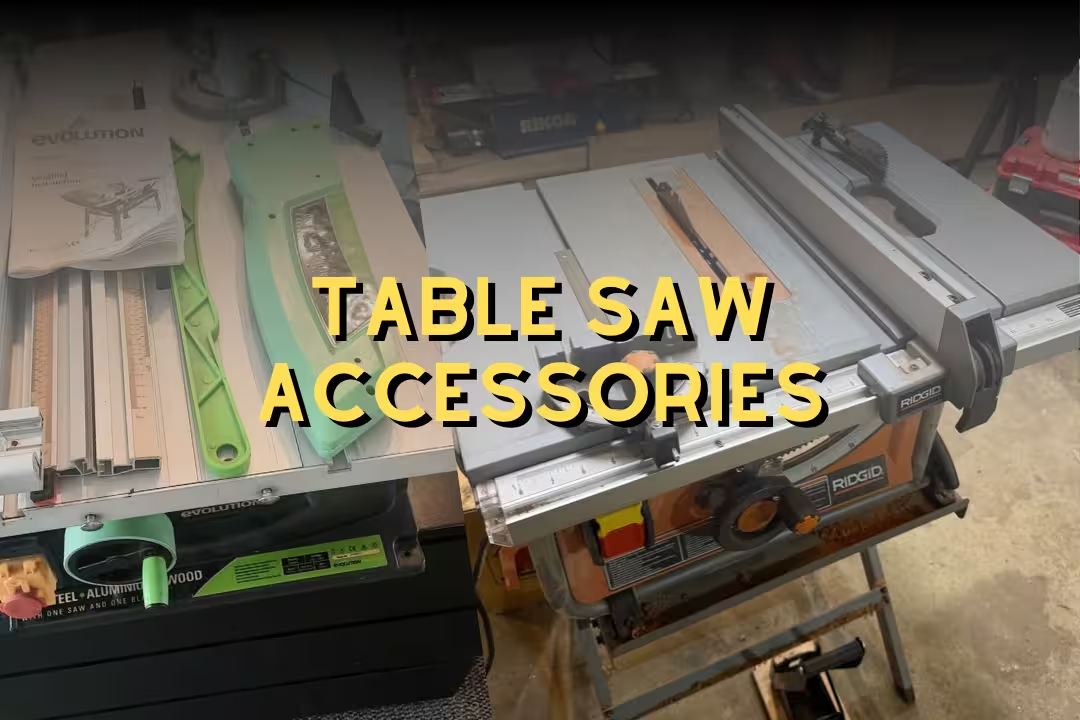
If your projects lean cabinet-heavy, a combo can still fit, but you’ll probably add a dedicated ripping solution later. At that point, it helps to know what accessories matter most (featherboards, better miter gauges, infeed/outfeed support), which we break down in table saw accessories.
Mixed-material cutting
If you cut wood, laminate, and occasional metal, focus on blade system and guarding that stays “closed” during handling. Multi-material cutting is real, but the wrong blade can grab thin-wall metal and chatter, so use the manufacturer-recommended tooth geometry and clamp small stock.
Heat management changes by material. Aluminum can gum up teeth if you push too slowly; mild steel can throw sharp, hot chips that feel like tiny pinpricks on bare forearms—long sleeves and a face shield stop a lot of that annoyance before it becomes a safety issue.
Safety and dust collection features
Blade guards
A good blade guard on a combo matters twice, because you handle the tool in two orientations. In miter mode, you want a guard that drops smoothly without sticking; in table mode, you want coverage that doesn’t tempt you to remove it “just for one cut.”
New users commonly lift the guard by hand to “peek” at the line, which puts fingers near the danger zone. A better workaround is to use a laser/shadow line and a bright task light so you can keep hands on the handle and clamp instead of the guard.
Riving knife
A riving knife reduces kickback by keeping the kerf from closing behind the blade in table mode. On combo saws with smaller tables, stock control is already tougher, so running without a riving knife is a fast way to turn a simple rip into a launch event.
Watch the alignment: if the riving knife sits off-center, it’ll push stock sideways into the fence and burn the cut edge. The fix is simple—loosen, tap-align to the blade plate (not the teeth), then re-tighten while pressing it flat so it doesn’t twist.
Brakes and lockouts
Electric blade brakes reduce coast-down time, which is more than convenience: it cuts the window where someone bumps the bench or reaches for offcuts while the blade is still spinning. Lockouts and anti-restart features help when you’re swapping modes and plugging into different circuits.
A practical habit is to wait until you hear the blade stop completely, then count one extra second before moving your hands near the throat plate. That tiny pause prevents the classic mistake of grabbing a cutoff while the teeth are still ghost-spinning.
Dust extraction ports
Combos need two-point dust thinking: miter mode throws chips backward and upward, while table mode pulls dust down into the base. If the saw gives you ports for both modes, use them; otherwise, you’ll notice dust collecting in mode-switch joints and making latches feel crunchy over time.
Don’t expect a shop vac to fix everything without good airflow. A pro trick is to use a short, smooth hose and keep bends gentle; tight corrugated hoses and sharp elbows kill suction and leave a fine dust film that you can taste in the air after a long session.
Precision and comfort features
Laser guides
A laser line (or shadow line) reduces “test cut” waste and helps you keep hands away from the blade area because you’re not leaning in to sight the teeth. It’s most useful on dark woods where a pencil line disappears under dust in seconds.
Lasers can drift after transportation. A quick calibration check on scrap—mark a line, drop the blade to kiss the wood, then compare—catches the problem before it ruins a batch of identical parts.
Cast aluminum tables
A cast table stays flatter than thin stamped metal, which shows up in cleaner miters and less rocking during rips. You can feel it when feeding stock: the board glides instead of stuttering over subtle dips.
Watch for oxidation and pitch buildup. When resin builds up, the surface feels tacky and feed gets jerky; wipe it down with a dedicated cleaner and add a thin coat of paste wax so workpieces slide smoothly without you pushing harder than you should.
Miter detents
Miter detents speed up common angles like 0°, 45°, and 90°, which matters in trim runs where you’re repeating the same few cuts. The best detents feel like a clean click, not a vague bump that still allows slop.
If detents feel loose, don’t immediately blame the saw. Many times the base isn’t supported evenly on a bench, and that twist changes how detents seat; a stable stand fixes “mystery inaccuracy” more often than people expect.
Noise and vibration
Noise and vibration aren’t comfort luxury items—they affect cut quality. High vibration makes the blade chatter, and you’ll see it as tiny washboard marks on the cut face that take extra sanding or create micro-gaps in miters.
Protect your hearing and your accuracy at the same time. If the saw’s pitch changes mid-cut, back off and check feed pressure, blade sharpness, and whether the stock is pinching; forcing it is how beginners burn edges and wander off the line.
Combo vs separate saws
Cost and space
The main reason to buy a table saw miter saw combo is simple: one machine takes less room than two, and you pay for one motor platform. In a small shop, that saved footprint often matters more than any single spec on a product page.
Two separate saws usually win once you start adding jigs and supports. A dedicated table saw can take a better fence, bigger outfeed, and safer workflow; if that’s your path, start by learning what makes a fence dependable in our table saw fence breakdown.
Switchover time
Switchover is fast on paper, but real life adds friction: cords snag, dust packs into locks, and you still need to re-think where your hands go and where offcuts fall. If your workflow alternates rip-miter-rip every few minutes, a combo can feel efficient once you build the habit.
Set up a “landing zone” for the fence, guard parts, and push sticks so you’re not hunting for pieces. That’s the hidden time sink that makes people hate combos, not the actual locking lever mechanism.
Capacity trade-offs
Capacity is the honest downside of a miter saw table saw combo. A dedicated 12″ sliding miter saw will crosscut wider boards, and a jobsite or contractor saw will rip wider panels with better support and more consistent fence pressure.
If you regularly rip sheet goods, the workaround is to break sheets down with a track saw or straightedge guide first, then bring manageable pieces to the combo. That simple change prevents tip-over moments and keeps you from forcing big panels through a small table.
Recommended combo setups and alternatives
Here are recommended combo setups and smart alternatives to cover different budgets and shop sizes.

Evolution R8MTS Convertible Saw
- Convertible miter and table configurations for versatile cutting
- Cuts wood plastic and metal with included TCT blade for all material jobs
- 0 to 45 degree bevel and plus/minus 45 degree miter range for precise angled cuts
- Compact footprint for small shops and easy storage
- 12 amp motor delivers steady power for demanding cuts
 Buy on Amazon

Hoteche 2-in-1 Miter Table Saw
- Converts quickly between compound miter saw and table saw to save space
- 8-1/4 inch blade accepts small stock and fine cuts
- 10 amp motor balances power and control for hobby projects
- Suitable for wood and light metal cutting with stable table support
- Simple setup and adjustments for accurate miter angles
Buy on Amazon
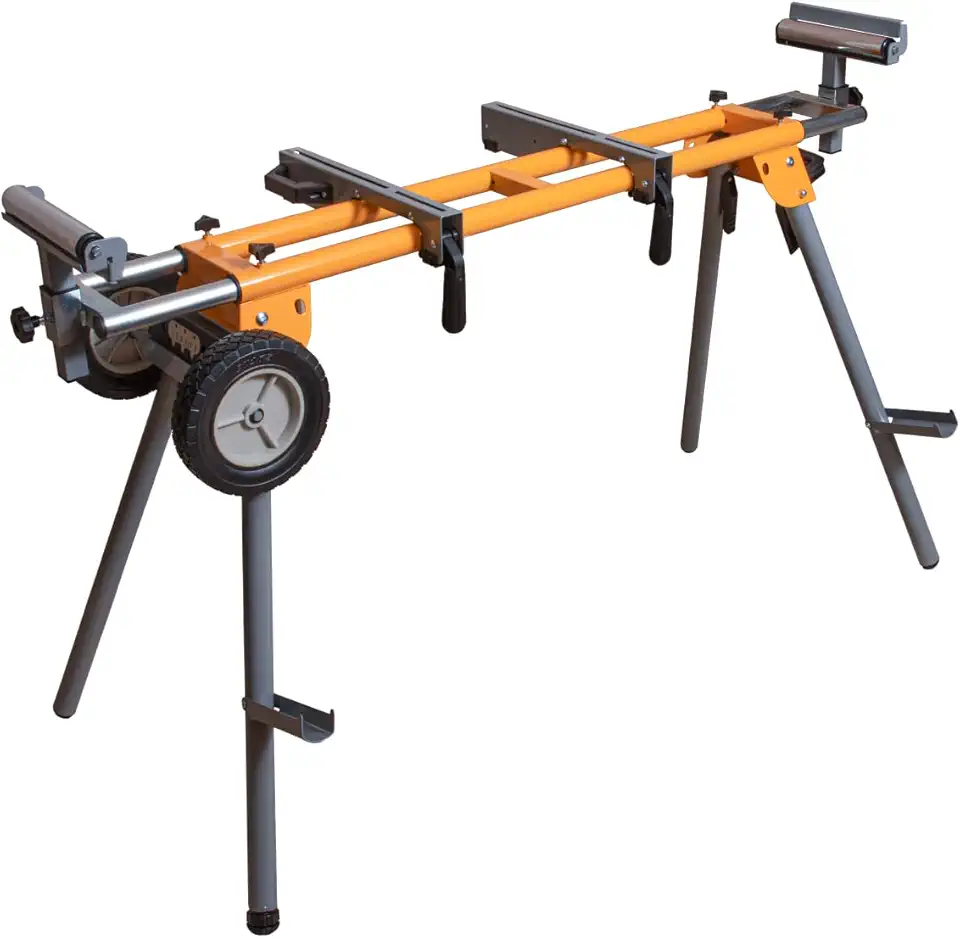
POWERTEC Portable Miter Saw Stand
- Quick release mounting brackets for fast tool attachment and removal
- Supports up to 330 pound load for heavy saws and lumber
- 8 inch wheels and folding legs for easy transport and storage
- Built in three prong outlets for powering tools and accessories
- Durable folding frame provides stable work platform on site
Buy on Amazon

Metabo HPT 10-inch Miter Saw
- 15 amp motor delivers consistent cutting power for framing and trim
- Xact Cut shadow line improves alignment and cut accuracy
- Single bevel design offers 0 to 45 degree bevel capacity for angled cuts
- 40 tooth TCT blade included for smooth crosscuts
- Lightweight build makes it easy to move between jobs
Buy on Amazon
This next group works well if you’re leaning away from a single combo and want two-tool flexibility without going full cabinet-shop.
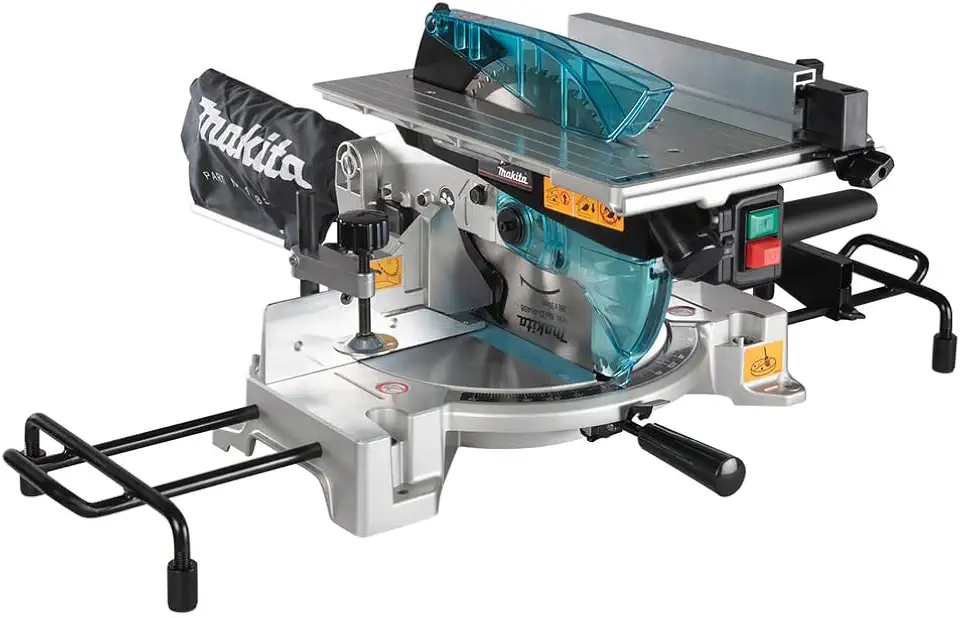
Makita LH1040F Table Miter Saw
- Robust top table design provides steady support for accurate miter cuts
- Easy to set bevel and miter adjustments for repeatable angles
- Powerful motor for clean crosscuts and miters in various woods
- Durable construction built to handle workshop use
- Simple blade change and maintenance for long term reliability
Buy on Amazon

SKIL 10-inch Dual Bevel Miter Saw
- Dual bevel capability lets you tilt both directions for faster crown molding and compound cuts
- Sliding rails extend cutting capacity for wider boards and moldings
- 10 inch blade delivers ample cutting depth for common trim work
- Clearly marked detents and stops for quick accurate angle settings
- Sturdy base and fence improve cut stability and repeatability
Buy on Amazon

SKIL 10-inch Jobsite Table Saw
- 15 amp motor provides jobsite power for ripping and dado work
- Folding stand with compact footprint for quick transport and storage
- 10 inch blade cuts standard sheet goods and dimensional lumber with ease
- Tool free adjustments speed blade and fence setup
- Designed for rugged jobsite use and repeated setup
Buy on Amazon

Makita LH1201FL Table Miter Saw
- 1650 watt motor delivers strong performance for precise cuts
- Large 305 mm blade offers deep cutting capacity for thick stock
- Solid cast table and fence ensure accurate miter and bevel alignment
- Smooth adjustments and reliable stops for repeatable results
- Built for professional workshop environments with durable components
Buy on Amazon
If you already know you want maximum capacity, this pairing covers a lot of ground without the combo compromises.

DEWALT 12-inch Single Bevel Miter Saw
- 15 amp motor provides reliable power for tough crosscuts and trim work
- 12 inch blade increases cutting capacity for wider boards and crown molding
- Single bevel design offers up to 45 degree bevel for common angled cuts
- Robust construction stands up to frequent jobsite use
- Easy to set miter angles and detents for fast precise cuts
Buy on Amazon
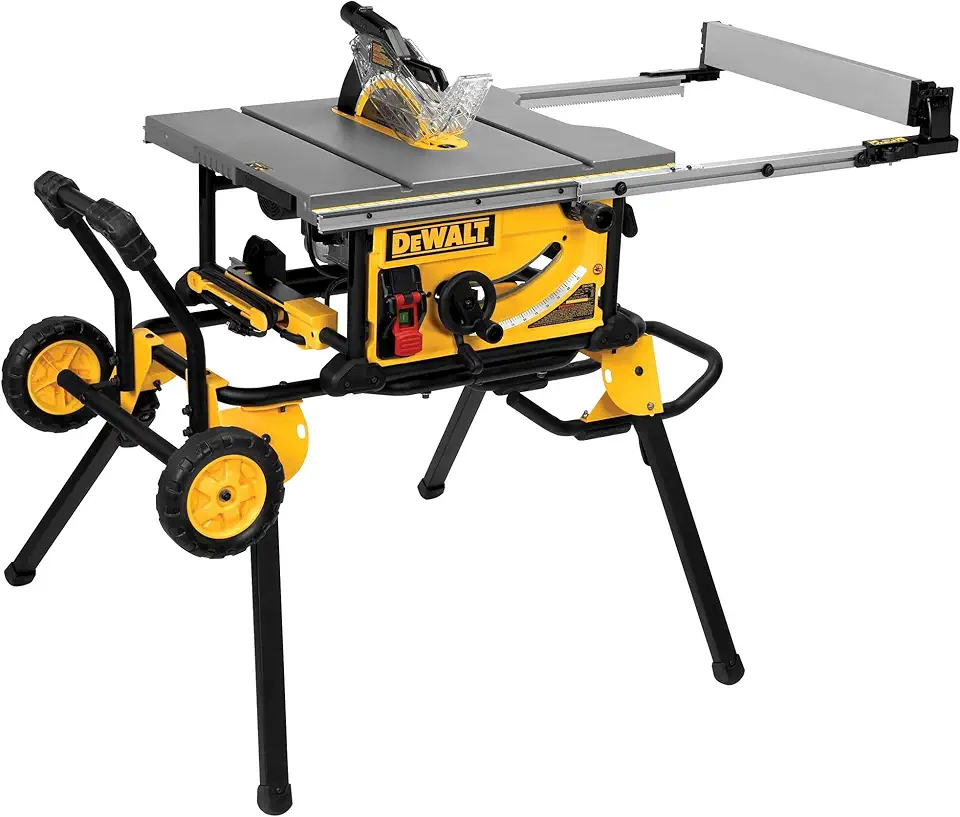
DEWALT 10-inch Table Saw with Rolling Stand
- 15 amp motor and 4800 rpm for smooth consistent cutting performance
- Foldable rolling stand simplifies transport and storage between jobs
- 32-1/2-inch rip capacity handles wide stock and sheet material with ease
- Tool free adjustments and quick fence setup speed workflow
- Stable table and heavy duty construction for reliable jobsite use
Buy on Amazon
If you’re stuck between a combo and separate tools, use this quick list to match the saw to your real work instead of the “wish list” projects:
- Pick a combo saw if you need crosscuts + light ripping and you store tools between sessions.
- Pick separate tools if you rip wide panels weekly or rely on long, accurate fences for cabinet parts.
- Pick multi-material capability if you cut reclaimed wood, aluminum trim, or light steel and don’t want frequent blade swaps.
- Budget for a stand, outfeed support, and a better blade—those upgrades change results more than small spec differences.
Practical Notes From Real-World Use
The first surprise with a table saw and miter saw combo is how fast “small support issues” become accuracy issues. A combo might sit perfectly flat on one bench and rock slightly on another; that tiny wobble shows up as inconsistent miters because the workpiece shifts as the blade starts, and you feel it as a faint bump under your palm.
Dust is the second surprise. Fine MDF dust loves pivots and lock slots, and after a few messy sessions the mode switch can feel stiff or not fully seated; the fix that works is regular vacuuming of the hinge area plus a dry lube where the manual allows—oil just turns dust into paste.
The third surprise is workflow. People buy a combo to “save time,” then lose time hunting for guards, fences, and push sticks as they swap modes; I keep a small bin clipped to the stand so every part has a home, and the saw stays in its safe configuration between cuts.
One last limitation: combos tempt beginners to make table-saw-style rips without table-saw-style discipline. Use a push stick, stand out of the kickback line, and slow down—when the blade grabs, it’s violent and instant, and the only “fix” is not creating the pinch point in the first place.
FAQs
Is A Miter Saw Table Saw Combo Worth It Compared To Buying Two Separate Saws?
Yes, a miter saw/table saw combo can be worth it for hobbyists and small shops seeking space and cost savings. It delivers basic crosscutting, ripping and mitering in a compact footprint and often at lower total cost than two separate machines. However, expect compromises in capacity, long-term durability and specialized performance compared to dedicated saws.
What Are The Main Limitations Of A Table Saw And Miter Saw Combo?
The main limitations are reduced capacity and compromise in specialized performance compared to dedicated machines. Combos often have smaller rip capacity, shallower miter/compound range and less robust fences or motors, which affects accuracy on large or heavy work. They may also be heavier to reposition and harder to service, so pros who need repeatable precision usually prefer separate saws.
How Much Rip Capacity Do Miter And Table Saw Combo Tools Usually Have?
Rip capacity on combos is typically more limited than standalone table saws, often ranging from 18 to 24 inches. Exact capacity depends on model design, fence offset and whether the motor or fence mounts allow extension for larger workpieces. If you routinely rip full-sheet material or wide stock, a dedicated table saw with greater infeed/outfeed support is a better choice.
Can The Evolution R8MTS Really Cut Metal And Wood With The Same Blade?
Yes, the Evolution R8MTS is designed to cut both metal and wood using its multipurpose RAGE blade. It uses a hardened-tooth geometry and lower speeds to slice ferrous and non-ferrous metals while still managing clean wood cuts, but performance varies with material thickness and feed rate. For best results, use the recommended blade, proper speeds and clamps, and accept that finish and speed differ from dedicated blades.
What Safety Features Should A Miter Saw And Table Saw Combo Include?
Essential safety features include a blade guard, riving knife or splitter, anti-kickback pawls, and a reliable fence with dust collection. Look for an electric brake, clear on/off switch placement, adjustable fences or stops, work clamps and proper blade guarding for both miter and table functions. Also follow PPE, shop practices and regular maintenance to reduce risk.