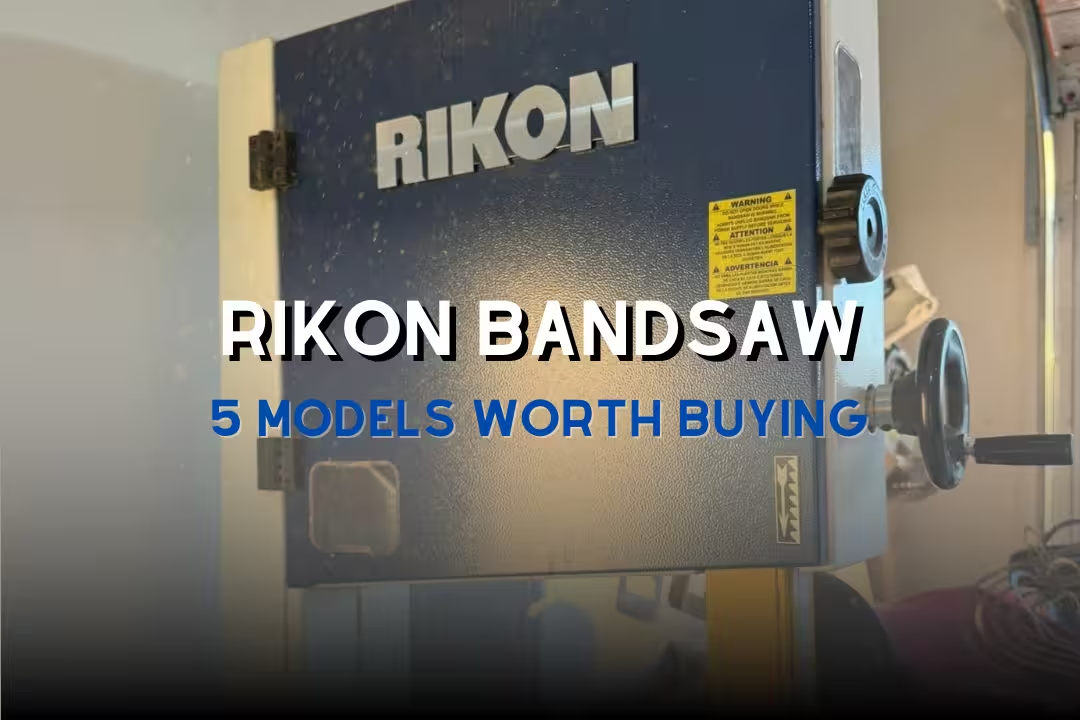

Looking for a rikon bandsaw that fits your shop? Whether you want a rikon benchtop bandsaw like the 10-305 or a larger rikon 14 bandsaw, there are solid choices. This post reviews five top models and what they do best. You’ll get short notes on motor and speeds, resaw capacity, table and fence, and dust needs. Read on to find the right rikon 10 inch bandsaw or 14-inch model for your work.
Table of Contents
A Rikon bandsaw is a smart pick for woodworkers who want clean curves, controlled ripping, and repeatable resaw cuts without paying premium-brand prices. This guide breaks down the Rikon lineup, compares key models, and shows how to choose blades, set up for low drift, and manage dust.
Rikon Bandsaw Lineup Overview
Rikon’s lineup stays popular because most machines share shop-friendly features like cast iron tables, quick-release blade tension, and dust ports that connect to common vac hoses. Many models also tilt the table up to 45° for bevel cuts, which is handy for angled joinery and segmented work (see rikontools.com for current specs by model).
Core features
Start by comparing table quality and guide design, because those two areas drive accuracy more than paint color or included blades. A cast iron table resists flex, and bearing-style guides help support the blade when you cut curves or resaw thicker stock.
- Cast iron table for flatter work support and less vibration
- Quick-release blade tension for faster blade swaps and longer blade life
- Dust ports (commonly 2-1/2 inch or 4 inch) for better visibility at the cut line
- Tilting table (often 0–45° right, sometimes -5° left) for bevel cuts
- Rip fence on many models for straighter ripping and basic resaw setups
Size categories
Rikon splits cleanly into benchtop 10-inch machines and floor-standing 14-inch machines. A rikon benchtop bandsaw fits small shops and handles curves and light resawing, while a rikon 14 bandsaw is the better choice for frequent resawing, hardwood work, and wider blades.
| Category | Typical best fit | Common blade length | Resaw range (typical) |
|---|---|---|---|
| 10-inch benchtop (10-305 / 10-3061) | Curves, small parts, light ripping | 70-1/2 inches | About 4-5/8 to 5 inches |
| 10-inch with stand (10-310) | Same cuts as benchtop, better working height | 70-1/2 inches | About 4-5/8 inches |
| 14-inch floor (10-325 / 10-326) | Resawing, thick hardwood, wider blades | 111 inches | Up to about 13 inches |
Rikon Benchtop Bandsaw: 10-305
The 10-305 is a classic small-shop rikon benchtop bandsaw: simple controls, solid table, and enough capacity for hobby furniture parts, toys, boxes, and template work. It’s also a good choice if you’re learning bandsaw setup, since adjustments are straightforward and parts are easy to reach.
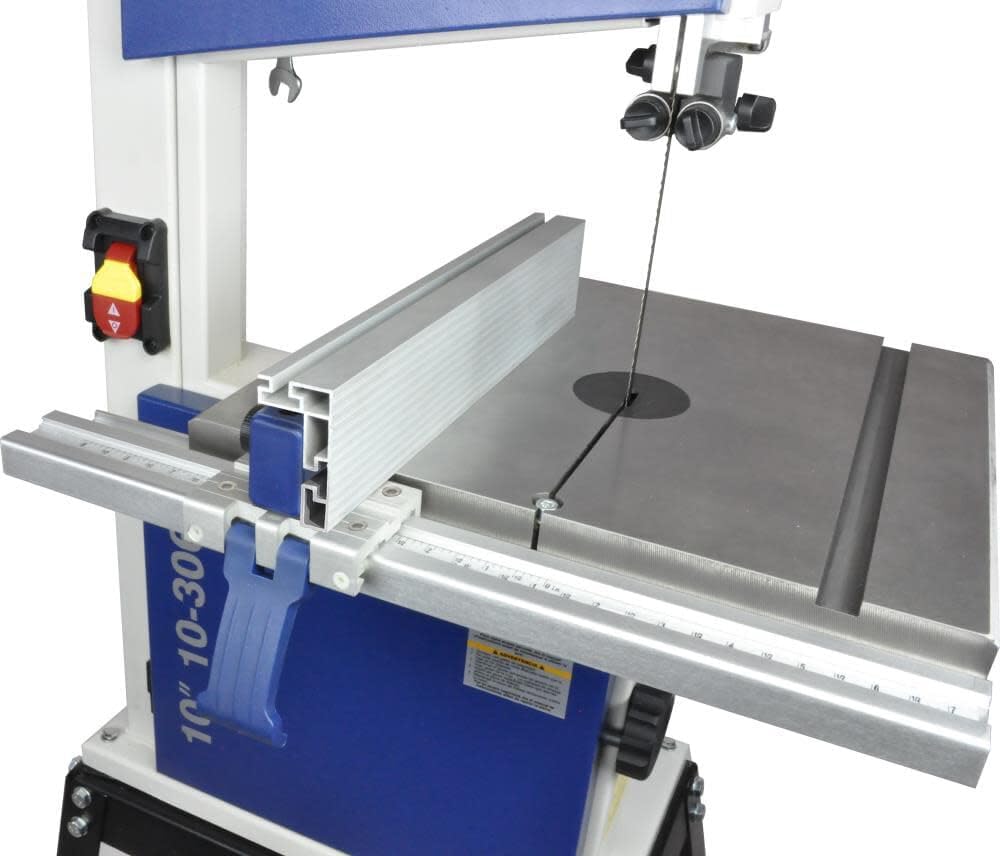
Rikon Deluxe Bandsaw Fence System
- Precision aluminum fence improves straight and repeatable cuts
- quick-adjust cam lever allows fast setup and fine tuning
- tall fence face supports resawing and vertical cuts
- compatible with select Rikon bandsaw models for easy installation
- durable construction enhances accuracy and control during cuts
 Buy on Amazon
Motor and speeds
The 10-305 runs a 1/3 HP motor on standard 115V power and uses a single blade speed around 2,780 feet per minute, which is a solid all-around speed for wood. If you mostly cut hardwood under 2 inches thick and focus on curves, this motor level will feel fine with a sharp blade and steady feed.
Cutting capacity
This rikon 10 inch bandsaw class machine is rated around 4-5/8 inch cutting height and 9-5/8 inch width, using 70-1/2 inch blades in roughly 1/8 to 1/2 inch widths. Plan on 1/8 or 3/16 inch blades for tight curves, and 3/8 or 1/2 inch blades for straighter ripping in thinner stock.
Table, fence, dust
You get a cast iron table (about 13-3/4 x 12-1/2 inches) that tilts to 45° right for bevel cuts, plus a basic rip fence for repeatable straight cuts. The 2-1/2 inch dust port works best with a shop vac; add a short hose run and a clean filter to keep the lower cabinet from packing with dust.
Rikon 10 Inch Bandsaw: 10-3061 Deluxe
The 10-3061 Deluxe is the step-up sweet spot for many hobbyists because it adds power, dual speeds, and quicker guide adjustments while keeping the benchtop footprint. If you’ve ever fought blade drift or guide setup on a small saw, this model’s tool-less approach can save real time between tasks.

Rikon Deluxe 10-inch Bandsaw
- Compact benchtop footprint for small shops
- Smooth, accurate cuts for hobby and detailed work
- Stable cast iron table for consistent results
- Tool-friendly blade changes and quick adjustments
- Includes rip fence for straight, repeatable cuts
Buy on Amazon
Dual-speed advantage
The dual speeds (about 1,515 and 3,280 feet per minute) let you slow down for certain plastics or light metal work and speed up for wood. Pair the low speed with the right blade type and lubricant practices for non-wood materials, and keep your wood blades reserved for clean woodworking cuts.
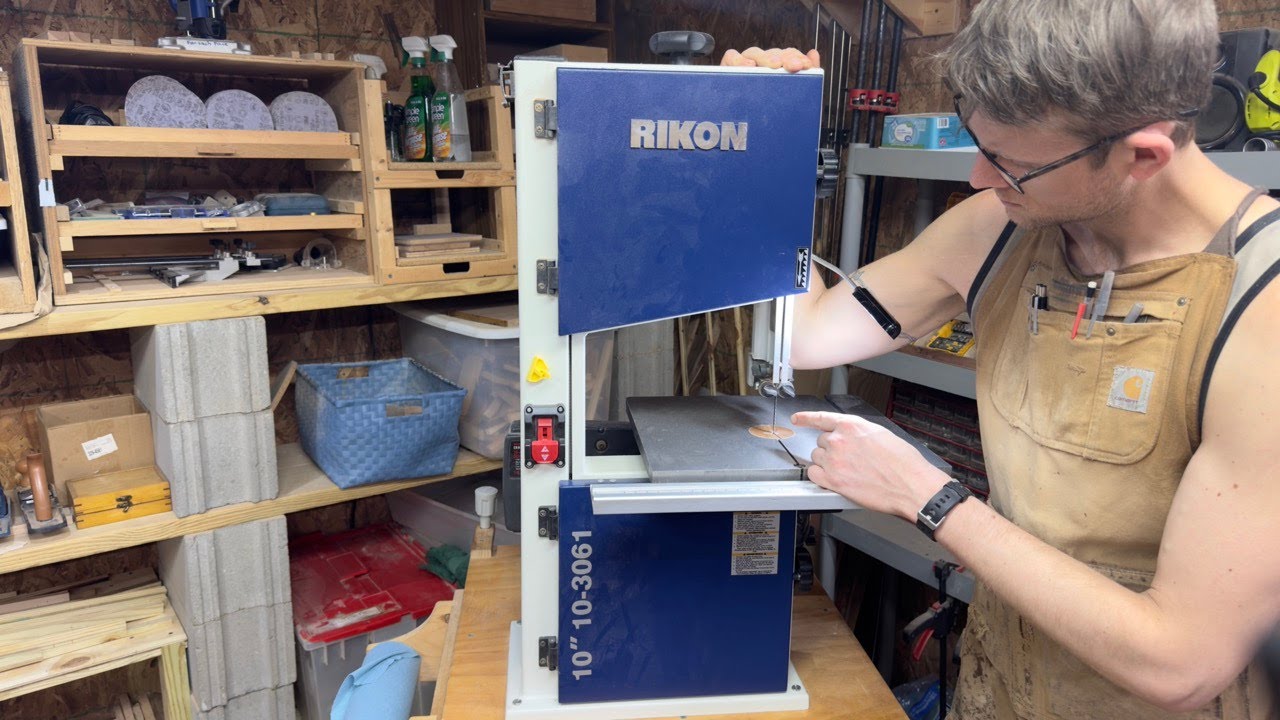
Tool-less guides
Rikon’s spring-loaded, tool-less guide system speeds up repeatable setups because you can move bearings and thrust supports without hunting for hex keys. For best results, set side bearings just off the blade (don’t pinch it), then bring the thrust bearing close enough to engage only while cutting.
Best use cases
Choose this rikon 10 inch bandsaw if you do mixed work: curve cuts for templates, ripping short boards, trimming tenons, and light resawing up to about 5 inches with the right blade. If you’re still deciding between a bandsaw and other options for your shop, compare use cases in this guide on scroll saw vs band saw.
Rikon Bandsaw with Stand: 10-310
The 10-310 takes the compact format and adds better ergonomics by putting the saw at a more comfortable working height. It’s a practical choice if you don’t have a sturdy bench, or you want the saw ready to roll without clearing a benchtop.

Rikon 10-inch Bandsaw with Stand
- Cast iron table and steel stand for stable cutting
- Rip fence included for precise straight cuts
- Quick release tension for fast blade changes
- Resaw capacity of 4 and 5/8 inch for thicker stock
- Compact design that fits most workshop spaces
Buy on Amazon
Stand and footprint
The steel stand gives you a dedicated base and a consistent feed height, which helps with control on longer cuts. If your shop is tight, measure your outfeed space more than the saw’s footprint, since boards need room before and after the blade to stay square to the fence.
Included accessories
Most packages include a rip fence, a miter gauge, and tool-less blade guide adjustment features that reduce setup time. Treat included blades as “starter blades” and plan to buy a blade that matches your main task, because blade choice changes results more than small motor differences.
Ideal projects
This model suits small furniture parts, curved apron work, cutting bandsaw boxes, and trimming bowl blanks before the lathe. Keep expectations realistic on tall resawing; you can do it within capacity, but a 14-inch saw will feel calmer and track straighter when you resaw often.
Rikon 14 Bandsaw: 10-326 Deluxe
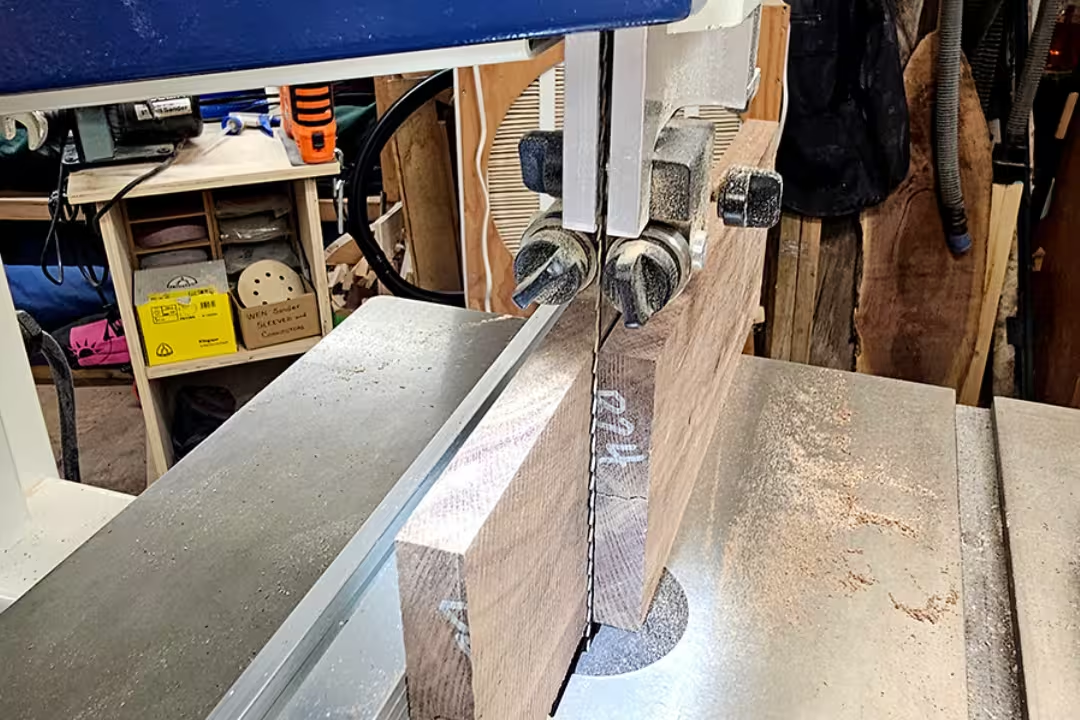
The 10-326 is the upgrade pick if you want faster adjustments, a taller fence, and pro-focused refinements for frequent use. It’s a strong match for small shops that resaw weekly and need consistent thickness from board to board.
Pro-grade upgrades
Expect a bit more motor (often listed around 1-3/4 HP), a refined guide system, and convenience changes like hinged guards and quick locks. Those details matter when you swap between a narrow blade for curves and a wide blade for resawing in the same afternoon.
Fence and table
A taller fence helps with upright support during resawing, and a large cast iron table keeps wide boards flatter through the cut. If you joint one face and one edge before resawing, the fence references more reliably and the blade won’t get forced sideways by a twisted board.
Dust and storage
Many setups use a 4-inch port or an adapter to a dust collector, which moves far more air than a shop vac and keeps the lower cabinet cleaner. For general dust safety guidance, OSHA’s woodworking eTool explains why controlling fine dust matters and outlines collection basics (OSHA Woodworking eTool).
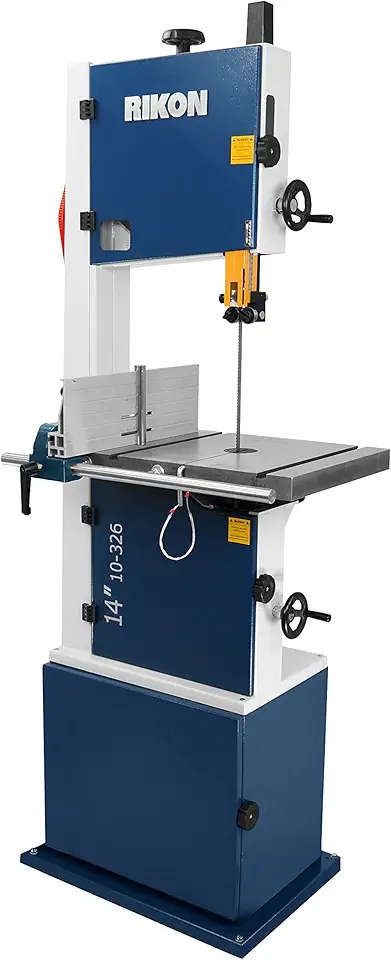
Rikon 14-inch Workshop Bandsaw
- Bigger resaw and cutting capacity for larger stock
- Robust construction for steady, vibration-free operation
- Versatile for curves and straight cutting
- Easy fence and blade adjustments for accuracy
- Ideal for serious hobbyists and small shops
Buy on Amazon
How to Choose a Rikon Bandsaw
Picking the right Rikon model comes down to space, resaw height, and how often you swap blades for different tasks. Decide what you cut most weeks, then buy the saw that makes that job easy with the fewest workarounds.
Benchtop vs 14-inch
Choose a benchtop unit if you need compact capacity for curves, crafts, and parts under 5 inches tall, or if you need to lift and store the machine. Step up to a rikon 14 bandsaw if you resaw boards for panels, make your own veneers, or want wider blades that track straighter under heavier feed pressure.
Blades and compatibility
Match blade width and TPI to the job: narrow blades turn tighter, while wide blades track straighter for ripping and resawing. As a quick rule, use higher TPI for thin stock and cleaner cuts, and lower TPI for thick stock so the gullets can clear sawdust.
Here are compatible replacement blades that fit common 70-1/2 inch Rikon benchtop models.
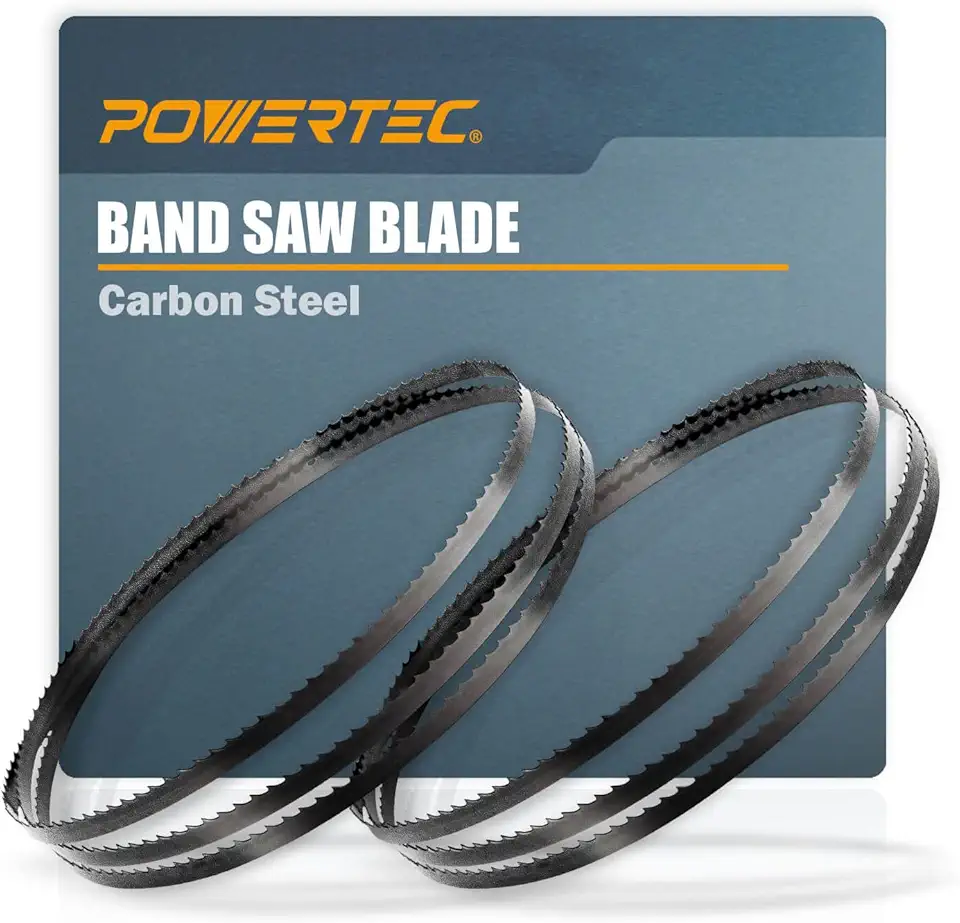
POWERTEC 70 and 1/2 inch Bandsaw Blades 2-Pack
- Two blades in one pack for quick replacements
- 1/8 inch by 14 TPI tooth configuration for fine, consistent cuts
- Compatible with Sears Craftsman 21400 and Rikon 10-305 and 10-3061 models
- Durable construction for long blade life
- Great value for frequent blade users
Buy on Amazon
Setup for low drift
Low drift comes from sharp blades, correct tension, and guide alignment, not from forcing the fence to compensate. Start by tracking the blade so it runs stable at speed, set guides just off the blade, square the table to the blade, then test-cut a straight line on scrap before you lock in your fence position.
Dust collection needs
Plan dust collection around airflow: shop vacs work well on 2-1/2 inch ports, while dust collectors shine on 4 inch ports and cabinet saws. If you add a cyclone separator, you’ll keep filters cleaner and maintain suction longer during extended resaw sessions.
FAQs
Are Rikon Bandsaws Any Good?
Yes — Rikon bandsaws are generally reliable and well-suited for hobbyists and small shops. They offer solid build quality, approachable prices, and models that perform well for woodworking and light metalwork. For best results, choose the right model for your projects, keep blades sharp, and perform regular setup and maintenance.
Where Are Rikon Bandsaws Made?
Rikon bandsaws are designed by Rikon and manufactured primarily in Taiwan and China, with specifics varying by model. Design, quality control, and distribution are managed by Rikon USA, while assembly locations and parts sourcing depend on the machine and production run. Always check the product spec or label for the exact country of origin.
Who Makes Rikon Bandsaws?
Rikon bandsaws are made by Rikon Industrial Corp., with Rikon USA handling distribution and support in North America. Rikon Industrial is a Taiwan-based manufacturer that produces tools under the Rikon brand for global markets.
Why Is My Rikon Bandsaw Blade Drifting Or Cutting Unevenly And How Can I Fix It?
Blade drift or uneven cuts usually result from incorrect blade tension, a dull or damaged blade, misaligned guides, or an incorrect blade choice. Fix it by setting proper tension, replacing or sharpening the blade, aligning guides and tracking, and using the correct blade width and tooth pattern for your material. If problems persist, inspect tires, bearings, and table alignment or consult Rikon support.