Band Saw for Sale: Buyer’s Guide to Choosing the Right Wood Bandsaw

A band saw for sale query usually means you want a wood-cutting bandsaw you can buy right now, with the right throat depth, resaw height, and blade speed for your projects. For woodworking, pick a saw that holds blade tracking steady under load, matches blade TPI to your stock, and has enough stiffness and table support to feed safely without drifting.
Table of Contents
If you’re also weighing other shop machines, your bandsaw choice should fit the rest of your workflow—especially ripping and joinery on a table saw—so it’s worth cross-checking how you break down stock in our best table saw guide.
Best band saw for sale picks (woodworking)
For most small shops, an 8–10 inch wood band saw hits the sweet spot: it’s compact, runs on standard power, and still handles curves, tenon cheeks, and light resawing. The trade-off is simple—benchtops save space, but they demand better setup habits (tension, guides, feed rate) to avoid drift and burned motors.
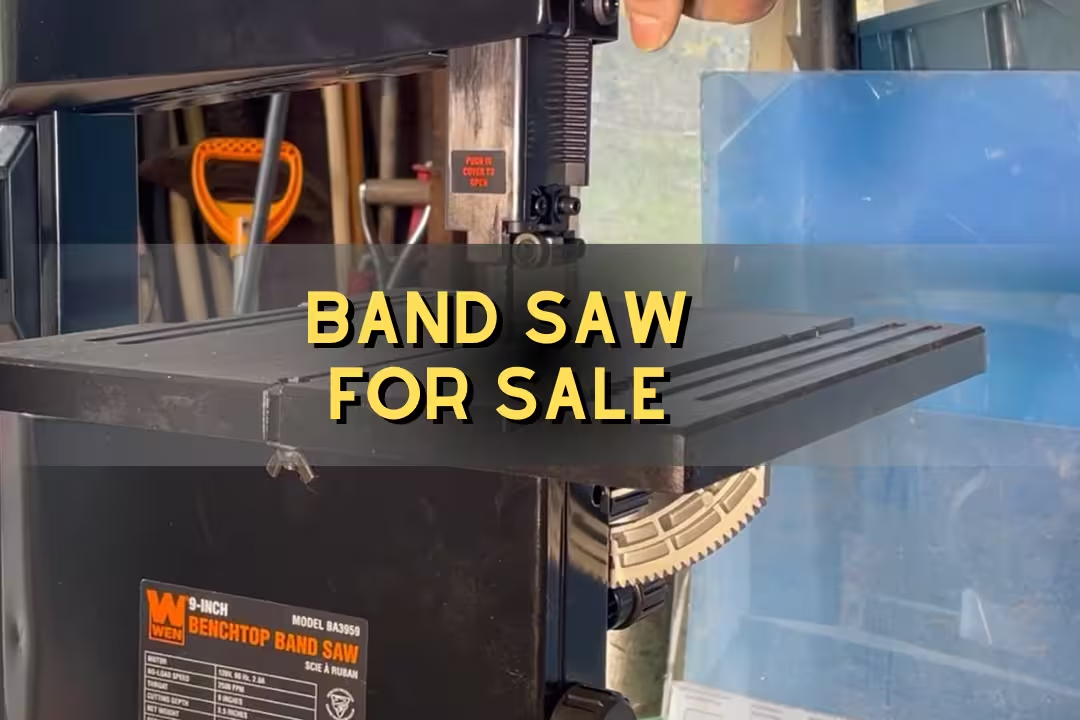
WEN 9-inch benchtop bandsaw
This is the kind of wood bandsaw I reach for when I’m cutting templates, small curve work, and thin stock where a big frame would be wasted. A compact benchtop also “feels” different in use: you’ll notice a sharper, higher-pitched blade hum and more vibration through the table when you push hardwood too fast, so slow your feed and let the teeth clear chips instead of forcing the cut.

WEN 9-Inch Benchtop Bandsaw
- Compact benchtop design saves shop space and mounts securely
- 2.8 amp motor delivers steady power for smooth cuts
- 9 inch cutting capacity handles small to mid projects
- adjustable blade tracking and tension for accurate results
- integrated fence and miter gauge for straight, repeatable cuts
 Buy on Amazon
Beginner mistake: treating a 9-inch benchtop like a mini resaw machine and then blaming the saw for blade drift. The workaround is to clamp a taller auxiliary fence, run a sharp 3/8″ blade for general curves, and switch to a wider blade only if the saw can tension it without the frame flexing—if the tension knob keeps turning but the blade still deflects, you’ve hit the machine’s limit.
WEN 10-inch two-speed with stand
A stand turns a small bandsaw into something you can feed more consistently, because your hands stay at a steady height and you’re not bracing the saw on a bench that shifts. Two-speed control is most useful when you occasionally cut denser stock or mixed materials; lower speed reduces heat, and you’ll smell less “toasty” pitch when you’re working resinous softwoods that like to gum up blades.

WEN 10-Inch Two-Speed Bandsaw with Stand
- Includes sturdy stand for stable floor mounting and more workspace
- two-speed 3.5 amp motor suits wood and tougher materials
- larger 10 inch capacity for wider resawing and curves
- easy blade changes and accessible adjustments for quick setup
- built-in fence and miter gauge for accurate cuts
Buy on Amazon
Common mistake: swapping speeds and keeping the same feed pressure, which overheats the blade at low speed and stalls the motor at high speed. A pro move is to listen for pitch change—if the motor note drops and the cut starts to polish, back off, clear chips, and restart with a lighter feed to protect motor windings.
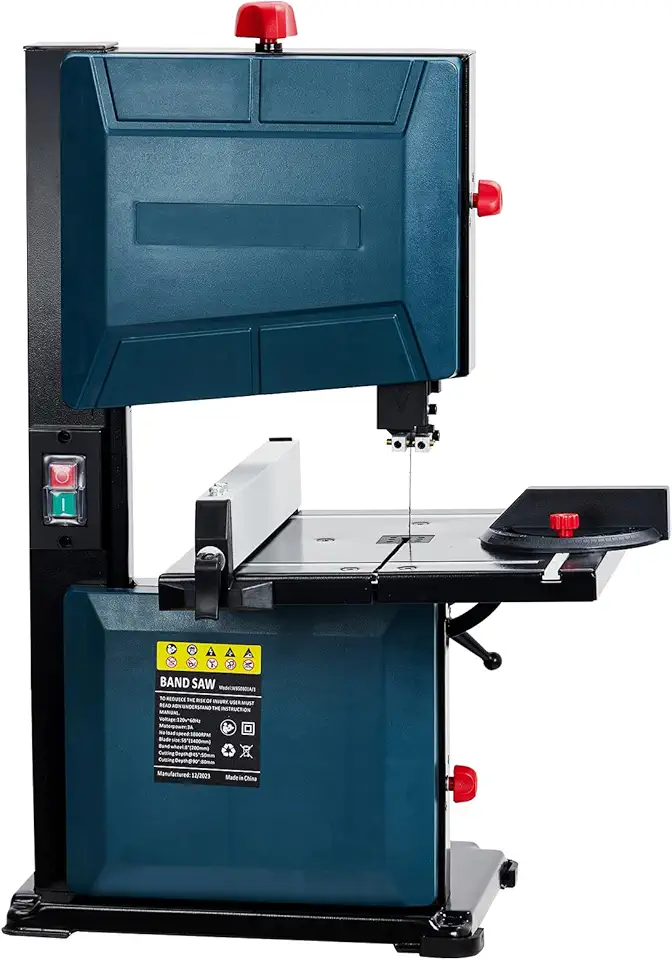
PeakPursuit 8-inch tilting wood bandsaw
A tilting table is handy for quick bevels and compound parts, but it adds one more alignment point you can knock out if you move the saw often. When the table’s off by even a hair, you’ll feel it: the workpiece “hunts” sideways against the fence and the cut edge looks slightly fuzzy on one side because the blade is rubbing.
PeakPursuit 8-Inch Tilting Bandsaw
- Tilting table offers 0 to 45 degree cutting for angled work
- 3 amp pure copper motor and 1800 RPM for consistent cutting power
- compact benchtop footprint fits small shops and hobby tables
- includes fence and miter gauge for precise straight and angled cuts
- suitable for woodworking and light aluminum work
Buy on Amazon
Risk to watch: cutting aluminum on a wood-oriented blade speed without the right blade choice can load the gullets and grab. If you do light aluminum, use the right metal-cutting blade, wax lube, and short strokes to avoid packing chips; stop if you see chip welding on the teeth.
Rikon vs Grizzly benchtop bandsaw options
People usually compare a band saw rikon to a grizzly benchtop bandsaw for one reason: how stable the saw stays once you tension a wider blade and start feeding hardwood. Stability is what turns a “pretty good” bandsaw into one that cuts repeatably without you steering the work to compensate.
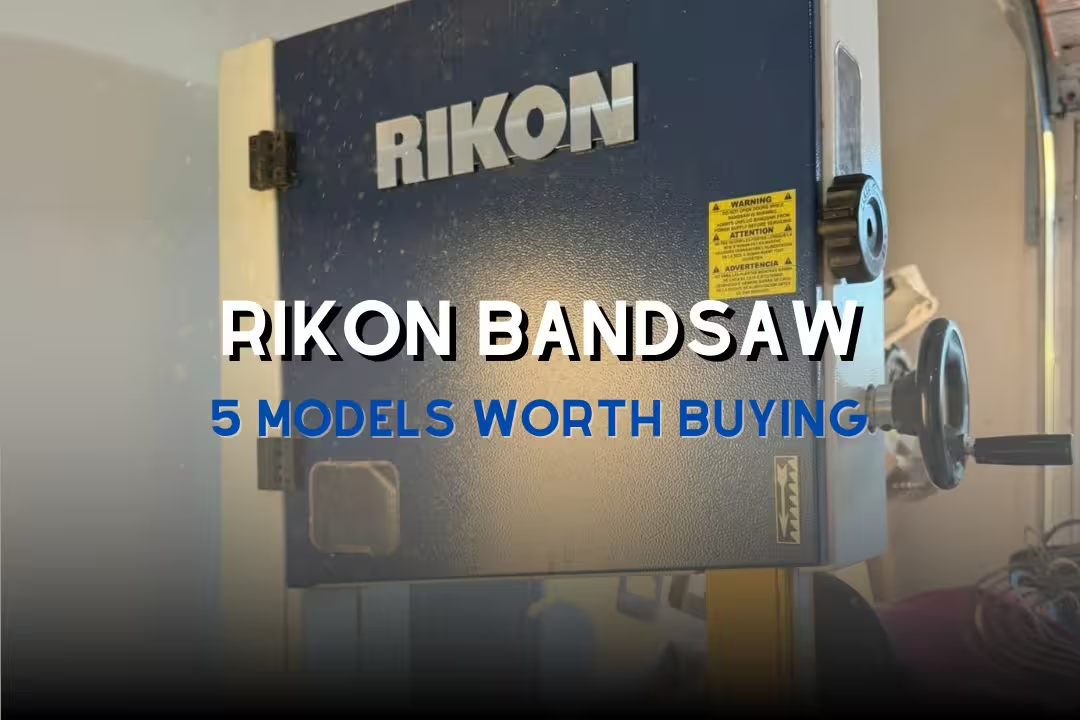
Band saw Rikon: 10-inch deluxe overview
The RIKON 10-inch deluxe class tends to feel calmer in the cut, with less chatter telegraphed into your fingertips through the table edge. That matters when you’re doing joinery cuts where a tiny wander becomes a gap at glue-up, and it’s why I treat this style of saw as a small-shop “daily driver” rather than a once-in-a-while tool—details like guides and tracking controls stay put after adjustments.

RIKON 10-Inch Deluxe Bandsaw
- Deluxe build quality offers improved stability and longevity for hobby shops
- roomy table supports larger workpieces and smoother feeds
- precise blade tracking and tension adjustments for accurate cutting
- accepts a range of blade sizes for versatility
- ideal for detailed woodworking and frequent use
Buy on Amazon
If you want a deeper brand-specific breakdown, the full comparison points (setup quirks, blade sizes that tension well, and what to upgrade first) are in our Rikon bandsaw article. One pitfall I see is buying a nicer saw and then never truing the fence to the blade path; even premium units still need a quick drift check with a scrap board and a pencil line to dial in fence alignment.
Grizzly benchtop bandsaw positioning
A grizzly benchtop bandsaw often makes sense when you want the strongest value per dollar and you’re fine doing a little setup work right away. The real trade-off shows up in small things: you might spend extra time shimming a fence face, tuning guide blocks, or upgrading the stock blade earlier to get cleaner curves and straighter resaw starts.
Beginner mistake: assuming cut quality is only about the saw body. In practice, blade choice and guide setup dominate—if you get washboard cuts, don’t keep tightening tension blindly; check that the blade rides on the wheel crown, then set side guides just off the blade (a paper thickness gap) to avoid side loading.
Cast iron table benefits
A cast iron table changes the feel of bandsawing: the work slides smoother, the saw “rings” less, and vibration doesn’t chatter your pencil line as much when you’re following a curve. That extra mass also helps when you’re feeding taller pieces—less tipping, less bounce, and fewer little mid-cut corrections that cause scalloped edges.
Watch the downside: cast iron rusts fast in humid shops, and beginners often oil it too much, which contaminates glue-ups. My workaround is paste wax in a thin coat, buffed until your hand feels a dry slickness, then store blades and jigs off the table so condensation doesn’t create rust rings.
Two-speed and heavy-duty band saws for sale
Two-speed and bigger-frame options are worth it when you’re resawing thicker stock, cutting dense hardwood more often, or switching between wood and occasional metal work. The key is matching the machine to your duty cycle: light benchtops can do a lot, but sustained heavy feeds create heat, dull blades fast, and raise the chance of motor overload.
VEVOR 10-inch two-speed with stand
This style of two-speed saw is practical if your projects jump from pine to oak to the occasional non-ferrous cut, and the included stand helps reduce the “walk” you sometimes get when a benchtop vibrates on a slick surface. I also like having a work light close to the cut line because it makes blade lead obvious—if the shadow shifts, you’re twisting the board instead of feeding straight.

VEVOR 10-Inch Two-Speed Bandsaw with Stand
- Two-speed operation provides low torque for metal and high speed for wood
- 370W 1/2 HP motor balances power and control for varied tasks
- heavy metal stand adds stability and ergonomic working height
- integrated work light improves visibility on the cut line
- fence and miter gauge included for repeatable, accurate cuts
Buy on Amazon
Risk: relying on speed change instead of blade change. If you cut a lot of hardwood with a coarse blade, you’ll get tear-out; if you cut thick stock with a fine blade, you’ll pack gullets and heat the blade until it smells sharp and metallic. Swap blades before you chase mystery problems.
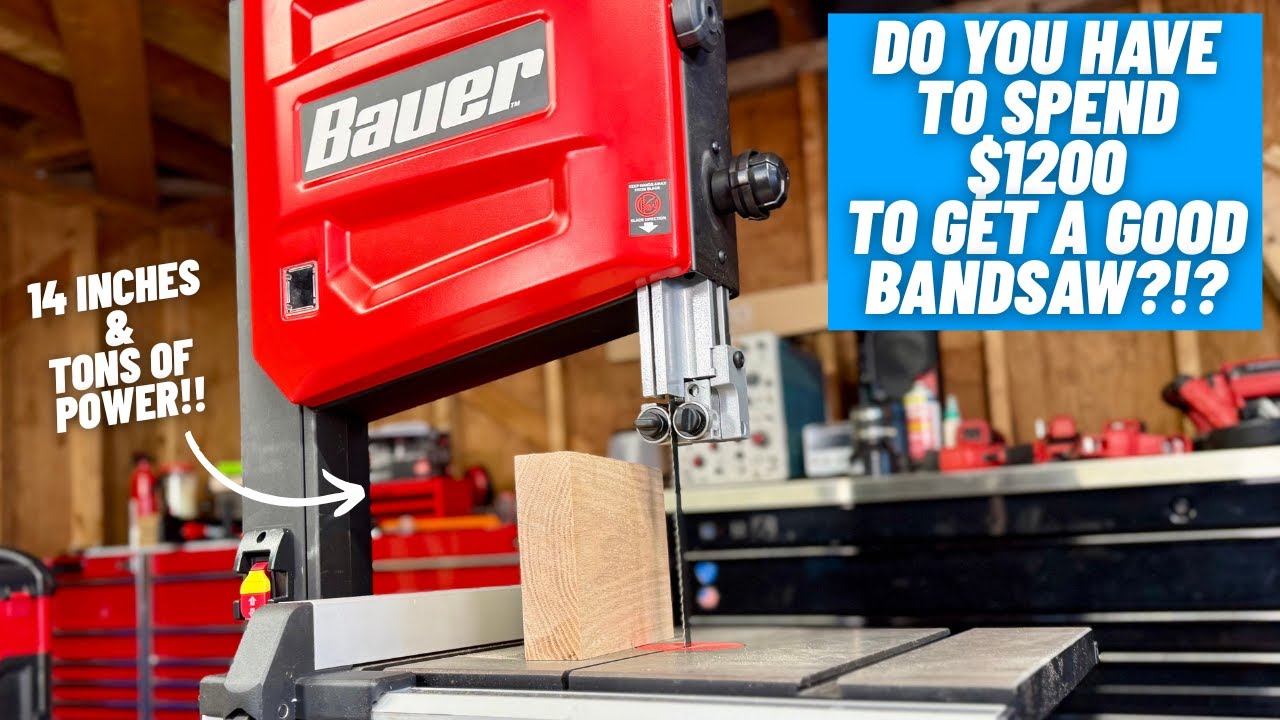
14-inch dual-speed 2 HP bandsaw
Moving up to a 14-inch, 2 HP class saw is about maintaining blade speed under load so the teeth keep cutting instead of rubbing. You can feel the difference immediately: the feed stays steady, the saw doesn’t bog, and the cut surface comes off warmer but cleaner—less fuzzy compression, more crisp tooth marks that sand out quickly.

14-Inch Dual-Speed Bandsaw 2 HP
- Dual-speed options let you switch between fast cuts and high torque resawing
- powerful 2 HP motor handles heavy hardwoods and larger projects
- large cast iron table provides a stable, vibration free work surface
- built-in overload protection enhances safety and motor longevity
- high cutting capacity for demanding shop tasks
Buy on Amazon
Common mistake: using big power to “force” bad technique. A larger saw will still wander if the blade is dull or the guides are set wrong; the difference is it can keep going long enough to ruin more stock. Treat overload protection as a backup, not a plan, and stop when you see burning or hear squealing.
When to choose 2 HP
Pick 2 HP when you resaw wider hardwood boards, cut thick green wood blanks, or run the saw for long sessions where heat buildup matters. If your work is mostly 3/4″ stock, templates, and curves, the space and cost may not pay back; you’ll get more improvement from sharper blades, better dust collection, and a stable fence than from extra horsepower.
A useful rule from the shop floor: if you’re slowing your feed so much that the blade is polishing the kerf walls, you’re underpowered or under-bladed for the job. Fix it by stepping down TPI, stepping up blade width (within tension limits), or moving to more power when you’ve already optimized blade selection.
Wood band saw buying guide: specs that matter
This section is where most “band saw for sale” pages fall short: specs only help if you know what they change at the cut line. Treat the numbers as a way to predict drift, burning, and how tired your hands feel after a long session of curve cutting.
Blade speed (FPM)
For a wood band saw, higher blade speed helps wood fibers shear cleanly, while lower speed reduces heat and gives you more control on tricky materials. Typical ranges often land around 770–1800 FPM for wood, while metal-focused units can run far slower; that gap is why “one saw for everything” usually means compromises in finish quality or blade life.
Risk: pairing high FPM with a dull blade creates friction fast, and you’ll smell resin and hot steel at the same time. If you notice the kerf turning dark or the blade feels hot when you carefully bring the back of your knuckle near it (don’t touch), stop and swap to a fresh blade or change speed if your saw allows speed control.
Blade TPI selection
TPI controls chip size and finish: low TPI clears chips for thick stock, while higher TPI leaves a cleaner edge on thin boards. A simple guideline that prevents most bad cuts is keeping at least 3 teeth in the wood at all times; fewer teeth causes snagging, more teeth in thick stock causes gullet packing.
- 3–4 TPI: thick resawing and fast ripping where finish isn’t the goal
- 6 TPI: good “leave it on the saw” choice for mixed hardwood/softwood
- 10–14 TPI: thin stock, small parts, and tighter curves (with narrow blades)
Beginner mistake: buying a narrow, high-TPI blade for everything because it turns tight curves. The workaround is keeping two blades on hand—a general-purpose blade and a dedicated curve blade—because constant blade swapping is still faster than sanding away tear-out and correcting drifted cuts with extra trimming.
Blade tension and tracking
Tension keeps the blade from twisting under feed pressure, and tracking keeps it riding predictably on the wheel crown. When tension is right, the blade sounds steadier (less flutter), and the cut stops “snaking” when you feed straight; when it’s wrong, you’ll see the blade deflect with light finger pressure and the kerf will wander even with a fence.
Risk: over-tensioning on small frames can crack blades early or stress bearings. A pro workaround is to set tracking with the guides backed off, tension just enough to stop flutter, then bring guides in last—guides are for support, not for forcing a blade to track correctly. That avoids premature wear on guide blocks and thrust bearings.
Resaw capacity and throat depth
Resaw capacity is the max height between table and guides, while throat depth is the distance from blade to frame; both determine what you can physically cut. If you plan to slice your own veneer or bookmatch panels, prioritize resaw height and a stiff frame, because blade drift gets worse when tall stock amplifies small tracking errors into big angle changes.
Common mistake: buying based on throat depth alone. Taller resawing needs a fence that stays square under pressure and a blade wide enough to resist twist; if the fence flexes, your “veneer” turns into a wedge. Add a taller auxiliary fence and slow the feed until the saw makes consistent chips instead of dust-like powder, which signals tooth rubbing.
Table tilt and fence
Table tilt helps with bevels, while a decent fence makes your bandsaw repeatable for straight cuts. The real limit isn’t the angle range—it’s whether the table returns to true 90° without fuss; if you can’t reset square quickly, you’ll waste time re-cutting parts and chasing tiny fit issues that show up later at assembly.
If you’re trying to integrate bandsaw work with table saw workflows, pay attention to fence concepts like rigidity and micro-adjust; our table saw fence article covers the same idea from the ripping side. A common beginner trap is clamping a warped shop-made fence without checking it against a straightedge, which bakes inaccuracy into every cut.
Motor power and stand
Amp ratings on benchtops and HP on bigger saws both translate to one thing: how well the blade keeps speed when you feed real wood, not air. Stands matter more than people think—if the saw rocks, your hands instinctively “correct” mid-cut, and those corrections create subtle facets you’ll feel when you run a fingertip along the edge: it won’t be glassy, it’ll feel wavy.
Risk: running a small motor with poor dust collection can cook it over time because fine dust packs around vents. Clean the lower cabinet and motor area regularly, and don’t ignore a hot electrical smell; that’s the warning sign before motor burnout.
Price tiers and value expectations
Band saw pricing maps closely to frame stiffness, table quality, guide system, and how consistently the saw holds settings between blade changes. For a transactional search like “band saw for sale,” it helps to decide your tier first so you don’t pay extra for capacity you’ll never use or cheap out on features that prevent recurring setup frustration.
| Tier | What you’re really buying | Best fit |
|---|---|---|
| Entry-level (8–10″) | Lighter frame, basic guides, smaller resaw; needs careful tuning | Curves, small parts, hobby shops |
| Midrange shop upgrades | Better tracking hardware, sturdier table/fence, calmer cuts | Frequent woodworking, light resaw |
| Industrial | High duty cycle, big resaw, stronger motors, heavier castings | Production, thick hardwood, daily resaw |
Entry-level benchtop pricing
Entry-level benchtops usually make sense when you want the most capability per square foot and you can accept more frequent blade swaps and tuning. The value is real if you keep expectations realistic: they excel at contours and small joinery cuts, but they don’t love aggressive resawing where you lean into the feed and expect the blade to stay dead straight.
Common mistake: spending the whole budget on the saw and running the cheapest blade forever. Budget for at least one upgraded blade right away, because a sharp blade makes the saw feel more powerful, reduces heat, and cuts down on the “dry screech” sound that shows up when teeth are dull. That one change avoids a lot of false troubleshooting.
Midrange shop upgrades
Midrange is where you start paying for repeatability: settings hold, guide adjustments don’t wander, and you can come back next weekend and the saw still cuts the way you left it. This tier also pairs well with a table saw-centric shop because it becomes a dependable second machine for curves, tenons, and resaw prep instead of a tinkering project.
A good upgrade path is stabilizing first (stand, fence face, blade), then comfort (light, dust port tweaks). Skip “nice-to-have” add-ons until your saw can track a blade reliably; accessories can’t fix a flexing frame.
Industrial price range
Industrial bandsaws cost more because they’re built for duty cycle: thicker frames, stronger wheels, better bearings, and controls that survive constant use. If you’re cutting thick hardwood daily, the math can work out because you waste less stock, burn fewer blades, and spend less time re-squaring fences and re-tuning guides.
Risk: buying industrial capacity without the space and electrical setup to support it. Bigger saws need clear infeed/outfeed zones and stable power; cramming one into a tight corner leads to awkward body positions and unsafe feeds. If your elbows keep brushing the wall while you feed, your shop layout is forcing bad technique.
Rental vs buying
Renting can be smart if you only need a bandsaw for a short burst of work—like breaking down a few thick slabs or handling one remodel phase. Market data also points to steady rental demand, with the band saw rental market projected to grow from $339M in 2025 to $424M by 2034 at a 3.2% CAGR per Band Saw Rental Market – intelmarketresearch.com.
The catch is blade condition: rental units often come back with tired blades and mis-set guides, so you lose time diagnosing issues you didn’t cause. My workaround is bringing your own known-good blade (correct length), plus a small square and feeler strip; spend five minutes checking tracking and guide spacing before you cut finished parts.
Reliability and common failure points
Reliability in a wood bandsaw comes down to three failure points: tracking stability, motor heat management, and protection against stalls. Spotting early signs saves money because many “broken saw” complaints are really dull blades, poor setup, or dust buildup creating heat and drag.
Blade tracking problems
Tracking issues show up as drift, wandering cuts, and a blade that won’t stay centered on the wheels. The fast diagnostic is to back off guides, set tension, then rotate the top wheel by hand: if the blade walks forward/back with each turn, you’re fighting tilt/tracking adjustment or a blade that’s welded poorly.
Beginner mistake: using side guides to “steer” the blade back on track. That overheats the blade and wears guides fast; set tracking at the wheels first, then bring guides close just for support. If your saw can’t hold tracking after that, check wheel tire condition and coplanarity before you blame the brand—worn tires can cause random wandering.
Motor burnout risks
Motor burnout usually isn’t instant; it’s heat over time from stalls, dust-choked vents, or forcing thick stock with an under-toothed blade. If the saw feels hot near the lower housing and the cut starts slowing while the belt smells warm, stop—continuing turns a small problem into a motor replacement.
A pro workaround is managing load with blade selection and feed pacing instead of power alone. If you’re resawing and the sawdust coming out looks like fine flour, you’re rubbing more than cutting; drop TPI and let the gullets carry chips out so the motor isn’t fighting friction. That habit extends motor life.
Overload protection value
Overload protection matters most for newer users and for saws that see long sessions, because it prevents a stall from turning into cooked windings. Think of it like a safety net that saves you when a knot, pinch, or dull blade suddenly spikes load.
Don’t misuse it: if overload trips more than once during the same cut, something’s wrong with setup, blade, or feed. Fix the cause—pinching stock, fence misalignment, dull teeth—instead of resetting and pushing on, because repeated overload events shorten switch and motor life.
Alternatives and specialty band saws
If your needs include metalwork, jobsite portability, or ultra-clean hand cuts, a standard woodworking bandsaw might not be the best single answer. The smart approach is pairing tools: keep the wood bandsaw for curves and resaw, then add a dedicated metal bandsaw or a hand saw for tasks that punish wood blades.
Variable speed metal bandsaw
A variable-speed metal bandsaw shines when you need controlled low FPM to keep teeth from overheating on steel and to avoid grabbing on thin-wall tubing. You’ll feel the difference in the cut: instead of screaming and sparking, the blade makes a steadier, lower sound and the chips come off like tight curls when speed is right.

Variable Speed Metal Bandsaw 5-Inch Capacity
- Variable speed control from 137 to 472 FPM for cutting different metals precisely
- 5 inch cutting capacity handles thick stock and small billets
- large workbench improves stability for metalworking tasks
- robust 10 amp motor designed for consistent metal cutting performance
- suitable for knife making and detailed metal projects
Buy on Amazon
Risk: using wood habits on metal—too much speed, no lubrication, and letting the blade dwell in one spot. Use the right blade, add cutting wax or fluid where appropriate, and keep a consistent feed so you don’t work-harden stainless; if you see blue heat tint, you’re running too hot and dulling teeth fast. For broader market context on blade categories and demand, see Bandsaw Blades – Research and Markets.
Pull saw complement
A Japanese pull saw is a great companion tool for cleanup cuts your bandsaw can’t safely do, like flush trimming plugs or working right up against a finished face. The sensation is distinct: the saw tracks on the pull stroke with less buckling, and the handle feedback is clearer, so you can feel tooth bite and stop before you scar a surface.
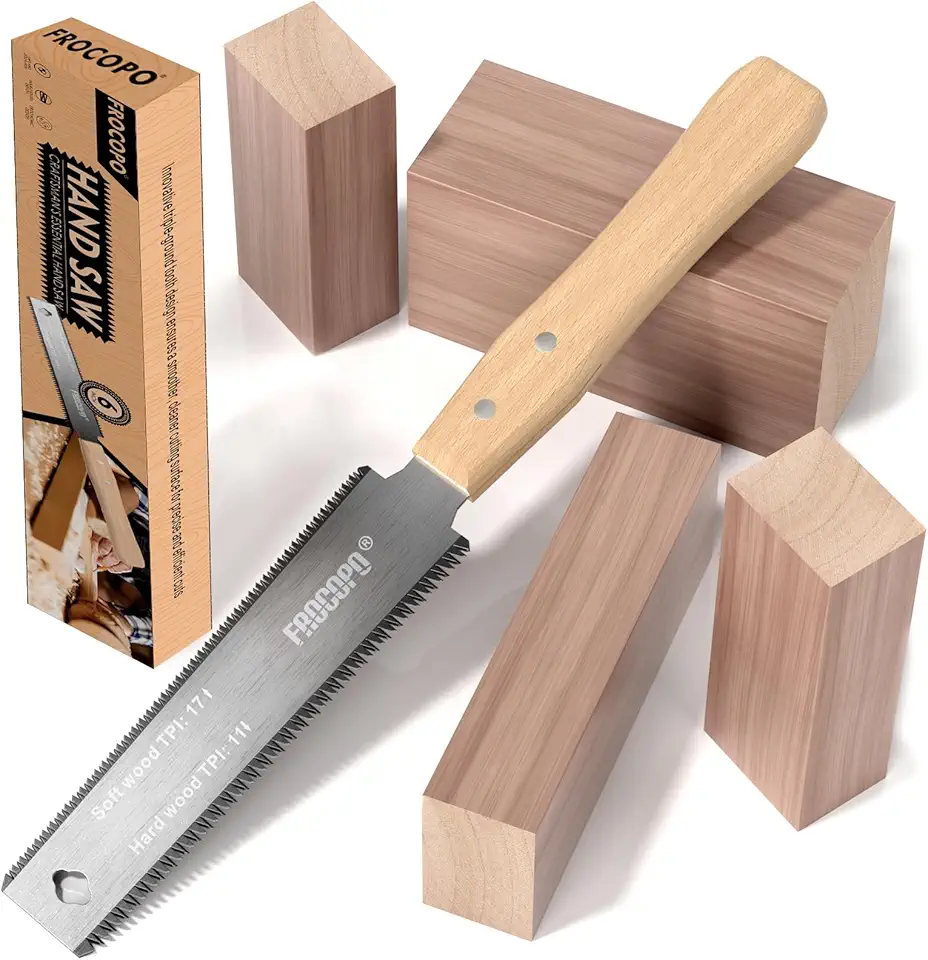
6-Inch Japanese Pull Saw
- Flexible double-edge blade with fine and coarse teeth for fast and clean cuts
- 17 and 11 TPI combination suits detailed woodworking and trim
- pull stroke action gives precise control and less binding
- lightweight non slip handle reduces hand fatigue for long tasks
- ideal for flush cuts, craft projects, and garden trimming
Buy on Amazon
Common mistake: forcing a pull saw on the push stroke, which kinks the plate and ruins accuracy. Keep your wrist straight, use light pressure, and let the teeth do the work; if you need machine-like repeatability for small parts, compare tool roles in our scroll saw vs band saw guide so you’re not asking one tool to cover every niche.
Practical Notes From Real-World Use
The biggest surprise in day-to-day bandsaw work is how often the “problem” is a small setup slip you can’t see until you cut wood. I’ve had cuts go from perfect to unusable after a single blade change because the thrust bearing got set too close, heated up, and started pushing the blade forward—suddenly the saw felt grabby and the kerf smelled hot.
Another real constraint is dust: fine hardwood dust coats the lower cabinet and you can feel the table get gritty, like sand under your palm, which increases feed resistance and makes you steer. The fix is boring but effective: vacuum the cabinet, brush off tires, and wipe the table clean before accuracy work; clean contact points reduce vibration and stop drift creep over a long session.
One more thing that didn’t work as expected early on was trusting the factory fence for resawing without a tall face. Short fences let boards roll slightly, and that tiny roll becomes a tapered slice; adding a tall, dead-straight auxiliary fence (MDF or plywood) and feathering the board against it solved most of my “why is this veneer wedge-shaped?” frustration. That’s also where a stable table saw workflow helps—if you’re processing stock for later ripping, our table saw accessories guide covers jigs and supports that pair well with bandsaw prep cuts.
Most bandsaw complaints trace back to blade choice, tension/tracking setup, or feeding technique—not the brand name on the door.
Shop-floor troubleshooting pattern
FAQs
What Size Band Saw Is Best For Woodworking?
A 14-inch bandsaw is the best all-around size for most woodworking shops. It balances capacity for resawing and ripping with sufficient throat depth for furniture parts while remaining affordable and space-efficient. Hobbyists can often get by with a 10–12 inch benchtop, but serious resawing benefits from 14+ inches.
Is A 9-Inch Or 10-Inch Benchtop Bandsaw Big Enough For Resawing?
A 9-inch or 10-inch benchtop bandsaw is usually too small for significant resawing. These machines can handle thin strips and small veneers but lack the throat and resaw capacity for furniture-sized boards. For occasional light resaw work they’re okay, but choose a 14-inch or larger saw for consistent, efficient resawing of thicker stock.
What’S The Difference Between Two-Speed And Variable-Speed Band Saws?
Two-speed bandsaws offer fixed pulley-set speeds while variable-speed models let you smoothly adjust RPM across a range. Two-speed saws are simpler, more robust, and often less expensive, but provide limited speed choices. Variable-speed drives give finer control for different materials and blade widths, improving cut quality and reducing blade wear for advanced users.
Why Does My Bandsaw Blade Keep Drifting Or Losing Tracking?
Blade drifting or losing tracking is usually caused by incorrect blade tension, a dull or mismatched blade, or misaligned guides and wheels. Start by setting correct tension and inspecting the blade for wear, then align the wheels and guide bearings per the manual. Also ensure blade width suits the cut and check for buildup on tires that can alter tracking.
Is It Better To Buy A Band Saw Or Rent One For A Short Project?
Renting a bandsaw is usually better for a short, one-off project, while buying makes sense if you plan to use it regularly. Rentals give access to larger, higher-quality machines without storage or maintenance costs, but availability and blade choices may vary. If you foresee several projects, consider buying a used or entry-level new saw for long-term value.