Power Matic Guide: Powermatic Tools, Models, and Buying Tips

Table of Contents
Power matic usually refers to Powermatic: a premium woodworking-machine brand known for heavy cast-iron builds, accurate fences and tables, and shop-ready dust control. If you’re comparing a power matic table saw, powermatic planer, or powermatic drill press, focus on motor class, adjustment systems, and how well each machine holds calibration after real use.
Bottom line: Powermatic machines shine when you need repeatable accuracy, smooth cuts, and less vibration over long sessions, but you’ll trade portability and budget for mass and precision. I’ll break down what to compare, where beginners get burned, and the upgrades that fix the common pain points.
Power matic brand overview
Founding and roots
Powermatic started in 1921 in McMinnville, Tennessee, building machinery that fit the needs of lumber and mill shops where downtime cost real money. That origin story shows up today in thicker castings, simpler service access, and controls that feel designed for gloved hands and dusty environments—knobs with a positive bite, levers that lock with a dull “clunk,” and handwheels that don’t feel tinny under load, as described by JPW Industries’ Powermatic brand.
A common beginner mistake is treating premium tools like they’re “set-and-forget.” Heavy machines still shift in shipping, and a brand-new jointer or saw can arrive slightly out of parallel; plan on a first-week check of table coplanarity, fence squareness, and belt tension before you chase accuracy problems that are really setup issues.
Model 66 legacy
The Model 66 table saw put Powermatic on the map because it delivered repeatable precision with a cabinet-saw layout that stayed stable under production use. You still see the influence in modern Powermatic cabinet saws: long trunnion travel for smoother tilt, stout cabinets that damp vibration, and fences meant to stay straight after years of being bumped by plywood edges.
One edge case: the “legendary” feel doesn’t protect you from bad blades or bad feed technique. If you push stock with uneven pressure, you’ll still get burn marks—your nose will catch that sharp, slightly sweet smell of scorching hardwood—so your comparison should include dust extraction and fence stability, not nostalgia.
What Powermatic is known for
Powermatic is known for cast-iron mass, smooth-running motors, and adjustment systems that don’t drift as quickly as lighter machines. In day-to-day use, that feels like less “chatter” in the cut, fewer mystery snipe issues on planers after you move them, and tables that stay flatter through seasonal shop humidity swings.
Trade-off: you pay in space and power. Many Powermatic machines want 220V circuits and enough floor to handle infeed/outfeed; if you’re still planning your layout, map your workflow and compare cabinet vs mobile bases before the machine arrives so you don’t end up ripping down sheet goods with a wall two feet behind the outfeed.
Powermatic tool lineup by category
Table saws
Powermatic table saws lean cabinet-style: rigid trunnions, wide cast tops, and fences meant to hold settings across long rips. If you’re deciding between saw styles, read our cabinet saw guide for the real workflow differences between mass and portability: cabinet table saw.
Common mistake: buying the saw first and figuring out support later. A cabinet saw’s accuracy depends on infeed/outfeed control; if you can’t support an 8-foot rip without lifting the work, you’ll blame the fence for a technique problem.
Planers and jointers
Powermatic planers and jointers focus on surface quality and stability under deeper cuts. In real use, you’ll notice less vibration through the handwheel and less “hunting” when you dial a table up a hair—tiny movements feel controllable instead of springy, which matters when you’re sneaking up on final thickness.
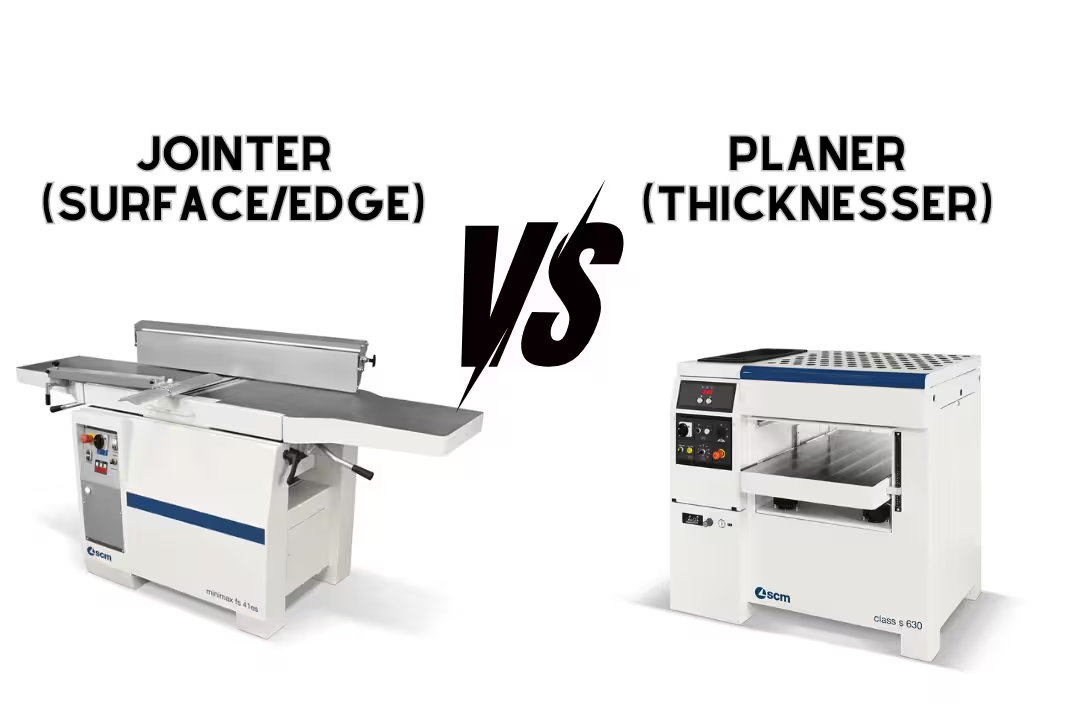
If you’re still sorting out which machine solves which problem, use our plain-language breakdown: jointer vs planer. That prevents the classic beginner move: trying to flatten a board with a planer alone, then wondering why a twisted board stays twisted—just thinner.
Drill presses and mortisers
A powermatic drill press is about accurate hole placement and repeatable depth, especially for hardware and furniture joinery. The best units feel “dead” when they cut—less quill flex, less squeal, and cleaner chips that don’t dust your face when the table and guards channel debris the right way.
Bench vs floor matters more than most people expect; bench units can be excellent, but stance and leverage change everything when you’re hogging Forstner holes. Compare formats with our guide: bench top drill press.
Lathes
Powermatic lathes are a big reason the brand has such a loyal following because mass and torque translate into smoother cuts on bowls and spindles. When you rough a blank, the machine doesn’t “walk,” and the gouge feels calmer in the cut—less buzzing in your fingers, less tool chatter that leaves washboard ripples.
Big lathe risk: jumping to large, out-of-balance blanks before your workholding and tool control are ready. If you want a safer ramp, our overview helps you match size and features to projects: wood lathe.
Bandsaws and shapers
Powermatic bandsaws and shapers target precision under load: steady tracking, strong fences, and enough power that feed rate doesn’t instantly punish you with drift or burning. The most common beginner issue here is setup impatience—bandsaw drift and shaper chatter usually come from blade selection, fence alignment, and feed discipline, not “bad machines.”
A pro workaround that saves time: keep a “known good” blade and setup notes. When a cut goes sideways, swap to your baseline blade first; it separates a tuning issue from a blade or material issue in minutes.
Sanding and finishing
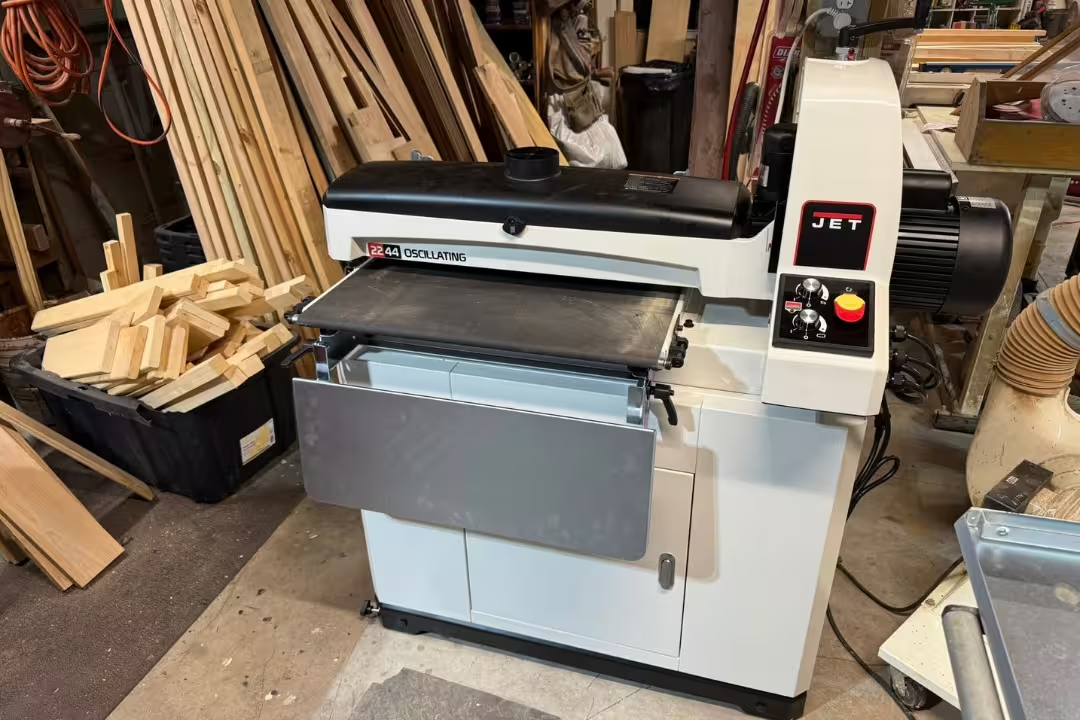
Powermatic sanding machines focus on flatness and control, which is what you want before finish hits the wood and every swirl suddenly shows up. You can feel the difference when the table stays steady—less vibration through fingertips, less “skitter” at the edge that rounds corners when you don’t want it.
Big mistake: sanding too early to fix milling mistakes. If your planer left tear-out, sanders can hide it but often round edges or dish panels; fix the root with cutter choice and feed direction, then sand for refinement.
Dust collection and air filtration
Dust systems are where a “nice” shop becomes a workable shop, especially with planers and table saws. Good capture reduces the gritty taste you get after a long session, and it helps finishes lay down cleaner because airborne fines don’t land in wet varnish.
One mistake I see often: running a big planer into undersized hose or long flex runs. That turns chips into clogs, then you get recutting inside the planer—louder cutting, hotter boards, and a rougher surface—so match ports, duct size, and collector capacity before you blame the machine.
Power matic table saws: what to compare
Cabinet saw build
A true cabinet saw build is about alignment stability: cabinet rigidity, trunnion design, and a top that stays flat. If you’re comparing Powermatic against other styles, check our overview of saw types so you don’t pay cabinet-saw money for contractor-saw behavior: contractor table saw.
Watch for an edge case: moving the saw on a mobile base across uneven floors can tweak the cabinet over time. If cuts start drifting, don’t adjust the fence first—verify the blade-to-miter alignment and the base level, then correct the fence.
Motors and power
Powermatic cabinet saws typically live in the 3–5 HP class, which matters when you’re ripping thick hardwood without slowing the blade. In practice, you hear it as a steadier pitch under load and feel it as less temptation to “push harder” when the cut bogs down—pushing is how kickback starts.
Beginner risk: assuming more HP means safer. Higher power punishes bad setups faster; use sharp blades, set riving knife height correctly, and keep feed pressure consistent so the stock doesn’t pinch and launch.
Accu-Fence system
The Accu-Fence system earns its reputation when it stays parallel under pressure—leaning a heavy sheet against the fence shouldn’t deflect it into the blade. A quick shop test: lock the fence, push sideways at the outfeed end with firm hand pressure, and watch for visible toe-in; if it moves, check rail bolts and fence pads before chasing micro-adjustments.
A pro workaround after a hard bump: verify fence-to-slot parallel with a dial indicator or a good combo square, then set a tiny intentional toe-out at the far end (hairline amount). That reduces burning and binding without changing the scale accuracy much.
Cut quality and dust control
Cut quality comes from stability + support: a flat top, a stiff fence, a sharp blade, and throat-plate support that prevents fibers from snapping at the edge. Dust control matters too because swirling air under the blade can lift thin offcuts and nick the back teeth, leaving tiny “tick” marks you feel later when sanding.
A zero-clearance insert is one of the fastest fixes for tear-out and chip control on a power matic table saw, and it can also improve collection by reducing open area around the blade.
Powermatic planer and jointer: what to compare
Helical vs straight knives
On a powermatic planer, helical (insert) cutterheads usually win for mixed hardwoods because the cut is shearing, not chopping. You’ll feel it in sound and vibration: a steadier, lower roar instead of the sharp slap of straight knives, and less “sting” through the machine when you hit reversing grain; retailers commonly highlight helical-head benefits across Powermatic lines, like in Woodcraft’s Powermatic selection.
Trade-off: inserts cost more up front, and beginners can overtighten the tiny screws. Use the right driver, clean pockets, and tighten in a steady pattern so you don’t crack an insert or trap dust that holds it slightly proud, which leaves a repeating line on boards.
Finish quality and noise
Finish quality depends on grain direction, depth of cut, feed rate, and cutter type. If your shop time is longer sessions, noise matters more than people admit—loud machines create fatigue and rushed decisions—so helical heads can be a real quality upgrade because you stay calmer and adjust less aggressively.
Edge case: straight knives can still produce a glassy finish on cooperative grain and are easier to “read” when something goes wrong. If you’re learning, you can use straight knives successfully by taking lighter passes and waxed tables, then graduate to helical when you’re ready to pay for convenience.
Stock removal and capacity
Capacity isn’t just width; it’s how reliably the machine pulls stock without slipping or snipe when you take meaningful cuts. Look for feed roller grip, bed length/support, and how easy it is to add infeed/outfeed support so long boards don’t lever upward at the cutterhead.
Beginner mistake: chasing speed by taking deep cuts on wide boards. That’s when you get tear-out, motor strain, and blown circuit breakers; a smarter tactic is two lighter passes with consistent feed, which often beats one heavy pass once you factor sanding time.
Table adjustments
Table adjustments are where good machines save your patience: backlash control, locks that hold, and scales you can trust. If your table drifts, you’ll feel it when you try to hit final thickness—your fingers catch a subtle step when you stack parts, and suddenly your “identical” rails don’t clamp evenly.
A shop-tested workaround: set thickness with a test strip and label the dial points that match your go-to sizes (3/4, 1/2, 1/4). Scales are helpful, but wood moves; a test strip keeps projects consistent even after humidity swings.
Powermatic drill press: what to compare
Variable speed control
A good powermatic drill press makes speed changes quick because correct RPM prevents burning and torn holes. If the control is easy, you’ll actually use it—slow for big Forstners, faster for small bits—rather than leaving it on one setting and wondering why maple smells scorched and the rim of the hole looks fuzzy.
Common mistake: changing belts with the machine plugged in or relying on the switch alone. Pull the plug, and wait for full stop; spinning pulleys and loose sleeves are a bad mix.
Depth stops and accuracy
Depth stops separate “pretty close” from repeatable joinery. For hinge cups, shelf pins, and dowel work, you want a stop that doesn’t creep after ten holes; if it does, check for dust-packed threads and lightly lubricate the mechanism so the stop seats consistently.
Pro tip for dead-consistent depth: add a simple collar stop on the bit for critical work. That backup prevents a ruined part if the press stop slips mid-run.
Table design and stability
Table design affects how often you fight setup. A larger, flatter table with solid rack-and-pinion movement gives real support for wide panels, and the table should lock without needing to reef on the handle; over-tightening is how people crack castings or strip clamps.
If you drill angled holes, check that the tilt mechanism returns to true zero reliably. Mark your real 0° with a scribe line after calibrating with a square, because factory marks can be off by a hair that ruins joinery over a long run.
Use cases in furniture builds
In furniture builds, a drill press earns its floor space when it speeds up hardware accuracy: drawer slides, knockdown fasteners, chair joinery, and repeat shelf-pin rows. The press also shines for safe hole-saw work because the table and clamps control torque that would twist a handheld drill in your wrist.
Beginner risk: freehand drilling small parts on the table without a hold-down. Use a clamp or a simple V-block so the bit doesn’t grab end grain and spin the work into your knuckles.
Standout Powermatic models and specs
This section gives quick, spec-led anchors that help you compare Powermatic options without getting lost in marketing. Use it to shortlist, then jump back to the comparison checklists for the trade-offs that matter in your shop.
| Model / Line | What it’s known for | Best-fit shop scenario |
|---|---|---|
| Powermatic 3520C lathe | 2 HP class, 20″ swing, variable speed with ergonomic controls | Serious bowl/spindle turning with frequent speed changes |
| Powermatic 4224B lathe | Large-capacity turning with high mass and stability | Big platters/bowls; blanks that punish lighter lathes |
| PM64 table saw line | Precision-focused saw options where insert/fence setup matters | Space-conscious shops that still want accurate ripping |
Powermatic 3520C lathe
The 3520C is a staple because variable speed and torque make turning feel controlled rather than wild. With a big blank spinning, you can fine-tune RPM without stopping, and the machine’s mass keeps the tool from chattering when the cut transitions from end grain to face grain; specs and positioning are commonly listed by major retailers like The Woodturning Store’s Powermatic page.
Main risk: roughing too fast before the blank is balanced. Start slow, stand out of the line of fire, then increase speed only after vibration drops and the cut sounds smooth instead of thumping.
Powermatic 4224B lathe
The 4224B targets turners who need large swing and serious stability. It’s the kind of lathe where a heavy, wet blank feels manageable once it’s mounted correctly, and the machine doesn’t transmit as much vibration into your hands, so you can take cleaner shear cuts and spend less time sanding torn grain.
A mistake beginners make on big lathes is under-building the workholding. Upgrade your faceplates, screws, and chuck jaws for the scale of work, and re-check tightness after the first few minutes of turning because fibers compress and fasteners can loosen.
PM64 table saw line
The PM64 line is often discussed in the context of shop fit: footprint, fence feel, and how well you can tune the insert area and dust pickup. If you want a broader comparison of good saw choices across brands and formats, use our roundup once you’ve decided which Powermatic class you’re shopping: best table saw.
Common pitfall: ignoring throat-plate and splitter/riving-knife compatibility. Plan your blade changes (thin kerf vs full kerf), then match inserts and anti-kickback setup so you don’t end up running “temporarily” without safety parts.
Accessories, upgrades, and maintenance
Dust collection integration
Good dust collection is an “upgrade” that protects tools and lungs. A planer that packs chips will re-cut them and leave tracks, and a table saw with poor capture will leave fine dust on rails that turns into gritty paste once mixed with oil, shortening the smooth life of your adjustments.
For shop-wide planning, keep duct runs short, minimize flex, and match port sizes. If your collector can’t keep up, prioritize the planer first—nothing fills a bag and clogs a line faster.

Wear parts and spares
Wear parts are what keep a machine earning its keep: belts, bearings, inserts/knives, switches, and cords. The smart move is keeping one spare of the parts that stop production cold, since waiting on shipping can cost more than the part.
A cord replacement is simple, but don’t treat it like a lamp cord swap—verify strain relief, grounding, and routing so nothing rubs on sharp sheet metal inside the cabinet.
Common alignment issues
The most common alignment issues show up as burning, drift, snipe, or a sudden change in cut sound. On saws, start with blade-to-slot alignment, then fence; on jointers, check outfeed table height and knife/insert height; on planers, check bed rollers and infeed/outfeed support before you blame the cutterhead.
A pro workflow that saves time: write down baseline readings after a full tune (indicator numbers, fence parallel, table height references). When something feels “off,” you can return to known-good settings without re-learning the machine from scratch.
Choosing the right Powermatic for your shop
Pro vs hobby needs
For pros, Powermatic often pays off in repeatability: settings hold, vibration stays low, and the machine tolerates long runs. For hobby work, the question is whether you’ll use the capacity often enough to justify the footprint and electrical work.
- If you build cabinets weekly, prioritize a cabinet saw and strong dust collection.
- If you mill rough lumber often, put budget into the jointer/planer pair first.
- If furniture and hardware precision drive your builds, a higher-end drill press saves rework.
- If turning is your main craft, buy the lathe you won’t outgrow and add accessories over time.
Entry vs industrial pricing
Pricing differences usually track with mass, motor, and mechanisms, not paint. Entry-leaning machines can still do great work, but you might spend more time tuning and adding support tables, while industrial models tend to arrive closer to stable and stay there longer under heavy use.
Beginner trap: stretching for the biggest machine and skipping the “boring” spend like blades, mobile bases, dust pipe, and outfeed. A mid-tier saw with a premium blade and real support often beats a top-tier saw with poor support and a dull blade.
Building a full-shop ecosystem
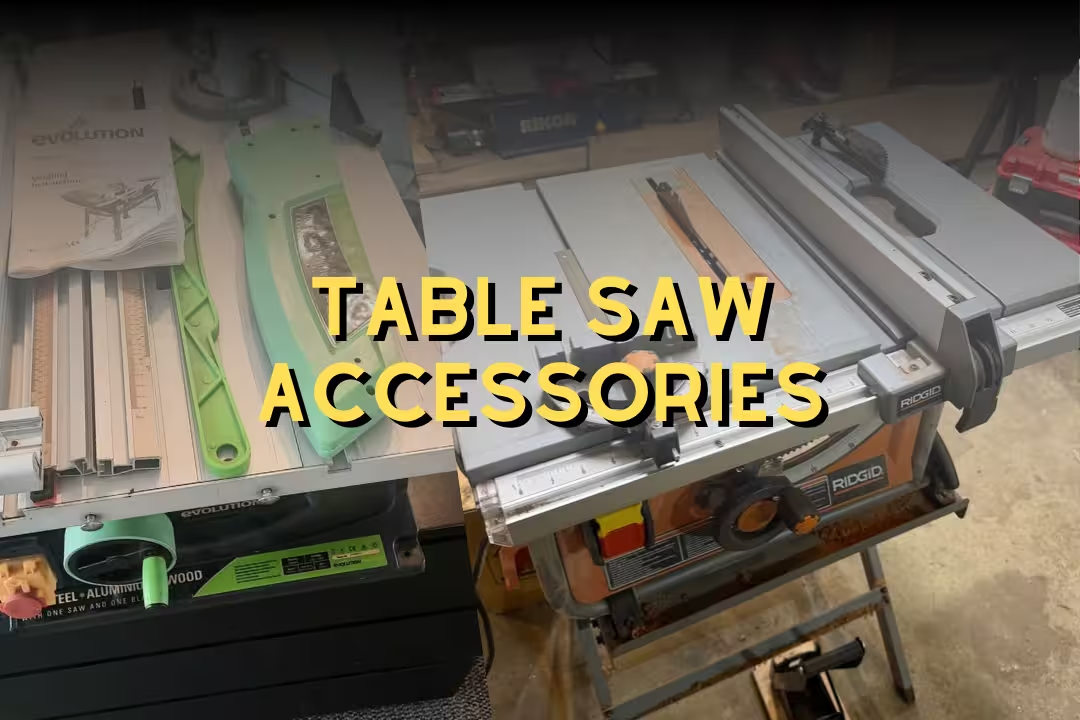
A full-shop ecosystem works when machines share a plan: power circuits, dust trunk line, and material flow from rough to finish. If you’re buying a Powermatic saw, plan your accessories early—push sticks, inserts, featherboards, and guards—using our table saw accessories guide so safety and cut quality grow together.
One practical constraint: shops don’t stay static. Leave slack in ducting where it helps, use quick-disconnects where you need flexibility, and keep machines on bases that roll without twisting the frame, so your calibration doesn’t get wrecked every time you rearrange.
Practical Notes From Real-World Use
What surprised me early on is how often “machine problems” were support problems. Long boards sagging off the planer outfeed caused snipe I couldn’t tune out, and wide rips on the table saw wandered until I added rigid outfeed support and stopped steering the stock with my hips.
Dust collection also didn’t work like I expected until I treated it like a system. A powerful collector connected with long flex hose still left chips in the planer and a haze in the air; shortening flex runs and sealing leaks stopped the hiss of air at joints, improved pickup, and kept the shop from feeling gritty on my teeth after an hour of milling.
Calibration drift has patterns. Mobile bases on uneven concrete slowly introduced twist, which showed up as fence checks that “kept changing”; shimming the base and leveling the saw fixed it for good, and I stopped chasing micro-adjustments that never held.
Last, don’t underestimate setup rhythm. When I rushed, I made beginner mistakes like skipping warm-up cuts, using the wrong RPM on the drill press, and leaving the jointer fence slightly off 90°, then I spent the rest of the day smelling burn marks and sanding out problems. A short pre-flight—square, parallel, sharp, extracted—keeps Powermatic machines feeling as smooth and accurate as people expect them to be.
FAQs
Is Power Matic The Same As Powermatic?
No, Powermatic (one word) is the official brand name and ‘Power Matic’ is a common misspelling. Use the Powermatic spelling when searching for parts, manuals, warranty information, or technical support, since official resources, serial lookups, and replacement parts listings typically follow the correct branding.
Which Powermatic Table Saw Is Best For A Small Professional Shop?
Powermatic’s smaller cabinet saws, such as the PM-2000 or PM-2100 series, often offer the best balance of size, power, and dust collection for a small professional shop. Choose a model with the horsepower you need (3–5 HP), a compact footprint that fits your floor space, and optional accessories like an outfeed table, fence upgrades, and upgraded dust ports for production work.
Are Helical Cutterheads Worth It On A Powermatic Planer?
Yes – helical cutterheads are generally worth the upgrade for smoother surface finish, quieter operation, and longer-lasting carbide inserts. They reduce tear-out on figured woods, require less frequent sharpening than straight knives, and often save time on sanding and refinishing; weigh the extra cost against your workload, material types, and desire for improved finish quality.
What Should I Check When Buying A Used Powermatic Drill Press?
Check spindle runout, quill action, bearings, table flatness, motor operation, belts, and pulleys before buying a used Powermatic drill press. Ensure smooth, wobble-free rotation and accurate depth stops, inspect the column and table for rust or cracks, verify the chuck and key, test the speed range, and confirm electrical safety and grounding; include any required accessories in the sale.
How Do I Improve Dust Collection On A Powermatic Table Saw?
Seal cabinet seams and use a dedicated throat plate or riving knife shroud to improve dust collection on a Powermatic table saw, and connect a properly sized dust collector or cyclone to the saw’s dust port. Add a blade hood or dust chute, optimize hose diameter and blast gates, keep the collection system clean, and consider an auxiliary hood or power-assist shroud at the cut line for finer dust capture.

Powermatic III Plus Injector
- Powerful electric motor for consistent, even cigarette packing
- Adjustable fill control to tailor cigarette tightness and draw
- Sturdy metal construction built for long term use
- Simple operation reduces wasted tobacco and speeds production
- Removable parts make cleaning and maintenance straightforward
 Buy on Amazon

HawkMatic HK3 Plus Auto Injector
- Automatic electric loading for faster cigarette production
- Large hopper cuts down on frequent refills during sessions
- Adjustable settings help control firmness and tobacco feed
- Compact footprint saves counter space and is easy to store
- Quick disassembly for cleaning and simple upkeep
Buy on Amazon

Powermatic 2 Plus Injector
- Reliable electric performance for consistent fills each time
- Adjustable density for customized cigarette draw and firmness
- Robust metal build designed for everyday use
- Straightforward controls ideal for beginners and experienced users
- Easy to clean components reduce downtime
Buy on Amazon
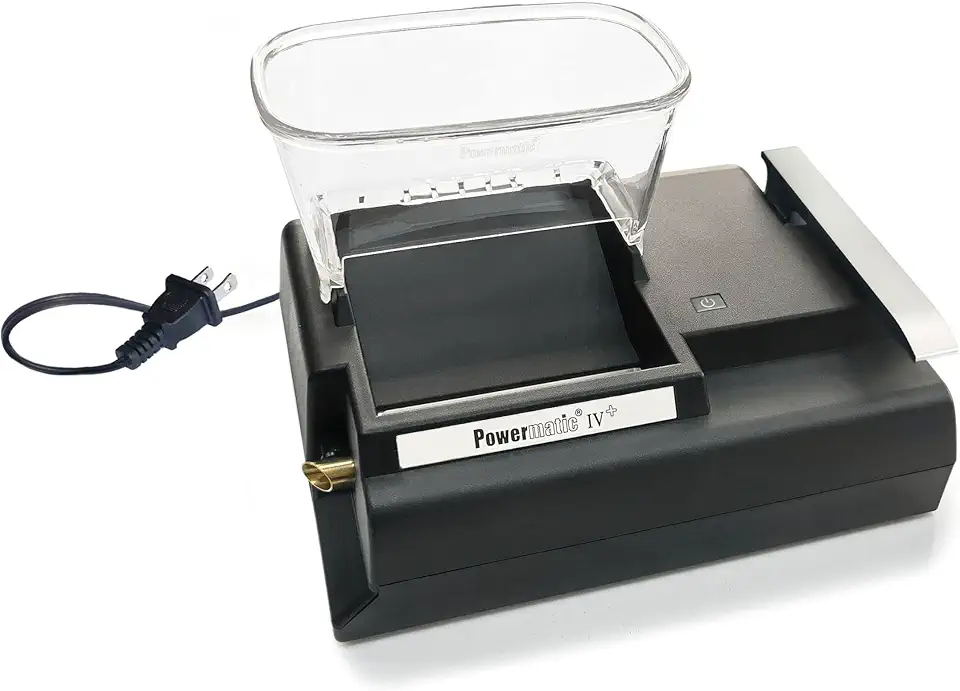
Powermatic 4 Electric Injector
- Heavy duty construction for dependable, long lasting use
- Fast, one touch operation to speed up cigarette making
- Adjustable fill control for precise firmness and airflow
- Compatible with standard cigarette tubes and filters
- Removable parts make cleaning and maintenance easy
Buy on Amazon

Powermatic V Plus with Hopper
- Integrated tobacco hopper reduces frequent refilling during batches
- Automatic tube loading simplifies the rolling process
- Adjustable fill settings let you control tightness and draw
- Robust design built for consistent, high volume use
- Easy to disassemble for cleaning and maintenance
Buy on Amazon
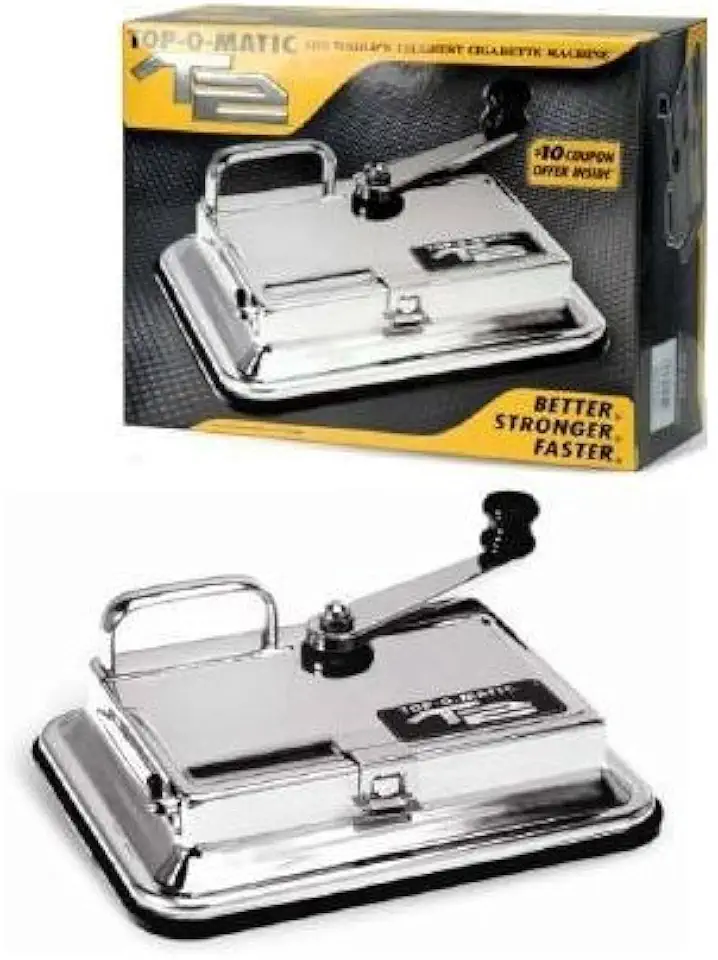
Top O Matic T2 Precision Injector
- Compact manual design for precise, controlled fills
- Durable metal construction for reliable long term use
- Fine adjustment lets you customize cigarette tightness
- Simple operation ideal for small batches and home use
- Easy maintenance with removable parts for cleaning
Buy on Amazon

Powermatic Mini Manual Roller
- Compact, portable design perfect for travel and small spaces
- Precision manual control for consistent cigarette packing
- Solid construction for dependable everyday use
- Easy to operate, ideal for beginners and hobbyists
- Simple to clean and store when not in use
Buy on Amazon

Replacement AC Power Cord for Powermatic
- Direct replacement cord for Powermatic 2 2 Plus 3 3 Plus III and PM 3 models
- Durable insulated cable designed for reliable power delivery
- Standard grounded plug for safe, stable connection
- Simple swap in to restore machine power without complex tools
- Exact fit to original specifications for hassle free installation
Buy on Amazon

Powermatic Mini White Injector
- Small footprint ideal for countertops and limited space
- User friendly operation for quick, consistent cigarette making
- Lightweight design makes it easy to move and store
- Built to deliver even fills with minimal effort
- Easy to take apart and clean for routine maintenance
Buy on Amazon

Zero Clearance Insert for PowerMatic 64
- Provides tear free cuts and better workpiece support at the blade
- Designed to fit Fulton Jet Grizzly and PowerMatic 64 table saws
- Improves dust collection by sealing the opening around the blade
- Simple installation keeps table saw setup quick and tool free
- Made from stable, warp resistant material for long term use
Buy on Amazon