
Scroll Saw vs Band Saw: A Comprehensive Comparison

Scroll saw vs band saw comes down to cut style: a scroll saw makes tight, intricate, low-tearout cuts in thin stock, while a band saw makes faster cuts in thicker stock and can resaw boards. Pick a scroll saw for fretwork and inside cuts; pick a band saw for curves, ripping, and thickness where speed and capacity matter.
Table of Contents
The confusing part is both tools “cut curves,” yet they do it with different blade motion, blade geometry, and real limits that show up fast in hardwood, thick stock, or long boards. Trade-offs are the story here.
Scroll saw vs band saw: At-a-glance differences
In daily shop use, I treat the scroll saw like a detail machine that shines on controlled, slow feed rates, while the band saw is a material mover that earns its keep when boards get longer, thicker, or heavier.
| Category | Scroll saw | Band saw |
|---|---|---|
| Best fit | Fretwork, ornaments, puzzles, inside cuts | Curves, ripping, resawing, thicker stock |
| Typical speed | ~400–1750 SPM (strokes/min) | ~1520–3060 SFPM (surface ft/min, often 2-speed) |
| Cut finish | Smoother, less sanding | More saw marks, more cleanup |
| Thickness comfort zone | About 1/4″–3/4″ is “easy”; thicker gets fussy | Comfortable past 1″; many saws handle 6″+ thickness |
| Inside (pierced) cuts | Yes, with a starter hole | No |
Best use cases
A scroll saw wins when your hands need to “steer” tiny radii and micro-corrections while watching a pattern line, with the blade doing a gentle up-down pecking action. A band saw wins when the stock has real mass and you’d rather guide a board through a continuous cut than babysit a thin blade.
- Choose a scroll saw for: fretwork, name signs, marquetry packets, intarsia shaping, toys, ornaments, puzzle pieces, and any job needing inside windows.
- Choose a band saw for: template rough-outs, furniture parts, cabriole legs, tenon cheek waste removal, and resawing veneer or bookmatched panels.
- If your “curves” are broad and your stock is thick, a band saw feels calm and steady; a scroll saw can start to feel like you’re forcing it.
Capacity and thickness
Scroll saw capacity is mostly about throat size (often 16″–20″) and how thick a cut stays controllable before blades heat, dull, and start drifting. Band saw capacity is about resaw height and frame stiffness; the moment you try a taller cut with a light frame, you’ll feel the board “push back” and the blade will start to lead.
In practice, scroll saws feel best under 3/4″ hardwood for detailed work; you can cut thicker, but breakage and burning show up quickly if your feed rate isn’t dialed in. Band saws stay comfortable far past that thickness, where a scroll saw would feel like it’s vibrating and nibbling instead of cutting.
Speed and finish
Band saws cut faster because the blade is a continuous loop moving in one direction, so you get constant tooth engagement. Scroll saws can leave a surprisingly clean edge on thin stock, but they cut slower because each stroke is a little bite and the work can chatter if you rush.
The tactile difference is obvious: a scroll saw produces a fine, dusty stream and a soft buzzing sound, while a band saw throws coarser chips and you can feel a steady pull into the blade. That pull is what lets a band saw chew through thickness, but it’s also why you’ll do more sanding afterward.
Price ranges
Entry scroll saws often land around $150–$400, where the big differentiators are vibration control, blade-change speed, and usable variable speed. Benchtop band saws commonly sit around $200–$600, where the money goes into frame stiffness, guide quality, and resaw height; you can browse current picks in our band saw guide.
Blade and motion differences
The blade is the whole story: the scroll saw’s short blade moves up and down, while the band saw’s long blade runs in one direction around two wheels. That difference changes heat, cut radius, internal-cut ability, and how often you’ll swap blades.
Scroll saw blades

Scroll saw blades are thin and short, commonly in the 5–20 TPI range, and they’re meant to track tight curves without tearing fragile fibers. Because only about an inch of tooth line is doing the work at any moment, they dull faster than most people expect, especially in maple, oak, or walnut where the cut starts to feel “polished” and slow rather than crisp.
A common beginner mistake is grabbing a fine-tooth blade for everything, then pushing harder when it stalls; that heats the blade, stretches it, and you’ll hear a higher-pitched “ting” before it snaps. A better workaround is to keep two blade types ready: a middle-TPI for most hardwood patterns, and a coarser blade for thicker stock so the gullets clear dust instead of packing.
Band saw blades

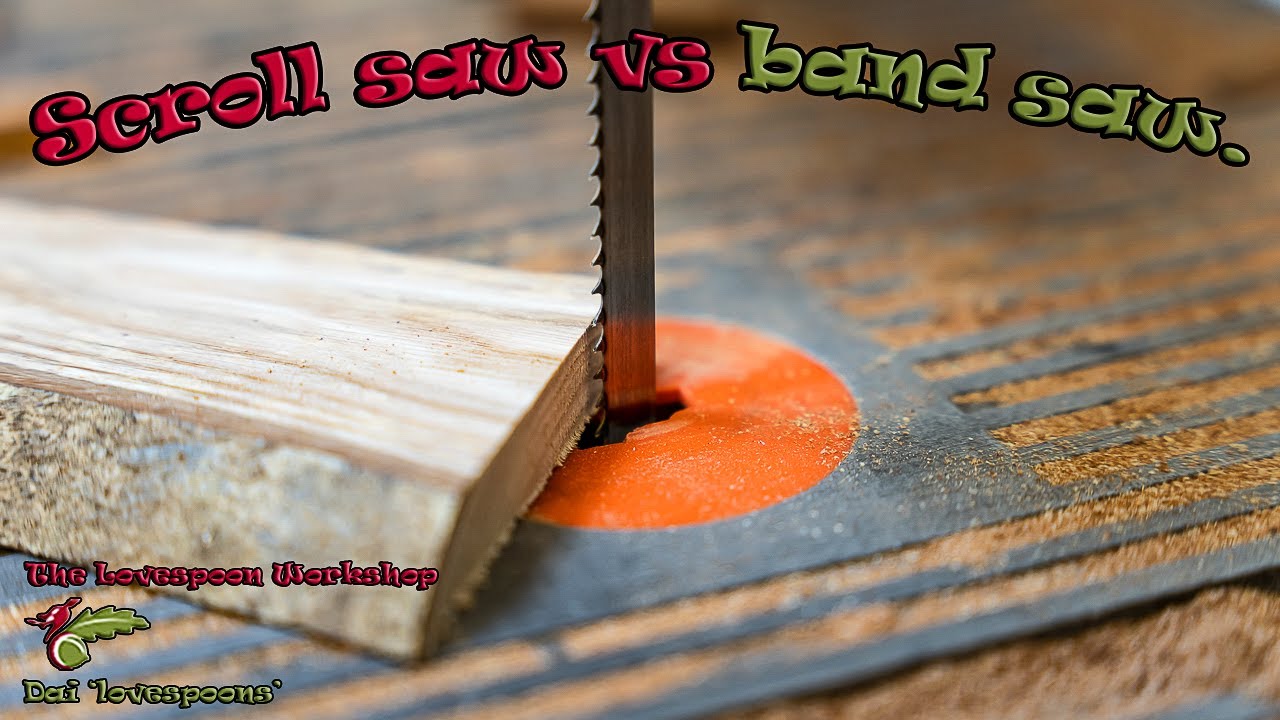
Band saw blades are a continuous loop, commonly 1/8″–1″ wide depending on the saw and task, and they run at high surface speed. Width controls curve ability: narrow blades turn tighter, while wider blades resist twisting and are the right tool for resawing and straight cuts.
Most band saw frustration comes from mismatching blade width and guide setup to the job. If you try to cut a tight curve with a 1/2″ resaw blade, you’ll feel the board fight you, the blade will start to squeal, and the cut will drift; swapping to a narrower blade and resetting guides usually fixes it faster than “tuning” for hours.
Internal cut capability
This is where the scroll saw is in a different class: drill a starter hole, thread the blade through, tension it, and cut an internal window with no edge entry. A band saw can’t do that because the blade is a closed loop, so internal shapes require a different workflow (drill and jigsaw, or drill and scroll saw, or coping saw cleanup).
If you make layered portraits, ornaments, or signs with “islands” inside letters (A, O, R), the scroll saw saves time and avoids glue-line repairs that happen when you split a piece to fake an inside cut.
Power, capacity, and performance
Power feels different on these tools: a scroll saw motor is small and steady, while a band saw motor and frame can muscle through thicker cuts. The moment you exceed what the saw wants to do, you’ll notice sound changes first—bogging on a scroll saw, or a deeper growl on a band saw.
Throat and depth
Scroll saw “throat” dictates how far you can rotate a workpiece before you hit the arm, which matters on big name signs and wide patterns. Band saw “depth” is more about resaw height and what the frame can hold without flexing; if you’re chasing better resaw results, a stiffer frame and better guides matter more than raw amperage.
Speed ranges
Scroll saw variable speed often sits around 400–1750 SPM, and that range is useful: slow down for plastics (less melting) and delicate veneers, speed up for clean cutting in softwood where fibers can fuzz at low speed. Band saws often run two common speeds around 1520/3060 SFPM—low for some nonferrous metals with the right blade, high for wood—so you “pick a gear” instead of micro-tuning.
A mistake I see is maxing speed to fix burning; on either saw, burning is often a blade or feed problem, not a speed problem. If the cut smells sharp and acrid and the kerf turns glossy, swap blades, reduce pressure, and let the teeth clear waste instead of rubbing.
Straight vs curve cutting
Band saws feel natural on straight and gentle curves because the blade tracks forward and the table supports longer stock. Scroll saws feel natural on tight curves because you can pivot the work on the table with very little force, keeping your fingertips close enough to “feel” the line without white-knuckling the piece.
For straight lines that must be accurate, a band saw still won’t replace a table saw and fence setup; it’s a great roughing tool, then you joint/plane or clean up at the table saw. If you’re building that workflow, our best table saw roundup explains what features actually matter for repeatable rips.
Precision, finish, and learning curve
Precision isn’t only the machine—your setup and your hands decide the outcome. Scroll saw work rewards light touch and patience; band saw work rewards correct blade selection and guide settings that stop blade twist.
Detail and fretwork
Scroll saws excel at fretwork because the blade kerf is tiny and the up-down action lets you “turn on a dime,” even under 1/4″ radius with the right blade and clean tension. Band saws can do decorative work, but the minimum curve radius and kerf width usually force thicker lines and more cleanup.
If you plan to stack-cut patterns, use painter’s tape and a light spray adhesive between layers; it keeps the stack from creeping. Beginners often clamp too hard or use thick tape that lifts the work off the table, which increases vibration and makes the cut feel skippy.
Sanding and cleanup
Scroll saw cuts often need only a quick edge kiss, while band saw cuts often show tooth marks that you can feel as tiny ridges when you run a fingertip across the edge. For inside curves, pairing either saw with a spindle sander saves time and keeps shapes round; our spindle sander guide covers sizes that match common curve work.
A fast pro workaround for band saw cleanup is to sand only what matters: hit the reference faces and joinery areas first, then soften show edges last. Over-sanding a curve can flatten it, and you won’t notice until parts meet and a gap stares back at you.
Skill requirements
Scroll saw skill is about control: steady feed pressure, turning without twisting the blade, and choosing a blade that clears dust. Band saw skill is about setup: guide spacing, tension, tracking, and using the right blade width so the blade doesn’t “lead” off your line.
If you want one shortcut that helps both: cut just outside the line consistently. Trying to “ride” the line on the first pass creates tiny corrections that show up as wavy edges, and that waviness is harder to fix than a clean, uniform margin you sand to final.
Reliability and common limitations
Both tools are reliable if you treat blades as consumables and keep setup tight. Most “my saw can’t cut” complaints trace back to dull teeth, low tension, or forcing feed pressure until the blade heats.
Blade wear rates
Scroll saw blades often dull 3–5× faster in real use because such a short section does all the cutting work, so the same teeth see constant friction and heat. That’s one reason scroll saw projects feel amazing for 10 minutes, then suddenly start burning and drifting—nothing “broke,” the blade just aged out.
If you hate wasting blades, you can stretch life by using the right TPI, slowing feed pressure, and letting the blade do the work. For cleanup work, a good sharpening stone can maintain chisels and scrapers that finish edges after cutting; see our sharpening stone guide for grits that make sense in a woodworking shop.
Breaks on hardwood
Scroll saw blade breaks spike in hardwoods over about 3/4″ when tension is low, the blade is too fine, or the work is turned while the teeth are still buried. You’ll feel it coming: the blade starts to “ping,” the cut slows, and the wood gets warm under your fingertips where it’s rubbing.
A shop workaround that reduces breaks is to back out of tight turns in two moves: stop feeding, ease the workpiece back a hair to clear the kerf, then rotate and re-enter. That tiny reset keeps the blade from binding and snapping at the worst moment—halfway through a delicate inside corner.
Band saw curve wandering
Band saw wandering on curves is usually blade width or guide alignment, not “bad luck.” If your curve is tighter than the blade can handle, the blade twists and walks off the line; if guides sit too far back, the blade can deflect before the bearings support it.
One fast diagnostic: draw a gentle S-curve on scrap and cut it at a comfortable feed rate. If the cut pulls consistently to one side, start with a fresh blade and reset guide bearings and thrust bearing; if it only wanders on tight sections, go narrower, then slow down and make relief cuts.
For a deeper comparison that matches what buyers look for, Woodsmith’s review lays out practical pros/cons in plain language: Scroll Saw vs. Band Saw.
Band saw vs jigsaw vs scroll saw
If you’re torn between three tools, separate them by how you work: stationary precision (scroll saw), stationary capacity (band saw), and carry-it-to-the-work flexibility (jigsaw). The jigsaw feels “free,” but that freedom often costs square edges and clean curves in thicker wood.
Quick feature table
| Feature | Band saw | Scroll saw | Jigsaw |
|---|---|---|---|
| Best for | Thick stock, resawing, broad curves | Tight curves, fretwork, pierced cuts | Portable curves, installs, mixed materials |
| Typical max thickness | Often 6–12″ (saw dependent) | Often 3/4–2″ (project dependent) | Often 2–4″ (blade dependent) |
| Finish quality | Rougher, sanding common | Cleaner on thin stock | Varies; tearout and bevel drift common |
| Inside cuts | No | Yes | Yes (with starter hole), but rougher |
| Portability | Low | Low | High |
Portability trade-offs
A jigsaw is the tool I grab when the work is awkward to bring to the bench, like trimming an opening or cutting a curve on a big panel. The trade-off is blade deflection: beginners often end up with edges that are beveled even when the base says 90°, then parts refuse to fit cleanly.
If you want a compact option that behaves a bit more like a tiny scroll saw for hobby cuts, a portable scroll/jigsaw hybrid can help in tight spaces.

Dremel Moto-Saw Compact Kit
- Lightweight, portable design ideal for hobbyists and model makers
- Variable speed control for precise cutting of delicate materials
- Includes starter blades and handy storage for accessories
- Compact footprint stores easily in small shops
- Great for intricate cuts and small projects
 Buy on Amazon
Which saw should you choose?
Make the choice by project type and frustration tolerance: a scroll saw rewards patience and gives you unmatched detail, while a band saw handles more jobs with fewer stops. If you hate frequent blade changes, you’ll feel that pain more on a scroll saw.
Choose a scroll saw
Pick a scroll saw if your work needs tight radius control, inside cuts, and clean edges that don’t require heavy sanding. It’s also a solid choice if you work at night or share space, since the sound is more of a steady buzz than the louder, lower-frequency rumble you get from bigger saws.
Common mistake: buying a scroll saw without caring about blade-change access, then dreading every inside cut. Fast blade changes matter because pierced work can require dozens of re-threads per piece, and slow changes turn a relaxing project into a nuisance.
Choose a band saw
Pick a band saw if you want one machine that can rough parts, cut curves in thicker stock, and handle resaw tasks that would be unrealistic on a scroll saw. If you’re already using a table saw for straight cuts, a band saw becomes the perfect partner for the shapes a fence can’t do; pairing it with the right table saw fence setup can tighten your whole workflow (see our table saw fence guide).
Common mistake: expecting a band saw to cut dead-straight like a table saw without tuning. Blade tension, guide placement, and a fresh blade do most of the work; trying to “muscle” a dull blade straight just makes it drift more.
When to buy both
Buying both makes sense when you do a mix of furniture parts and decorative work: the band saw roughs and resaws, and the scroll saw handles the delicate cutouts and crisp details. In a small shop, I like this split because each tool stays in its lane, so you spend less time swapping blades or fighting setups.
If budget forces one purchase now, start with your most common material thickness. Thin craft stock points to a scroll saw; thicker boards and bigger parts point to a band saw.
Safety differences
Both tools can hurt you, but the injury patterns differ. Scroll saws more often cause small nicks and “sandpaper burns” from vibration and friction, while band saws can cause deeper cuts because the exposed blade is longer and the feed force is higher, especially when hands drift close during tight curves.
A safety habit that saves fingers on both: use a push stick or small offcut as a “hand shield” anytime your fingertips would pass within a couple inches of the blade. Another mistake is wearing gloves for grip; gloves can snag and pull, so keep bare hands and control the stock with steady pressure.
Recommended tools and resources
The right accessories make either saw feel like a better machine: fresh blades, a bright task light, and a stable stand beat “more power” for most hobby and small-shop work. Budget for blades first, since dull blades ruin accuracy faster than any other variable.
Recommended scroll saws
These scroll saws are solid starting points for detailed pattern work and inside cuts.

WEN 16-inch Scroll Saw
- Variable speed control for precise cuts
- Built-in work light improves visibility on detailed projects
- Generous 16-inch throat for larger patterns
- Stable base reduces vibration for smoother results
- Compatible with standard scroll saw blades for easy replacement
Buy on Amazon
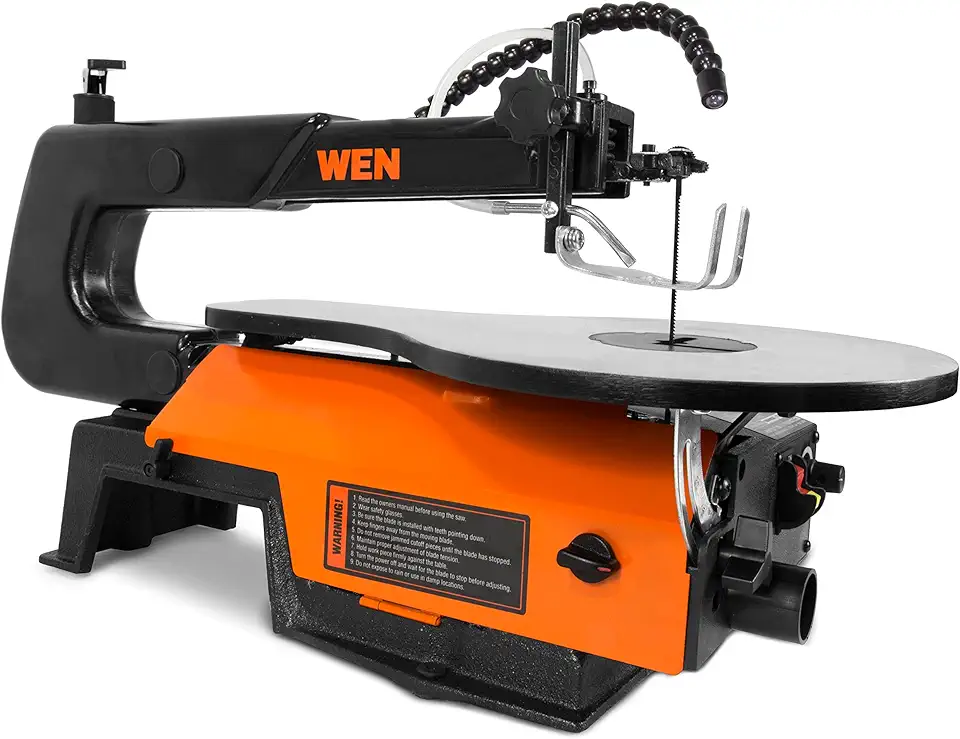
WEN 16-inch Quick-Change Scroll Saw
- Easy-access blade changes speed up workflow
- Variable speed lets you dial in cutting for different materials
- Integrated work light for clearer cutting lines
- Large throat capacity for bigger projects
- Stable operation ideal for intricate fretwork
Buy on Amazon

WEN 16-inch Easy-Access Scroll Saw
- Tool-free easy-access blade changes for fast swapping
- Variable speed control for fine detail or faster cuts
- Large 16-inch throat for expanded cutting range
- Stable table minimizes vibration for cleaner cuts
- Great for detailed woodworking and hobby applications
Buy on Amazon
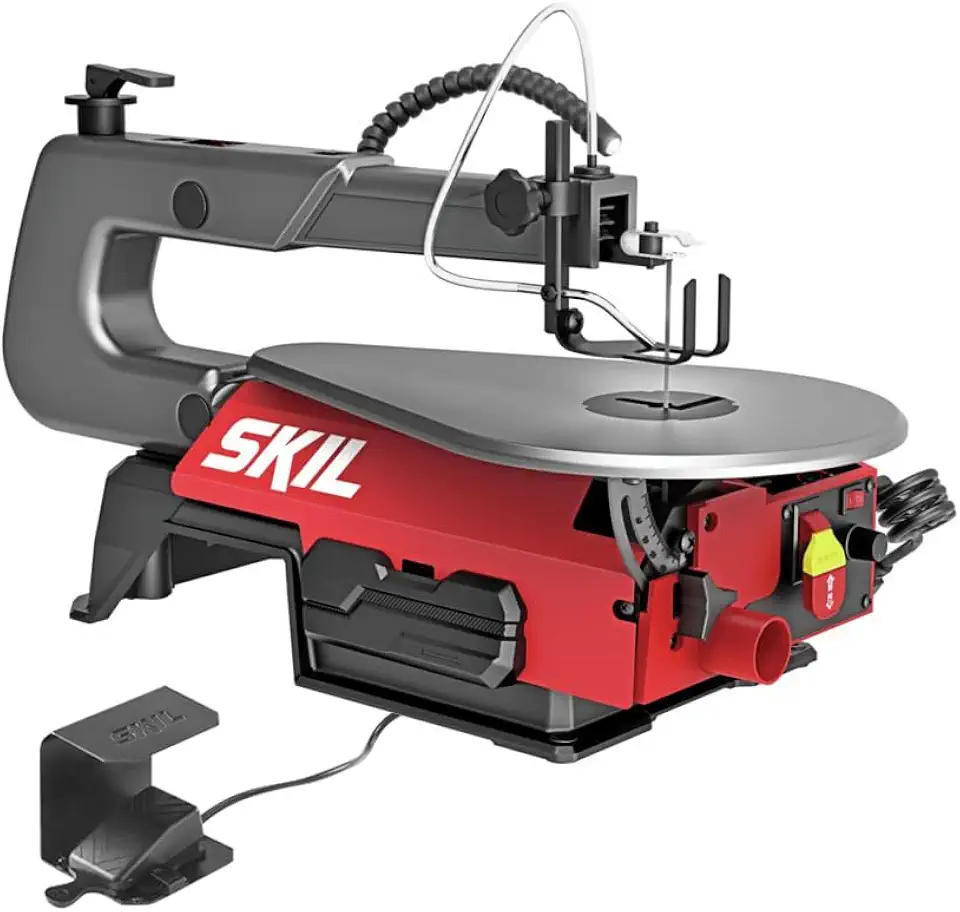
SKIL 16-inch Scroll Saw with LED
- Variable speed lets you customize cutting performance
- Integrated LED work light improves visibility on the cutline
- 16-inch throat handles larger patterns and projects
- 1.2 amp motor tuned for fine detail work
- User-friendly controls suitable for beginners
Buy on Amazon

Shop Fox 16-inch VS Scroll Saw
- Variable speed control for precision and versatility
- Foot switch enables hands-free operation and improved control
- Built-in LED light enhances cutting visibility
- Includes miter gauge and rotary shaft for advanced setups
- Robust construction suited for pro shop use
Buy on Amazon
Recommended band saws
These band saws cover common small-shop needs like curve cuts, roughing parts, and light resaw work.

WEN 9-inch Benchtop Band Saw
- Compact footprint fits small shops and benches
- 2.8 amp motor delivers steady cutting power for hobby projects
- 9-inch capacity handles small to medium stock
- Adjustable blade guides help maintain accurate cuts
- Simple setup and maintenance for quick use
Buy on Amazon

WEN 10-inch Two-Speed Band Saw with Stand
- Two-speed motor provides versatility for different materials
- Includes stand for a stable, shop-ready setup
- 10-inch capacity fits common woodworking tasks
- 3.5 amp motor offers reliable cutting power
- Easy access to belts and blades for routine maintenance
Buy on Amazon
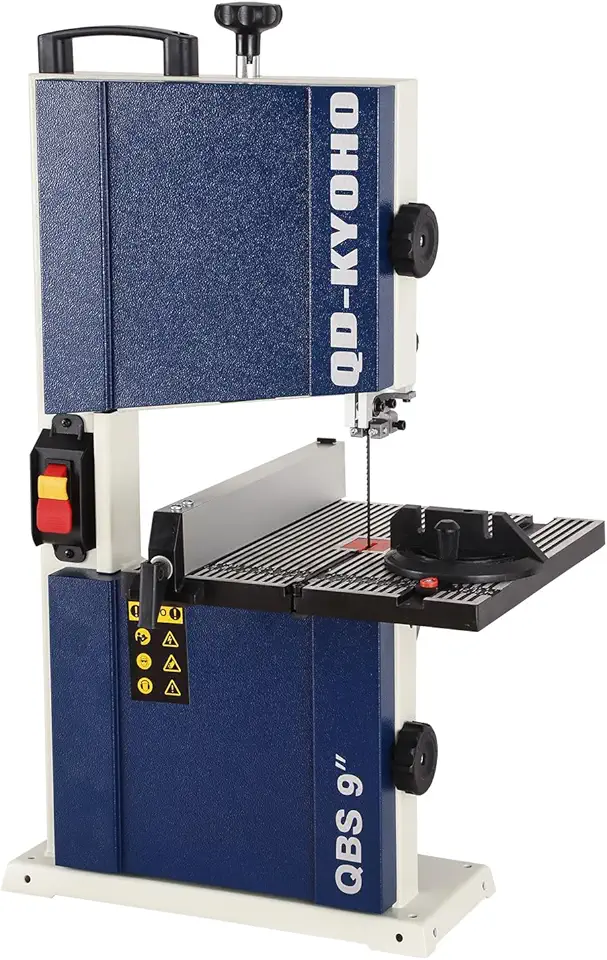
Portable 9-inch Benchtop Band Saw
- Portable benchtop design for easy transport and storage
- 1/3 HP motor with 2.5 amp rating for steady cutting performance
- Cast-aluminum worktable with scale for accurate layout and cuts
- 770 FPM blade speed for efficient cutting action
- Includes miter gauge for angled cuts
Buy on Amazon
Must-have band saw reference
If you want repeatable results, a band saw rewards a little reading on tracking, tension, and guide setup.
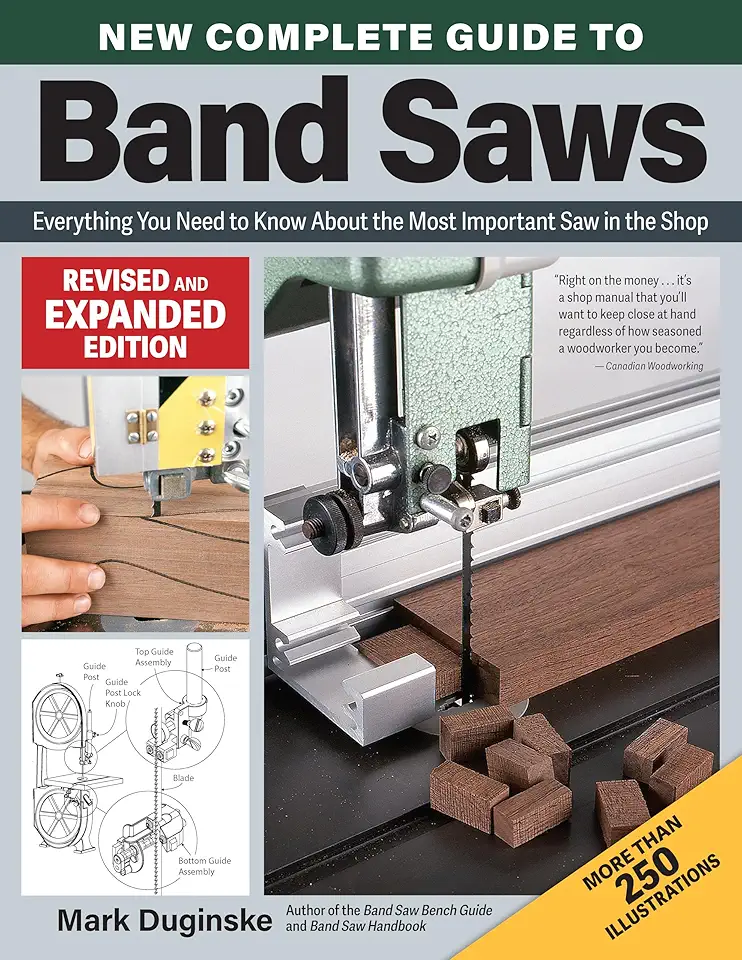
Complete Guide to Band Saws (Revised)
- Step-by-step setup and adjustment procedures for any band saw
- Maintenance routines to prolong blade and machine life
- Troubleshooting tips for common cutting and tracking issues
- Safety best practices and shop-ready workflows
- Blade selection and project advice for better results
Buy on Amazon
Practical Notes From Real-World Use
The biggest surprise for new owners is how much the “same” wood can cut differently between boards. A scroll saw that feels smooth on poplar can start chattering on hard maple, and you’ll feel that chatter in your fingertips as a fast, tiny vibration that makes you overcorrect and wobble the line; slowing down and moving to a coarser blade usually fixes it.
Dust collection also behaves differently than people expect. Scroll saw dust is fine and floats, so it sneaks into your nose and tastes dry and bitter later; a small nozzle close to the cut line matters more than a big shop vac across the room. Band saw chips are heavier and fall, but the lower cabinet can pack up and cause heat smells if you don’t clear it out.
On band saws, I see beginners chase perfect curves without relief cuts, then the blade binds and the cut drifts wide. Cutting a few strategic relief kerfs lets waste fall away so the blade doesn’t get pinched, and the saw suddenly feels easier to steer.
On scroll saws, the classic frustration is inside cuts that take forever because re-threading the blade feels fiddly. The shop trick is to batch operations: drill all starter holes first, stack your blades and wrench where your hand naturally lands, and keep tension consistent so you don’t spend the whole session “tuning” by ear.
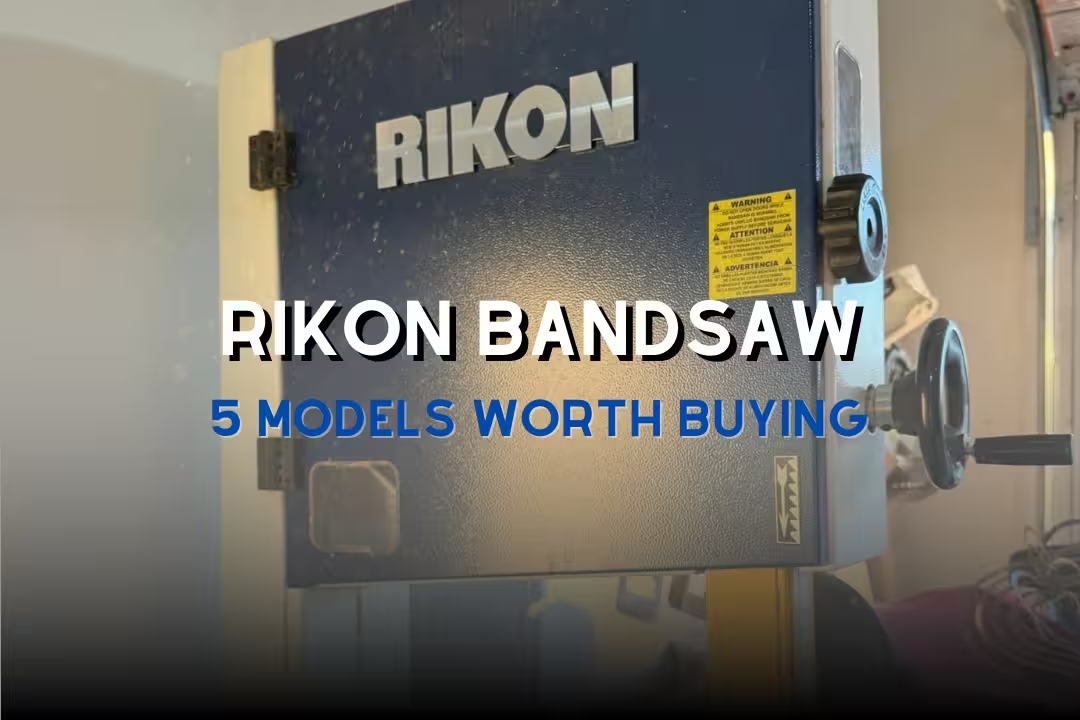
For band saw buyers trying to step up in quality, focusing on guides and frame stiffness usually pays off more than chasing extra horsepower. If you want a closer look at what changes as you move up-market, our Rikon bandsaw breakdown highlights the features that show up in real cuts.
FAQs
Is A Scroll Saw Better Than A Band Saw For Detailed Woodworking?
Yes. A scroll saw is generally better for very fine, intricate woodworking because it uses a thin blade and offers excellent control for tight curves and fretwork. It cuts slower and handles thinner stock than a band saw, so use the scroll saw for detail and the band saw for resawing or heavier work.
Can A Band Saw Do The Same Cuts As A Scroll Saw?
No. A band saw cannot match a scroll saw for very tight, intricate cuts because its blades are thicker and less flexible. Band saws excel at cutting thicker stock, wider-radius curves, and resawing, so you can often substitute one for the other but will sacrifice fine detail or the ability to cut very thin patterns.
What’S The Main Difference Between A Band Saw Vs Jigsaw Vs Scroll Saw?
They differ mainly by blade action, material thickness they can handle, and the level of detail they provide. Band saws use a continuous loop blade for cutting thick stock and resawing; jigsaws use a handheld reciprocating blade for portable straight or curved cuts in sheet goods; scroll saws use a thin up-and-down blade for fine, intricate patterns. Pick the tool based on thickness, precision, and portability.
How Thick Of Wood Can A Scroll Saw Cut Compared To A Band Saw?
A scroll saw typically handles thin stock, usually up to 1–2 inches thick. Band saws vary by size and throat capacity but commonly cut several inches to over a foot, making them suitable for resawing lumber and thicker boards that a scroll saw cannot manage.
Do Scroll Saw Blades Break Easily And How Often Should You Replace Them?
Scroll saw blades are relatively delicate and can break more easily than larger saw blades. Replace blades when they become dull, burn the wood, wander, or produce rough cuts — for hobbyists that’s often after several hours of cutting and sooner with hard or resinous woods. Use the correct blade size, proper tension, and a gentle feed to reduce breakage.