


Table of Contents
Red oak wood is a North American hardwood, most often from Quercus rubra, known for reddish color, coarse open grain, 1,290 lbf Janka hardness, and use in flooring, furniture, cabinets, trim, veneer, plywood, firewood, and smoking wood. It’s strong, easy to buy, easy to stain, and best kept indoors because its open pores don’t resist water like white oak.
What Is Red Oak Wood?
Red oak wood refers to lumber from trees in the red oak group, with northern red oak, Quercus rubra, being the best-known commercial source in North America. In a lumber rack, it feels firm and slightly grainy under your fingers, and fresh boards often carry a warm, sour-sweet oak smell when cut.
Northern Red Oak

Northern red oak is the species most people mean when they ask, “what is red oak wood?” It’s a deciduous hardwood in the beech family, and its lumber is sold widely for red oak flooring, red oak boards, cabinets, stair parts, and interior millwork.
Red Oak Group
Commercial red oak can include more than one species, such as southern red oak, black oak, pin oak, and scarlet oak. That grouping matters because boards from different regions can vary in color, weight, pore size, and stain response, which is why flooring patches sometimes look close before finishing but shift after the first coat.
Key Specs
Red oak specs place it in the medium-heavy hardwood range: hard enough for durable wood flooring, workable enough for common shop tools, and lively enough in grain to hide small dents better than maple. The figures below align with published species data from The Wood Database.
| Property | Typical Red Oak Value | Practical Meaning |
|---|---|---|
| Common species | Quercus rubra | Main northern red oak lumber source |
| Janka hardness | 1,290 lbf | Good for normal residential floors |
| Average dried weight | About 44 lb/ft³ / 700 kg/m³ | Medium-heavy, solid feel |
| Specific gravity | About 0.56 basic / 0.70 at 12% MC | Good screw holding and strength |
| Common uses | Flooring, furniture, cabinets, trim, veneer, plywood, firewood | Broad interior and utility use |
Common Formats
Red oak lumber is easy to find in both lumberyard and home-center formats, but the convenience level changes the cost and the amount of milling work left for you. Small S4S boards feel smooth and ready in the hand, while rough 4/4 stock leaves saw marks, fuzz, and thickness variation that need jointing and planing.
- Rough red oak lumber for milling in a shop
- S2S, S3S, and S4S red oak boards for furniture and repairs
- Red oak flooring, stair treads, risers, and transitions
- Red oak veneer and red oak plywood for panels and cabinet work
- Turning blanks, craft boards, laser-cut panels, and scroll saw stock
- Red oak firewood, chunks, mini splits, and smoking wood
Appearance and Wood Properties

Red oak appearance is bold, warm, and grain-forward, with visible growth rings and open pores that catch stain fast. Compared with fine-grained hardwoods, red oak looks more textured under clear finish, and you can often feel the pores after one coat if you don’t fill the grain.
Color and Grain

Red oak heartwood usually runs light to medium reddish brown, while sapwood is nearly white to pale brown. Freshly sanded boards can show a pink or salmon cast, and oil-based polyurethane turns that warmer and more amber; for a broader color comparison, see our guide to wood colors.
The grain pattern changes with the cut: plain-sawn red oak shows cathedral arches, quarter-sawn boards show straighter grain and small ray fleck, and rift-sawn boards give the cleanest vertical lines. If the board will become a cabinet door frame or table leg, rift-sawn stock often looks calmer than plain-sawn stock; our wood grain pattern guide shows why those cuts look different.
Open Pores
Open pores are the feature that makes red oak easy to identify and easy to misuse. The earlywood pores are large enough that stain, water, dust, and glue can sink into them, which gives red oak its dramatic grain but weakens its moisture performance.
This video gives useful visual context for how oak pore structure affects water movement and wood selection, especially if you’re comparing red oak with white oak for wet areas.
Janka and Density
Red oak hardness is 1,290 lbf on the Janka scale, which puts it near the sweet spot for household hardwoods. It’s harder than black walnut at about 1,010 lbf and cherry at about 950 lbf, but softer than white oak at about 1,360 lbf and hard maple at about 1,450 lbf; for wider comparisons, use our wood hardness scale.
The density of red oak gives it a solid thump when you stack boards, and that weight helps screws bite well. It’s heavier than many softwoods and poplar, but it still machines more easily than very hard woods like hickory.
Strength Data
Red oak strength supports use in chairs, tables, stair treads, shelves, and flooring. Published values often list modulus of rupture near 14,380 psi, modulus of elasticity near 1,761,000 psi, and crushing strength near 6,780 psi, which explains why well-built red oak furniture feels stiff instead of springy.
Shrinkage and Movement
Red oak movement is a real design constraint, not a footnote. Radial shrinkage is about 4.0%, tangential shrinkage about 8.6%, and volumetric shrinkage about 13.7%, so wide tops, cabinet panels, and floors need seasonal room to expand and contract.
Beginner mistake: gluing a solid red oak panel tightly into a frame can split the frame or bow the panel during humid months. Use floating panels, elongated screw holes, breadboard-end joinery done correctly, or plywood where movement would be trapped.
Durability and Water
Red oak durability is good indoors but poor outdoors. It is usually rated non-durable to perishable for decay resistance, and the USDA Forest Products Laboratory Wood Handbook explains wood decay, moisture, and movement data that match what shows up in real projects: red oak fails fast when water reaches bare end grain.
Water damage on red oak often starts as dark gray or black staining near open joints, sink bases, or floor seams. Once water gets into the pores, sanding the surface may not remove the stain because the discoloration can sit below the finish line.
Red Oak Wood Pros and Cons
Red oak pros make it one of the most practical domestic hardwoods for interiors, while its cons mostly come from water exposure, bold grain, and movement. If you match the wood to the right setting, red oak gives high value without feeling cheap.
Main Advantages
Main advantages include availability, strength, stain acceptance, fair cost, and predictable machining. It’s a forgiving hardwood for people moving beyond pine because it cuts cleanly, sands evenly with the right sequence, and hides small handling marks better than smooth-grained cherry or maple.
- Widely available across North America
- Strong enough for flooring, stair treads, cabinets, and furniture
- Accepts stain readily because of open pores
- Usually more affordable than walnut, cherry, white oak, and hard maple
- Good screw holding, glue performance, and shop workability
- Bold grain hides small dents, pet marks, and daily wear
Main Disadvantages
Main disadvantages are poor natural water resistance, coarse texture, pink undertones, and seasonal movement. Beginners often assume “oak is oak” and use red oak where white oak belongs, then see swelling, black water marks, or early rot.
- Not waterproof and not a smart choice for exposed outdoor use
- Open pores can drink stain too fast and look too dark
- Coarse grain may look busy in minimalist designs
- Pink or red undertone can show through pale stains
- Wide boards can cup or gap if moisture changes are ignored
- Dust can irritate eyes, skin, throat, and lungs
Safety and Allergies
Red oak dust is sharp-feeling and dry in the nose during sanding, and some people react with itchy skin or tight breathing. Use dust collection, wear eye protection, and use a properly fitted respirator when sanding, routing, or machining red oak.
Food safety also matters with red oak smoking wood. Use clean, untreated, mold-free red oak only, and never cook over scraps from painted boards, pressure-treated lumber, plywood, stained furniture, or glue-laminated panels.
Sustainability
Sustainable red oak is easier to source than many imported tropical woods because it’s a major North American hardwood group. Look for local sawmills, FSC certification, responsible forestry claims, and kiln-dried domestic stock; the American Hardwood Export Council lists red oak among widely available American hardwoods.
Best Uses for Red Oak Wood
Best uses for red oak wood are dry interior projects where hardness, grain, and value matter more than natural rot resistance. It works best as flooring, furniture, cabinets, trim, veneer, plywood, stair parts, firewood, and smoking wood.
Red Oak Flooring
Red oak flooring is one of the best hardwood flooring choices for normal homes because it balances durability, availability, stainability, and refinish potential. Solid red oak floors can often be sanded and refinished multiple times, while engineered red oak depends on veneer thickness.
Flooring caution: red oak belongs in living rooms, bedrooms, dining rooms, offices, halls, and stairs, not wet bathrooms or laundry rooms. In older homes, narrow 1.5 inch red oak flooring can be hard to patch because aged boards amber over time, so test stain on loose repair strips before committing.
For deeper floor planning, read our dedicated guide to red oak flooring. It covers room choice, durability, finish wear, and the small installation details that reduce cupping and gapping.
Furniture and Cabinets
Red oak furniture works well for tables, chairs, desks, bookcases, beds, benches, and storage pieces. The wood has enough strength for joinery and enough visual character for traditional, mission, farmhouse, rustic, and craftsman styles.
Red oak cabinets can look warm and classic, especially with medium and dark stains. For a smoother furniture-grade surface, fill the grain before clear coating; otherwise, the finish can look slightly rippled when light skims across the doors.
Style trade-off: red oak can feel too busy for flat, ultra-modern furniture unless you choose rift-sawn boards and a calm stain. If you’re comparing species for casework, our guide to wood for furniture will help narrow the options.
Trim and Millwork
Red oak trim is common for baseboards, crown molding, door casing, window casing, stair rails, balusters, and interior doors. It cuts clean profiles with sharp knives, but dull router bits can burn edges and leave a sour scorched smell that takes extra sanding to remove.
Veneer and Plywood
Red oak veneer gives cabinets, panels, and repairs the look of solid oak with far less wood movement. Red oak plywood is often the smarter choice for cabinet boxes, built-ins, shelving, wall panels, and laser-cut craft signs because sheet goods stay flatter than wide glued-up solid panels.
Firewood and Smoking
Red oak firewood burns hot and long once dry, but green oak hisses, smokes, and fights the flame because the pores hold moisture deep inside. Red oak smoking wood gives a medium to bold smoke flavor that pairs well with beef, pork, lamb, poultry, game, ribs, and Santa Maria-style tri-tip.
Seasoning matters: split red oak often needs 12 to 24 months to dry properly, and many wood burners aim for under 20% moisture content. The Penn State Extension firewood guide explains why dry firewood burns cleaner and delivers more useful heat.
Red Oak vs White Oak
Red oak vs white oak comes down to pores, water resistance, color, cost, and use case. Red oak is usually easier to find and less costly, while white oak is better for moisture-prone work because its pores are more blocked by tyloses.
Quick answer: red oak is often better for affordable interior stained projects, while white oak is better for wet areas, exterior doors, barrels, boat parts, and neutral modern interiors. For a full side-by-side breakdown, see red oak vs white oak.
Hardness and Strength
White oak hardness is about 1,360 lbf, while red oak hardness is about 1,290 lbf. That difference is real on paper but small in daily flooring and furniture use; finish quality, grit control, and moisture management often matter more than the 70 lbf gap.
Color and Grain
Red oak color tends to read pinker, warmer, or redder, while white oak often looks tan, beige, olive, or golden brown. Stain can narrow the visual gap, but clear finishes make the species difference easier to see.
Grain difference also matters: red oak pores look more open and dramatic, while white oak can appear tighter and calmer. Quarter-sawn boards in both species can show ray fleck; read our quarter-sawn oak guide if ray fleck is part of your design goal.
Water Resistance
White oak wins water resistance because tyloses help block its pores. Red oak end grain can pull in water much faster, which is why red oak is a poor choice for barrels, boats, planter boxes, shower trim, and outdoor furniture.
Shop workaround: if red oak must sit near a sink or entryway, seal end grain, back sides, grooves, and cut edges before installation. Film finish on the face alone won’t protect hidden pores where water sneaks in first.
Cost and Availability
Red oak availability is one reason it stays popular. White oak has strong demand from flooring, furniture, barrels, and modern interiors, so comparable white oak stock often costs more, especially in wide, clear, rift-sawn, and quarter-sawn boards.
Best Use Cases
Choose red oak for interior flooring, stained cabinets, trim, bookcases, desks, shelves, and budget-conscious hardwood projects. Choose white oak wood for exterior exposure, wet zones, barrels, outdoor furniture, and projects where a tan-neutral tone looks better than pink-red warmth.
Working, Staining, and Finishing
Working red oak is straightforward with sharp tools, steady sanding, and finish tests on offcuts. The wood rewards careful prep, but it also exposes shortcuts because open pores highlight glue spots, sanding scratches, and uneven stain.
Cutting and Machining
Cut red oak with sharp carbide blades and clean router bits to reduce burning and tearout. It planes, joints, routes, and drills well, but boards with knots or wavy grain need lighter passes because the cutter can lift coarse fibers.
Professional workaround: mark the grain direction before planing, and take a skim pass after flipping questionable boards. If tearout still shows, use a card scraper or sanding block rather than chasing the defect thinner through the planer.
Sanding Sequence
Sanding red oak usually works best through 120, 150, and 180 grit, with 220 grit only when the finish system calls for it. Over-sanding can burnish the surface and reduce stain uptake, which makes one board look pale next to another.
- Start at 100 or 120 grit if milling marks are visible.
- Move to 150 grit and sand evenly with the grain.
- Finish at 180 grit for most stain work.
- Vacuum pores, then wipe with mineral spirits or a compatible cleaner.
- Test stain and finish on offcuts from the same boards.
Gluing and Fasteners
Red oak glues well when surfaces are fresh, flat, and dust-free. Clamp pressure should close the joint without starving it; too much pressure can squeeze glue away, while too little leaves a dark line after stain.
Fasteners hold well in red oak, but pre-drill near board ends to prevent splitting. This matters with narrow rails, stair nosing, face frames, and small craft boards where one split can ruin the part.
Stain Behavior
Staining red oak is easy because the pores absorb color fast, but that same feature can make dark stain collect heavily in the grain. Popular colors such as Minwax Weathered Oak can cool the red tone, but the final look depends on sanding grit, board selection, and finish type.
Common mistake: staining without checking glue squeeze-out first. Glue trapped in pores can look invisible on bare wood, then flash as pale islands after stain; scrub squeeze-out while wet, scrape cured glue clean, and use a raking light before finishing.
Finish Options
Best finishes for red oak depend on the look and wear level you need. Oil-based polyurethane warms the wood and deepens the grain, water-based polyurethane keeps it lighter, lacquer builds fast, shellac adds warmth, and hardwax oil gives a lower-sheen hand-rubbed feel.
For smooth tabletops, use grain filler before the final coats. Without filler, your fingertips can still feel the tiny valleys of the pores after finishing, which some people love on rustic pieces but dislike on desks and dining tables.
Maintenance Tips
Maintain red oak by keeping grit off floors, wiping spills fast, using felt pads under furniture, and avoiding wet mops. On furniture, use coasters and avoid placing cups, planters, or damp towels directly on the surface.
Cabinet care means protecting edges near sinks, dishwashers, and coffee stations. Touch up finish before bare wood shows, because water will find end grain and routed profiles before it attacks the middle of a flat panel.
Practical Notes From Real-World Use
Practical shop note: red oak tells on rushed prep. When you wipe a freshly sanded board with mineral spirits, uneven sanding appears as dull patches, the pores darken in seconds, and any cross-grain scratches jump out before the finish makes them permanent.
Floor repair note: matching old red oak is harder than matching new samples in a store. Aged floors have ambered from light and finish, so I test three stain strengths on scrap, then view them beside the floor in morning light and warm evening light before choosing.
Moisture note: red oak near exterior doors often fails at the ends first, not the middle. Seal cuts, use mats that breathe, and avoid rubber-backed rugs that trap damp grit against the finish.
Buying Red Oak Lumber and Products
Buying red oak gets easier once you know grades, thicknesses, surfacing terms, sawing methods, and product formats. The cheapest board isn’t always the best value if you’ll lose half of it to knots, cup, checks, or poor color match.
Lumber Grades
Red oak grades describe clear cutting yield, not beauty alone. FAS and Select suit long visible parts, #1 Common gives value for smaller cabinet and furniture parts, and #2 Common works for rustic projects or short pieces where defects can be cut away.
Thickness and Board Feet
Board feet measure lumber volume: thickness in inches × width in inches × length in feet ÷ 12. A 4/4 red oak board starts roughly 1 inch thick before surfacing, while 5/4, 6/4, and 8/4 stock suit thicker tops, legs, benches, and turned parts.
Buying tip: add waste for milling, grain selection, defects, and mistakes. For furniture parts, I often buy extra length rather than extra width because end checks and color shifts near board ends are common.
Surfacing Terms
Surfacing terms tell you how much milling remains. Rough-sawn stock needs jointing and planing, S2S is surfaced two sides, S3S adds one straight-line-ripped edge, and S4S is surfaced four sides for easier DIY use.
Sawing Methods
Plain-sawn red oak is common and affordable, with cathedral grain. Quarter-sawn red oak costs more, moves less across width, and shows ray fleck, while rift-sawn red oak gives straighter grain for legs, face frames, and cleaner modern cabinetry.
Selection tip: don’t mix plain-sawn, rift-sawn, and quarter-sawn parts randomly on a visible face frame unless you want a patchwork look. For project stock and dimensions, our oak boards guide helps compare common buying formats.
Pricing Factors
Red oak price changes with grade, thickness, width, length, drying method, surfacing, sawing method, region, shipping, certification, and product format. Small craft boards and packaged S4S boards cost more per board foot than rough lumberyard stock because milling, sorting, packaging, and shipping are already built in.
Value check: wide, clear, long boards are premium boards, and rift-sawn or quarter-sawn red oak costs more than plain-sawn stock. Flooring pricing follows a different path because milling, tongue-and-groove profiling, grading, and prefinishing can add more cost than the raw wood itself.
Woodworking Boards
Red oak boards are useful for small furniture, shelves, repairs, cabinet parts, scroll saw work, laser cutting, and craft builds. Solid boards are best when strength and visible grain matter, while veneer and plywood work better for thin panels and stable surfaces.
These red oak products fit small woodworking, veneer, plywood, craft, and repair projects.

Red Oak Lumber Set
- Solid red oak boards for woodworking projects
- smooth hardwood suits cuts, joinery, and finishing
- sized for small builds and repairs
- includes 4 pieces for added value
- ideal for crafts, furniture accents, and shop use
 Buy on Amazon

Craft-Ready Oak Board
- Unfinished solid hardwood for custom projects
- easy to cut, shape, sand, and finish
- great for scroll saw and laser work
- clean red oak grain adds a classic look
- single board format is handy for small builds and gifts
Buy on Amazon

Red Oak Veneer Sheets
- Thin red oak planks for detailed craft work
- 2 pack gives extra material for projects
- 1/4 inch hardwood is easy to laser cut
- unfinished surface is ready for staining or painting
- great for gifts, models, and decorative accents
Buy on Amazon

Real Oak Veneer Sheets
- Authentic red oak veneer for fine detailing
- letter size sheets work well for many projects
- great for marquetry, cabinets, and furniture repair
- thin flexible sheets are easy to apply
- pack of 6 offers plenty for school and hobby use
Buy on Amazon
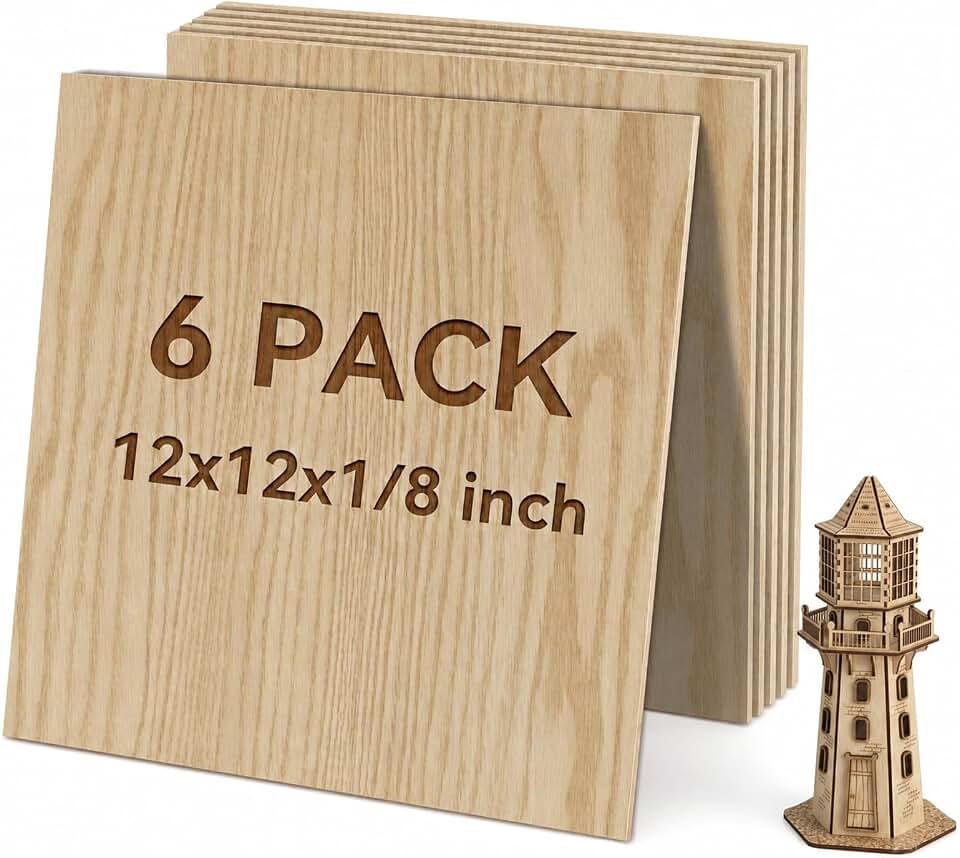
Oak Plywood Craft Pack
- Unfinished red oak plywood for creative projects
- 12 inch by 12 inch sheets are versatile and easy to handle
- thin 1/8 inch boards suit laser cutting and engraving
- great for signs, wood burning, and DIY builds
- 6 pack provides solid project value
Buy on Amazon
Smoking Wood
Red oak smoking wood should be clean, seasoned or kiln-dried, and free from mold, paint, stain, glue, or chemical treatment. Good oak smoke smells warm, nutty, and slightly sweet; wet or dirty oak smells sour and leaves harsh smoke on food.
These red oak options are suited for grilling, smoking, pizza ovens, fire logs, and barbecue cooks.

Smoke Ready Oak Chunks
- Rich red oak flavor for smoking and grilling
- USDA certified for added quality assurance
- chunk size works well for smokers and grills
- great for beef, pork, and poultry
- convenient 8 to 10 pound box for frequent use
Buy on Amazon

Big Oak Mini Splits
- Kiln dried for cleaner, steadier burning
- 8 inch mini splits fit pizza ovens and smokers
- red oak adds bold flavor to food
- USDA certified for dependable quality
- generous 25 to 30 pound supply for longer sessions
Buy on Amazon

Chef Grade Oak Pieces
- Red oak chunks and pieces for smoking and grilling
- FSC certification supports responsible sourcing
- 16 pound box offers plenty for repeat cooks
- 8 inch sticks work in smokers and firewood setups
- adds a balanced wood-fired flavor to meats
Buy on Amazon

Santa Maria Oak Blend
- Natural red oak flavor for smoke and grill cooking
- chunk and chip mix gives flexible use
- ideal for tri tip, ribs, chicken, and steaks
- compact 18 ounce bag is easy to store
- great choice for adding classic barbecue aroma
Buy on Amazon

Classic Oak Fire Logs
- Premium red oak logs for cooking and heating
- USDA certified kiln dried for cleaner burning
- 16 inch length suits grills, ovens, and fireplaces
- large 60 to 70 pound supply lasts through many uses
- dependable choice for bold wood fire flavor
Buy on Amazon
Red Oak FAQs
Red oak FAQs usually focus on whether the wood is good, hard, waterproof, costly, or suitable for flooring, furniture, and firewood. The short answer: red oak is a strong interior hardwood with great value, but it needs protection from water.
Good Interior Uses
Good interior uses include flooring, stair treads, furniture, cabinets, built-ins, shelves, trim, doors, veneer, and plywood panels. Red oak is a good wood for dry indoor spaces because it’s strong, easy to source, and accepts many stains and finishes.
Hardwood Classification
Red oak is hardwood, not softwood, because it comes from a deciduous broadleaf oak tree. The word hardwood doesn’t always mean harder than every softwood, but red oak is genuinely hard enough for floors, furniture, and stairs.
Outdoor Suitability
Red oak outdoors is risky because the wood is not naturally rot-resistant and its open pores take in water. For outdoor furniture, decking, exterior doors, and wet areas, choose a more decay-resistant species from our guide to outdoor furniture wood.
Beginner trap: coating red oak with exterior finish doesn’t turn it into white oak or teak. If water reaches a screw hole, end grain, or joint, decay can start beneath a finish that still looks fine from the surface.
Cost and Value
Red oak value is one of its biggest strengths. It usually costs less than white oak, walnut, cherry, hard maple, and many imported hardwoods, but more than pine, poplar, and common construction lumber.
Price depends on grade, thickness, width, length, region, surfacing, drying, sawing method, and format. A short packaged craft board may look inexpensive at checkout but cost far more per board foot than rough lumber from a local hardwood dealer.
Firewood Seasoning
Red oak firewood often needs 12 to 24 months after splitting because oak dries slowly. Properly seasoned pieces feel lighter, show checking at the ends, sound clearer when knocked together, and burn with less smoke than green dark oak logs pulled from a fresh pile.
Final answer: red oak wood is a good hardwood for interior flooring, furniture, cabinets, trim, veneer, plywood, firewood, and smoking wood. Skip it for wet outdoor projects unless you accept heavy sealing, frequent maintenance, and a shorter service life than more water-resistant woods.
FAQs
Is Red Oak Wood Good For Flooring?
Yes, red oak wood is a great choice for flooring. It is strong, durable, and has a classic grain pattern that many homeowners like. It also takes stain well, so it can match a wide range of interior styles.
What Is Red Oak Wood Used For?
Red oak wood is commonly used for furniture, flooring, cabinets, trim, and millwork. It is also popular for stair parts and interior finish work because it is easy to work with and has an attractive appearance. In addition, it is often used in woodworking projects and traditional home construction.
Is Red Oak Better Than White Oak?
Red oak is not always better than white oak, but it is often preferred for cost and ease of finishing. White oak is denser and more moisture-resistant, while red oak usually has a more open grain and a warmer look. The better choice depends on your project and where the wood will be used.
Is Red Oak Wood Waterproof?
No, red oak wood is not waterproof. It can absorb moisture, which means it should be sealed and protected if used in areas with water or high humidity. For wet locations, white oak or another moisture-resistant material is usually a better option.
How Long Does Red Oak Firewood Take To Season?
Red oak firewood usually takes about 12 to 24 months to season properly. The exact time depends on how the wood is split, stacked, and stored. To season faster, keep it in a sunny, airy spot and cover the top while leaving the sides open.
Affiliate Disclosure: Some links in this post are affiliate links. If you make a purchase through these links, we may earn a small commission at no extra cost to you. We only recommend products we genuinely believe in.



Had 7 large red oaks taken down because they were crowding the house and way too many acorns. Was going to turn them into fire wood but after reading your article I think I will send them to the neighborhood saw mill. Looking to make some cannon carriages. Most are made from white oak but looks like Red Oak will suffice. Not sure what else.
Had 7 large red oaks taken down because they were crowding the house and way too many acorns. I was going to turn them into fire wood but after reading your article I think I will send them to the neighborhood saw mill. Looking to make some cannon carriages. Most are made from white oak but looks like Red Oak will suffice. Not sure what else.
That’s a smart move! Red oak should definitely do the job for cannon carriages. Sending it to the sawmill will give you a lot more versatility than just turning it into firewood. You’ll end up with some great material for future woodworking projects!