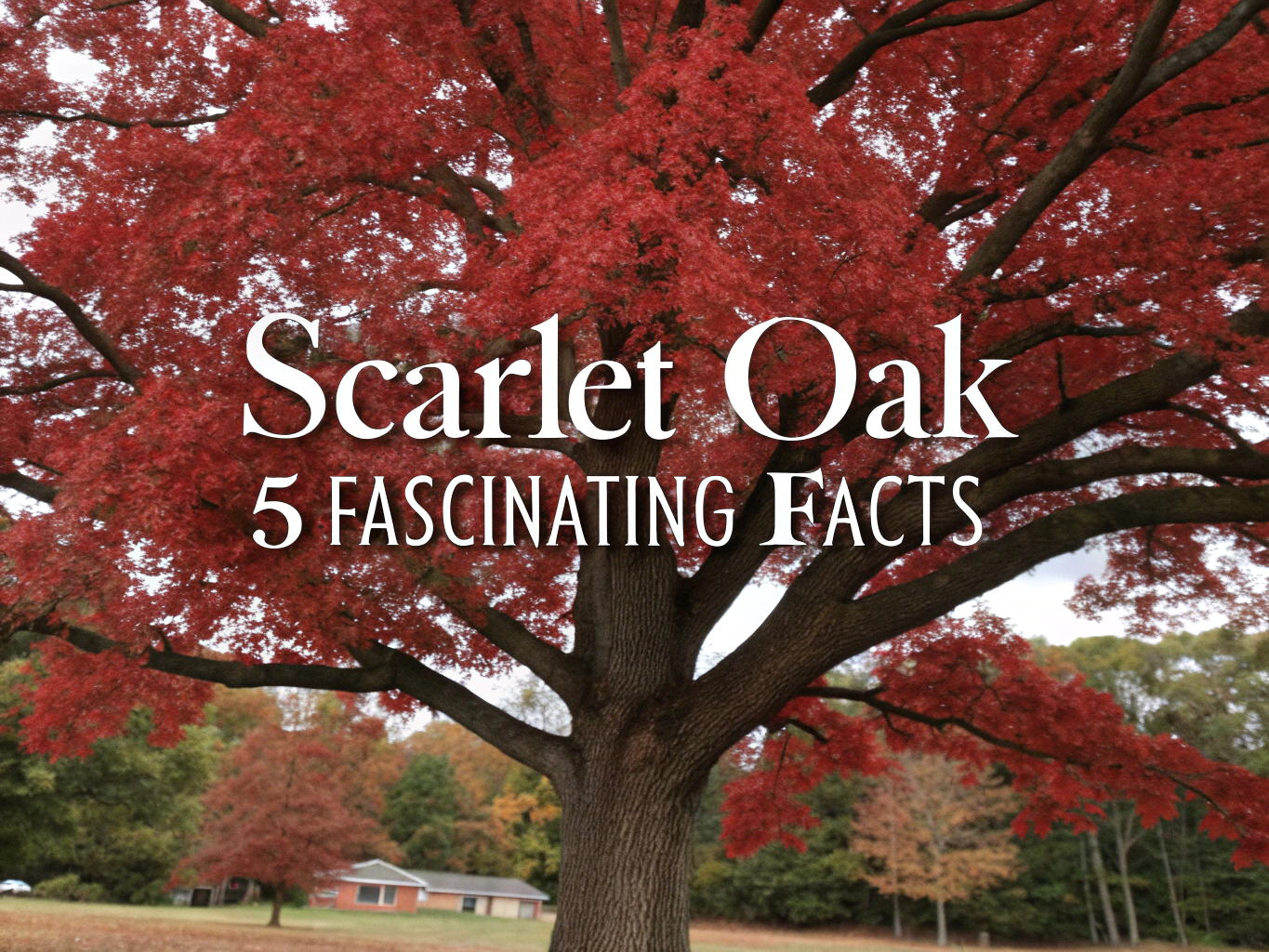
Scarlet Oak: Identification, Growth, Habitat, and Care Guide

Scarlet oak (Quercus coccinea) is a deciduous eastern North American oak recognized by deeply cut, bristle-tipped leaves, vivid red fall color, and acorns that mature across two growing seasons. It grows best in full sun on acidic, well-drained upland soil.
Table of Contents
Scarlet Oak at a Glance
Quercus coccinea is a large native shade tree in the red-oak group. Its best features are strong fall color, wildlife value, and tolerance of dry uplands after establishment; its main limits are mature size, sensitivity to alkaline or saturated soil, and susceptibility to oak wilt.
Species Facts Table
| Trait | Scarlet oak fact |
|---|---|
| Scientific name | Quercus coccinea Münchh. |
| Family | Fagaceae, the beech family |
| Oak group | Red-oak group, section Lobatae |
| Native range | Eastern and central United States |
| Typical height | 60–80 feet; favorable forest specimens can exceed 100 feet |
| Typical spread | 40–50 feet |
| Growth rate | About 12–24 inches annually on a suitable site |
| Expected lifespan | Often 80–100 years; some survive near 150 years |
| Light | Full sun, preferably six or more direct hours |
| Soil | Acidic, well-drained, sandy, gravelly, or loamy soil |
| Hardiness | Commonly listed for USDA Zones 4–9 |
| Acorn maturity | Autumn of the second growing season |
| Fall color | Scarlet, bright red, or red-orange |
Quercus coccinea Taxonomy
The scientific name separates this species from trees loosely sold or described as “red oak.” Scarlet oak belongs to Quercus, family Fagaceae, and the red-oak section Lobatae; pointed leaf bristles and two-season acorns are reliable group traits.
The USDA Forest Service profile documents the species’ form, habitat, reproduction, and forestry characteristics. Hybrids and variable leaves can blur field identification, so taxonomy should be paired with buds, acorns, bark, and habitat.
Growth, Size, and Lifespan
Annual growth commonly falls between 12 and 24 inches, but seedlings often devote early energy to roots before producing long shoots. Full sun, acidic soil, open root space, and timely establishment watering support faster growth; compaction, high pH, and repeated drought shorten shoots.
Mature trees usually reach 60–80 feet with a 40–50-foot crown. Scarlet oak often lives 80–100 years, while favorable forest trees may last longer; poor drainage, construction damage, oak wilt, and hidden root injury can cut that span sharply.
Flowers and Acorn Production
Spring flowers appear as leaves expand. Hanging male catkins release pollen into the wind, while small female flowers occur separately on the same tree, making scarlet oak monoecious.
Pollinated acorns take about 18 months to mature. Production varies through mast cycles, and a seed-grown tree may need many years before yielding heavy crops; neighboring compatible red oaks can improve pollination, but the resulting seedlings may show hybrid traits.
How to Identify Scarlet Oak

Scarlet oak identification works best when you combine leaves, acorn cups, buds, bark, crown form, and habitat. Don’t identify it from red autumn color alone: red maple, northern red oak, pin oak, and several ornamental trees can display similar color.
Identification Checklist
- Look for leaves about 3–7 inches long, often with seven to nine lobes.
- Confirm pointed bristles at the tips of the lobes.
- Check for deep, rounded or C-shaped sinuses extending well toward the midrib.
- Inspect acorn cups covering roughly one-third to one-half of each nut.
- Look for clustered, pointed, reddish-brown terminal buds.
- Use dark, irregular mature bark only as supporting evidence.
- Confirm that the site fits a sunny, dry, acidic upland habitat.
A common beginner mistake is collecting one unusual leaf from a shaded lower branch. Compare several sun leaves and lower-canopy leaves because shape, lobe depth, and size can vary greatly on the same tree.
Scarlet Oak Leaf
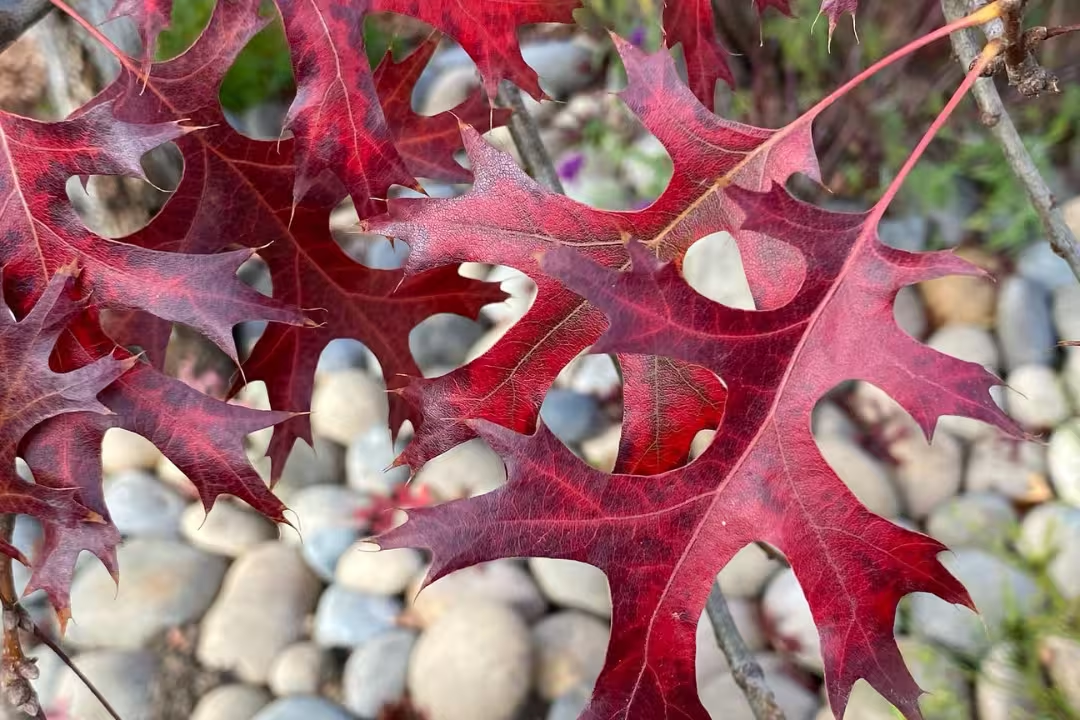
A typical scarlet oak leaf has seven to nine narrow, bristle-tipped lobes separated by deep sinuses. The upper face feels smooth and slightly leathery beneath a fingertip, while the paler underside may carry tiny hair tufts where major veins meet.
Leaves often turn clear scarlet or red-orange in autumn, yet genetics, temperature, moisture, and sunlight alter the display. Young trees and sheltered lower branches may hold dry brown leaves into winter, a trait called marcescence.
Acorns and Cups
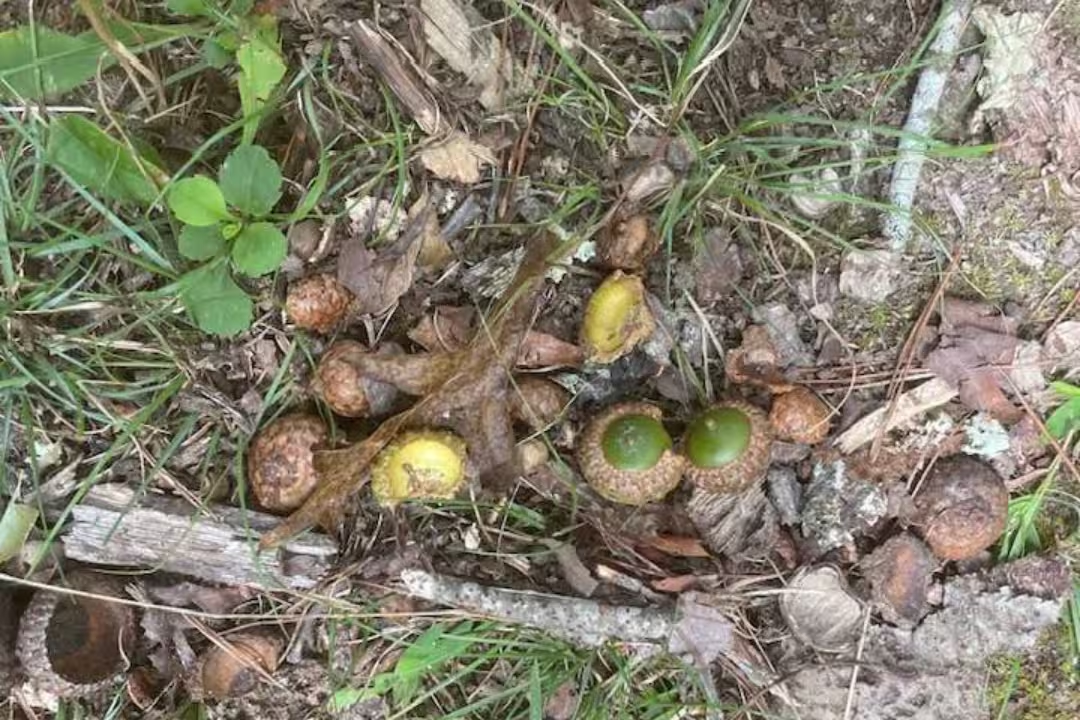
Scarlet oak acorns measure about ½–1 inch long and sit in comparatively deep cups. The cup usually covers one-third to one-half of the nut, and its tightly pressed scales lack the loose fringe seen on some similar oaks.
Some nuts show faint rings near the tip. Cup depth changes among individual trees, so pair this clue with leaves and buds; acorns found beneath a mixed canopy may also have rolled or been carried from another oak.
Bark Characteristics
Young bark is fairly smooth and gray-brown. With age it darkens and breaks into irregular ridges with shallow furrows, creating a coarse surface that catches on a glove but lacks the deeply blocky profile of some old white oaks.
Bark alone gives a weak identification because many red oaks look alike from several yards away. A fresh black oak bark fissure often exposes yellow-orange inner tissue, while scarlet oak doesn’t display that strong yellow layer consistently.
Buds and Twigs
Winter twigs are slender and reddish brown, with a cluster of pointed terminal buds. Pale hairs can occur near bud tips; use a hand lens because this fine pubescence is easy to miss in rain, low light, or on weathered twigs.
Crown and Form
Young trees tend to grow upright or pyramidal. Open-grown adults develop broad, rounded, sometimes irregular crowns, while forest trees carry narrower crowns above straighter trunks because they compete for overhead light.
Lower limbs usually remain more level than the sharply descending lower branches associated with pin oak. Storm damage, crowding, and early pruning can alter this silhouette, making crown form a supporting clue rather than proof.
![How-to Prune an Oak Tree [Scarlet Oak]](https://cdn.glamorwood.com/wp-content/cache/flying-press/18d8ddfa445070010ab37140b8f6ae4c.jpg)
Range, Habitat, Ecology, and Uses
Scarlet oak grows naturally across much of the eastern and central United States, chiefly on sunny, acidic uplands. It supplies mast, nesting structure, insect habitat, shade, restoration cover, lumber, and fuelwood.
Native Range
The native range extends from parts of New England and the Mid-Atlantic west into the Midwest, then south through Appalachian and southeastern regions. Local abundance varies, and planting within a species-level range doesn’t prove that every county or soil type suits it.
Consult the USDA Plants profile and regional floras when confirming native status. County records can miss isolated populations, while planted trees outside the documented range may create misleading observations.
Natural Upland Habitat
Dry ridges, rocky slopes, sandy woods, gravelly soils, and fire-influenced upland forests form typical habitat. Scarlet oak tolerates dry ground after establishment but performs poorly where water fills soil pores for long periods and deprives roots of oxygen.
The species is shade intolerant to moderately intolerant. Saplings can linger beneath a thin canopy, yet vigorous crown development needs direct light; this explains why trees often increase after disturbance opens a stand.
Wildlife and Mast Value
Tannin-rich acorns feed deer, squirrels, chipmunks, wild turkeys, blue jays, woodpeckers, and small mammals. They taste dry, bitter, and mouth-puckering when raw, but wildlife still uses them, often after lower-tannin foods become scarce.
Mast isn’t equal every autumn. Large crops may be followed by lean years, while jays and squirrels move cached acorns beyond the parent crown; leaves, caterpillars, cavities, and fallen litter add food and shelter beyond the acorn crop.
Landscape and Restoration Uses
Large sunny grounds such as parks, campuses, broad lawns, and naturalized plantings suit this oak. In restoration work, use it on acidic uplands within its regional plant community rather than inserting it into a wetland plan for its autumn color.
Regional seed sources often match local frost schedules, summer heat, and rainfall better than anonymous stock. A mixed planting with several locally suitable oak species also spreads disease and mast-failure risk across multiple species.
Scarlet Oak Wood Uses
Scarlet oak lumber usually enters the commercial red-oak category rather than being sold by species. Uses include flooring, furniture, interior millwork, pallets, general construction, and fuelwood; site and stem form have a strong effect on grade.
Its open pores and reddish-brown grain resemble other red oak wood. A yard tree rarely carries high timber value because nails, embedded wire, low branching, trunk bends, and decay raise milling costs and safety risks.
Scarlet Oak Pros, Cons, and Site Suitability
Scarlet oak suits a large, sunny property with acidic, well-drained soil and room for a 40–50-foot crown. It’s a poor choice for small lots, wet ground, alkaline fill, confined pits, or locations beneath utility lines.
Landscape Pros and Cons
| Advantages | Trade-offs |
|---|---|
| Brilliant red to red-orange fall color | Color varies with genetics, weather, and site |
| Native wildlife and insect value | Acorns create cleanup and slipping concerns |
| Useful shade from a broad crown | Too large for narrow lots and utility corridors |
| Tolerates dry uplands once established | New trees still need regular irrigation |
| Medium growth rate | Coarse roots can make transplanting difficult |
| Adapts to lean acidic soil | High-pH soil can trigger chlorosis |
| Strong native character | Red-oak-group susceptibility to oak wilt |
The biggest beginner error is treating drought tolerance as permission to ignore a new transplant. A forest-grown adult has roots extending far beyond its crown; a nursery tree starts with a sharply reduced root system confined to one root ball.
Best Planting Sites
Best sites receive at least six hours of sun and contain acidic, aerated soil that drains after heavy rain. Broad lawns, parks, campuses, and upland restoration areas give the roots and crown enough room to mature without repeated clearance pruning.
Practical notes from field use: inspect the site a day after rain and push a narrow trowel below the surface. Sour-smelling, sticky gray soil signals poor aeration, while hard pale subsoil that rings beneath the tool often marks compacted construction fill rather than a true dry upland.
Sites to Avoid
Avoid persistently saturated soil, narrow verges, confined tree pits, heavily salted roadsides, high-pH building fill, and areas with regular vehicle traffic over the root zone. Dry native habitat doesn’t mean roots tolerate compacted, oxygen-poor urban soil.
Wet properties call for a species matched to periodic flooding, such as overcup oak or a swamp white oak tree where locally appropriate. Compare those needs with overcup oak habitat before choosing by appearance.
Soil, Drainage, and Chlorosis
Acidic soil keeps iron and other nutrients accessible to scarlet oak roots. In alkaline ground, new leaves may turn yellow between green veins, shoots shorten, and the crown thins; adding ordinary fertilizer won’t correct iron unavailability caused by high pH.
Test pH, drainage, and soil structure before planting. Sulfur changes pH slowly and can injure roots when misapplied, while iron injections treat symptoms without fixing the site; replacing the species is often the sounder long-term choice on strongly alkaline ground.
Space and Utility Clearance
Plan around a 40–50-foot crown, an extensive root system, and a trunk that will keep widening for decades. Place the tree where mature limbs won’t reach roofs, streetlights, service wires, or neighboring structures.
No universal setback fits every property because soil, foundations, easements, roads, and local codes differ. Before digging, call the local utility-marking service and check overhead lines; repeated utility pruning produces an unbalanced crown and large decay pathways.
Planting and Caring for Scarlet Oak
Plant scarlet oak with its root flare at finished grade, then water the original root ball and surrounding soil during establishment. A wide hole, restrained mulch, minimal fertilizer, and early structural pruning prevent the costliest long-term defects.
Selecting Nursery Stock
Confirm the label reads Quercus coccinea, not simply “red oak.” Choose a straight trunk with a visible flare, one workable central leader, evenly spaced branches, intact bark, and no severe circling roots.
Container trees are easy to transport but may hide kinked roots. Bare-root plants demand cool, moist handling, while large balled-and-burlapped stock costs more and loses a greater share of its original roots; a smaller healthy tree often establishes faster than an oversized specimen.
Use nursery listings only after checking species identity, provenance, inspection status, and shipping restrictions.
Planting Position and Method
- Find the first major roots and expose the root flare before measuring the root ball.
- Dig a hole two to three times wider than the roots but no deeper than their measured height.
- Set the flare at or slightly above finished grade.
- Cut or straighten circling roots while they’re still small enough to correct.
- Remove synthetic wrapping and follow local guidance for burlap and wire baskets.
- Backfill mainly with excavated native soil and break large clods by hand.
- Water slowly to settle soil without stamping it hard.
- Spread 2–3 inches of mulch, leaving bare space around the trunk.
Deep planting is the most persistent installation error. Once buried, the trunk base stays damp, roots grow upward for oxygen, and girdling roots can tighten around the stem years before decline becomes visible.
Establishment Watering
Water deeply whenever the root ball begins to dry several inches below the mulch. Soil type, rainfall, root-ball size, heat, and wind matter more than a fixed calendar; check moisture by hand rather than assuming a lawn sprinkler reached the roots.
The root ball can feel dusty and dry while adjacent clay remains slick and wet. Apply water slowly across both zones, then stop before saturation; gradually widen the watered area as roots spread during the first two or three growing seasons.
Mulching and Fertilizing
Maintain a broad 2–3-inch mulch layer using arborist chips or shredded bark. Keep it several inches from the trunk; a mulch volcano traps moisture against bark, hides rodent feeding, and encourages roots to circle within the loose material.
Skip routine fertilizer at planting. A soil test and diagnosed deficiency should guide amendments because excess nitrogen pushes soft shoot growth without repairing drainage, root damage, alkaline soil, or an undersized root zone.
Basic planting supplies may help with moisture checks and trunk protection, but no product replaces correct planting depth.
Structural Pruning
Young-tree pruning should favor one dominant leader and well-spaced scaffold branches without stripping the trunk bare. Remove broken, rubbing, dead, or competing branches in stages, retaining enough live foliage to feed root establishment.
Small cuts close faster than large cuts made after defects become heavy. Don’t top the crown or leave stubs, and use a qualified arborist for mature limbs, storm damage, or cuts near buildings and energized lines.
Common Scarlet Oak Problems and Safety
Major scarlet oak problems include oak wilt, bacterial leaf scorch, root disorders, borers, repeated defoliation, chlorosis, drought, and construction damage. Diagnose the pattern and site before applying pesticides or fertilizer because many infectious and environmental symptoms overlap.
Oak Wilt and Pruning
Oak wilt can kill red-oak-group trees quickly. Warning signs include bronzing or wilting during the growing season, upper-crown leaf loss, and decline spreading through the canopy; drought and root injury can look similar, so laboratory or professional confirmation may be needed.
Avoid unnecessary pruning during the local high-risk period when sap-feeding beetles can visit fresh wounds. Timing changes by climate, and the USDA oak wilt guide explains transmission, symptoms, and management principles.
Don’t move fresh firewood from infected areas. Ordinary wound paint isn’t standard for routine pruning, yet local oak-wilt protocols may call for immediate wound treatment after accidental damage during a high-risk period; follow regional forestry guidance.
Bacterial Leaf Scorch
Bacterial leaf scorch can cause brown leaf margins, premature leaf drop, reduced growth, and gradual crown thinning. The scorched boundary may have a yellow band, but visual symptoms overlap with drought, compacted soil, root loss, and salt injury.
Testing may be needed before treatment. Management often focuses on reducing root-zone stress and monitoring decline rather than promising a cure; remove a hazardous tree when structural weakness and crown loss reach an unacceptable level.
Root and Trunk Disorders
Root rot risk rises in chronically saturated soil, while girdling roots often begin in containers or around deeply buried trunks. A trunk entering the ground like a straight telephone pole, with no visible flare, warrants a careful root-collar inspection.
Construction can sever roots, add fill, or compress pore space years before the crown thins. Protect a broad root zone before work starts; trenching and vehicle parking beneath the canopy can cause damage that watering and fertilizer can’t reverse.
Insects and Leaf Damage
Potential insects include spongy moth caterpillars, borers, scale insects, leaf miners, and gall-forming wasps. Small galls and scattered chewing are often cosmetic, while repeated heavy defoliation reduces stored energy and makes drought or borer injury more serious.
Look for the pattern before spraying: affected species, crown distribution, exit holes, frass, timing, and repeat damage. Broad insecticide use can kill predators and pollinators without reaching larvae protected inside wood or leaf tissue.
Environmental Stress Symptoms
| Symptom | Possible cause | Useful first response |
|---|---|---|
| Yellow tissue between green veins | High-pH chlorosis or root stress | Test soil pH and inspect drainage |
| Brown leaf edges | Drought, salt, scorch, or root loss | Check moisture and recent site changes |
| Small leaves and short shoots | Compaction, poor roots, or nutrient limitation | Inspect the root zone before fertilizing |
| Sudden upper-crown browning | Oak wilt, severe root injury, or drought | Request fast professional assessment |
| Dieback on one side | Trenching, girdling root, heat, or localized injury | Map nearby construction and root damage |
| Loose bark near the base | Decay, injury, or root-collar disease | Keep people away and obtain a risk assessment |
Site history matters. A crown may react two or three years after trenching, grade changes, road salt, or root compaction, so record construction dates and weather extremes before deciding that insects caused the damage.
Tree Safety Warning Signs
Arrange a prompt assessment for large dead limbs, fresh trunk cracks, root-plate movement, hanging branches, cavities with weak surrounding wood, sudden leaning, or fungal fruiting bodies near the base. Keep people and vehicles away after storm damage.
Acorns also create a seasonal slipping risk on hard walks, and falling branches can damage roofs or vehicles. Don’t climb, cut, cable, or inspect a mature crown near electrical conductors without trained personnel and suitable equipment.
Growing Scarlet Oak From Acorns
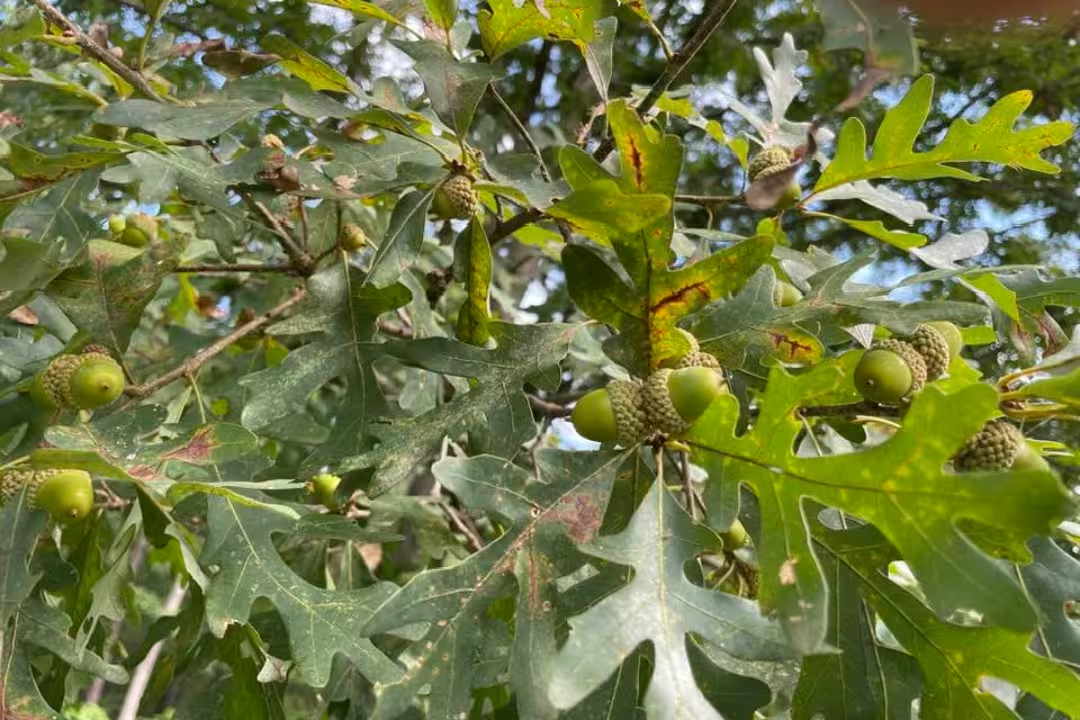
Scarlet oak acorns need cool, moist conditions before spring germination and must never dry completely. Collect sound autumn acorns, refrigerate them in a moist medium for roughly 60–90 days, and sow in deep, protected containers.
Collecting Viable Acorns
Collect freshly fallen mature acorns from a confidently identified parent tree. Reject nuts with cracks, mold, exit holes, sour odors, dark soft tissue, or shells that collapse under light finger pressure.
A float test can screen obvious insect damage, but floating doesn’t prove failure and sinking doesn’t prove viability. Open a small sample from each seed lot; healthy kernels should look firm and pale rather than brown, hollow, or watery.
Storage and Stratification
Red-oak acorns are recalcitrant seeds, meaning severe drying can kill them. Store them in a lightly moist medium with some air exchange, checking for condensation, mold, and premature root growth rather than sealing them in dripping-wet material.
Cold, moist stratification commonly lasts 60–90 days near 34–41°F, though seed lots differ. Guidance from the Iowa State Extension explains practical acorn handling and germination.
Sowing and Transplanting
Sow acorns about 1–2 inches deep in a well-drained medium. Use tall pots or air-pruning containers for the early taproot, and cover outdoor beds with secure wire mesh because squirrels can empty a carefully planted tray overnight.
Transplant seedlings while young, handling roots by the surrounding medium rather than pulling the stem. A seed-grown tree won’t copy the parent’s exact color or form, and acorns gathered under mixed red oaks may produce hybrids.
Scarlet Oak Compared With Similar Oaks
Scarlet oak differs from similar species through a combination of deep bristle-tipped lobes, a cup covering up to half the acorn, pointed buds, dry-upland habitat, and an open mature crown. No single leaf or bark feature settles every identification.
Similar Oak Comparison Table
| Species | Scientific name | Oak group | Typical habitat | Key leaf or acorn clue | Acorn maturity |
|---|---|---|---|---|---|
| Scarlet oak | Quercus coccinea | Red | Dry acidic uplands | Deep sinuses, bristle tips, deep cup | Two seasons |
| Northern red oak | Quercus rubra | Red | Mesic slopes and uplands | Shallower sinuses and shallow cup | Two seasons |
| Shumard oak | Quercus shumardii | Red | Moist, well-drained bottomlands | Larger leaves and shallower acorn cup | Two seasons |
| Black oak | Quercus velutina | Red | Dry uplands | Yellow-orange inner bark | Two seasons |
| Water oak | Quercus nigra | Red | Moist southeastern lowlands | Variable, often spatula-shaped leaf | Two seasons |
| Overcup oak | Quercus lyrata | White | Wet bottomlands | Cup nearly encloses the acorn | One season |
| Post oak | Quercus stellata | White | Dry poor uplands | Thick cross-shaped leaf | One season |
| Swamp white oak | Quercus bicolor | White | Moist lowlands | Pale underside and rounded teeth | One season |
| Pin oak | Quercus palustris | Red | Moist acidic lowlands | Descending lower limbs, shallow cup | Two seasons |
Red Oak vs Scarlet Oak
Scarlet oak is a red oak, but “red oak” can mean the full botanical group or northern red oak, Quercus rubra. Members share bristle-tipped leaves and acorns that mature during their second growing season.
For a red oak vs scarlet oak comparison, northern red oak usually has broader leaves, shallower sinuses, and a shallow saucer-like acorn cup. Scarlet oak usually shows narrower lobes, deeper C-shaped sinuses, and a cup covering more of the nut.
The wood from both species often enters the same commercial category. The broader material differences between red oak and white oak involve pore structure, acorn timing, leaf bristles, and moisture resistance rather than autumn color.
Northern Red and Shumard Oaks
Northern red oak favors many mesic uplands and usually carries shallow acorn cups. Its leaf sinuses don’t cut as close to the midrib as scarlet oak’s, though sun leaves and young shoots can blur that distinction.
Shumard oak, Quercus shumardii, often grows on moist but drained bottomlands and has larger leaves and acorns. Regional overlap, planted trees, and natural hybridization mean buds, cup depth, leaf bases, and habitat should all enter the decision.
Scarlet vs Black Oak (Quercus velutina)
Black oak (Quercus velutina) often has broader, less deeply divided leaves with rusty hair beneath, particularly near vein junctions. Cutting into mature bark may reveal the characteristic yellow-orange inner layer once used as a dye source.
Scarlet oak tends to show deeper sinuses, tighter acorn-cup scales, and brighter red fall color. Fall color can fail in warm or dry years, so the inner bark and cup provide stronger separation than foliage color alone.
Scarlet vs Water Oak (Quercus nigra)
Water oak (Quercus nigra) is a southeastern tree of floodplains, bottomlands, and moist sites. Its highly variable leaves are often narrow at the base and broad near the tip, creating a spatula or duck-foot shape rather than deep regular lobes.
Scarlet oak favors drier acidic uplands, ranges farther north, and produces more consistent red autumn foliage. Water oak is often shorter lived and can develop weak structure; see the full water oak tree guide for its site needs.
Scarlet vs Overcup Oak
Overcup oak (Quercus lyrata) belongs to the white-oak group and tolerates floodplain soils. It has rounded lobes without bristle tips, one-season acorns, and a deep cup that nearly or fully encloses the nut.
Scarlet oak has pointed bristles, two-season acorns, and a cup covering a smaller portion of the nut. These trees aren’t substitutes: one suits dry uplands, while the other is adapted to wet bottomlands and periodic flooding.
Scarlet vs Post Oak
Post oak (Quercus stellata) has thick, rough leaves whose broad middle lobes often create a cross shape. Rounded lobe tips, one-season acorns, slow growth, and tolerance of poor dry ground identify it as a white-oak-group species.
Scarlet oak carries thinner, deeply cut, bristle-tipped leaves and often grows faster on a suitable site. Both occupy dry uplands, making leaf tips and acorn timing more useful than habitat; read about post oak wood for further comparison.
Scarlet vs Swamp White Oak Tree
A swamp white oak tree (Quercus bicolor) has rounded teeth or shallow lobes, a dark upper surface, and a pale silvery underside that flashes in the wind. It handles moist lowlands and periodic wetness better than scarlet oak.
Scarlet oak has pointed bristles, deep sinuses, and a dry-upland preference. Swamp white oak acorns mature in one season because it belongs to the white-oak group; scarlet oak acorns need two growing seasons.
Scarlet vs Pin Oak
Pin oak (Quercus palustris) also has deeply lobed, bristle-tipped leaves, making it a frequent source of confusion. Its lower limbs commonly point downward, middle limbs extend horizontally, and upper limbs rise, producing a recognizable tiered crown.
Pin oak has a shallow saucer-shaped acorn cup and comes from moist acidic lowlands. Scarlet oak carries a deeper cup, a more open irregular crown, and stronger ties to dry uplands; both can develop severe chlorosis in alkaline soil.
FAQs
How Can You Identify A Scarlet Oak Tree?
Scarlet oak is identified by its deeply cut, pointed leaf lobes, glossy green leaves, and brilliant red fall color. Its leaves usually have seven to nine bristle-tipped lobes with wide, C-shaped spaces between them. Mature trees develop dark, ridged bark, while the acorns have a shallow, saucer-like cap.
How Fast Does A Scarlet Oak Grow?
Scarlet oak grows at a moderate to fairly fast rate, often adding about 1 to 2 feet per year in good conditions. Young trees grow best in full sun and well-drained, acidic soil. Growth can slow in compacted soil, deep shade, drought, or areas with poor drainage.
Is Scarlet Oak A Good Tree For A Yard?
Scarlet oak can be an excellent yard tree if you have enough space for its large mature size. It provides cooling shade, attractive red autumn foliage, and food for wildlife. Plant it away from buildings, driveways, and power lines because it can reach 60 to 80 feet tall and produces acorns.
What Is The Difference Between Red Oak And Scarlet Oak?
Scarlet oak has deeper leaf sinuses and usually develops brighter scarlet-red fall color than northern red oak. Northern red oak leaves are generally broader with shallower spaces between the lobes. Scarlet oak also prefers drier, well-drained soils, while northern red oak tolerates a wider range of yard conditions.
Are Scarlet Oak Acorns Edible?
Scarlet oak acorns are edible for people after proper processing, but they are naturally very bitter because they contain tannins. Shell them, leach the nutmeats in water until the bitterness is gone, then cook or dry them. Never eat moldy acorns, and remember that acorns are more commonly used as wildlife food.
Affiliate Disclosure: Some links in this post are affiliate links. If you make a purchase through these links, we may earn a small commission at no extra cost to you. We only recommend products we genuinely believe in.