

Iron wood, usually written “ironwood,” is a common name for several unrelated trees known for hard, heavy, or durable wood; it isn’t one universal species. The name can describe desert ironwood, American hophornbeam, Persian ironwood, black ironwood, Bornean ironwood, and many regional trees with very different leaves, habitats, hardness figures, and uses.
Table of Contents
What Is Iron Wood?

Ironwood is a shared name, not a botanical genus. Reliable facts about an ironwood tree—such as mature size, Janka hardness, decay resistance, or legal status—require its scientific name.
Ironwood as a Common Name
The label ironwood tree developed independently in several regions. In eastern North America it often means American hophornbeam or American hornbeam, while a resident of the Sonoran Desert is more likely describing Olneya tesota.
Plant nurseries also use ironwood for the ornamental Parrotia persica. Timber merchants may apply it to dense tropical species, including black ironwood and Bornean ironwood, so the common name alone can’t establish what a buyer will receive.
Why It Is Called Ironwood
The word “iron” describes tool resistance and weight, not metal inside the trunk. Dense ironwoods can feel unusually cold and solid in the hand, and a thin blank may feel heavier than a much larger piece of pine.
Hard wood resists dents and cutting, yet it can still crack along short grain. Beginners often read “ironwood” as a promise of universal strength, but hardness, impact resistance, bending strength, decay resistance, and stability measure different behavior.
Iron Wood, Ironwood, and Bois de Fer. English reference works usually spell the tree name “ironwood,” while “iron wood” remains a frequent search form. Bois de fer means “wood of iron” in French and can refer to different species by country; in Québec, bois de fer commonly points to American hophornbeam rather than desert ironwood.
Why Botanical Names Matter. A scientific name links claims to one species. Before planting, cutting, burning, or buying ironwood, request a name such as Olneya tesota or Ostrya virginiana; a sales title reading “exotic black iron wood” isn’t adequate identification.
Types of Ironwood Trees
The main types of ironwood trees come from unrelated plant families and climates. Their shared name reflects perceived wood properties, not close botanical relationships.
Ironwood Species Comparison Chart
| Common name | Botanical name | Typical range or setting | Key identification clue | Main role |
|---|---|---|---|---|
| Desert ironwood | Olneya tesota | Sonoran Desert | Thorns, compound gray-green leaves, purple pea-like flowers | Wildlife habitat and small craft wood |
| American hophornbeam | Ostrya virginiana | Eastern North America | Shaggy bark and hop-like fruit | Native understory tree and tool wood |
| American hornbeam | Carpinus caroliniana | Moist eastern woodlands | Smooth, muscular gray trunk | Native shade tree and utility wood |
| Persian ironwood | Parrotia persica | Temperate gardens; native near the Caspian Sea | Mottled bark and multicolored fall foliage | Ornamental planting |
| Black ironwood | Krugiodendron ferreum | Southern Florida, Caribbean, tropical America | Small leathery leaves and very dense wood | Limited specialty material |
| Bornean ironwood | Eusideroxylon zwageri | Southeast Asian rainforests | Large evergreen tree with durable timber | Heavy exterior construction |
| Australian ironwoods | Several genera | Multiple Australian regions | Varies by species | Construction, posts, craft, or regional utility use |
Desert Ironwood — Olneya tesota
Desert ironwood belongs to the legume family, Fabaceae, and grows naturally in Arizona, southeastern California, Baja California, and Sonora. It favors desert washes, valleys, bajadas, and rocky foothills where brief runoff reaches deep soil.
Mature trees commonly reach about 15–30 feet, with broad crowns, gray bark, thorny branches, and small compound leaves. Pink, lavender, or purple flowers appear in showy flushes, followed by seed pods; foliage may thin after frost or severe drought.
The dark, dense heartwood is prized for knife scales, jewelry, turning, and polished carvings. Trunks tend to be irregular and internally checked, which explains why small blanks are easier to find than long, clear boards.
American Hophornbeam — Ostrya virginiana. This eastern North American member of Betulaceae commonly grows 25–40 feet tall beneath larger forest trees. Its thin, gray-brown bark separates into loose vertical strips, while clusters of inflated sacs resemble hops and provide the clearest field clue.
Hophornbeam wood has served in mallets, handles, wedges, levers, and wear-resistant parts. Readers comparing local trees can find a more focused profile in our ironwood tree guide.
American Hornbeam — Carpinus caroliniana. Also called musclewood or blue beech, this 20–35-foot tree favors moist woods and stream margins. Its smooth gray trunk forms rounded, sinewy ridges that look and feel like flexed muscles, rather than the flaky strips found on hophornbeam.
Persian Ironwood — Parrotia persica. This witch-hazel relative is grown for peeling, mottled bark and autumn foliage that can shift through yellow, orange, crimson, and purple on one crown. Small red flowers appear on bare or nearly bare twigs, and mature plants often reach 20–40 feet.
Black Ironwood — Krugiodendron ferreum. Native to southern Florida, the Caribbean, and tropical America, this slow-growing tree produces exceptionally dense wood. Limited supply and ecological value make it a poor candidate for casual harvesting or ordinary building lumber.
Bornean Ironwood — Eusideroxylon zwageri. Ulin or belian is a Southeast Asian tree valued for durable timber used in shingles, posts, decking, marine work, and heavy structures. Slow regeneration, forest loss, and past overcutting make documented origin more meaningful than a merchant’s durability claim.
Australian Regional Ironwoods. Australia has no single universal ironwood species. The name appears among trees in genera such as Erythrophleum, Acacia, and Casuarina; toxicity, density, durability, and suitable projects differ sharply, so compare a botanical name rather than a regional nickname.
Ironwood Tree Identification

Ironwood tree identification starts with location, then bark, leaves, flowers, and fruit. Wood hardness or trunk color by itself can’t separate the many unrelated ironwoods.
Identification by Location
- Eastern dry or rocky woodland: Check for American hophornbeam.
- Eastern moist woodland: Check for American hornbeam and its fluted trunk.
- Sonoran Desert wash: Look for thorny desert ironwood with compound leaves.
- Temperate garden: Mottled bark and vivid fall color suggest Persian ironwood.
- Southern Florida or Caribbean habitat: Black ironwood becomes possible.
- Southeast Asian timber: Ulin or Bornean ironwood requires source documentation.
Geography removes many false matches before fine details enter the process. A tree labeled ironwood in an eastern Canadian woodlot is far more likely to be Ostrya virginiana than a drought-loving Olneya tesota.
Bark and Trunk Features
Bark gives fast clues. Hophornbeam carries narrow shaggy strips; American hornbeam stays smooth and muscular; mature Persian ironwood sheds patches that expose cream, gray, olive, and brown areas beneath.
Desert ironwood has gray bark and a low, branching form armed with thorns. Older trunks can darken and fissure, so inspect younger branches and foliage rather than rejecting the identification from an aged trunk alone.
Leaves and Branches. American hophornbeam and hornbeam both have alternate simple leaves with serrated edges, which causes frequent confusion. Hophornbeam leaves tend to be sharply double-serrated, while hornbeam leaves show strong straight veins running to each tooth.
Desert ironwood carries small gray-green compound leaves and thorn-tipped branches adapted to heat and water loss. Persian ironwood leaves are broader and rounder, with wavy or shallowly toothed margins.
Flowers, Pods, and Fruit. Hop-like papery fruit identifies American hophornbeam, while leafy three-lobed bracts surround American hornbeam nutlets. Purple pea-family flowers and pods point to desert ironwood; small red flowers on bare twigs support Persian ironwood.
Visual Identification Decision Tree. Start with habitat: desert or woodland. In eastern woodland, feel the trunk—smooth and sinewy suggests hornbeam; shaggy strips suggest hophornbeam. In a dry desert setting, confirm thorns, compound leaves, pea-like flowers, or pods before naming desert ironwood.
Common Identification Mistakes. Beginners often confuse hophornbeam with hornbeam, identify milled lumber from color alone, or trust a nursery label without checking its Latin name. Photograph the whole tree, bark, leaf attachment, leaf underside, and fruit; one close-up image rarely records enough evidence.
A dark board also can’t be authenticated by appearance. Oxidation, finish, lighting, and related woods such as ebony wood can produce similar brown-black surfaces.
Ironwood Hardness and Wood Properties
Ironwood hardness varies by species. Desert ironwood is often listed near 3,260 pounds-force on the Janka scale, while American hophornbeam is commonly reported near 1,860 pounds-force, so one “ironwood hardness” number is misleading.
Species-Specific Density and Weight
Reference figures place dried desert ironwood near 75 pounds per cubic foot, or about 1,200 kilograms per cubic meter. American hophornbeam is much lighter at roughly 50–52 pounds per cubic foot, or around 800–830 kilograms per cubic meter.
These are averages rather than promises for a particular blank. Moisture content, sapwood percentage, growth conditions, mineral deposits, and measurement method change the result; our wood density chart explains how weight and specific gravity relate.
Janka Hardness Explained
The Janka test records the force needed to press a 0.444-inch steel ball halfway into a wood sample. It helps compare dent resistance, but it doesn’t directly predict bending strength, toughness, screw holding, decay resistance, or movement after humidity changes.
Hardness lists can also mix test directions, moisture conditions, or poorly documented samples. Treat rankings as reference points and use a species-linked source; our wood hardness scale gives the testing context.
Why Some Ironwood Sinks. Fresh water has a density near 1,000 kilograms per cubic meter. A dry desert ironwood heartwood sample averaging around 1,200 kilograms per cubic meter may sink, but lighter ironwoods, porous pieces, sapwood, trapped air, and sample variation can keep another piece afloat.
Grain, Color, and Figure. Desert ironwood heartwood ranges from orange-brown and reddish brown to deep chocolate, often crossed by darker lines. Fresh sanding releases a dry, warm woody scent, and fine polishing creates a glassy surface that makes interlocked figure flash as the piece turns under light.
Light sapwood can form bold contrast, though it may be softer or less durable. Clear finish deepens the dark bands, sometimes so much that subtle figure disappears; test a wiped sample on an offcut before coating the main work.
Durability and Dimensional Stability. Some ironwoods resist decay well, but the name doesn’t certify outdoor performance. Grain direction, drying history, end checks, ground contact, standing water, joint design, and local fungi can matter more than a broad species reputation.
Ironwood Versus Oak. Many ironwoods are harder and heavier than common oak, yet oak is easier to buy as long, clear boards, machine into joinery, and glue into large panels. For a dining table or outdoor table, correctly selected oak or another established furniture species is often more practical than small, irregular desert ironwood stock.
Ironwood Versus Ebony. Both names cover multiple species. Ebony often has finer, more uniform dark coloring, while desert ironwood commonly displays orange, brown, and black figure; both demand sharp tools and credible source records.
Ironwood Versus Lignum Vitae. Genuine Guaiacum species aren’t synonyms for ironwood. Lignum vitae wood is exceptionally dense and resinous, has different machining behavior, and is linked to major conservation and trade concerns.
Ironwood Versus Ipe. Ipe usually means dense Handroanthus timber sold in deck-sized boards. Desert ironwood normally appears as scales, blocks, and short blanks, making it unsuitable as a direct replacement for ipe wood in full exterior decks.
Growing Ironwood Trees and Ecology
Successful planting depends on the exact ironwood species. Desert ironwood needs heat, sparse irrigation, and fast drainage, while American hornbeam performs better in moist eastern soil and Persian ironwood suits temperate ornamental planting.
Choosing Species by Climate
Choose American hophornbeam for a well-drained eastern woodland setting and American hornbeam for moist soil near streams or in partial shade. Persian ironwood offers decorative bark and fall color where summers aren’t severely arid.
Desert ironwood belongs in hot, low-water sites resembling its Sonoran range. A protected courtyard can trap heat well, but cold-air pockets, lawns with frequent irrigation, and clay basins create poor conditions.
Site, Soil, and Water
Drainage sets the limit for desert ironwood. Water a new tree deeply enough to wet the developing root zone, then allow the soil to dry; shallow daily watering keeps roots near the surface and raises the risk of root stress.
Eastern ironwoods need establishment water suited to rainfall and soil texture. Keep mulch several inches from the trunk flare, and plant with the flare visible rather than burying it beneath soil or decorative stone.
Growth, Size, and Lifespan. American hophornbeam often reaches 25–40 feet, hornbeam about 20–35 feet, Persian ironwood roughly 20–40 feet, and desert ironwood commonly 15–30 feet. Width can equal height on old open-grown trees, so overhead clearance alone doesn’t define suitable space.
Many ironwoods grow slowly to moderately. Desert ironwood is often described as living for several centuries, but age estimates for old desert trees carry uncertainty and shouldn’t be applied to every species carrying the name.
Pruning and Maintenance. Build branch structure while the tree is young by removing damaged, crossing, or weakly attached limbs in stages. Cutting away too much desert canopy exposes bark to intense sun and can trigger cracking or sunscald; thorns also make eye protection and deliberate tool placement necessary.
Pests and Planting Failures. Dense wood doesn’t make a living tree immune to root rot, drought, boring insects, construction injury, or storms. Common failures include planting too deeply, keeping desert roots wet, damaging bark with string trimmers, and removing a large share of the crown in one season.
Desert Nurse-Plant Ecology. A desert ironwood canopy reduces direct sun and lowers daytime soil temperature beneath it. Leaf litter adds organic matter, while shade and shelter help young cacti and shrubs establish in a microhabitat that feels several degrees cooler than exposed gravel.
Birds use the crown for perching, nesting, and cover; insects visit the flowers; other animals consume seeds or rest in the shade. Removing a mature tree can affect a small community of plants and animals, not just one trunk.
Ironwood Forest National Monument. Arizona’s monument was established in 2000 and protects about 129,000 acres of Sonoran Desert habitat, according to the Bureau of Land Management. Its name reflects the area’s notable desert ironwood population, but monument status doesn’t give visitors permission to collect wood.
Ironwood Tree and Wood Uses
Ironwood uses include tool handles, mallets, pegs, carving, knife scales, furniture accents, exterior construction, fuel, wildlife habitat, and ornamental planting. The suitable use depends on species, board dimensions, grain condition, durability, cultural context, and collection law.
Traditional Tools and Implements
Dense regional ironwoods have been shaped into mallets, wedges, levers, pegs, handles, bearings, fence parts, and other wear-resistant objects. American hophornbeam earned the name “leverwood” from this type of demanding utility work.
Old uses don’t prove modern structural suitability. A short-grained desert ironwood branch can snap around a poorly placed hole, while straight hophornbeam may tolerate impact better in a handle despite having a lower Janka value.
Knife Handles and Turning
Desert ironwood knife scales feel substantial and polish to a smooth, almost stone-like touch. Dark figure, low pore visibility, and natural resistance to handling make it attractive, but hidden checks can open as the handle becomes thinner.
Turners use small blocks for pens, finials, beads, and tool details. Irregular grain can tear near a bead or cove, so sharp edges, light cuts, and support behind fragile profiles save more material than aggressive shaping.
Carving, Inlays, and Jewelry. Dense ironwood holds crisp detail and takes a bright polish, which suits pendants, small sculpture, plugs, and inlaid accents. Thin corners still chip readily; leave them thick during rough work and reduce them only after the surrounding form is stable.
Ironwood Furniture and Tables. Full desert ironwood furniture is uncommon because long clear boards are scarce, heavy, and costly. Makers more often use it for pulls, wedges, butterfly keys, feet, trim, or inlays rather than an entire dining table.
The best wood for an outdoor table isn’t established by hardness alone. Stable construction, drainage at joints, seasonal movement, fastener compatibility, and verified decay resistance matter more than an impressive common name.
Outdoor Use by Species. Bornean ironwood has a history in exterior structures, while desert ironwood is usually sold too small for comparable work. American hophornbeam’s hardness doesn’t automatically make it a durable ground-contact timber.
Ornamental Landscape Uses. Persian ironwood provides peeling bark and rich autumn color. American hornbeam works as a small native shade tree in moist sites, hophornbeam fits woodland edges, and desert ironwood casts filtered shade in arid gardens.
Indigenous Cultural Uses. Desert ironwood has long-standing cultural value among distinct peoples of the Sonoran region, including the Tohono O’odham and Comcaac. Carving traditions, foods, tools, medicine, and ceremonial practices shouldn’t be merged into one generic account or copied without culturally grounded sources.
Firewood and Collection Limits. Dense wood can burn slowly and produce sustained heat after proper seasoning, but that doesn’t make protected desert ironwood ordinary firewood. Never cut a living native tree for fuel or remove dead wood from federal, state, tribal, or private property without clear authorization.
Working With Desert Ironwood
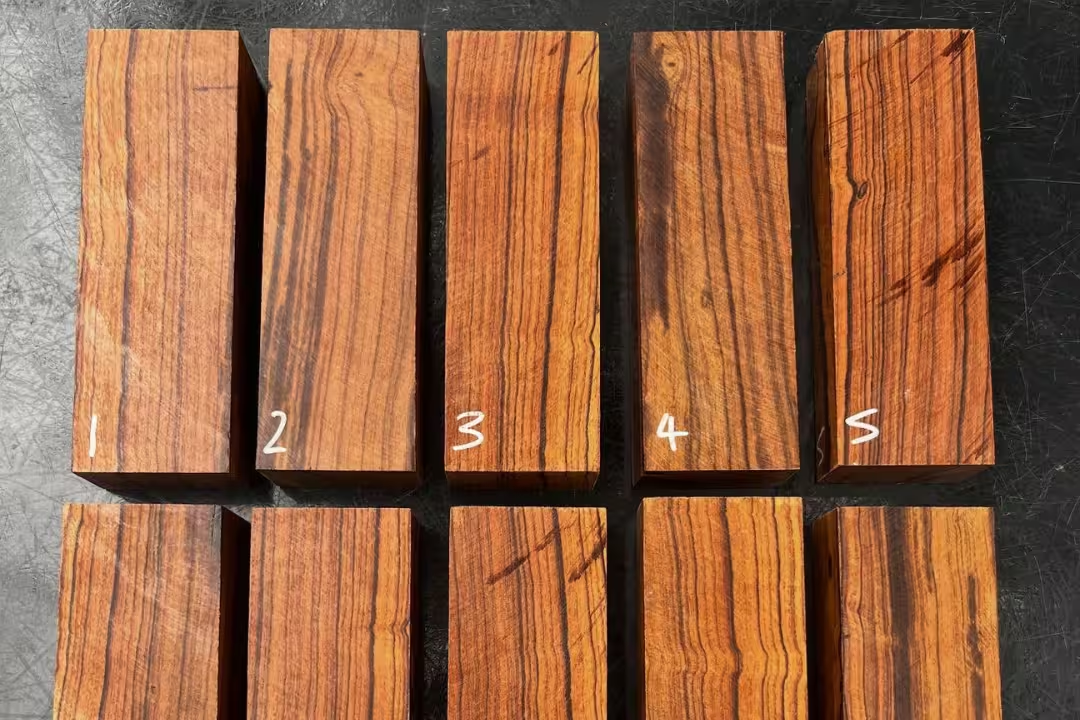
Desert ironwood is demanding because it combines high density, irregular grain, natural extractives, and common internal defects. Sharp tooling, low heat, fresh bonding surfaces, and conservative layouts produce better results than force.
Cutting and Shaping
Inspect every blank under strong side light before marking it. Fine checks appear as thin black lines, bark pockets feel slightly hollow when tapped, and short grain often changes direction abruptly around swirling figure.
Use sharp carbide tooling where suitable and take light cuts. Feeding too fast raises the pitch of the saw, warms the blank within seconds, and can leave a bitter-smelling brown burn line that takes more sanding than the original cut.
Drilling and Fastening
Predrill dense stock for screws and knife-handle pins. Use a sharp bit, back the exit face, withdraw often to clear packed chips, and keep holes away from end checks or narrow edges.
A hot bit may squeal, wander, discolor the hole, or expand a hidden crack. Reduce speed, avoid heavy pressure, and let the tool cool rather than forcing a smoking cut through the final few millimeters.
Gluing Dense Oily Wood. Mill flat, fresh bonding faces and leave them coarse enough for the adhesive system rather than polishing them to a glossy surface. Remove loose dust, follow the adhesive maker’s mix ratio and cure conditions, and test unfamiliar preparation on an offcut.
Epoxy is common for knife scales because it fills small gaps and bonds mixed materials, but it can’t correct a rocking scale or contaminated face. Pins add mechanical support; they don’t rescue a weak adhesive bond.
Sanding and Finishing. Move through a sensible grit sequence without skipping deep scratches. Fresh abrasive cuts with a dry hiss and produces fine brown dust; worn paper slides, heats the surface, and burnishes it before the scratch pattern has disappeared.
Reduce speed and pressure as the surface becomes smooth. Oil, wax, film finish, or polishing compound can all work, yet each darkens the wood differently; test the complete finishing schedule on material from the same blank.
Cracks, Burns, and Weak Bonds. Trim visibly checked ends before laying out a handle, then allow extra length for fresh cuts. Place the most attractive figure only after confirming that it doesn’t hide bark, a void, or fragile short grain.
Burned bonding faces need fresh abrasion before gluing. If a finished piece turns too dark, stripping it may deepen scratches or change dimensions, so a finish sample is faster and safer than correcting the completed project.
Practical Notes From Real-World Use. A blank that looks generous on a product page can lose several millimeters to saw kerf, flattening, pin-hole placement, and removal of checked ends. Lay out both scales on the usable core before the first cut, and mark grain direction on every face so matching parts don’t get reversed.
Bookmatched scales rarely stay visually identical after contouring because each sanding pass exposes a different grain layer. Keep the pair aligned from opening through final assembly, and compare them under the same light after each major shaping stage.
The following video is useful for readers comparing dense woodworking stock and practical shop handling.
Dust and Workshop Safety. Fine ironwood dust can irritate skin, eyes, and airways. Use source extraction, eye protection, and a properly selected respirator; keep gloves away from rotating tools, where fabric can catch and pull a hand into the work.
Vacuum dust rather than blowing it across the shop. Store or discard oil-soaked cloths using the finish maker’s fire-safety directions because some curing oils generate enough heat to ignite piled rags.
Buying Ironwood Responsibly
Buy ironwood by botanical identity, provenance, usable dimensions, dryness, and defect disclosure—not by color or marketing name. A retail listing, including an Amazon ironwood tree or craft blank listing, isn’t proof of species, lawful harvest, stability, or conservation status.
Botanical Identity and Provenance
Ask the seller for the scientific name, country or state of origin, and an explanation of whether the wood was salvaged, reclaimed, plantation-grown, or harvested under permit. “Ironwood,” “bois de fer,” and “exotic hardwood” leave too much room for substitution.
Documented salvage can be a sound source, but the word “salvaged” needs context. Material from private land, road work, storm damage, or an approved removal should have a traceable chain rather than an unsupported label.
Legal Harvest and Conservation
Collection rules depend on species, land ownership, agency, and jurisdiction. Dead wood can remain protected on public land because it supplies habitat and nutrients; permission to visit land doesn’t grant permission to remove plants, logs, branches, or seed pods.
Arizona regulates certain native plant removal and transport through the Arizona Department of Agriculture native plant program. Protected areas, tribal lands, and federal property may impose separate or stricter rules.
Certifications and Trade Rules. FSC certification can support responsible forestry for some supply chains, but it isn’t available for every small salvaged blank. CITES controls also apply species by species; for example, genuine Guaiacum is listed in Appendix II, while that fact shouldn’t be copied onto every ironwood.
Check the botanical name against live CITES, IUCN, customs, and forestry records before importing tropical stock. Conservation categories and documentation rules can change, and a legal domestic purchase may still require papers for international transport.
Defects, Dimensions, and Pricing. Craft ironwood is commonly priced by the piece, matched pair, figure, or intended project rather than by board foot. Heartwood percentage, burl figure, color contrast, stabilization, dryness, checks, inclusions, shipping weight, and documented origin all affect value.
- Confirm whether dimensions are exact or nominal.
- Allow material for saw kerf and flattening.
- Request clear photographs of all six faces.
- Look for waxed ends that may conceal checks.
- Ask whether a matched pair is cut from one block.
- Verify whether “stabilized” means resin-treated stock.
- Reject pieces whose usable core won’t fit the planned layout.
Knife Scales and Craft Blanks. Choose scales with enough thickness for flattening and final contour, plus extra length around pins and guard transitions. Turning blocks need grain that supports the smallest planned diameter; a dramatic swirl can become a weak cross-grain neck after shaping.
These listings show the common blank formats available for knife handles, turning, carving, and small restoration projects; confirm botanical identity, exact dimensions, defects, and origin with the seller before purchase.

Natural Ironwood Handle Scales
- Includes four natural wood pieces
- Sized for custom knife handles
- Dense ironwood adds lasting character
- Great for crafting and restoration
- Sand, shape, and finish to suit your project
 Buy on Amazon

Desert Ironwood Blank Set
- Five exotic hardwood blanks included
- Dense wood with distinctive natural grain
- Suitable for knife handles and pens
- Great for carving and turning projects
- Useful for custom woodworking creations
Buy on Amazon

Desert Ironwood Turning Block
- Large solid exotic hardwood block
- Generous size for custom shaping
- Suitable for tool and knife handles
- Great for carving or pen projects
- Natural grain gives every project unique character
Buy on Amazon

Long Desert Ironwood Blank
- Single long hardwood blank
- Ideal for slim handles and grips
- Dense ironwood suits detailed shaping
- Great for pen turning and carving
- Natural wood grain creates a custom finish
Buy on Amazon

Bookmatched Ironwood Handle Pair
- Matched pair for balanced knife handles
- Stabilized exotic hardwood construction
- Natural grain creates a refined look
- Sized for custom knife making
- Ready for shaping, sanding, and finishing
Buy on Amazon
FAQs
What Is An Ironwood Tree?
An ironwood tree is a common name for several tree species with exceptionally dense, hard wood. The name may refer to hornbeam, desert ironwood, hophornbeam, or tropical species depending on the region. These trees are valued for their strength, durability, and often slow growth.
How Do You Identify An Ironwood Tree?
You can identify an ironwood tree by checking its leaves, bark, seeds, and location because the name applies to different species. Many types have dense wood, rough or ridged bark, and a sturdy branching form. Use a local tree guide or consult an arborist for a reliable species identification.
What Is Ironwood Used For?
Ironwood is used for durable items such as tool handles, flooring, furniture, carvings, and firewood. Its density helps it resist wear and damage, but it can be difficult to cut or shape. Some ironwood species are also planted as shade trees or valued for habitat and erosion control.
Is Ironwood The Hardest Wood?
Ironwood is among the hardest woods, but it is not always the single hardest wood in the world. Hardness varies greatly because ironwood describes several unrelated tree species. Some tropical woods, including certain ebony and quebracho species, can rank higher on standard wood-hardness tests.
Is Ironwood Rare Or Protected?
Some ironwood species are common, while others are rare, protected, or regulated in certain areas. Conservation status depends on the exact species and where it grows. Check local forestry rules before cutting, collecting, buying, or transporting ironwood, especially if it comes from a desert or tropical region.
Affiliate Disclosure: Some links in this post are affiliate links. If you make a purchase through these links, we may earn a small commission at no extra cost to you. We only recommend products we genuinely believe in.