

Ipe wood is a dense tropical hardwood from several Handroanthus species native to Central and South America. Also called Brazilian walnut, it offers exceptional hardness, decay resistance, and outdoor longevity, but it costs more and demands careful sourcing, sharp tools, predrilling, drainage, and stainless-steel fasteners.
Table of Contents
What Is Ipe Wood?
Ipe is a trade group, rather than one uniform species, used for dense hardwood harvested mainly from Handroanthus trees. It commonly becomes decking, boardwalks, siding, docks, flooring, and outdoor furniture.
Definition and Trade Names
Brazilian walnut is the best-known trade name, yet ipe isn’t botanically related to true walnuts in the Juglans genus. Sellers may also use names such as lapacho, ironwood, pau d’arco, or Brazilian ipe, so purchase documents should identify the declared species and origin.
Pronunciation and Spelling
Pronounce ipe “ee-pay.” The Portuguese form is ipê, while “ipa wood” is usually a phonetic misspelling rather than another material. Searching either spelling may produce similar products, but invoices and certificates should use an accepted botanical or commercial name.
Ipe Tree and Taxonomy. Commercial ipe comes mainly from Handroanthus in the Bignoniaceae family. Older references often classify related trees as Tabebuia, and decking packages can contain several closely related species with small differences in density, grain, and color. The Kew Plants of the World Online database provides accepted botanical names and distributions.
Mature trees may reach roughly 100–150 feet tall with trunks 2–4 feet across, depending on species and habitat. Their range includes Brazil, Bolivia, Peru, Colombia, Paraguay, Venezuela, and parts of Central America, so not all ipe is Brazilian.
Origin, Color, and Grain. Heartwood ranges from olive and reddish brown to chocolate brown with nearly black streaks. Sapwood looks much paler. Freshly planed boards can show startling variation, but sunlight and a penetrating finish often make a deck look more unified after several weeks.
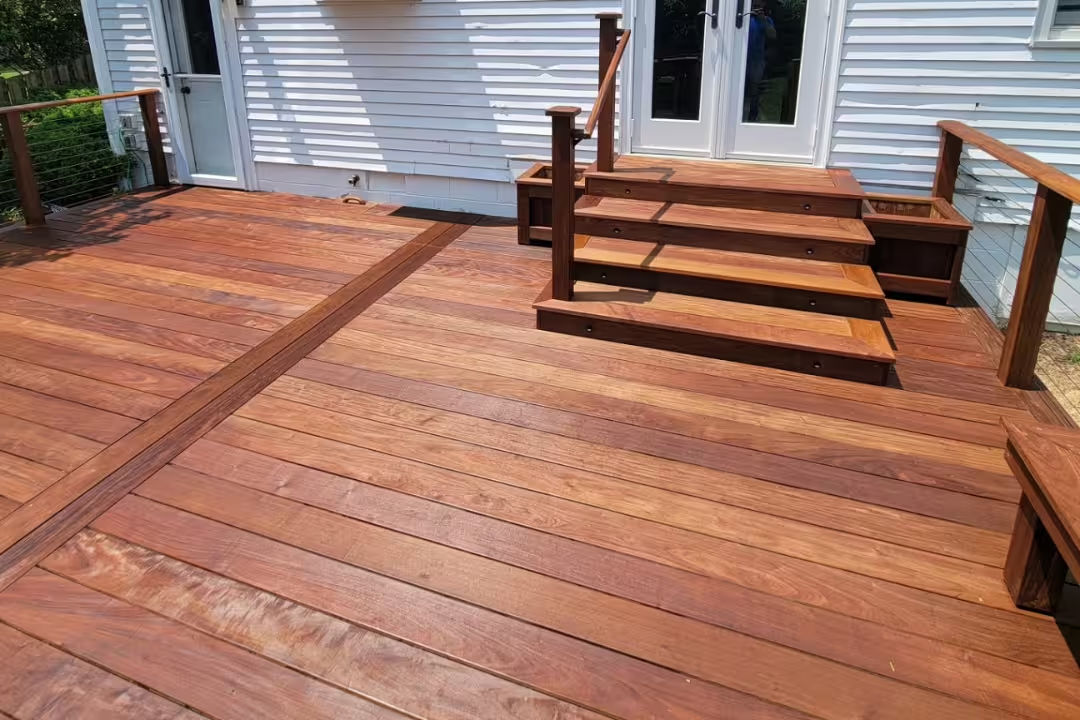
The grain runs straight to interlocked with a fine or medium texture. A newly cut surface feels almost waxy and exceptionally firm under a fingertip; a dull blade leaves dark burn marks and a faint, sharp smell rather than the clean ribbon-like shavings produced by softer lumber. For broader regional context, see this guide to Brazilian wood.
Ipe Wood Properties and Uses
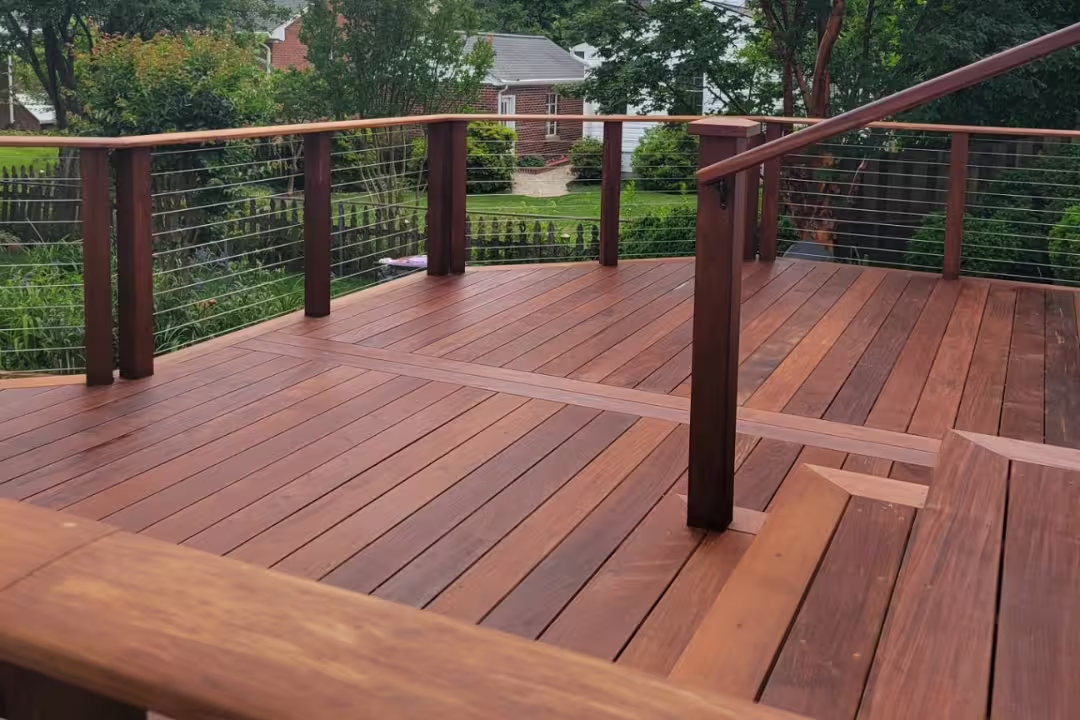
Ipe combines high density, exceptional surface hardness, strong decay resistance, and good stability for a tropical hardwood. These benefits support long outdoor service, but they also increase board weight, tool wear, labor, and fastening difficulty.
Property and Performance Table
| Property | Typical reference value | Practical meaning |
|---|---|---|
| Air-dry density | About 1,050 kg/m³ or 65 lb/ft³ | Heavy boards; some pieces sink in water |
| Janka hardness | About 3,510 lbf | Strong resistance to dents and wear |
| Modulus of rupture | About 25,660 psi | High bending strength |
| Modulus of elasticity | About 3.2 million psi | Stiff under load |
| Crushing strength | About 13,600 psi | Resists compression damage |
| Radial shrinkage | About 6.6% | Movement still requires correct spacing |
| Tangential shrinkage | About 8.0% | Fairly favorable radial-to-tangential balance |
| Potential service life | Often 40–75+ years | Possible with sound design and installation, not guaranteed |
Reference values vary among species, specimens, moisture levels, and test methods. The Ipe wood property profile offers useful comparison data, but its figures shouldn’t replace product-specific engineering values or local code requirements.
Density, Weight, and Hardness
At about 65 pounds per cubic foot, a nominal 1×6 board measuring ¾ × 5½ inches weighs close to 1.9 pounds per foot. A 16-foot board can approach 30 pounds, and carrying several leaves a distinct pressure across the palms and forearms. Plan safe unloading before freight arrives.
The 3,510-lbf Janka rating is about two and a half times that of white oak. This hardness resists chair legs, claws, and heavy foot traffic, yet hand nailing becomes impractical and ordinary steel blades lose their edge quickly.
Strength and Stability. Ipe is stiff and strong, but its laboratory values don’t make every board a structural member. Grade, span, knots, moisture, connectors, and local codes still control structural use. Narrow boards often stay flatter than wide stock when both faces receive similar airflow.
Durability and Service Life. Heartwood has very high natural resistance to fungal decay, termites, and abrasion. Properly installed boards may serve for several decades, but standing water, marine borers, wet framing, and trapped organic debris can shorten that period. Ipe is moisture resistant, not waterproof.
Fire Performance. Some products have earned a Class A flame-spread classification through ASTM E84 testing. That claim doesn’t automatically transfer to every thickness, species, profile, or assembly. Ask for the exact product report and confirm acceptance with the local code official.
Common Outdoor Uses. Ipe serves residential decks, commercial boardwalks, pool surrounds, stairs, rainscreens, privacy screens, benches, pergolas, bridges, and docks. Coastal and pool installations need Type 316 stainless hardware, while elevated cladding needs rear drainage and ventilation.
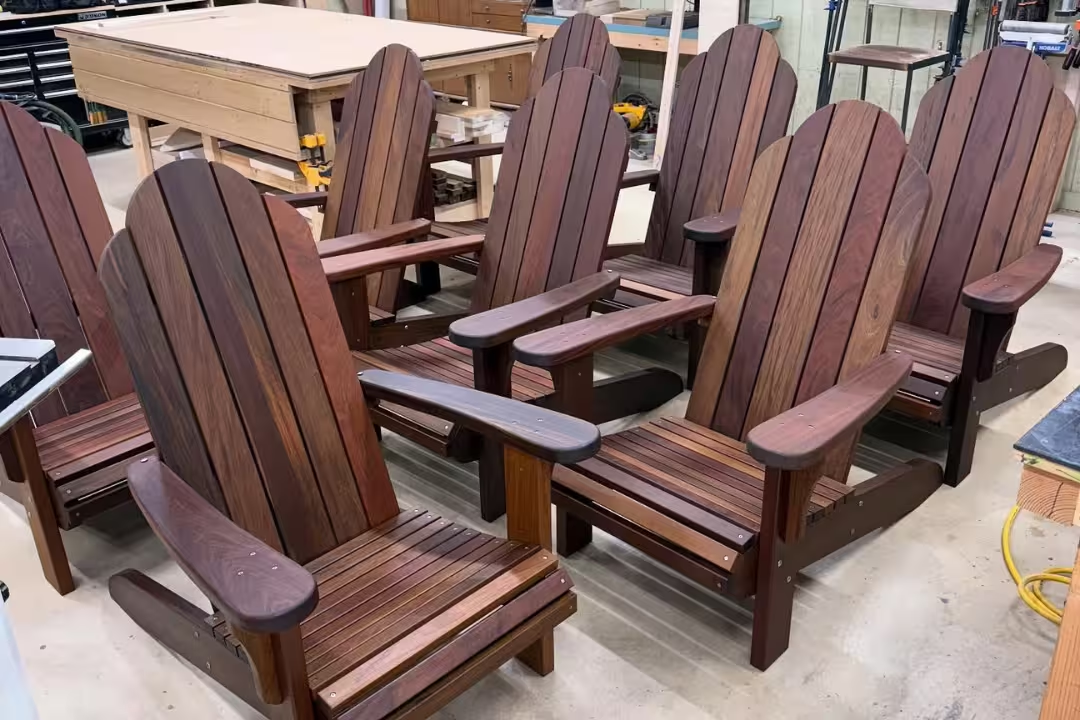
Advantages and Disadvantages. Its main strengths are wear resistance, long potential life, rich natural color, low reliance on chemical treatment, and the option to weather gray. Drawbacks include high cost, heavy handling, difficult machining, dark-surface heat, color variation, and traceability concerns.
- Best qualities: hardness, decay resistance, stability, repairable natural grain, and high-traffic performance.
- Installation costs: carbide tooling, predrilling, stainless screws, freight, and slower labor.
- Site concerns: surface heat, algae in shade, weight, drainage, and ventilation.
- Buying concerns: mixed species, unclear grades, illegal harvest, and undocumented origin.
Common Ipe Failure Modes. End checking starts when fresh cuts lose moisture too fast. Cupping often points to uneven airflow or moisture exposure. Black stains usually come from iron contamination, while split ends commonly trace back to missing or undersized pilot holes.
Practical Notes From Real-World Use. A sticky deck surface usually means excess oil remained after application, not that the wood rejected all finish. Patchy gray areas appear beneath rugs and planters, and slippery green films develop where shade, pollen, and damp leaves stay on the boards.
One expensive mistake is placing premium ipe over a frame that stays wet. The surface boards may remain firm while joists soften around screw penetrations. Protect the substructure with compatible flashing, provide airflow, and design board replacement into hidden-fastener layouts.
Sustainability and Legal Sourcing
Ipe can be responsibly sourced, but a tropical-hardwood name alone proves nothing about legality or forest management. Buyers should verify species, harvest origin, chain of custody, CITES records, and importer documentation for the actual shipment.
Environmental Considerations
Ipe trees grow in biodiverse forests and occur at relatively low densities across broad areas. High timber value can encourage illegal cutting, permit fraud, species substitution, and laundering through long supply chains. Blanket claims that all ipe is sustainable—or never sustainable—hide the role of traceable forest management.
CITES Appendix II
Commercially relevant Handroanthus, Roseodendron, and Tabebuia timber is covered by CITES Appendix II. Trade isn’t banned, but listed products can require export controls and documents showing legal, non-detrimental harvest. Product form, origin, destination, and shipment date affect the rules; check the CITES Appendices before importing.
FSC Chain of Custody. FSC certification can provide stronger evidence of managed origin and tracked handling. Check the certificate number, active status, scope, and invoice claim. A supplier displaying an FSC logo doesn’t prove that every board in its warehouse carries certification.
Lacey Act Compliance. U.S. law prohibits trade in plants and wood taken or sold contrary to applicable laws. Importers carry greater filing duties, but retail buyers also benefit from keeping itemized invoices, species declarations, origin details, and certification records.
Supplier Due Diligence. Ask for the botanical name, country and region of harvest, CITES status, chain-of-custody certificate, invoice claim, and importer identity. A price far below comparable documented stock deserves scrutiny, especially when the seller can’t explain grade, profile, or origin.
Buying Ipe Lumber and Decking
Buy ipe by specification, not by color photographs alone. Profile, actual dimensions, moisture condition, grade, length distribution, certification, freight, and waste can change the delivered cost more than a small difference in advertised board price.
Lumber Types and Profiles
Rough ipe lumber is sold by board foot for milling. S4S stock has four surfaced faces, while decking arrives square-edged, pregrooved, or in specialized tongue-and-groove profiles. Avoid exposed tongue-and-groove layouts that can trap water without a tested drainage design.
Dimensions and Coverage
Common nominal profiles include 1×4, 1×6, 5/4×6, 2×4, and 2×6. A nominal 1×6 often measures about ¾ × 5½ inches, though suppliers differ. Confirm thickness, face width, edge radius, groove shape, and whether dimensions apply before or after drying.
| Calculation | Result | Use |
|---|---|---|
| One linear foot × 5.5-inch width | 0.458 ft² | Board area before gaps |
| 1 ÷ 0.458 | 2.18 linear feet | Approximate lumber per square foot |
| $5 per linear foot ÷ 0.458 | $10.92 per ft² | Board cost before waste and freight |
| ¾ × 5½ × 16-foot board | About 30 pounds | Handling and delivery planning |
Grades and Appearance. Ask whether the order is clear all-heart, select, premium, mixed color, shorts, or one-face stock. Written grading rules should state allowances for sapwood, checks, pinholes, mineral streaks, machining defects, and color variation.
Moisture Content. Air-dried decking suits many open exterior projects, while kiln-dried stock fits furniture and controlled interior work. Measure delivered boards with a meter suited to dense hardwood. Gap decisions must reflect actual moisture, expected site conditions, board width, and supplier instructions.
Ipe Wood Price Ranges. Typical retail decking may run about $4–$9 or more per linear foot, or roughly $9–$20 or more per square foot of material. Rough or surfaced project lumber can reach $12–$25 or more per board foot based on thickness, width, grade, certification, and length.
Cost Conversion and Waste. For rough lumber, multiply thickness in inches by width in inches by length in feet, then divide by 12. Allow about 10–15% waste for straightforward decks and 15–20% or more for diagonal layouts, stairs, picture frames, or heavy defect cutting.
Total Installed Cost. Professional projects often reach $25–$50 or more per square foot after labor, freight, clips, screws, joist preparation, flashing, tool wear, waste, end sealer, and optional oil. Difficult access, curved work, long boards, and coastal hardware raise the total.
Where to Buy Ipe. Full deck packages are best sourced from established hardwood importers or specialty decking yards that provide written grades, installation instructions, replacement stock, and traceability records. Local inspection helps reveal machining defects and color range before freight charges become nonrefundable.
Small-Project Ipe Boards. Surfaced board sets work for handles, samples, repairs, turnings, and small outdoor accents. They aren’t substitutes for grade-matched full-length decking. Check exact dimensions, moisture condition, species description, and usable length before ordering.

Ipe Hardwood Board Set
- Four surfaced ipe boards
- Dense hardwood construction
- Smooth S4S finished faces
- Ideal for small outdoor projects
- Naturally rich wood appearance
 Buy on Amazon
How to Install Ipe Decking
Ipe installation requires planning for board moisture, drainage, ventilation, tool wear, and movement. Use carbide cutting tools, correctly sized pilot holes, stainless-steel fasteners, fresh-cut end sealer, and a substructure expected to last with the decking.
Planning and Acclimation
Store boards flat on evenly spaced supports, above soil and standing water, with air reaching the stack. Don’t seal warm or wet boards inside plastic. Measure moisture at delivery and again before installation rather than relying on a label or a fixed acclimation period.
Cutting and Predrilling
Use sharp carbide-tipped blades and quality brad-point or carbide bits. Predrill face screws and holes near ends or edges. A clean cut feels glassy and firm; dark smoke, squealing, or scorched edges signal a dull or overheated blade.
Stainless-Steel Fasteners. Type 305 stainless suits many exterior settings, while Type 316 performs better near pools, saltwater, and corrosive coastal air. Match pilot diameter, screw length, clip spacing, edge distance, and torque to the fastening manufacturer’s instructions.
Spacing and Ventilation. Exterior gaps often fall near ⅛–¼ inch, but no single gap fits every moisture level and climate. Provide cross-ventilation, ground clearance, wall flashing, and positive drainage. Hidden clips don’t remove board movement or ventilation needs.
End-Grain Sealing. Coat every fresh crosscut soon after cutting with a compatible end sealer. This slows abrupt moisture exchange and reduces checking. Face oil serves a different cosmetic role and can’t repair an already split end.
Adhesive Use. Ipe’s density and extractives can weaken some bonds. Use an exterior adhesive approved for dense hardwood, follow its surface-preparation directions, and test a sample. Mechanical fasteners must still carry the required load.
Installation Safety. Fine dust can irritate eyes, skin, and lungs. Wear eye and hearing protection, use dust extraction, and choose a properly fitted respirator for airborne dust. Heavy boards can pinch fingers or strain backs, so use two people for awkward lengths.
Deck Plugs. Face-fastened decks can hide counterbored screw heads with matching ipe plugs. Align the grain where practical, use a compatible adhesive sparingly, and trim the cured plug flush. A plug can’t correct weak screw embedment or a badly split hole.

Natural Ipe Deck Plugs
- Made from natural ipe wood
- Chamfered base aids installation
- Conceals deck fastener holes
- Matches ironwood decking tones
- Includes 100 plugs
Buy on Amazon
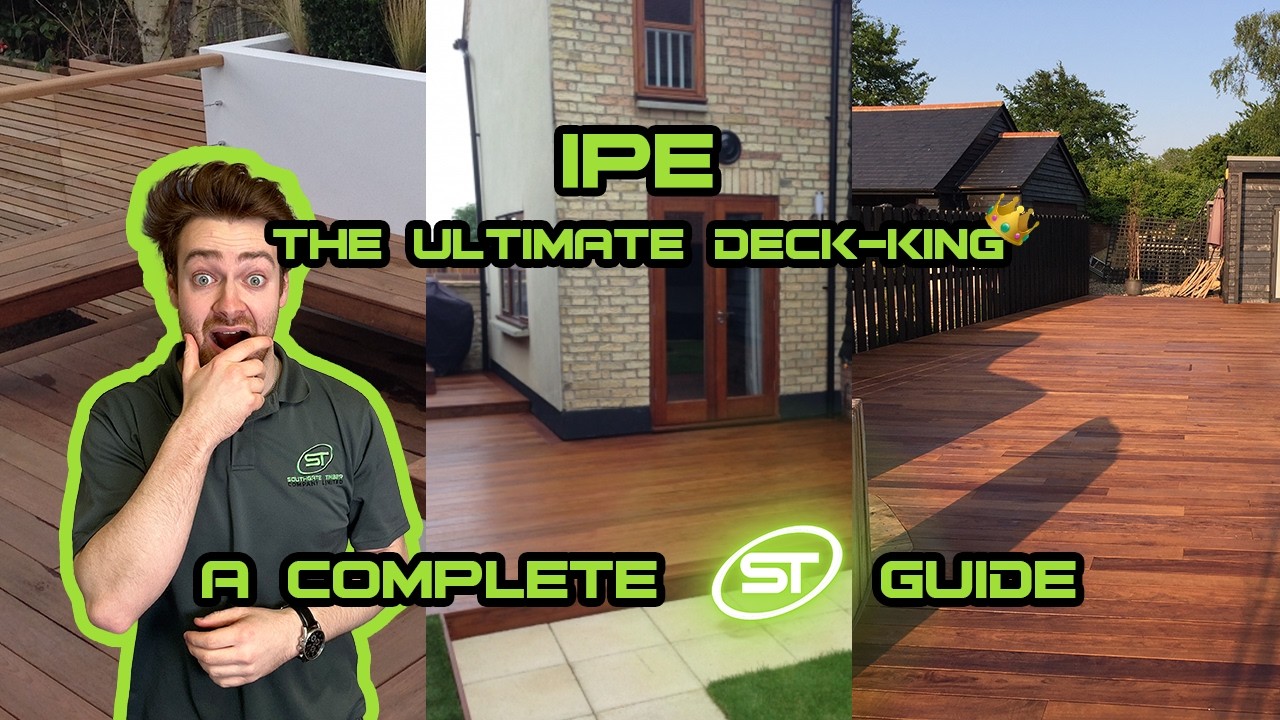
This installation video provides a useful visual reference for handling dense hardwood decking, but the board and fastener manufacturers’ written instructions should control product-specific details.
Ipe Wood Maintenance
Ipe doesn’t need face oil for its inherent decay resistance, but UV exposure will turn unfinished boards silver-gray. Cleaning controls grime and algae; penetrating finish manages color. Neither treatment compensates for blocked drainage or wet framing.
Brown Color Preservation
Use a thin penetrating finish made for dense tropical hardwood if brown color is the goal. Prepare the surface, work in suitable drying weather, and wipe away excess at the stated interval. Thick application leaves tacky patches that collect dust and shoe prints.
Natural Gray Weathering
Leaving ipe unfinished creates a silver-gray patina through UV exposure. The color change doesn’t by itself mean decay. Furniture, mats, roof overhangs, and planters block sunlight, so uncovered areas gray faster and create visible outlines.
Cleaning and Restoration. Sweep first, wash with a wood-compatible cleaner, scrub with a soft or medium brush, and rinse well. Sodium-percarbonate products can lift organic grime, while oxalic-acid brighteners can reduce some tannin and iron discoloration. Test a hidden area first.
Keep pressure washing conservative. A narrow jet held close to the deck can etch lighter grain, leave pale stripes, and raise fibers that feel slightly furry under bare feet. Cleaning chemistry and brushing usually provide more control.
Products to Avoid. Thick paints and varnishes often peel outdoors because they form a film over dense moving wood. Don’t mix cleaning chemicals or scrub with steel wool. Tiny iron particles can produce deep blue-black stains after moisture reaches them.
Maintenance Frequency. Clean according to pollen, shade, leaf litter, humidity, and foot traffic rather than a fixed month. Color-preserving oil often needs renewal every one to two years, with exposed rails and steps fading sooner than sheltered boards.
Penetrating Ipe Finish. Check coverage, preparation, drying conditions, local VOC limits, and compatibility with earlier coatings. Apply less than seems visually satisfying at first; dense wood accepts little finish, and the professional workaround is wiping twice rather than leaving a glossy wet layer.

DeckWise Ipe Oil Plus Finish
- Designed for exotic hardwoods
- Semi transparent natural tone
- Helps maintain deck appearance
- One gallon project size
- Lower 100 VOC formula
Buy on Amazon
Ipe Versus Other Decking Materials
Ipe offers exceptional hardness and long potential life, but lower-cost hardwoods, treated pine, cedar, and composite can be better fits for limited budgets, easy DIY work, consistent color, or simpler sourcing. Compare the complete deck system rather than board price alone.
Decking Comparison Table
| Material | Approximate material cost | Janka hardness | Maintenance and trade-off |
|---|---|---|---|
| Ipe | $9–$20+ per ft² | 3,510 lbf | Optional oil; heavy and difficult to machine |
| Cumaru | Often below ipe | About 3,330 lbf | Dense, variable color, may move more |
| Garapa | Often below cumaru and ipe | About 1,650 lbf | Golden color, softer, easier budget fit |
| Teak | Often comparable or higher | About 1,070 lbf | Stable and easier to machine; origin matters |
| Treated pine | About $2–$6+ per ft² | About 690–870 lbf | Affordable and workable; dents and checks more readily |
| Composite | About $5–$15+ per ft² | Not directly comparable | Consistent appearance; heat, scratching, and expansion vary |
| Cedar | About $4–$10+ per ft² | Roughly 350 lbf for western red cedar | Light and workable; soft surface needs care |
Ipe Versus Cumaru
Cumaru approaches ipe’s hardness at about 3,330 lbf and often costs less. It can show wider red, yellow, and brown variation and may move more between wet and dry seasons. Both woods need carbide tools, pilot holes, ventilation, and stainless fasteners. See the full cumaru wood guide.
Ipe Versus Garapa. Garapa has a golden-yellow appearance, lower density, and a softer surface. It offers a useful middle ground for owners who want real tropical hardwood without ipe’s darkest color, extreme weight, or highest material price.
Ipe Versus Teak. Ipe is over three times harder by Janka rating, while teak usually machines more easily and remains prized for dimensional stability and marine service. Genuine teak can cost as much as or more than ipe. Plantation source, species, and grade shape the comparison; read more about teak wood.
Ipe Versus Treated Pine. Treated pine costs far less, weighs less, and suits common woodworking tools. Its softer surface dents and checks more readily, and preservative-compatible hardware matters. A sound pine deck may still make better financial sense for a short ownership period.
Ipe Versus Composite. Composite decking supplies consistent color, product warranties, and little need for refinishing. Product lines differ in heat, scratching, expansion, staining, and repairability. Ipe provides genuine grain and high wear resistance but asks more from installers and sourcing records.
Cedar and Other Alternatives. Cedar feels lighter and cuts cleanly, but its soft surface marks under furniture. Black locust offers domestic decay resistance where available, while thermally modified wood lowers weight and avoids tropical sourcing. This black locust overview explains another exterior option.
Is Ipe Wood Worth It?
Ipe is worth it for long-lived, high-traffic projects where natural wood, abrasion resistance, skilled installation, and documented sourcing justify the expense. It makes less sense where budgets are tight, airflow is poor, color consistency is mandatory, or suitable tools and replacement stock aren’t available.
When Ipe Makes Sense
Choose ipe for boardwalks, busy decks, exterior stairs, pool surrounds, and architectural features expected to remain in service for decades. The project should support heavy boards, stainless hardware, specialist labor, suitable drainage, and verifiable legal origin.
When Alternatives Are Better
Choose another material for low-cost DIY work, structures with poor under-deck airflow, frequent board removal, difficult carrying access, or projects needing uniform factory color. Cumaru, garapa, treated pine, cedar, black locust, composite, and PVC each solve a different budget or maintenance problem.
Final Decision Checklist. Compare written quotes using the same board dimensions, waste allowance, freight, hardware, framing preparation, finish, and labor. Then confirm the following points before placing a deposit.
- Is the quoted figure for boards alone or the complete installed deck?
- Are actual profile dimensions and total linear feet listed?
- Does the grade define sapwood, checks, pinholes, color, and usable faces?
- Can the seller document species, origin, CITES status, and certification claims?
- Will the framing, flashing, drainage, and ventilation last with the decking?
- Are compatible stainless fasteners and replacement boards readily available?
- Does the installer have carbide tools, dense-hardwood bits, and relevant project experience?
- Do you prefer maintained brown color or natural silver-gray weathering?
- Can the budget absorb freight, waste, tool wear, and specialist labor?
A well-specified ipe deck feels dense and steady underfoot, with little surface denting and a smooth, cool texture in shade. The same dark boards can become hot in direct summer sun, so samples should be tested at the site before committing to a pool deck or barefoot area.
FAQs
What Is Ipe Wood And Where Does It Come From?
Ipe wood is an exceptionally dense, durable tropical hardwood commonly used for decking, siding, and outdoor furniture. It comes from several Handroanthus species native to Central and South America, especially Brazil. Its natural oils and tight grain help it resist moisture, insects, and decay outdoors.
Is Ipe The Same As Brazilian Walnut?
Yes, ipe is commonly sold as Brazilian walnut, although it is not a true walnut species. The trade name describes its rich brown color and hardness rather than its botanical family. Ipe usually refers to Handroanthus woods from tropical America, while true walnuts belong to the Juglans genus.
How Long Does Ipe Wood Last Outdoors?
Ipe wood can last 25 to 50 years or more outdoors when properly installed and maintained. Its extreme density naturally resists rot, insects, and weathering. Good airflow, correct fasteners, and routine cleaning help maximize its lifespan, especially in wet or shaded locations.
Does Ipe Decking Need To Be Sealed Or Oiled?
No, ipe decking does not need to be sealed or oiled to remain durable outdoors. It naturally resists decay and can be left unfinished, where it gradually weathers to a silver-gray color. Applying a UV-inhibiting hardwood oil is optional if you want to preserve its original brown tone and reduce surface checking.
Is Ipe Wood Sustainable And Legally Sourced?
Ipe can be sustainable and legally sourced when it is purchased from suppliers with documented, responsibly managed supply chains. Look for credible certification, such as FSC, and request chain-of-custody or legal-harvest documentation. Because illegal logging remains a concern in some regions, choose suppliers that clearly identify species, country of origin, and import compliance.
Affiliate Disclosure: Some links in this post are affiliate links. If you make a purchase through these links, we may earn a small commission at no extra cost to you. We only recommend products we genuinely believe in.


