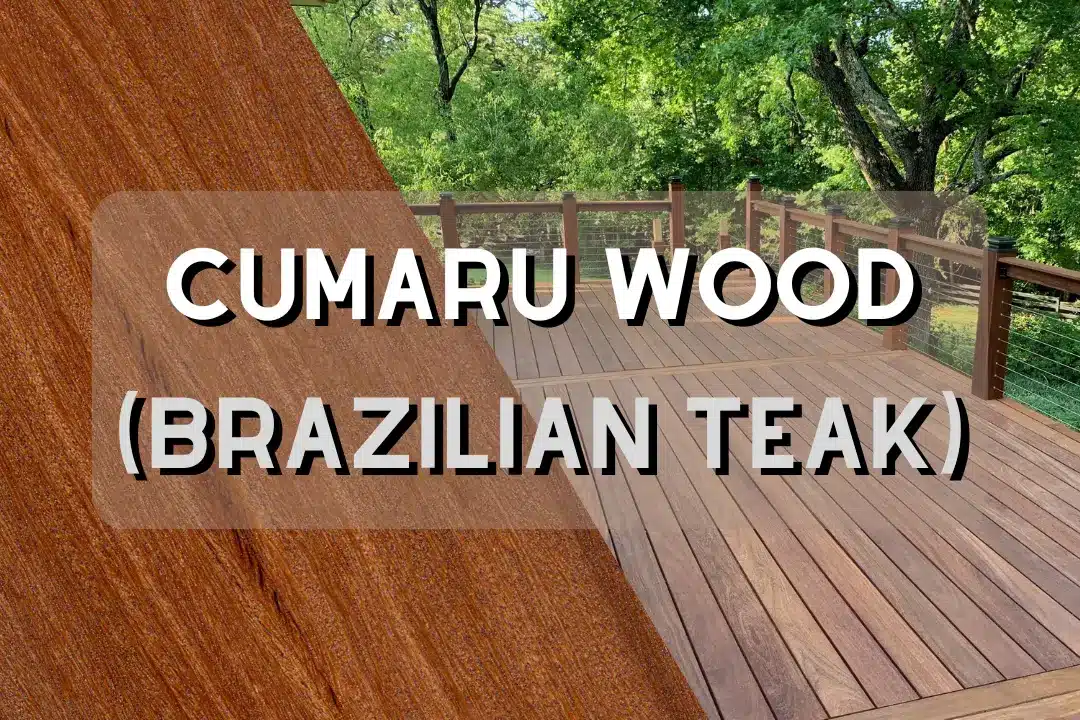
Cumaru Wood Guide: What It Is, Uses, Price, and Pros and Cons

Cumaru wood is a dense South American tropical hardwood, often sold as Brazilian teak, known for its 3,540 lbf Janka hardness, strong rot resistance, and long service life in decking and flooring. It’s a premium material with real installation demands: it’s heavy in the hand, hard on tools, and unforgiving if you skip spacing, pre-drilling, or moisture control.
This guide explains what is cumaru wood, how it performs outdoors and indoors, what cumaru wood price ranges look like, and where it beats or loses to ipe, teak, garapa, tigerwood, and oak.
Table of Contents
What Is Cumaru Wood?

Cumaru wood is a heavy tropical hardwood from the Dipteryx genus, most often linked with Dipteryx odorata. It grows in parts of South America and is prized for outdoor durability, high density, reddish-brown color, and wear resistance.
In practical use, cumaru feels noticeably heavier than oak or maple before the first cut is even made. A fresh board has a dry, hard surface under your fingers, and sawdust often smells faintly warm and spicy rather than resinous like softwood.
Brazilian Teak Name
Brazilian teak is a trade name for cumaru, not a botanical match to true teak. Genuine teak is Tectona grandis, so buyers comparing Brazilian teak vs cumaru should know they’re usually looking at the same commercial wood, while Brazilian teak vs teak is a different species comparison.
The trade name creates a common beginner mistake: people expect cumaru to behave like marine teak. It doesn’t have the same oily feel or easy workability, so installation methods used for teak wood don’t always transfer cleanly.
Origin and Species
Cumaru hardwood commonly comes from Brazil, Peru, Bolivia, Colombia, Venezuela, and other Amazon Basin regions. Some suppliers group several Dipteryx species under the cumaru name, so color, density, and board behavior can vary between shipments.
The Wood Database lists cumaru as very durable and gives key reference values such as 3,540 lbf Janka hardness and 68 lb/ft³ dried weight; see The Wood Database for its species profile. Those figures match what you feel on site: drill bits heat fast, boards resist dents, and dull blades leave burn marks quickly.
Tonka Bean Connection
Tonka beans come from trees associated with cumaru, and they contain aromatic coumarin compounds. That connection explains why cumaru is sometimes called tonka or tonka bean wood in regional timber markets.
Woodworkers shouldn’t treat the aromatic link as harmless. Cumaru dust can irritate eyes, skin, and lungs, so a respirator, eye protection, and dust extraction matter when cutting, sanding, or routing this dense tropical hardwood.
Best Uses
Best uses for cumaru include decking, exterior stairs, boardwalks, siding, porch flooring, interior flooring, furniture accents, plugs, veneer, knife scales, and tool handles. It works best where hardness and decay resistance matter more than easy machining.
- Cumaru wood decking for decks, docks, rooftops, stairs, pool surrounds, and walkways
- Cumaru wood flooring for high-traffic interiors and homes with pets
- Exterior accents where rot resistance matters
- Small woodworking projects that benefit from density and rich color
- Veneer projects where the look is desired without the weight of solid lumber
Appearance and Technical Properties

Cumaru wood properties explain why it works so well in demanding spaces: it’s hard, dense, strong, and naturally resistant to decay. The trade-off is movement risk, difficult machining, and higher labor effort than domestic hardwoods.
| Property | Approximate Cumaru Value | Practical Meaning |
|---|---|---|
| Botanical association | Dipteryx odorata and related Dipteryx species | Trade-name variation can affect color and supply |
| Janka hardness | 3,540 lbf | Very high dent resistance |
| Dried weight | 68 lb/ft³ / 1,085 kg/m³ | Heavy boards, higher freight, harder handling |
| Specific gravity | 0.86 basic / 1.09 at 12% moisture | Dense enough to require sharp tooling |
| Modulus of rupture | 22,400 psi | Strong bending performance |
| Elastic modulus | 3,140,000 psi | Stiff under load |
| Crushing strength | 13,100 psi | Good compression strength |
| Radial shrinkage | 5.3% | Moves less across growth rings |
| Tangential shrinkage | 7.7% | Can cup if moisture is uneven |
| Volumetric shrinkage | 12.6% | Acclimation and ventilation matter |
| Decay resistance | Very durable | Strong outdoor candidate when installed correctly |
Color and Grain
Cumaru wood color ranges from golden brown and chestnut to reddish brown, amber, and occasional purplish streaks. Board-to-board variation is normal, so a floor or deck can look lively rather than uniform.
The grain is often interlocked or wavy, with a medium to coarse texture. That irregular grain gives finished boards depth, but it can also tear out during planing if the cutterhead is dull or feed speed is too aggressive.
Outdoor Weathering
Cumaru turns gray outdoors if left unfinished, much like ipe, teak, garapa, and many exterior hardwoods. The silver-gray patina comes mostly from UV exposure and surface weathering, not immediate structural decay.
Penetrating oil with UV inhibitors slows graying and deepens the red-brown tone. Film-forming finishes can peel on horizontal decks, so they’re usually a poor fit where rain, sun, foot traffic, and heat hit the same surface.
Janka Hardness
Cumaru Janka hardness is about 3,540 lbf, which makes it more than twice as hard as red oak and white oak. This is why cumaru flooring resists dents well, but also why installers need stronger nailers, proper cleats, and clean pilot holes.
For scale, ipe is about 3,680 lbf, tigerwood about 2,160 lbf, garapa about 1,650 lbf, hard maple about 1,450 lbf, white oak about 1,360 lbf, red oak about 1,290 lbf, and genuine teak about 1,070 lbf. Cumaru sits near the top of common hardwood options without reaching the price level of some species covered in our guide to the most expensive wood.
Density and Strength
Cumaru density is one reason the wood performs well outdoors and under heavy foot traffic. The same density increases shipping weight, slows cutting, and makes long boards tiring to move without help.
On a saw, cumaru produces a sharp, dry dust and a pitchy heat smell when the blade dulls. If you see dark burn lines after a rip cut, the blade is probably dragging rather than cutting cleanly.
Shrinkage and Stability
Dimensional movement still happens with cumaru, even though it feels almost stone-like compared with softer woods. Its shrinkage values show that poor moisture control can still cause cupping, checking, or gaps.
The common mistake is assuming dense means stable in every condition. Cumaru boards that are wet below and sun-baked above can cup, especially when installed too tight or over framing that traps moisture.
Rot Resistance
Cumaru rot resistance is excellent compared with many domestic woods, which is why it’s popular for exterior use. It resists decay and insect attack well, but it’s not waterproof and still absorbs and releases moisture.
Good outdoor performance comes from combining the wood’s natural durability with drainage, airflow, stainless fasteners, and sealed end cuts. Poor detailing can ruin a premium hardwood deck long before the wood itself wears out.
Cumaru Wood Decking
Cumaru wood decking is a strong choice for exterior floors where hardness, decay resistance, and long service life matter. It often serves as a lower-cost alternative to ipe wood while keeping similar density and durability.
Installed correctly, cumaru decking is commonly marketed for 25+ years of service. That lifespan depends on climate, ventilation, fastener quality, maintenance, drainage, and whether fresh cuts are sealed right away.
Outdoor Applications
Outdoor applications include residential decks, docks, boardwalks, rooftop decks, commercial walkways, outdoor stairs, pool surrounds, rainscreen siding, and pergolas. Cumaru also belongs in discussions about the best wood for outdoor furniture because it handles wear and weather better than many common species.
A pool deck is a good example of cumaru’s trade-offs. The surface feels solid and dense under bare feet, but dark boards can get hot in full sun, and smooth profiles can feel slick when oil, sunscreen, or algae builds up.
Deck Board Sizes
Cumaru deck boards commonly come in nominal 1×4, 1×6, 5/4×4, 5/4×6, 2×4, and 2×6 sizes. Lengths are often random, commonly from about 7 ft to 20 ft depending on importer stock.
Longer boards reduce end joints but are harder to move and may arrive with more bow. For smaller crews, shorter lengths can install faster and waste less if the framing layout is planned around available stock.
Decking Profiles
Common profiles include S4S eased-edge boards, pregrooved boards for hidden fasteners, tongue-and-groove porch flooring, and rainscreen siding profiles. The right profile depends on exposure, drainage, fastening method, and whether the boards need visible screw concealment.
Tongue-and-groove cumaru should be used with care outdoors because it limits drainage and airflow. It fits covered porches better than exposed decks where water needs quick escape paths.
Installation Essentials
Cumaru decking installation requires pre-drilling, carbide-tipped blades, stainless steel screws, careful spacing, proper ventilation, and end sealing on fresh cuts. Skipping any of those steps can cause split ends, broken screws, stains, or board movement.
This video fits the installation topic because hidden fastening and board handling decisions affect how premium hardwood decks look after the first season. Watch the fastening concept, then check your board supplier’s profile-specific instructions before copying any spacing detail.

A practical workaround for drilling is to keep two bit sets nearby: one for pilot holes and one fresh countersink for finish work. Hot, worn bits wander in cumaru, and a wandering bit leaves plugs that never sit cleanly.
Spacing and Ventilation
Board spacing commonly falls around 1/8 inch to 1/4 inch, but the correct gap depends on moisture content, board width, local climate, and supplier instructions. Air-dried boards and kiln-dried boards may need different starting gaps.
Ventilation is the quiet detail that saves decks. If the underside stays damp while the top dries in sun, cumaru can cup hard enough to stress fasteners and lift edges.
Maintenance and Patina
Cumaru decking maintenance depends on whether you want brown-red color or a silver-gray patina. Use penetrating hardwood oil with UV inhibitors to slow graying, or leave it unfinished and clean it periodically for a natural weathered look.
Avoid aggressive pressure washing because it can raise fibers and leave the surface fuzzy under bare feet. A hardwood deck cleaner, soft brush, controlled rinse, and dry weather window give cleaner results than blasting the surface.
Fasteners and Plugs

Cumaru deck screws should be stainless steel, with 305 stainless suitable for many inland projects and 316 stainless preferred near salt, pools, or high-moisture exposure. Low-grade coated screws can corrode, stain the wood, or snap during installation.
These cumaru plug options are relevant when you want a clean fastener finish on face-screwed decking or woodworking projects.

Cumaru Plug Kit
- Tapered plugs help create a clean finish
- matching hardwood blends into decking surfaces
- includes stainless steel screws for convenience
- ideal for hidden fastener projects
- large kit supports bigger builds
 Buy on Amazon

Cumaru Wood Plugs
- Face grain plugs for a polished look
- 10 millimeter size suits many projects
- easy to sand, stain, or paint
- great for hiding fasteners cleanly
- bulk pack for repeated woodworking use
Buy on Amazon
Bulk Cumaru Plugs
- Large quantity for high-use projects
- face grain finish gives a refined appearance
- 10 millimeter plugs fit many woodworking needs
- easy to sand and customize
- ideal for clean fastener concealment
Buy on Amazon
For plug work, pre-drill, countersink, drive the screw without overdriving, glue the plug with grain aligned, trim it flush, and sand lightly. Matching cumaru plugs blend better than generic hardwood plugs because the color and grain are distinctive.
Cumaru Wood Flooring
Cumaru wood flooring suits high-traffic interiors because it’s extremely hard, richly colored, and more dent-resistant than oak or maple. It rewards careful moisture testing and punishes rushed acclimation.
The floor feels firm and glassy after finishing, with less give underfoot than softer domestic species. That hard feel is part of its appeal, but it also means subfloor flatness and fastener settings need more attention.
Flooring Benefits
Brazilian teak flooring resists dents from shoes, pets, furniture, and busy entryways better than most domestic hardwood flooring. The dramatic mix of red, brown, gold, and amber also hides minor color variation better than pale uniform woods.
Its hardness doesn’t make it scratch-proof. Grit under chair legs still acts like sandpaper, so felt pads, walk-off mats, and regular vacuuming matter.
Solid vs Engineered
Solid cumaru flooring offers full-thickness hardwood and long refinish potential, but it needs tighter control of subfloor moisture and indoor humidity. It’s less forgiving in below-grade or unstable humidity conditions.
Engineered cumaru flooring is usually more dimensionally stable, especially in wider planks or over concrete where the manufacturer allows it. Check veneer thickness before buying because thin wear layers limit future sanding.
Prefinished vs Unfinished
Prefinished cumaru installs faster and often has a hard factory coating, sometimes with aluminum oxide wear layers. It’s useful when dust control, schedule, and immediate use matter.
Unfinished cumaru gives better control over sheen, filler, and color tone, but sanding this wood takes patience. Over-polishing the surface can reduce finish penetration, while coarse scratches can stand out once oil or polyurethane deepens the grain.
Acclimation and Moisture
Acclimation should be based on moisture readings, not a fixed number of days. Cumaru flooring, the subfloor, and the room environment need to reach compatible moisture levels before installation starts.
The USDA Wood Handbook explains how wood changes dimension with moisture content; its moisture and shrinkage guidance is available through the USDA Forest Products Laboratory. That science shows up in real rooms as seasonal gaps, cupped boards, or compression if humidity swings are ignored.
Installation Challenges
Installation challenges include difficult nailing, tool wear, tongue splitting, and finish compatibility. Use nailer settings and cleats approved for exotic hardwood, and test a few boards before committing to the full floor.
Beginners often use the same setup they used on oak. Cumaru needs sharper tooling, more controlled fastener depth, and slower work because a split tongue can ruin a board that costs far more to replace.
Flooring Care
Cumaru flooring care is straightforward: sweep or vacuum often, use approved hardwood floor cleaner, avoid standing water, and keep indoor humidity steady. Rugs in traffic lanes and felt pads under furniture prevent most avoidable wear.
Use a damp mop, not a wet one. Water left in seams can swell edges or dull finish, especially during seasons when indoor humidity is already high.
Cumaru Wood Price
Cumaru wood price varies by product type, grade, thickness, profile, certification, supplier, freight distance, and regional availability. It’s premium hardwood pricing, but cumaru is often less expensive than ipe and much more expensive than pressure-treated pine.
| Cumaru Product | Typical U.S. Price Range | Cost Notes |
|---|---|---|
| Decking material | $7 to $14 per square foot | Profile, thickness, grade, and freight can shift totals |
| Decking by linear foot | $4.50 to $8.50+ per linear foot | Board width and profile change the square-foot equivalent |
| Installed decking | $18 to $35+ per square foot | Labor, clips, screws, plugs, oil, and framing details matter |
| Flooring material | $6 to $12+ per square foot | Solid, engineered, prefinished, and grade affect cost |
| Installed flooring | $12 to $22+ per square foot | Subfloor prep and exotic-wood labor can raise totals |
| Lumber | $15 to $30+ per board foot | Thickness, width, grade, and availability matter |
Decking Material Costs
Cumaru decking price commonly runs about $7 to $14 per square foot for material. Pregrooved boards, thicker stock, premium grades, and FSC-certified options often sit higher in that range.
Linear-foot pricing can mislead beginners because 1×4, 1×6, 5/4×6, and 2×6 boards cover different areas. Convert everything to square feet before comparing supplier quotes.
Installed Decking Costs
Installed cumaru decking often lands around $18 to $35+ per square foot. Labor costs rise because crews spend more time drilling, cutting, plugging, oiling, and handling heavy boards.
The hidden costs are fasteners, end sealer, plugs, UV oil, waste for color sorting, delivery, and blade wear. A low board price can lose its advantage if freight is high or accessories are missing from the estimate.
Flooring Costs
Cumaru flooring price commonly runs about $6 to $12+ per square foot for material and about $12 to $22+ installed. Prefinished flooring may cost more upfront but can save time and site-finishing labor.
Subfloor correction can change the job total. A dense, stiff floor highlights humps and dips, so flattening the substrate before installation is cheaper than fixing squeaks or gaps later.
Lumber Costs
Cumaru lumber price often falls around $15 to $30+ per board foot, depending on thickness, width, grade, and supply. Wide, clear boards cost more because defects and color sorting reduce usable yield.
For small projects, buying blanks or surfaced stock can beat rough lumber. You pay more per board foot, but you avoid milling losses and the strain of flattening very dense hardwood with hobby tools.
Price Factors

Price factors include thickness, grade, profile, moisture content, certification, freight, supplier inventory, and accessory package. Dense woods cost more to ship because weight matters as much as volume.
- 5/4 and 2x boards cost more than thinner decking stock
- Pregrooved profiles can cost more than S4S boards
- Clear and select grades cost more than mixed-grade stock
- FSC-certified cumaru may carry a premium
- Kiln-dried, air-dried, and decking-dried stock can price differently
- Stainless screws, clips, plugs, end sealer, and oil raise total project cost
Lifetime Project Costs
Lifetime cost depends on service life, maintenance habits, replacement risk, and installation quality. Cumaru can be cost-effective over decades, but only if the deck or floor is built to handle moisture movement.
A cheaper install that skips pre-drilling, proper spacing, or sealing can become expensive fast. The professional workaround is to budget for the correct hardware and finish from the start rather than treating them as optional extras.
Cumaru vs Other Woods
Cumaru vs other woods usually comes down to price, color, hardness, availability, workability, and sourcing. It performs close to ipe, costs less than many ipe options, and is much harder than oak, teak, garapa, and tigerwood.
| Wood | Approx. Janka Hardness | How It Compares With Cumaru |
|---|---|---|
| Cumaru | 3,540 lbf | Very hard, durable, reddish-brown to golden-brown |
| Ipe | 3,680 lbf | Slightly harder, often darker, often more expensive |
| Genuine teak | 1,070 lbf | Softer, oilier, historically strong in marine uses |
| Garapa | 1,650 lbf | Lighter yellow-gold, softer, often brighter visually |
| Tigerwood | 2,160 lbf | Striped, dramatic color, softer than cumaru |
| Red oak | 1,290 lbf | Easier to work, much softer, interior-focused |
| White oak | 1,360 lbf | Easier to source, good interior wood, much softer |
Cumaru vs Ipe
Cumaru vs ipe is the closest premium decking comparison. Ipe is slightly harder at about 3,680 lbf, while cumaru is about 3,540 lbf, so the real decision often comes down to color, price, availability, and supplier quality.
Ipe often has a darker olive-brown tone, while cumaru shows more red, amber, and gold. Cumaru is a strong ipe alternative when you want similar performance without paying the highest tropical decking premium.
Cumaru vs Teak
Cumaru vs teak is easy to misunderstand because of the Brazilian teak name. Cumaru is far harder, while genuine teak is softer, oilier, easier to work, and long respected for marine and outdoor furniture uses.
If you’re treating teak outdoor furniture, the finish strategy differs from cumaru decking. Teak’s natural oils and lower hardness make it easier to refresh, while cumaru needs more attention to UV oil penetration and surface prep.
Cumaru vs Garapa
Cumaru vs garapa is often a color and hardness decision. Garapa is lighter yellow-gold and about 1,650 lbf Janka, while cumaru is darker, denser, and much more dent-resistant.
Garapa can brighten shaded outdoor spaces, but cumaru handles heavier wear better. For commercial traffic or stairs, cumaru’s extra density often justifies the harder installation.
Cumaru vs Tigerwood
Cumaru vs tigerwood comes down to visual drama versus restrained strength. Tigerwood has orange-brown color with dark striping, while cumaru is usually more classic and less striped.
Cumaru is harder than tigerwood, so it resists dents better in high-wear settings. Tigerwood wins when bold striping is the main design goal.
Cumaru vs Oak
Cumaru vs oak favors cumaru for hardness and outdoor durability, but oak wins for machining, availability, staining, and installer familiarity. Cumaru is more than twice as hard as red oak and white oak.
Oak is often the safer interior choice for budget-sensitive flooring and furniture. Cumaru makes sense where high wear, premium color, or exterior resistance matters more than ease of work.
Other Decking Alternatives
Decking alternatives include pressure-treated pine, cedar, redwood, garapa, massaranduba, tigerwood, black locust, composite decking, and PVC decking. Each option trades cost, heat, movement, maintenance, lifespan, and appearance differently.
Black locust wood characteristics make it a strong domestic outdoor option in some regions, while composite boards reduce oil maintenance but can run hot and lack real wood grain. Cumaru sits in the premium natural hardwood category where lifespan and feel carry more weight than low upfront cost.
Pros, Cons, and Problems
Cumaru wood pros and cons are clear: it’s extremely hard, durable, and attractive, but heavy, difficult to machine, and sensitive to poor installation details. Most cumaru failures come from moisture, fasteners, finish choice, or rushed handling.
In real projects, the boards sound sharp and dense when tapped together, almost like two pieces of hard plastic. That density is useful, but it also means mistakes are harder to correct once screws, plugs, and finish are in place.
Main Advantages
Main advantages include 3,540 lbf hardness, very durable decay resistance, warm color, long service life, and strong value among premium tropical hardwoods. It works well for decking, flooring, siding, furniture accents, plugs, veneer, and specialty woodworking.
- Very high dent resistance for floors and decks
- Strong rot and insect resistance outdoors
- Warm red, brown, amber, and golden color range
- Often lower cost than ipe
- Long service life when installed and maintained correctly
- Suitable for many structural, decorative, and small-project uses
Key Disadvantages
Key disadvantages include heavy weight, difficult cutting, fast tool wear, color variation, movement risk, graying outdoors, sourcing concerns, and dust irritation. It’s not the easiest hardwood for beginners.
The common beginner mistake is buying cumaru for a first deck because it looks beautiful, then using softwood habits. Treat it as a premium hardwood system: boards, fasteners, gaps, airflow, oil, and end sealer all work together.
Checking and Splits
Checking and splits often start at fresh cut ends where moisture leaves the board too fast. End sealer reduces this risk and should be applied soon after cutting, especially in hot, dry, or windy conditions.
Keep boards off the ground, shaded, and stickered before installation. Leaving uncovered bundles in harsh sun can make the top boards lose moisture faster than the lower boards, which encourages stress before the deck is even built.
Cupping and Movement
Cumaru cupping usually comes from uneven moisture exposure, tight spacing, poor ventilation, or wet framing. Dense wood still moves when one face stays damp and the other dries quickly.
The workaround is simple but often skipped: provide airflow below the deck, slope drainage away, follow supplier spacing, and avoid trapping water between boards and sleepers. Rooftop decks need special attention because low clearance limits drying.
Fastener Failure
Fastener failure happens when installers skip pilot holes, use weak screws, overdrive fasteners, or choose hardware that reacts poorly outdoors. Cumaru is hard enough to snap screws that would survive in softer lumber.
Use stainless steel screws, drill clean pilot holes, countersink consistently, and avoid forcing screws through dense grain. If the drill whines and the screw heats up, stop before it breaks below the surface.
Finish Problems
Cumaru finish problems often come from film coatings on exposed decks, oil applied over dirty wood, damp surfaces, or too much product left on the surface. Penetrating hardwood oil works better outdoors than thick coatings that peel.
Before oiling, the board should feel dry and clean, not cool and damp. Wipe off excess oil because puddled finish can stay tacky, attract dirt, and create shiny blotches.
Dust Safety
Cumaru wood dust can irritate the skin, eyes, nose, throat, and lungs. Use dust extraction, eye protection, gloves when needed, and a properly fitted respirator during cutting, sanding, or routing.
OSHA explains health risks from wood dust exposure in its wood dust guidance. In the shop, cumaru dust feels fine and dry on the skin, and it can hang in still air longer than expected after sanding.
Buying, Sourcing, and Projects
Buying cumaru wood should involve more than choosing the lowest quote. Check species name, grade, moisture condition, board profile, certification, origin documentation, return policy, freight terms, and accessory compatibility.
A reliable supplier can explain whether the stock is decking-dried, kiln-dried, air-dried, pregrooved, FSC-certified, or suitable for the intended use. Vague answers are a warning sign, especially with tropical hardwood.
Responsible Sourcing
Sustainable cumaru wood depends on legal harvest, responsible forest management, chain-of-custody controls, and transparent supply records. Long-life hardwood can be a durable material choice, but poorly sourced tropical timber carries real environmental risk.
The Forest Stewardship Council explains FSC certification and chain-of-custody systems for forest products. FSC-certified cumaru decking may cost more, but documentation helps reduce uncertainty around tropical timber sourcing.
FSC and Lacey Act
FSC and Lacey Act checks serve different roles. FSC addresses certification and chain of custody, while the U.S. Lacey Act deals with illegal plant and wood product trade declarations and compliance.
The USDA APHIS page on Lacey Act requirements explains import rules for covered plant products. A legal import isn’t automatically certified sustainable, so buyers should ask for both legality and certification details when they matter.
Buyer Checklist
Buyer checklist questions can prevent expensive mismatches before delivery. Ask the supplier specific questions and write the answers into the quote, not just a phone conversation.
- What Dipteryx species or trade specification is being sold?
- Where was the wood harvested and processed?
- Is FSC-certified cumaru available for this order?
- Is chain-of-custody documentation available?
- What is the board moisture condition?
- What spacing does the supplier recommend for this stock?
- Are boards S4S, pregrooved, tongue-and-groove, or another profile?
- Which fasteners, clips, plugs, oils, and end sealers match the profile?
- What waste factor should be ordered for color sorting and cuts?
- How are freight damage and rejected boards handled?
Woodworking Uses
Cumaru woodworking works best for small durable parts such as knife scales, tool handles, boxes, turning blanks, inlays, furniture accents, and decorative trim. It’s also useful near other dense exotics like jatoba wood in high-wear accent projects.
Use carbide tools, light passes, sharp abrasives, and dust control. The wood can feel almost waxy-smooth after high-grit sanding, but over-sanding may make finishes sit on top rather than soak in evenly.
Veneer and Small Projects
Cumaru veneer gives cabinets, panels, furniture repairs, and decorative surfaces the look of Brazilian teak without the weight and machining difficulty of solid lumber. Knife scales and small blanks let woodworkers use cumaru’s density in manageable sizes.
These cumaru small-project materials are useful when you want the look and density of the wood without buying full boards.
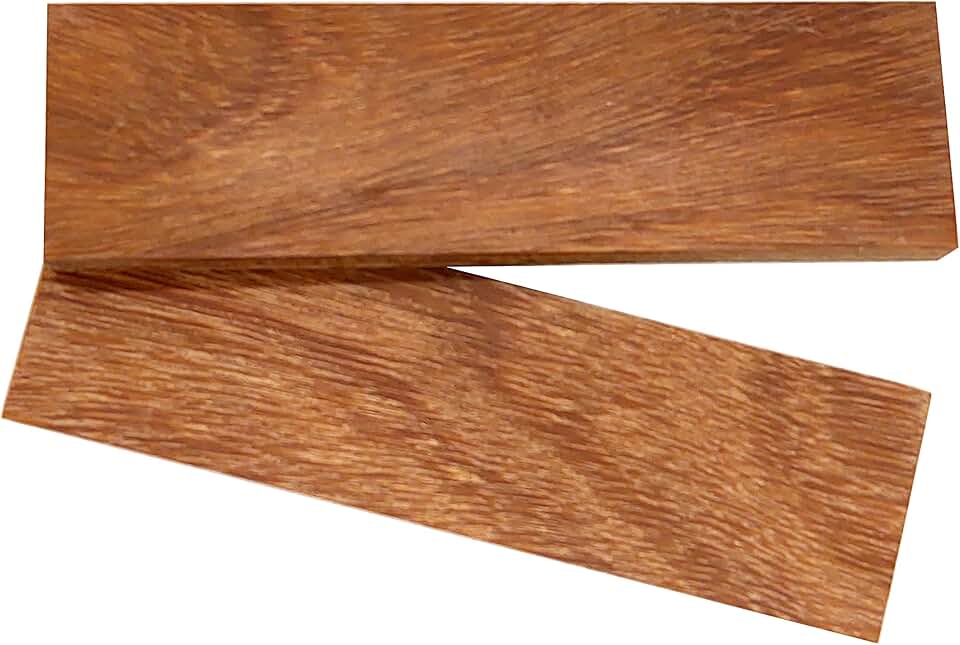
Cumaru Knife Scales
- Dense cumaru wood for premium handles
- ideal size for custom knife scales
- rich tone adds a handcrafted look
- suitable for shaping and finishing
- strong choice for durable builds
Buy on Amazon

Natural Cumaru Veneer
- Thin natural veneer for detailed finishes
- flexible size works for many projects
- ideal for furniture, cabinets, and decor
- adds a real wood look without bulk
- useful for repairs and refinishing work
Buy on Amazon
For veneer, test adhesive and finish on offcuts first. Cumaru’s color can deepen strongly under oil, while water-based finishes may keep the surface closer to its raw amber-brown tone.
FAQs
What Is Cumaru Wood Used For?
Cumaru wood is used for decking, flooring, siding, and other outdoor projects because it is very hard and durable. It is also used for pergolas, benches, and heavy-duty furniture where strength and weather resistance matter. Many builders choose it for long-lasting exterior applications.
Is Cumaru Wood Good For Decking?
Yes, cumaru wood is a great choice for decking because it is dense, strong, and naturally resistant to rot and insects. It performs well in outdoor conditions when installed and maintained correctly. Regular cleaning and proper fastening help it last longer and stay attractive.
How Much Does Cumaru Wood Cost?
Cumaru wood usually costs less than ipe but more than many softwoods and common decking materials. Prices vary based on board size, grade, supplier, and location. Shipping can also affect the total cost because cumaru is a heavy hardwood.
Is Cumaru Better Than Ipe?
Cumaru is not always better than ipe, but it can be a smart alternative for many projects. Ipe is generally harder and more expensive, while cumaru offers excellent durability at a lower price. The best choice depends on your budget, design goals, and how much wear the surface will get.
Does Cumaru Wood Turn Gray?
Yes, cumaru wood will turn gray over time if it is left untreated outdoors. This is a natural aging process caused by sunlight and weather exposure. If you want to keep its rich brown color, apply a UV-protective deck finish and reapply it as needed.
Affiliate Disclosure: Some links in this post are affiliate links. If you make a purchase through these links, we may earn a small commission at no extra cost to you. We only recommend products we genuinely believe in.