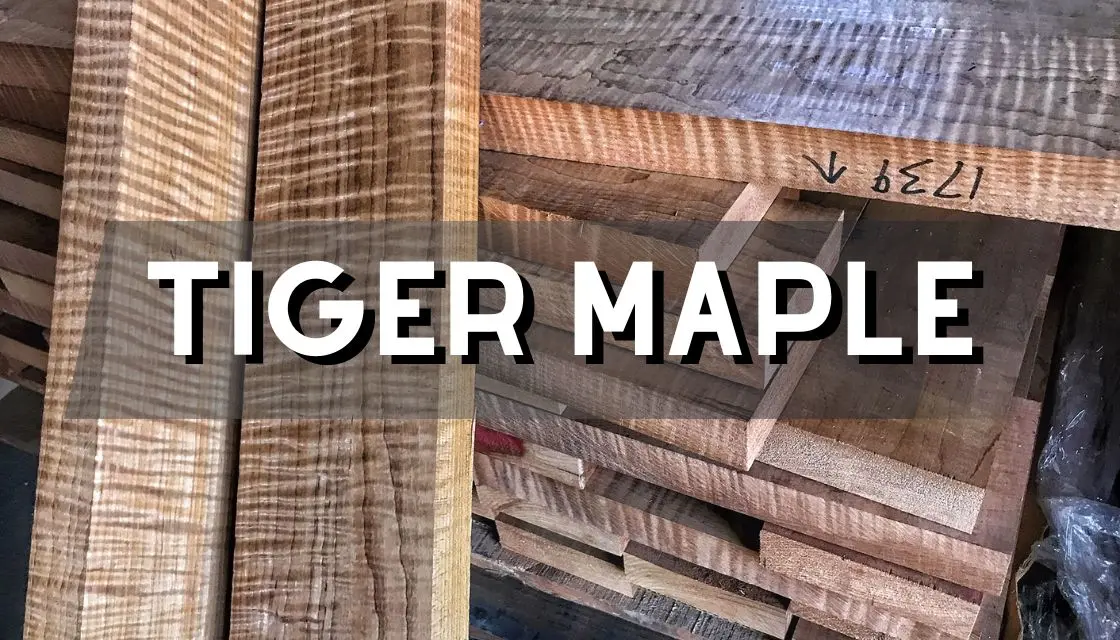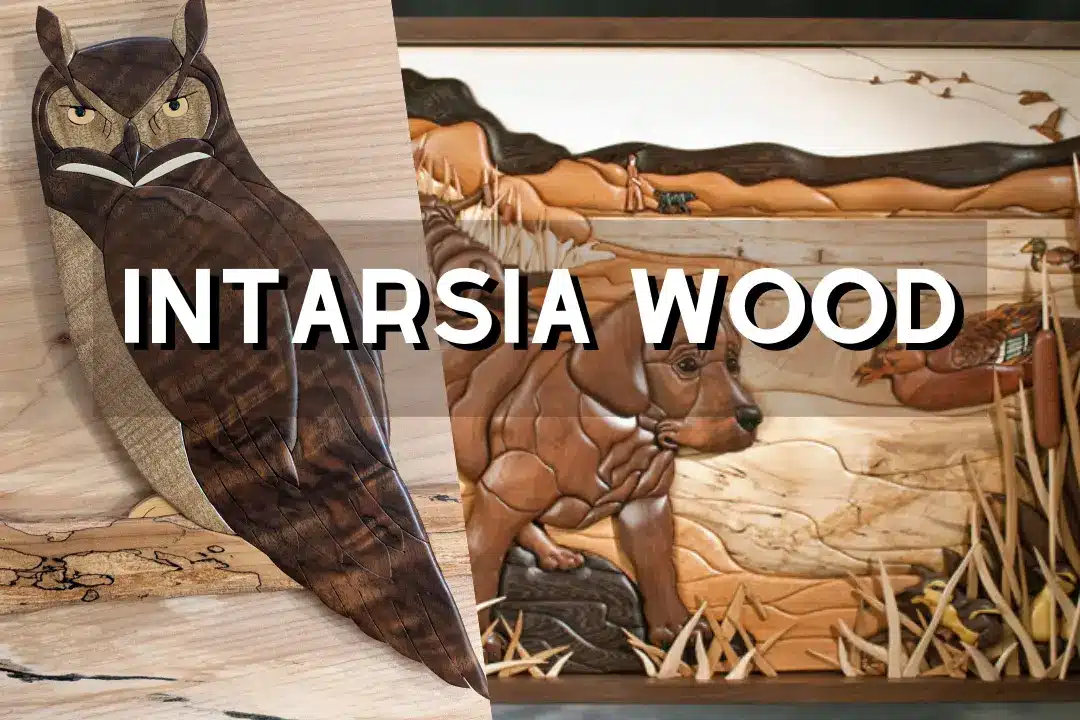


A bloodwood tree is one of several unrelated trees named for red kino, reddish wound fluid, or deep-red heartwood. In Australia, the name usually means a Corymbia; in southern Africa, Pterocarpus angolensis; and in the lumber trade, South American Brosimum rubescens.
Table of Contents
What Is a Bloodwood Tree?
There is no single species called the bloodwood tree. Geography and context determine whether someone means an Australian gum relative, an African savanna tree, a tropical South American timber, or another plant sharing the common name.
Common Name, Not Species
The bloodwood scientific name changes with the plant. The principal examples belong to four separate families: Corymbia gummifera in Myrtaceae, Pterocarpus angolensis in Fabaceae, Brosimum rubescens in Moraceae, and Baloghia inophylla in Euphorbiaceae.
That difference matters because species-level facts can’t be transferred between them. A hardness value for South American bloodwood says nothing reliable about Australian bloodwood timber, while cultivation advice for an inland Corymbia could kill a rainforest species.
Why Bloodwood Trees Bleed
A bloodwood tree may release red kino or another reddish exudate after its bark or wood is injured. Tannins, polyphenols, and related extractives give the material its color, which often darkens from red to reddish brown as moisture leaves and oxidation occurs.
The fluid helps isolate damaged tissue and may reduce attack by insects or microorganisms. A viral “bleeding tree” video can look startling because fresh kino is glossy, sticky, and close to the color of diluted blood, but the substance isn’t blood and doesn’t circulate like an animal’s vascular fluid.
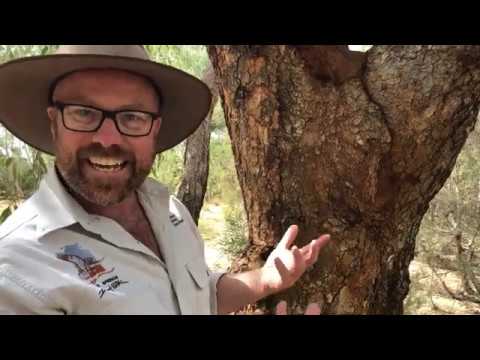
If you’re asking what tree bleeds red when cut, several plants fit that description. Red exudate alone can’t identify one, and cutting bark to provoke a response opens an entry point for decay while exposing you to unknown plant compounds.
Kino Versus Red Heartwood
Kino and heartwood are different materials. Kino forms as a wound-associated exudate and can gather in veins, pockets, or cracks; heartwood is the older, non-living wood near the center of a trunk, colored by extractives deposited during growth.
Australian bloodwoods gained their name largely from kino. South American Brosimum rubescens is sold as bloodwood mainly because a sawn board exposes dense, saturated red heartwood, not because every standing tree releases dramatic red fluid.
Bloodwood Species Comparison
The main types of bloodwood trees differ in continent, leaf structure, flowers, fruit, and the feature behind their name. Compare those traits before applying a range, mature height, lumber property, or conservation claim.
At-a-Glance Species Table
| Common interpretation | Scientific name | Native region | Main naming feature | Useful identification clue |
|---|---|---|---|---|
| Red bloodwood | Corymbia gummifera | Eastern Australia | Red kino | Rough tessellated bark, white flowers, woody capsules |
| African bloodwood | Pterocarpus angolensis | Southern and south-central Africa | Reddish exudate and valued timber | Compound leaves and broad, circular winged pods |
| South American bloodwood | Brosimum rubescens | Tropical South America | Deep-red heartwood | Dense red lumber from a Moraceae tree |
| Brush bloodwood | Baloghia inophylla | Eastern Australia and southwest Pacific | Red exudate and timber associations | Glossy simple leaves; not a Corymbia |
| Dragon’s blood tree | Dracaena cinnabari | Socotra | Red dragon’s-blood resin | Umbrella-shaped crown; not a bloodwood |
Red Bloodwood: Corymbia gummifera
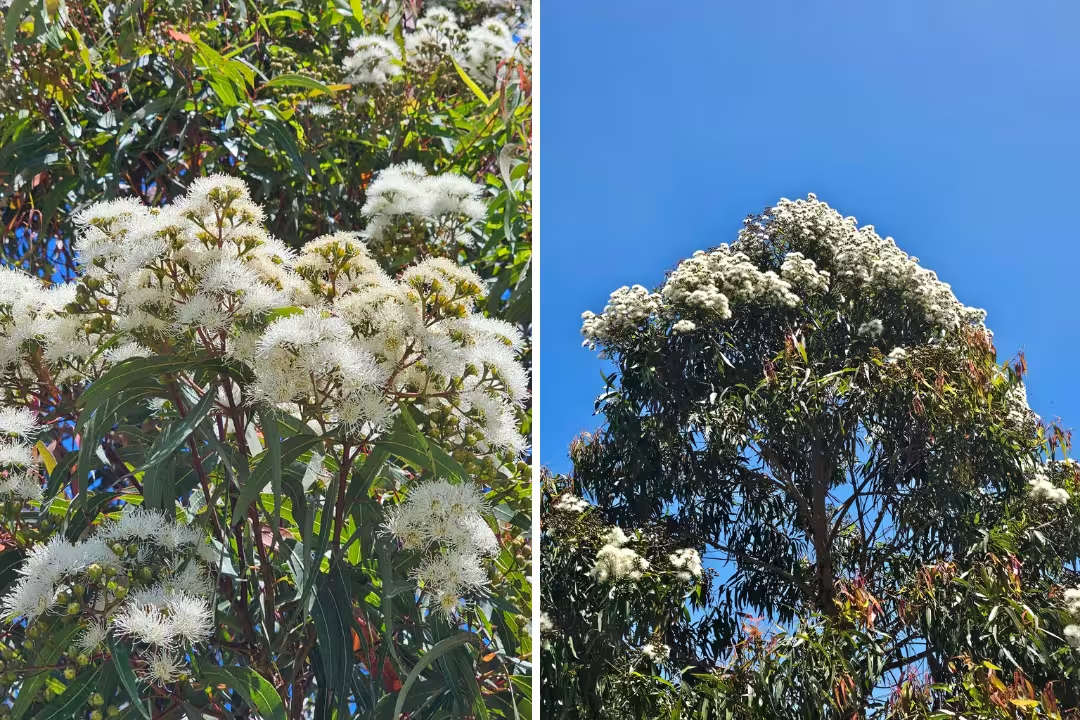
Corymbia gummifera is an eastern Australian bloodwood found mainly in coastal and near-coastal Queensland and New South Wales. Mature trees can reach about 35 metres, though exposed, fire-affected, or nutrient-poor sites often produce shorter, broader trees.
Look for rough, persistent, blocky bark; alternate lance-shaped adult leaves; white or cream flowers; and thick woody capsules. The Australian bloodwoods and ghost gums were formally separated from Eucalyptus into Corymbia in 1995, which explains why older books may call this tree Eucalyptus gummifera.
African Bloodwood: Pterocarpus angolensis
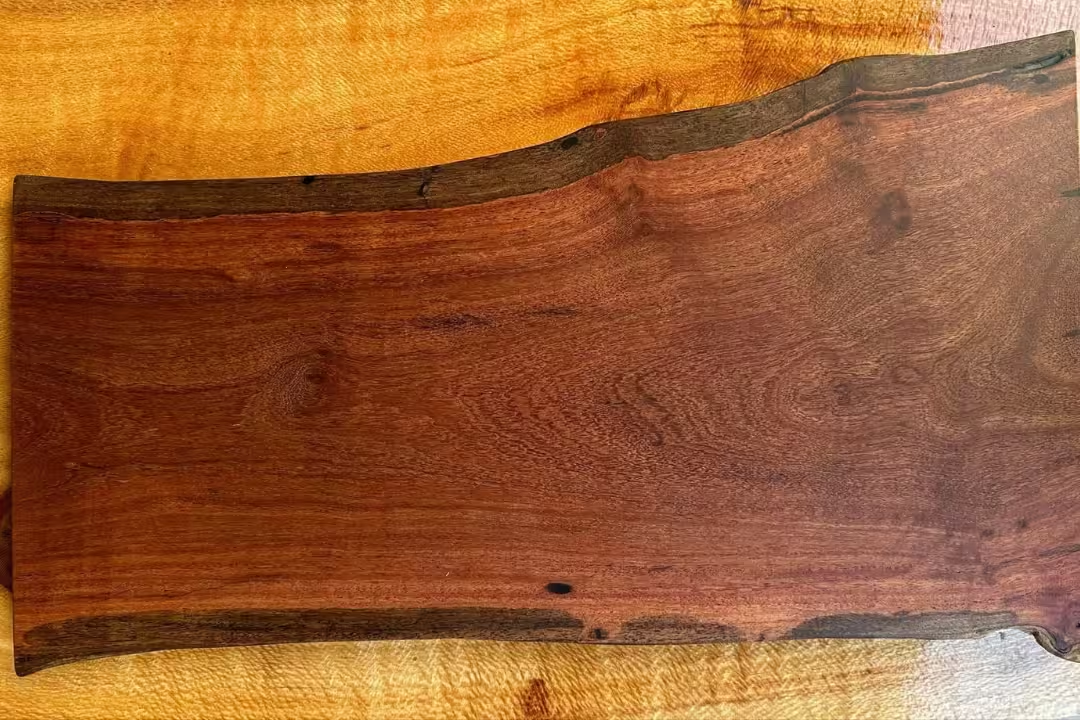
The African bloodwood tree, Pterocarpus angolensis, is also called kiaat, mukwa, or muninga. It grows in seasonally dry woodland and savanna across parts of southern and south-central Africa, commonly reaching roughly 5–16 metres.
Its compound leaves, yellow to orange-yellow pea-like flowers, and flat rounded pods separate it from Australian bloodwoods. “African teak” is a timber-market name, but the tree isn’t true teak, which belongs to the genus Tectona.
South American Bloodwood: Brosimum rubescens
In specialty lumber yards, bloodwood most often means Brosimum rubescens, a tropical South American tree also sold as satine, satine rubane, or cardinal wood. Its polished heartwood can show a deep scarlet-red surface with fine dark streaks.
The accepted range and taxonomy can be checked through Kew Plants of the World Online. Supplier names still vary, so buyers should compare the invoice’s botanical name with the shipping and origin documents rather than relying on color.
Brush Bloodwood: Baloghia inophylla
Baloghia inophylla, called brush or scrub bloodwood, proves that an Australian bloodwood isn’t always a Corymbia. This separate evergreen lineage grows in rainforest and coastal forest areas of eastern Australia and parts of the southwest Pacific.
Its glossy, simple leaves and forest habitat contrast with the familiar rough-barked red bloodwood. The milky or colored exudates of Euphorbiaceae plants can irritate skin, so don’t touch a wound or use its fluid as an identification test.
Other Australian Corymbia Bloodwoods
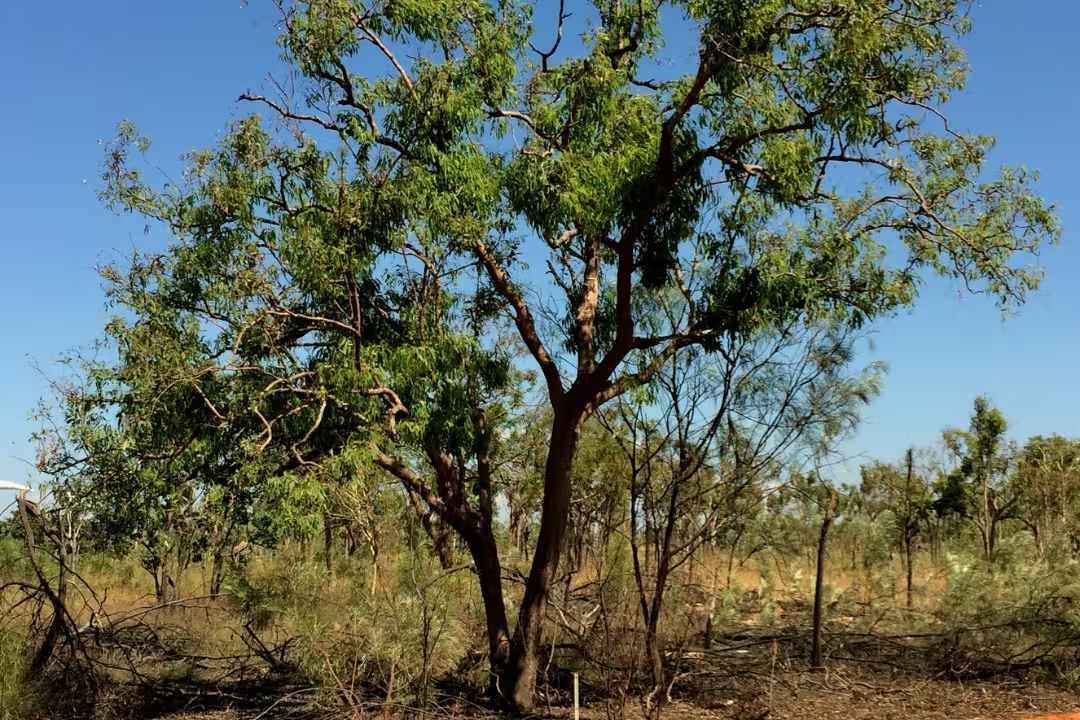
Australia contains many locally named bloodwoods, and common names can overlap between regions. Useful examples include:
- Corymbia intermedia — pink bloodwood.
- Corymbia eximia — yellow bloodwood.
- Corymbia opaca — desert bloodwood.
- Corymbia terminalis — desert bloodwood.
- Corymbia ptychocarpa — swamp bloodwood.
- Corymbia polycarpa — long-fruited bloodwood.
Flower color, capsule shape, bark texture, mature size, and rainfall tolerance differ across this group. Long-fruited bloodwood, for example, has conspicuously elongated woody fruit, while swamp bloodwood can produce pink flowers and occupies warm northern habitats.
How to Identify Bloodwood Trees
For reliable bloodwood tree identification, start with location, leaves, and fruit. Red fluid is a weak clue because many unrelated plants produce colored exudates, and individual bloodwoods may show no visible kino.
Location and Habitat
An eastern Australian forest points to Corymbia gummifera or a related species. Southern African savanna suggests Pterocarpus angolensis, while a standing tree in tropical South American forest or an imported scarlet board may indicate Brosimum rubescens.
Habitat narrows the choice but doesn’t finish the identification. Planted specimens can grow far outside their native range, and Australian bloodwoods range from humid seasonal wetlands to dry desert country.
Leaves
Corymbia gummifera has simple, alternate, lance-shaped adult leaves that may feel leathery between the fingers. Pterocarpus angolensis has compound foliage composed of several leaflets, making leaf structure one of the fastest ways to separate the two.
Photograph the upper and lower surfaces, the stalk, and the point where each leaf joins the twig. Beginners often mistake a single leaflet for an entire leaf; trace the central stalk back to its bud before recording it.
Flowers and Fruit
Australian Corymbia flowers have masses of conspicuous stamens and often resemble eucalyptus blossoms. Their fruit is a hard woody capsule, commonly called a gumnut, with shape and valve position useful in species keys.
African bloodwood bears pea-family flowers followed by broad, flattened, winged pods. Fruit usually remains recognizable longer than flowers, so fallen intact pods can provide a better field clue without harming the tree.
Bark and Exudate

Red bloodwood has coarse, persistent bark broken into irregular blocks. Running a hand lightly over an already fallen piece reveals a dry, corky texture; old kino nearby may look glassy black-red rather than bright crimson.
African bloodwood develops dark, fissured bark and may release reddish fluid from existing injuries. Photos should record the whole trunk and branching form because a close-up of red sap removes most of the clues needed for identification.
Identification Without Damage
Never cut bark merely to see whether a tree “bleeds.” Use this three-step check instead:
- Record the country, habitat, coordinates, and whether the tree appears planted.
- Photograph mature leaves, twigs, bark, canopy shape, flowers, and fruit.
- Compare the evidence with a regional flora or submit it to a herbarium-supported identification service.
For Australian specimens, descriptions in PlantNET help separate species by fruit, leaf, bark, and range. Include a scale beside fallen fruit; a ruler is better than a hand because camera perspective distorts size.
Where Bloodwood Trees Grow
Bloodwood trees occur naturally in Australia, Africa, and South America, but no single habitat describes them all. Some tolerate seasonal drought and fire, while others depend on humid tropical forest conditions.
Australian Habitats
Australian Corymbia bloodwoods occupy coastal forest, sandstone ridges, dry woodland, tropical savanna, seasonally wet ground, and arid inland plains. Corymbia gummifera favors eastern coastal and near-coastal environments, often on sandy or nutrient-poor soils.
Desert bloodwoods such as Corymbia opaca and Corymbia terminalis cope with long dry periods. Their broad crowns cast dense patches of shade, and the temperature drop beneath an old tree can feel immediate on exposed red soil.
African Woodlands and Savannas
Pterocarpus angolensis grows in seasonally dry woodland and savanna, including miombo systems. The tree’s deciduous cycle follows seasonal moisture, while fire, browsing, and competition can repeatedly suppress young stems.
The South African National Biodiversity Institute profile describes its form, range, flowers, and uses. Mature straight trunks attract timber cutting, which can leave fewer good seed trees in heavily harvested areas.
South American Forests
Brosimum rubescens belongs to tropical South American forest rather than Australian dry woodland. Forest-grown trees compete for overhead light, producing tall boles that later yield the narrow, dense boards found in specialty timber shops.
Country of sale doesn’t prove country of harvest. A board can pass through several distributors, so provenance documents should trace the timber back beyond the final retailer.
Pollinators and Nectar
Flowering Corymbia species supply nectar and pollen to bees, beetles, birds, and, in some regions, bats. On a warm flowering day, the canopy may carry a steady insect hum and a faint sweet scent.
Flowering time changes with species, rainfall, temperature, and site. Gardeners shouldn’t assume one ornamental bloodwood will provide nectar in the same month as a distant wild population.
Hollows and Wildlife
Older Australian bloodwoods may develop hollows used by parrots, cockatoos, owls, bats, reptiles, arboreal mammals, and invertebrates. These mature habitat trees can support wildlife long after heartwood decay begins.
A hollow trunk isn’t automatically unsafe or dead. Arborists assess root condition, remaining sound wood, canopy load, occupancy, and possible targets before recommending pruning or removal.
Bloodwood Apples and Galls
Bloodwood apples, also called bush coconuts in some regions, are insect-induced galls formed on certain desert bloodwoods. They aren’t ordinary botanical fruit and shouldn’t be confused with the woody capsules containing Corymbia seed.
These structures hold ecological and cultural significance within region-specific Aboriginal knowledge and food traditions. Collection or use should follow guidance from the Traditional Owners connected to that country rather than generalized online instructions.
Bloodwood Lumber and Traditional Uses
Bloodwood lumber usually means Brosimum rubescens in international woodworking, though regional sellers may use the name for African or Australian timber. Confirming the species prevents costly machining mistakes and supports better legality checks.
Species Sold as Bloodwood
Specialty dealers often sell Brosimum rubescens as bloodwood, satine, or cardinal wood. African kiaat and Australian bloodwoods can appear under the same broad label, yet their density, grain, color, durability, and trade routes differ.
A useful starting point is this detailed bloodwood wood guide. Compare samples with padauk wood, since fresh padauk can also appear orange-red but usually has a more open texture.
Lumber Properties and Hardness

Published figures for Brosimum rubescens include an average dried weight near 1,065 kg/m³ and Janka hardness around 2,900 lbf, or 12,900 N. Reported values also include 4.6% radial shrinkage and 7.0% tangential shrinkage.
| Property | Approximate published value for Brosimum rubescens | Workshop meaning |
|---|---|---|
| Average dried weight | 1,065 kg/m³ (66.5 lb/ft³) | Heavy boards and demanding handling |
| Janka hardness | 2,900 lbf (12,900 N) | High wear resistance and faster cutter wear |
| Modulus of rupture | 25,290 psi | High bending strength in clear test pieces |
| Modulus of elasticity | 3.12 million psi | Stiff material with limited flex |
| Radial shrinkage | 4.6% | Movement across quartersawn surfaces |
| Tangential shrinkage | 7.0% | Greater movement across flatsawn surfaces |
These figures come from the Wood Database bloodwood profile and describe one species and dataset. Compare them through the wood hardness scale, but allow for moisture, growth site, grain direction, and testing variation.
Furniture and Woodworking Uses
South American bloodwood suits furniture accents, cabinetry, handles, turned objects, inlay, flooring details, and instrument parts. Its natural red contrast works well beside pale woods, though red sanding dust can stain adjacent maple or ash.
Large solid panels demand careful stock selection because dense lumber still moves across the grain. Narrow components, veneer, or framed panels usually control movement better than a wide, rigidly fastened slab.
Machining and Finishing
Practical workshop notes start with sharp cutters and controlled feed speed. Dull edges make the machine note turn harsher, leave glazed patches, and raise heat fast enough to darken the surface.
- Use sharp carbide cutters where the machine and operation allow them.
- Take light passes around changing or interlocked grain to limit tear-out.
- Pre-drill screws near ends and edges to reduce splitting.
- Prepare glue faces immediately before assembly; burnished surfaces can weaken adhesion.
- Seal end grain on turning blanks and thick boards to slow end checking.
- Use extraction, safety glasses, and a properly fitted particulate respirator.
Freshly sanded bloodwood can feel unusually smooth and cool, yet a burnished surface may resist glue or finish. Scrape or lightly sand mating faces, remove dust, and test oil, shellac, and clear film finishes on offcuts because each changes the red tone differently.
UV exposure and oxidation often shift bright scarlet wood toward darker red-brown. A UV-resistant coating can slow that change, but no clear finish keeps fresh-cut color permanently.
Price and Supplier Variables
Bloodwood price depends on botanical identity, thickness, width, length, moisture condition, color consistency, defect rate, freight, documentation, and seller location. Small turning blanks carry a much higher equivalent board-foot cost than full boards.
Record the scientific name, country of origin, price per board foot or cubic metre, dimensions, grade, moisture condition, and certification status. A cheap listing may hide severe end checks, narrow usable width, poor drying, or another red species such as jatoba wood.
Traditional Kino Uses
Kino from Australian trees has been used in pigments, dyes, tanning, material applications, and traditional medicine. Those uses are species- and culture-specific, and they don’t establish modern dosage, safety, or clinical effectiveness.
Don’t taste unidentified kino or apply it to skin. Contamination, plant identity, concentration, individual sensitivity, and harvesting methods all affect risk, while removing bark can permanently injure the tree.
African Ethnobotanical Uses
Pterocarpus angolensis supplies timber for furniture, carving, flooring, joinery, boats, and practical regional objects. Its bark, roots, and exudate also appear in traditional medical systems.
Ethnobotanical records document human practice rather than prove a treatment safe or effective. Root digging and ring-barking can kill mature trees, so cultural use shouldn’t be separated from harvest method and local authority.
Conservation and Responsible Sourcing
Bloodwood has no universal conservation status because the name covers unrelated species and populations. Check the scientific name, assessment date, geographic scope, population trend, and applicable local law.
Species-Specific Conservation Status
A global category can differ from national or regional protection. It also can’t prove that a particular shipment was harvested legally or that one local population is regenerating successfully.
Search the IUCN Red List using a full scientific name rather than “bloodwood.” Read the assessment year and range notes because older evaluations may not reflect recent logging, clearing, drought, or fire.
Regional Threats
Potential pressures include forest clearing, selective logging, grazing, browsing, mining, roads, altered fire cycles, and poor seedling recruitment. Each species faces a different mix of threats.
Selective cutting can remove the straightest mature trees while leaving crooked or damaged stems. The site may still look wooded, yet lose valuable seed sources and future high-quality timber.
Legal Timber Purchasing
Ask a supplier for the scientific name, harvest country and region, chain-of-custody records, permits where required, and FSC or comparable certification when available. Certification supports a sourcing claim but doesn’t replace correct species identification.
Online availability isn’t proof of legal harvest. Keep invoices, botanical names, origin records, and certificates with the lumber, particularly if finished work may later cross a national border.
Scientific Names and Provenance
Provenance means the traceable source of a seed, plant, or timber lot. For lumber, useful records connect the seller’s label to harvest origin; for restoration seed, provenance may refer to the local population adapted to particular soil and rainfall.
Names such as “blood rosewood,” “bloodwood rosewood,” or “bacon wood” can be marketing language rather than accepted taxonomy. Request the Latin binomial and reject paperwork listing only a creative trade name.
Growing a Bloodwood Tree
You can grow some bloodwood trees from seed, but instructions depend on the exact species. A packet labeled only “bloodwood” lacks enough information to select climate, soil, or spacing.
Start With Scientific Names
Confirm the full botanical name before buying. Bloodwood climates span arid inland Australia, tropical seasonal wetlands, African savanna, and humid South American forest, so one generic care sheet can’t serve them all.
Check mature height and canopy width rather than the seedling’s small pot size. A tree capable of reaching 20–35 metres can damage paving, conflict with utility lines, or outgrow a confined yard.
Australian Corymbia Cultivation
Match an Australian Corymbia to local rainfall, drainage, frost exposure, soil, root space, and mature size. Place large species away from buildings, overhead cables, drains, pavement, and narrow planting beds.
Corymbia seed is usually fine and needs shallow sowing, good contact with the propagation mix, light, and steady moisture without waterlogging. Germination treatment varies by species, seed age, and source, so follow a botanical nursery’s species-specific directions.
Seedlings often fail from deep burial or constant saturation rather than drought. Bottom-water gently or use a fine mist so the tiny seed isn’t pushed into cold, airless media.
Tropical Bloodwood Cultivation
Pterocarpus angolensis and Brosimum rubescens aren’t interchangeable garden trees. Compare minimum temperature, humidity, seasonal rainfall, dry-season duration, drainage, canopy space, and root room before planting.
A tropical forest species may suffer in hot, dry wind despite warm daytime temperatures. An African woodland species can also decline where cool, saturated soil prevents the seasonal rhythm its roots experience in habitat.
Seed and Plant Buying
Choose seed and plants carrying a scientific name, collection origin, packing date, germination directions, and lawful collection statement. Avoid listings marked only “blood tree,” “bloodhood tree,” or “dragon blood,” since these phrases often mix unrelated plants.
These product listings illustrate why names and descriptions must be checked before purchase.
A photograph isn’t enough proof. Sellers sometimes reuse images of red kino, dragon trees, or red-leaved maples while shipping seed from a completely different genus.
Import and Quarantine Rules
Seed, live plants, untreated wood, bark, and soil can carry insects, fungi, or other regulated organisms. Check the destination country’s import permit, phytosanitary certificate, treatment, labeling, and prohibited-species rules before ordering.
A seller’s willingness to ship doesn’t mean customs will admit the package. Confiscation, destruction fees, delays, and penalties remain possible when paperwork or treatment fails local biosecurity requirements.
Bloodwood and Similar-Looking Trees
Bloodwood isn’t synonymous with every tree having red resin, foliage, bark, or timber. Names such as dragon’s blood, Bloodgood, padauk, and blood rosewood refer to different botanical identities.
Dragon’s Blood Trees
Dracaena cinnabari, the Socotra dragon’s blood tree, has an umbrella-shaped crown and produces red dragon’s-blood resin. Dracaena draco, the Canary Islands dragon tree, also yields red resin, but neither species is a Corymbia, Pterocarpus, or Brosimum.
The distinction affects climate, seed treatment, mature form, conservation, and legality. A dragon’s blood tree can’t substitute for an Australian bloodwood in a restoration planting or for Brosimum rubescens in a lumber specification.
Bloodgood Japanese Maple
Acer palmatum ‘Bloodgood’ is a Japanese maple cultivar grown for dark red-purple foliage. The similar-sounding name causes frequent shopping errors, but it has no bloodwood relationship.
Maple leaves are palmately lobed, and the tree produces paired winged samaras rather than woody gumnuts or circular Pterocarpus pods. Its compact ornamental form also differs sharply from a large forest bloodwood.
Other Red-Named Woods
Padauk, red sandalwood, logwood, purpleheart, jatoba, and some rosewoods can be sold beside bloodwood because they offer red, orange, burgundy, or purple-brown color. Color alone remains a poor timber identifier, especially after finishing or UV exposure.
Compare bloodwood with purpleheart wood and bubinga wood before substituting materials. Density, pore structure, movement, tooling behavior, and sourcing concerns can differ more than the displayed photographs suggest.
Misleading Marketplace Listings
Marketplace listings often pair dramatic red-sap photographs with unrelated seeds or use “bloodwood” as a color label. Before buying, require the scientific name, native range, mature size, propagation method, provenance, and legal shipping documents.
- Reject a plant listing that supplies only a common name.
- Reverse-search photographs to detect reused images.
- Check whether leaf, flower, and fruit images belong to the same species.
- Compare claimed climate needs with the species’ native distribution.
- Ask for seed collection and export details before payment.
- Keep the invoice and label until the plant produces diagnostic features.
The safest rule is simple: if a seller can’t provide a complete scientific name, treat the plant, seed, or board as unidentified. That single check prevents most confusion between true bloodwood trees, dragon’s blood trees, red maples, and unrelated red timbers.
FAQs
What Is Special About A Bloodwood Tree?
A bloodwood tree is valued for its dark red, resin-like sap, durable timber, and striking bark. The name commonly refers to several Australian Corymbia species, although other trees may also be called bloodwood. Many have rough, deeply textured trunks and provide nectar, shelter, and habitat for native wildlife.
Why Does A Bloodwood Tree Bleed Red?
Bloodwood trees bleed red because injuries release a red, sticky resin called kino. The resin helps seal damaged bark and wood, reducing moisture loss and offering some protection from insects and infection. It is not blood; its color comes from natural plant compounds. Different bloodwood species can produce resin in slightly different shades and amounts.
Where Do Bloodwood Trees Grow?
Most Australian bloodwood trees grow in open forests, woodlands, and savannas across Australia. Corymbia species tolerate warm climates, sun, and often dry or poor soils once established. Their exact range depends on the species, with some found in tropical northern regions and others in temperate eastern or southern areas.
Is Bloodwood The Same As A Dragon’s Blood Tree?
No, bloodwood is not the same as a dragon’s blood tree, though both can produce red resin. Australian bloodwoods usually belong to the Corymbia genus, while dragon’s blood trees commonly belong to Dracaena or related groups. The shared red sap causes the naming confusion, but the trees differ in appearance, origin, and growing needs.
Can You Grow A Bloodwood Tree From Seed?
Yes, you can grow many bloodwood trees from seed when the seed is fresh and conditions are warm. Sow it on the surface of a free-draining seed-raising mix, keep it lightly moist, and provide bright light. Germination and success vary by species, so use correctly identified seed and avoid overwatering young seedlings.
Affiliate Disclosure: Some links in this post are affiliate links. If you make a purchase through these links, we may earn a small commission at no extra cost to you. We only recommend products we genuinely believe in.