
Jatoba wood is a dense tropical hardwood from the Hymenaea genus, widely sold as Brazilian cherry and prized for its red-brown color, high hardness, and long wear life. It’s popular for flooring, stairs, furniture, knife scales, turning blanks, and other projects where strength matters more than easy machining.
Best meta title: Jatoba Wood Guide: Hardness, Uses, Flooring Pros and Cons. Best meta description: Learn what Jatoba wood is, why it’s called Brazilian cherry, how hard it is, and what to check before buying Jatoba wood flooring or lumber.
Table of Contents
What Is Jatoba Wood?
Jatoba wood is a heavy tropical hardwood most often associated with Hymenaea courbaril, a tree found across parts of Central America, South America, and the Caribbean. The wood is hard, reddish, durable, and much heavier in the hand than oak or true cherry; a short board has a dense, cool feel and a sharp tap when you set it on the bench.
Quick Definition
What is Jatoba wood? It’s a dense exotic hardwood used for hardwood flooring, stairs, furniture, cabinetry, handles, turning, millwork, and decorative projects. In practical use, it behaves like a high-wear flooring wood first and a fine furniture wood second because its weight and hardness demand sharper tools and slower work.
Brazilian Cherry Name
Brazilian cherry is the trade name for Jatoba, but it isn’t true cherry. The name comes from its warm red-brown color, while true American black cherry belongs to the Prunus genus; for a deeper color comparison, see our guide to Brazilian cherry wood.
Botanical Identity
Botanically, Jatoba is linked to the Hymenaea genus, especially Hymenaea courbaril, in the Fabaceae family. Names such as courbaril, West Indian locust, guapinol, algarrobo, jatobá madeira, jabota, and even misspellings like gatoba may point buyers to the same commercial wood group, but the supplier should still list the species clearly; Plants of the World Online lists Hymenaea courbaril as the accepted botanical identity.
Native Range
Native range includes tropical regions of Brazil, Peru, Bolivia, Mexico, parts of Central America, and Caribbean areas. This broad range is one reason color, density, and hardness numbers vary by source, tree, site, and drying method.
Common Uses
Common uses include Jatoba wood flooring, stair treads, furniture, cabinet doors, drawer fronts, turned pens, dowels, knife scales, tool handles, musical parts, and veneers. Beginners often choose it for small projects because the color looks dramatic right away, then learn fast that dull blades leave burn marks and a faint hot-sugar smell in the shop.
Appearance and Wood Properties
Jatoba’s appeal comes from the mix of deepening red color, interlocked grain, high density, and very high hardness. Technical values vary, but most published wood references place it far above red oak, white oak, maple, and hickory on common hardwood hardness ranking charts.
Color and Darkening
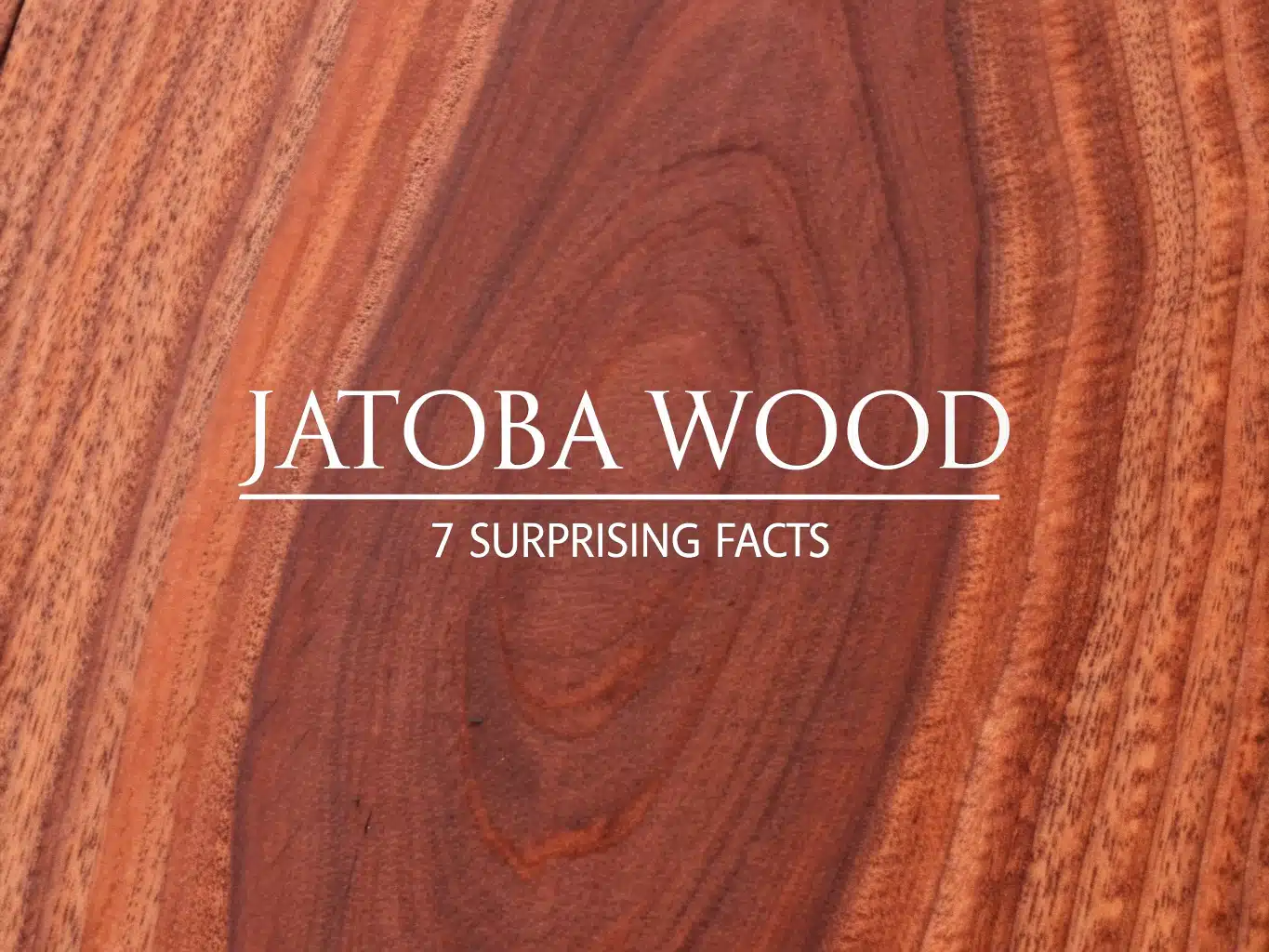
Fresh Jatoba often starts salmon-orange, orange-brown, golden brown, or reddish-orange, then darkens with UV exposure and oxidation into a deeper reddish brown or burgundy brown. On floors, the change can be dramatic: lift a rug after six months and the covered area may look lighter and almost raw beside the exposed boards.
Grain and Texture
The grain is usually interlocked, irregular, and sometimes wavy, with a medium-to-coarse texture and moderate natural luster. A planed face can feel smooth but not silky like cherry; you can often feel slight raised grain lines under your fingertips after the first coat of finish.
Hardness Ranking
Jatoba hardness is commonly cited around 2,350–2,690 lbf on the Janka scale, depending on sample and source. That means it dents far less easily than oak, maple, or true cherry, but installers pay for that toughness through slower cutting, harder nailing, and more demanding refinishing.
Density and Strength
Average dried weight is about 56 lb/ft³, or roughly 900 kg/m³, which makes boards feel noticeably heavy for their size. That density gives Jatoba strong impact resistance, but it also raises shipping cost, tool wear, and fatigue when handling wide flooring bundles all day.
Shrinkage and Movement
Wood movement still matters with Jatoba, even though the wood feels hard enough to seem immovable. Approximate shrinkage values often land near 4.8% radial, 8.5% tangential, and 13% volumetric, so poor acclimation can cause cupping, gapping, crowning, and squeaks.
Natural Durability
Jatoba heartwood is commonly rated durable to very durable against decay, but it isn’t waterproof and it isn’t immune to insects. The dense surface sheds small spills well when finished, yet end grain and screw holes can still absorb moisture fast if left exposed.
Properties Table
Use this table as a practical field guide before buying Jatoba lumber or flooring; values are typical ranges, not guarantees for every board. Published species profiles such as The Wood Database Jatoba profile report comparable hardness, density, and shrinkage figures.
| Property | Typical value | Practical meaning |
|---|---|---|
| Botanical name | Hymenaea courbaril | Ask for botanical identity, not only a trade name. |
| Trade name | Brazilian cherry | Red color name; not true cherry. |
| Wood type | Tropical hardwood | Strong, dense, and imported in many markets. |
| Janka hardness | About 2,350–2,690 lbf | Excellent dent resistance; harder to machine. |
| Average dried weight | About 56 lb/ft³ / 900 kg/m³ | Heavy boards and higher shipping cost. |
| Color | Orange-brown to reddish-brown | Darkens strongly with light exposure. |
| Grain | Interlocked or irregular | Can tear out during planing and routing. |
| Texture | Medium to coarse | Needs careful sanding before finish. |
| Durability | Durable to very durable heartwood | Good decay resistance, not waterproof. |
| Common uses | Flooring, furniture, cabinetry, turning, handles | Best where hardness and color matter. |
For density context, compare Jatoba with other heavy species in our guide to the density of wood. The difference matters during delivery, milling, installation, and wall-mounted furniture builds.
Jatoba Wood Flooring
Jatoba wood flooring is a high-durability hardwood floor choice best for buyers who want strong dent resistance and a warm red-brown look. The trade-off is color darkening, added installation effort, higher cost than many domestic woods, and strict moisture control.
Flooring Pros and Cons
The main pro is wear resistance: Jatoba handles hallways, stairs, dining rooms, offices, and active homes better than many softer hardwoods. The main drawback is that Brazilian cherry floors darken with sunlight, so rugs, furniture, and low-light corners can create visible color patches.
| Pros | Cons |
|---|---|
| Very hard and dent resistant | Darkens noticeably with sunlight and age |
| Long wearing in busy rooms | Harder to cut, nail, sand, and refinish |
| Rich red-brown premium look | Shows dust, pet hair, and scratches more than pale floors |
| Good choice for stairs and hallways | Heavy material raises labor effort |
| Solid boards can often be refinished | Imported wood raises sourcing questions |
Solid vs Engineered
Solid Jatoba flooring is usually thicker, can often be sanded more times, and works best above grade where humidity is controlled. Engineered Jatoba flooring uses a Jatoba wear layer over a plywood or composite core, giving better dimensional stability on concrete slabs, condos, basements, and some radiant heat systems if the maker approves it.
Prefinished vs Unfinished
Prefinished flooring arrives with a factory finish, often UV-cured polyurethane or aluminum oxide, so installation is faster and site dust is lower. Unfinished Jatoba gives a flatter, site-finished surface and custom sheen, but sanding dense red hardwood cleanly takes patience because heat can burn edges and leave dark streaks.
Acclimation and Moisture

Acclimation protects Jatoba floors from avoidable failures such as cupping, crowning, gaps, buckling, and squeaks. Many installers aim for indoor relative humidity around 35%–55% and temperature around 60°F–80°F, then verify both flooring and subfloor with a moisture meter before fastening or gluing.
- Check the subfloor moisture before the delivery crew unloads flooring.
- Open cartons as the manufacturer directs, not by guesswork.
- Keep HVAC running before, during, and after installation.
- Leave expansion space at walls, posts, vents, and fixed cabinets.
- Follow the flooring maker’s limits for concrete slabs and radiant heat.
Moisture standards vary by product, region, and subfloor type, so follow the flooring maker and professional guidance from sources such as the NWFA technical guidelines. A beginner mistake is trusting room “feel” instead of meter readings; a dry-feeling room can still hide a damp slab or wet plywood seam.
Maintenance and Sunlight
Daily care should be simple: sweep grit, use a microfiber mop, clean with hardwood-safe products, add felt pads, and place rugs near doors. Skip steam mops, wet mopping, harsh alkaline cleaners, and dragging furniture because Jatoba resists dents better than finish scratches.
Sunlight management is about controlling contrast, not freezing the color in place. Rotate rugs, move furniture during the first months, and use UV-filtering window treatments if the room gets strong sun; otherwise, covered floor sections may stay orange while exposed boards turn deep red-brown.
Flooring Cost
Jatoba flooring cost often runs about $5–$10+ per sq. ft. for solid materials and about $4–$9+ per sq. ft. for engineered materials. Installed Jatoba floors often land around $8–$15+ per sq. ft., while hardwood refinishing commonly falls around $3–$8 per sq. ft., with final numbers shaped by plank width, grade, finish, subfloor prep, region, shipping, tariffs, and inventory.
Flooring Comparison Table
This comparison helps set expectations before choosing Jatoba hardwood floors over common domestic woods or denser tropical options. Hardness is useful, but color, workability, finish behavior, sourcing, and room style matter just as much.
| Wood species | Janka hardness | Color profile | Flooring suitability |
|---|---|---|---|
| Red oak | About 1,290 lbf | Light tan to pink-brown | Reliable, stain-friendly, familiar grain |
| White oak | About 1,360 lbf | Tan to olive-brown | Stable look, strong domestic option |
| Hard maple | About 1,450 lbf | Cream to pale tan | Clean modern look, can show scratches |
| Hickory | About 1,820 lbf | High contrast tan and brown | Very tough domestic flooring |
| Jatoba | About 2,350–2,690 lbf | Orange-brown to deep red-brown | Very durable, warm, and dramatic |
| Ipe | About 3,680 lbf | Olive-brown to dark brown | Extremely hard; often used outdoors too |
Jatoba vs Other Hardwoods
Jatoba compares as a very hard, very dense, red-toned hardwood that outperforms many domestic woods in dent resistance. It loses points for machining difficulty, strong color change, and weight.
Jatoba vs Oak

Jatoba is harder than both red oak and white oak by a wide margin. Oak accepts stain more predictably and has a familiar open grain, while Jatoba gives a denser, redder, more exotic look that can dominate a room.
Jatoba vs Maple
Compared with maple, Jatoba is darker, heavier, and harder. Maple suits pale, clean interiors; Jatoba suits rooms where a rich red-brown floor or accent piece is part of the design plan.
Jatoba vs Hickory
Jatoba beats hickory on most hardness charts, while hickory wins for domestic availability in North America and lively natural contrast. If the goal is domestic hardwood toughness, hickory is strong; if the goal is a red tropical hardwood look, Jatoba is the clear match.
Jatoba vs Ipe
Ipe is harder and more common for decking, while Jatoba is more common in interior flooring, boards, blanks, and millwork. Both demand carbide tools, pilot holes, and dust control; for a closer outdoor comparison, read our Ipe wood guide.
Jatoba vs True Cherry
Brazilian cherry is not true cherry. American black cherry, Prunus serotina, is softer, smoother, lighter to handle, and easier to work, while Jatoba is much harder, heavier, and better suited for high-wear floors.
Working With Jatoba Wood
Working with Jatoba rewards sharp tools and punishes rushing. The wood can machine cleanly and finish beautifully, but its density, interlocked grain, and heat buildup can cause burning, chipping, splitting, glue issues, and red dust irritation.
Practical Notes From Real-World Use
In real use, Jatoba feels heavy before the saw even starts, and it gives off fine reddish dust that clings to hands, sleeves, and the edge of a respirator. The best workaround is to mill in light passes, let boards cool between cuts, and finish a test offcut first because clear oil can push the color from orange-red to deep amber faster than expected.
Cutting and Machining
Cutting Jatoba works best with sharp carbide blades, clean router bits, steady support, and lighter passes. Too much feed pressure can chip edges; too slow a feed can burn the surface and leave a dark line that takes more sanding than beginners expect.
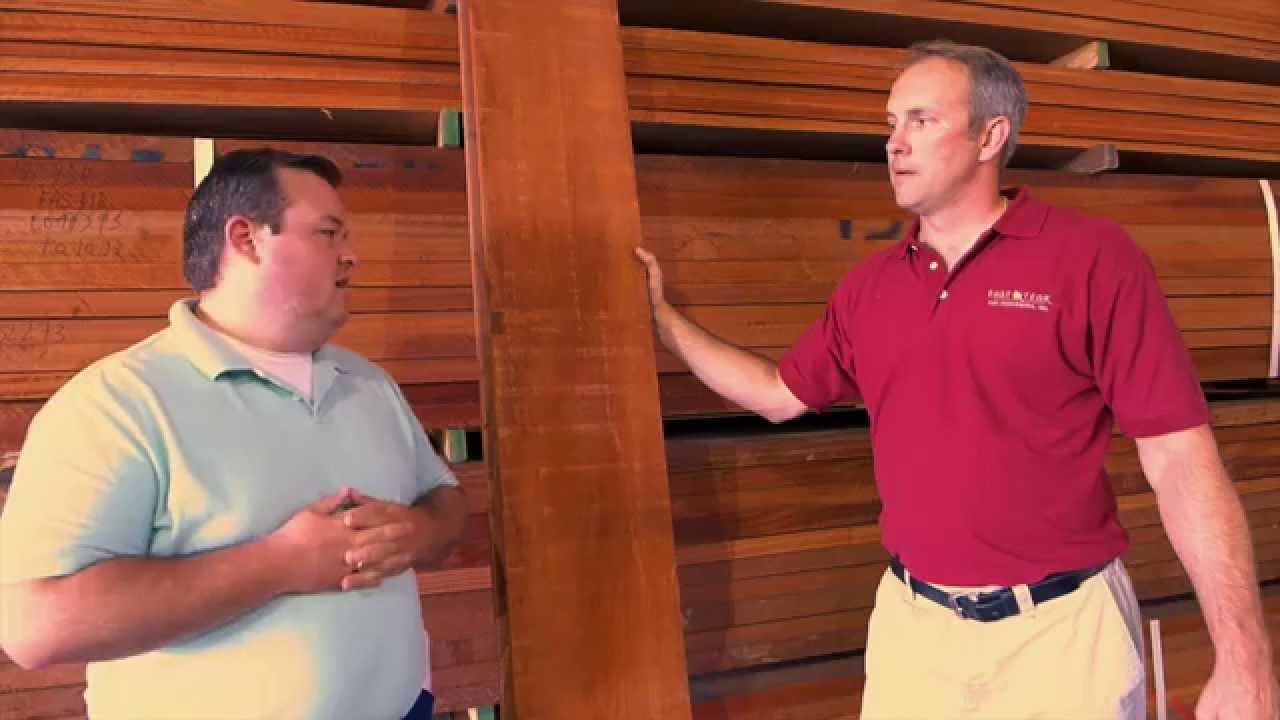
This video fits the shop setup part of the process, especially if you’re planning small Jatoba projects and want a visual reference before cutting dense hardwood stock.
Drilling and Fastening
Pre-drilling is smart with Jatoba, especially near ends, edges, narrow parts, knife scales, and stair nosings. Use pilot holes, countersinks, sharp brad-point bits, and quality fasteners; forcing a screw into dense Jatoba can split the part with a sharp crack before the head seats.
Sanding and Gluing
Sanding Jatoba usually starts around 80 grit for leveling, then moves through 120 and 150–180 before many finishes. Don’t polish it too high if the finish needs grip, and vacuum carefully because red dust packed in pores can muddy the first coat.
Gluing Jatoba works better when surfaces are freshly planed or sanded, clean, and evenly clamped. PVA, epoxy, polyurethane glue, and flooring adhesives can work in the right setting, but dusty or burnished surfaces weaken the bond.
Finishing Jatoba
Clear finishes usually suit Jatoba better than heavy stain because the natural color is already strong. Oil-based polyurethane warms the red and amber tones, water-based polyurethane keeps the color a little cleaner, and hardwax oil gives a lower-sheen hand-rubbed feel on small parts.
Toxicity and Dust Safety
Is Jatoba wood toxic? It isn’t usually treated as a highly toxic wood, but Jatoba dust can irritate skin, eyes, nose, throat, and lungs. Wear eye protection, use dust collection, and use a respirator when sanding; the fine red powder feels dry and gritty, and it can leave sensitive skin itchy by the end of a session.
Best Uses for Jatoba Wood
Jatoba wood uses make the most sense where hardness, color, and strength outweigh weight and tool wear. It shines in floors, stairs, durable furniture, handles, turned pieces, and selected kitchen tools.
Flooring and Stairs
Flooring and stairs are classic Jatoba uses because the wood resists dents and handles repeated foot traffic. Stair treads feel solid underfoot, but installers need sharp blades, careful nosing cuts, and accurate moisture readings before fitting them tight.
Furniture and Cabinetry
Furniture makers use Jatoba for tables, desks, chairs, cabinet doors, drawer fronts, and accent panels. The mistake is building oversized pieces without planning for weight; a thick Jatoba tabletop can become awkward to move and hard on hardware.
Handles and Knife Scales
Knife scales, chisel handles, mallet handles, and custom grips benefit from Jatoba’s density and polish. Drill pin holes before final shaping, seal end grain, and sand both scales together so the grain lines and thickness match.
Turning and Small Projects
Turning blanks in Jatoba make pens, bottle stoppers, small boxes, dowels, handles, and decorative objects with a rich finish. Sharp tools matter because dull gouges can skate across the dense surface and leave crushed fibers that show after polishing.
Kitchen and Cutting Boards
Kitchen utensils such as spatulas, scrapers, and serving tools can work well in Jatoba when the stock is untreated and finished with food-safe materials. For cutting boards, choose clean kiln-dried lumber from a trusted supplier and avoid mystery imported scraps that may have unknown coatings, fumigation residues, or shop contamination.
Outdoor Use
Outdoor use is possible because Jatoba heartwood has good natural durability, but success depends on drainage, ventilation, end sealing, spacing, and maintenance. For hardwood outdoors, many builders compare it with denser decking species or alternatives such as teak wood, especially where weather exposure is constant.
Sustainability and Buying Tips
Jatoba can be a responsible purchase when it comes from legal, traceable, well-managed supply chains. The risk is buying tropical hardwood labeled only by a catchy trade name with no origin, certification, or paperwork.
Sustainability Status
Commercial Jatoba is not commonly listed in CITES Appendices for routine trade checks, but legal status alone doesn’t prove low-impact harvesting. Use the CITES species checklist for trade-status checks, then ask suppliers for country of origin, certification, and chain-of-custody details.
Responsible Sourcing
Responsible sourcing means looking for FSC-certified Jatoba, chain-of-custody records, Lacey Act compliance for U.S. imports, and sellers who can identify the wood beyond “Brazilian cherry.” Avoid unusually cheap tropical hardwood if the seller can’t explain where it came from or how it was harvested.
Lumber Buying Checklist
Before buying lumber, check the botanical name, moisture content, thickness, board footage, grade, surfaced or rough-sawn condition, and defects. Look closely for checking, warp, end splits, insect holes, and tension that shows up when a board pinches the saw blade during ripping.
- Ask whether the stock is kiln-dried and what moisture content it measured.
- Confirm thickness: 4/4, 5/4, 8/4, blanks, dowels, or surfaced boards.
- Check both faces and both edges for cracks, twist, and checking.
- Buy extra waste allowance because dense interlocked grain can chip during milling.
- Choose matching color if the parts will sit side by side in one project.
Flooring Buying Checklist
Before buying flooring, compare solid vs engineered construction, wear-layer thickness, plank width, plank length, finish type, gloss level, warranty, installation method, and approved subfloors. Ask whether the showroom sample is freshly milled or already darkened, because a new floor may not stay the same color you saw on a small display board.
| Product type | What to check | Why it matters |
|---|---|---|
| Flooring | Wear layer, finish, installation method | Controls refinish life and where it can be installed. |
| Lumber | Moisture content, grade, thickness | Reduces movement and milling waste. |
| Turning blanks | Dryness, cracks, dimensions | Prevents failure on the lathe. |
| Knife scales | Flatness, matching grain, stability | Keeps handles aligned and attractive. |
| Kitchen tools | Food-safe finish, smoothness, maker quality | Protects food contact and hand comfort. |
Price and Value
Jatoba value is strongest when you want high hardness, rich red-brown color, long flooring life, or dense stock for handles and turned pieces. It’s weaker value for pale interiors, budget builds, easy DIY machining, or projects where major color change would cause design problems.
Jatoba Project Products
Small Jatoba products let you test the wood before committing to flooring or large boards. Pen blanks, knife scales, dowels, project boards, and kitchen utensils show how the wood cuts, sands, feels, and finishes on a manageable scale.
Jatoba Project Stock
These project-stock options are useful for pen turning, knife making, dowel repairs, practice cuts, and small Jatoba woodworking projects.

Exotic Wood Pen Blank Set
- Includes 12 blanks in four premium woods
- ideal for pen turning and DIY projects
- smooth stock for easy shaping and finishing
- great variety for creative builds
- ready for crafting detailed custom pens
 Buy on Amazon

Jatoba Knife Scales
- Ideal for custom knife handle projects
- dense hardwood with rich natural color
- stable material for fine finishing
- suitable for makers and hobbyists
- adds a polished look to custom builds
Buy on Amazon

Jatoba Dowel Rods
- Includes two unfinished hardwood dowels
- kiln-dried for improved stability
- versatile for crafts and woodworking
- smooth round stock for easy cutting
- great for repairs, models, and custom projects
Buy on Amazon

Brazilian Cherry Board
- One-piece hardwood board for woodworking projects
- rich Brazilian cherry color and grain
- wide size works for furniture and joinery
- strong material with reliable stability
- easy to mill, shape, and finish
Buy on Amazon

Brazilian Cherry Pen Blanks
- Five matching blanks for pen turning projects
- compact size is ideal for custom pens
- Brazilian cherry offers bold natural color
- smooth stock supports accurate shaping
- perfect for hobbyists and gift makers
Buy on Amazon
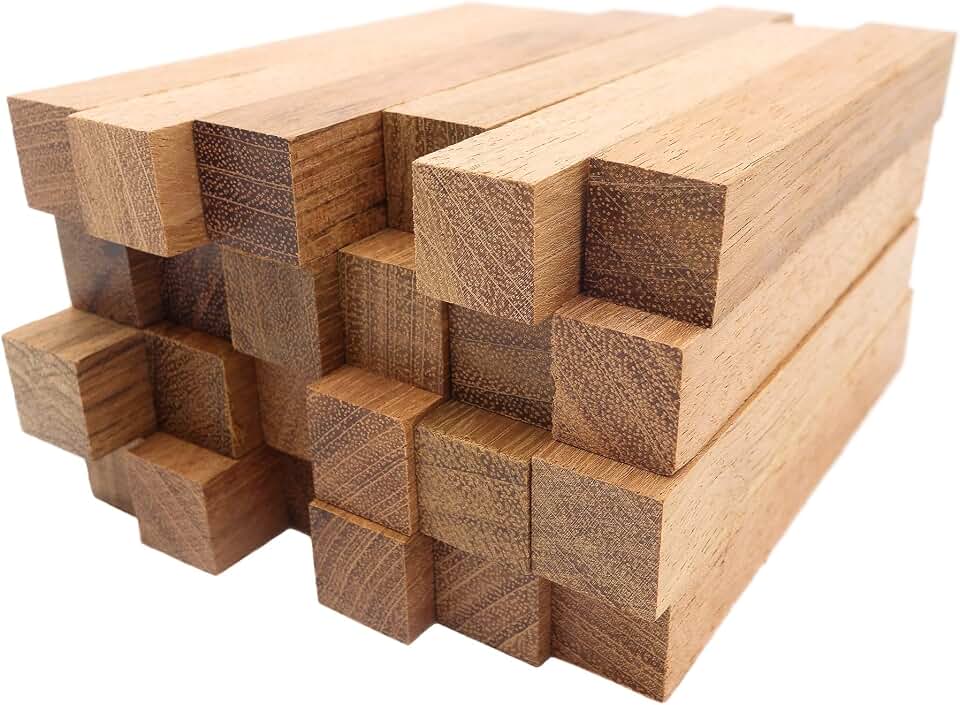
Jatoba Pen Blank Pack
- Large 24-pack for frequent crafting sessions
- each blank measures 5 by 3/4 by 3/4 inch
- great for pens, small projects, and practice
- Jatoba wood offers strength and character
- excellent value for makers and hobbyists
Buy on Amazon
Jatoba Kitchen Utensils
Jatoba kitchen utensils make sense for cooks who want a hard, smooth wooden scraper or spatula that feels solid without scratching pans. Wash by hand, dry right away, and refresh with a food-safe oil or wax when the surface starts to feel dry.
These kitchen tools show Jatoba in everyday use, where the dense wood feels firm against cast iron, nonstick pans, and griddles.

Handmade Jatoba Spatula
- Versatile tool for flipping, scraping, and stirring
- safe for cast iron and nonstick use
- handcrafted from durable Jatoba wood
- slim profile reaches into pans easily
- made in the USA for everyday kitchen use
Buy on Amazon

Slim Jatoba Saute Spatula
- Thin edge slides under food with ease
- useful for flipping, scraping, and sauteing
- durable hardwood construction for daily cooking
- comfortable 13 inch reach for better control
- handmade in the USA for quality you can feel
Buy on Amazon

Long Jatoba Kitchen Scraper
- Great for eggs, scraping, and turning
- long 13 inch design offers added reach
- sturdy wood handles hot pan tasks well
- multipurpose shape suits many cooking styles
- handcrafted in the USA from Jatoba wood
Buy on Amazon
FAQs
What Is Jatoba Wood Used For?
Jatoba wood is used for flooring, furniture, cabinetry, millwork, stair parts, and other durable indoor projects. It is valued for its rich color, attractive grain, and strong resistance to wear, making it a popular choice for both decorative and heavy-use applications.
Is Jatoba The Same As Brazilian Cherry?
Yes, Jatoba is commonly sold as Brazilian cherry, but it is not a true cherry wood. The name comes from its reddish-brown color, which can resemble cherry as it ages. Woodworkers often use both names for the same species in the marketplace.
Is Jatoba Wood Good For Flooring?
Yes, Jatoba wood is excellent for flooring because it is very hard and highly durable. It handles foot traffic well and holds up better than many softer woods. Its color and grain also give floors a warm, premium appearance.
How Hard Is Jatoba Wood Compared With Oak?
Jatoba wood is much harder than oak. On the Janka hardness scale, Jatoba is significantly more dent-resistant and better suited for demanding use. That extra hardness makes it a strong choice for floors and other surfaces that need added durability.
Is Jatoba Wood Toxic To Work With?
Jatoba wood is generally safe to work with, but its dust can irritate some people. Wearing a dust mask and using good ventilation is recommended when sanding or cutting it. As with most hardwoods, basic workshop safety practices are the best precaution.
Affiliate Disclosure: Some links in this post are affiliate links. If you make a purchase through these links, we may earn a small commission at no extra cost to you. We only recommend products we genuinely believe in.