
Rose Wood Explained: Species, Properties, Uses, and Legal Trade

Rose wood, normally written “rosewood,” is a trade name used mainly for dense, richly colored hardwoods in the genus Dalbergia. Species identification matters because appearance, hardness, price, health risks, and international trade rules differ sharply between genuine rosewoods and look-alikes.
Table of Contents
What Is Rose Wood?
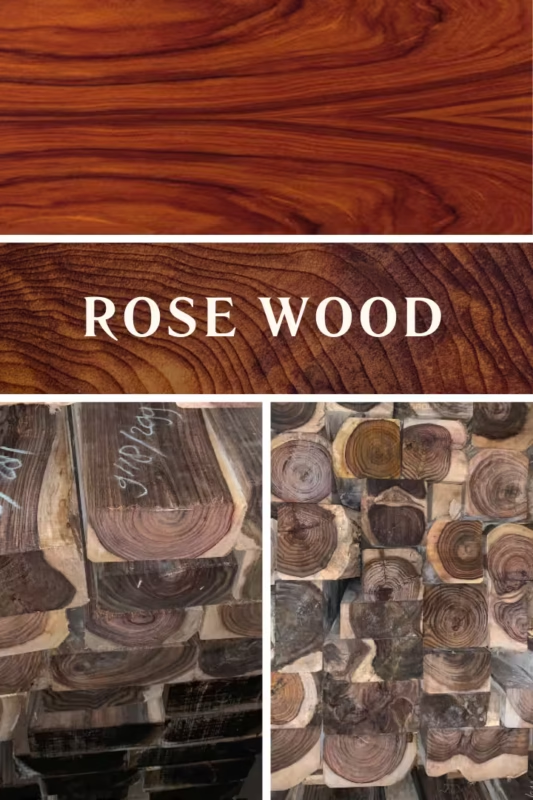
The simplest rosewood definition is a trade name for dense, often dark-veined tropical hardwoods, especially species in the genus Dalbergia. Rosewood isn’t one tree species, so the name alone can’t establish a material’s botanical identity, physical properties, origin, or legal status.
Correct Spelling and Definition
Rosewood is one word when referring to timber, though searches for rose wood and the misspelling “roose wood” usually mean the same material. The name is linked to the sweet or floral odor released by some freshly cut boards, but scent varies and fades with age.
Yes, rosewood is a hardwood. The term hardwood describes botany, meaning wood from a flowering broadleaf tree; it doesn’t guarantee a given hardness, though most commercial rosewoods are much harder than red oak.
Dalbergia Taxonomy
True rosewoods belong mainly to Dalbergia, a genus in the legume family Fabaceae. Accepted names can change after taxonomic review, so invoices and permits should use the scientific name recognized by resources such as Kew Plants of the World Online.
Trade Names and Mislabeling
A trade name can describe a familiar appearance rather than a botanical relationship. “Santos rosewood,” for example, commonly refers to Machaerium scleroxylon, while a rosewood-colored table may contain stained rubberwood or printed laminate.
Common-name-only listings create problems during appraisal, repair, customs clearance, and resale. Ask for the botanical name, harvest country, product construction, source records, and applicable permits before accepting a valuable item as genuine rosewood.
Genuine Rosewood Species and Look-Alikes

Genuine rosewoods include several Dalbergia species, but they don’t share one color, hardness, or trade status. The table gives useful reference values; natural variation, moisture content, and test methods can change measured hardness.
| Trade name | Botanical name | Approximate Janka hardness | Key distinction |
|---|---|---|---|
| Brazilian rosewood | Dalbergia nigra | 2,790 lbf | CITES Appendix I |
| East Indian rosewood | Dalbergia latifolia | 2,440 lbf | Common instrument wood |
| Cocobolo | Dalbergia retusa | 2,960 lbf | Very oily; strong sensitizer |
| African blackwood | Dalbergia melanoxylon | Often above 3,000 lbf | Woodwinds and precision turning |
| Honduran rosewood | Dalbergia stevensonii | About 2,200 lbf | Resonant marimba material |
| Bolivian rosewood | Machaerium scleroxylon | About 1,960 lbf | Look-alike outside Dalbergia |
Brazilian Rosewood (Dalbergia nigra)
Brazilian rosewood, also called Bahia rosewood, has brown, red, violet, or nearly black heartwood crossed by irregular dark lines. Its acoustic reputation and limited legal supply make documented material especially valuable.
New international commercial trade is heavily restricted because the species appears in CITES Appendix I. Antique or pre-Convention claims don’t remove the need for credible provenance; age estimates without dated records may fail at a border.
East Indian Rosewood (Dalbergia latifolia)
East Indian rosewood ranges from golden brown to deep purplish brown with darker stripes. It became a common guitar-body wood after Brazilian rosewood supplies tightened, yet its availability doesn’t mean every international shipment is permit-free.
The phrase “Indian rosewood plant” may also refer to living Dalbergia latifolia trees or locally named plants. Check the botanical name because Indian trade names can cover unrelated timber and ornamental species.
Cocobolo (Dalbergia retusa)
Cocobolo displays vivid orange, red, purple, brown, and black bands. Freshly machined stock can feel almost waxy between the fingers, while sanding gives off a sweet, spicy odor that shouldn’t be used as an identification test.
Its oil can weaken ordinary glue joints, and its fine dust may cause dermatitis or breathing reactions. A beginner’s common mistake is sanding bare-armed because the wood smells pleasant; extraction and covered skin are safer.
African Blackwood (Dalbergia melanoxylon)
African blackwood is a true Dalbergia despite its trade name. Its dark purple-black heartwood, very fine texture, and ability to hold accurate bores make it suited to clarinets, oboes, bagpipes, and precision turning.
Siamese Rosewood (Dalbergia cochinchinensis)
Siamese rosewood is a high-value Southeast Asian species associated with severe illegal-logging pressure and luxury furniture demand. Never infer lawful origin from a finished surface or seller location; species-specific annotations and national restrictions need a live check.
Honduran Rosewood (Dalbergia stevensonii)
Honduran rosewood is dense, resonant, and dimensionally stable after proper drying. Marimba makers value clear, sustained notes from selected stock, but a straight-grained musical bar has stricter grain, defect, and moisture requirements than an ordinary furniture board.
Bolivian Rosewood and Morado
Bolivian rosewood, morado, and Santos rosewood often mean Machaerium scleroxylon. It offers brown-violet color and dark striping, but it shouldn’t be presented as a Dalbergia species; compare its working traits with pau ferro.
Ambiguous Rosewood Names
Names such as African, Amazon, Caribbean, Patagonian, and Santos rosewood can identify different genera across markets. These aren’t automatically fraudulent names, but the seller must disclose the species rather than asking buyers to infer it from a regional label.
Rosewood Properties and Identification
Rosewood can’t be authenticated by color or smell alone. Reliable identification combines wood anatomy, physical measurements, source records, and laboratory testing when legal or financial stakes justify the cost.
Color and Grain
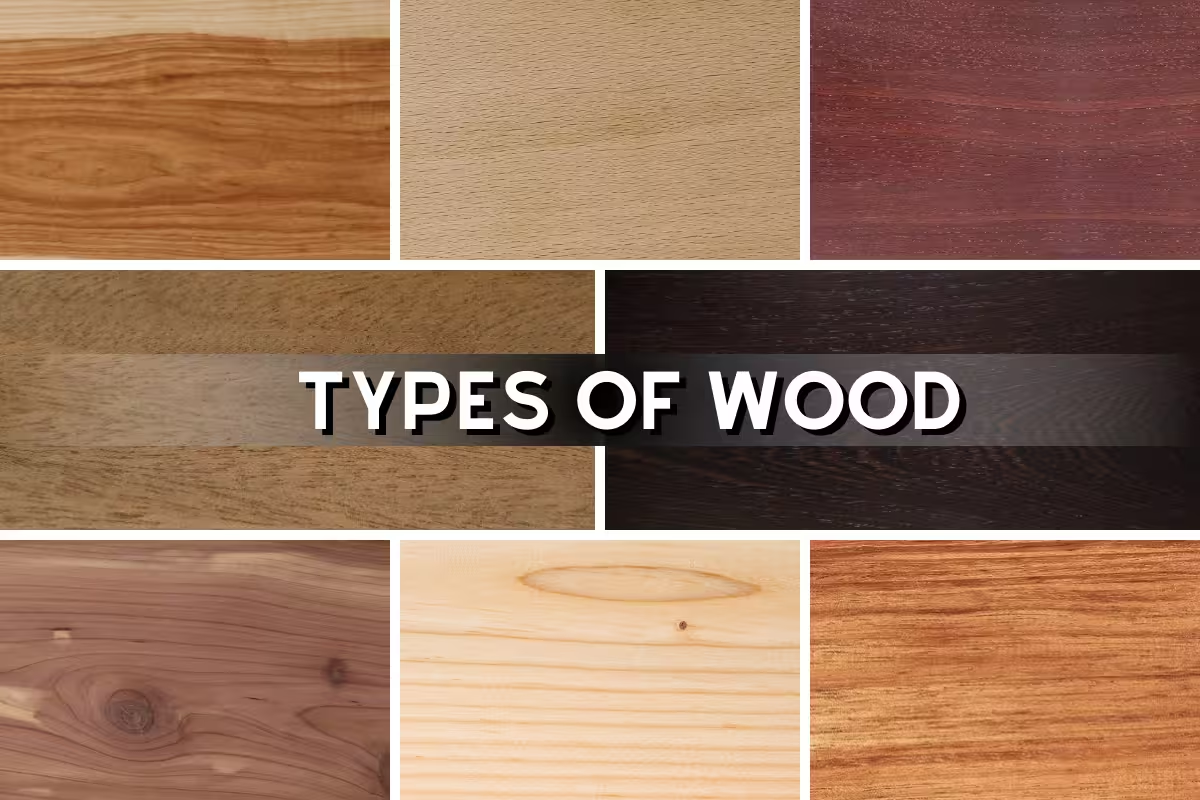
Heartwood may appear orange, reddish brown, chocolate, violet, or nearly black, often with dark irregular veins. Fresh surfaces can look brighter and then settle into a deeper brown after oxygen and ultraviolet exposure.
Grain may be straight, interlocked, or web-like, while sapwood is usually pale and distinct. Stain, finish, camera white balance, and aging can imitate these features, so a polished face photograph provides weak evidence.
Janka Hardness by Species
Rosewood is hard wood in the everyday sense, but no single Janka figure covers the group. Brazilian rosewood measures about 2,790 lbf, East Indian rosewood about 2,440 lbf, and cocobolo about 2,960 lbf, compared with roughly 1,290 lbf for red oak.
Hardness improves dent resistance but increases heat, tool wear, and splitting risk near screws. Pre-drill narrow parts and use sharp carbide edges rather than forcing a dull cutter through dense stock.
Oils, Odor, and Finish
Natural oils contribute to a smooth, lustrous surface but may interfere with some coatings. Test the finish on offcuts, keep sanding residue out of pores, and avoid assuming a sweet smell proves genuine rosewood.
Stability and Workability
Properly dried rosewood can remain stable, yet it still moves as humidity changes. Interlocked grain tends to tear under a plane; a high cutting angle, light passes, or cabinet scraper leaves a cleaner surface with less fuzzy breakout.
A practical warning comes through the fingertips: a cutter that starts producing a hot, polished edge rather than crisp shavings is rubbing. Stop and sharpen before heat checking or scorched resin marks appear.
Visual and End-Grain Checks
Inspect an unfinished end-grain surface with a sharp hand lens. Vessel size, pore distribution, rays, parenchyma, and dark deposits are more informative than face color, though closely related Dalbergia species can still defeat visual identification.
Laboratory Identification
Laboratories may use DART-TOF mass spectrometry, DNA barcoding, near-infrared spectroscopy, or stable-isotope analysis. Results depend on sample condition and reference libraries; some methods identify species, while geographic-origin claims may remain less certain.
Documentation Red Flags
- No botanical name or a description limited to “mixed tropical hardwood.”
- A price far below comparable documented stock.
- Conflicting harvest, origin, or acquisition dates.
- “Brazilian rosewood style” shown as genuine Brazilian rosewood.
- An invoice that doesn’t match the permit’s species or product form.
- A seller who refuses to supply source records before payment.
Documents must agree with the physical shipment. Small spelling differences, weight discrepancies, or a raw-lumber declaration attached to finished parts can delay clearance and trigger closer inspection.
Rosewood Uses and Value
Rosewood serves furniture, veneer, instruments, handles, flooring, and decorative work because it combines hardness with striking figure. Its value depends on species and provenance, not the trade name alone.
Furniture and Veneer
Cabinetmakers use rosewood for tables, desks, chairs, marquetry, trim, and turned details. Veneer places rare figure across a broad, stable substrate with far less timber, and it isn’t poor construction when the maker identifies it honestly.
Inspect edges, undersides, drawer interiors, and repeated grain patterns to distinguish solid wood from veneer. Printed laminate repeats identical figure, while real veneer shows pores and subtle fiber changes but may have a thin edge line.
Rosewood for Acoustic Guitars
Rosewood is often selected for acoustic-guitar backs and sides, bridges, and fingerboards. There is no single best wood for acoustic guitars: stiffness, density, cut, moisture, bracing, body shape, top wood, and builder choices affect the finished voice.
East Indian rosewood offers a practical balance of availability, stability, dark overtone-rich response, and familiar working behavior. Brazilian stock may command more money, but a prestigious species can’t rescue weak construction or badly quartered, stressed wood.

Woodwinds and Percussion
African blackwood holds fine bores and threads in woodwinds, while selected Honduran rosewood produces resonant marimba bars. Instrument stock must meet tight defect limits; hidden checks, grain runout, or uneven moisture matter more here than on a decorative box.
Knife Handles and Craft Blanks
Dense rosewood makes durable knife scales, pens, boxes, jewelry, turning blanks, and inlay. Small blanks often carry a high board-foot cost because sellers charge for color matching, defect removal, cutting, photography, and individual packaging.

Rosewood Knife Handle Scales
- Natural rosewood selection for custom projects
- Sized for knife handles and small craft builds
- Warm grain adds a distinctive handmade look
- Easy to shape sand and finish
- Ideal for makers restorers and DIY enthusiasts
 Buy on Amazon
A marketplace title isn’t proof of species. Confirm the botanical identity, origin, actual dimensions, moisture condition, and documentation before buying scales, especially if they will cross an international border.
Flooring and Interiors
Rosewood has appeared in flooring, paneling, trim, and luxury interiors, but large-volume use consumes valuable stock and raises sourcing costs. Veneer over a stable certified core often gives a similar visual effect with better material efficiency.
Why Rosewood Costs More
Many rosewood trees take decades to form wide, dark heartwood, and logs lose yield through sapwood, checks, bends, and defects. Wide matched sets, quartered instrument stock, intense figure, careful drying, and documented legal origin raise the price further.
Permits, laboratory tests, customs work, storage, and chain-of-custody records become part of a dealer’s cost. Price per piece can hide an extreme board-foot rate, so compare equal species, dimensions, grade, moisture, and paperwork; see other expensive wood species for context.
Conservation, CITES, and Legal Trade
Rosewood isn’t universally illegal, but international trade is regulated according to species, origin, date, and product form. CITES controls cross-border trade; domestic possession or sale depends on separate national and local laws.
Appendix I vs Appendix II
Dalbergia nigra is listed in CITES Appendix I, where international commercial trade in newly harvested material faces the strictest limits. Most other covered Dalbergia species appear in Appendix II, meaning controlled trade may occur with the required findings, declarations, and permits.
Import and Export Rules
Before a shipment or trip, verify species, acquisition date, source country, destination, product form, covered-wood weight, and permit requirements. Consult the official CITES Appendices and both countries’ wildlife and customs authorities, since rules and annotations can change.
Finished-Product Exemptions
Certain Appendix II annotations exempt qualifying finished musical instruments, finished instrument parts, and finished accessories. Don’t assume the exemption covers raw lumber, veneer, unfinished components, commercial quantities, or Brazilian rosewood; wording and national implementation control the result.
Legal Sourcing and Provenance
A sound file may include invoices, botanical names, harvest origin, chain-of-custody records, permits, and dated pre-Convention evidence. Forestry certification can support responsible sourcing, but it can’t replace required CITES paperwork.
Common Compliance Failures
Frequent failures include traveling with an undocumented Brazilian rosewood guitar, declaring a vague common name, and assuming an antique appearance proves legal age. Importers also get caught when the invoice, permit, net weight, and shipment contents don’t match.
Physical ownership isn’t provenance. A dark, old-looking board still needs records strong enough to support its species, source, and acquisition date.
Practical compliance principle
Official Sources and Live Checks
Check rules immediately before purchase, sale, shipment, or travel. Archived forum posts and old dealer guidance may describe superseded annotations, while destination countries can impose stricter national controls than the CITES baseline.
Buying Rosewood Responsibly
Responsible buying starts with an exact species and traceable source, then moves to dimensions, grade, moisture, and construction. A cheap unidentified board transfers legal and quality risk from the seller to the buyer.
Questions for Sellers
- What is the complete botanical name and country of harvest?
- Is it wild harvested, plantation grown, salvaged, reclaimed, or vintage stock?
- Does the sale or shipment require CITES documents?
- Is the item solid wood, veneer, laminate, or stained substitute?
- What are the exact dimensions, moisture content, grade, and sapwood percentage?
- Does the photograph show the actual board?
- Can you supply invoices and chain-of-custody records before payment?
Solid Wood vs Veneer
Solid rosewood uses the named timber through the component; veneer applies a thin layer over another core. Both can perform well, but buyers shouldn’t pay solid-wood pricing for veneered engineered board presented with vague wording.
Pricing, Grade, and Documentation
Compare price using board-foot volume and account for usable yield. Instrument-grade sets cost more because they are matched for dimensions, cut, stability, grain, and defects; documented pre-Convention material may carry a separate provenance premium.
Shipping and customs charges can exceed the value of a small overseas order. Request a landed-cost estimate and confirm who bears seizure, return, brokerage, and permit costs before sending payment.
Domestic Wood Alternatives
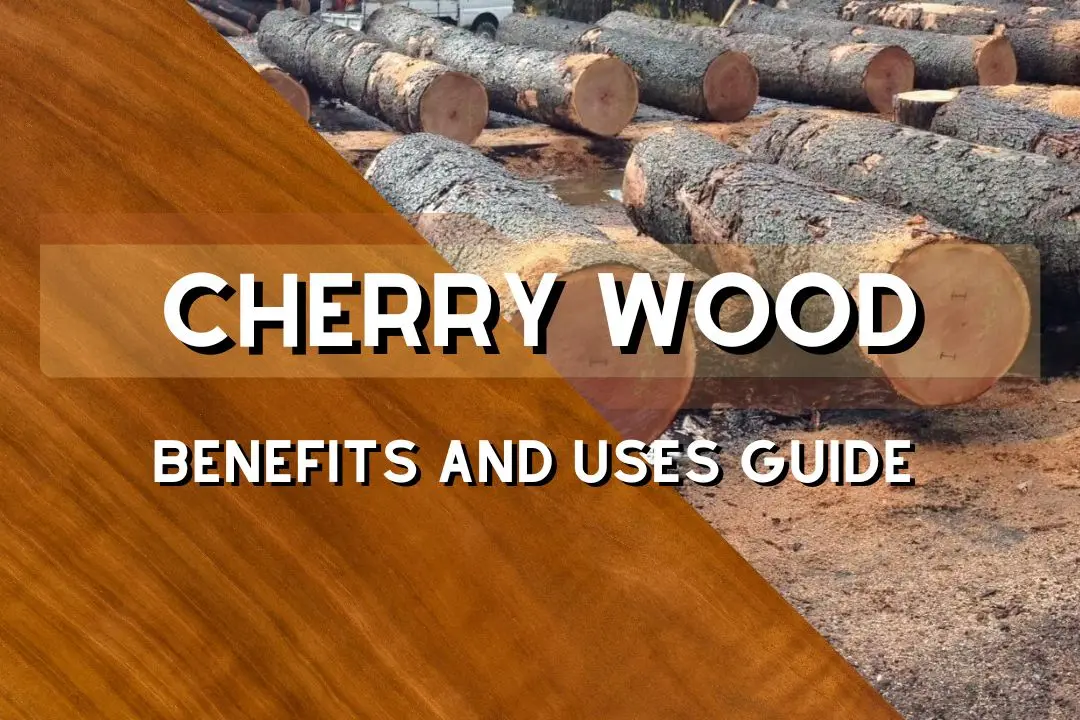
Walnut supplies dark color, easier machining, and broad North American availability. Cherry deepens warmly with age, while stained maple offers hardness and predictable supply; none duplicates rosewood grain or acoustic behavior exactly.
Tropical Commercial Substitutes
Morado, granadillo, pau ferro, ovangkol, and ziricote can provide dark color or related working traits. Replacing one poorly documented tropical wood with another isn’t a responsible fix, so verify each substitute’s exact species and source.
Engineered and Reclaimed Options
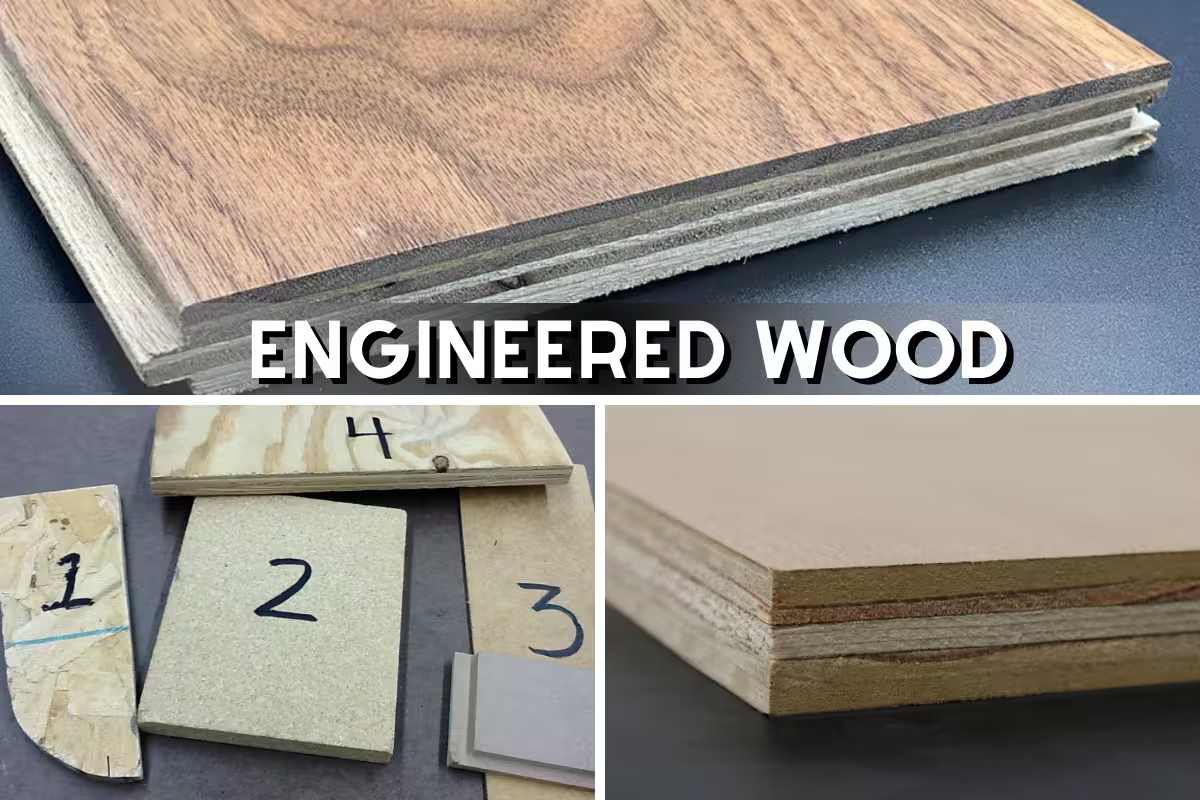
Reclaimed stock, documented vintage wood, laminated hardwood, engineered fingerboards, and veneer over stable certified substrates reduce pressure on fresh logs. Trade-offs include repair methods, edge appearance, consistency, resale expectations, and the need to document reclaimed claims.
Rosewood Workshop Safety
Rosewood dust can irritate skin, eyes, and airways, while repeated exposure may produce sensitization. Safe workshop practice also addresses oily glue surfaces, machining heat, and slow moisture changes in dense stock.
Dust and Sensitization
Cocobolo and related species can cause rashes, nasal irritation, coughing, headaches, or breathing trouble in susceptible users. Sensitization may worsen after repeated contact, so a wood that caused no reaction last month isn’t guaranteed to remain harmless.
Extraction and PPE
Capture dust at saws, routers, and sanders, then wear a properly fitted particulate respirator and eye protection. Cover exposed skin, vacuum clothing, and wash after work; compressed air throws fine dust back into the breathing zone.
Oily-Wood Gluing Risks
A polished or aged oily surface can produce a joint that looks sound yet peels apart under light leverage. Machine or scrape the mating faces shortly before assembly, remove loose dust, select an adhesive rated for oily hardwood, and test offcuts.
Avoid flooding the surface with solvent, which can draw more extractives into the joint or interfere with the adhesive. Freshly prepared, accurately fitted surfaces usually matter more than aggressive wiping.
Drying and Moisture Control
Dense thick stock dries slowly and may check if its ends lose moisture too fast. Seal end grain, use stickers with even support, monitor moisture at more than one depth, and allow stock to acclimate before final milling.
Practical workshop experience shows the last sizing pass should wait until the board has rested after rough milling. Internal stress may reveal itself as a slight cup or pinched saw kerf, saving a finished component from later distortion.
Rosewood Commons and Other Meanings
Rosewood Commons, rosewood oil, wooden roses, colors, fragrances, and branded organizations are separate entities from Dalbergia timber. Search results mix them because spacing and capitalization provide weak intent signals.
Rosewood Essential Oil
Rosewood essential oil traditionally comes from Aniba rosaeodora, an Amazonian tree in the Lauraceae family, not from Dalbergia timber. The oil is associated with a high linalool content, though composition changes with source and processing.
Rosewood Colors and Fragrances
Rosewood can describe a dark reddish-brown or purplish-brown color. A rosewood stain, finish, fabric, cosmetic, or fragrance may contain no rosewood material, and fragrance accords may reproduce floral-woody notes with other ingredients.
Wooden Roses
A wooden rose is a flower carved, turned, or assembled from wood. Pine, birch, basswood, plywood, and many other materials work for the craft, so “wooden rose” doesn’t mean the object contains rosewood.
Where Does Rosewood Come From and Grow?
Rosewood comes from tropical and subtropical regions of South America, Central America, Asia, and Africa. It has no single country of origin because the rosewood name covers multiple species with different natural ranges.
- South America: Brazilian rosewood is native to Brazil’s Atlantic Forest.
- Central America: Cocobolo and Honduran rosewood occur in parts of Mexico and Central America.
- South and Southeast Asia: East Indian and Siamese rosewoods grow in regional forests and, in some areas, plantations.
- Africa: African blackwood grows primarily in dry woodlands and savannas across eastern and southern Africa.
The location where a tree grows doesn’t by itself prove the identity or legal origin of the resulting rosewood material. A seller’s country may be the place of milling, storage, or export rather than harvest. Botanical names and source documents provide stronger evidence than regional trade names.
All genuine Dalbergia rosewoods are broadleaf woods, so they fall within the botanical hardwood category described in this guide to types of hardwood. Their density, hardness, growth conditions, and trade restrictions still vary by species.
FAQs
Is Rosewood A Hardwood?
Yes, rosewood is a dense tropical hardwood valued for its strength, rich color, and natural oils. The name covers several tree species, including Indian rosewood and Brazilian rosewood. Its hardness makes it popular for fine furniture, instruments, flooring, and decorative veneers.
How Can You Tell If Rosewood Is Real?
Real rosewood usually has a dense feel, dark streaked grain, and a noticeable sweet or floral scent when freshly cut or sanded. Grain patterns and color vary by species, so appearance alone is not conclusive. For valuable pieces, ask for documentation or have a wood specialist inspect it.
Why Is Rosewood So Expensive?
Rosewood is expensive because it grows slowly, is highly durable, and has long been prized for its distinctive grain and color. Many rosewood species are limited, protected, or difficult to source legally. Careful harvesting, export rules, and strong demand for premium furniture and instruments also raise prices.
Is Rosewood Illegal To Buy Or Transport?
Rosewood is not automatically illegal to buy or transport, but some species are protected by national and international trade rules. Legal requirements depend on the species, its country of origin, and whether it crosses a border. Keep receipts and permits, especially for antiques, instruments, or imported wood.
What Is Rosewood Commons?
Rosewood Commons is generally a name used for a residential community, housing development, apartment complex, or shared public space. Its exact meaning depends on the location or organization using the name. Check the local property website, map listing, or municipal records for details about a specific Rosewood Commons.
Affiliate Disclosure: Some links in this post are affiliate links. If you make a purchase through these links, we may earn a small commission at no extra cost to you. We only recommend products we genuinely believe in.