African Blackwood Guide: Uses, Properties, Price, and Buying Tips

Table of Contents
African Blackwood is Dalbergia melanoxylon, a very dense, dark hardwood native to parts of Africa and valued for woodwind instruments, knife handles, pen blanks, inlay, and fine turnery. It’s often mistaken for ebony, but African Blackwood belongs to the Dalbergia group, making it botanically closer to rosewoods than true ebonies.
What African Blackwood Is

African Blackwood is a heavy black hardwood used where color, wear resistance, fine detail, and stability matter more than wide board size. In the shop, it feels almost stone-like in the hand, with a cool, hard surface and a noticeably heavy pull when you lift even a small blank.
Dalbergia Melanoxylon
The correct scientific name is Dalbergia melanoxylon. That name matters because trade labels can be vague, and botanical databases such as Plants of the World Online place the species in Fabaceae, the legume family, within the Dalbergia genus.
African Blackwood is often mistaken for ebony because of its dark heartwood, but it is a Dalbergia species, not a true Diospyros ebony. If you’re comparing it with other dense hardwoods, our guide to ebony wood explains that difference in more detail.
Common Trade Names
Common names include mpingo, grenadilla, African grenadilla, Mozambique ebony, and Senegal ebony. The “ebony” names can confuse buyers, so I treat them as trade language, not proof of species identity.
- African Blackwood
- Dalbergia melanoxylon
- Mpingo wood
- Grenadilla wood
- African grenadilla
- Mozambique ebony
- Senegal ebony
Tree and Native Range
The African Blackwood tree grows in dry African woodland, including savanna, miombo woodland, thorn scrub, and seasonally dry habitats. It’s associated with countries such as Tanzania, Mozambique, Kenya, Malawi, Zambia, Zimbabwe, Senegal, Angola, Namibia, and South Africa.
The tree is usually small and irregular compared with large commercial timber trees. Mature trees are often cited around 4–15 meters tall, with trunk diameters commonly around 20–30 cm, so wide, clear boards are rare from the start.
Why Large Boards Are Scarce
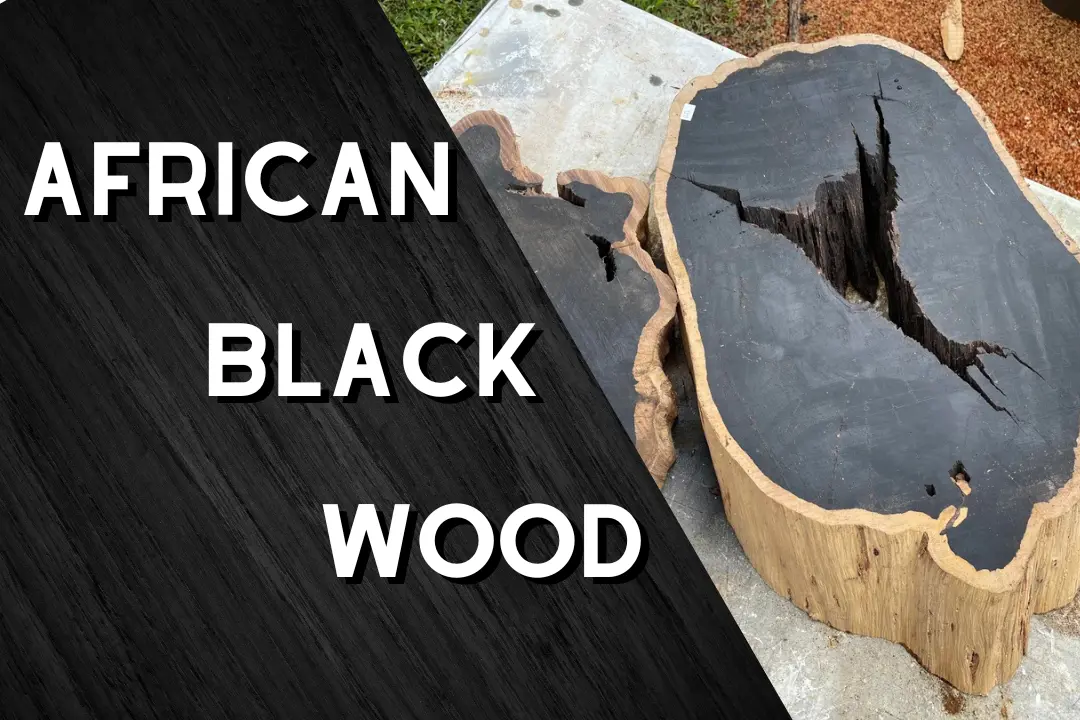
Large African Blackwood boards are scarce because the usable black heartwood is often narrow, checked, cracked, or interrupted by pale sapwood. Many logs yield better value as pen blanks, knife scales, small turning blocks, dowels, inlay strips, or instrument billets than as wide lumber.
This is why searches for African blackwood furniture often lead to small accents rather than full dining tables or wide flooring runs. It can be used in furniture and flooring details, but using it as broad solid lumber wastes material and raises cost fast.
Appearance and Wood Properties
African Blackwood has nearly black heartwood, fine texture, extreme density, and high natural polish potential. The best pieces look deep brown-black indoors, then show purple, grey, or chocolate streaks when you tilt them under bright bench light.
Heartwood and Sapwood
The heartwood ranges from dark brown to purple-black or almost jet black. Sapwood is pale yellow, cream, or straw-colored, and the contrast can be sharp enough to look intentional in craft work.
For instrument billets, uniform dark heartwood is usually preferred because sapwood can look like a visual defect. For jewelry, knife spacers, or small boxes, that same pale edge can create strong contrast against the black core.
Grain and Finish
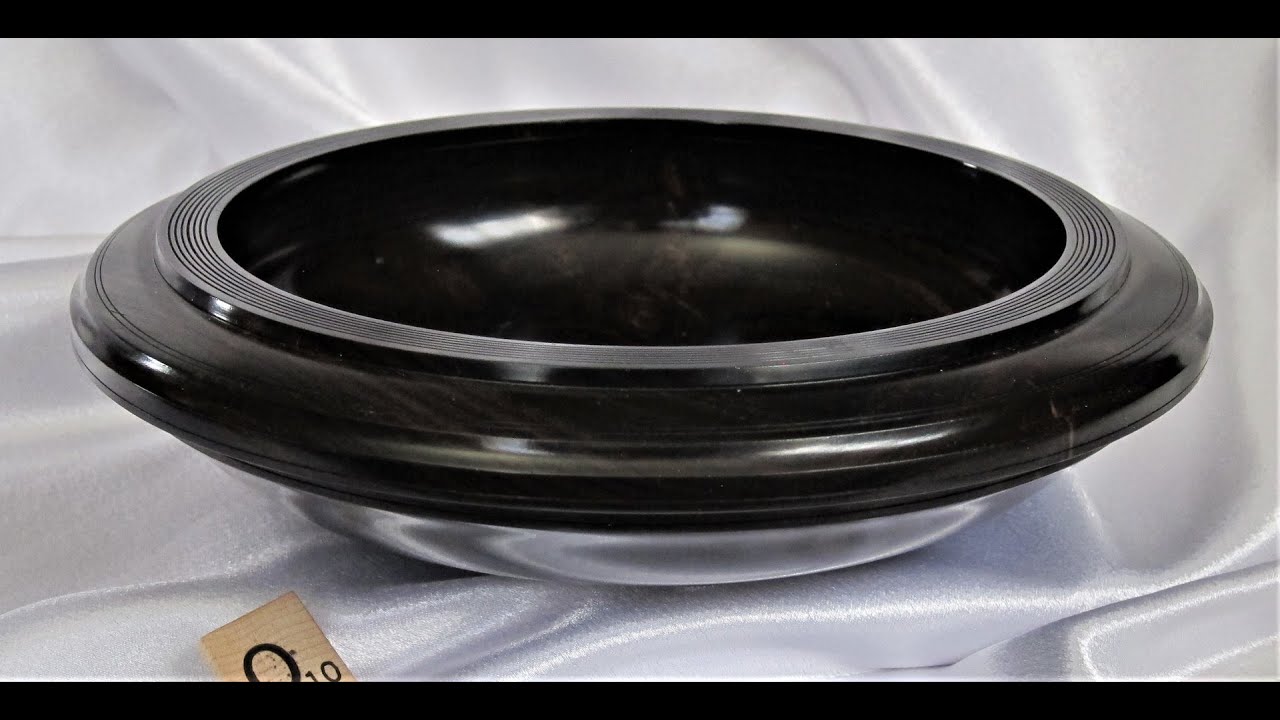
The grain is usually straight to interlocked, with a very fine and even texture. After sanding and buffing, it can look more like polished horn, black stone, or dense resin than ordinary wood.
Stain is rarely needed because the natural color already supplies depth. Oil, wax, shellac, lacquer, friction polish, or a CA finish can all work, but the finish should stay thin enough to avoid making crisp details look plastic.
Density and Weight
African Blackwood is one of the densest commercial hardwoods. The Wood Database lists average dried weight around 79 lb/ft³ or 1,270 kg/m³, with a Janka hardness near 3,670 lbf, figures that explain why even a pen blank feels surprisingly heavy; see The Wood Database for the full species profile.
Because its density is higher than water, a solid dry piece can sink in water. That doesn’t make water testing a perfect ID method, since cracks, trapped air, finish, and moisture content can change the result.
Hardness and Strength
The Janka hardness of about 3,670 lbf makes African Blackwood far harder than hard maple, white oak, or black walnut. On a drill press, you can feel this difference through the handle as a steady resistance and a faint warm scent when the bit starts to heat.
| Property | Commonly Cited Value | What It Means in Use |
|---|---|---|
| Average dried weight | 79 lb/ft³ / 1,270 kg/m³ | Very heavy; small pieces feel dense and solid |
| Specific gravity | 0.96 basic / 1.08 at 12% MC | May sink; difficult to glue compared with open-grained woods |
| Janka hardness | 3,670 lbf / 16,320 N | Dulls tools fast; holds crisp detail |
| Modulus of rupture | 25,460 lbf/in² | Strong under bending stress |
| Modulus of elasticity | 2,603,000 lbf/in² | Stiff and stable for precision parts |
| Crushing strength | 10,570 lbf/in² | Resists compression and wear |
Stability and Shrinkage
African Blackwood has good dimensional stability when it’s dried correctly. Common shrinkage values are about 2.9% radial, 4.8% tangential, 7.7% volumetric, with a T/R ratio near 1.7.
That stability helps in precision woodwind parts, pens, knife handles, and fitted decorative work. Poorly seasoned blanks can still check at the ends, so I never trust a shiny waxed end until I’ve trimmed back and inspected fresh wood.
African Blackwood Uses
The best African Blackwood uses are small high-value projects that benefit from density, dark color, fine texture, and polish. It’s less practical for large furniture panels, but excellent for parts that people touch, turn, play, or inspect closely.
Woodwind Instruments
African Blackwood is famous for woodwind instruments, including clarinets, oboes, bagpipe chanters, drones, flutes, and piccolos. Makers prize it because it holds precise bores, resists wear, and can produce a focused tone when the billet is seasoned and machined correctly.
Instrument-grade stock needs stricter selection than craft stock. Straight grain, stable seasoning, low crack risk, consistent dark color, and correct billet dimensions all matter more than decorative figure.
Knife Handles
African Blackwood knife scales feel dense and cool before shaping, then polish to a smooth grip that works well on hunting knives, kitchen knives, fixed blades, folding knives, and presentation pieces. The dark color pairs cleanly with brass, stainless, nickel silver, copper, and black G10 liners.
The beginner mistake is overheating the scales on a belt grinder. Use fresh belts, light pressure, and short passes; if the handle feels hot against your fingertips, stop before heat checks appear near pins or edges.
Pen Turning
African Blackwood pen blanks are popular because small stock works well for the species. A finished pen can look deep black with subtle brown grain, and the blank turns cleanly if the tools are sharp and the cut is light.
Drilling is the risky step for pen blanks. Use a sharp bit, clear chips often, and slow down near the exit hole to avoid blowout or a heat crack that appears after the tube is glued.
Furniture and Flooring
African Blackwood furniture is usually best as accent work, not full casework. Think pulls, trim, inlay lines, feet, knobs, drawer details, or small turned features on a cabinet made from a more available hardwood.
African black wood flooring is possible in theory, but wide flooring stock is scarce, costly, and hard to source responsibly. For most homes, a better design choice is a narrow inlay strip, threshold detail, or border paired with another hardwood from our types of hardwood guide.
Inlay and Luxury Crafts
Inlay is one of the most efficient uses of African Blackwood because tiny offcuts still have value. It gives sharp contrast against maple, holly, boxwood, sycamore, and other pale woods.
It also suits small luxury crafts such as chess pieces, jewelry, razor handles, awl handles, calligraphy holders, knobs, beads, plugs, and box details. Save every clean offcut; a thin strip that looks useless beside the saw can become a clean black line in a lid or handle spacer.
Workability and Shop Tips
African Blackwood workability is demanding but rewarding: it cuts slowly, dulls tools, heats during sanding, and resists easy glue bonding, yet it turns and polishes beautifully. Treat it like a precision material, not like a common domestic hardwood.
Cutting and Sawing
Use sharp carbide blades, secure the blank firmly, and feed slower than you would with maple or walnut. The saw note sounds tighter and higher, and the cut dust feels fine and heavy rather than fluffy.
The common beginner mistake is forcing the cut. That burns the edge, stresses small stock, and can open hidden checks; a fresh blade and steady feed save more material than rushing.
Turning and Drilling

African Blackwood turning is excellent with sharp gouges, skews, and light cuts. It holds crisp beads, fine coves, and thin details that softer woods would fuzz or crumble around.
For drilling, use sharp brad-point or parabolic bits, clear chips often, and drill in stages for deep holes. Never let the bit squeal and smoke; that heat can create a hairline crack you won’t see until finishing.
Sanding Heat Control
Sanding African Blackwood produces a smooth glassy surface, but heat builds fast. Keep the piece moving, use clean abrasives, and step through grits rather than leaning hard on one coarse belt.
On small turned parts, I pause when the wood feels warm to touch, not after it becomes hot. That small habit prevents heat checking near thin beads, pen ends, and knife-pin holes.
Gluing Dense Wood
Gluing African Blackwood can be less predictable because of high density, fine pores, and natural extractives. Freshly sand or plane the surfaces right before glue-up, then avoid clamp pressure so high that it starves the joint.
For knife scales and mixed materials, epoxy often wins over standard yellow glue. Lightly roughen the bonding face, wipe dust away, test fit pins dry, and give the adhesive full cure time before shaping.
Finishing Options
Good finishing options include CA finish for pens, oil and wax, shellac, lacquer, friction polish, and buffed wax. The wood already has depth, so heavy stain usually hides the subtle purple-brown tone that makes it attractive.
Test finishes on offcuts first. Some oils can make the surface look warmer and browner, while film finishes can increase gloss but show scratches if the sanding steps were rushed.
Dust and Safety
African Blackwood dust can cause skin, eye, or respiratory irritation in sensitive users. Use dust extraction, eye protection, and a well-fitted respirator, especially during sanding, drilling, or power carving.
The dust is dark and fine, and it settles into pores, sleeves, and bench corners. Wash exposed skin after long sanding sessions and keep the shop air moving instead of relying on a paper mask near the lathe.
African Blackwood Comparisons

African Blackwood is often compared with ebony and rosewood because it is dark, dense, and part of the Dalbergia group. The right choice depends on species identity, color needs, workability, legality, and project size.
Blackwood vs Ebony
African Blackwood is not true ebony. African Blackwood is Dalbergia melanoxylon, while true ebonies such as Gaboon ebony and Macassar ebony usually come from the Diospyros genus.
Color also differs in practice: Gaboon ebony can be more uniformly jet black, while African Blackwood often shows dark brown, purple, or grey undertones under strong light. For more ebony comparisons, see our guide to Macassar ebony.
Blackwood vs Rosewood
African Blackwood is a Dalbergia species, so it is botanically related to many rosewoods. It isn’t usually sold as “rosewood,” because its color, density, and traditional uses place it in a different commercial category.
Most rosewoods show warmer visible grain, with brown, red, orange, or purple tones. African Blackwood is darker, finer textured, and more common in woodwind instruments and small precision objects than broad panels; compare it with Indian rosewood for a clearer contrast.
Density and Hardness
African Blackwood is commonly cited around 3,670 lbf Janka, while Gaboon ebony is often cited near 3,080 lbf. Exact figures vary by sample, moisture, and source, but both woods are hard enough to punish dull tools.
| Wood | Botanical Group | Typical Look | Common Strength | Common Limitation |
|---|---|---|---|---|
| African Blackwood | Dalbergia | Brown-black to purple-black | Instrument bores, turning, knife handles | Small stock, tool wear, legal checks |
| Gaboon Ebony | Diospyros | Very uniform black when high grade | Fingerboards, inlay, luxury fittings | Scarcity, checking, high cost |
| Indian Rosewood | Dalbergia | Brown to purple-brown grain | Guitars, furniture, veneer | Trade controls, color variation |
Best Use Differences
Choose African Blackwood for precision dark parts: clarinet sections, oboe bodies, bagpipe parts, pens, knife scales, inlay, and small turned items. Choose ebony for fingerboards, fittings, keys, or black decorative accents where a uniform black look matters most.
Choose rosewood when you want visible figure, larger decorative surfaces, or a warmer instrument tonewood look. Dense alternatives like cocobolo can work for handles and turnery, but oiliness and allergy risk need extra care.
Sustainability and Legal Trade
African Blackwood is a conservation-sensitive wood, so buyers should treat species identity, origin, and paperwork as part of the purchase, not an afterthought. Legal trade exists, but vague listings and undocumented cross-border sales create risk.
Conservation Status
African Blackwood is widely referenced as Near Threatened in conservation summaries, with pressure from overharvesting, slow growth, habitat loss, firewood use, agricultural expansion, and export demand. The IUCN Red List is the key source to check for conservation status updates.
Slow growth and low usable yield make waste a real issue. A clear, dark, crack-free billet can take decades to form, so cutting it into casual scrap projects is poor material use.
CITES Appendix II
African Blackwood falls under Dalbergia trade controls, and many Dalbergia species are listed under CITES Appendix II with annotations and exemptions that depend on product type and shipment details. CITES Appendix II doesn’t mean a complete ban; it means international trade may require documents showing legal and non-detrimental sourcing, as outlined by CITES Appendices.
The edge case is finished small items, which may be treated differently from raw lumber in some trade situations. Still, cross-border buyers should ask before purchase because customs delays can cost more than the blank.
Responsible Sourcing
Responsible sourcing starts with clear species identification: Dalbergia melanoxylon. Good suppliers can usually state the species, origin when available, import status, and whether the stock is old inventory, reclaimed, certified, or legally harvested.
Avoid listings that say only black exotic wood, African ebony, ebony-like wood, or blackwood-style lumber. Those phrases may describe dyed wood, another black species, or a mixed lot with no reliable chain of custody.
Ethical Buying Checklist
Use this buying checklist before paying for African Blackwood, especially for international orders or high-grade blanks.
- Confirm the scientific name: Dalbergia melanoxylon.
- Ask if the wood was legally imported.
- Check whether CITES paperwork is needed for your shipment.
- Prefer suppliers that share origin or chain-of-custody details.
- Use clear dark stock for projects that truly need it.
- Save offcuts for inlay, plugs, pins, beads, and spacers.
- Avoid wasting instrument-grade billets on casual craft tests.
Price and Buying Guide
African Blackwood price varies because size, color, defects, seasoning, legal documentation, and intended use change the value of each piece. Small pen blanks can be accessible, while instrument-grade billets and wide boards can cost much more because they waste more material during selection.
Why Prices Vary
Prices rise when the stock is fully dark, dry, crack-free, straight-grained, and thick enough for demanding work. Sapwood, end checks, wax-hidden cracks, short lengths, and uncertain species labels usually lower value.
Searches for African black wood price or price per kg can mislead buyers because density, defect rate, and cut form matter more than weight alone. A heavy cracked block may be worth less than a lighter, clean, stable pair of knife scales.
Common Product Forms
African Blackwood is most common as small project stock: pen blanks, bottle-stopper blanks, knife scales, small turning squares, dowels, craft blocks, inlay strips, instrument billets, and narrow boards. Large clear lumber exists, but it’s uncommon and should be bought with care.
| Project | Best Stock Form | What to Avoid | Pro Tip |
|---|---|---|---|
| Pens | Dry square blanks or dowels | End checks and off-center cracks | Trim ends before drilling |
| Knife handles | Matched scales | Warped or thin stock | Leave extra thickness for flattening |
| Instruments | Seasoned billets | Craft-grade blocks | Buy from tonewood suppliers |
| Furniture accents | Small boards or strips | Large wasteful panels | Use as pulls, trim, and inlay |
| Inlay | Offcuts and thin strips | Sapwood if pure black is needed | Save clean saw trimmings |
Pen Blank Criteria
For an African Blackwood pen blank, choose dry straight stock with no visible cracks, minimal end checking, and enough length to trim both ends. Fully dark heartwood gives the classic black pen look, while pale sapwood creates a bolder custom effect.
Hold the blank under bright side light before drilling. Hairline checks often flash as thin grey lines, and catching them early prevents wasting a brass tube and pen kit.
Knife Scale Criteria
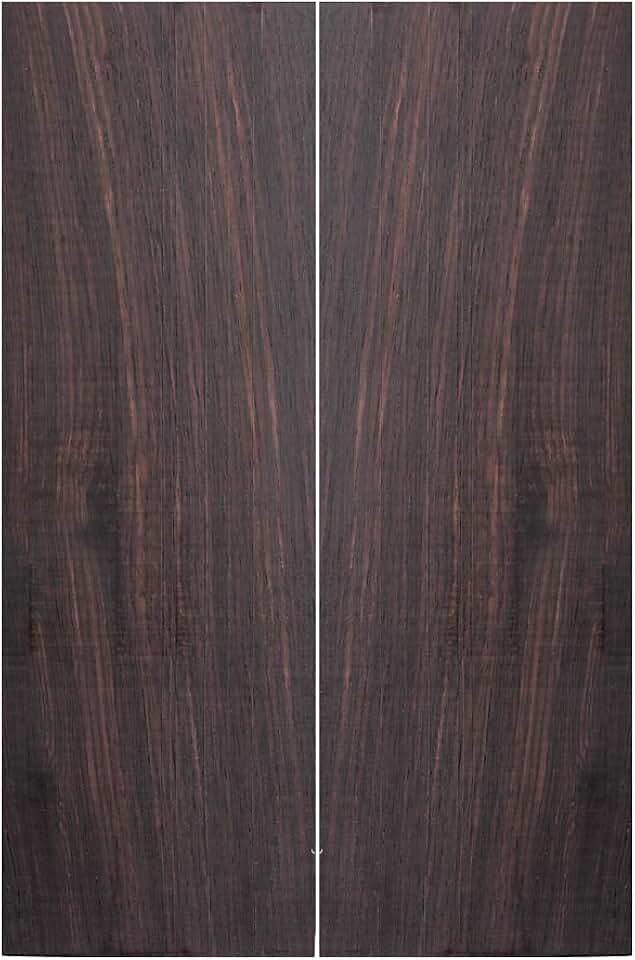
For African Blackwood knife scales, look for matched flat stock with stable grain, enough thickness after flattening, and no hidden cracks near pin locations. Bookmatched scales give both sides of the handle a balanced look.
Before glue-up, scratch the bonding surface lightly with fresh abrasive and clean the dust. Smooth polished blackwood can feel perfect, but it may offer weak mechanical grip for adhesive.
Instrument Billet Criteria
Instrument billets need straight grain, stable seasoning, consistent density, correct size, and no checks. A craft blank that looks dark and pretty may still fail as a clarinet, oboe, or bagpipe part if it has internal stress or poor orientation.
Buy instrument stock from suppliers who know tonewood requirements. The cost reflects sorting losses, drying time, defect rejection, and the risk carried before a usable bore is drilled.
Real Blackwood Identification
The best way to identify real African Blackwood is species verification: the listing should say Dalbergia melanoxylon. Visual clues include very dark heartwood, fine texture, heavy feel, pale sapwood when present, and subtle brown or purple undertones.
Red flags include vague names like black hardwood, African ebony, ebony-style craft wood, or blackwood board with no scientific name. Smell and sink tests can support identification, but neither replaces reliable supplier information.
Relevant Product Options
These African Blackwood options fit common small projects such as pens, knife handles, dowels, turning parts, and compact craft work.

Classic Blackwood Blank
- Dense African blackwood with a rich natural grain
- ideal for turning pens, handles, and small projects
- smooth hardwood surface for precise shaping
- sized for versatile lathe work
- great choice for fine woodworking
 Buy on Amazon

Blackwood Dowel Set
- Ten matching African blackwood dowel blanks
- compact size for pens, pins, and handle parts
- strong hardwood with a premium feel
- easy to cut, shape, and turn
- useful for DIY crafts and fine detail work
Buy on Amazon

Turner’s Blackwood Block
- Single square African blackwood blank for lathe projects
- dense hardwood with excellent turning qualities
- ideal for pens, handles, and small custom parts
- smooth grain for a refined finish
- ready for shaping and sanding
Buy on Amazon
Bookmatched Knife Scales
- Matched pair of African blackwood handle scales
- bookmatched grain creates a balanced look
- great for custom knife handles and small tools
- dense wood offers strength and durability
- compact size is ideal for precision projects
Buy on Amazon

Premium Knife Scales
- African blackwood scales for custom knife making
- dense material supports strong, long-lasting handles
- natural dark tone adds a refined finish
- sized for DIY shaping and fitting
- great for woodworking and blade projects
Buy on Amazon
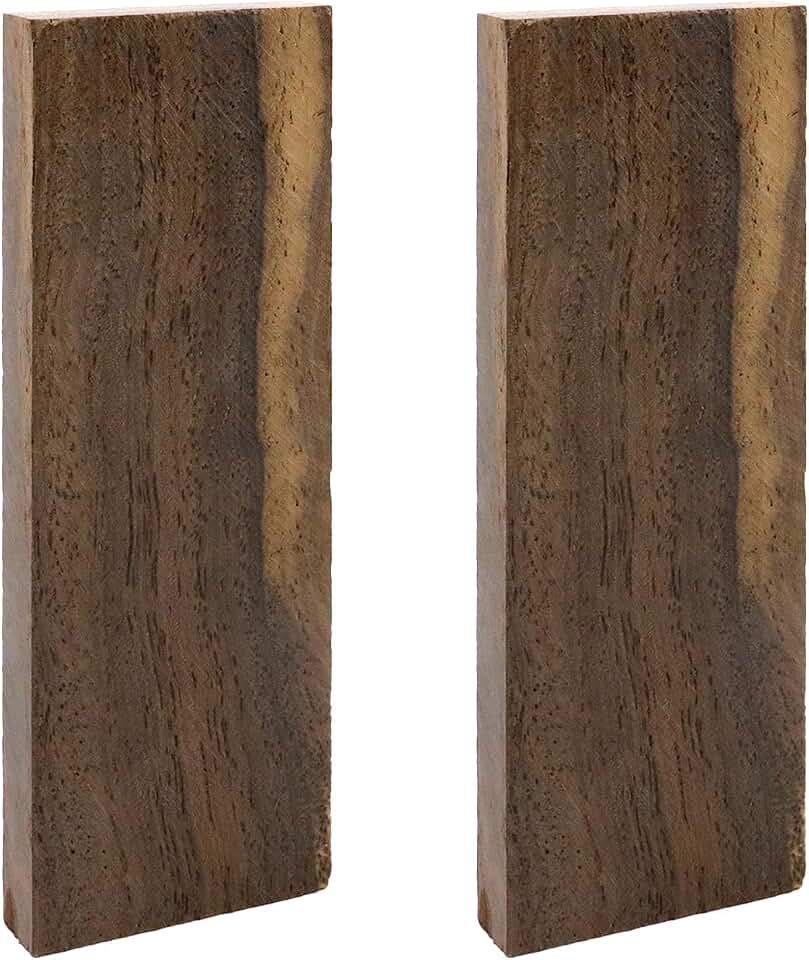
Exotic Blackwood Board
- Compact African blackwood board for precision projects
- dense exotic hardwood with a beautiful natural finish
- ideal for knife handles, tools, and small crafts
- easy to mill, carve, and sand
- great for woodworking and DIY builds
Buy on Amazon
Pros, Cons, and Best Uses
African Blackwood is best for small premium work where density, black color, fine texture, and polish justify the cost. It’s a poor match for wasteful layouts, rushed machining, undocumented sourcing, or projects that need wide, clear boards.
Key Advantages
The main advantages are durability, polish, stability, dark natural color, and crisp detail. It turns cleanly, wears well in handles, and gives inlay a deep black line without dye.
- Very dense and wear-resistant.
- Naturally dark without staining.
- Takes a high polish.
- Excellent for precision turning.
- Stable when dried correctly.
- Highly valued for woodwind instruments.
- Useful for luxury small objects and inlay.
Common Drawbacks
The main drawbacks are high cost, small available sizes, tool dulling, difficult glue behavior, dust irritation, and sustainability paperwork. Poorly dried pieces can also check during storage, turning, drilling, or aggressive sanding.
Beginners often waste money by buying pretty craft blocks for jobs that need instrument-grade or flat handle-grade stock. Match the blank to the project before you buy, not after it arrives.
When To Choose It
Choose African Blackwood when you need dark precision material for pens, knife handles, clarinets, oboes, bagpipes, inlay, luxury pulls, small turned tools, or decorative accents. It’s worth the premium when the piece will be touched, seen closely, or machined to fine detail.
For related dense decorative hardwoods, compare African Blackwood with wenge wood, bloodwood, or lignum vitae. Each one solves a different design problem in color, hardness, availability, and feel.
When To Avoid It
Avoid African Blackwood when you need wide lumber, low-cost practice stock, easy gluing, fast machining, or large flooring and furniture surfaces. It’s also a poor choice if the seller can’t confirm Dalbergia melanoxylon or provide reasonable sourcing details.
For most full-size furniture, use African Blackwood as trim or inlay and build the main structure from a more available hardwood. That approach respects the material, lowers waste, and still gives the deep black visual impact people search for under black African wood.
FAQs
Is African Blackwood The Same As Ebony?
No, African blackwood is not the same as ebony. It is a different hardwood species, although both are very dark, dense, and prized for fine work. African blackwood is usually harder and more stable, while ebony is often chosen for its deep black color.
Why Is African Blackwood So Expensive?
African blackwood is expensive because it is rare, slow-growing, and difficult to harvest. It also takes careful drying and machining due to its extreme density. High demand for musical instruments, carving, and specialty items keeps prices elevated.
Is African Blackwood Endangered?
Yes, African blackwood is considered at risk in parts of its range because overharvesting has reduced natural populations. It is managed carefully in many places, and some suppliers use certified or sustainably sourced wood. Check local regulations and sourcing before buying.
What Is African Blackwood Used For?
African blackwood is used for high-end musical instruments, especially clarinets, oboes, and bagpipes. It is also used for turnery, knife handles, small carvings, and decorative items. Its fine grain and durability make it ideal for detailed craftsmanship.
Is African Blackwood Good For Knife Handles?
Yes, African blackwood is excellent for knife handles. It is dense, stable, and resistant to wear, which makes it suitable for premium custom knives. Because it is very hard, it can be harder to shape, but the finished result is durable and attractive.
Affiliate Disclosure: Some links in this post are affiliate links. If you make a purchase through these links, we may earn a small commission at no extra cost to you. We only recommend products we genuinely believe in.