

Sycamore wood is a pale hardwood valued for furniture, turning, kitchenware, veneer, and the broad ray fleck seen in quarter-sawn boards. In North America, the name usually means American sycamore, Platanus occidentalis; in Britain and much of Europe, it commonly means sycamore maple, Acer pseudoplatanus.
Table of Contents
What Is Sycamore Wood?
Both main species sold as sycamore are true hardwoods because they come from broadleaf flowering trees. That botanical label doesn’t mean every sycamore board is harder than softwood or other hardwood lumber.
American Sycamore
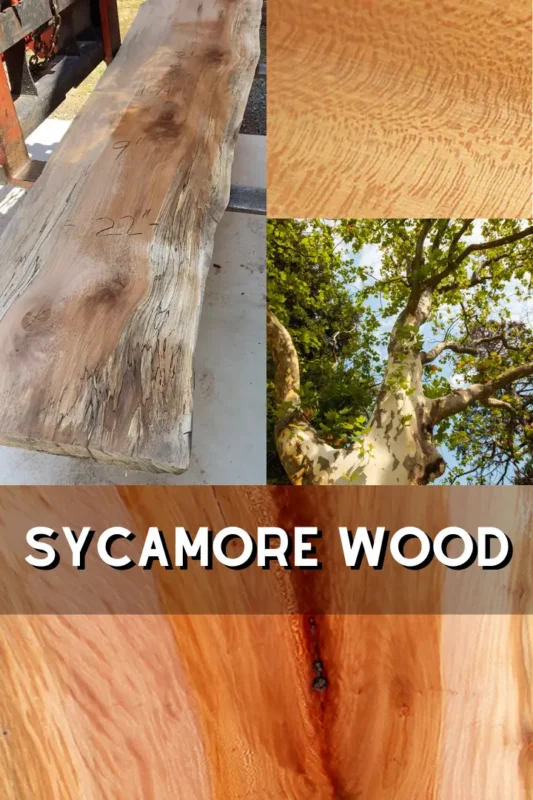
American sycamore, Platanus occidentalis, is a member of the plane-tree family and grows across eastern and central North America, including Michigan. It’s also called American plane, buttonwood, or buttonball, and its pale lumber often contains reddish-brown heartwood beside cream sapwood.
The tree can produce wide logs, but the lumber has interlocked grain and can move sharply while drying. Its signature feature is the broad medullary rays exposed by quarter-sawing, which create flakes that look almost silver when the board is tilted under a workshop light.
Sycamore Maple
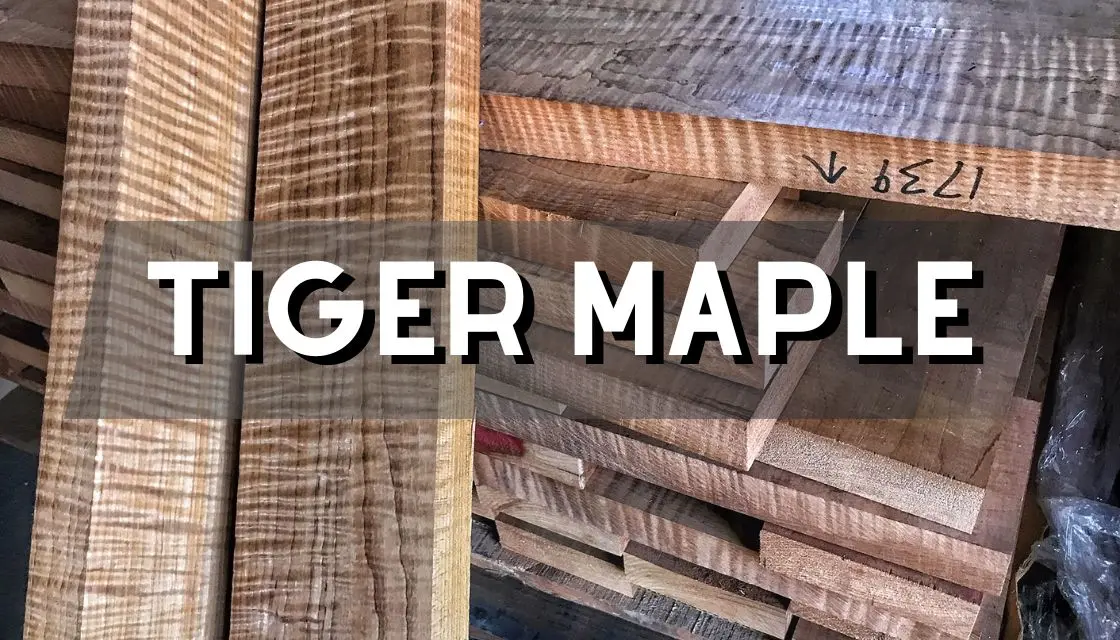
Sycamore maple, Acer pseudoplatanus, is a true maple native to parts of Europe and western Asia. It usually has cream or pale yellow wood with a fine texture, and selected boards can display curly, rippled, quilted, or fiddleback figure.
Regional naming causes many buying mistakes. A British seller using “sycamore” will often mean sycamore maple, while a US sawmill will usually mean American sycamore; the accepted botanical names can be checked through Plants of the World Online.
London plane and lacewood: London plane, Platanus × acerifolia, is a separate hybrid common along city streets. “American lacewood” may describe quarter-sawn American sycamore, but commercial lacewood can also mean unrelated Australian species such as Cardwellia sublimis, so the trade name alone isn’t enough.
Species comparison table: These averages identify practical differences rather than guarantees for every board. Moisture, growing conditions, grain direction, and defects all change performance.
| Property | American sycamore | Sycamore maple | London plane |
|---|---|---|---|
| Scientific name | Platanus occidentalis | Acer pseudoplatanus | Platanus × acerifolia |
| Plant family | Platanaceae | Sapindaceae | Platanaceae |
| Approximate Janka hardness | 770 lbf | 1,050 lbf | Varies by source and parentage |
| Approximate dried weight | 34 lb/ft³ | 38 lb/ft³ | Moderate |
| Typical appearance | Strong ray fleck when quarter-sawn | Pale, fine texture; curly figure possible | Plane-like rays and pale color |
| Natural decay resistance | Poor | Poor | Poor |
| Frequent uses | Furniture, butcher blocks, veneer, boxes | Furniture, instruments, turning, veneer | Interior joinery and salvaged urban lumber |
Appearance and Technical Properties

What does sycamore wood look like? American sycamore has pale sapwood, darker heartwood, and dramatic rays on radial faces, while sycamore maple looks more like fine-textured maple wood. Both feel smooth after sanding, yet reversing grain can leave fuzzy patches that become visible only after finish touches the surface.
Color, Grain, and Texture
American sycamore ranges from white and light tan to medium reddish brown. Its diffuse pores aren’t as visually open as oak pores, and the surface often feels fine to medium beneath a fingertip after sanding to 180 grit.
Sycamore maple is commonly cream, pale yellow, or nearly white. Clear oil adds a honey tone, while a water-based finish retains more of the wood’s cool pale color; sunlight and age will still add warmth.
Quarter-sawn versus flat-sawn: Quarter-sawing exposes American sycamore’s rays as broad lace-like flakes and gives the face better dimensional behavior. Flat-sawn stock shows cathedral grain, fewer obvious rays, higher visible face movement, and often a lower purchase cost.
Hardness, Density, and Strength
Sycamore hardness depends on the species. American sycamore averages about 770 lbf on the Janka scale, while sycamore maple is near 1,050 lbf; Janka values measure resistance to indentation, not bending strength, screw holding, or rot resistance.
American sycamore weighs roughly 34 lb/ft³ when dried, compared with about 38 lb/ft³ for sycamore maple. Representative bending strength is about 10,000 psi for American sycamore and 13,900 psi for sycamore maple, but knots, grain runout, and excess moisture can reduce usable strength.
The USDA Wood Handbook explains why moisture and grain orientation matter when comparing mechanical data. A board’s published species average should never replace structural grading or sound joinery.
Shrinkage and movement: American sycamore has representative green-to-oven-dry shrinkage of 5.0% radial, 8.4% tangential, and 14.1% volumetric. Sycamore maple is near 3.6% radial, 7.8% tangential, and 12.3% volumetric; normal seasonal movement is much smaller, but wide solid panels still need room across the grain.
Decay and weather resistance: Both woods rate poorly against fungal decay and repeated wetting. Paint and clear coatings slow moisture entry but don’t make sycamore waterproof, rot resistant, or suitable for soil contact.
What Is Sycamore Wood Used For?

Sycamore wood is good for indoor furniture, veneer, turning, carving, boxes, kitchenware, and decorative panels. American sycamore suits projects that benefit from ray fleck and easy machining, while figured sycamore maple is often chosen for fine furniture and musical instruments.
Furniture, Cabinetry, and Kitchenware
Furniture and cabinetry: Quarter-sawn American sycamore makes striking cabinet doors, drawer fronts, box lids, shelves, and table aprons. Use straight-grained stock for narrow chair parts, allow floating panels to move, and protect desktops because American sycamore dents sooner than oak or hard maple.
A dresser made from sycamore can look restrained from across a room, then flash lace-like rays as you walk past it. For visual balance, place heavily figured boards on the drawer fronts and use quieter flat-sawn material for sides, backs, and internal web frames.
Cutting boards and food contact: Sound, untreated, properly dried sycamore has a history in butcher blocks and food containers. Don’t use reclaimed boards with unknown paint or preservative history, and avoid film finishes on knife-contact surfaces unless the finish maker approves that exact use.
- Wash a sycamore cutting board with mild soap rather than soaking it.
- Dry both faces so one side doesn’t remain wet and cup.
- Discard boards with deep splits that trap food debris.
- Use clean lumber free from bark, decay, metal, and chemical treatment.
Turning, Veneer, Flooring, and Instruments
Turning and carving: Sycamore works for bowls, handles, spindles, bottle stoppers, and carved details. A sharp gouge leaves a clean, slightly lustrous cut, while a dull edge pulls at interlocked fibers and leaves a woolly surface around end grain.
Veneer and decorative panels: Thin veneer delivers dramatic ray or curly figure without paying for thick figured lumber. Raw veneer needs a flat substrate, suitable adhesive, even pressing, and a balanced back face; veneering one side of a thin panel invites bowing.
Flooring and high-wear surfaces: American sycamore can serve as residential flooring, but its 770 lbf hardness means heels, pet claws, and dropped cookware will mark it sooner than oak. Sycamore maple resists dents better, yet it remains softer than hard maple.
Musical instruments: Figured sycamore maple appears in violin backs and ribs, guitar components, and decorative instrument veneer. Luthier stock requires controlled grain orientation, seasoning, figure, and acoustic selection, so an attractive craft board isn’t automatically instrument grade.
Boxes and utility products: American sycamore has been used for crates, pallets, boxes, interior fittings, and inexpensive utility parts. These uses reflect its availability, moderate weight, and workability rather than resistance to weather.
Outdoor use and alternatives: Avoid untreated sycamore for decks, posts, raised beds, marine work, or uncovered garden furniture. White oak, black locust, cedar, cypress, or exterior-rated modified wood will usually give a longer service life.
Workshop Performance and Finishing
Sycamore is good for woodworking when it’s dry, acclimated, and cut with sharp tools. The main workshop problems are drying distortion, planer tear-out, compressed fastener holes, and blotchy color on figured grain.
Drying and Acclimation
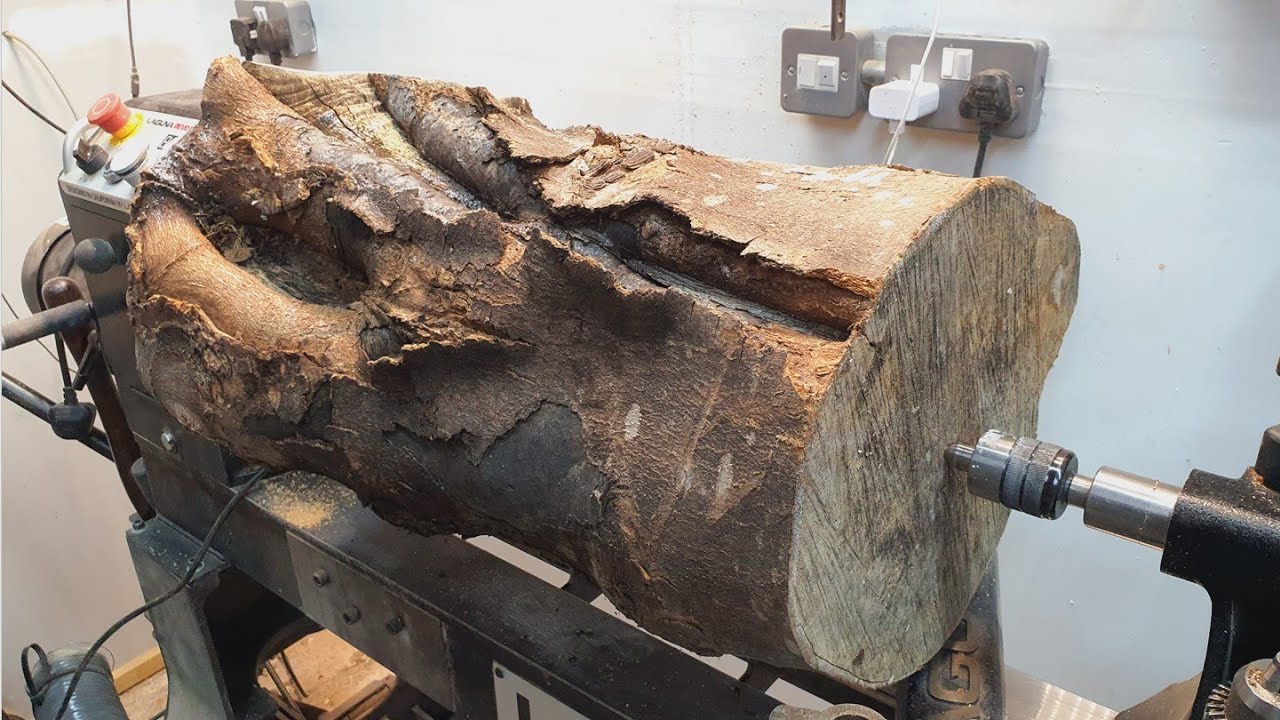
Fresh sycamore can bow, cup, twist, check, or pick up dark sticker shadows. Seal fresh end grain, stack boards on dry stickers of equal thickness, keep sticker rows vertically aligned, and add weight above the pile to reduce uneven drying stress.
Check indoor stock with a calibrated moisture meter and let it acclimate in the shop before final sizing. Moisture targets vary with local indoor conditions, so matching the intended room matters more than following one universal percentage.
Lessons learned in practice: Don’t take rough sycamore straight to final thickness. Joint one face lightly, plane the other, let the boards rest overnight, then repeat; a board that rocks on the bench after the first pass still holds internal stress.
Milling, Gluing, Sanding, and Finishing
Sawing and milling: Straight-grained boards cut cleanly, but interlocked figure may tear under a jointer or planer. Use sharp knives, light passes, a helical cutterhead where available, and reverse the feed direction when the grain changes; finish stubborn patches with a card scraper.
Before ripping narrow parts, inspect the edge for grain runout. A strip whose fibers leave the edge at a steep angle may snap with a short, fibrous break, so move that piece to a decorative panel rather than a loaded chair rail.
Gluing and fastening: Freshly milled faces normally glue well. Remove burnishing, distribute clamps across wide panels, pre-drill near ends, and stop driving screws once the head seats because softer American sycamore compresses around hardware.
Sanding figured grain: Remove tear-out before progressing through 120, 150, and 180 grit. Shine a low raking light across the pale surface; scratches appear as dull hooks, while torn ray tissue looks fuzzy and darker from one viewing direction.
Choosing a finish: Water-based polyurethane keeps sycamore pale, while oil-varnish blends create a warmer amber cast. Figured areas may absorb stain unevenly, so test dye, gel stain, wood conditioner, or a thin dewaxed-shellac washcoat on an offcut from the same board.
Sycamore vs Other Hardwoods
American sycamore is softer than oak, hard maple, beech, and black walnut, while sycamore maple sits close to walnut in Janka hardness. Choose sycamore for its pale color and figure, not for maximum wear or outdoor durability.
Sycamore vs Maple and Oak
Sycamore vs maple: American sycamore isn’t a maple and dents more easily than hard maple. Sycamore maple belongs to the maple genus, while quarter-sawn American sycamore offers a broader, more dramatic ray pattern than most pale maple boards.
Sycamore vs oak: Red and white oak resist indentation better, and white oak has far better natural decay resistance. Oak’s open ring pores feel more textured after finishing; sycamore’s diffuse pores produce a smoother, quieter background behind its ray fleck.
Sycamore vs Walnut and Beech
Sycamore vs walnut: American sycamore is paler and softer than black walnut. Sycamore maple and walnut have similar published Janka values, but walnut is selected for dark heartwood while sycamore is chosen for a light surface or reflective figure.
Sycamore vs beech: Beech is harder and better suited to wear-prone utility parts than American sycamore. Both species can move noticeably with humidity, so neither removes the need for floating panels, elongated screw holes, or other movement-aware construction; see the full beech wood guide.
Hardness comparison table: These Janka figures compare indentation resistance under standard test conditions. For more species, consult the wood hardness scale.
| Wood species | Approximate Janka hardness | Practical wear level |
|---|---|---|
| American sycamore | 770 lbf | Dents relatively easily |
| Black cherry | 950 lbf | Moderate |
| Black walnut | 1,010 lbf | Moderate |
| Sycamore maple | 1,050 lbf | Moderate |
| Northern red oak | 1,290 lbf | Good |
| White oak | 1,360 lbf | Good |
| Hard maple | 1,450 lbf | High |
How to Buy Sycamore Lumber
Buy sycamore lumber by confirming the botanical species, sawing orientation, moisture condition, actual dimensions, and delivered cost. A low listing price can become expensive once waste, milling, and shipping are included.
Species, Orientation, Moisture, and Grade
Confirm the species: Ask whether the wood is Platanus occidentalis, Acer pseudoplatanus, London plane, or another regional “sycamore.” This single question prevents incorrect assumptions about hardness, color, figure, and tool response.
Choose sawing orientation: Select quarter-sawn American sycamore for ray fleck, cabinet panels, and improved face stability. Flat-sawn stock works for broad grain patterns and less prominent components, often with better availability and log recovery.
Moisture, grade, and dimensions: Ask whether boards are green, air-dried, or kiln-dried, then verify them with your own meter. Check whether dimensions are rough, surfaced-two-sides, nominal, or final, and request the minimum clear cutting size rather than relying on a broad grade label.
Inspect for cup, bow, twist, end checks, sticker stain, knots, and abrupt heartwood color. Online project boards often cost more per board foot because selection, surfacing, packaging, and short-quantity handling are built into the sale.
Pricing and board-foot formula: Board feet equal thickness in inches × width in inches × length in feet ÷ 12. A 1-inch × 8-inch × 6-foot board contains 4 board feet before surfacing and defect removal.
Quarter-Sawn Boards, Turning Stock, and Veneer
Quarter-sawn boards and strips: Small prepared boards suit boxes, drawer fronts, trim, and grain-orientation tests. Compare actual dimensions, surfaced condition, ray consistency, total board footage, and shipping before choosing a pack.
These quarter-sawn sycamore options cover compact boards, narrow strips, long stock, and wider craft pieces.

Quarter Sawn Sycamore Boards
- Quarter sawn sycamore grain
- Two ready-to-use boards
- Three-quarter by four by 24 inch size
- Ideal for furniture details
- Great for fine woodworking
 Buy on Amazon

Slim Sycamore Lumber Strips
- Quarter sawn sycamore grain
- Four versatile lumber strips
- Three-quarter by two by 36 inch size
- Handy for trim and accents
- Suitable for detailed projects
Buy on Amazon
Long Quarter Sawn Sycamore Boards
- Quarter sawn sycamore grain
- Two long project boards
- Three-quarter by four by 48 inch size
- Excellent for furniture builds
- Great for custom millwork
Buy on Amazon
Compact Sycamore Project Boards
- Quarter sawn sycamore grain
- Two compact hardwood boards
- Three-quarter by four by 18 inch size
- Easy to use for small builds
- Ideal for decorative accents
Buy on Amazon

Wide Sycamore Craft Boards
- Quarter sawn sycamore grain
- Two wide hardwood boards
- Three-quarter by six by 12 inch size
- Great for small woodworking
- Useful for custom craft pieces
Buy on Amazon
Turning stock: Inspect a blank for end checks, bark inclusions, and moisture before mounting it. Green stock cuts with cool, wet ribbons and can distort after turning; dried stock feels harder under the gouge but supports more predictable final dimensions.
A solid sycamore blank provides enough material to test tool response, sanding, and finish color.
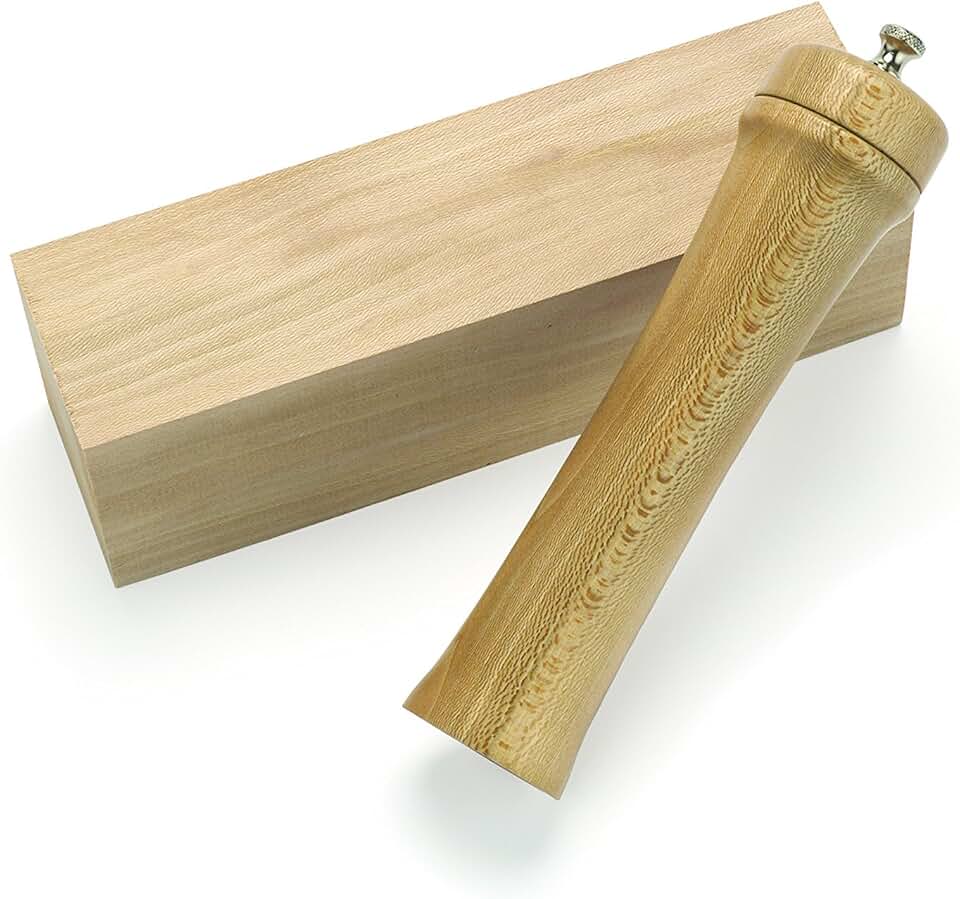
Solid Sycamore Turning Blank
- Solid sycamore wood blank
- Three by three by 12 inch size
- Generous stock for shaping
- Great for turning projects
- Suitable for custom woodworking
Buy on Amazon
Figured sycamore veneer: Check the species, thickness, dimensions, backing, and sheet sequence. Raw veneer near 1/42 inch is fragile, and consecutive leaves are more useful than unrelated sheets when creating bookmatched doors or panels.
These figured veneer sheets offer curly and English sycamore appearances for decorative faces.

Curly Maple Sycamore Veneer
- Curly tiger figure adds character
- Raw veneer without backer
- Four by 22 inch sheet
- Thin one forty-second inch profile
- Ideal for decorative surfaces
Buy on Amazon

English Figured Sycamore Veneer
- Figured English sycamore appearance
- Raw veneer without backing
- 13 by 36 inch sheet
- Thin one forty-second inch profile
- Enhances furniture and panels
Buy on Amazon
Safety and Responsible Sourcing
Treat sycamore dust as a respiratory and eye irritant, and inspect every salvaged board or turning blank before machining. Responsible sourcing also means checking harvest records, transport distance, drying losses, and hidden metal in urban logs.
Wood Dust and Tool Safety
Wood dust and PPE: Use effective extraction, a properly fitted particulate respirator, eye protection, and hearing protection while sawing, routing, sanding, or turning. OSHA identifies wood dust exposure with respiratory effects and other workplace hazards in its wood dust guidance.
Stop work if you develop wheezing, a persistent rash, or severe eye irritation, and seek medical advice. Never burn painted, treated, finished, or unidentified boards indoors because coatings and preservatives can release hazardous smoke.
Tool and blank safety: Inspect turning stock for cracks before mounting, rotate it by hand to confirm clearance, and keep the tool rest close. Reversing grain can catch a gouge abruptly, while a hidden check may let part of a spinning blank break free.
Sustainable and Salvaged Sycamore
Sustainable sycamore sourcing: American sycamore is widespread across much of eastern and central North America, but responsible harvest still depends on forest management and chain of custody. Look for documented local lumber or credible certification such as the Forest Stewardship Council.
Sycamore maple is native to parts of Europe and western Asia and may behave invasively in some introduced locations. That status is regional, so locally removed trees can be useful lumber without supporting fresh harvest from sensitive native forests.
Urban and salvaged sycamore: Large city trees can yield broad slabs with striking color and ray figure. Nails, fence wire, screws, concrete, internal staining, and decay pockets are common risks, so scan the log with a metal detector before it reaches a sawmill blade.
Salvaged slabs also carry more drying uncertainty than graded retail lumber. Cut away soft decay, seal fresh ends, document where metal was found, and leave enough thickness for later flattening rather than sizing the slab close to its final dimension while green.
FAQs
What Is Sycamore Wood Used For?
Sycamore wood is commonly used for furniture, cabinetry, flooring, butcher blocks, veneer, and decorative interior projects. Its pale color and distinctive grain make it popular for turned items, boxes, and musical instruments. Because it machines and finishes well, it suits many workshop projects. It is usually chosen for indoor use rather than exposed structures.
Is Sycamore Wood Good For Furniture?
Sycamore wood can be a good furniture wood, especially for indoor tables, cabinets, chairs, and accent pieces. It has an attractive light appearance that can show figured or interlocked grain. The wood works well with sharp tools, although its grain may tear out during planing. Seal and finish it properly for a smooth, durable surface.
Is Sycamore Wood Hard Or Soft?
Sycamore is a hardwood, but it is moderately hard rather than extremely dense or tough. It is harder than many softwoods, such as pine, while remaining easier to work than very hard species like hickory. Its hardness makes it suitable for everyday furniture and cabinetry. Dry boards carefully because the wood can move or warp as moisture changes.
Can Sycamore Wood Be Used Outdoors?
Sycamore wood is not a good choice for unprotected outdoor projects because it has low natural resistance to decay and insects. Rain, ground contact, and repeated moisture can cause it to deteriorate quickly. Use a durable exterior species instead, such as cedar, white oak, or teak. If used outside, keep it covered, sealed, and away from soil.
Is Sycamore Maple The Same As American Sycamore?
No, sycamore maple and American sycamore are different tree species, despite their similar common names. Sycamore maple usually refers to Acer pseudoplatanus, a maple native to Europe and western Asia. American sycamore is Platanus occidentalis, a plane tree native to North America. Their wood, leaves, and growing characteristics differ.
Affiliate Disclosure: Some links in this post are affiliate links. If you make a purchase through these links, we may earn a small commission at no extra cost to you. We only recommend products we genuinely believe in.