

Eastern white pine (Pinus strobus) is a large evergreen native to eastern North America, identified by five soft needles per bundle. Young trees may grow 2 feet or more each year on suitable sites, eventually reaching 50–80 feet in landscapes and more than 100 feet in productive forests.
This guide explains identification, spacing, care, common diseases, privacy-screen performance, and the pale softwood that makes white pine one of the better-known light-colored woods.
Table of Contents
Eastern White Pine Quick Facts
Pinus strobus is a long-lived conifer suited to cool or moderate climates, acidic soil, and sites with ample overhead room. Its soft blue-green foliage, quick early growth, and native wildlife value are balanced by low salt tolerance and a mature crown up to 40 feet wide.
| Trait | Eastern white pine facts |
|---|---|
| Scientific name | Pinus strobus L. |
| Family | Pinaceae |
| Plant type | Evergreen conifer |
| Native range | Eastern Canada, Great Lakes, northeastern United States, and Appalachian Mountains |
| Hardiness | Commonly USDA Zones 3–8 |
| Landscape size | About 50–80 feet tall and 20–40 feet wide |
| Forest size | Often 100–150 feet or more on productive sites |
| Growth rate | Up to 2 feet or more annually while young under favorable conditions |
| Lifespan | Frequently 200 years or longer |
| Light | Full sun to partial shade |
| Preferred soil | Acidic, moist, fertile, and well drained |
| Needles | Five per bundle, soft, flexible, and blue-green |
| Cones | Slender, hanging cones about 4–8 inches long |
| Salt tolerance | Low |
Name and Classification
The accepted scientific name is Pinus strobus, while common names include eastern white pine, northern white pine, and white pine. It belongs to Pinaceae and is a five-needle pine rather than a spruce, fir, or two-needle hard pine.
Size and Growth Rate
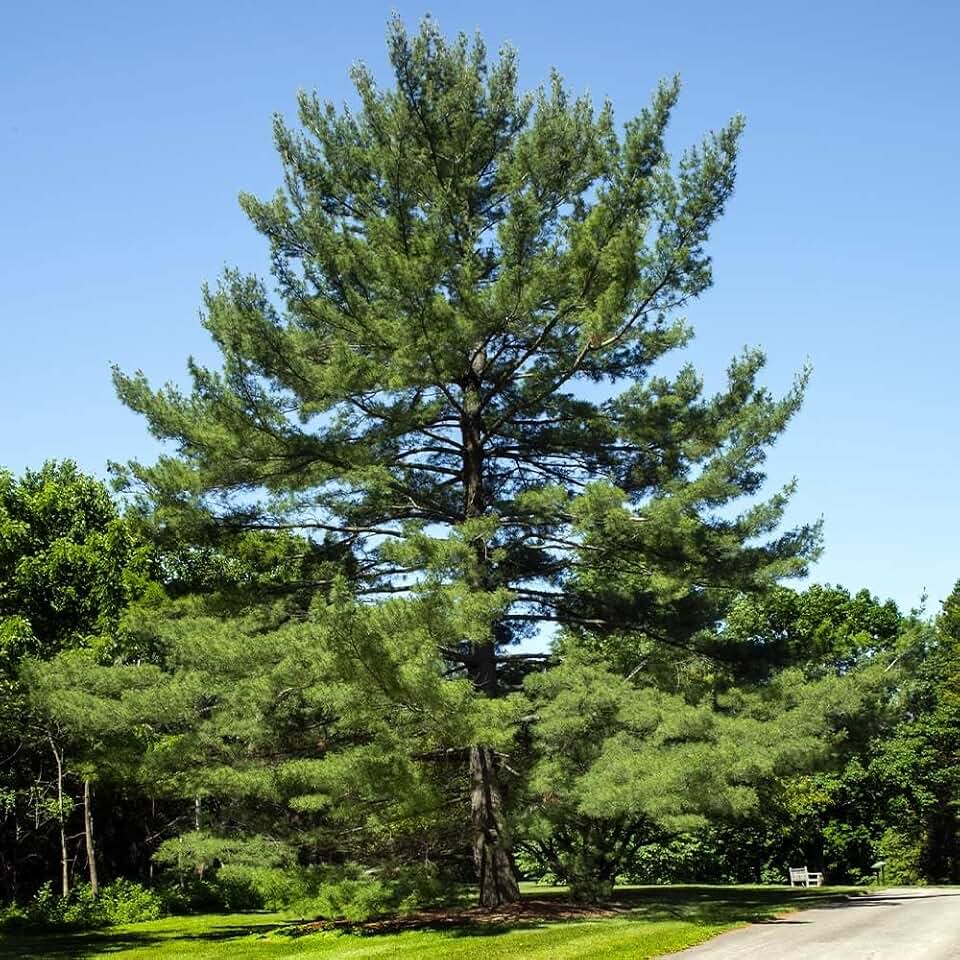
A reasonable landscape expectation is 50–80 feet tall with a 20–40-foot spread. Forest trees compete for light and often form straight trunks exceeding 100 feet, while open-grown trees spread farther and develop broad horizontal limbs.
The eastern white pine growth rate may exceed 24 inches yearly during vigorous youth. That figure isn’t guaranteed: drought, compacted soil, high pH, deer browsing, transplant shock, and leader damage can reduce annual extension to a few inches.
Lifespan and Hardiness
The eastern white pine lifespan often exceeds 200 years, and protected trees can persist for several centuries. Most references place the eastern white pine hardiness zone range at USDA Zones 3–8, though trees near the warm limit need suitable moisture and protection from reflected heat.
Key Botanical Traits
Each tree bears separate pollen and seed cones and relies on wind pollination. Its narrow seed cones release winged seeds, while evergreen foliage stays present year-round despite individual needles aging, yellowing, and falling after several growing seasons.
Eastern White Pine Identification

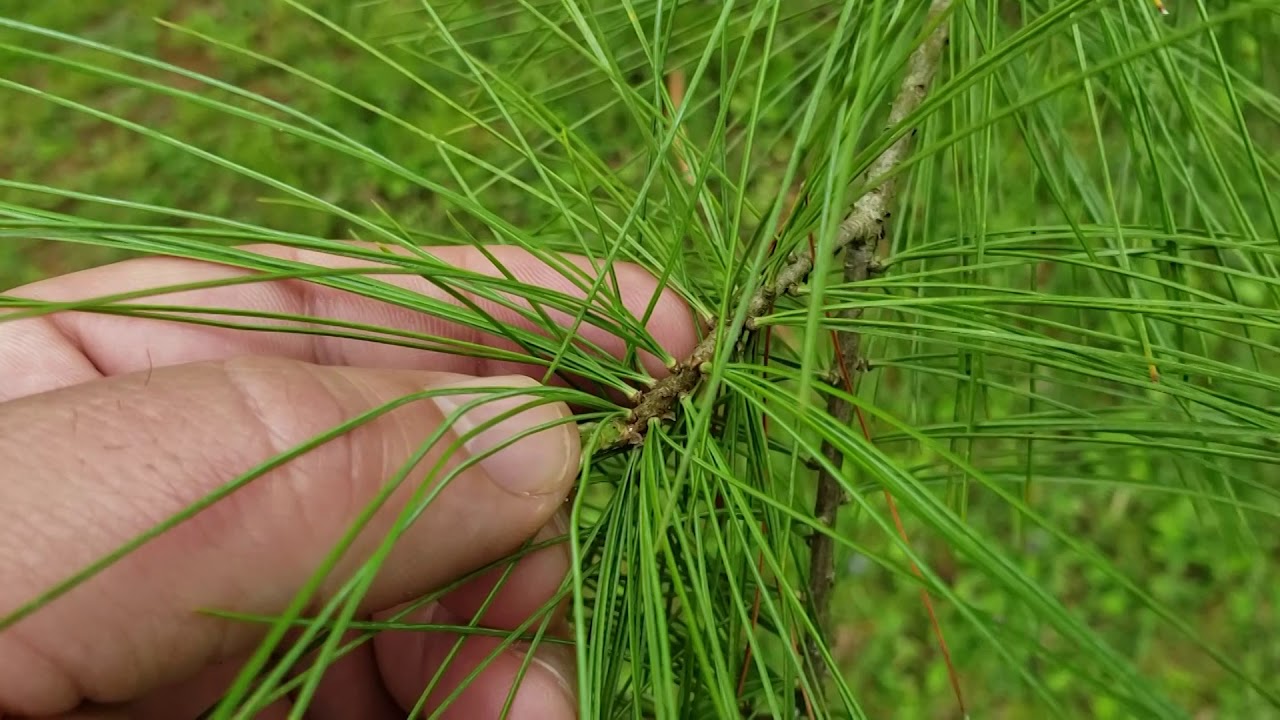
The quickest way to identify eastern white pine is to count five needles in each fascicle, or bundle. The needles feel soft and flexible between the fingers, unlike the stiff points of spruce or the firmer paired needles of red pine.
Five-Needle Identification
Gather one intact bundle at its papery base and separate it gently. A true eastern white pine normally reveals five slender needles, commonly 2.5–5 inches long; the five letters in “white” provide an easy field mnemonic.
Fresh needles have a cool, slightly waxy feel and bend before breaking. Their blue-green or gray-green color gives the crown a softer appearance than the darker, rigid foliage found on many yellow pine species.
Cones, Bark, and Buds
Eastern white pine cones are long and narrow, usually 4–8 inches, slightly curved, and suspended from branches. Their thin scales lack the stout prickles seen on some pines, and dry mature cones feel light and papery in the hand.
Young bark appears smooth and gray-green. Mature bark becomes dark and furrowed, with broad irregular ridges, while narrow reddish-brown buds form at shoot tips. Bark alone can mislead on saplings, so confirm the needle count.
Young and Mature Form
Young trees form a regular pyramidal outline with a clear central leader. Open-grown mature trees become irregular and picturesque, while forest-grown trees lose shaded lower limbs and retain a narrower crown above a long, clean trunk.
Annual Branch Whorls
A young white pine normally produces one branch whorl each year. Counting visible whorls and adding several years for the seedling stage gives a rough age estimate, but browsing, secondary shoots, broken leaders, and hidden basal whorls reduce accuracy.
White Pine Comparisons
| Species | Needles | Helpful distinction |
|---|---|---|
| Eastern white pine | Five soft needles per bundle | Long, slender hanging cones |
| Red pine | Two long, firm needles per bundle | Reddish plated bark and smaller cones |
| Scotch pine | Two needles per bundle | Orange upper bark on mature trees |
| Western white pine | Five needles per bundle | Western range plus differences in cones and buds |
| White spruce | Single stiff needles | Needles attach to woody pegs rather than bundles |
Red pine has paired, stiff needles that often snap when bent. Scotch pine also carries paired needles, while white spruce has sharp single needles and rough twigs studded with woody pegs.
Range, Growth, and Ideal Conditions
Eastern white pine grows best in cool, humid regions on acidic, moist, well-drained soil. Full sun produces the densest crown, but seedlings tolerate partial shade better than many other pines.
Native Range and Habitat
The eastern white pine native range extends from southeastern Canada through New England and the Great Lakes, then south through higher Appalachian sites. The USDA Forest Service silvics account describes its distribution, forest associates, soils, and regeneration patterns.
Natural stands occur on cool slopes, sandy or loamy uplands, well-drained stream terraces, and former fields entering forest succession. Common associates include eastern hemlock, red maple, sugar maple, yellow birch, balsam fir, red spruce, and red oak.
Landscape Versus Forest Size
Open-grown trees put more energy into lateral branches and can become 20–40 feet wide. Forest competition pushes growth upward, producing taller trunks and smaller upper crowns; copying forest spacing in a yard creates crowding without planned thinning.
Conditional Growth Rate
Two feet of annual growth requires active roots, adequate light, reliable moisture, and an intact leader. A newly transplanted six-foot tree may show little shoot extension while rebuilding roots, whereas a smaller established seedling can overtake it after several seasons.
Measure the newest leader from the prior whorl to the current bud to track annual extension. Repeated short leaders often signal drought, root restriction, alkaline soil, deep planting, browsing, or weevil damage rather than naturally slow genetics.
Light and Soil
Full sun supports a dense, balanced crown, while partial shade remains acceptable for young trees. Deep shade causes thin growth, wider gaps between branch whorls, and one-sided crowns leaning toward available light.
Preferred ground is acidic sandy loam or loam with usable depth. Strongly alkaline soil can cause pale foliage and weak growth because some nutrients become less available; repeated fertilizer applications won’t repair an unsuitable pH or compacted subsoil.
Moisture and Drainage
The root zone should stay evenly moist during establishment without remaining saturated. After heavy rain, water that sits around the planting hole for more than a day signals poor drainage and a raised planting area or different species may be safer.
Climate and Exposure
Cool, humid climates suit this pine better than hot sites surrounded by paving. Reflected heat, ozone, drought, and road spray cause cumulative stress, which may appear as short growth, sparse needles, and progressive branch dieback rather than one sudden failure.
Planting, Spacing, and Care
Plant eastern white pine with the root flare visible, provide enough room for its mature crown, and water according to soil moisture rather than a fixed calendar. Most early failures trace back to deep planting, dried roots, standing water, or overlooked deer pressure.
Site Selection
Choose a position away from overhead wires, septic components, salted roads, narrow foundation beds, and confined pavement openings. Plan for a 50–80-foot tree, not the compact nursery plant that fits easily in a car or wheelbarrow.
- Check that the location has 20–40 feet of potential crown room.
- Watch drainage during and after heavy rain.
- Test soil pH rather than inferring it from nearby plants.
- Look for salt spray, reflected heat, and prevailing winter wind.
- Account for nearby trees that will compete for light and moisture.
- Confirm that establishment watering can reach the full root ball.
Root Flare Planting

Dig the hole about two to three times the root-ball width but no deeper than the root system. Set the first major roots at or slightly above grade, leaving the trunk flare exposed after settling.
Container-grown roots may circle along the pot wall and base. Straighten or cut severe circles before planting; leaving them intact can produce girdling roots that restrict the trunk years after the tree appears established.
For balled-and-burlapped stock, stabilize the ball before removing accessible rope, synthetic burlap, and the upper wire basket. Backfill mainly with native soil, then water slowly until the soil feels evenly damp rather than soupy.
Spacing by Planting Goal
| Planting goal | Starting spacing | Long-term trade-off |
|---|---|---|
| Specimen tree | Often 20–30 feet or more from large structures and mature trees | Room supports a broad, balanced crown |
| Single-row screen | About 12–20 feet | Closer planting closes sooner but increases competition |
| Staggered screen | Rows offset with spacing based on mature widths | Better visual coverage and less direct crowding |
| Windbreak | Set through a site-specific conservation plan | Row count, wind direction, and companion species change the design |
| Forestry planting | Often denser than landscape spacing | Requires later thinning to meet timber goals |
A common beginner mistake is placing young pines five or six feet apart for instant privacy. The row closes quickly, then shaded lower limbs die, crowns thin, and roots compete for the same narrow strip of soil.
Watering and Mulching
Water thoroughly at planting, then test the soil several inches deep before watering again. Deep irrigation that moistens the root ball supports outward root growth; frequent surface sprinkling leaves lower roots dry and encourages shallow rooting.
Spread 2–3 inches of organic mulch across the root zone while keeping it away from the trunk. A wet mulch mound pressed against bark feels cool and spongy, but that mulch volcano hides the flare and encourages bark decay or girdling roots.
Fertilizing and Pruning
Don’t fertilize automatically at planting. A soil test and visible growth response should guide treatment, since excess nitrogen can produce soft, elongated shoots without correcting drainage, root injury, high pH, or limited soil volume.
Retain one central leader and remove dead, broken, crossing, or infected branches. If the leader breaks, tie one healthy lateral upright and shorten its competitors; leader retraining restores form more successfully than topping the crown.
Spring candles can be shortened before their needles fully expand when modest density control is needed. Avoid cutting far into bare old wood because white pine may show poor bud regeneration where no live needles remain.
Deer and Rodent Protection
Deer browse tender leaders and rub young trunks, creating forks or stripped bark. Use fencing tall enough for local deer pressure, then inspect ties and guards so they don’t become hidden constrictions as the trunk expands.
Rodents may chew bark near the snow line or root collar during winter. Keep mulch from touching the trunk and check guards in spring for gnawing damage, trapped moisture, and nests.
Growing From Seed
Collect cones as they begin changing color but before their scales open fully. Dry them in a ventilated, protected place, extract the winged seeds, and provide roughly 30–60 days of moist cold stratification based on the seed supplier’s protocol.
Keep the stratification medium damp rather than dripping wet. Sow shallowly in clean, free-draining medium and provide bright light after germination; saturated mix and stale air encourage damping-off, which can collapse seedlings at the soil line overnight.
Eastern White Pine Seeds
- Includes 50 seeds for planting
- Pinus strobus evergreen species
- Grows into a tall landscape tree
- Useful for privacy and windbreak planting
- Cold-hardy choice for many gardens
 Buy on Amazon
Choosing Nursery Stock
Small seedlings cost less and frequently establish faster than large trees because less root mass was lost or confined. Bare-root stock works well for quantity planting but must remain cool and moist from shipment through planting.
Inspect container plants for roots circling the pot, buried trunk flares, competing leaders, browning tips, and trunk wounds. Compare landed cost, including freight, mulch, irrigation supplies, deer protection, planting labor, and likely replacement losses—not the listing price alone.
Eastern White Pine Tree
- Live eastern white pine tree
- Two to three foot nursery size
- Evergreen foliage for year-round interest
- Ideal for privacy screens and windbreaks
- Suited to landscape planting
Buy on Amazon
Practical Notes From Real-World Use
Lift a nursery pot before buying when local rules permit. A sour smell, slimy roots, and water sloshing around the base suggest poor root aeration, while a hard spiral of woody roots indicates the tree remained confined too long.
Smaller white pines often look sparse during their first season, yet their leaders can lengthen sharply after roots spread into surrounding soil. The best early indicator isn’t height alone; look for firm green buds, flexible twigs, and new roots extending beyond the original ball.
Common Eastern White Pine Problems
Eastern white pine browning can result from normal needle shedding, drought, salt, winter injury, root damage, insects, or fungal disease. Diagnose the pattern and location before treating: interior yellow needles mean something different from a hooked leader or dead branch tips.
Normal Needle Drop
Older interior needles commonly turn yellow or golden in autumn and drop while current outer foliage remains green. This seasonal needle drop is normal when it occurs evenly across the crown without dead shoots, cankers, resin, or wilted leaders.
White Pine Weevil
White pine weevil (Pissodes strobi) larvae feed inside the terminal shoot, causing a drooping, hooked, or brown leader. The tree usually survives, but multiple replacement leaders create a forked top and poorer structural or timber form.
Cut the infested leader below the damaged tissue before adults emerge, following regional timing guidance. Select one vigorous lateral, train it upright, and shorten competitors; the University of Minnesota Extension provides identification and management details.
White Pine Blister Rust
White pine blister rust, caused by Cronartium ribicola, can produce swollen cankers, orange spores, branch flagging, and crown death after infection reaches the trunk. Branch cankers may be pruned before they enter the main stem, leaving the branch collar intact.
The fungus uses alternate hosts that include currants and gooseberries in the genus Ribes, plus some Castilleja and Pedicularis species. Removing every nearby Ribes plant isn’t a universal fix; regional disease pressure, host resistance, and distance affect risk.
Adelgids and Root Rot
Pine bark adelgid (Pineus strobi) produces white, woolly patches on bark and branches. The growth can look like clumps of cotton caught in crevices, but light populations are often more alarming than lethal on otherwise vigorous trees.
Root-decay organisms such as Armillaria gain opportunities in saturated, compacted, or injured root systems. Mushrooms near the base, thinning foliage, loose bark, basal decay, or new leaning indicate possible instability and call for inspection by a qualified arborist.
Needle Disease Complexes
Several fungi and weather stresses can contribute to recurring white pine needle browning. Disease is more likely when current needles, shoot tips, or whole branches are affected, especially when the pattern returns each spring or summer.
Don’t spray based on color alone. Submit fresh symptomatic foliage and branch tissue to a regional diagnostic laboratory when browning repeats, because treatment timing and the value of treatment depend on the identified organism.
Winter and Salt Injury
Winter burn often appears on exposed crown surfaces after frozen soil prevents roots from replacing water lost through needles. Road-salt damage tends to be strongest on the road-facing side, with browning concentrated low in the spray zone.
Water before the ground freezes if autumn is dry, maintain mulch, and place new trees outside heavy salt drift. Rinsing salt from foliage and soil during suitable thawed conditions may reduce residue, but better placement offers the most reliable long-term protection.
Storm and Leader Damage
Wet snow and ice can bend long limbs or split competing tops. White pine wood is relatively soft, so remove damaged hanging branches safely and restore one dominant leader on young trees rather than shearing the entire crown flat.
| Visible symptom | Likely explanation | Next step |
|---|---|---|
| Older inner needles yellow in autumn | Normal needle shedding | Monitor; outer growth should remain green |
| Terminal shoot droops and browns | White pine weevil | Remove infested leader and train a replacement |
| Orange spores or swollen branch canker | Blister rust | Prune branch infection before it reaches the trunk |
| One roadside crown face browns | Salt spray or winter exposure | Review exposure and soil salt risk |
| Current needles or shoot tips die | Disease, drought, or root stress | Inspect roots and submit a diagnostic sample |
| Mushrooms and movement at trunk base | Root or butt decay | Restrict access and request a structural assessment |
Landscape Benefits and Limitations
Eastern white pine suits large properties with acidic, drained soil and room for a broad evergreen crown. It’s a poor fit for small paved sites, salty roadsides, wet ground, or places needing a permanently dense hedge at ground level.
Advantages and Disadvantages
| Advantages | Disadvantages |
|---|---|
| Fast early growth on a suitable site | Too large for many residential lots |
| Soft blue-green evergreen foliage | Low salt and urban-stress tolerance |
| Native food and cover for wildlife | Lower branches may thin with age |
| Partial-shade tolerance while young | Vulnerable to weevil and blister rust |
| Long potential lifespan | Soft limbs may break in snow or ice |
| Useful pale, workable wood | Drops needles, cones, pollen, and small branches |
The soft foliage is pleasant to brush past, but mature trees produce a steady layer of needles and lightweight cones. Place them where natural litter can remain as mulch rather than over pools, gutters, or highly maintained paving.
Roots and Structural Risks
Eastern white pine roots spread widely and often occupy shallow, oxygen-rich soil. They aren’t classed as aggressively invasive, but large root systems can compete with lawns, lift weak paving edges, and conflict with infrastructure when the trunk is placed too close.
Shallow bedrock, saturated soil, severed roots, and restricted planting pits increase windthrow risk. Keep construction traffic away from the root zone; one pass by heavy equipment can compress wet soil and reduce root-zone oxygen long after tire marks disappear.
Specimen Tree Suitability
An open-grown eastern white pine makes a graceful specimen on a large lawn, woodland edge, or naturalized property. Give the tree enough room to keep long horizontal limbs without repeated clearance pruning over roofs, drives, and walkways.
Privacy Screens and Windbreaks
White pine can create quick evergreen screening, but a single row may lose density near the ground as branches become shaded. A staggered mixed screen survives pest outbreaks and storm gaps better than a tightly packed white-pine monoculture.
Useful companions depend on regional conditions and may include white spruce, red spruce, American holly, and native deciduous shrubs. Match every species to soil moisture, mature width, light, and local disease pressure rather than treating plant diversity as random mixing.
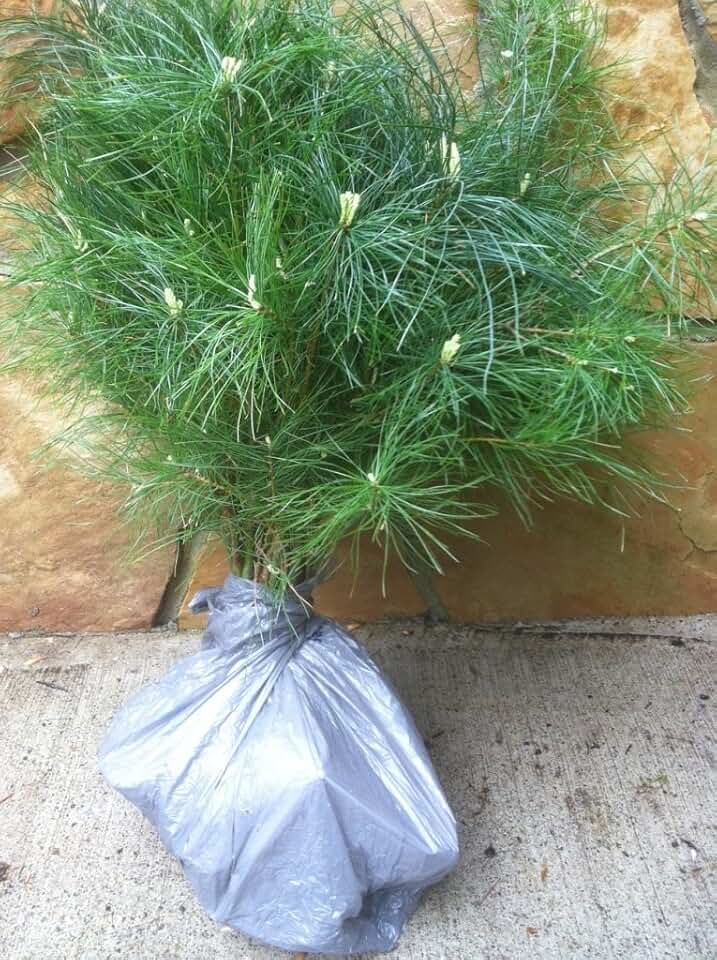
Eastern White Pine Pair
- Includes two eastern white pine trees
- Plants measure about 20 to 22 inches
- Great for starting a privacy planting
- Evergreen trees add year-round structure
- Suitable for garden and landscape use
Buy on Amazon
Property Decision Checklist
An eastern white pine is a sound property choice only if the site can support its mature size and environmental needs. Use this six-point check before buying or moving soil.
- Can the site hold a tree 50–80 feet tall?
- Is 20–40 feet of crown space available?
- Does water drain after a heavy rain?
- Is the location outside regular road-salt spray?
- Can you provide water during the first two growing seasons?
- Is blister rust or white pine weevil pressure high locally?
If two or more answers raise concern, another conifer may fit better. Repeated pruning, soil correction, or replacement watering rarely compensates for a fundamentally unsuitable site over the tree’s long life.
Ecology, Wood, and History
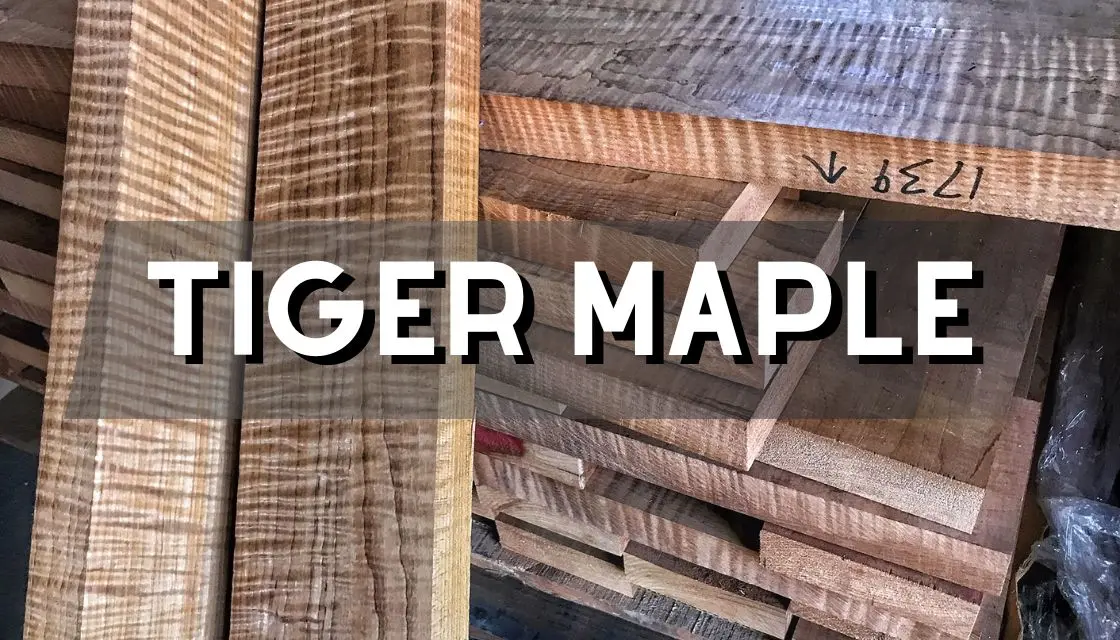
Eastern white pine supplies seeds, shelter, nesting structure, pale softwood, and a major historical connection to shipbuilding and northeastern forestry. Its wood ranks among the familiar light color woods, usually appearing creamy white to pale brown before darkening mildly with age.
Wildlife and Forest Ecology
Red and gray squirrels, chipmunks, mice, crossbills, chickadees, and nuthatches consume seeds or use the tree for cover. Dense foliage provides winter shelter, while large crowns can offer nesting and roosting structure for forest birds.
Needle litter shades the soil, slows moisture loss, and enters nutrient cycles as it decomposes. White pine also shapes forest succession by forming an elevated canopy above younger hardwoods, changing understory light and moisture without eliminating all regeneration.
Light-Colored Softwood Properties
Eastern white pine is a lightweight, low-hardness softwood with a fine, fairly even texture. Dried material averages around 25 pounds per cubic foot, while commonly cited Janka hardness is about 380 pounds-force; moisture and growth conditions affect measured values.
Freshly planed boards reveal a pale cream surface with a mild resinous scent and a smooth, almost silky feel. This is one of the better-known light colored wood types, distinct from light-colored hardwoods such as maple, birch, and aspen.
Softness makes the surface easy to dent with a dropped tool or hard thumbnail. Sharp cutters leave clean fibers, while dull blades compress and tear earlywood; see the broader guide to soft wood for related material traits.
Modern Wood Uses
Modern uses include interior trim, molding, paneling, carving, patternmaking, cabinet components, furniture, boxes, crates, and light construction. White pine machines and sands easily, but its low surface hardness makes it less suitable for floors or worktops exposed to hard wear.
Boards accept paint well once resin and knots are managed. For clear finishes, use scraps to test blotching and color shift; the pale background makes uneven stain easy to see. The guide to pine boards covers common board characteristics.
Eastern white pine lacks the natural decay resistance needed for wet exterior contact without protection. Use suitable treatment, coatings, flashing, and drainage where approved, or choose a material rated for the exposure rather than relying on thick paint alone.
Historical and Cultural Importance
Tall, straight old-growth trunks became prized ship masts during the colonial period. Trees reserved for the Crown were associated with the Broad Arrow mark, and disputes over mast-tree policies became part of northeastern North American political history.
Eastern white pine carries deep cultural meaning for the Haudenosaunee Confederacy through the Tree of Peace. The species is also the state tree of Maine and Michigan and the provincial tree of Ontario.
Eastern White Pine FAQs
These answers address the most common questions about eastern white pine growth, size, roots, screening, and browning. Each answer gives a practical range because site conditions matter more than a nursery label’s maximum claim.
How Fast Does It Grow?
Young eastern white pine can grow about 2 feet or more per year with adequate sun, moisture, acidic soil, and root space. Growth slows in drought, shade, compacted or alkaline ground, and after leader damage. Recently transplanted trees may spend one or two seasons rebuilding roots before shoot growth accelerates.
How Tall Does It Get?
Landscape trees commonly reach 50–80 feet tall and 20–40 feet wide. Forest-grown eastern white pines frequently exceed 100 feet and may approach or surpass 150 feet on deep, productive sites. That size rules out planting beneath utility lines or in narrow foundation beds.
Are Its Roots Invasive?
Eastern white pine roots are widespread and often relatively shallow, but they aren’t normally described as aggressively invasive. Trouble develops when a large tree sits close to paving, foundations, pipes, or restricted soil. Saturated or shallow soil can also reduce anchorage and raise wind-failure risk.
Is It Good for Privacy?
Eastern white pine provides fast evergreen screening on large, well-drained sites. Space trees about 12–20 feet apart according to stock size and design, preferably in staggered mixed rows. Crowded single rows close sooner but often lose lower density as shaded limbs die and deer raise the canopy.
Why Is It Turning Brown?
Older inner needles that yellow evenly in autumn usually indicate normal shedding. Browning on new growth, shoot tips, one side of the crown, or complete branches can indicate drought, winter burn, road salt, root damage, needle disease, blister rust, or white pine weevil. Diagnose the pattern before applying treatment.
FAQs
How Fast Does An Eastern White Pine Grow?
Eastern white pine usually grows 2 to 3 feet per year once established in a suitable location. Young trees may grow more slowly while they develop roots, while healthy mature trees can grow faster in ideal conditions. Consistent moisture, room to spread, and minimal competition encourage strong growth.
How Tall Does An Eastern White Pine Get?
Eastern white pine can reach 50 to 80 feet tall in home landscapes and over 100 feet in natural forests. It commonly spreads 20 to 40 feet wide, so it needs generous planting space. Its final size depends on climate, soil, moisture, and nearby trees.
Are Eastern White Pine Roots Invasive?
Eastern white pine roots are not usually considered invasive, but they spread widely near the soil surface. They rarely damage foundations or pipes, yet the tree’s large mature size makes proper placement important. Plant it at least 20 feet from buildings, driveways, and underground utilities when possible.
Is Eastern White Pine Good For Privacy Screens?
Eastern white pine makes an effective privacy screen because its soft evergreen needles provide year-round coverage. Plant several trees with enough spacing for their mature width and good airflow instead of crowding them. It performs best in sunny or lightly shaded sites with well-drained soil and room to grow tall.
Why Is My Eastern White Pine Turning Brown?
Your eastern white pine may be turning brown because of drought, winter burn, transplant stress, pests, disease, or poor drainage. Browning on older inner needles can be normal seasonal shedding, but browning on new outer growth may indicate a problem. Water deeply during dry periods and inspect for insects, bark damage, and discolored branches.
Affiliate Disclosure: Some links in this post are affiliate links. If you make a purchase through these links, we may earn a small commission at no extra cost to you. We only recommend products we genuinely believe in.