

Hackberry wood is a pale North American hardwood with moderate hardness, coarse grain, good workability, and poor natural decay resistance. It suits indoor furniture, cabinetry, turning, veneer, crafts, and firewood, while spalted boards offer striking black fungal lines for decorative projects.
Table of Contents
What Is Hackberry Wood?
Hackberry is a hardwood from deciduous Celtis trees, chiefly common hackberry and sugarberry. It usually has pale yellow-gray to light brown wood, an average Janka hardness near 880 lbf, and little resistance to prolonged moisture or decay.
Botanical Identity
Common hackberry is Celtis occidentalis, a tree native to much of eastern and central North America. It belongs to Cannabaceae, the same botanical family that now includes Celtis species, though older references placed hackberry near the elm family.
The hardwood label describes its angiosperm origin, not its resistance to dents. Hackberry is harder than yellow poplar but considerably softer than hard maple, ash, and the familiar furniture oaks. Our guide to types of hardwood explains why botanical classification and physical hardness aren’t the same measurement.
Common Hackberry and Sugarberry
Common hackberry favors northern and central parts of the commercial range, while sugarberry, Celtis laevigata, is more closely associated with southern floodplains and moist lowlands. Mature trees often reach 40–60 feet, with larger specimens growing on favorable sites.
Lumber dealers may combine the two species under the hackberry lumber name. That practice is acceptable for many decorative projects, but buyers shouldn’t assume every board marked “hackberry” came from Celtis occidentalis.
Hackberry Versus Elm. Hackberry isn’t an elm, though coarse pores, occasional interlocked grain, and old botanical classifications cause confusion. Elm often has stronger grain interlocking and greater resistance to splitting; see our elm wood guide for a closer species comparison.
Technical Properties Table. The following figures are typical published averages, largely based on conditioned material rather than guarantees for each board. Mechanical properties change with species, moisture, growth conditions, grain orientation, and test method; the USDA Wood Handbook explains the standard wood-property measurements behind such data.
| Property | Typical value | Practical meaning |
|---|---|---|
| Average dried weight | 37 lb/ft³; 595 kg/m³ | Moderate carrying and furniture weight |
| Basic specific gravity | About 0.49 | Oven-dry mass compared with green volume |
| Specific gravity at 12% MC | About 0.60 | Conditioned density measurement |
| Janka hardness | 880 lbf; 3,910 N | Suitable for furniture but prone to dents under hard use |
| Modulus of rupture | 11,000 psi; 75.9 MPa | Useful bending strength for ordinary indoor projects |
| Modulus of elasticity | 1.19 million psi; 8.21 GPa | Less stiff than many oak, ash, and hard maple boards |
| Crushing strength | 5,440 psi; 37.5 MPa | A published average, not a structural design value |
| Radial shrinkage | 4.8% | Movement across quartersawn width |
| Tangential shrinkage | 8.9% | Flatsawn boards can cup noticeably |
| Volumetric shrinkage | 13.8% | Careful drying and acclimation matter |
| T/R ratio | About 1.9 | Unequal movement can contribute to distortion |
| Natural durability | Non-durable to perishable | Poor choice for wet or ground-contact projects |
Reading Property Values. Basic specific gravity uses oven-dry mass and green volume, while specific gravity at 12% uses conditioned wood. Average dried weight is a separate measurement, and a 37 lb/ft³ value doesn’t mean every dry board will weigh exactly that amount.
Strength figures commonly describe small, clear test specimens near a stated moisture level. Design values differ for graded structural lumber, so the table shouldn’t support substitutions in engineered beams, stairs, safety rails, or other load-rated parts.
Appearance and Spalted Hackberry

Hackberry has pale, subdued color, moderately coarse texture, open pores, and grain that ranges from straight to irregular. Spalting can add sharp black zone lines, but advanced fungal decay may leave soft wood that can’t carry a dependable load.
Heartwood and Sapwood
The broad sapwood is pale, often yellow-gray, cream, or light tan. Heartwood tends toward light brown or gray-brown, and the transition may be subtle enough that a finished panel appears almost uniform from several feet away.
Freshly planed stock can show a faint straw tone and a dry, clean smell rather than a heavy aromatic scent. Under clear oil, the surface warms to soft honey-brown; water-based coatings preserve more of the cooler, grayish cast.
Grain, Texture, and Pores
Grain is usually straight, though localized interlocking can reverse direction within one pass of a planer. The pores remain visible after fine sanding, giving clear-coated boards more texture than hard maple.
Quartered faces often show straighter lines and less width movement than flatsawn faces. A hand across unfinished hackberry feels slightly ridged after dusting because open earlywood pores interrupt the smoother latewood bands.
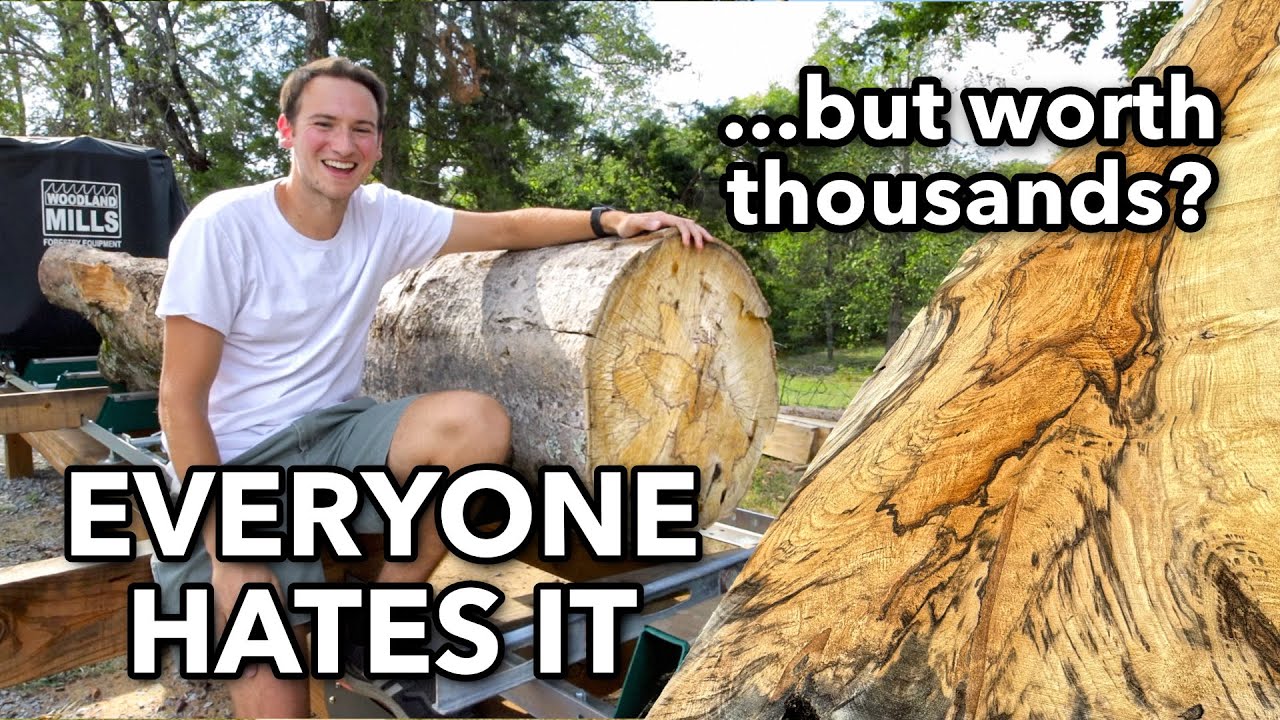
Spalted Hackberry Wood. Spalting is fungal coloration and partial decay, not a separate species or grade. Hackberry’s pale background makes dark boundary lines, bleaching, and mottled brown areas highly visible, which suits box lids, drawer fronts, turnings, knife scales, and small furniture accents.
Spalting Strength Tests. Press suspicious areas with a fingernail or awl, then compare the resistance with adjacent clear wood. Reject load-bearing pieces if the tool sinks easily, fibers crumble at an edge, or the board feels unusually light for its dimensions.
A second test involves making a clean crosscut through a waste end. Sound spalted fibers cut cleanly, while advanced decay leaves dusty, torn, or sponge-like material. Resin stabilization may support a decorative turning blank, but it doesn’t create predictable structural lumber.
Spalted Wood Safety. Fungal pigments can remain after active growth stops, and dry wood may still release contaminated dust. Use source extraction and a properly fitted particulate respirator; don’t blow the gray-brown powder across the shop with compressed air.
Strength, Stability, and Durability
Hackberry is strong enough indoors for ordinary furniture, cabinets, boxes, and shelves made from sound stock. Its weaker points are moderate dent resistance, relatively high shrinkage, drying distortion, and poor resistance to damp conditions.
Hardness and Dent Resistance
At approximately 880 lbf Janka, hackberry handles normal furniture use but dents more readily than red oak at about 1,290 lbf, white ash around 1,320 lbf, and hard maple near 1,450 lbf. It remains much harder than eastern white pine and harder than yellow poplar.
A dropped metal clamp can leave a visible crescent in a hackberry bench top. Protective pads, runners, and replaceable work surfaces reduce damage where point loads matter more than overall bending strength.
Strength and Stiffness
The approximate 11,000-psi bending strength supports many well-proportioned indoor parts. Its moderate stiffness means a long shelf may need extra thickness, a front nosing, or a center support sooner than a comparable ash or hard maple shelf.
Don’t replace ash in tool handles or engineered parts using species averages alone. Our ash wood comparison shows why impact resistance, elasticity, grain selection, and part dimensions all affect performance.
Shrinkage and Movement. Tangential shrinkage near 8.9% and radial shrinkage near 4.8% indicate meaningful movement from green to oven-dry condition. A wide flatsawn top can cup or open joints if its underside is trapped while the upper face gains or loses moisture.
Attach tops with figure-eight fasteners, wooden buttons, or screws through elongated holes. Frame-and-panel doors need free panel movement; glue belongs in the rail-and-stile joints, not around the full panel perimeter.
Drying and Moisture Targets. Furniture stock often performs well near 6–8% moisture content in heated or air-conditioned interiors. Humid regions may settle closer to 9–12%, so the correct target is the equilibrium level expected at the project’s destination.
Measure several areas with a calibrated meter, including both board faces and freshly exposed stock when possible. A kiln-dried label describes a process; it doesn’t prove that lumber remained dry during warehousing or transport.
Storage and Drying Problems. Green hackberry can warp, end-check, or stain when moisture leaves too quickly or airflow is uneven. Seal end grain, align stickers vertically through the stack, support thin boards at close intervals, and add evenly distributed top weight.
Never lay dry boards directly on concrete. The underside can gain moisture and feel cool or slightly clammy while the upper face stays dry, producing one-sided expansion and cup.
Decay Resistance. Hackberry heartwood is rated non-durable to perishable. Repeated wetting can cause fast deterioration, while sapwood stored in damp conditions may also attract insects or develop additional fungal damage.
Protected Exterior Use. Limited use is possible beneath a roof when parts stay above soil, drain freely, and receive a maintained exterior coating on every face. A coating slows moisture exchange but doesn’t change the wood’s natural decay rating.
- Avoid fence posts, deck framing, garden-bed walls, and ground-contact structures.
- Shape horizontal surfaces so water sheds rather than pools.
- Seal end grain, joints, undersides, and concealed faces.
- Inspect coating failures and open joints at least once each year.
- Choose cedar, cypress, black locust, treated lumber, or suitable white oak for persistent exposure.
Working and Finishing Hackberry

Hackberry usually machines and glues well with sharp tools, yet interlocked grain can tear and open pores stay visible beneath thin finishes. Light cutter passes, orderly sanding, pilot holes, and test boards prevent most beginner failures.
Sawing and Machining
Sharp carbide blades leave clean edges in sound stock. Where grain reverses, reduce feed speed, take light finishing passes, and use a high-angle smoother, card scraper, or sanding block rather than forcing another deep planer pass.
A dull router bit may compress fibers instead of severing them, leaving fuzzy edges that rise after the first finish coat. Back up cross-grain cuts and use a shallow climb cut only where your tool setup and experience permit safe control.
Turning and Carving
Hackberry turns into bowls, handles, ornaments, small vessels, and spindle parts without the heavy tool pressure required by harder maple. Fresh wood produces long, damp ribbons, while dry stock creates shorter crisp shavings and more airborne dust.
Seal green blank ends and rough-turn bowls with enough wall thickness for later distortion. Spalted blanks need a face shield, gentle cuts, and frequent inspection because a concealed soft pocket can release a weak rim section at lathe speed.
Gluing and Fastening. Standard interior wood glues bond clean, dry hackberry well. Remove dust from joint faces, confirm close contact, and predrill screws near ends or narrow edges so wedge pressure doesn’t split the board.
Waterproof adhesive can’t make hackberry decay resistant. Exterior glue protects the bond line, while the surrounding wood still absorbs moisture and can rot.
Sanding Open Pores. Work through a sensible sequence such as 100, 120, 150, and 180 grit on furniture surfaces. Use a hard block on flat faces; soft pads can hollow springwood or weak spalted patches and leave a rippled reflection.
Clear Finishes. Water-based polyurethane and lacquer retain the palest color, while oil-based varnish, shellac, and drying oils add amber warmth. Apply your full finishing schedule to an offcut because end grain, sapwood, and fungal areas absorb finish differently.
Staining Hackberry. Penetrating stain can settle heavily in coarse pores and produce dark specks. A thin washcoat or compatible conditioner may reduce contrast, while gel stain offers greater surface control; test either system before treating assembled work.
Beginners often apply a dark stain hoping to imitate walnut. The result can look muddy and hide delicate spalting, so choose a lighter dye or toner when the natural figure is the reason for using hackberry.
Filling the Grain. Grain filler is optional for satin furniture but useful beneath a smooth, reflective film. Fill after the chosen sealer stage specified by the product maker, scrape across the grain, and inspect under low side lighting for missed pores.
Practical Notes From Real-World Use: The cleanest hackberry surfaces often come from stopping the planer before the final dimension, scraping torn areas, then sanding with a firm block. Chasing every reversing fiber through repeated machine passes can leave the board thinner without making it smoother.
Workshop practice
Workshop Dust Safety. Treat all hackberry dust as a respiratory and eye irritant. Local extraction, enclosure at dust-producing machines, and a suitable particulate respirator reduce exposure; the NIOSH wood dust guidance covers recognized workshop hazards and controls.
Vacuum benches and clothing rather than using compressed air. Spalted stock deserves stricter control because sanding can release a fine, musty-smelling powder containing wood and fungal debris.
Hackberry Wood Uses
The best hackberry wood uses are dry indoor projects where moderate strength, pale color, easy machining, or decorative spalting matters. Common applications include furniture, cabinets, boxes, turned objects, veneer, crafts, utility parts, and properly seasoned firewood.
Furniture and Cabinetry
Sound, dry hackberry works for indoor tables, cabinet parts, shelves, drawer components, chair parts, and decorative panels. Select straighter grain for narrow load-bearing components and use movement-friendly attachments beneath broad tabletops.
Spalted boards fit drawer fronts, door panels, and accent rails better than chair legs or slender structural parts. Dramatic figure can hide soft spots, so test the entire component rather than judging one firm-looking face.
Boxes and Utility Projects
Hackberry has long served in boxes, crates, pallets, and ordinary utility products. Its moderate weight makes small storage pieces manageable, while color variation and sound knots can suit rustic work where clear premium faces aren’t needed.
For a fitted box, mill oversized parts and let them rest before final sizing. Thin flatsawn pieces may move after heavy stock removal, causing a once-flush lid to develop a slight corner lift.
Turning and Crafts. Bowls, tool grips, ornaments, scroll-saw patterns, carved panels, and pyrography projects suit hackberry’s moderate hardness. Its pale surface shows burned lines clearly, while spalted figure adds contrast without stain.
Veneer and Panels. Raw veneer needs a flat substrate, compatible adhesive, even pressure, and extra material for trimming. Apply a compatible backer or reverse-side veneer to wide panels so unequal construction doesn’t pull the substrate into a bow.
Hackberry Flooring. Hackberry can serve in lower-traffic residential rooms where dents and changing character are acceptable. Its 880-lbf hardness falls well below oak, ash, and hard maple, making it a weaker choice for entryways, kitchens, commercial floors, or homes with large dogs.
Hackberry Firewood. Dry hackberry produces medium heat, often reported around 20–21 million BTU per full cord. Actual output changes with species mix, cord packing, density, and moisture, so use that range for comparison rather than a guaranteed yield.
Season splits to about 20% moisture or less, measured on a freshly opened face. Sound pieces ignite without excessive difficulty and work well in mixed hardwood loads, though denser hickory wood usually delivers more heat per cord.
Burn only untreated wood. Painted, glued, pressure-treated, resin-stabilized, or chemically contaminated pieces can release hazardous fumes; badly decayed firewood also creates dusty handling and offers less solid fuel per stack.
Unsuitable Outdoor Projects. Don’t use untreated hackberry for deck framing, garden beds, posts, year-round outdoor seating, boat parts, or exterior trim that stays wet. Protected decorative items can work with drainage and regular recoating, but naturally durable wood is the safer long-term choice.
Advantages and Wood Comparisons
Hackberry’s main advantages are workability, pale color, moderate weight, local affordability, and attractive spalting. Its drawbacks are low decay resistance, less dent resistance than premium flooring woods, noticeable movement, coarse pores, and inconsistent retail availability.
Advantages and Disadvantages
| Advantages | Disadvantages |
|---|---|
| Machines, turns, glues, and finishes well | Interlocked areas may tear during planing |
| Pale color works with clear or light finishes | Dark stain can become blotchy or muddy |
| Spalting can create high decorative value | Advanced spalting weakens the fibers |
| Harder than yellow poplar | Softer than oak, ash, and hard maple |
| Often affordable near its growing range | Availability and shipping costs vary widely |
| Useful across furniture, crafts, veneer, and fuel | Natural decay resistance is poor |
A frequent buying mistake is treating “character” or “spalted” as a structural grade. These terms describe visual features, while soundness, moisture, grain orientation, checks, and usable dimensions still require separate inspection.
Hackberry Versus Oak
Hackberry is softer than red oak and white oak, so it dents sooner on flooring and work surfaces. It tends to look paler and less strongly ring-porous, while oak offers better availability and wider recognition in furniture markets.
White oak has much better decay resistance because its heartwood vessels contain tyloses. Red oak shouldn’t be assumed durable outdoors, but hackberry remains the poorer choice wherever repeated wetting is likely.
Hackberry Versus Maple. Hard maple, near 1,450 lbf Janka, resists dents far better and suits wear-heavy counters and flooring. Hackberry machines with less effort and can show coarser texture or stronger spalting; compare it with our maple wood guide.
Hackberry Versus Ash. White ash is harder, stiffer, and better associated with impact-loaded handles and sporting goods. Hackberry works for ordinary furniture, but published averages don’t support a direct substitution where an ash part was selected for repeated shock.
Hackberry Versus Elm. Both can have coarse texture and interlocked grain. Elm’s strongly interwoven fibers often resist splitting better, while hackberry usually offers a lighter, less dramatic plain-sawn appearance; exact species matters in restoration work.
Hackberry Versus Poplar. Hackberry is harder and more visibly textured than yellow poplar. Poplar remains easier to source for painted trim and cabinet interiors, while hackberry makes more sense for clear finishes, natural pale furniture, or decorative spalting; see our poplar wood guide.
Buying and Pricing Hackberry Lumber
Buy hackberry by usable material, not package size or decorative labels alone. Compare actual dimensions, moisture, grade, surfacing, defects, shipping charges, and the volume left after cutting away checks, bark, pith, insects, warp, and punky spalting.
Available Lumber Forms
Hackberry is sold as rough boards, surfaced lumber, live-edge slabs, craft boards, spalted pieces, scroll-saw stock, turning blanks, bowl blanks, veneer, and firewood. Full-sized lumber is often easier to find near the tree’s range, while online shops favor compact pieces that ship by parcel.
Small packaged stock carries higher milling, selection, packing, and freight costs per unit of wood. A low total price can still produce a high board-foot cost, especially where the product includes several short pieces.
Grades and Surfacing Terms
Ask whether a dealer uses formal NHLA hardwood grades or informal labels such as select, rustic, craft, figured, or character. The NHLA grading rules judge the clear cutting yield of standard lumber; they don’t certify a board for structural service.
S2S usually means two surfaced faces, while S3S and S4S add one or two prepared edges. Seller practices can differ, so confirm actual finished dimensions; nominal 4/4 rough stock often finishes near ¾ inch after flattening and surfacing.
Board Feet and Usable Cost. Calculate volume with: board feet = thickness in inches × width in inches × length in inches ÷ 144. Use actual dimensions for packaged craft stock and include the expected waste from cracks, bark, pith, or soft fungal areas.
| Package dimensions | Calculated volume | Buying implication |
|---|---|---|
| ¾ × 6 × 36 inches | 1.125 board feet | A single accent board with continuous grain |
| ¾ × 6 × 24 inches | 0.75 board foot | Compare price against three-quarters of a board foot |
| ¾ × 8 × 24 inches | 1 board foot | Convenient baseline for cost comparison |
| Sixteen ¼ × 3 × 12-inch boards | 1 board foot total | Packaging and thin-stock preparation add cost |
| Four 3 × 3 × 12-inch blanks | 3 board feet total | Turning blanks are commonly sold per set |
A 1.125-board-foot spalted board isn’t fully usable if three inches of end checking and one soft corner require removal. Divide the delivered cost by the usable board feet after likely waste for a fairer comparison.
Veneer Square-Foot Pricing. Compare veneer by surface area rather than board feet. A 16 × 123-inch sheet contains about 13.67 square feet before trimming; allow extra area for defects, grain matching, trial cuts, and finish samples.
Buy-or-Reject Checklist. Ask for the exact species or species group, actual dimensions, moisture reading, drying method, grade system, and photographs of both faces and ends. For unique figured stock, confirm that the displayed board is the piece being shipped.
- Sight along the board for bow, cup, crook, and twist.
- Inspect both ends for open checks and unsealed end grain.
- Look for insect holes, fresh frass, bark inclusions, and pith.
- Press spalted zones to locate soft or crumbly fibers.
- Check whether dimensions are rough, nominal, or finished.
- Measure moisture rather than relying on “kiln dried.”
- Read return terms for one-of-a-kind boards and veneer.
- Add freight and dimensional-weight charges to the delivered cost.
Spalted Furniture Board. A ¾ × 6 × 36-inch board contains about 1.125 board feet and can suit a shelf, box panel, drawer face, or cabinet accent. Confirm firmness across every spalted zone and ask whether dimensions are actual.

Spalted Hackberry Board 6 x 36 Inch
- Distinctive spalted grain character
- Generous 6 by 36 inch board size
- Three quarter inch thickness for sturdy projects
- Ideal for furniture accents and crafts
- One piece board for seamless designs
 Buy on Amazon
Thin Scroll-Saw Stock. Sixteen ¼ × 3 × 12-inch boards equal about one board foot in total. Prepared thin stock saves resawing time, but buyers should inspect flatness because narrow pieces can cup or bow during storage and parcel shipment.

Kiln Dried Hackberry Scroll Wood Set
- Sixteen thin hackberry boards included
- Kiln dried for ready to use stock
- Quarter inch thickness suits detailed cuts
- Great for scroll saw and craft work
- Compact 3 by 12 inch board size
Buy on Amazon
Lathe Turning Blanks. Four 3 × 3 × 12-inch blocks contain about three board feet by geometric volume, though sellers commonly price blanks per piece or set. Check end sealing, pith, moisture, grain direction, checks, and spalted softness before mounting one.

Hackberry Lathe Turning Blank Set
- Four hackberry blanks in each set
- Sized for convenient lathe turning
- Solid 3 by 3 by 12 inch blocks
- Great for pens handles and small forms
- Natural hardwood character for custom projects
Buy on Amazon
Raw Hackberry Veneer. A 16 × 123-inch sheet offers about 13.67 square feet before waste. Unbacked veneer needs careful handling, a stable substrate, compatible adhesive, even clamping or vacuum pressure, and a balancing layer on broad panels.
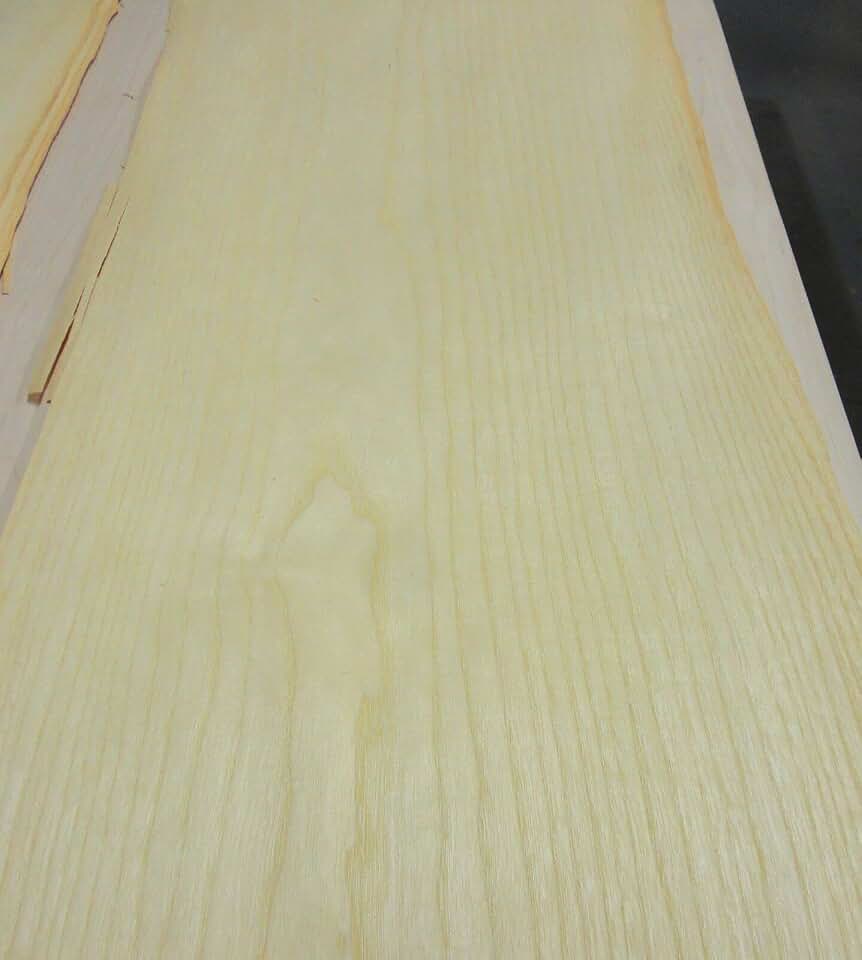
A Grade Hackberry Wood Veneer Roll
- A grade hackberry veneer with natural appeal
- Wide 16 by 123 inch sheet size
- Thin one forty second inch profile
- Raw veneer accepts your preferred finish
- No backing for flexible application
Buy on Amazon
Frequently Asked Questions
These concise answers cover the most common questions about hackberry wood properties, value, furniture use, exterior exposure, and firewood. Project suitability still depends on moisture, soundness, grain, dimensions, and the final service environment.
Is Hackberry a Hardwood?
Yes. Hackberry is a true botanical hardwood because it comes from a deciduous angiosperm tree. That label doesn’t mean it is exceptionally hard: its Janka rating near 880 lbf is below red oak, white ash, and hard maple.
Is Hackberry Wood Valuable?
Plain hackberry is usually an affordable domestic hardwood where it grows locally, but supply can be inconsistent. Wide clear boards, slabs, selected spalting, and ready-to-use craft pieces may carry higher decorative value, while shipping and waste can exceed the raw wood cost.
Is Hackberry Good for Furniture? Yes, provided the lumber is sound, dry, and allowed to move across the grain. It works well for tables, cabinets, shelves, boxes, and accent panels, though wear-heavy surfaces dent sooner than oak or hard maple.
Can Hackberry Be Used Outdoors? Hackberry isn’t recommended for exposed or ground-contact construction because its heartwood is non-durable to perishable. Small protected pieces may survive with drainage and maintained coatings, but cedar, cypress, black locust, treated lumber, or suitable white oak offers better service.
Is Hackberry Good Firewood? Yes, dry untreated hackberry is useful medium-output firewood and works well in mixed hardwood loads. Season it to about 20% moisture or less on a freshly split face, and never burn painted, glued, treated, or resin-stabilized stock.
FAQs
Is Hackberry Wood Harder Than Oak?
No, hackberry wood is generally softer than both red and white oak. Hackberry has a Janka hardness around 880 lbf, while red oak is about 1,290 lbf and white oak about 1,360 lbf. It can still handle many indoor projects, but it dents and wears more easily than oak.
Is Hackberry Wood Good For Furniture?
Yes, hackberry wood can make attractive, functional indoor furniture. It machines and glues reasonably well, and its pale color with subtle grain suits painted, stained, or natural finishes. Because it is moderately soft, use a durable finish and consider it for tables, cabinets, and pieces that will not receive severe abuse.
Can Hackberry Wood Be Used Outdoors?
No, untreated hackberry is not a good choice for long-term outdoor use. It has low natural resistance to decay and insects, so repeated moisture exposure can cause it to rot relatively quickly. For exterior projects, choose a naturally durable wood or protect hackberry completely with a suitable preservative and maintained finish.
Is Spalted Hackberry Safe To Work With?
Yes, spalted hackberry is generally safe to work with when you take proper dust precautions. Spalting is caused by fungi, and cutting or sanding may release irritating spores and fine dust. Wear a well-fitting respirator, use dust collection, and avoid using wood that is soft, crumbly, or structurally weakened.
Is Hackberry Good Firewood?
Yes, hackberry is good firewood once it has been properly seasoned. It provides moderate heat, burns fairly steadily, and is suitable for fireplaces, stoves, and campfires. Split it and let it dry until moisture content is around 20 percent; unseasoned hackberry can be harder to light and produce more smoke.
Affiliate Disclosure: Some links in this post are affiliate links. If you make a purchase through these links, we may earn a small commission at no extra cost to you. We only recommend products we genuinely believe in.