
Types of Hardwood: The Definitive Guide to Species, Floors, and Identification

Table of Contents
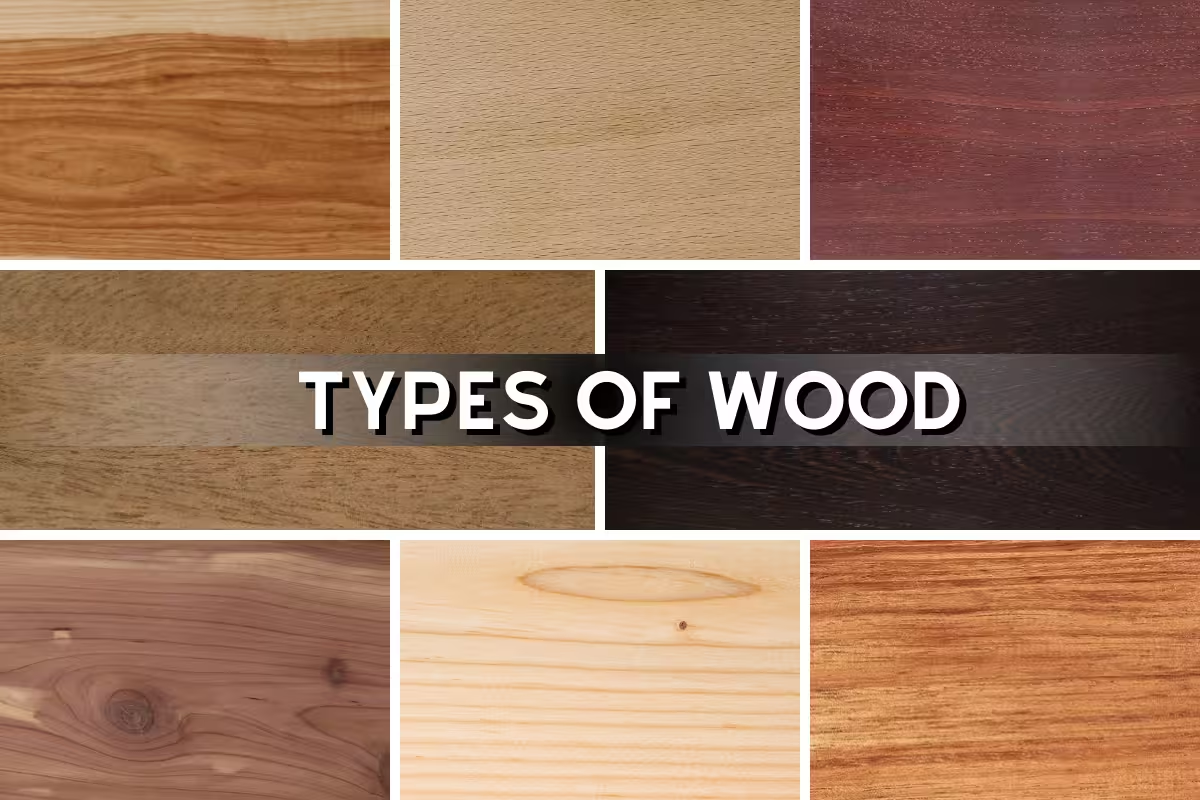
Types of hardwood include both wood species, such as oak, maple, hickory, walnut, and cherry, and hardwood floor formats, such as solid, engineered, parquet, reclaimed, prefinished, and unfinished flooring. Hardwood comes from angiosperm trees, but the word “hardwood” doesn’t always mean the wood is physically harder than softwood.
For floors, the best choice depends on species, construction, finish, moisture, traffic, and how the floor will be repaired later. A smooth maple board under bare feet feels tight and glassy, while open-grain oak has tiny ridges you can feel when light catches the pores.
What Are Types of Hardwood?
Hardwood types can mean tree species, flooring constructions, grain groups, porosity classes, or domestic and exotic categories. In home projects, people usually use the phrase to compare hardwood flooring types of wood and floor formats at the same time.
Quick Answer
Common hardwood species include oak, maple, hickory, walnut, cherry, birch, ash, mahogany, teak, and acacia. Common types of hardwood floors include solid hardwood, engineered hardwood, prefinished hardwood, unfinished hardwood, parquet, reclaimed hardwood, and wide-plank hardwood.
- Most common hardwood floor: oak, mainly red oak and white oak.
- Hardest common domestic floor: hickory, around 1,820 lbf on the Janka scale.
- Best all-around floor choice: white oak for its balance of grain, stability, and resale appeal.
- Best way to identify a floor: start with grain, then plank size, age, end grain, and color.
Hardwood Species
Hardwood species are the actual woods used for boards, furniture, cabinets, and flooring. Oak, maple, hickory, walnut, cherry, birch, and ash are common North American hardwoods, while teak, mahogany, acacia, Brazilian cherry, and ipe are common imported or tropical hardwood examples.
Botanically, hardwoods come from angiosperm trees, which are flowering plants; softwoods come from gymnosperms, often cone-bearing trees such as pine, fir, and spruce. The USDA Forest Service explains tree groups by structure and reproduction, which is why balsa counts as hardwood despite being very soft.
Hardwood Floor Types
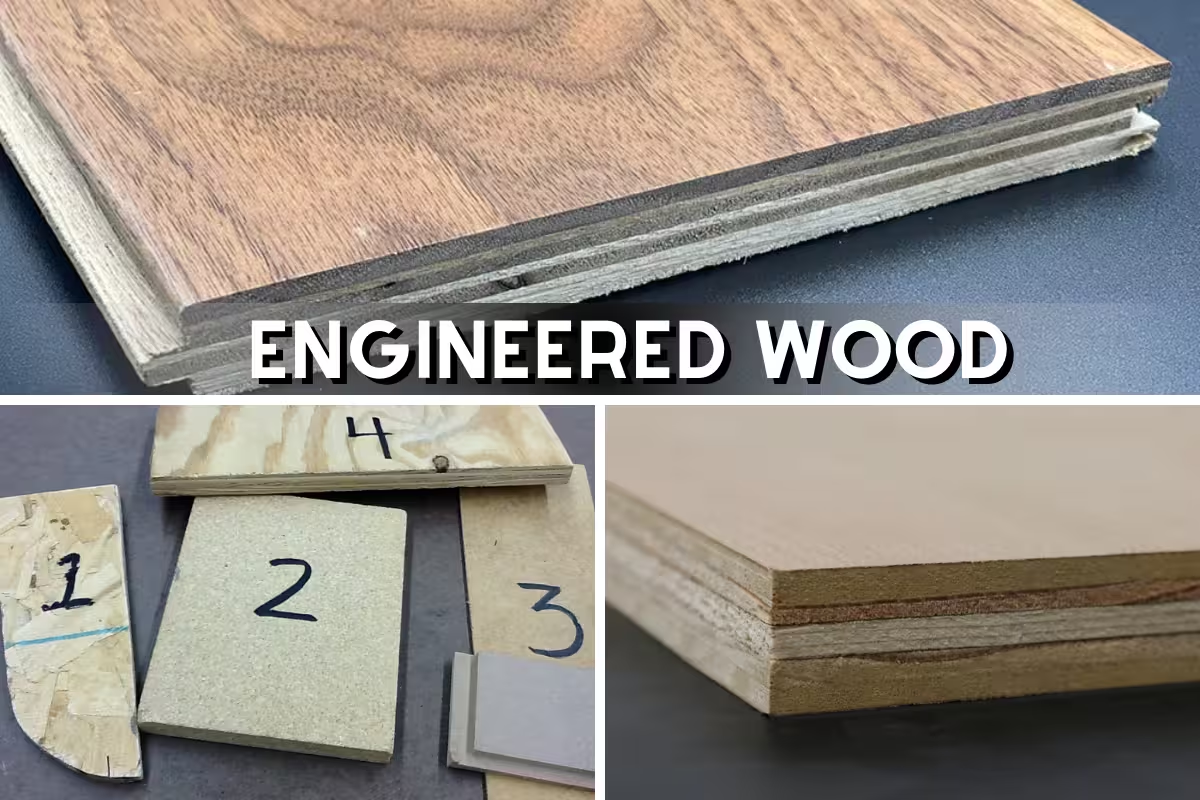
Hardwood floor types describe how the floor is built and finished. Solid hardwood is one piece of wood, engineered hardwood has a real wood veneer over a layered core, and parquet uses small pieces arranged into patterns such as herringbone or chevron.
Construction changes where the floor can go. Engineered hardwood handles slabs, basements, and wide boards better because its cross-layer core reduces seasonal movement compared with one-piece solid planks.
Hardwood vs Softwood
Hardwood vs softwood is a botanical difference, not a promise of hardness. Pine is a softwood, but old pine floors can feel dense underfoot after decades of resin hardening, while American cherry is hardwood but dents more easily than oak.
| Category | Hardwood | Softwood |
|---|---|---|
| Botanical group | Angiosperm, often broadleaf | Gymnosperm, often conifer |
| Common examples | Oak, maple, walnut, cherry | Pine, fir, spruce, cedar |
| Flooring use | Formal floors, refinishable surfaces | Historic floors, rustic looks, subfloors |
| Hardness rule | Can be hard or soft | Can be soft or moderately hard |
Snapshot Comparison Tables
Quick tables help compare species before you get lost in color names and product labels. Use these snapshots as a first filter, then check the deeper sections before buying or matching an existing floor.
| Species | Domestic/Exotic | Color | Grain | Janka Rating | Best For | Watch-Outs |
|---|---|---|---|---|---|---|
| Red oak | Domestic | Warm tan to pink | Open, strong | 1,290 lbf | Traditional floors | Pink tone shows under pale stains |
| White oak | Domestic | Neutral tan to brown | Open, calmer than red oak | 1,360 lbf | Modern wide plank | Premium cuts cost more |
| Hard maple | Domestic | Cream to pale tan | Closed, smooth | 1,450 lbf | Light clean interiors | Stain blotches easily |
| Hickory | Domestic | High contrast tan and brown | Bold, varied | 1,820 lbf | Pets and traffic | Can look busy |
| Black walnut | Domestic | Chocolate brown | Flowing, medium | 1,010 lbf | Luxury rooms | Softer than buyers expect |
| American cherry | Domestic | Red-brown | Closed, fine | 950 lbf | Furniture and low-traffic floors | Darkens with light |
Hardwood Classifications Explained
Hardwood classifications explain why two boards that both say “hardwood” can behave very differently. The key categories are botanical type, geographic origin, grain type, porosity, and common use.
- Key takeaway: classification predicts appearance, movement, staining behavior, repair options, and sourcing risk.
- Beginner mistake: choosing by color alone, then discovering the grain, denting, or movement doesn’t fit the room.
Botanical Type
Botanical type separates hardwoods from softwoods by tree biology. Most hardwood flooring species are deciduous trees, including oak, maple, hickory, walnut, cherry, birch, and ash.
Tropical hardwoods such as teak wood, mahogany wood, and acacia wood can offer darker colors, oilier surfaces, or higher density. Those traits can make cutting, gluing, and finishing feel different at the tool, with a denser board giving a sharper tap and more resistance under the saw.
Geographic Origin
Geographic origin splits hardwood into domestic and exotic groups. Domestic hardwoods are usually North American species, while exotic hardwoods are imported from tropical or international sources.
Domestic woods are usually easier to source, patch, and match. Exotic woods can bring striking color and density, but sourcing paperwork matters because imported wood can fall under the USDA APHIS Lacey Act.
Grain Type
Grain type affects how a floor looks, hides wear, and takes stain. Open-grain hardwoods such as oak, ash, and hickory have visible pores and texture; closed-grain hardwoods such as maple, cherry, and birch look smoother and quieter.
Open grain can hide small dents because the natural texture breaks up light. Closed grain can show sanding marks, swirl scratches, and stain blotches because the surface reflects light more evenly.
Wood Porosity
Wood porosity describes pore size and distribution. Ring-porous woods such as oak and ash show clear earlywood pore bands, while diffuse-porous woods such as maple, birch, and cherry have finer, more even pores.
Porosity helps with floor identification when you can see end grain at a vent or threshold. A clean flashlight view of the board end often tells more than the stained face, especially on older ambered floors.
Common Uses
Common use matters because flooring asks different things from wood than furniture or cabinets do. Floors need dent resistance, movement control, available matching stock, and a finish that can handle grit under shoes.
Furniture woods can favor workability and color. Walnut, cherry, mahogany, and maple all make fine furniture, and that search overlap explains why people comparing best wood furniture or a dining table often land on hardwood species guides.
Hardwood Flooring Types of Wood
Hardwood flooring types of wood differ in hardness, color, grain, cost, stability, and repair behavior. The right species is the one that fits your traffic, moisture, style, maintenance habits, and tolerance for marks.
- Best all-around: white oak.
- Best traditional value: red oak.
- Best for heavy traffic: hickory or hard maple.
- Best dark luxury look: walnut.
- Best dramatic character: hickory or acacia.
Oak
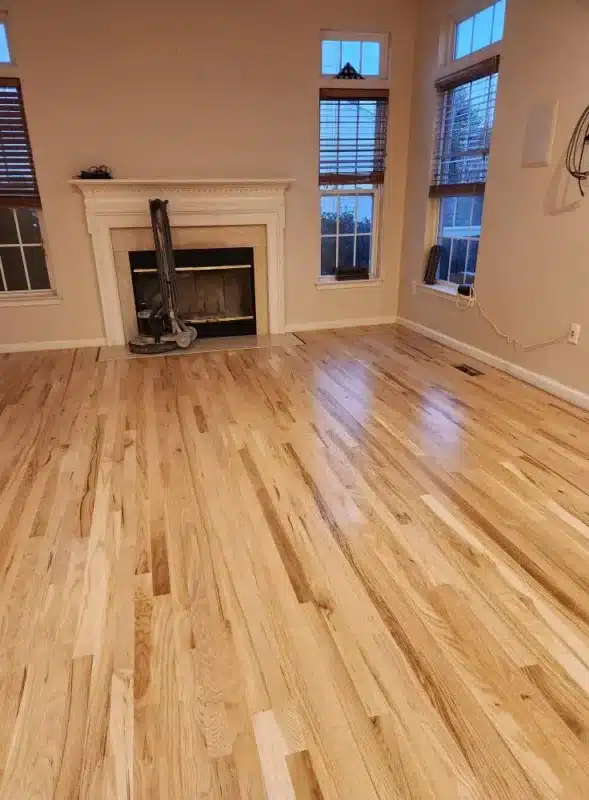
Oak hardwood is one of the most common floor species in North America. Red oak has a warmer pink cast and stronger grain, while white oak wood has a cooler brown tone, slightly higher hardness, and better natural moisture resistance.
Red oak rates about 1,290 lbf and white oak about 1,360 lbf on the Janka scale. White oak is popular for natural matte floors, Scandinavian looks, and wide plank rooms because its grain feels calmer than red oak under pale finishes.
Maple
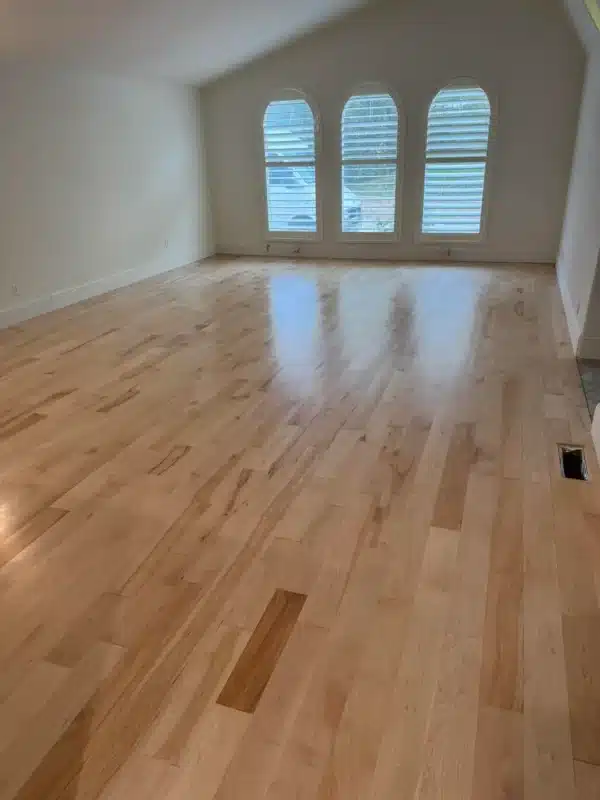
Maple hardwood has a pale cream color and smooth closed grain. Hard maple, also called sugar maple, rates about 1,450 lbf, which is why it appears in basketball courts and bowling alleys.
Maple’s weakness is finish visibility. Dark stain can blotch, sanding scratches can flash in side light, and tiny pet marks can stand out because the surface has little open grain to distract the eye.
Hickory
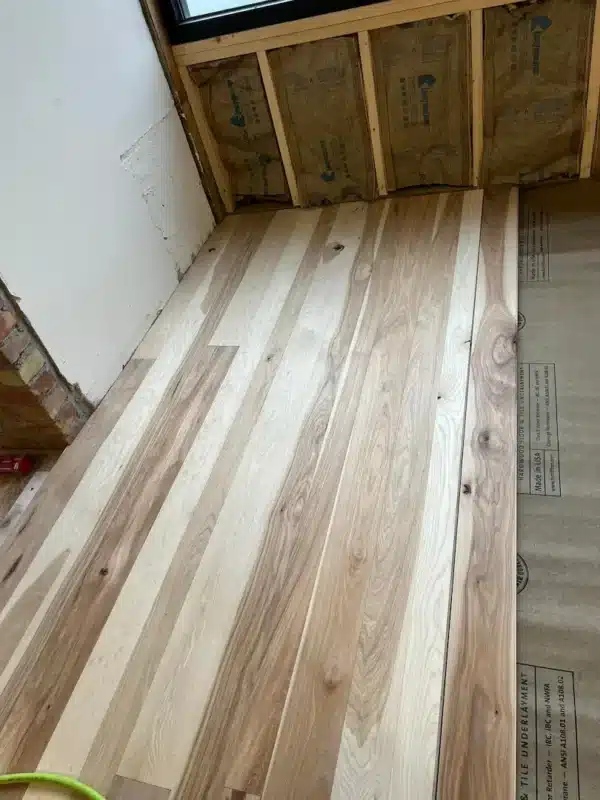
Hickory hardwood is one of the hardest common domestic flooring choices, around 1,820 lbf. It works well in busy homes because dents from dropped keys, chair legs, and dog claws are less likely than on softer woods.
The trade-off is visual movement. Hickory wood can swing from pale cream to dark brown in one room, which feels warm and rustic to some buyers but too busy in small modern spaces.
Walnut
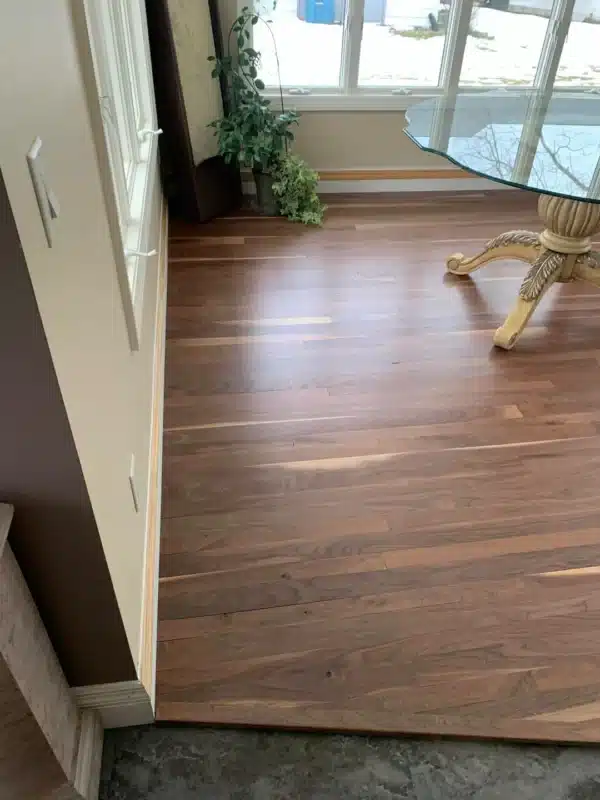
Walnut hardwood gives a rich chocolate-brown floor with a quiet, flowing grain. Black walnut wood is premium, but it rates only about 1,010 lbf, so it dents more easily than oak, maple, or hickory.
Walnut works best in lower-traffic luxury spaces, offices, bedrooms, and dining rooms where rugs and felt pads can protect it. Dark walnut also shows pale dust, pet hair, and fine scratches faster than a satin white oak floor.
Cherry
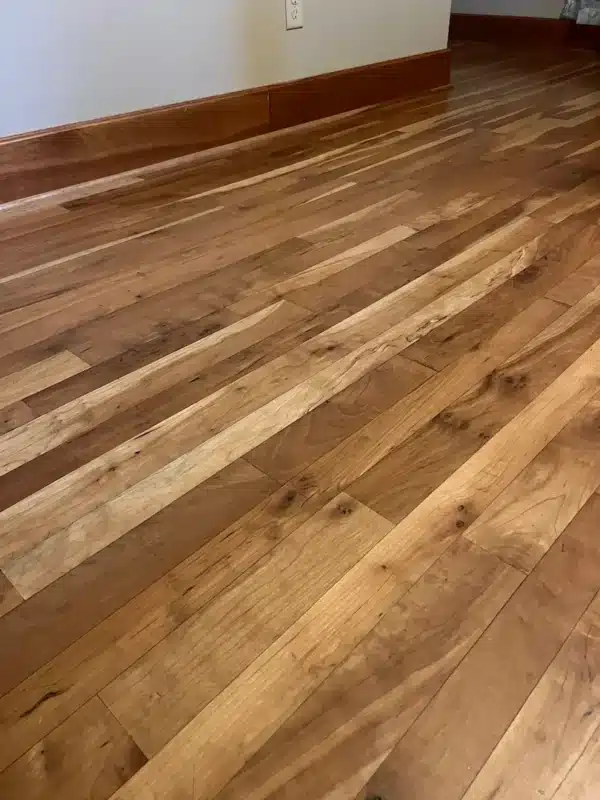
Cherry hardwood has warm red-brown color that darkens with age and sunlight. Cherry wood can make beautiful furniture and formal floors, but American cherry is soft at about 950 lbf.
Do not confuse American cherry with Brazilian cherry, also called jatoba. Brazilian cherry is a different species and rates around 2,350 lbf, with a darker, denser, more dramatic look.
Birch
Birch hardwood is light, moderately hard, and often more varied than maple. Yellow birch rates around 1,260 lbf, which places it near red oak in dent resistance.
Birch can be a good choice for light floors, but it needs careful sanding and stain control. Without conditioner or a compatible finish schedule, birch can show uneven color patches that look cloudy in afternoon light.
Ash
Ash hardwood has open grain similar to oak but often looks lighter and a bit more elastic. White ash rates about 1,320 lbf and has a long history in tool handles and sports equipment because it handles shock well.
Ash flooring can be excellent, but regional availability has changed in some markets because emerald ash borer damage reduced supply. Matching older ash repairs may take more searching than matching oak.
Mahogany
Mahogany hardwood is valued for reddish-brown color, fine grain, and stable behavior in furniture and premium interiors. True mahogany and trade-name substitutes can look similar in a showroom but differ in density, origin, and legal sourcing.
For floors, ask for species documentation and finish compatibility. Some tropical woods contain extractives that can slow curing, reject adhesives, or change the tone of oil-based finishes.
Teak
Teak hardwood is naturally oily and moisture resistant, which is why it appears in boats, outdoor furniture, and high-moisture applications. The surface can feel slightly waxy after fresh milling compared with dry oak or maple.
That oil content creates installation friction. Adhesives and finishes must be tested first, because some systems bond poorly unless the surface is cleaned or prepared exactly as the manufacturer says.
Acacia
Acacia hardwood has dramatic color variation, bold grain, and an exotic look at a more reachable price than many tropical floors. It often appears in flooring, furniture, and butcher-block-style surfaces.
Acacia products vary widely by source and grading. Before ordering, view several cartons or large samples, because one small display board may not show the full range from golden tan to dark brown.
Types of Hardwood Floors
Types of hardwood floors are defined by construction, finish timing, board format, and source material. Solid, engineered, prefinished, unfinished, parquet, reclaimed, and wide-plank floors each solve different problems.
| Floor Type | Construction | Best Location | Refinish Potential | Moisture Tolerance | Typical Buyer |
|---|---|---|---|---|---|
| Solid hardwood | One piece of wood | Above grade, wood subfloor | High | Low to moderate | Long-term homeowner |
| Engineered hardwood | Veneer over layered core | Slabs, basements, wide plank | Depends on wear layer | Moderate | Moisture-aware buyer |
| Prefinished hardwood | Factory finished boards | Fast remodels | Varies | Varies | Low-disruption project |
| Unfinished hardwood | Site sanded and finished | Custom stain or matching | High if solid | Varies | Custom design buyer |
| Parquet hardwood | Small patterned pieces | Formal rooms | Varies | Low to moderate | Pattern-focused buyer |
| Reclaimed hardwood | Salvaged and remilled wood | Rustic or historic spaces | Varies | Depends on milling | Character and reuse buyer |
Solid Hardwood
Solid hardwood is milled from one piece of wood, commonly 3/4 inch thick. It can often be sanded and refinished 4–6 times, depending on previous sanding, board profile, and remaining wear surface.
Solid wood feels substantial underfoot, with a crisp sound when tapped near a joist. It performs best above grade or on grade in rooms with stable humidity, and it is usually a poor choice for below-grade basements.
Engineered Hardwood

Engineered hardwood has a real hardwood veneer over a plywood, hardwood, or high-density core. It is real wood on top, unlike laminate, which uses a printed image layer.
The layered core gives better stability across width, especially over concrete, radiant heat systems, and wider boards. Refinish value depends on veneer thickness: under 1 mm usually cannot be sanded, around 2 mm may allow light sanding once, 3–4 mm can allow one or more refinishes, and 5–6 mm is premium.
Prefinished Hardwood
Prefinished hardwood is coated at the factory before installation. Many products use UV-cured or aluminum oxide finishes that resist abrasion better than standard site-applied polyurethane.
The benefit is fast installation, less odor, and no sanding dust hanging in the air. The trade-off is beveled edges, which can catch crumbs and create visible lines between boards.
Unfinished Hardwood
Unfinished hardwood is installed raw, then sanded, stained, and finished on site. It is the best path for custom stain, exact sheen, flush transitions, and matching older adjacent rooms.
The drawback is jobsite disruption. Sanding dust has a dry wood smell, finish can smell sharp during curing, and furniture must stay out longer than with factory-finished boards.
Parquet Hardwood
Parquet hardwood uses small wood pieces in geometric layouts. Herringbone, chevron, basketweave, and Versailles patterns can make a floor look classic or very modern depending on species and finish.
Patterned floors demand layout discipline. A small wall out of square can make a chevron pattern drift, so control lines and dry layouts matter more than they do on straight strip flooring.
Reclaimed Hardwood
Reclaimed hardwood comes from barns, factories, warehouses, and older structures. Buyers value nail holes, old saw marks, oxidized color, and the heavy feel of aged boards.
Inspect reclaimed wood for metal, contaminants, moisture, and structural defects. A hidden nail can spark against a saw blade, and old oil or dirt can interfere with adhesives and finishes.
Wide-Plank Hardwood
Wide-plank hardwood usually means boards 5 inches, 7 inches, 9 inches, or wider. Wide boards show more grain, fewer seams, and a calmer visual rhythm in open rooms.
Wider solid boards also show seasonal movement more clearly. Engineered construction is often safer for wide-plank floors, especially in climates with dry winters and humid summers.
Solid vs Engineered Hardwood
Solid vs engineered hardwood is mostly a construction and moisture question. Solid wood gives the most sanding life, while engineered wood gives better dimensional stability in tricky locations.
- Choose solid: above-grade rooms, long refinishing horizon, traditional nail-down installation.
- Choose engineered: concrete slabs, basements, wide planks, radiant heat, tighter moisture control needs.
- Common mistake: buying thin engineered flooring and expecting solid-like refinishing life.
Construction Differences
Solid hardwood is one continuous piece from face to back. Engineered hardwood combines a real hardwood wear layer with cross-oriented core layers that reduce expansion and contraction.
Moisture Performance
Moisture performance is where engineered hardwood usually wins. Cross-layer construction resists width movement better than solid wood, but engineered hardwood is still not waterproof.
Refinish Potential
Refinish potential depends on usable wood above the tongue or veneer. Standard 3/4-inch solid hardwood often survives multiple full sandings, while engineered products depend on wear-layer thickness.
Installation Locations
Installation location should guide the choice before color does. Solid hardwood belongs in dry, conditioned rooms; engineered hardwood fits more subfloors, including concrete slabs and some below-grade spaces.
Wear Layer Thickness
| Engineered Wear Layer | Refinish Outlook | Best Use | Risk |
|---|---|---|---|
| Under 1 mm | Usually not sandable | Low-cost updates | Shorter repair life |
| Around 2 mm | May allow light sanding once | Moderate traffic | Easy to sand through |
| 3–4 mm | Can allow one or more refinishes | Longer-term homes | Needs skilled sanding |
| 5–6 mm | Strongest engineered refinish value | Premium wide plank | Higher upfront cost |
Wear layer thickness controls repair options more than many labels admit. If a salesperson says an engineered board can be refinished, ask for the exact veneer thickness, not a vague durability claim.
Domestic vs Exotic Hardwood
Domestic hardwood is usually easier to buy, repair, and match, while exotic hardwood often offers denser wood, stronger color, and more sourcing checks. The better option depends on budget, style, installation skill, and documentation.
Domestic Hardwood Species
Domestic species include red oak, white oak, maple, hickory, walnut, cherry, birch, and ash. These woods suit many North American homes because trims, stairs, vents, and repair stock are easier to coordinate.
Exotic Hardwood Species
Exotic species include Brazilian cherry, teak, mahogany, acacia, ipe, ebony, padauk, and purpleheart. Dense tropical woods may need pilot holes, special adhesives, sharper blades, and finish tests before full installation.
Some exotic woods, such as ebony wood, padauk wood, and purpleheart wood, have striking color but are less common as full-home flooring because cost, movement, sourcing, and color change create extra limits.
Cost and Availability
Cost and availability favor domestic species in most repairs. If you need three replacement boards next year, oak will be simpler to find than a discontinued exotic blend from a private-label line.
Installation Complexity
Installation complexity rises with density, oil content, and board width. Very hard woods can split at fasteners, dull blades, resist sanding, and reject finishes if the system is not matched to the species.
Sustainability and Sourcing
Sustainable sourcing matters most with imported and tropical woods. Look for chain-of-custody documentation, reclaimed options, and certifications such as Forest Stewardship Council where available.
For engineered products, check indoor air rules too. The EPA formaldehyde standards cover composite wood products, and low-VOC finishes can reduce odor during the first weeks after installation.
Janka Hardness and Durability
Janka hardness measures dent resistance, not total floor durability. Finish quality, grain, color, installation, moisture control, and maintenance can matter as much as the species rating.
What Janka Measures
The Janka test measures the force needed to embed a steel ball halfway into wood. Ratings are often shown in pounds-force, and the Janka hardness guide from The Wood Database is a useful reference for comparing species.
The test helps predict dent resistance from chair legs, dropped objects, and heel pressure. It does not directly measure scratches, water resistance, finish abrasion, or how stable a board will be in winter.
Common Janka Ratings
| Wood Species | Janka Rating | Practical Meaning |
|---|---|---|
| American cherry | 950 lbf | Softer, best with care |
| Black walnut | 1,010 lbf | Premium look, dents easier than oak |
| Yellow birch | 1,260 lbf | Moderate domestic option |
| Red oak | 1,290 lbf | Reliable baseline |
| White ash | 1,320 lbf | Oak-like strength and grain |
| White oak | 1,360 lbf | Balanced and widely liked |
| Hard maple | 1,450 lbf | Hard, smooth, stain-sensitive |
| Hickory/pecan | 1,820 lbf | Very dent resistant domestic floor |
| Brazilian cherry/jatoba | 2,350 lbf | Hard exotic with strong color |
| Ipe/Brazilian walnut | 3,680 lbf | Extremely dense, harder to install |
Dent Resistance
Dent resistance improves as Janka rating rises, but load shape matters. A thin metal chair glide can dent a hard floor because the force is concentrated into a tiny point.
Scratch Resistance
Scratch resistance usually starts with the finish, not the wood. Sand grit under shoes can cut a glossy finish on hickory, while a matte textured oak may hide the same scratch better.
Finish Durability
Finish durability depends on chemistry, thickness, cure, sheen, and maintenance. Factory aluminum oxide finishes can resist abrasion very well, but they are harder to spot-repair invisibly than many site-applied finishes.
Hardwood Grain Patterns and Cuts
Hardwood grain patterns come from both species anatomy and how the log is cut. Board cut affects appearance, stability, waste, and price.
Open vs Closed Grain
Open-grain woods such as oak, ash, and hickory show visible pores and texture. Closed-grain woods such as maple, birch, and cherry look smoother, which can make sanding marks easier to see.
Plain-Sawn Boards
Plain-sawn boards are common and usually more affordable. They show cathedral grain and can move more across width than quarter-sawn or rift-sawn boards.
Quarter-Sawn Boards
Quarter-sawn boards show straighter grain and better dimensional stability. In oak, they can show medullary rays that flash like pale ribbons when the light hits at an angle.
Rift-Sawn Boards
Rift-sawn boards create very straight, linear grain. Designers often use rift white oak for modern interiors, but lower lumber yield pushes the price higher.
Live-Sawn Boards
Live-sawn boards use the full range of the log, mixing plain, quarter, and rift grain. European-style white oak floors often use live-sawn boards for wide, natural character.
Character Grades
Character grades include knots, mineral streaks, color variation, and small natural marks. Clear or select grades look cleaner, but rustic grades hide daily wear better and can cost less in some species.
Identify Your Hardwood Floor

What type of hardwood floor do I have? Start with grain, then check color, plank size, end grain, age, region, and hardness clues. Grain and board dimensions are more reliable than color because stain, UV, and finish ambering can change appearance.
| Visual Clue | Possible Species | What to Check Next | Reliability |
|---|---|---|---|
| Strong open pores | Oak, ash, hickory | End grain and color variation | High |
| Smooth pale face | Maple, birch | Blotching, grain transitions | Medium |
| Dark brown natural tone | Walnut, stained oak | Pores and protected areas | Medium |
| Reddish tone | Cherry, Brazilian cherry, stained oak | Hardness and UV darkening | Medium |
| 2 1/4-inch strip flooring | Often older oak | Home age and end grain | Medium |
Start With Grain
Grain is the first clue. Oak has strong open pores, maple is smooth and pale, hickory has bold contrast, walnut has flowing brown grain, cherry has warm red tones, and birch often looks like maple with more irregular shifts.
Check Color Carefully
Color can mislead. Oil-based polyurethane can amber, rugs can leave lighter rectangles, and sun-exposed boards can look different from boards under furniture.
Measure Plank Dimensions
Plank dimensions help date and identify a floor. Many older oak strip floors are around 2 1/4 inches wide, while wide planks may point to newer flooring, reclaimed boards, or custom milling.
Inspect End Grain
End grain gives stronger clues than face grain. Look at floor registers, thresholds, loose boards, or unfinished edges; ring-porous woods show distinct pore bands, while diffuse-porous woods look more even.
Consider Age and Region
Age and region narrow the list. Mid-century North American homes often have oak strip flooring, while older regional homes may include maple, pine, fir, or heart pine depending on local supply.
Use Hardness Clues
Hardness clues are risky. Fingernail or coin tests can damage finish and still mislead you because old finish, subfloor flex, and existing dents change the result.
Match for Repairs
Match repairs by grain, width, thickness, profile, and cut before matching color. Color can often be adjusted with stain, but mismatched pore structure or board width stands out after the finish dries.
Hardwood Flooring Cost by Type
Hardwood flooring cost depends on species, construction, grade, width, finish, labor, subfloor prep, and region. Material-only hardwood commonly runs about $3–$15+ per sq. ft., while installed hardwood commonly runs about $6–$25 per sq. ft.
Material Cost Ranges
Material cost is only the board price. Red oak, some birch, and some maple often sit in lower tiers, while walnut, reclaimed wood, wide-plank white oak, teak, mahogany, ipe, and Brazilian cherry can cost much more.
Installed Cost Ranges
Installed cost includes labor, fasteners or adhesive, underlayment, floor prep, transitions, trim, disposal, sanding, and finishing where needed. Premium exotic, reclaimed, custom, or wide-plank hardwood can exceed $25 per sq. ft. installed.
Species Price Tiers
| Tier | Common Species or Type | Why It Costs That Way |
|---|---|---|
| Budget | Red oak, some birch, some maple | Strong availability and standard milling |
| Mid-range | White oak, hickory, ash | Good demand, harder milling, style demand |
| Premium | Walnut, reclaimed hardwood, wide-plank white oak | Lower yield, longer boards, higher design demand |
| High premium | Teak, mahogany, ipe, Brazilian cherry | Import costs, density, sourcing checks, specialty installation |
Width and Grade Costs
Width and grade change price fast. Wider boards and longer lengths cost more because the mill needs larger, cleaner lumber; clear grades also cost more than character grades in many species.
Finish and Labor Costs
Finish and labor can shift the total more than species. Prefinished boards may cost more upfront but reduce jobsite finishing labor, while unfinished floors cost more in labor but allow custom color and a seamless surface.
Matching Existing Floors
Matching existing floors can cost more than installing new rooms. The installer must align species, board width, thickness, tongue profile, cut, stain, sheen, and age-darkened color.
Best Hardwood for High-Traffic Areas
Best hardwood for high-traffic areas usually means a hard species, durable finish, forgiving grain, and a color that hides dust and scratches. Hickory, hard maple, and white oak are strong candidates, but finish and texture can matter just as much.
Busy Households
Busy households need floors that hide normal wear. Satin white oak, wire-brushed hickory, and hard maple can work, but glossy dark finishes often show every footprint and fine scratch.
Homes With Dogs
Homes with dogs should prioritize finish durability, texture, and medium color. Trim nails, add runners, use felt pads, and choose matte or wire-brushed surfaces that hide claw trails better than dark gloss.
Kitchens
Kitchens need spill control. Hardwood can work if water is wiped fast, but engineered hardwood or stable white oak usually performs better than solid red oak in moisture-prone kitchen zones.
Basements
Basements favor engineered hardwood over solid hardwood. Moisture testing, vapor control, and manufacturer approval matter before any hardwood goes below grade.
Modern Interiors
Modern interiors often use white oak, maple, ash, and light engineered hardwood. Rift-sawn or quarter-sawn cuts create straighter lines, while matte finishes reduce glare and dust visibility.
Traditional Interiors
Traditional interiors pair well with red oak, white oak, walnut, and cherry. Narrow oak strip floors and medium brown stains still suit many older homes, dining rooms, and formal spaces.
Installation, Moisture, and Refinishing
Hardwood installation succeeds when the flooring, subfloor, moisture levels, adhesive or fastener system, and room conditions all match. Most failures start before the first board is fully installed.
Installation Methods
Installation methods include nail-down, staple-down, glue-down, and floating systems. Solid hardwood is often nailed to wood subfloors, while engineered hardwood is often glued, floated, or installed over concrete depending on product instructions.
Subfloor Requirements
Subfloor requirements include flatness, dryness, cleanliness, and strength. A dip underfoot can create hollow sounds, flex, squeaks, cracked adhesive, and uneven wear lines.
Moisture Testing
Moisture testing is not optional. The National Wood Flooring Association publishes installation guidance because moisture imbalance can cause cupping, crowning, gapping, buckling, and adhesive failure.
Acclimation Basics
Acclimation is not just leaving boxes inside for a set number of days. Wood must reach a moisture content that fits the occupied home environment, which may take more or less time depending on climate and storage.
Radiant Heat Compatibility
Radiant heat compatibility depends on species, construction, adhesive, and heat limits. Engineered hardwood is often safer than solid hardwood, and gradual temperature changes reduce stress.
Recoat vs Refinish
Recoat vs refinish depends on damage depth. A screen-and-recoat refreshes worn finish without deep sanding, while full refinishing removes finish and some wood to repair deeper wear, stains, or color changes.
Hardwood Maintenance by Species
Hardwood maintenance changes by finish, species, grain, color, and household use. The safest routine is dry cleaning, quick spill removal, gentle damp mopping, mats, and furniture protection.
Routine Cleaning
Routine cleaning should remove grit before it acts like sandpaper. Use a hardwood-safe vacuum head, a microfiber mop, and a damp—not wet—cleaning method approved by the floor manufacturer.
Oak Maintenance
Oak maintenance is forgiving because open grain hides mild wear. Avoid soaking the pores with wet mops, and refresh high-traffic lanes before gray worn spots expose raw wood.
Maple Maintenance
Maple maintenance calls for scratch prevention because the smooth surface shows marks. Use clean pads under chairs and avoid dark stain touch-ups unless tested, since maple can blotch.
Walnut Maintenance
Walnut maintenance should focus on dent prevention. Rugs, felt pads, and careful furniture moves help because walnut is softer than its premium look suggests.
Cherry Maintenance
Cherry maintenance must account for color change. Move rugs from time to time during early years so UV exposure doesn’t leave sharp light rectangles on the floor.
Scratch Prevention
Scratch prevention works better than repair. Keep grit outside with entry mats, trim pet nails, lift furniture instead of dragging it, and choose satin or matte sheen if visibility worries you.
Long-Term Longevity
Long-term longevity comes from moisture control and timely recoating. Waiting until finish is fully worn through means sanding deeper, losing more wood, and risking darker stains that won’t lift cleanly.
Risks, Myths, and Hardwood Trends
Hardwood risks include moisture damage, scratches, dents, color change, installation failure, and unrealistic expectations. Current buyer preferences favor natural white oak, matte finishes, textured surfaces, wide engineered planks, reclaimed wood, and low-VOC products.
- Key takeaway: harder wood is not always the better floor.
- Real-world fix: choose the species, finish, board width, and construction as one system.
- Trend note: warmer natural tones are replacing many gray-heavy floors.
Moisture Risks
Moisture risks include cupping, crowning, gapping, buckling, and moldy odors near trapped water. Engineered hardwood is more stable than solid hardwood, but no real hardwood floor is waterproof.
Scratch and Dent Myths
Scratch myths start when buyers treat Janka ratings like finish ratings. A hard floor can still scratch if grit cuts the coating, and a softer textured floor can hide daily marks better.
Harder Is Not Always Better
Harder is not always better because very dense woods can be harder to nail, glue, sand, stain, and repair. Some dense exotic boards feel almost stone-like under tools and can punish dull blades fast.
Color Change Over Time
Color change is normal. Cherry darkens, walnut can mellow, oil-based finishes amber, and rugs can create uneven exposure marks that surprise homeowners during room changes.
Installation Failure Risks
Installation failure often traces back to skipped moisture tests, poor acclimation, wrong adhesive, missing expansion gaps, uneven subfloors, or solid hardwood placed below grade. The floor may look fine for weeks, then rise with a hollow pop after humidity shifts.
Hardwood Alternatives
Hardwood alternatives include laminate, luxury vinyl plank, bamboo, cork, tile, and softwood floors. Laminate and LVP can handle scratches or water better in some homes, but they do not offer the same sanding life as real hardwood.
Bamboo is technically grass, not hardwood, though strand-woven bamboo can be very hard. Quality varies by manufacturer, adhesive, finish, and core, so compare product data rather than the material name alone.
Emerging Buyer Preferences
Buyer preferences now lean toward light natural white oak, matte or satin sheen, wire-brushed texture, character grade, live-sawn boards, wide engineered planks, reclaimed hardwood, FSC-certified sourcing, and low-VOC finishes.
Practical use shows one common edge case: buyers love dark floors in samples, then dislike the dust, footprints, and pet hair once the whole room is installed. A medium natural tone often gives the best balance between beauty and easy living.
FAQs
What Are The Main Types Of Hardwood Floors?
The main types of hardwood floors are solid hardwood and engineered hardwood. Solid hardwood is made from a single piece of wood, while engineered hardwood has a real wood top layer over a stable core. Each type offers different benefits for installation, durability, and moisture resistance.
What Type Of Hardwood Floor Do I Have?
You can tell by checking the edge, underside, or a removed floorboard if possible. Solid hardwood is wood all the way through, while engineered hardwood has layered construction with a visible top veneer. If you are unsure, a flooring professional can identify it quickly.
Which Hardwood Flooring Type Is The Most Durable?
Engineered hardwood is often the most durable for changing humidity and busy households. Solid hardwood can also last for decades and be refinished many times, but it is more sensitive to moisture and movement. The best choice depends on where the floor is installed and how much wear it gets.
Is Engineered Hardwood Better Than Solid Hardwood?
Engineered hardwood is better for moisture-prone areas and easier installation, while solid hardwood is better for long-term refinishing and classic appeal. Neither is always better in every situation. The right option depends on your room, budget, and how long you want the floor to last.
How Can I Tell If My Floor Is Oak Or Maple?
You can tell oak and maple apart by looking at the grain pattern and color. Oak usually has a stronger, more open grain, while maple looks smoother and more uniform. A close photo or a sample from a hidden area can help confirm the wood type.
Affiliate Disclosure: Some links in this post are affiliate links. If you make a purchase through these links, we may earn a small commission at no extra cost to you. We only recommend products we genuinely believe in.