

Shellbark hickory, Carya laciniosa, is a large North American hardwood recognized by shaggy bark, stout twigs, usually seven leaflets, and exceptionally large edible nuts. It grows mainly in fertile bottomlands, differs from shagbark hickory in several reliable traits, and needs ample space plus patience when planted.
Table of Contents
Shellbark Hickory at a Glance
A mature shellbark hickory tree commonly stands 60–80 feet tall with a 40–60-foot crown. Rich forest sites can produce trees over 100 feet, while poor drainage, compacted soil, or deep shade limits growth.
Carya laciniosa Defined
Carya laciniosa is a deciduous, nut-producing hickory native to eastern and central North America. Its signature combination is shaggy gray bark, large compound leaves, heavy fruit, and sweet kernels enclosed by hard shells.
Names and Classification
The species belongs to Juglandaceae, the walnut family, and the genus Carya. Kingnut hickory, big shellbark hickory, bottom shellbark, and thick shellbark are established common names; “hickory shellbark” is a less natural wording variant used in some searches.
Size and Longevity
Shellbark grows slowly but may live 200 years or longer on a favorable site. It’s commonly associated with USDA Zones 5–8, though cold tolerance differs among seed sources, so locally sourced stock often adapts better than material moved across several climate regions.
Key Characteristics
- Alternate compound leaves, usually with seven serrated leaflets
- Long gray bark plates that pull away from the trunk
- Large terminal buds on stout yellow-brown or orange-brown twigs
- Thick, four-part husks surrounding large hard-shelled nuts
- Moist floodplain and river-bottom habitat
- Sweet kernels that require a strong cracker to extract
Shellbark Hickory Tree Identification
Reliable shellbark hickory identification uses bark, leaflets, buds, fruit, habitat, and location together. Shaggy bark by itself isn’t enough because shagbark hickory develops a similar trunk texture.
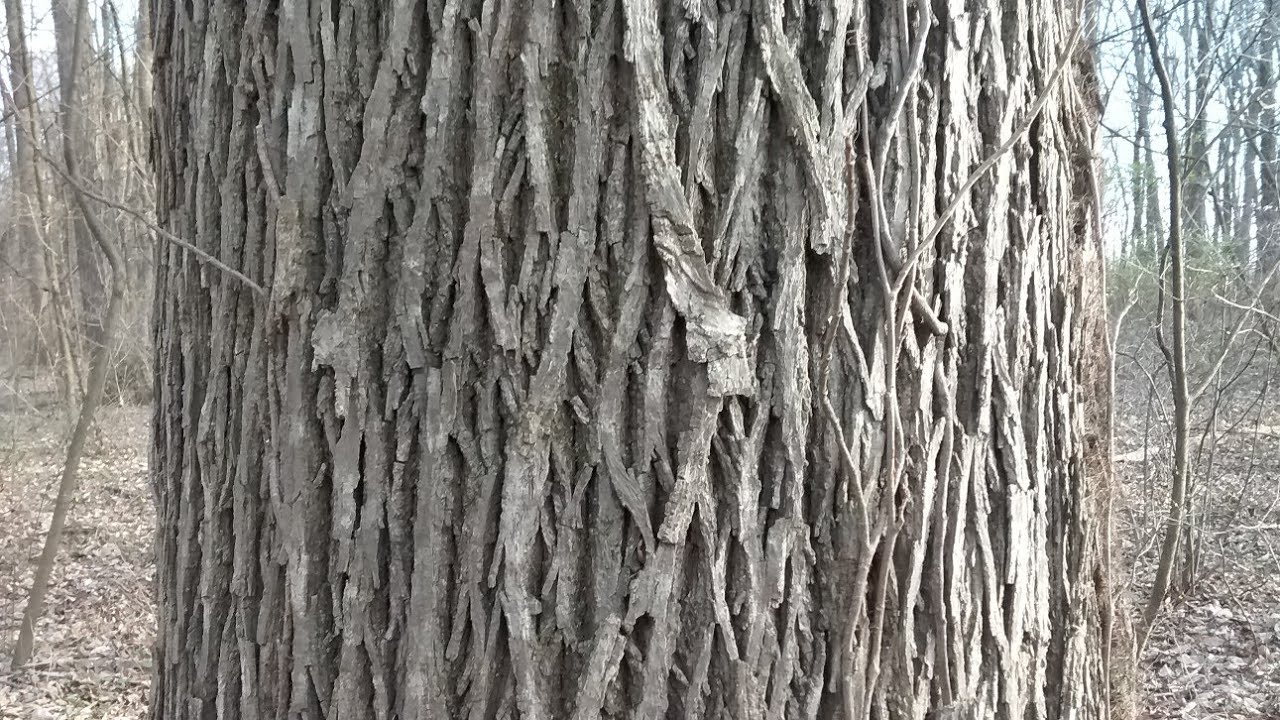
Mature and Young Bark
Mature bark separates into long loose plates that curl outward, leaving a rough surface that feels ridged and slightly springy at the lifted edges. Young trunks remain comparatively tight and smooth, so a sapling can lack the feature implied by the shellbark name.
Compound Leaves
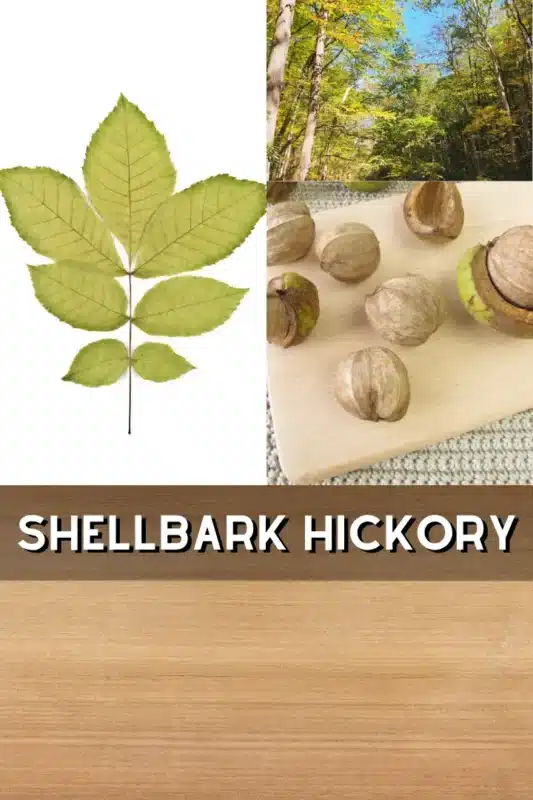
Each complete leaf is commonly 10–24 inches long and carries usually seven leaflets, though five or nine can occur. The upper leaflets are largest, their edges feel sharply toothed, and autumn foliage changes from yellow to golden brown.
Count leaflets from the attachment point to the terminal leaflet. Beginners often count damaged fragments or mistake each leaflet for a full leaf; follow the central stalk back to the twig before recording the number.
Twigs and Buds
Shellbark has stout twigs and conspicuously large terminal buds. During winter, compare twig thickness, bud size, and prominent leaf scars rather than relying on bark, particularly on younger trees or possible hybrids.
Flowers and Pollination
The tree is monoecious: hanging male catkins and small terminal female flowers occur on the same plant. Wind carries pollen in spring as leaves open, but male pollen release and female receptivity may overlap poorly on a lone tree.
Fruit, Husk, and Nut
Fruit often measures about 1.5–2.5 inches, with size varying by genetics and site. The fruit includes the outer husk and inner nut; the hard shell lies beneath the husk and surrounds the edible kernel.
Mature husks turn brown and split along four seams. The clean nut feels unexpectedly heavy when well filled, while insect-damaged or empty nuts often feel light and make a faint dry rattle.
Field Identification Checklist
Field experience shows that three matching traits provide a safer identification than one dramatic feature. Photograph the whole leaf, terminal bud, fruit beside a ruler, trunk, and surrounding habitat before collecting any sample.
- Confirm that several intact leaves carry seven leaflets.
- Check for stout twigs and large terminal buds.
- Measure the fruit and inspect its thick splitting husk.
- Record whether the tree occupies a floodplain or fertile bottomland.
- Compare its location with a verified regional distribution map.
- Treat intermediate specimens as possible hybrids.
Shellbark vs Shagbark Hickory

In a shellbark vs shagbark hickory comparison, shellbark usually has seven leaflets, larger fruit, heavier husks, stouter twigs, and a stronger connection to wet bottomlands. Shagbark usually has five leaflets and occupies a broader mix of upland and well-drained sites.
Comparison Table
| Characteristic | Shellbark hickory | Shagbark hickory |
|---|---|---|
| Scientific name | Carya laciniosa | Carya ovata |
| Usual leaflet count | 7 | 5 |
| Fruit and nut | Larger and heavier | Usually smaller |
| Husk | Exceptionally thick | Thick but less massive |
| Twigs and buds | Stouter and larger | More slender |
| Typical habitat | Moist bottomlands | Broad range, often uplands |
| Bark | Loose gray plates | Long peeling strips or plates |
Reliable Diagnostic Traits
Use at least three diagnostic traits. A tree with mostly seven-leaflet leaves, massive four-part husks, large buds, and a river-bottom setting is a strong shellbark candidate; unusual leaflet counts alone don’t disprove the identification.
Other Confusing Hickories
Mockernut hickory often has seven leaflets and thick husks, but its bark usually forms tight intersecting ridges rather than long loose plates. Pignut hickory tends to have smaller fruit, thinner twigs, and fewer leaflets.
Dunbar’s Hickory Hybrid
Dunbar’s hickory, Carya × dunbarii, results from shellbark and shagbark parentage. Intermediate buds, leaflet numbers, nuts, or bark can defeat visual identification, so exact confirmation may require a regional botanical key or herbarium review.
Native Range, Habitat, and Ecology
Shellbark hickory occurs in scattered parts of eastern and central North America, especially along major river systems. It favors deep fertile bottomlands rather than being equally common across the eastern forest.
Geographic Range
Populations occur around portions of the Great Lakes, Midwest, Ohio Valley, Mississippi Valley, and connected lowlands. The USDA PLANTS profile provides county- and state-level distribution data, though a mapped county doesn’t prove that every suitable-looking site contains the species.
Bottomland Habitat
Typical habitat includes floodplains, river terraces, stream bottoms, and deep alluvial soils. Associated trees may include sycamore, silver maple, green ash, bur oak, swamp white oak, cottonwood, elm, walnut, and other hickories.
Soil and Flooding Tolerance
The roots handle periodic flooding better than those of many upland hickories, but stagnant water can still exclude oxygen and kill fine roots. Moist silt loam with open pore space suits the tree better than a compacted clay depression that stays flooded.
Wildlife Value
Nuts feed squirrels, chipmunks, mice, deer, turkeys, and other wildlife. Older trees add cavity habitat, while foliage supports native insects that become food for woodland birds; this ecological value also means intense competition during harvest.
Conservation and Foraging
Bottomland clearing, altered rivers, and development have reduced suitable habitat in some regions. Collect only with permission, follow public-land rules, leave sound nuts for wildlife and regeneration, and avoid cutting bark or branches from locally uncommon trees.
Shellbark Hickory Nuts

Yes, you can eat shellbark hickory nuts. Their kernels are sweet and rich, but thick shells and internal partitions make processing slower than cracking pecans or thin-shelled walnuts.
Edibility and Flavor
A sound kernel tastes buttery and mildly sweet, sometimes with a toasted maple-like finish. Wild trees vary: one may yield plump kernels, while a nearby seedling produces poorly filled nuts or shells that trap the meat in narrow chambers.
Nutrition Facts
Generic dried hickory nuts provide roughly 657 calories per 100 grams, with about 64 grams of fat, 13 grams of protein, and 18 grams of carbohydrate. These are group-level figures from USDA FoodData Central, not laboratory values exclusive to Carya laciniosa.
Harvest Timing
Nuts commonly fall from September into October, with timing shifting by latitude and weather. Gather fruit after the husk browns, splits at its seams, and drops naturally; immature green fruit removed from branches rarely improves in storage.
Sorting and Cleaning
Wear gloves, remove loose husks, rinse away residue, and dry the nuts in a single layer with airflow. Reject mold, exit holes, soft spots, decay, or sour odors; floating can reveal some empty nuts, but well-filled nuts occasionally float too.
Cracking Hard Shells
A light kitchen cracker often flexes without opening shellbark nuts. Use a heavy lever cracker, bench vise, or controlled hammer on a stable block, apply force across more than one axis, and wear eye protection because sharp shell chips jump without warning.
Stop before the shell becomes gravel. Two or three controlled fractures leave larger kernel sections, and a narrow nut pick reaches chambers that fingers can’t enter.
Storage and Rancidity
Keep dry whole nuts in a cool, pest-resistant container. Refrigerate shelled kernels for short use or freeze them airtight; discard pieces with a paint-like, bitter, soapy, or stale-oil smell because their high fat content oxidizes readily.
Recipes and Culinary Uses
Use chopped kernels in cookies, quick breads, pie filling, granola, brittle, candy, nut butter, or hickory-nut milk. For recipes with hickory nuts, toast small pieces at moderate heat and watch closely; their edges shift from fragrant to scorched within minutes.
Allergy and Food Safety
Hickory belongs to the walnut family, so people with a tree-nut allergy need medical guidance before eating it. Never taste moldy, insect-filled, discolored, or rancid kernels, and keep cracked pieces away from young children who may choke on hard fragments.
Growing a Shellbark Hickory Tree
Grow shellbark hickory in full sun, deep moist soil, and a permanent position with room for a broad canopy. Its slow growth and taproot make careful site selection more useful than later relocation.
Landscape Benefits and Limits
The tree offers shade, yellow fall color, wildlife food, edible nuts, and a long life. Its limitations include hard falling nuts, husk litter, slow growth, difficult transplanting, broad roots, and eventual limb risk near buildings or parked vehicles.
Site and Space Requirements
Allow for at least a 40–60-foot mature crown and keep the tree clear of utility lines, roofs, pavement, and narrow tree lawns. Avoid shallow bedrock, construction compaction, dense overhead shade, and permanently saturated soil.
Growth and Transplanting
Young shellbarks invest heavily below ground, so short annual shoots don’t always signal failure. Repeated potting can bend or circle the developing taproot; direct sowing or an early move from a deep container reduces deformation.
Nut-Bearing Timeline
Seed-grown forest trees may need 40 years or more for meaningful crops, with strongest production in maturity. The USDA Forest Service species account documents the tree’s growth and seed-production pattern; grafted selections may bear earlier, but results remain site- and cultivar-dependent.
Pollination and Mast Crops
A single tree can set nuts, yet a genetically distinct hickory with compatible bloom timing may improve pollination. Expect irregular mast crops: spring weather, drought, insects, tree maturity, and the previous crop all affect annual yield.
Buying Seeds and Trees
Confirm the botanical name, harvest season, storage method, stratification status, and whether stock is a seedling or grafted cultivar. A seedling won’t reproduce a named parent’s nut quality true to type, while a grafted tree offers more predictable traits.
Seed Stratification and Sowing
Place fresh mature nuts in a damp, airy medium for roughly 90–120 cold days near 33–40°F. Keep the medium moist rather than wet, check for mold and early roots, then sow about 1–2 inches deep in the final site or a deep container.
Rodents can remove every planted nut overnight. Pin hardware cloth over the bed with enough clearance for shoots, then remove it before stems press against the mesh.
Optional Seed Product
This seed offers a propagation option for patient growers, not a promise of germination, early bearing, or parent-like nuts. Verify freshness and whether cold treatment has begun before purchase.

King Nut Hickory Seed
- Shellbark hickory tree seed
- Produces large edible nuts
- Ideal for native landscape planting
- Long-lived shade tree potential
- Best suited to patient gardeners
 Buy on Amazon
Seedling Transplanting
Move seedlings while small, keep roots damp, and protect the taproot from bending or drying. Set the root flare at grade, backfill mainly with native soil, water thoroughly, and spread mulch in a broad shallow ring without touching the trunk.
Watering and Establishment
Keep the root zone consistently moist during establishment without leaving it saturated. Deep watering followed by a partial drying interval promotes wider rooting; adjust frequency for rainfall, heat, drainage, and soil texture rather than using a fixed calendar.
Fertilizing and Pruning
Use a soil test before applying fertilizer, since high nitrogen can produce weak, fast shoots without fixing drainage or root injury. Prune broken limbs, dead wood, competing leaders, and poor unions while retaining most of the live young crown.
Field Experience Insights
The most common establishment mistake is planting a small seedling too deep. A buried flare stays damp, bark softens at the soil line, and the trunk can feel slightly spongy; expose the flare, widen the mulch ring, and keep mowers away.
Another frequent error is judging moisture from the surface. Push a narrow trowel 4–6 inches into the outer root zone: cool crumbly soil is usually adequate, powdery soil needs water, and slick soil that smears between fingers is too wet.
Pests, Diseases, and Stress
Healthy shellbark hickories tolerate minor leaf feeding and late-season spots, but root damage, compaction, drought, and prolonged flooding weaken their defenses. Diagnose the site conditions first before treating visible insects or foliage.
Common Insect Pests
Possible pests include bark beetles, shuckworms, nut weevils, aphids, borers, scale, webworms, and caterpillars. Watch for premature nut drop, exit holes, frass, thinning foliage, and progressive twig dieback; one chewed leaf rarely warrants treatment.
Hickory Diseases
Anthracnose, leaf spots, powdery mildew, cankers, and root diseases can affect hickories. Cosmetic spotting late in summer often needs no action, while enlarging bark lesions, dead branches, and crown thinning call for a closer diagnosis.
Environmental Stress
Major stresses include trenching, compacted fill, deicing salts, drought after planting, stagnant flooding, mower wounds, and mulch piled against bark. Construction damage may remain hidden for years because root loss precedes visible crown decline.
When to Call an Arborist
Request a qualified arborist when large dead limbs threaten targets, the trunk develops cracks or cavities, mushrooms appear near major roots, or the crown declines quickly. Mature hickory limbs are dense and heavy, making high pruning unsafe without rigging and aerial equipment.
Shellbark Hickory Wood Uses
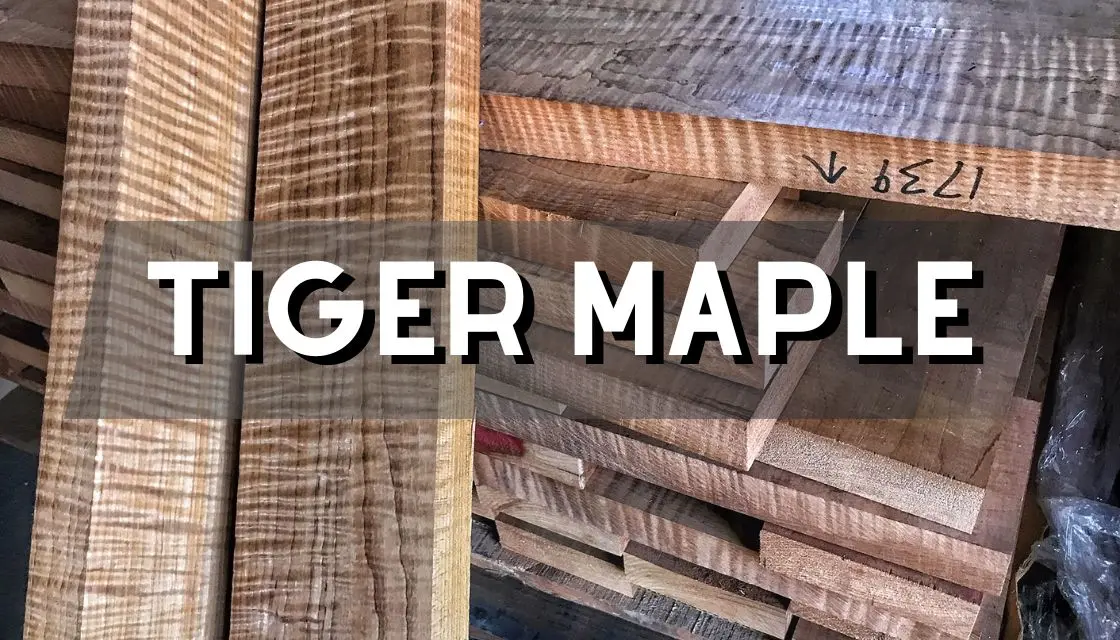
Shellbark hickory wood is hard, dense, wear-resistant, and highly resistant to shock. Mills commonly sell it with other true hickory wood because species are difficult to separate reliably after logs are processed.
Wood Characteristics
The wood combines high density and toughness, qualities that suit impact-bearing parts but increase tool wear and machining effort. Fresh boards feel unusually heavy, and changing grain direction can tear out during planing if knives are dull.
Hickory’s place on the wood hardness scale explains its strong wear performance. That hardness doesn’t make every board stable: poor drying can still produce checks, distortion, or internal stress.
Traditional and Modern Uses
Common uses include tool handles, furniture, flooring, sporting goods, ladder parts, and equipment components. Straight-grained stock works well where impact resistance matters, while figured or irregular boards may suit smaller pieces after careful drying and grain inspection.
Firewood and Smoking Wood
Dry shellbark hickory makes hot, long-burning firewood and aromatic smoking wood. Split dense rounds before full seasoning, since dry hickory can resist a hand maul, and use moderate smoking quantities to avoid an acrid, bitter coating on food.
FAQs
How Do You Identify A Shellbark Hickory Tree?
You can identify a shellbark hickory by its large, compound leaves, shaggy bark, and unusually big nuts. It typically has five to nine leaflets, with the terminal leaflet largest, and bark that peels into long, thick plates.
Are Shellbark Hickory Nuts Edible?
Shellbark hickory nuts are edible, with a sweet, rich flavor when fully ripe. Crack the thick husk and hard shell after the green outer husk splits in fall. The kernels can be eaten raw, toasted, or used in baking, although they are often harder to extract than pecans.
What Is The Difference Between Shellbark And Shagbark Hickory?
Shellbark hickory is generally a larger, wetter-site tree with bigger nuts and more leaflets than shagbark hickory. Shellbark usually has seven to nine leaflets and thick, broad bark strips, while shagbark commonly has five leaflets and looser, narrower bark. Both produce edible nuts and have peeling bark.
How Long Does A Shellbark Hickory Take To Produce Nuts?
A shellbark hickory usually begins producing nuts after about 10 to 15 years, although reliable crops may take longer. Trees grown from seed can take 20 years or more, while grafted or well-established nursery trees may fruit sooner. Nut production improves as the tree matures and receives full sun.
Can You Grow Shellbark Hickory From Seed?
Yes, you can grow shellbark hickory from seed, but the process is slow and requires cold stratification. Plant fresh, cleaned nuts outdoors in fall or chill them in moist medium for roughly 90 to 120 days before spring planting. Protect seedlings from squirrels and keep the deep taproot undisturbed.
Affiliate Disclosure: Some links in this post are affiliate links. If you make a purchase through these links, we may earn a small commission at no extra cost to you. We only recommend products we genuinely believe in.