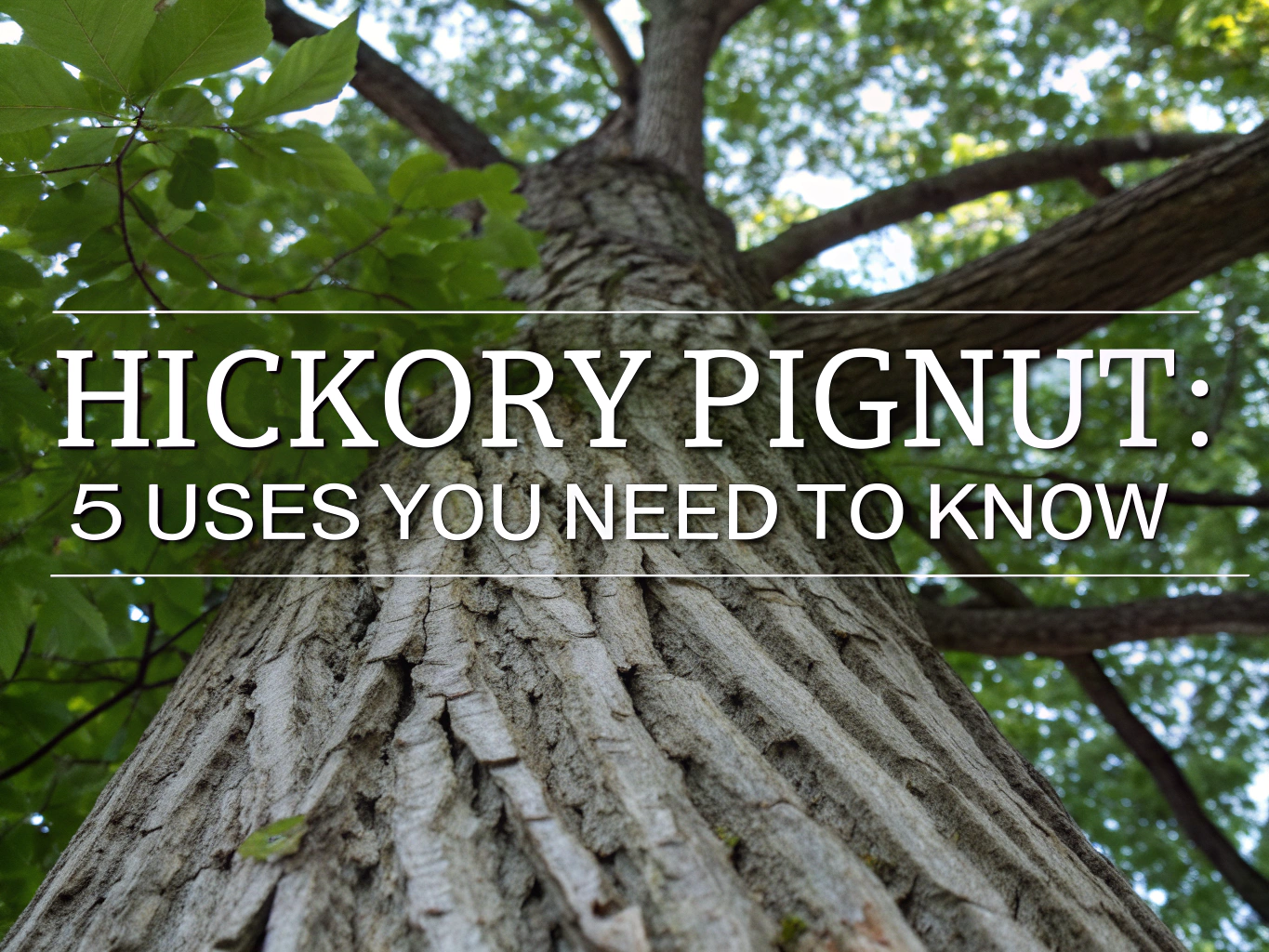

Pignut hickory, Carya glabra, is an eastern North American hardwood identified by smooth compound leaves, tight gray bark, and pear-shaped fruit. Its nuts are edible, yet the thick shell, small kernel, and variable bitterness limit their value as human food.
Table of Contents
Pignut Hickory at a Glance
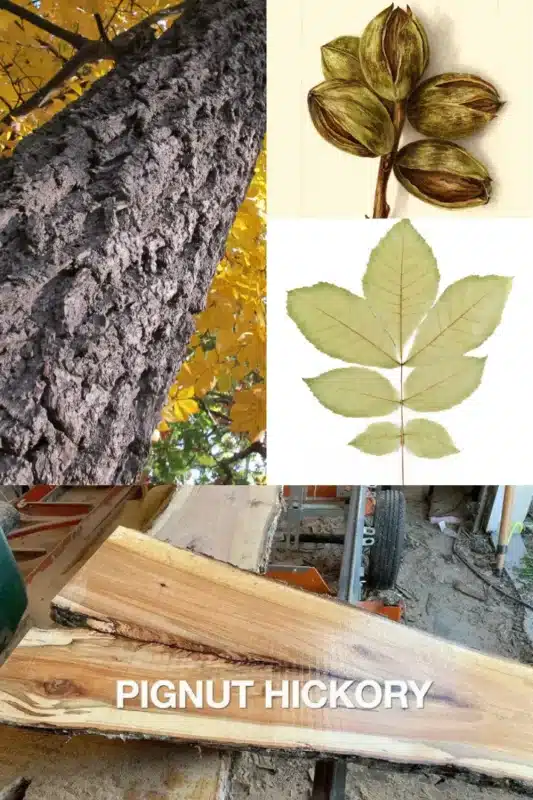
Pignut hickory is a native canopy tree found mainly in well-drained oak–hickory forests. Five leaflets are common, mature bark stays tighter than shagbark bark, and the fruit often narrows near its base like a small pear.
Quick Facts Table
| Feature | Pignut hickory details |
|---|---|
| Scientific name | Carya glabra (Mill.) Sweet |
| Family | Juglandaceae, the walnut family |
| Plant type | Deciduous hardwood tree |
| Native range | Eastern North America |
| Typical height | 50–80 feet; exceptional forest trees may reach about 100 feet |
| Typical spread | 25–40 feet |
| Leaflets | Usually five, sometimes seven |
| Fruit | Pear-shaped to nearly round, usually 1–2 inches |
| Nut flavor | Variable; mild on some trees, bitter or astringent on others |
| Growth rate | Slow to moderate |
| Pollination | Wind-pollinated; male and female flowers occur on one tree |
| Main uses | Wildlife habitat, lumber, handles, flooring, fuel, charcoal, and smoking wood |
Identity and Classification
Carya glabra belongs to Juglandaceae, alongside walnuts, pecans, and other true hickories. The accepted botanical record from Kew Science Plants of the World Online places it in the genus Carya, separate from Chinese hickories such as Carya cathayensis.
This American hickory tree is monoecious: separate male and female flowers grow on the same specimen. Wind transfers pollen, so a lone tree may set some fruit, while nearby genetically different hickories often support better pollination.
Size, Growth, and Lifespan
A mature pignut hickory commonly reaches 50–80 feet tall with a 25–40-foot crown. Forest trees competing for sunlight tend to form long, straight trunks, while open-grown trees branch lower and develop broader crowns.
Growth ranges from slow to moderate, with root growth often outpacing visible shoot growth during the seedling stage. The USDA Forest Service reports that some trees can live near 300 years, though storms, root injury, drought, and competition shorten that span at many sites.
Name and Related Hickories
The name refers to farmers allowing hogs to eat the nuts. The label doesn’t mean toxic, nor does “hickory pignut” describe a separate plant.
Close relatives include shagbark, shellbark, mockernut, bitternut, pecan, and red hickory. Our guides to shellbark hickory and pecan wood show how members of one genus can differ greatly in bark, fruit, and food value.
Taxonomic Variations
The boundary between pignut and red hickory, Carya ovalis, remains a taxonomic challenge. Regional floras may treat red hickory as a distinct species, a close relative, or part of a wider pignut complex, so identification keys and range maps don’t always match.
Coast pignut hickory is sometimes listed as Carya glabra var. megacarpa. For practical field work, record location and habitat, then compare several leaves, mature fruit, winter buds, and bark rather than forcing a name from one uncertain trait.
How to Identify Pignut Hickory
Reliable pignut hickory identification combines five smooth leaflets, a modest brown terminal bud, tight ridged bark, and pear-shaped fruit with a thin, incompletely splitting husk. Leaflet count alone isn’t dependable because several hickories produce five or seven leaflets.
Leaves and Autumn Color
Pignut hickory leaves grow alternately along the twig and are pinnately compound. A full leaf commonly measures 8–12 inches and carries five leaflets, though vigorous shoots can produce seven.
The terminal leaflet is usually the largest, with the upper side pair larger than the lower pair. Serrated edges feel finely saw-toothed against a fingertip, while the surfaces lack the dense, velvety fuzz found on mockernut hickory.
Autumn foliage usually changes to yellow or gold. Color intensity varies with moisture, temperature, leaf health, and exposure, so fall color has little diagnostic value by itself.
Young and Mature Bark
Young pignut hickory bark is smooth to lightly ridged and gray. With age, it develops narrow interlacing ridges and shallow furrows that can form a compact diamond pattern.
Running a palm across mature bark produces a firm, ribbed feel rather than the loose, springy plates of shagbark. Old pignuts can become scaly, so bark alone can mislead a beginner examining a weathered tree.
Twigs, Buds, and Pith
Twigs are reddish brown to gray-brown and relatively smooth. The terminal bud is small to medium, brown or reddish brown, and far less swollen than the large, fuzzy bud of mockernut hickory.
Leaf scars are broadly heart-shaped or three-lobed. A clean crosscut through a dead twig reveals chambered pith, though this confirms the hickory or walnut group rather than pignut hickory by itself.
Flowers and Pollination
Male flowers hang in slim green catkins as leaves expand in spring. Female flowers are small and inconspicuous, appearing near the tips of fresh shoots where windblown pollen can reach them.
Cold snaps, rain during pollen release, low tree vigor, and distance from compatible hickories can reduce fruit set. Heavy crops often occur in mast years, followed by lighter production rather than a uniform annual harvest.
Fruit, Husk, and Shell
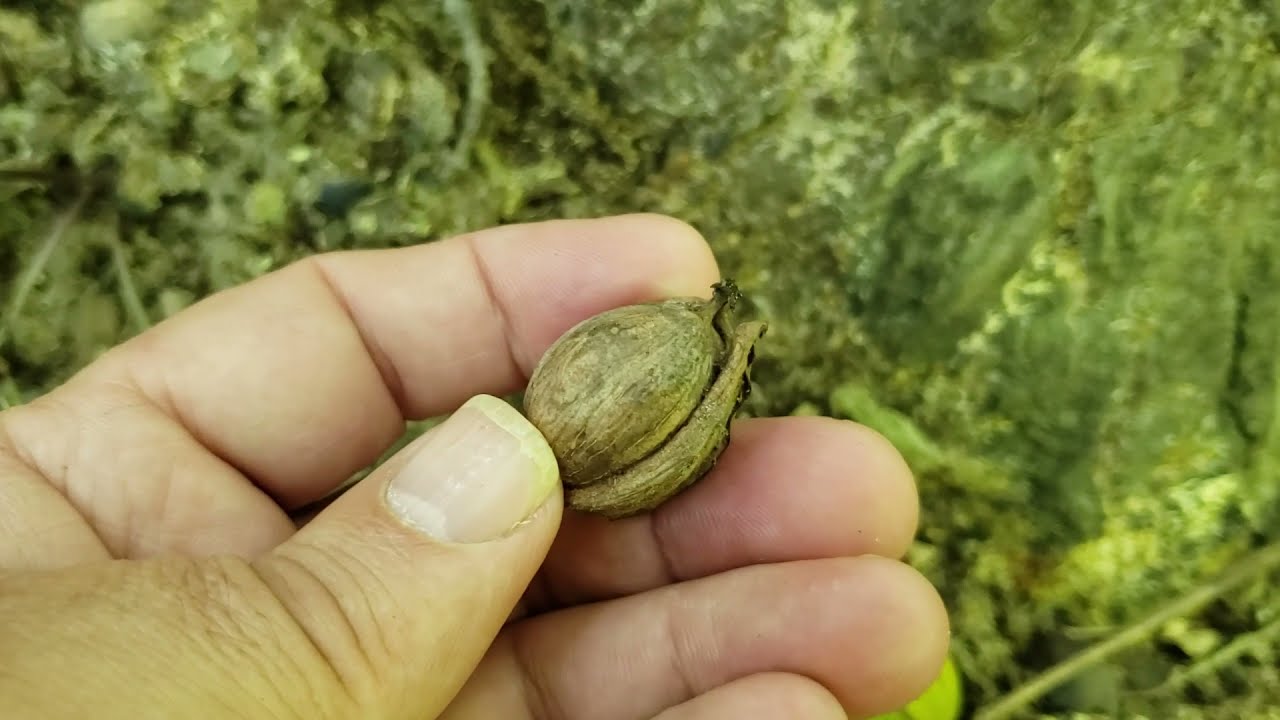
Pignut hickory fruit is commonly 1–2 inches long and pear-shaped to almost round. The green outer husk turns brown in early autumn and remains fairly thin compared with a mockernut or shagbark husk.
At maturity, the husk may split partway from the tip or break open irregularly. Inside sits a hard, thick shell with a relatively small kernel, which explains why the pignut hickory nut gives little food for the effort required to crack it.
Field Identification Checklist
Use this multi-trait checklist on mature material. Fruit and buds carry more weight than one damaged leaf or an unusual patch of bark.
- Confirm alternate, pinnately compound leaves.
- Look for five leaflets on several leaves; accept occasional seven-leaflet leaves.
- Check that the terminal leaflet is the largest.
- Feel for comparatively smooth leaves and twigs.
- Look for a modest brown or reddish-brown terminal bud.
- Reject classic shagbark if the trunk has long, loose bark plates.
- Search beneath the crown for pear-shaped fruit.
- Check whether the thin husk splits incompletely or irregularly.
- Use a regional key if red hickory occurs nearby.
A useful field habit is to collect three evidence sets: leaves from a sunlit branch, intact fruit from directly beneath the crown, and a clear bud photograph. Mixed forest litter often places one species’ nut beneath another tree, which causes many false identifications.
Are Pignut Hickory Nuts Edible?
Yes, properly identified pignut hickory nuts are edible for humans. Their kernels may taste mild, oily, bitter, or mouth-drying, and the hard shell often holds too little meat to make gathering efficient.
Flavor and Food Value
One tree can produce acceptable nuts while a nearby tree produces strongly astringent kernels. A bitter sample leaves a dry puckering sensation across the tongue and cheeks, while better kernels taste faintly sweet and oily.
This variation explains conflicting answers to “are pignut hickory nuts edible?” Edible describes safety after sound identification; it doesn’t promise pleasant flavor or easy shelling.
Harvesting Mature Nuts
Collect nuts after their husks turn brown and the fruit falls naturally, often during September or October. Choose fresh heavy nuts from clean ground away from vehicle runoff, pesticide drift, standing water, and animal waste.
Keep fruit from separate trees in labeled bags if you want to compare flavor. This small step reveals tree-to-tree differences that disappear when an entire harvest is mixed together.
Evaluating Nut Quality
Discard nuts with mold, sour odors, pin-sized insect holes, cracks, or blackened kernels. Fresh kernel meat should smell clean and nutty, not like damp cardboard, old paint, or stale cooking oil.
A water float test can screen a large batch: many empty or insect-damaged nuts float. Treat it as a rough sorting method, since trapped air and moisture differences can make sound nuts float or poor nuts sink.
Cracking the Hard Shell
Dry cleaned nuts briefly in a cool, ventilated place, then use a screw-type nutcracker, vise, or controlled hammer strike on a stable block. Wear eye protection because sharp shell fragments can jump sideways.
Start with light pressure along the shell’s seam, rotate, and press again. Crushing the center in one hard blow mixes shell splinters into the kernel; gradual pressure gives cleaner pieces.
Nutcrackers and sorting trays make small harvests easier to process.
Allergy and Safety Cautions
Pignut hickory is a tree nut and can trigger serious allergic reactions. Anyone with a known tree-nut allergy should avoid tasting it and follow medical guidance for cross-contact and emergency treatment.
Never taste a nut before identifying the parent tree from multiple traits. Mold, rancidity, insect damage, contaminated collection areas, and mistaken identity create more practical risk than the species itself; the FDA food allergy guidance explains the wider allergy concern.
Pignut Hickory Lookalike Comparisons
The strongest comparisons use buds, bark, fruit, and hairiness together. Individual leaves overlap too much among hickory species to support a confident identification.
| Species | Typical leaflets | Bud or hairiness | Bark and fruit clue |
|---|---|---|---|
| Pignut hickory | 5, sometimes 7 | Smooth; modest brown bud | Tight bark; pear-shaped fruit with thin, partly splitting husk |
| Shagbark hickory | Usually 5 | Large terminal bud | Long loose bark plates; thick freely splitting husk |
| Mockernut hickory | Usually 7–9 | Hairy twigs and leaves; large bud | Thick husk around a small kernel |
| Bitternut hickory | Usually 7–11 | Bright sulfur-yellow bud | Thin often winged husk; intensely bitter kernel |
| Red hickory | Usually 5–7 | Overlaps with pignut | Often looser, scaly bark; regional keys may differ |
| Black walnut | Often 15–23 | Many leaflets; distinctive twig odor | Round fleshy husk that doesn’t split into sections |
Pignut vs. Shagbark
Both trees often carry five leaflets, making foliage a weak separator. Mature shagbark develops long curling plates, while pignut bark usually remains close, narrow-ridged, and comparatively tidy.
Shagbark fruit has a thick husk that commonly opens into four distinct sections. Pignut fruit is often pear-shaped, with a thinner husk that splits less freely and a smaller, less consistently sweet kernel.
Pignut vs. Mockernut
Mockernut hickory commonly has seven to nine leaflets, fuzzy petioles, hairy lower leaf surfaces, and a large terminal bud. Pignut is the smoother tree, often with five leaflets and a smaller bud.
Mockernut fruit feels bulky because a thick husk surrounds a disappointing amount of kernel. Compare these details with the full mockernut hickory guide when the foliage feels soft or the bud looks unusually swollen.
Pignut vs. Bitternut
Bitternut hickory usually has seven to eleven narrow leaflets and a bright sulfur-yellow terminal bud. That yellow bud is one of the clearest winter clues among eastern hickories.
Bitternut fruit often has thin seams or wings, and its kernel is intensely bitter. Pignut buds are brown to reddish brown, while its fruit is more often pear-shaped.
Pignut vs. Red Hickory
Red hickory is the hardest comparison because bark, leaflet count, fruit size, and range overlap. Red hickory often shows looser scaly bark with reddish tones, but this distinction fades on young or weathered trunks.
Use a regional botanical key and examine mature fruit from the tree, several sun leaves, buds, and lower-trunk bark. Taxonomic disagreement means some records may identify the same population in different ways.
Pignut vs. Black Walnut
Black walnut usually carries many more leaflets and produces a round fruit with a thick, fleshy husk. That husk stains fingers yellow-brown and doesn’t divide along four hickory-style seams.
Both genera have chambered pith, so a cut twig can’t settle the identification alone. Leaflet count, husk structure, odor, buds, and fruit shape separate pignut from the tree covered in our walnut wood guide.
Native Range, Habitat, and Ecology
Pignut hickory is native across much of the eastern United States and occupies upland oak–hickory forests, ridges, and well-drained slopes. Deep soil and good crown light support faster growth and heavier nut production than compacted, saturated ground.
Geographic Distribution
The range extends from parts of New England and the Mid-Atlantic west into the Great Lakes and central Mississippi Valley, then south through the Southeast into eastern Texas. Distribution records differ near the coast and range edges because of regional taxonomy.
The USDA Forest Service silvics profile maps the broad range and reports forest growth, seed production, and longevity. Local herbarium records remain useful where red or coast pignut treatments alter a national map.
Oak–Hickory Forest Communities
Common associates include white oak, northern red oak, black oak, scarlet oak, mockernut hickory, shagbark hickory, and bitternut hickory. Tulip tree may join it on richer sites, while southern stands can include shortleaf or loblolly pine.
Pignut may be widespread without dominating a stand. Its ecological role comes from mast diversity, long-lived canopy structure, durable deadwood, and insect-rich foliage rather than sheer abundance.
Soil, Moisture, and Light
Deep, well-drained, mildly acidic to neutral soil supports the best development. Established trees tolerate dry uplands, but pignut hickory isn’t a wetland species and declines in persistently saturated soil.
Young trees can remain beneath a partial canopy, often growing slowly while holding their position. Stronger light produces a fuller crown and better flowering, while sudden exposure after nearby clearing can cause sun and wind stress.
Seed Production and Dispersal
Forest observations place initial seed production near age 30 and the strongest production around 75–200 years. These figures are population-level ranges, not a promise that a planted tree will fruit on schedule.
Gravity drops nuts under the crown, while squirrels, chipmunks, and mice carry and cache them. Forgotten caches produce seedlings beyond the parent canopy, making rodent dispersal far more useful than wind for these heavy seeds.
Wildlife and Ecosystem Value
Squirrels, mice, chipmunks, raccoons, bears, deer, and some birds consume the nuts when available. Use varies with local mast crops, and wildlife may choose sweeter acorns or shagbark nuts before bitter pignut kernels.
Mature trees supply canopy cover, nesting structure, cavities, dead limbs, carbon storage, and fallen wood. Native insects feed on the foliage, then become prey for birds, adding another layer to the forest food web.
Fire and Forest Succession
Fire can kill young stems above ground while leaving roots able to sprout from the collar. Repeated severe burns suppress recruitment because each new shoot loses stored energy before forming a stable crown.
Older trees have thicker bark but remain open to root damage, basal wounds, and crown scorch. In forest succession, seedlings can persist in partial shade, then respond when canopy gaps create more usable light.
Pignut Hickory Wood and Uses
Pignut hickory wood is dense, hard, wear-resistant, and highly resistant to shock. Its main uses include tool handles, flooring, furniture parts, firewood, charcoal, and smoking wood.
Wood Properties and Density
Published references place average dried density near 52 pounds per cubic foot, or about 835 kilograms per cubic meter. Moisture content, growth rate, grain direction, and test method change measured values, so one number doesn’t describe every board.
The wood feels heavy in hand and transmits a sharp ring when two dry pieces strike. Interlocked or irregular grain can tear during machining; sharp cutters and light finishing passes leave a cleaner surface.
For wider context, compare hickory with the site’s wood density guide and wood hardness scale. Density and hardness describe different traits, and neither alone predicts shock resistance.
Is It Good Firewood?
Yes, pignut hickory is excellent firewood once seasoned. Dense splits burn hot, form long-lasting coals, and require fewer reloads than many lighter hardwoods.
Fresh hickory is heavy, reluctant to ignite, and can hiss as moisture escapes. Split rounds early, stack them off the ground under a top cover, and allow airflow through the sides until a moisture meter reads about 20% or lower on a freshly split face.
Knotty crotches resist hand splitting and can send an axe sideways. Work from the edges, use steel wedges for stubborn rounds, and avoid striking twisted grain where a tool can glance unpredictably.
Tools, Flooring, and Furniture
Shock resistance made hickory a long-standing choice for hammer, axe, and shovel handles. Straight grain matters: short grain crossing a handle creates a hidden break point that may fail under impact.
Flooring benefits from wear resistance but moves with humidity and can be demanding to nail. Acclimate boards, monitor subfloor moisture, and predrill close to ends to reduce splitting and checking.
Furniture makers often use hickory where strength matters more than low weight. The contrasting pale sapwood and darker heartwood can create bold variation, as discussed in the broader hickory wood guide.
Smoking Wood Safety
Sound, untreated pignut hickory can produce a strong savory smoke suited to pork, beef, and other rich foods. Use small dry pieces; thick white smoke can leave meat bitter and sooty.
Never cook with painted, pressure-treated, glued, moldy, roadside-contaminated, or unidentified wood. Remove soil and loose bark, then burn cleanly until the smoke appears thin and pale.
A smoker thermometer helps control heat while learning how dense hickory burns.
Generic Hickory Product Labels
Retail lumber, flooring, charcoal, and smoking chips labeled “hickory” usually represent a species group. The label doesn’t prove that the product contains Carya glabra.
Sawmills often sort true hickories by grade, color, size, and mechanical suitability instead of exact species. Request written species verification if a project requires documented pignut hickory rather than generic hickory.
Planting and Growing Pignut Hickory
Plant pignut hickory in deep, well-drained soil with full sun, ample overhead clearance, and room for a 50–80-foot tree. Young seedlings establish more reliably than large stock because hickories develop a deep taproot early.
Site and Space Requirements
Choose a location away from buildings, utility lines, narrow tree lawns, septic fields, patios, and parking spaces. A mature canopy needs open vertical space, while roots need uncompacted soil beyond the original planting hole.
Full sun produces the strongest crown, though a young tree tolerates partial shade. Avoid permanently wet soil, shallow bedrock, highly alkaline fill, and small pavement openings that trap heat and road salt.
Landscape Benefits and Limitations
A pignut hickory supplies native shade, wildlife food, autumn color, and long-term canopy structure. It suits parks, large properties, naturalized buffers, and restoration sites better than small urban yards.
Hard nuts and husks can strike vehicles, roll underfoot, and collect in gutters. Slow early shoot growth frustrates impatient growers, while established trees are difficult to relocate without severe root loss.
Hickories produce juglone-related compounds, but planting results vary with soil biology, drainage, concentration, and neighboring plant sensitivity. Claims that nothing grows beneath a hickory ignore real site variation.
Choosing Nursery Stock
Buy plants labeled Carya glabra, preferably from a regional seed source. A smaller seedling with a straight, fibrous root system often establishes better than a tall specimen with a folded taproot.
Inspect container depth, root flare, circling roots, trunk wounds, and root-to-shoot balance. Height alone says little about quality; a 24-inch top can hide a taproot bent into a tight container spiral.
Taproots and Transplanting
Plant while stock is young and dormant where seasonal conditions permit. Keep roots moist during handling, set the root flare at finished grade, spread flexible side roots outward, and never force a long root into a J-shaped bend.
Water the surrounding soil deeply rather than watering only beside the trunk. Apply a broad mulch layer 2–3 inches deep, leaving a bare gap around the bark; mulch piled against the trunk holds moisture and hides decay or rodent damage.
Collecting Viable Nuts
Gather freshly fallen, heavy nuts from a positively identified parent tree. Remove loose husks and reject fruit with holes, cracks, mold, or an unusually light feel, since these often indicate empty kernels.
Keep viable nuts cool and slightly moist rather than allowing them to become bone-dry. Label the parent location and collection date so successful seedlings retain useful provenance records.
Cold Stratification and Sowing
Pignut hickory seeds usually benefit from 90–120 days of moist chilling. Mix nuts with slightly damp sand, peat, vermiculite, or paper media, refrigerate above freezing, and inspect periodically for mold or early root growth.
Autumn sowing lets winter provide natural chilling. Plant nuts about 1–2 inches deep and cover the bed with securely pinned hardware cloth; squirrels can smell and remove an unprotected nut within hours.
For container growing, choose deep root-training pots and move sprouted nuts with care. The pale emerging radicle feels crisp and snaps easily, and damage at this stage can stop seedling establishment.
Germination Problems
Failed germination commonly results from dead seed, insect damage, dry storage, inadequate chilling, saturated media, or rodent theft. Sow several nuts because germination varies within every collected batch.
A seedling may show little top growth while producing a long root. Don’t discard it too soon; keep moisture steady without soaking the mix, protect it from browsing, and check drainage before assuming the plant has stopped developing.
Pests, Diseases, and Stress
Healthy pignut hickories tolerate minor leaf feeding and cosmetic spotting, but drought, root injury, compaction, and repeated defoliation can start a multi-factor decline. Crown thinning, dead upper branches, loose bark, and boring dust deserve close attention.
Common Insect Pests
Potential pests include hickory bark beetles, twig girdlers, leafminers, aphids, scales, nut weevils, and wood borers. Limited chewing rarely threatens a mature tree, while bark beetles can become serious on drought-stressed specimens.
Look for fresh boring dust, small exit holes, thinning foliage, snapped twig tips, and patches of loose bark. Treating insects without correcting dry soil or damaged roots often gives poor long-term results.
Diseases and Hickory Decline
Anthracnose, leaf spots, powdery mildew, cankers, root rots, trunk rots, and witches’-broom disorders can affect hickories. Scattered leaf spots are often cosmetic, while expanding cankers and fungal structures near the base point to deeper damage.
Hickory decline rarely has one cause. Drought, root wounds, compacted soil, bark beetles, opportunistic fungi, and repeated leaf loss can combine until the tree no longer replaces damaged roots and branches.
Drought and Flooding Stress
Established pignut hickory tolerates dry uplands better than prolonged flooding. New transplants still need slow, deep watering during dry periods because their roots occupy only a small soil volume.
Saturated soil excludes oxygen and can kill fine roots, leading to yellow foliage, sparse growth, and branch dieback. Correct drainage where possible rather than adding frequent shallow water to an already stressed root zone.
Urban and Construction Damage
Construction traffic compresses pore space, tears roots, and changes drainage long before the canopy shows symptoms. Protect a broad root area with fencing, since most absorbing roots spread well beyond the trunk and don’t sit solely beneath the visible crown edge.
Trenching, grade changes, road salt, mower strikes, and soil piled over roots can trigger decline several seasons later. Avoid cutting major roots and keep stored materials, vehicles, and wash water outside the protected root zone.
Warning Signs
Watch for a sparse canopy, undersized leaves, dead upper limbs, premature fall color, loose bark, boring dust, exit holes, cankers, and mushrooms near the trunk. Several symptoms appearing together suggest structural or root trouble, not a minor seasonal blemish.
- Check recent changes in drainage, grading, paving, or irrigation.
- Photograph the same crown from one position each season.
- Inspect the root flare for burial, wounds, and fungal growth.
- Don’t seal cavities or fill trunk hollows with concrete.
- Keep people away from branches showing cracks or active failure.
- Request an arborist assessment when dieback reaches major limbs or the upper crown.
The safest workaround is to diagnose site stress first. Spraying a declining hickory for every visible insect can waste treatment while drought, severed roots, or compacted soil continues driving the problem.
FAQs
Are Pignut Hickory Nuts Edible For Humans?
Yes, pignut hickory nuts are edible for humans, although their flavor is often bitter or astringent. Crack the hard shell, remove the nutmeat, and taste a small amount before eating more. Trees vary greatly, so some nuts are more pleasant than others. Avoid nuts that are moldy, damaged, or collected from contaminated areas.
How Can You Identify A Pignut Hickory Tree?
You can identify a pignut hickory by its compound leaves, gray furrowed bark, and pear-shaped nuts with thin husks. Its leaves usually have five leaflets, with the middle three being noticeably larger. Mature trees develop bark with shallow ridges rather than long peeling strips. Check several features together, because hickory species can look similar.
Is Pignut Hickory Good Firewood?
Yes, pignut hickory is excellent firewood because it burns hot, long, and steadily. The dense wood produces strong coals and is useful for heating, campfires, and cooking. Split it while it is green and season it thoroughly, usually for at least a year. Like other hickories, it can be difficult to split once fully dried.
How Large Does A Pignut Hickory Tree Grow?
A pignut hickory typically grows 50 to 80 feet tall, with some trees reaching about 100 feet in ideal conditions. Its spread is commonly 25 to 40 feet wide. Growth is slow to moderate, especially when young. Give it ample room, deep soil, and full sun to support its long-term size and health.
What Is The Difference Between Pignut And Shagbark Hickory?
The easiest difference is bark: shagbark hickory has long, loose strips, while pignut hickory has tighter ridged bark. Shagbark nuts usually have thicker husks and sweeter kernels than pignut nuts. Pignut leaves commonly have five leaflets, whereas shagbark leaves may have five or seven. Both trees provide dense wood and valuable wildlife food.
Affiliate Disclosure: Some links in this post are affiliate links. If you make a purchase through these links, we may earn a small commission at no extra cost to you. We only recommend products we genuinely believe in.