
Catalpa Wood: A Complete Guide to Properties, Uses, and Value

Catalpa wood is a lightweight, relatively soft hardwood valued for easy carving, low shrinkage, coarse grain, and naturally decay-resistant heartwood. It works well for decorative furniture, paneling, turnings, and carefully detailed outdoor projects, but its modest strength and 550 lbf Janka hardness limit structural and high-wear uses.
Table of Contents
What Is Catalpa Wood?

Catalpa wood comes from flowering broadleaf trees in the genus Catalpa and the Bignoniaceae family. Most North American lumber data describe northern catalpa, Catalpa speciosa, so buyers shouldn’t assume every board sold as catalpa has identical properties.
Hardwood Versus Hardness
Catalpa is a botanical hardwood because it grows on a flowering broadleaf tree. “Hardwood” doesn’t mean physically hard: at about 550 lbf on the Janka scale, northern catalpa dents far more easily than walnut or oak. Our guide to the wood hardness scale explains how this test relates to wear.
Northern Catalpa
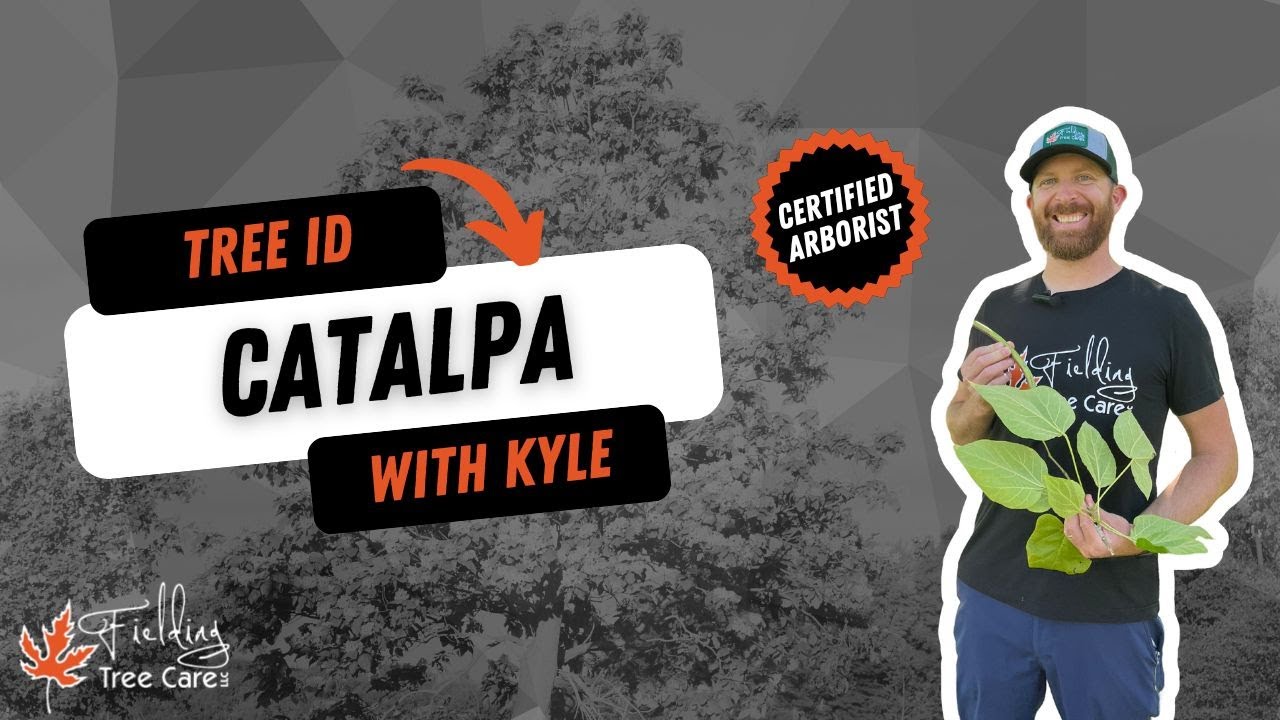
Northern catalpa, or Catalpa speciosa, is also called hardy catalpa, western catalpa, cigar tree, and Indian bean tree. Mature trees often have huge heart-shaped leaves, white flowers marked with yellow and purple, long seed pods, and deeply furrowed bark. The USDA Plants Database documents its North American distribution.
This species supplies the reference values commonly quoted for catalpa lumber. Trees can reach roughly 50–100 feet under favorable conditions, yet urban specimens often contain low branches, knots, embedded metal, or internal decay that reduce recoverable board length.
Catalpa Bignonioides
Catalpa bignonioides is southern catalpa, a southeastern North American species also known as common catalpa or cigar tree. It tends to remain smaller than northern catalpa, though site quality and age strongly affect tree size.
A lumber label reading only “catalpa” leaves a species-level gap. Don’t apply Catalpa speciosa strength and shrinkage figures to southern catalpa without supporting documentation, especially where provenance or predictable performance matters.
Other Catalpas
Other catalpas include Chinese catalpa, Catalpa ovata, and Catalpa × erubescens, a hybrid commonly linked to C. bignonioides and C. ovata. These trees add botanical context, but their lumber shouldn’t inherit northern catalpa’s technical figures without species-based testing.
Catalpa Versus Paulownia
Catalpa and paulownia wood can both feel surprisingly light in the hand, and their trees have broad leaves and showy flowers. They belong to different genera. Paulownia is usually lighter and softer, while catalpa commonly shows stronger earlywood pore bands and darker brown heartwood.
Color and Grain
Catalpa heartwood ranges from grayish tan to light golden or medium brown. Its sapwood is cream, pale gray, or nearly white. Oil finishes warm the heartwood toward honey brown, while water-based finishes retain more of the dry board’s muted color.
The grain is usually straight, with a coarse open texture that catches a fingernail after fine sanding. Knots, crotches, and fast-grown urban wood can redirect fibers abruptly, producing rough, woolly patches when cutters aren’t sharp.
End-Grain Identification
Clean end grain shows large earlywood pores, smaller latewood pores, and visible growth-ring contrast. Magnification may reveal rays, parenchyma, and vessel tyloses, but anatomy alone isn’t foolproof. Confirm unknown boards through tree provenance, bark, leaves, pods, or supplier records.
Catalpa Wood Properties
Northern catalpa is a light, stable hardwood with modest bending strength and low impact resistance. Published numbers are averages for clear test pieces, not guaranteed values for boards containing knots, checks, sloping grain, or variable moisture.
Technical Properties Table
The following values are commonly reported for Catalpa speciosa. The Catalpa wood profile provides the reference data; growth conditions, test methods, and moisture can shift individual results.
| Property | Approximate value | Practical meaning |
|---|---|---|
| Average dried weight | 29 lb/ft³ (460 kg/m³) | Light to carry and machine |
| Specific gravity | 0.38 basic; 0.46 at 12% MC | Lower density than oak or walnut |
| Janka hardness | 550 lbf (2,450 N) | Dents under concentrated pressure |
| Modulus of rupture | 10,650 psi (73.4 MPa) | Modest bending strength |
| Elastic modulus | 1.21 million psi (8.35 GPa) | Less stiff than major structural hardwoods |
| Crushing strength | 5,350 psi (36.9 MPa) | Soft fibers compress beneath clamps and hardware |
| Radial shrinkage | 2.5% | Low movement across quartersawn faces |
| Tangential shrinkage | 4.9% | Moderate movement across flatsawn faces |
| Volumetric shrinkage | 7.3% | Low overall drying shrinkage |
| T/R ratio | About 2.0 | Unequal movement can still contribute to cup |
Hardness Comparisons
At about 550 lbf Janka, catalpa is harder than basswood at 410 lbf and eastern white pine at 380 lbf. It is much softer than black walnut at 1,010 lbf, red oak at 1,290 lbf, and white oak at 1,360 lbf.
The practical difference appears when a dropped screwdriver leaves a deep crescent dent in catalpa but only a shallow mark in oak. Catalpa suits carving and low-impact objects; it’s a poor flooring or heavy workbench choice.
Weight and Strength
At roughly 29 lb/ft³ dry, catalpa offers a useful strength-to-weight trade-off for decorative panels, doors, carvings, and movable furniture. Low density also means weaker screw holding and lower stiffness than denser hardwoods. Compare this figure with other species in our wood density guide.
Dimensional Stability
Catalpa’s low shrinkage supports good dimensional stability after proper drying. Stable doesn’t mean motionless: wide flatsawn panels still move across their width, and reaction wood, poor sticker alignment, or repeated wetting can produce cup and twist.
Structural Limitations
Catalpa shouldn’t replace oak, ash, hard maple, or engineered framing in load-bearing work. Clear-wood laboratory figures aren’t building-code design values. Beams, joists, ladders, and safety-critical components require graded material and calculations for the actual load and span.
Workability, Drying, and Finishing
Catalpa cuts and shapes with low tool resistance, yet its coarse fibers demand sharp edges and light pressure. Most workshop failures come from crushed surfaces, fuzzy grain, excess moisture, or a finish schedule that ignores the open pores.
Cutting and Machining
Sharp carbide or high-speed steel cutters leave a cleaner surface than dull blades, which pull soft fibers into fuzzy ridges. Plane irregular grain with light cuts or use a sharp scraper before sanding. Back up crosscuts and drilling exits to reduce ragged edges.
Carving and Turning
Catalpa carves with a soft, crisp resistance between basswood and denser walnut. It works well for decoys, reliefs, figures, bowls, and hollow forms. Very fine details can buckle across earlywood pores, so slice with freshly honed tools instead of prying out chips.
On a lathe, use light finishing cuts and support thin vessel walls. Aggressive scraping can tear the porous bands into a rough washboard texture. Sanding through controlled grits works better than holding coarse paper against the piece until the surface heats.
Gluing and Fastening
Fresh, flat catalpa surfaces usually glue well. Use enough clamp force to close the joint, not enough to emboss the jaws into the wood. Cauls spread pressure and prevent narrow clamps from leaving dark compressed stripes beneath a clear finish.
Drill pilot holes near ends, in thin parts, and for large screws. Broad washers reduce surface crushing. For exterior work, match stainless steel or suitably coated fasteners with an adhesive rated for the expected moisture exposure.
Steam Bending
Catalpa isn’t a leading steam-bending wood. Severe bends can crush or separate its coarse fibers, particularly in stock with runout. Choose white oak, ash, or hickory for demanding curves; use laminated catalpa strips or a generous radius when its appearance is required.
Drying and Storage
Low shrinkage makes catalpa fairly manageable to dry, but green boards can still develop end checks and twist. Seal fresh end grain soon after milling. Stack boards on dry, equal-thickness stickers aligned vertically over a level base, then shelter the pile from sun and rain while preserving airflow.
Moisture and Acclimation
Check several locations with a calibrated moisture meter, including both board faces where possible. Don’t rely on a fixed number of storage days. Interior lumber must approach the finished room’s equilibrium moisture; exterior stock will often settle at a higher level.
Staining and Painting
Catalpa accepts stain, but its porous earlywood can create strong grain contrast. Test an offcut from the same board. A thin washcoat reduces uneven absorption, while pigmented stain settles into pores and makes the grain appear darker.
Painted catalpa needs dry stock, sanding, dust removal, and a compatible primer. Give end grain extra primer because it absorbs liquid quickly. Soft corners lose paint films early, so ease sharp edges before coating.
Clear Finishes
Oil and oil-based varnish create a warmer amber tone and deepen the coarse figure. Water-based finishes keep the wood lighter. Apply thin first coats and inspect in raking light, where raised fibers look like pale whiskers against wet gloss.
Pore Filling
Use grain filler for a smooth reflective finish on cabinet doors, boxes, or formal furniture. Leaving pores open creates a natural, tactile surface. High gloss over unfilled catalpa often looks pitted rather than flat, no matter how many topcoats are added.
Dust Safety
Catalpa isn’t widely flagged as highly toxic, but wood dust remains harmful. Fine particles can irritate eyes, skin, and airways. Use source extraction, ventilation, eye protection, and a fitted particulate respirator; the OSHA wood-dust guidance explains workplace exposure risks.
- Stop work if coughing, wheezing, rash, or eye swelling develops.
- Wash exposed skin before eating or touching the face.
- Never burn painted, glued, finished, or treated catalpa indoors.
Rot Resistance and Outdoor Performance

Catalpa heartwood has useful natural durability, but rot resistance doesn’t make it maintenance-free. Sapwood, wet end grain, trapped water, soil contact, fastener holes, and local insects can shorten service life.
Heartwood Versus Sapwood
Durability claims apply mainly to the brown heartwood. Pale sapwood has fewer decay-resistant extractives and should be removed or protected in demanding exterior parts. A board with wide sapwood edges isn’t equivalent to an all-heartwood post.
Suitable Exterior Uses
Sound heartwood can serve in fence rails, signs, trim, garden structures, and light outdoor furniture. Project design matters more than the species label alone. Compare drainage, joinery, and maintenance needs in our guide to outdoor furniture woods.
Water-Shedding Design
Slope horizontal surfaces, cap exposed ends, ventilate enclosed spaces, and keep joints from forming small water pockets. Round over sharp edges so coatings retain a more uniform film. A tiny upward-facing mortise can hold enough rainwater to defeat naturally durable heartwood.
Fasteners and Coatings
Use corrosion-resistant fasteners and seal penetrations that face upward. Exterior paint or stain slows weathering and color loss, yet coatings need inspection at joints and end grain. Don’t drive screw heads deeply into the soft face; the resulting crater collects water.
Ground-Contact Limitations
Catalpa has a history in fence posts, but ground contact varies with soil moisture, heartwood content, climate, termites, and installation. Keep sapwood out of the soil zone, avoid planting damaged ends upward, and inspect the boundary where air, soil, and wood meet.
Durability Misconceptions
Decay resistance doesn’t prove termite immunity, marine-borer resistance, a fixed lifespan, or code acceptance. Historical post performance is useful evidence, but it isn’t a universal durability guarantee. Continuously saturated catalpa can fail, particularly where sapwood or checks admit moisture.
Catalpa Wood Uses and Limitations
The best catalpa wood uses favor low weight, easy shaping, visible grain, and moderate service loads. Poor choices expose its soft surface to abrasion, impact, concentrated hardware pressure, or major structural stress.
Carving and Decorative Work
Catalpa suits decoys, relief carvings, figures, signs, and decorative architectural parts. Its low cutting resistance reduces fatigue during long hand-carving sessions. Beginners often pry across the grain and break fine details; controlled slicing cuts leave cleaner edges.
Furniture and Cabinetry
Use catalpa for cabinet panels, drawer parts, side tables, shelves with modest spans, and rustic furniture. Increase dimensions where loads rise and reinforce hardware points with threaded inserts or hardwood plugs. Thin chair legs and heavily used tabletops are poor matches.
Trim and Paneling
Interior trim, wall panels, ceiling accents, and lightweight door inserts make good use of catalpa’s stable, coarse-grained face. Handle freshly surfaced molding carefully: stacked pieces can pick up pressure marks from stray chips that feel barely noticeable through gloves.
Fence Posts and Rails
Heartwood posts and rails can perform well where water drains and damaged areas remain visible for inspection. Select straight, sound stock and compare the design with other wood fence options. Avoid burying sapwood-heavy sections in warm, wet soil.
Bowls and Turnings
Catalpa makes light bowls, vases, lidded boxes, ornaments, and decorative spindles. The open grain creates a distinct ridged texture under oil. Use another species for mallet handles or tools exposed to repeated impact.
Boats and Water Exposure
Low weight and durable heartwood explain occasional marine use, but catalpa isn’t interchangeable with every established boatbuilding timber. Choose sound boards, marine-rated adhesive, suitable encapsulation, and drainable joint details. Untreated components that remain wet can still decay.
Catalpa Firewood
Seasoned catalpa burns, but its low density produces shorter burn cycles and less heat per cord than dense oak or hickory. It works for shoulder-season fires and kindling. Split rounds early, dry them under cover, and expect more frequent stove loading.
Poor Project Choices
Avoid catalpa for busy floors, cutting boards, commercial counters, workbench tops, ladders, impact handles, slender loaded chair parts, and ungraded framing. These applications expose its low hardness and strength rather than its useful carving and stability traits.
Practical Notes From Real-World Use
The most common workshop surprise is how easily a smooth board gains compression marks. Clean the bench before setting down finished parts, pad clamps, and place broad cauls under weights. A single chip beneath a panel can leave a dent visible after finishing.
For shelves and table rails, sizing catalpa like oak often creates parts that feel springy or underbuilt. Increase thickness, shorten unsupported spans, or hide a stiffer wood inside the assembly. This preserves catalpa’s appearance without asking it to carry unsuitable loads.
Buying Catalpa Lumber Responsibly
Catalpa lumber has regional specialty value, especially as wide boards, slabs, carving blocks, and turning blanks. Compare usable dry yield rather than treating the advertised board-foot rate as the full cost.
Value and Availability
Catalpa isn’t traded as consistently as red oak or poplar, so supply can change sharply by region. Wide clear boards may attract specialty buyers, while a yard-tree log can have little mill value after transport, metal risk, knots, and decay are counted.
Lumber Sales Formats
Sellers offer rough boards by board foot, surfaced boards by piece, live-edge slabs, carving blocks, turning blanks, and veneer by area or roll. Confirm whether dimensions are rough, nominal, or actual. Surfaced 4/4 lumber is normally thinner than one inch.
Board-Foot Calculation
Calculate board feet as thickness in inches × width in inches × length in feet ÷ 12. A rough board measuring 1 inch × 10 inches × 8 feet contains 6.67 board feet before defects and surfacing loss.
Seller Questions
- Which Catalpa species is documented?
- Was the lumber kiln-dried or air-dried?
- What moisture content was measured, and with which meter?
- Are dimensions rough, surfaced, nominal, or actual?
- How much sapwood, wane, checking, insect damage, or twist is present?
- Do photographs show the exact boards being shipped?
- Were urban logs scanned for nails, wire, and fencing?
- What freight, oversize, surfacing, and minimum-order charges apply?
Ask these questions before paying because species and moisture affect far more than appearance. A cheap wet slab can require months of storage, lose width to checks, and cost more than a dry board ready for machining.
Delivered Usable Cost
Add lumber price, freight, surfacing, defect waste, and moisture-related loss, then divide by the usable board feet. This delivered usable cost exposes false bargains. Ten inexpensive boards with severe twist may yield less stock than six clear, properly dried boards.
Urban Salvage
Urban catalpa salvage can keep attractive wood out of a chipper or landfill. Expect branch-heavy grain, hidden decay, short logs, and embedded metal hazards. Many sawyers reject yard trees because one buried nail can damage a blade and stop production.
Sustainable Sourcing
Responsible buying depends on traceable origin, legal harvest, drying efficiency, usable yield, and transport distance—not merely the species name. Check conservation claims at species level through the CITES species database, and favor sellers who disclose source region, defects, and moisture.
Solid Catalpa Versus Veneer
Solid catalpa supplies thickness, carvability, edge detail, and the wood’s natural mechanical properties. Catalpa veneer supplies a decorative surface only; its strength, dent resistance, and moisture performance come largely from the backing, adhesive, substrate, and finish.
Solid Wood Performance
Solid stock can be shaped, repaired, refinished, and joined through its full thickness. It also moves across the grain and carries the natural defects of the log. Wide boards need joinery that permits seasonal movement.
Appropriate Veneer Uses
Veneer works for furniture resurfacing, cabinet panels, boxes, wall accents, door inserts, and curved interior forms over a stable substrate. It conserves uncommon material and creates a consistent grain face, but it doesn’t make particleboard or MDF behave like solid catalpa outdoors.
Catalpa Veneer Roll
A thin roll can cover larger interior panels with few seams. Before purchase, verify actual dimensions, backing, adhesive requirements, and botanical labeling. A listed 0.25 mm profile leaves little material for aggressive sanding.

Catalpa Wood Veneer Roll for DIY
- Natural catalpa wood grain appearance
- Wide roll for larger surface projects
- Thin 0.25 mm veneer profile
- Suits furniture upgrades and interior accents
- Ideal for DIY repairs and decorative finishing
 Buy on Amazon
Straight Grain Veneer
Straight-grain veneer suits matched furniture fronts and long wall layouts where visual direction matters. Non-woven backing can improve handling, but it doesn’t correct a cupped or contaminated substrate. Check the listed 0.2 mm thickness before selecting trimming and sanding methods.

Natural Catalpa Straight Grain Veneer
- Natural straight-grain catalpa veneer
- Non-woven backing adds stability
- Thin 0.2 mm profile for detailed work
- Suitable for furniture and wall projects
- A practical choice for carpenters and hobbyists
Buy on Amazon
Veneer Installation Failures
Bubbles form when pressure misses the center, adhesive coverage is patchy, or trapped vapor can’t escape. Edge lifting often starts with dust, oily residue, weak trimming, or unsealed exposed edges. Acclimate veneer and substrate together before assembly.
- Flatten and clean the substrate.
- Test adhesive and finish compatibility on scrap.
- Follow the adhesive maker’s open-time instructions.
- Apply even pressure across the complete face.
- Trim with a sharp veneer knife or fine-cutting tool.
- Seal vulnerable edges after the adhesive cures.
Exterior use is risky unless the veneer, backing, adhesive, substrate, edge treatment, and coating all carry ratings for that exposure. A waterproof topcoat alone can’t rescue an interior-grade glue line.
Catalpa Wood FAQs
These direct answers cover the most common questions about catalpa wood properties, value, furniture, firewood, and finishing.
Is Catalpa a Hardwood?
Yes. Catalpa is botanically a hardwood because it comes from a flowering broadleaf tree. It remains physically soft compared with many hardwoods: northern catalpa has a reported Janka hardness near 550 lbf.
Is Catalpa Wood Valuable?
Catalpa can have specialty value as wide lumber, live-edge slabs, carving stock, turnings, and locally salvaged wood. Log value may remain low if transport, metal contamination, decay, knots, or short usable lengths reduce sawmill yield.
Is Catalpa Good for Furniture?
Yes, catalpa suits light-duty furniture, cabinet panels, shelves with sensible spans, side tables, and rustic pieces. Increase loaded part dimensions and reinforce hardware. Choose a harder wood for busy tabletops, slender chair parts, and surfaces exposed to repeated impact.
Is Catalpa Good Firewood?
Catalpa is usable firewood after proper seasoning, but its low density means shorter burns and less heat per cord than dense hardwoods. It works better for mild-weather fires, kindling, or mixing with slower-burning oak than for overnight heating.
Can Catalpa Be Stained?
Yes. Catalpa accepts stain, though its coarse open pores can darken strongly and create a textured result. Test the full schedule on an offcut; use a washcoat for more controlled absorption or grain filler where a smooth, formal finish is wanted.
FAQs
Is Catalpa Wood A Hardwood Or Softwood?
Catalpa is a hardwood because it comes from a broadleaf flowering tree, not a conifer. However, it is relatively soft and lightweight compared with dense hardwoods such as oak or maple. Its easy workability makes it useful for simple projects, but it can dent more easily than tougher woods.
Is Catalpa Wood Rot-Resistant Enough For Fence Posts?
Catalpa heartwood is naturally rot-resistant and can make durable fence posts without chemical treatment. Historically, farmers used it for posts, rails, and outdoor structures because it withstands soil contact well. For the longest service life, use heartwood rather than sapwood and avoid pieces with existing cracks or decay.
Is Catalpa Good For Carving And Furniture?
Catalpa is good for carving and light-duty furniture because it is soft, easy to cut, and fairly stable when dry. Its coarse grain and lower hardness can make fine detail and smooth finishing more challenging than with basswood or cherry. It works especially well for rustic furniture, bowls, signs, and larger carvings.
How Much Is Catalpa Wood Worth?
Catalpa wood is usually worth less than premium hardwoods, but clear, dry, wide boards can still have value for specialty projects. Prices vary greatly by region, board quality, drying, dimensions, and local demand. Logs often bring modest prices, while properly milled lumber or durable fence-post material may sell for more.
What Is The Difference Between Catalpa Speciosa And Catalpa Bignonioides?
Catalpa speciosa is generally a larger, hardier northern species, while Catalpa bignonioides is a smaller tree native mainly to the southeastern United States. Northern catalpa typically has larger leaves, longer seed pods, and a more upright form. Both produce showy white flowers and similar lightweight, rot-resistant wood.
Affiliate Disclosure: Some links in this post are affiliate links. If you make a purchase through these links, we may earn a small commission at no extra cost to you. We only recommend products we genuinely believe in.