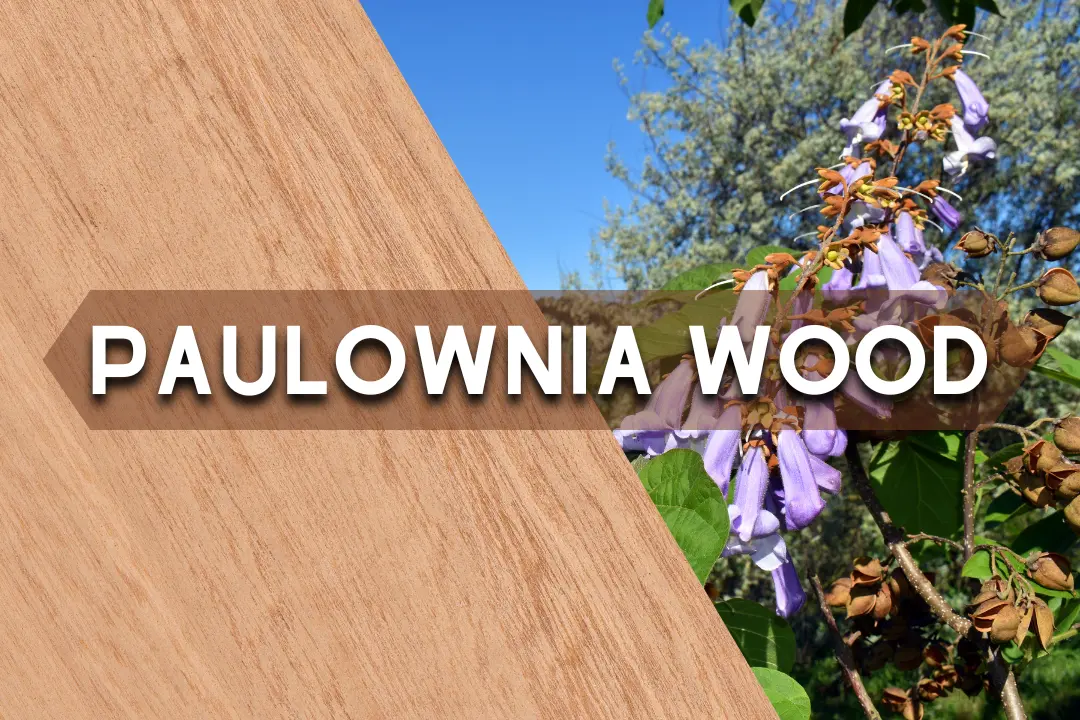
Paulownia Wood Guide: Properties, Furniture, Uses, and Drawbacks

Paulownia wood is a pale, exceptionally lightweight hardwood cut from flowering trees in the Paulownia genus. It machines easily and moves little after drying, making it useful for lightweight furniture, cabinets, instruments, surfboards, crafts, and wall panels, yet its soft surface and weak fastener grip limit heavy-duty use.
Paulownia furniture feels surprisingly light when lifted, but that benefit comes with trade-offs: the wood dents easily, long shelves can sag, and screws can strip if driven too hard. This guide explains its measured properties, suitable uses, buying checks, finishing methods, and practical limits.
Table of Contents
What Is Paulownia Wood?
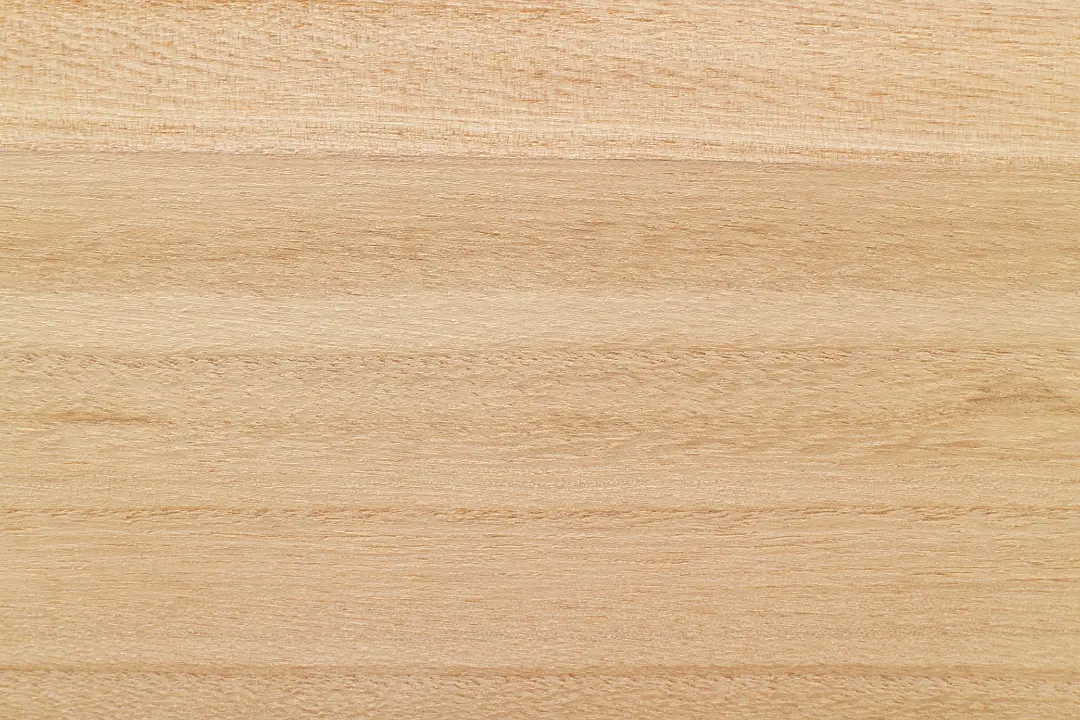
Paulownia Wood Definition
Paulownia wood is lumber from deciduous trees in the genus Paulownia, part of the Paulowniaceae family. It has a pale color, open texture, low density, low shrinkage, and a surface soft enough to mark with a fingernail under firm pressure. These traits make it a distinctive lightweight hardwood.
Is Paulownia a Hardwood?
Yes. Paulownia is botanically a true hardwood because it comes from a flowering broadleaf tree, rather than a conifer. Hardwood classification doesn’t describe physical hardness: with a Janka rating near 300 lbf, paulownia is softer than many woods sold as softwoods.
Species and Common Names
Paulownia is a genus rather than one standardized timber species. Lumber may come from Paulownia tomentosa, Paulownia elongata, Paulownia fortunei, or a plantation hybrid. Common names include princess tree, empress tree, royal paulownia, and kiri, especially in Japanese use.
Species identification matters because density, color, grain, drying behavior, and strength vary. A seller advertising “royal paulownia wood” without listing the species, hybrid, origin, moisture content, or grade hasn’t provided enough information for a load-sensitive project.
Origin and Botanical Context
Paulownia species are native mainly to East Asia. The trees have broad leaves and clusters of showy flowers, while some produce dry seed capsules that people occasionally mistake for gum tree balls. The Plants of the World Online database provides accepted botanical records for the genus.
Paulownia tomentosa has naturalized beyond its native range, including parts of North America. Claims describing paulownia as the fastest-growing timber need context because growth rates vary with species, climate, irrigation, soil, tree age, spacing, and plantation care.
Paulownia Wood Properties and Strength

Paulownia combines very low weight with low hardness, modest bending strength, and unusually low shrinkage. The reference figures below apply mainly to Paulownia tomentosa; they aren’t guaranteed specifications for every board, plantation hybrid, or composite panel.
Imperial and Metric Properties
| Property | Reference figure | Practical meaning |
|---|---|---|
| Average dried weight | 18 lb/ft³; 280 kg/m³ | Exceptionally light for hardwood |
| Basic specific gravity | About 0.23 | Low wood substance by volume |
| Specific gravity at 12% moisture | About 0.28 | Useful dry-lumber comparison |
| Janka hardness | 300 lbf; 1,330 N | Dents under concentrated impact |
| Modulus of rupture | 5,480 psi; 37.8 MPa | Relatively low bending failure strength |
| Modulus of elasticity | 635,000 psi; 4.38 GPa | Low stiffness on long spans |
| Crushing strength | 3,010 psi; 20.7 MPa | Limited compression resistance |
| Radial shrinkage | 2.4% | Low movement across growth rings |
| Tangential shrinkage | 3.9% | Low drying and seasonal movement |
| Volumetric shrinkage | 6.4% | Good dimensional stability |
These values align with the species reference published by The Wood Database. Use them for material comparison, not structural calculations. A building component needs grade-specific design values, verified connections, local code acceptance, and a qualified load assessment.
Weight, Density, and Stability
A cubic foot of dry paulownia weighs about 18 pounds at the reference density. That low mass helps with portable furniture, camper fittings, wall cladding, boxes, model aircraft, and board cores, where every pound affects handling, freight, or vehicle payload.
Low shrinkage makes properly dried boards relatively stable, but stable doesn’t mean motionless. Check moisture with a calibrated meter, acclimate lumber to the room, and allow seasonal movement in wide panels. Our guide to wood density explains why moisture condition must accompany any density comparison.
Paulownia Wood Grain and Color
Paulownia wood grain is usually straight, with a coarse and sometimes uneven texture. Heartwood ranges from pale gray-brown to light brown and may carry muted reddish or violet tones. Pale sapwood often blends into the heartwood without a sharp boundary.
Freshly sanded paulownia has a dry, almost chalky feel and visible open pores. Raking light makes the growth pattern clearer, while amber oil deepens the tan tones. Photos can’t show density variation, so inspect both faces and lift comparable boards before choosing furniture stock.
Is Paulownia Wood Strong?
Paulownia wood has a useful strength-to-weight ratio for nonstructural products, but it isn’t strong in absolute bending, compression, or stiffness. It works well where low mass matters more than impact resistance; it’s a poor substitute for graded structural pine in beams, joists, stairs, or framing.
Marketing comparisons can sound impressive when strength is divided by very low density. That doesn’t mean an equal-sized paulownia beam outperforms steel, oak, or construction lumber. Compare equal dimensions, span, load direction, moisture level, failure mode, and safety factor before accepting such claims.
Structural and Shelf Limits
Paulownia shelf strength depends on thickness, width, unsupported span, grain, defects, connection design, and load position. A thin shelf may feel firm during installation yet develop a visible downward bow after books sit on it for several months because wood experiences long-term creep.
Shorten the span, add a front-edge stiffener, use a concealed metal rail, or laminate paulownia around a stiffer core. Mounting screws must enter studs, sound masonry anchors, or another rated substrate; screws gripping only soft paulownia or drywall can pull free.
Why Property Values Vary
Property values vary by species, hybrid, tree age, growth rate, ring width, board position, defects, moisture content, grain direction, and testing method. Juvenile plantation wood may differ markedly from mature wood of the same named species.
Ask for test data tied to the actual product when failure could injure someone or damage property. Generic species averages are suitable for early design choices, crafts, and comparison shopping, but they can’t establish a safe load rating.
Advantages, Drawbacks, and Durability
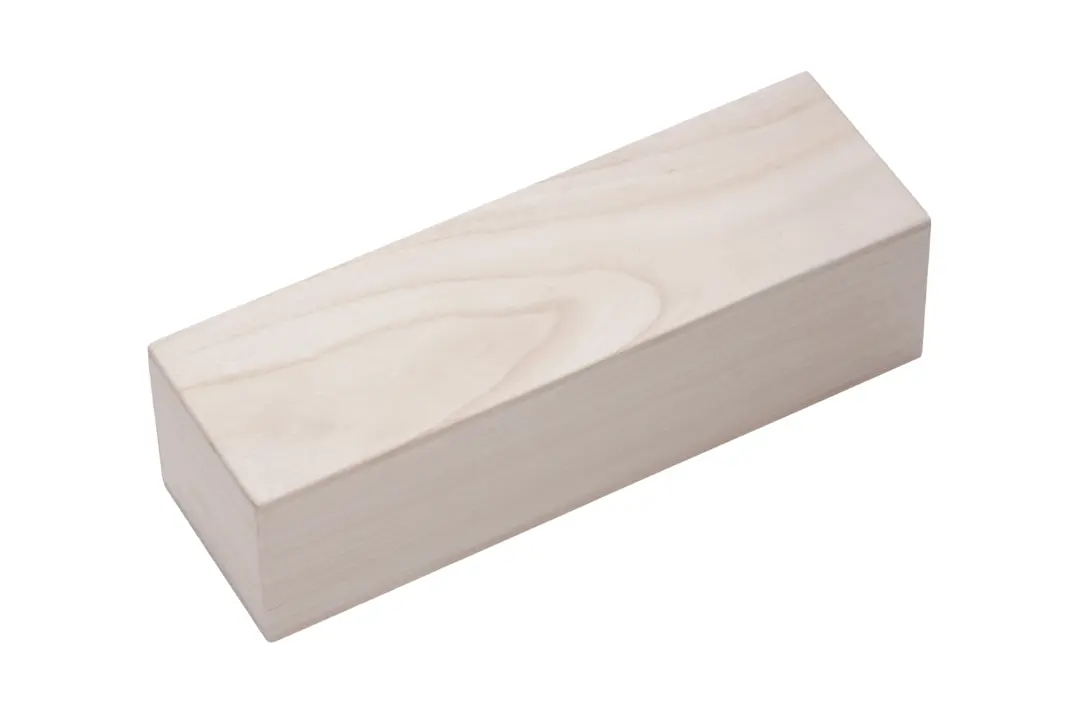
Paulownia’s main advantages are low weight, easy machining, low shrinkage, and useful natural decay resistance. Its main drawbacks are a dent-prone surface, weak fastener holding, low stiffness, variable supply quality, and poor performance where joints trap water.
Lightweight and Easy Machining
The low density makes paulownia comfortable to carry and gentle on cutting tools. A wide board feels almost hollow compared with poplar, yet it is real solid wood. Hand planes and carving tools move through it with little resistance, which helps beginners but also makes accidental gouges easy.
Low Shrinkage and Insulation
Reference shrinkage of 2.4% radial and 3.9% tangential is low, supporting stable boxes, cabinet parts, instrument components, and laminated panels. Its cellular, low-density structure also slows heat transfer better than many dense woods at equal thickness, though product-specific testing is needed for rated assemblies.
Dents and Surface Damage
At about 300 lbf Janka, paulownia dents easily. A dropped tape measure can leave a rounded crater, and a clamp pad can press a crisp outline into the surface. Desktops, dining tops, children’s furniture, floors, and workbenches receive damage quickly without protective design.
A polyurethane film improves stain and scratch resistance but doesn’t harden the fibers below it. Concentrated pressure still crushes the wood and may fracture the coating. Use sacrificial glass, a replaceable top, hardwood edging, or a denser wear surface for busy furniture.
Fastener-Holding Problems
Screws can strip when a driver’s clutch is set like it would be for oak or pine. Nail heads may sink below the surface, hinges can loosen with repeated movement, and fasteners near an end can crush or split the edge. Low driver torque prevents many failures.
Predrill near ends, use washers or wide heads, and reinforce repeated-load points with hardwood plugs, threaded inserts, through-bolts, or glued backing blocks. Don’t try to repair a stripped hinge screw with a larger screw alone; the larger thread may crush more soft fiber.
Is Paulownia Wood Waterproof?
No. Paulownia isn’t waterproof. Unfinished wood absorbs moisture, raises grain, weathers gray, and may check around end grain. Natural decay resistance can slow fungal damage in some conditions, but it doesn’t stop water entry or remove the need for drainage and coating maintenance.
Rot Resistance Outdoors
Paulownia heartwood is commonly rated as having useful decay resistance, so selected exterior projects can perform well when kept above ground and allowed to dry. Seal end grain, coat every accessible face, use exterior adhesive, and choose stainless or suitable corrosion-resistant fasteners.
Horizontal joints that hold rain fail sooner than ventilated vertical cladding. Leave drainage gaps, slope exposed ledges, cap upward-facing end grain, and inspect the coating after intense sun or wet seasons. Dark stains around fasteners often signal metal corrosion rather than wood rot.
Where Not to Use It
- Code-regulated beams, joists, stairs, or framing without approved design values
- Ground-contact posts or buried landscape parts without validated treatment
- High-traffic flooring and unprotected work surfaces
- Long, thin shelves carrying books, tools, or concentrated loads
- Hardware points that receive repeated motion without reinforcement
- Wet rooms where exposed MDF-core paulownia panels can absorb water
The common beginner mistake is choosing paulownia only because it feels stiff in a short sample. Test the full-size assembly under the expected load, since span and connection behavior often control performance before the board itself breaks.
Paulownia Wood Uses
Common paulownia wood uses include lightweight furniture, cabinet interiors, chests, instruments, surfboards, model parts, carvings, boxes, packaging, and decorative wall panels. Each application takes advantage of low weight or stability while managing softness and weak screw holding.
Is Paulownia Good for Furniture?
Yes, paulownia is good for furniture that benefits from low weight, such as occasional tables, decorative cabinets, drawer parts, folding screens, movable shelving, and bedroom pieces. It is less suitable for heavily used tabletops, chair joints, benches, or children’s furniture exposed to frequent impact.
Paulownia wood furniture feels almost startlingly light when one end is lifted. That makes moving a cabinet easy, but the same cabinet can rack if joinery is weak. Use broad glued joints, mechanical reinforcement, a rigid back panel, and hardwood blocks behind hinges and drawer slides.
For furniture paulownia wood works best as part of a planned material mix. Paulownia can form the case, drawer sides, or internal panels while a harder wood protects legs, handles, front edges, and wear points. Compare other furniture woods before choosing stock for a demanding surface.
Cabinets and Tansu Chests
Kiri wood has a long association with Japanese tansu chests. Low mass makes large cases easier to move, while low shrinkage supports fitted drawers and doors. Modern cabinetmakers still need sound joinery because repeated hinge and slide loads can loosen screws in unreinforced material.
Instruments and Soundboards
Paulownia appears in koto soundboards and other lightweight resonant components. Instrument-grade boards are selected for grain, density, cut, seasoning, stiffness, and acoustic response. A pale craft board with attractive grain isn’t automatically suitable for a soundboard.
Surfboards, Boats, and Cores
Surfboard and paddleboard builders value paulownia for low mass, shaping ease, and better dent resistance than balsa. Marine assemblies still need waterproof adhesive, compatible fiberglass or coatings, sealed penetrations, drainage, and periodic inspection. Bare paulownia shouldn’t be treated as a finished waterproof core.
Carving, Models, and Crafts
Carving tools slice paulownia with a light, dry shaving and little hand pressure. It suits models, signs, decorative rounds, pyrography, and CNC work, but coarse fibers can crumble at fine points. Leave fragile details slightly thicker and make the final cut with a freshly honed edge.
Boxes and Packaging
Specialty boxes benefit from low shipping weight and stable panels. Corners remain vulnerable to crushing, so reinforce them with splines, corner blocks, or protective hardware. A soft interior can protect delicate contents, while exposed exterior edges may need harder trim.
Wall Cladding and Panels
Decorative paulownia panels place little dead load on a wall and are comfortable to hold overhead during installation. Check substrate condition, adhesive compatibility, fire rules, moisture exposure, outlet extensions, and fastening instructions. Decorative cladding isn’t a structural sheathing product.
Paulownia vs Other Lightweight Woods

Paulownia is lighter than cedar, basswood, yellow poplar, and most pines, while being heavier and harder than typical balsa. No option wins every comparison: availability, stiffness, finish quality, exterior history, cost, and required mass determine the better choice.
Paulownia vs Balsa
Paulownia averages about 18 lb/ft³ and 300 lbf Janka, while balsa often averages near 9 lb/ft³ and 100 lbf, with wide natural variation. Paulownia is heavier but tolerates handling and localized impact better; balsa wins when minimum mass is the main goal.
Choose paulownia for furniture parts, surfboards, boxes, or models that need a firmer edge. Choose balsa wood for ultralight aircraft, flotation, or composite cores where skins carry much of the load.
Paulownia vs Cedar
Western red cedar averages near 23 lb/ft³ and 350 lbf Janka, placing it slightly above paulownia in weight and hardness. Cedar has a better-established exterior supply chain, grading system, and installation history. Paulownia offers lower weight and low shrinkage but needs product-specific exterior checks.
Paulownia vs Basswood
American basswood averages about 26 lb/ft³ and 410 lbf Janka. Its fine, even texture holds delicate carving detail better than paulownia’s coarser grain. Paulownia is preferable where reduced mass, wider lightweight panels, or selected exterior performance matters more than a silky carved surface.
Read the separate basswood guide when choosing carving stock. Beginners often pick paulownia for intricate lettering, then lose sharp corners as soft fibers crumble; basswood is more forgiving at small scale.
Paulownia vs Poplar
Yellow poplar averages about 29 lb/ft³ and 540 lbf Janka, making it heavier, harder, and stiffer than paulownia. Poplar suits painted furniture, doors, frames, and parts that receive repeated handling. Paulownia suits portable cases and low-load panels where weight savings dominate.
The full poplar wood profile covers its working traits. Don’t confuse a paulownia veneer panel with solid poplar or solid paulownia; the MDF core controls edge strength, moisture response, and much of the weight.
Paulownia vs Pine
Pine describes many species spanning roughly the mid-20s to mid-30s lb/ft³, with broad hardness and strength ranges. Paulownia is usually lighter and less stiff than common structural pine. It shouldn’t replace graded pine in framing based on weight or species averages alone.
Working and Finishing Paulownia

Paulownia cuts and sands easily, but sharp tools, light clamping pressure, low driver torque, and a tested finishing schedule produce much cleaner results. Most beginner problems come from treating this low-density wood like pine, poplar, or oak.
Cutting, Routing, and Sanding
Use sharp, fine-tooth blades and support thin stock close to the cut. A sacrificial backer reduces breakout during drilling. Router bits should be clean and sharp; dull cutters rub the soft grain, leaving pale fuzzy ridges rather than a crisp edge.
Start with the finest grit that removes the machining marks, often 120 or 150 rather than aggressive 60 grit. Sand with light pressure through 180 or 220. Heavy pressure erodes softer bands faster, producing a subtle washboard texture that becomes obvious after stain.
Gluing and Clamping
Paulownia provides a broad bonding surface, but excessive clamp pressure crushes fibers and squeezes out too much adhesive. Tighten clamps until the joint closes and a small glue bead appears. Use cauls with broad pads so metal clamp faces don’t leave deep circular dents.
Screws, Nails, and Reinforcement
Predrill close to edges, set the driver clutch low, and stop when the head contacts the surface. For shelves, hinges, and removable fittings, install hardwood reinforcement blocks, threaded inserts, or through-bolts. Wide washers spread compression over more fibers.
Laser Engraving and Pyrography
Paulownia engraves and burns readily, so begin with low heat or fast test passes. Its open grain can produce uneven dark lines, and excessive heat forms a broad brown halo. Keep active exhaust running, supervise the machine, and place an extinguisher within reach.
Confirm the complete panel composition before laser cutting. Solid untreated wood, plywood, MDF, veneer adhesive, and coatings release different smoke and behave differently under heat. A veneer-faced MDF board isn’t solid paulownia and may require settings approved by the laser manufacturer.
Clear Finishes and Stains
Water-based polyurethane preserves a pale appearance, while oil-based polyurethane and many oils add a warmer amber cast. Shellac, lacquer, and hardwax oil can also work indoors. Test on an offcut because pale paulownia shows color changes and sanding defects quickly.
Stain may turn patchy where softer grain absorbs more pigment. Sand uniformly, remove dust, then test a washcoat, conditioner, dye, gel stain, or toner. Building color through several light applications gives more control than flooding the surface with a dark penetrating stain.
Painting and Exterior Coatings
Prime bare wood before painting and spot-seal glue lines, knots, and porous end grain. Veneer-faced MDF needs separate edge sealing because exposed MDF swells quickly after water entry. Exterior pieces need a rated coating on all accessible faces, joints, and cut edges.
Practical Notes From Real-World Use
A full paulownia board can be lifted with one hand, yet its edge may bruise against a steel bench corner before the project begins. Store boards flat on padded stickers, protect corners during transport, and lay clean cardboard beneath finished faces during assembly.
Clamp marks, overtightened screws, and dark blotchy stain are the three failures seen most often. The reliable workaround is to make a complete sample joint and finish sample from the same board, since density can change between pale earlywood and darker growth bands.
Buying Paulownia Wood
Buy paulownia by verified species, construction, moisture content, grade, usable dimensions, and delivered cost. The label may describe solid lumber, edge-glued boards, plywood, paulownia-core plywood, veneer-faced MDF, or a mixed-species craft pack.
Identify Species and Construction
Ask for the species or commercial hybrid, country of origin, and construction method. Solid boards show grain continuing across the edge, while veneer panels reveal layered plywood or a fine, uniform MDF core. Finger joints appear as repeated interlocking lines along the face or edge.
Solid Lumber Checklist
- Species or named commercial hybrid
- Country and plantation or forest origin
- Kiln-dried or air-dried condition
- Measured moisture content
- Rough or surfaced dimensions and actual thickness
- Clear, knotty, or utility grade
- Limits for pith, knots, checks, warp, glue lines, and color
- Minimum order, return policy, packaging, and freight
Inspect wide boards for central pith, end checking, twist, and very low-density zones. A moisture meter reading should suit the destination climate; dry-looking stock can still be too wet for an air-conditioned interior. Buy extra material for defect removal and grain matching.
Veneer and Composite Panels
Confirm face veneer species, veneer thickness, core material, panel flatness, adhesive class, emissions rating, and indoor or exterior classification. Veneer-faced MDF gives a smooth engraving surface and stable dimensions, but its weight, edges, fastener grip, and moisture response differ from solid paulownia.
Is Paulownia Wood Expensive?
Paulownia can be inexpensive near plantation and milling centers, yet imported specialty boards may cost more than local pine or poplar. Price depends on species, grade, drying, width, thickness, surfacing, order size, construction, freight, and waste rather than one universal market figure.
Board-Foot Cost Formula
Board feet = thickness in inches × width in inches × length in feet ÷ 12.
Standard North American lumber calculation
A 1-inch-thick board measuring 8 inches wide and 8 feet long contains 5.33 board feet before surfacing or defect removal. Multiply that quantity by the quoted price per board foot, then add waste, machining, tax, finish, and delivery.
Delivered Usable Cost
Compare delivered usable cost, not the advertised unit price. If a 10-board order loses 15% to pith, warp, and checks, divide the full landed cost by the remaining usable board feet. Precut rounds cost more per unit of wood because cutting, drying, sorting, and packaging are included.
Sustainability and Certification
Fast tree growth doesn’t prove that a finished product is sustainable. Check legal origin, plantation land use, irrigation, fertilizer, pesticides, milling yield, kiln energy, transport distance, product lifespan, and disposal. Documented chain of custody carries more weight than labels such as “miracle tree” or “zero impact.”
Look for credible certification such as the Forest Stewardship Council system where certified paulownia is available. Certification availability varies by supplier and region, so request a valid certificate code linked to the invoiced product rather than accepting a logo alone.
Is Paulownia Invasive?
Paulownia tomentosa is invasive or monitored in parts of the eastern United States, but status varies by species and jurisdiction. Other species and managed non-seeding hybrids shouldn’t automatically receive the same classification. The National Invasive Species Information Center documents concerns about princess tree.
Check regional rules before planting a living tree, particularly near disturbed woodland or transport corridors. Buying finished lumber is a separate act from introducing seed or live planting stock, though buyers should still request legal-origin documentation.
Paulownia Products and Formats
Paulownia products range from natural log rounds and solid boards to veneer-faced MDF, floating shelves, and decorative planks. Match the format to the project rather than assuming every item labeled paulownia has solid-wood weight, edges, moisture resistance, or fastener behavior.
Natural Wood Rounds
Natural rounds suit centerpieces, painted signs, pyrography, wedding décor, and low-load displays. Because each piece crosses the growth rings, it may check, cup, or change diameter as humidity shifts. Acclimate rounds before decorating and seal both faces plus the bark-free edge.

Natural Paulownia Wood Slices
- Ten natural wood rounds
- Seven to eight inch size range
- Unfinished surface for custom projects
- Great for rustic centerpieces
- Suitable for craft and wedding decor
 Buy on Amazon
Larger rounds provide more visual area but carry a greater checking risk because the distance from pith to edge increases. Avoid placing fresh rounds directly on a damp tablecloth or heating vent; uneven moisture exchange can create a sharp split overnight.

Extra-Large Paulownia Wood Slices
- Ten natural paulownia rounds
- Eleven to twelve inch size range
- Unfinished surface invites customization
- Useful for large table centerpieces
- Fits rustic craft and decor projects
Buy on Amazon
Veneer-Faced Craft Panels
These craft panels use paulownia veneer over MDF; they aren’t solid paulownia. The MDF core supplies flatness and predictable engraving, while the veneer provides natural grain. Exposed edges absorb water, create fine dust during machining, and need sealing before painting.

Paulownia Veneer Canvas Boards
- Four double-sided craft boards
- Paulownia veneer over an MDF core
- Quarter-inch thick board profile
- Ten by sixteen inch panel size
- Ready for engraving painting and signs
Buy on Amazon
Thin veneer leaves little room for deep sanding or engraving. Make a shallow test pass and inspect whether the brown MDF core shows through. Seal every cut edge, especially on signs used near kitchens, bathrooms, open windows, or drink service areas.

Paulownia Veneer Sign Boards
- Fifteen unfinished MDF boards
- Double-sided paulownia veneer surface
- Five by fifteen inch board size
- Quarter-inch thick construction
- Designed for laser engraving and wood burning
Buy on Amazon
Floating Wall Shelves
Paulownia’s low mass reduces the shelf’s dead load, but total capacity depends on bracket geometry, wall substrate, anchor type, screw installation, shelf depth, and load distribution. A stated 22-pound capacity doesn’t apply if brackets miss studs or heavy objects sit at the front edge.
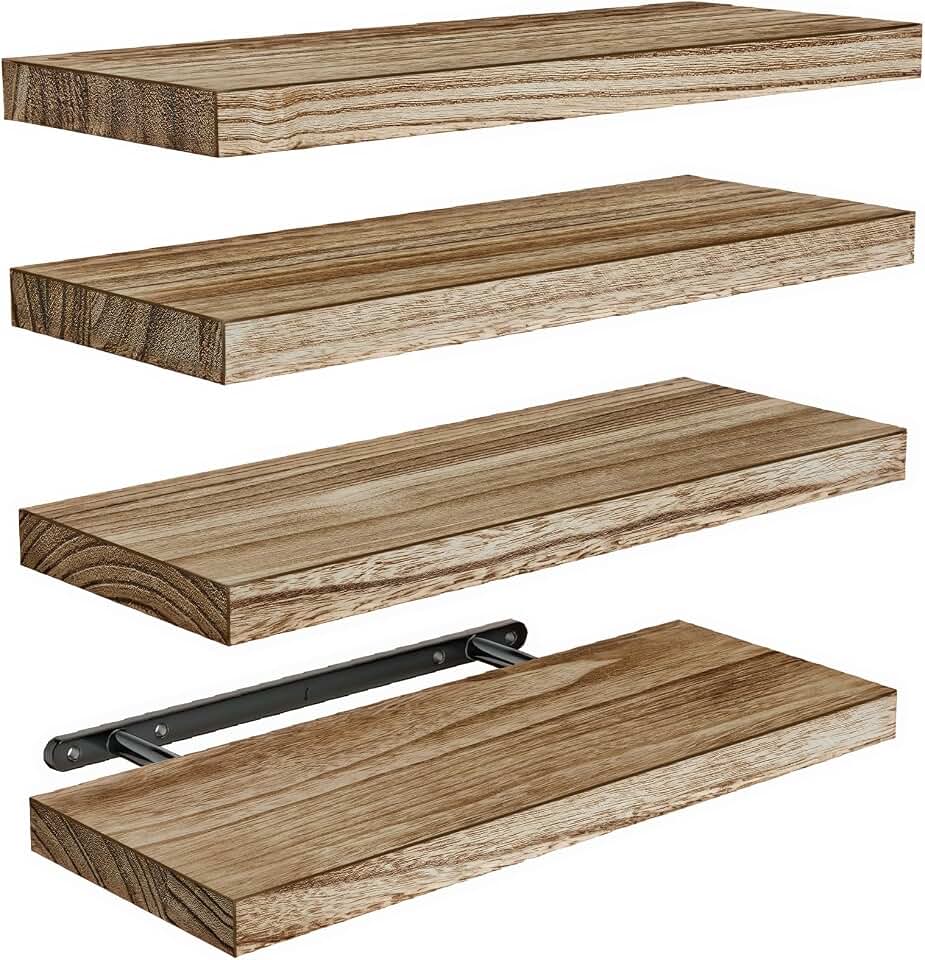
Paulownia Floating Wall Shelves
- Set of four light brown shelves
- Crafted from paulownia wood
- Concealed metal brackets included
- Supports up to twenty-two pounds per shelf
- Drilling template simplifies installation
Buy on Amazon
Use a level, locate framing, and follow the supplied anchor instructions. Spread books and décor across the shelf rather than grouping dense objects at one corner. Check for bracket movement after the first week and after any load change.
Decorative Wall Planks
Paulownia wall planks are a practical decorative use because low weight makes handling and cutting easier. Fifty planks advertised to cover 25 square feet provide an average of 0.5 square feet per plank before offcuts, pattern matching, and damaged pieces.
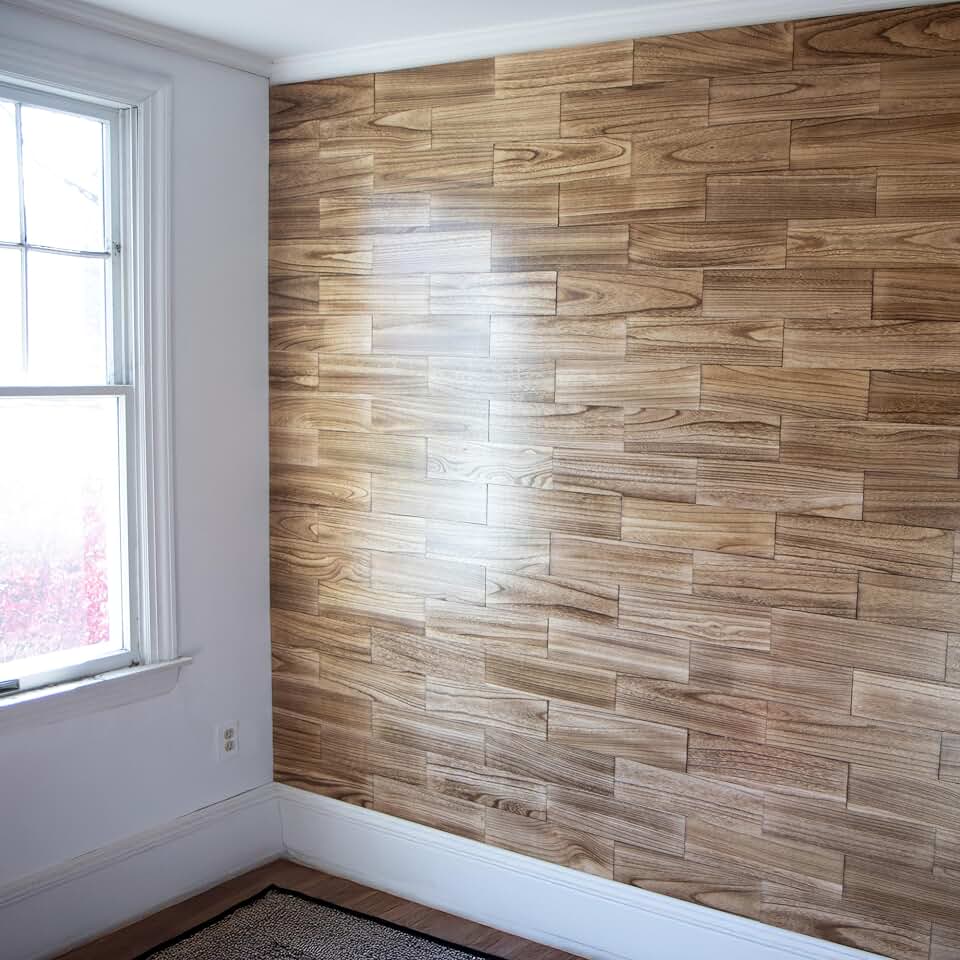
Paulownia Accent Wall Planks
- One hundred percent paulownia wood
- Fifty planks cover twenty-five square feet
- Each board measures seventeen by four and a half inches
- Six-tenths inch thick wood panels
- Made for DIY accent walls and crafts
Buy on Amazon
Order extra planks for cuts and grain selection, commonly 8% to 15% depending on room shape and pattern. Check wall flatness, outlet depth, adhesive compatibility, fire restrictions, and indoor moisture before installation. Keep planks away from active leaks and unsealed shower areas.
FAQs
Is Paulownia Wood Good For Furniture?
Yes, paulownia wood is good for lightweight furniture such as cabinets, drawers, shelves, and decorative pieces. Its pale color, smooth grain, and easy workability make it popular for painted or stained projects. Because it is relatively soft, use it where extreme impact resistance and heavy-duty joinery are not the main priorities.
Does Paulownia Wood Dent Easily?
Yes, paulownia wood dents more easily than many common furniture woods because it is lightweight and relatively soft. It can mark from sharp impacts, heavy objects, or rough daily use. A durable finish, careful placement, and felt pads help protect surfaces, especially on tabletops and frequently handled furniture.
Can Paulownia Wood Be Used Outdoors?
Paulownia wood can be used outdoors, but it needs proper sealing and regular maintenance to resist moisture, sunlight, and weathering. It is naturally more decay-resistant than some softwoods, yet it is not maintenance-free. Use an exterior-grade finish and avoid ground contact or constantly wet locations for the longest service life.
Is Paulownia Stronger Than Pine?
Paulownia is generally not stronger than pine in overall structural use, although results vary by pine species and the type of strength measured. Paulownia is extremely light and has a good strength-to-weight ratio, but it is softer and less dense than most common pines. Pine is usually the better choice for load-bearing furniture parts.
Is Paulownia Wood Sustainable?
Yes, paulownia wood can be a sustainable choice when it comes from responsibly managed plantations or certified suppliers. Paulownia trees grow quickly, regenerate readily, and can produce usable timber in relatively short rotations. Check the source, shipping distance, and certification because sustainability depends on harvesting practices and supply-chain standards.
Affiliate Disclosure: Some links in this post are affiliate links. If you make a purchase through these links, we may earn a small commission at no extra cost to you. We only recommend products we genuinely believe in.