
Western Red Cedar: Tree Identification, Lumber Properties, Uses and Siding Guide

Western red cedar is a large evergreen conifer native to western North America, scientifically named Thuja plicata. Its lightweight, aromatic lumber is valued for dimensional stability, easy machining, and naturally durable heartwood used in siding, shingles, decking, fences, and interior paneling.
Table of Contents
What Is Western Red Cedar?
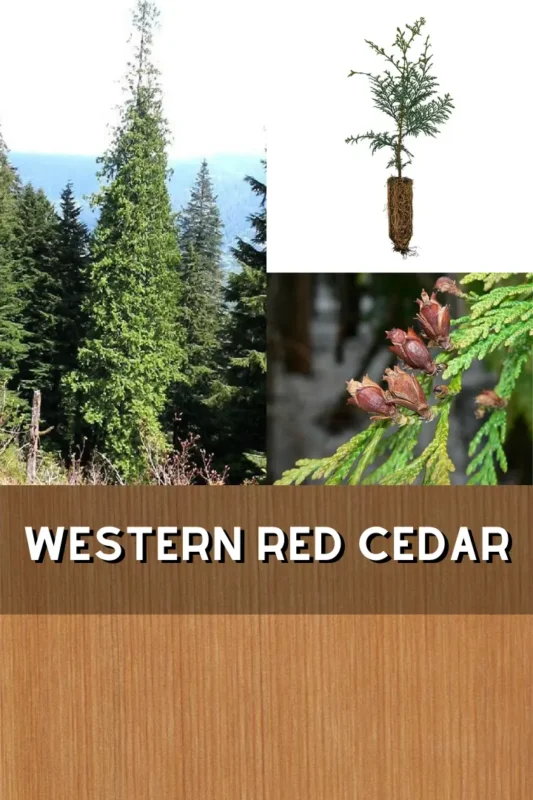
Western red cedar belongs to the cypress family, not the true cedar genus. The living tree produces pale sapwood around reddish-brown heartwood, and most claims about natural decay resistance apply to that heartwood rather than every board sold as cedar.
Definition and Taxonomy
The accepted scientific name is Thuja plicata. It is an evergreen gymnosperm in Cupressaceae, the same plant family as arborvitae, cypress, and juniper. The Royal Botanic Gardens, Kew provides accepted taxonomy and plant-name records.
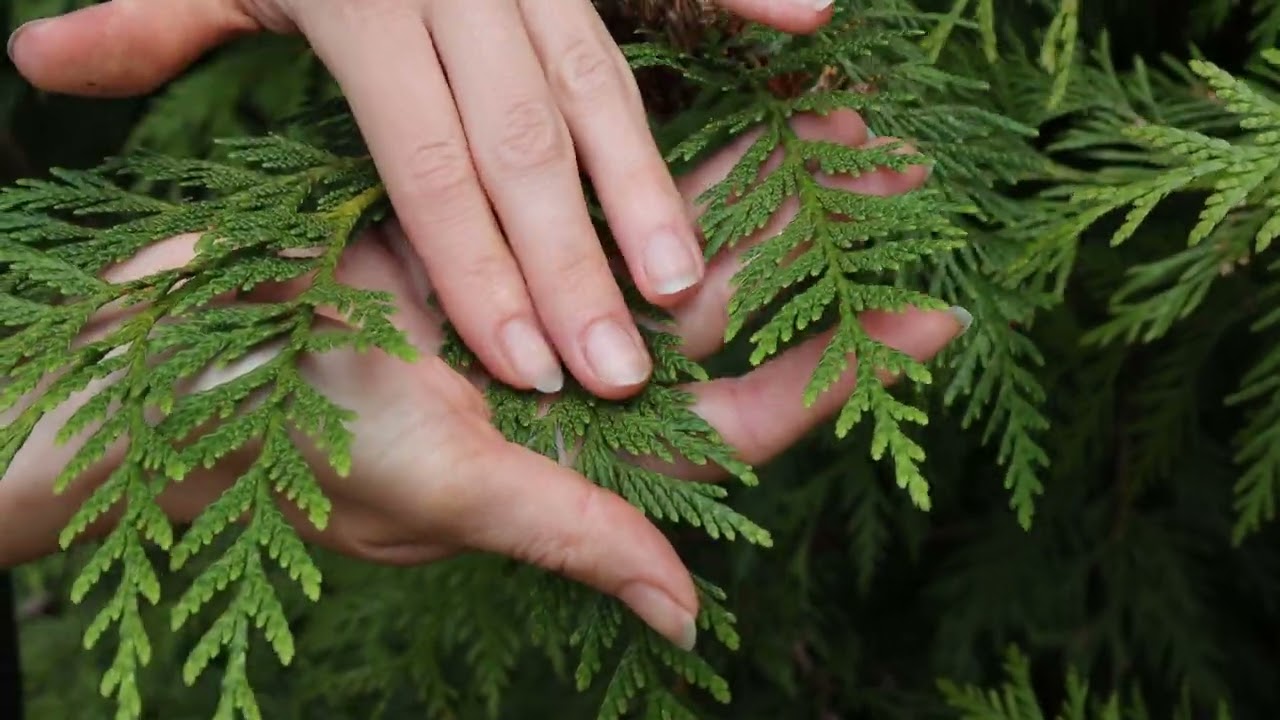
The species produces seeds in cones rather than flowers or fruit. Its scale-shaped foliage grows in flattened sprays, giving the branchlets a layered, fan-like feel when they slide between the fingers.
Names and Synonyms
Western redcedar, written as one word, is common in forestry publications because the name separates it from true cedars. Commercial sellers usually write western red cedar. Pacific redcedar, giant arborvitae, canoe cedar, giant cedar, and shinglewood also appear in older or regional sources.
True cedar distinction. True cedars belong to the genus Cedrus in the pine family. Atlas cedar and cedar of Lebanon are examples; readers can compare them through the guides to Atlas cedar and cedar of Lebanon.
Western Red Cedar Tree Guide
A western red cedar tree is best identified by flattened foliage sprays, tiny oblong cones, fibrous vertical bark, and drooping branch tips. Native forest trees commonly reach 150–200 feet, while residential specimens are often shorter because soil, heat, wind, and root space restrict growth.
Tree Identification
- Small, overlapping scale leaves arranged in flat sprays
- Glossy green upper foliage with paler markings below
- Reddish-brown or gray-brown bark peeling in fibrous strips
- Small oblong cones, commonly about 0.4–0.7 inch long
- Narrow pyramidal crowns on young trees
- Lower branches that droop before turning upward near the tips
Crushed foliage releases a sharp resinous scent, while freshly exposed bark feels stringy rather than plated. Don’t identify a tree by aroma alone: several arborvitae and false cedars smell similar, particularly after rain releases their volatile oils.
Native Range and Habitat
The native coastal range runs from southeastern Alaska and British Columbia through Washington and Oregon into northern California. Inland populations occur around eastern Washington, northern Idaho, western Montana, and adjacent parts of Canada. The USDA Fire Effects Information System documents its distribution, ecology, and response to disturbance.
Cool, moist sites suit the species best. It grows beside streams, in humid valleys, and on uplands where soil retains moisture without keeping roots continuously waterlogged. Young trees tolerate substantial shade, though open light supports denser growth when water remains available.
Growth, size, and longevity. A well-sited young tree may add 1–2 feet annually. Native specimens commonly reach 150–200 feet, and exceptional trees exceed that range. Documented trees can live beyond 1,000 years, but residential longevity depends on root space, summer moisture, construction damage, and heat exposure.
Planting and landscape care. Place the root flare at soil level, spread roots rather than circling them, and leave room for the broad mature crown. Water deeply through establishment and during long dry spells. Keep mulch 2–4 inches deep over the root zone but several inches away from the trunk.
A western cedar tree is a poor choice for tight foundation beds, narrow pavement islands, or sites beneath overhead wires. Deep planting, daily shallow irrigation, and mulch piled against the bark are common beginner mistakes. A wide watering basin gives roots a larger, cooler zone than a drip emitter placed beside the trunk.
Ecology and Indigenous relationships. Dense crowns shelter wildlife, streamside trees shade water, and fallen trunks become moisture-holding nurse logs. Western red cedar also maintains deep cultural, practical, and spiritual relationships with many Pacific Northwest Indigenous Nations, with uses that include canoes, houses, carvings, bentwood boxes, baskets, mats, cordage, and ceremonial objects. Practices differ by Nation and shouldn’t be presented as one uniform tradition.
Tree stress and dieback. Drought and heat can produce brown tips, thinning crowns, dead branches, and progressive western redcedar dieback. Root compaction, buried root flares, trenching, saturated soil, and severe dryness can cause similar symptoms. Inspect soil and root conditions before blaming insects or disease.
Deep irrigation across the root zone works better than wetting only the trunk area. Water should soak slowly without leaving a sour, swampy smell or standing puddles the next day, both of which can signal poor drainage and oxygen-starved roots.
Western Red Cedar Lumber Properties
Western red cedar lumber is light, soft, stable, and easy to machine. Typical air-dry density is about 23 pounds per cubic foot, while Janka hardness is roughly 350 pounds-force, so boards carry easily but dent more readily than redwood or many decking species.
Appearance and Key Properties
| Property | Representative value or description | Practical effect |
|---|---|---|
| Air-dry density | About 23 lb/ft³ or 370 kg/m³ | Easy to lift, carry, and install |
| Janka hardness | About 350 lbf | Cuts easily but dents under concentrated loads |
| Radial shrinkage | About 2.4%, green to oven-dry | Relatively low dimensional change |
| Tangential shrinkage | About 5.0%, green to oven-dry | Flat-grain boards may still cup |
| Modulus of rupture | About 7,500 psi | Reference average, not a design value |
| Modulus of elasticity | About 1.1 million psi | Species, grade, size, and moisture alter capacity |
Freshly cut wood has a sweet, resinous aroma, and a sharp plane can leave a silky surface with alternating pink, cinnamon, and brown bands. Its low density explains both the pleasant hand-tool response and its limited resistance to chair legs, dropped tools, and pet claws.
These figures are representative averages rather than code-approved structural values. The USDA Wood Handbook explains how moisture, grain direction, defects, and test methods affect wood properties. Structural work requires grade-specific design values.
Heartwood Versus Sapwood

Heartwood durability comes partly from natural extractives, including thujaplicins, that inhibit decay organisms. Heartwood ranges from pinkish tan to deep reddish brown. Pale yellow-white sapwood lacks comparable resistance and can decay where repeated wetting prevents drying.
Second-growth lumber may contain more visible sapwood than buyers expect. Examine both board faces and ends rather than judging the stack from one reddish face. Paint can hide the color boundary, but it doesn’t turn vulnerable sapwood into naturally durable heartwood.
Rot resistance and lifespan. Cedar is water-resistant, not waterproof. Correctly detailed siding can remain serviceable for decades, and shingles are often discussed in 30–50-year ranges. Ground contact, open end grain, failed flashing, leaf buildup, and trapped water can shorten that life sharply.
Grades, grain, and drying. Clear vertical-grain stock offers straight grain, few visible knots, and good dimensional behavior, but it carries a premium. Select or appearance knotty boards cost less and provide a rustic look. Kiln-dried stock is more predictable for finishing; green stock may shrink, check, or twist after installation.
Wide flat-grain boards show dramatic grain patterns, yet they’re more prone to cupping than narrow vertical-grain boards. A beginner often fastens a bowed board flat with excessive force. Sorting the pile and rejecting unstable pieces prevents split tongues and pulled fasteners later.
Dimensions and structural use. A nominal 1 × 6 isn’t always 1 inch by 6 inches after drying and surfacing. Actual thickness and width vary by profile and producer. Confirm measurements, moisture condition, grade stamp, and structural listing before using western cedar lumber for beams, joists, posts, or guards.
Wood dust safety. Sawing and sanding create fine dust that can irritate eyes, skin, and airways. Repeated exposure can cause respiratory sensitization and occupational asthma associated with plicatic acid. Use extraction, eye protection, and a properly selected, well-fitted respirator; a cloth mask isn’t a reliable substitute.
Common Western Red Cedar Uses
Common western red cedar uses include siding, shingles, fences, decking, pergolas, outdoor furniture, paneling, sauna interiors, carving, and specialty boat components. Its strongest advantages are low weight, stability, workability, and heartwood durability rather than hardness or heavy structural capacity.
Exterior Building Uses
Cedar suits siding, soffits, trim, privacy screens, gates, fences, trellises, gazebo components, and cedar porch wraps. Straight pieces machine cleanly around corners, but thin edges split if nails sit too close to an end. Predrilling near board ends gives more reliable results.
For fences, compare board grade, heartwood content, post material, and soil exposure rather than buying by species name alone. The guide to wood fence types explains where cedar fits beside treated lumber and other outdoor species.
Decking and Outdoor Projects
Western red cedar is an attractive decking material for bare-foot areas because its surface feels warm and relatively smooth. Its softness also means grill legs, furniture feet, hail, and dropped tools leave marks. Use pads beneath concentrated loads and avoid aggressive pressure washing.
Outdoor furniture stays manageable because cedar weighs less than many competing woods. For benches and tables, choose thicker stock at joints and use stainless-steel hardware. More material choices appear in the guide to the best outdoor furniture wood.
Interior and specialty uses. Wall and ceiling paneling, decorative beams, closet lining, carving, sauna boards, and acoustic accents benefit from low weight and warm color. Cedar logs and thick slabs can check as they dry, so decorative components need allowances for movement rather than rigid attachment across their full width.
Don’t use western red cedar as the best wood for smoking salmon. Cedar-plank cooking places food on a clean, untreated plank, while smoking requires suitable hardwood fuel. Never burn finished, glued, treated, or unidentified cedar, since smoke can carry irritating compounds and coating residues.
Garden beds and food safety. Untreated cedar heartwood works for many raised beds, but soil contact shortens its service life. Line only where the chosen membrane won’t trap water against the boards, keep end grain drained, and confirm any factory-applied treatment or finish is approved for the intended contact.
Interior wall installation. Fix roof or plumbing leaks before covering a wall, acclimate planks as the manufacturer directs, and leave movement space at perimeters. Use adhesives compatible with both wood and substrate. Commercial spaces may require tested flame-spread ratings rather than an assumption based on board thickness.

Western Red Cedar Wall Planks
- Real western red cedar planks for wall applications
- Adds warm natural grain to interior spaces
- Suitable for exterior accent wall projects
- Covers approximately 10.5 square feet
- Varied plank lengths create a more organic look
 Buy on Amazon
Western Red Cedar Siding Guide
Western red cedar siding comes in overlapping, interlocking, open-joint, and shingle formats. Profile choice changes water shedding, shadow lines, installation direction, fastener placement, and coverage, but no wood profile replaces flashing, a weather-resistive barrier, or wall drainage.
Bevel Siding

Bevel siding has a thick lower edge and a thin upper edge. Horizontal courses overlap to shed water, creating a traditional appearance. Calculate quantity from exposed face height rather than full board width because the concealed overlap contributes no wall coverage.
Tongue-and-Groove Siding
Tongue-and-groove boards interlock and may run horizontally, vertically, or diagonally when the profile manufacturer permits it. Fit joints without crushing them together. Seasonal swelling needs room, and a tight joint can buckle or split when boards absorb moisture.
Channel siding. A recessed channel between boards casts a strong shadow line suitable for rustic and contemporary walls. Some profiles work in one orientation only, so check milling and drainage details before rotating a horizontal product for vertical use.
Board-and-batten siding. Wide vertical boards form the field while narrow battens cover joints. Cedar is often considered among the best wood for board and batten siding because it stays light and relatively stable. Fastening must permit board movement without pinning both edges rigidly.
Shingles and shakes. Shingles are usually sawn and uniform; shakes tend to be thicker and more textured. Exposure, grade, underlayment, side-lap, corner details, and local wind requirements must match the product instructions. A wall shingle isn’t automatically rated for roofing.

Western Red Cedar Sidewall Shingles
- Made from naturally durable western red cedar
- Grooved sidewall profile adds classic texture
- Resquared and rebutted for a consistent appearance
- Eighteen-inch shingles suit exterior wall projects
- Half-square carton is convenient for smaller repairs
Buy on Amazon
Coverage and actual width. A nominal 1 × 6 profile may cover far less than six inches after surfacing, overlap, or tongue engagement. Use the manufacturer’s installed exposure. A half-square of shingles covers about 50 square feet at the stated exposure, while a full square covers 100 square feet.
| Siding type | Typical orientation | Quantity basis | Main installation risk |
|---|---|---|---|
| Bevel | Horizontal | Exposed course height | Insufficient overlap or overdriven nails |
| Tongue-and-groove | Horizontal, vertical, or diagonal | Net coverage width | Joints fitted too tightly |
| Channel | Profile-dependent | Net coverage width | Using an unapproved orientation |
| Board-and-batten | Vertical | Board layout plus battens | Restraining seasonal movement |
| Shingles or shakes | Course-laid | Square feet at stated exposure | Incorrect exposure or side-lap |
Installing and Maintaining Cedar
Successful cedar installation depends on drainage and drying, not finish alone. Use integrated flashing, suitable clearances, corrosion-resistant fasteners, protected field cuts, and a ventilated rainscreen where the wall design or climate calls for one.
Moisture, Flashing, and Clearances
Install siding over a code-compliant weather-resistive barrier and integrate flashing above windows, doors, horizontal trim, deck ledgers, and penetrations. Common guidance keeps wood siding at least 6 inches above grade, subject to local code and product instructions.
Maintain separation from roofs, decks, and flat trim where snow, debris, or splashback can keep boards wet. A rainscreen cavity adds drainage and airflow behind cladding. Finish can slow moisture exchange, but it can’t repair a missing window head flashing.
Fasteners and Field Cuts
Use stainless-steel fasteners in coastal, damp, or severe exposure. Approved hot-dipped galvanized fasteners may suit milder settings. Uncoated steel reacts with moisture and cedar extractives, often leaving blue-black streaks that resemble mold but follow nail heads or metal contact points.
Seal or prime field cuts before installation because end grain drinks water quickly and darkens first. Fasteners should sit flush rather than crushing the wood fibers. Predrill near ends, particularly in dry clear stock, where a nail can split the board with a crisp snapping sound.
Storage and acclimation. Store boards flat, supported, dry, and off the soil. Cover the stack against rain while leaving the sides open for airflow. Sealing wet boards tightly in plastic encourages condensation, staining, and uneven moisture that appears after installation as cupping or open joints.
Measure moisture in several boards from different stack levels. Interior paneling needs time to approach indoor conditions, while exterior acclimation depends on product instructions and regional climate. Don’t scatter wet siding in direct sun; one face can dry faster and pull the board into a curve.
Stains, paints, and sealers. A pigmented penetrating stain is often the best stain for a cedar gazebo when visible grain and easier maintenance are priorities. Paint offers stronger UV screening but needs a cedar-compatible stain-blocking primer. Clear coatings preserve fresh color briefly and demand frequent exterior upkeep.
Light and medium stain colors reduce solar heating compared with very dark finishes. Coat faces, edges, and ends when the finish specification calls for back-priming. Cedar extractives can bleed through unsuitable primers, creating tan or brown patches after rain.
Cleaning and recoating. Start with low pressure, a soft brush, and a cleaner approved for the coating. High-pressure washing erodes soft earlywood, leaving raised ridges and a fuzzy surface. Let cleaned siding dry to the finish maker’s stated moisture limit before recoating.
- Find and repair leaks, splashback, or blocked drainage.
- Wash gently and treat mildew with a compatible cleaner.
- Rinse without forcing water behind laps or joints.
- Allow the wall to dry fully.
- Sand loose fibers and feather failed coating edges.
- Prime exposed wood where the coating system requires it.
- Apply the recommended finish at the specified spread rate.
Common siding failures. Low ground clearance, absent flashing, blocked rainscreens, unsealed cuts, iron contamination, overdriven nails, and wet-board installation cause many failures blamed on cedar itself. Uneven gray weathering is common beneath deep eaves because sheltered wood receives less rain and sunlight.
Practical notes from real-world use. Check lower courses, window corners, and board ends first; these locations often feel cool and slightly soft before broad damage becomes visible. A moisture meter helps separate active wetting from an old stain, but readings need comparison with dry boards of the same species.
When a dark streak tracks directly below a fastener, test for iron staining before applying mildew cleaner. Replacing the moisture source and incompatible metal prevents recurrence. Scrubbing the color alone leaves the reaction ready to return after the next wet cycle.
Western Red Cedar Comparisons
Western red cedar offers low weight and stability, but it costs more than many treated softwoods and dents more easily than redwood or dense decking. The right comparison depends on exposure, structural needs, maintenance tolerance, freight distance, fire rules, and desired appearance.
Advantages and Limitations
- Durable heartwood, but less-durable sapwood
- Easy handling, cutting, shaping, and fastening
- Good dimensional stability with correct drying and storage
- Distinct color and grain that fade under ultraviolet exposure
- Broad exterior and interior use, subject to grade and code
- Soft surface that scratches and dents
- Potential extractive staining and metal corrosion problems
- Dust capable of causing irritation and respiratory sensitization
Cedar Versus Redwood
Redwood is slightly harder at roughly 450 Janka lbf, compared with cedar near 350 lbf. Both species offer naturally durable heartwood and good dimensional behavior. Local grade supply, clear-board availability, freight, and color may matter more than the modest hardness difference.
See the guide to sequoia and redwood for species context. Neither wood survives careless ground contact or trapped water simply because it contains decay-resistant extractives.
Cedar versus treated pine. Pressure-treated pine often costs less and may carry a treatment rating for ground contact. Cedar weighs less and offers a more refined natural appearance. Treated boards can arrive wet, heavy, and prone to shrinkage, so check the treatment-category label and moisture before building.
Cedar versus composite. Cedar can be cut, patched, sanded, and refinished with familiar tools. Composite decking offers consistent color and lower staining needs, yet it can feel noticeably hotter in sun and may require tighter joist spacing. Compare installed systems rather than board prices alone.
Cedar versus other siding. Fiber cement resists dents, insects, and fire better in many assemblies but weighs more and creates silica-containing cutting dust. Vinyl needs little coating maintenance but can distort from heat. Cedar gives natural grain and repairability while requiring planned finishing and moisture control.
Eastern and incense cedar. Eastern red cedar is Juniperus virginiana, a harder juniper used for closets, chests, and small projects. Incense cedar is Calocedrus decurrens. Compare western cedar with eastern red cedar, and verify scientific names whenever identity affects price or performance.
Cost and Buying Western Red Cedar
The cost of western red cedar lumber depends on grade, grain orientation, heartwood content, drying, size, length, milling, profile, freight, and factory finishing. A useful quote must identify the seller’s region, collection date, dimensions, grade, quantity unit, and installed coverage.
Price Factors and Units
Clear vertical-grain heartwood commands a strong premium because mills recover fewer long, defect-free pieces. Knotty, short-length, finger-jointed, green, and mixed-sapwood stock may cost less. Rough western cedar lumber can also appear inexpensive until surfacing loss, drying, sorting, and waste are included.
| Pricing unit | What it measures | Buying caution |
|---|---|---|
| Board foot | 144 cubic inches of rough wood | Confirm nominal or actual dimensions |
| Linear foot | Board length | Width and profile must match |
| Square foot | Installed surface area | Check whether waste is included |
| Square | 100 square feet of siding or roofing coverage | Exposure changes carton coverage |
| Piece or carton | Product count or packaged coverage | Compare net coverage, not package size |
Board-Foot Calculation
The board-foot formula is thickness in inches × width in inches × length in feet ÷ 12. A rough 2 × 6 board measuring 10 feet contains 10 board feet: 2 × 6 × 10 ÷ 12 = 10.
A surfaced 2 × 6 has smaller actual dimensions, yet some sellers price it from nominal rough size. Ask how the yard calculates volume before comparing quotes. Linear-foot pricing can be clearer for finished profiles if both products provide the same net coverage.
Siding quantity and waste. Divide wall width by installed coverage width, not nominal board width. Start with about 10% waste for plain rectangular walls. Add more for diagonal layouts, numerous openings, short stock, complex gables, selective color matching, or boards rejected for damage.
Count trim, inside and outside corners, flashing, fasteners, rainscreen strips, finish, freight, and labor separately. For shingles, confirm whether a carton is a half-square or full square and whether its stated coverage assumes the exposure required by your wall design.
Species, grade, and coverage. Request Thuja plicata in writing rather than accepting “cedar.” Confirm whether boards are solid, finger-jointed, laminated, veneered, factory-primed, or unfinished. Inspect knots, checks, splits, wane, machining, moisture, actual dimensions, and net installed exposure.
Match grade to the visible surface and service demand. Clear stock makes sense for refined trim, while sound knotty cedar often performs well on rustic siding. Buying the most expensive grade won’t correct poor drainage, and buying by color alone can hide large amounts of sapwood.
Sustainability certifications. FSC, PEFC, and SFI claims apply to identified products and chain-of-custody systems, not automatically to every cedar board. Ask for the product claim on the invoice. An Environmental Product Declaration can also support comparisons based on documented manufacturing information.
Wood is renewable, but that fact alone doesn’t verify responsible sourcing. The FSC label guide explains how certified, recycled, and controlled material claims differ.
Live tree example. Bare-root trees need planting soon after arrival because exposed roots dry quickly. Soak roots only as directed by the nursery, spread them naturally in the planting hole, and avoid adding rich amendments that create a small, water-holding pocket around the root system.

Western Red Cedar Tree Pack
- Four live bare-root western red cedar trees
- Ideal for privacy screens and landscape planting
- Approximately 20 inches tall at shipment
- Arrives without pots or soil for planting flexibility
- A natural choice for growing long-lived evergreen trees
Buy on Amazon
Siding example. Packaged sidewall shingles can suit small repairs where buying a full square creates excess material. Match grade, exposure, thickness, texture, and weathered color before ordering. New cedar often looks bright beside an older wall until sunlight and rain alter its surface.
Western Red Cedar Sidewall Shingles
- Made from naturally durable western red cedar
- Grooved sidewall profile adds classic texture
- Resquared and rebutted for a consistent appearance
- Eighteen-inch shingles suit exterior wall projects
- Half-square carton is convenient for smaller repairs
Buy on Amazon
Wall plank example. Interior plank packages should state net square-foot coverage rather than relying on nominal dimensions. Order enough at one time to blend color and grain across the wall. Open several cartons and mix boards during installation instead of creating visible color bands.
Western Red Cedar Wall Planks
- Real western red cedar planks for wall applications
- Adds warm natural grain to interior spaces
- Suitable for exterior accent wall projects
- Covers approximately 10.5 square feet
- Varied plank lengths create a more organic look
Buy on Amazon
FAQs
Is Western Red Cedar A True Cedar?
Western red cedar is not a true cedar; it belongs to the Thuja genus. True cedars belong to the Cedrus genus and are native to different regions. Despite its name, western red cedar shares many useful qualities with true cedars, including natural durability, a pleasant aroma, and attractive grain.
Is Western Red Cedar Waterproof Or Rot-Resistant?
Western red cedar is naturally rot-resistant but not completely waterproof. Its natural oils and extractives help it resist decay, insects, and moisture damage better than many woods. Outdoor cedar still benefits from proper installation, drainage, and a protective finish to reduce water absorption and surface weathering.
How Long Does Western Red Cedar Last Outdoors?
Western red cedar can last 20 to 40 years outdoors when installed and maintained properly. Siding, fencing, and decking life varies with climate, ground contact, sun exposure, and moisture levels. Applying a suitable stain or sealant and keeping the wood clean can help extend its service life.
Does Western Red Cedar Siding Need To Be Sealed?
Western red cedar siding does not need sealing to resist rot, but sealing helps preserve its appearance. Left unfinished, cedar naturally weathers to a silvery gray color while remaining durable. Use a breathable exterior stain or water-repellent finish if you want to maintain the original color and reduce uneven weathering.
Why Is Western Red Cedar Lumber Expensive?
Western red cedar lumber is expensive because it is naturally durable, visually attractive, and harvested from a limited supply. Slow-growing trees, careful grading, transportation, and strong demand for outdoor projects also affect pricing. Its long lifespan and low maintenance needs can make cedar a worthwhile investment for siding, decking, and fencing.
Affiliate Disclosure: Some links in this post are affiliate links. If you make a purchase through these links, we may earn a small commission at no extra cost to you. We only recommend products we genuinely believe in.