
Black Locust Tree: Identification, Growing Risks, Wood Uses and Key Facts

Black Locust Tree: Identification, Growing Risks, Wood Uses and Key Facts
The black locust tree, Robinia pseudoacacia, is a fast-growing deciduous tree with fragrant white flowers, compound leaves, root suckers, and highly decay-resistant heartwood. Native to parts of the United States, it has spread far beyond that range; its bark, foliage, seeds, and pods are toxic when eaten.
Its spring bloom supports pollinators, while locust wood serves in fence posts, outdoor structures, and firewood. Those benefits come with serious trade-offs, including invasive colonies, stipular spines, livestock poisoning, locust-borer damage, and repeated regrowth after cutting.
Table of Contents
Black Locust Tree at a Glance
Black locust facts are easy to summarize but harder to apply. This species grows quickly, fixes nitrogen, flowers heavily in suitable seasons, and produces valuable hardwood, yet it can spread beyond its planting site and perform poorly as a predictable yard tree.
Quick Species Definition
Taxonomy and names: The accepted scientific name is Robinia pseudoacacia, a member of Fabaceae, the pea family. Other names include false acacia, yellow locust, and white locust, but it isn’t a true acacia or the same species as honey locust. Kew Plants of the World Online provides the accepted botanical classification.
| Black locust tree fact | Typical description | Practical qualification |
|---|---|---|
| Scientific name | Robinia pseudoacacia | Different genus from honey locust |
| Mature height | Usually 30–50 feet | May exceed 60–80 feet on favorable sites |
| Crown spread | About 20–35 feet | Root spread and suckers can extend farther |
| Growth rate | Fast when young | Roughly 2–4 feet in a favorable year, not guaranteed |
| Lifespan | Often several decades | Some trees approach a century; borers, rot, and storms shorten life |
| Light | Full sun | Flowering and form decline in heavy shade |
| Hardiness | Commonly Zones 3–8 | Provenance and cultivar affect cold tolerance |
| Reproduction | Seeds, suckers, stump sprouts | One tree can become a connected colony |
Size, Growth Rate, Lifespan, Flowers, and Reproduction
The black locust growth rate is fastest during youth on sunny, open sites with adequate moisture. Two to four feet of extension growth can occur in a favorable season, but compacted soil, deer browsing, drought, and locust borers can reduce that figure sharply.
A black locust lifespan isn’t fixed. Open-grown trees exposed to storm damage may decline after 30 to 60 years, while sound trees on protected sites can live much longer; a fast-growing trunk can still hide decay, borer tunnels, or weak unions.
During late spring, drooping racemes of pea-shaped flowers release a sweet, heavy fragrance that can carry across a still yard. Bees work the creamy white clusters noisily, but frost, hard rain, and wind can cut a bloom period short and reduce nectar production.
Wildlife value includes nectar, pollen, nesting structure, and insect forage. That value must be weighed against the loss of native grassland or savanna plants where dense black locust colonies shade the ground.
Black locust roots form associations with nitrogen-fixing bacteria. Nitrogen fixation can aid growth on disturbed ground, but it doesn’t correct drainage, compaction, mineral deficiencies, or unsuitable pH, and added nitrogen can alter nutrient-poor natural communities.
How to Identify Black Locust

A black locust tree identification should combine leaves, flowers, bark, spines, pods, and suckering habit. Relying on one feature causes mistakes, especially in winter or when ornamental cultivars carry pink flowers.
Leaves, Flowers, Bark, and Stipular Spines
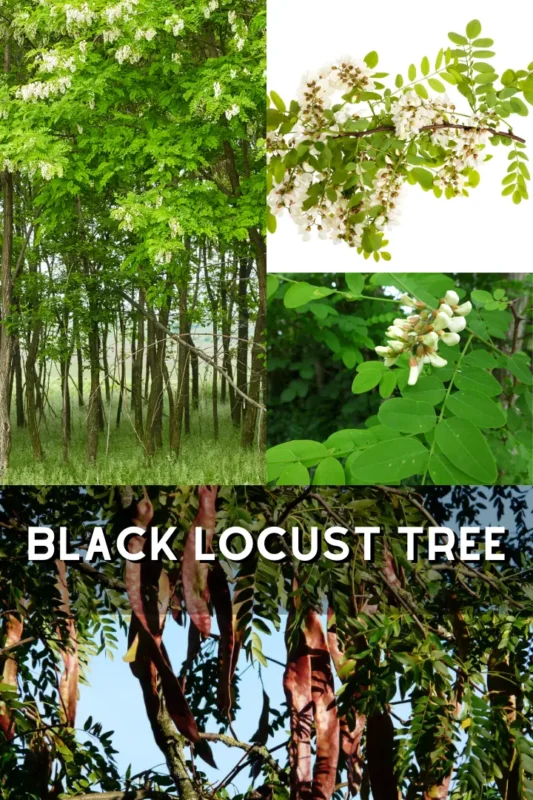
Black locust leaves are alternate and pinnately compound, usually 6–14 inches long. A leaf commonly carries 7–19 smooth-edged, oval leaflets with rounded or faintly notched tips; the foliage feels thin and slightly cool between the fingers rather than leathery.
A black locust tree in bloom bears hanging white racemes made of individual pea-like flowers. Some cultivars flower pink or purple, so flower color alone shouldn’t decide the identification.
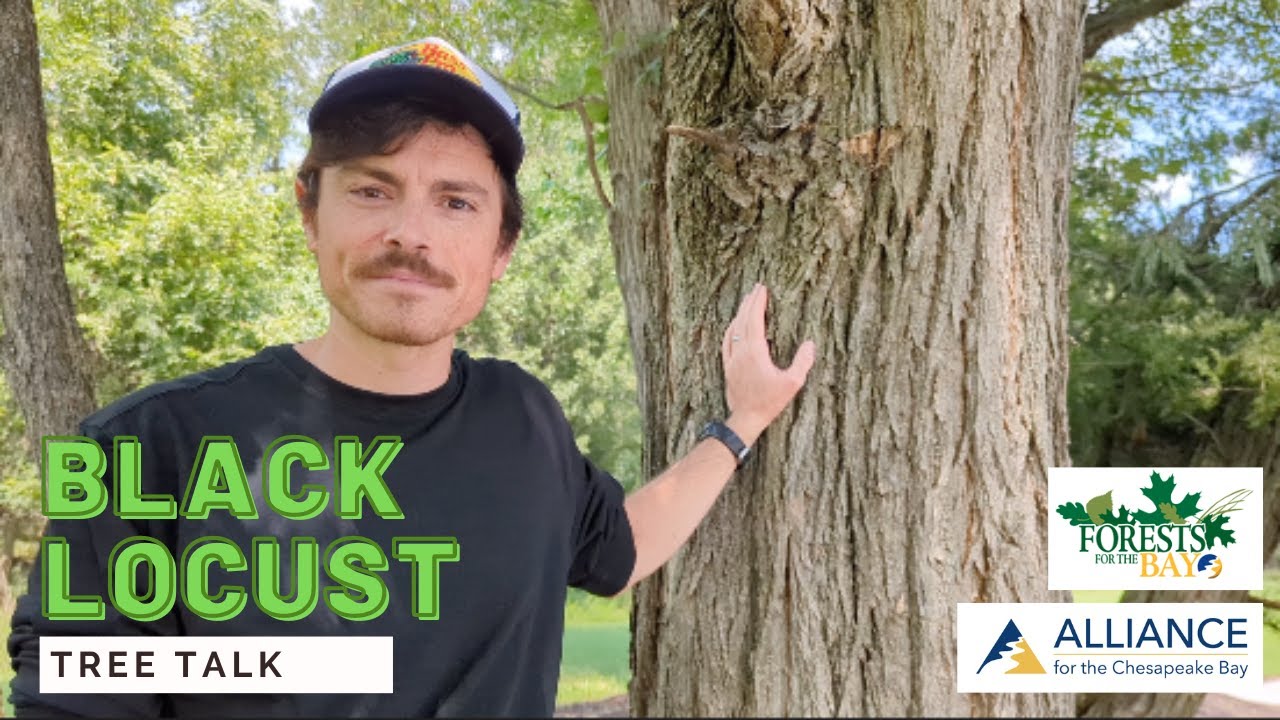
Young bark starts fairly smooth, while mature black locust bark becomes gray-brown and deeply furrowed. Running a gloved hand over an old trunk reveals hard, rope-like ridges divided by narrow, dark channels.
Young shoots commonly carry paired stipular spines at the leaf nodes. These short, sharp structures differ from the long, branched thorns growing from trunks and limbs of wild honey locust.
Seed Pods, Roots, Suckers, and Seasonal Identification
Mature black locust seed pods are flat, brown, and usually only a few inches long. They may persist into winter, but they are far shorter and less twisted than typical honey locust pods; seeds and pods shouldn’t be treated as food.
Root suckers can appear beyond the crown, beside fences, through thin turf, or along cut roots. Several stems in a line often belong to one connected root system rather than separate seed-grown trees.
- Spring: Look for emerging compound leaves, paired spines, and fragrant hanging flowers.
- Summer: Check for open foliage, green developing pods, and fresh suckers around the planting.
- Fall: Expect yellowing leaves and flat pods turning brown.
- Winter: Use rope-like bark, paired spines on young twigs, persistent pods, and colony form.
A common beginner mistake is identifying a tree from an online flower photograph. The best field check combines the twig nodes, compound foliage, short pods, mature bark, and evidence of suckering.
Black Locust Versus Honey Locust

Black locust and honey locust belong to Fabaceae, but they are different species with distinct flowers, foliage, defensive structures, pods, and common uses. Black locust is Robinia pseudoacacia; honey locust is Gleditsia triacanthos.
Scientific Identity, Flowers, and Foliage
Black locust produces showy, fragrant, pea-shaped flowers, while honey locust flowers are smaller, greenish, and less conspicuous. The foliage pattern also helps: black locust is mainly pinnate with broad oval leaflets, while honey locust may be pinnate or bipinnate with finer leaflets.
| Feature | Black locust | Honey locust |
|---|---|---|
| Scientific name | Robinia pseudoacacia | Gleditsia triacanthos |
| Flowers | Showy, fragrant white racemes | Small, greenish clusters |
| Leaves | Mainly pinnate; broader leaflets | Pinnate or bipinnate; finer leaflets |
| Sharp structures | Short paired stipular spines | Large branched thorns on wild trees |
| Pods | Short, flat, usually a few inches long | Long, curved, or twisted |
| Common planting role | Posts, timber, reclamation | Filtered-shade street tree in thornless forms |
Spines, Seed Pods, Wood, and Site Uses
Wild honey locust can develop large branched thorns from its trunk and branches. Black locust usually has much shorter paired spines on young growth, though thorniness varies and rootstock shoots may differ from a grafted ornamental crown.
Pod length offers another quick distinction. Honey locust pods often exceed six inches and may twist as they dry; black locust pods remain shorter and flatter.
Black locust is better known for highly durable heartwood, while thornless honey locust cultivars are widely planted for filtered shade. See the full honey locust comparison before selecting either tree.
Native Range and Invasive Behavior
Black locust is native to parts of the United States, especially regions linked with the Appalachians and Ozarks, but extensive planting has carried it far outside its historical distribution. A native North American tree can still act invasively after introduction into a different regional ecosystem.
Historical Native Range and Naturalization Beyond Its Range
The exact pre-settlement range remains partly uncertain because people planted black locust for posts, erosion control, mine timbers, and reclamation. The USDA Forest Service silvics profile describes its distribution, regeneration, growth, and forestry uses.
Naturalized populations thrive along roads, rail corridors, abandoned fields, logged ground, utility routes, and other sunny disturbed sites. Seed movement helps start new populations, while roots and stumps build dense local colonies.
Suckering, Ecological Effects, and Regional Legal Status
Cutting, fire, excavation, or root injury can trigger vigorous stump and root sprouts. This response explains why a single removal attempt may leave more visible stems during the next growing season.
Dense colonies shade low vegetation and change habitat structure. Nitrogen fixation may shift soil nutrient conditions, favoring disturbance-tolerant plants at the expense of species adapted to nutrient-poor prairie, dune, or savanna soils.
Legal status varies by country, state, province, municipality, and conservation district. Check agriculture departments, invasive-plant councils, Cooperative Extension offices, and local noxious-weed lists before buying seeds or live plants; online availability doesn’t prove local planting is permitted.
Growing Conditions and Site Suitability
Black locust grows best in full sun and well-drained soil, but site tolerance doesn’t make it suitable for every property. Root suckers, branch failure, spines, pavement conflicts, and local invasive status often matter more than soil fertility.
Sun, Soil, Water, Space, and Root Conflicts
The tree tolerates dry, disturbed, and relatively low-fertility ground after establishment. Persistently saturated soil is a poor fit, while deep periodic watering usually supports stronger rooting in young trees better than frequent shallow sprinkling.
Drought-tolerant doesn’t mean immune to stress. Extended dryness can cause scorched leaf edges, slow growth, branch dieback, and greater vulnerability to borers; newly planted stock needs consistent establishment moisture without waterlogged roots.
Spacing based only on crown width misses the main problem. Allow room for roots and suckers, fallen limbs, maintenance access, overhead wires, nearby structures, pavement, livestock boundaries, and neighboring property.
Appropriate Sites, Sites to Avoid, Cultivars, and Alternatives
Appropriate planting sites may include large rural holdings, managed post-production blocks, reclamation projects, and agroforestry systems where local rules permit the species and workers can inspect and control new shoots.
Avoid planting beside foundations, patios, narrow sidewalks, play spaces, horse paddocks, utility routes, or conservation land. Small residential lots rarely provide enough management buffer for spreading roots and storm-damaged limbs.
The Morton Arboretum lists cultural traits and limitations for black locust. Local site conditions still govern the decision, particularly where the species appears on invasive-plant lists.
‘Frisia’ offers yellow foliage, while ‘Purple Robe’ carries rose-purple flowers. ‘Twisty Baby’ has contorted growth, and ‘Bessoniana’ is associated with a more upright form; none of these selections automatically removes suckering, weak-wood, or rootstock concerns.
Grafted trees need close inspection below the graft. A rootstock sucker may be thornier and more vigorous than the named upper cultivar and can overtake it if left in place.
Possible regional alternatives include thornless honey locust for filtered shade, Kentucky coffeetree for a legume-family canopy tree, redbud or serviceberry for smaller spaces, and locally native oaks for long-term habitat. Review other hardwood trees before committing.
A black locust tree may fit a large managed site where its wood, flowers, and fast growth have a planned use. It is usually a poor choice where suckers, toxic plant material, or repeated pruning can’t be managed.
Practical planting decision
Toxicity, Pests, and Physical Hazards
Black locust can harm people and animals if toxic plant parts are eaten, and its spines and defective branches create physical hazards. Horses face particular risk from bark, foliage, shoots, seeds, pods, and accessible prunings.
Toxic Parts, People, Pets, Horses, and Livestock
Potentially toxic parts include bark, leaves, young shoots, seeds, and pods. Compounds associated with poisoning include the toxalbumin robin, and drying plant material shouldn’t be assumed to make it harmless.
Possible signs in people or pets include nausea, vomiting, abdominal pain, weakness, dizziness, or lethargy. Contact a physician or poison-control service for human exposure and a veterinarian or animal poison service for suspected pet ingestion; don’t attempt improvised treatment.
Horses may show depression, appetite loss, colic, weakness, abnormal heart rhythm, or neurologic impairment after exposure. The Merck Veterinary Manual describes black locust poisoning in animals.
Remove fallen branches and prunings from livestock areas rather than stacking them over a fence. Wear gloves, long sleeves, and eye protection because young paired spines can punch through thin gloves and spring-loaded shoots can snap back at face level.
Locust Borer, Leafminers, Cankers, Rot, and Storm Failure
The locust borer, Megacyllene robiniae, is a major timber and structural pest. Larvae tunnel through stems, leaving swollen areas, holes, and internal defects that weaken limbs and reduce sawlog quality.
Black-and-yellow adult borers often feed on goldenrod pollen, while their larvae remain hidden in wood. Open-grown or stressed trees can suffer heavy damage, so fast diameter growth doesn’t guarantee a straight usable log.
The locust leafminer, commonly associated with Odontota dorsalis, can turn foliage brown or skeletonized. Damage may look severe from a distance, yet one outbreak rarely kills a sound tree; repeated defoliation is more concerning.
Cankers, heart rot, old pruning wounds, narrow branch unions, and borer galleries increase the chance of storm failure. Structural pruning works best on young trees, before large competing leaders form and the crown develops heavy end-loaded limbs.
Black Locust Tree Wood and Uses
Black locust tree wood combines high hardness, strength, and outstanding heartwood decay resistance. Its pale sapwood lacks the same durability, while irregular grain, checking, tool wear, and borer defects complicate processing.
Heartwood, Sapwood, Density, Strength, Shrinkage, and Decay Resistance
Freshly exposed heartwood can appear yellow-green to golden brown and darkens with age. The narrow sapwood is pale yellow or cream; this visible boundary matters because heartwood provides durability, not the species name by itself.
Young, small-diameter stems may contain a high share of sapwood. A cheap “locust” post can decay early at the ground line if it has limited heartwood, retained bark, shallow diameter, or constant wetting.
| Wood property | Common reference value | Use-related meaning |
|---|---|---|
| Average dried weight | About 48 lb/ft³ or 770 kg/m³ | Heavy to lift, transport, and handle green |
| Janka hardness | About 1,700 lbf | Resists denting but increases tool wear |
| Modulus of rupture | About 19,400 psi | Strong clear wood; not a grading certificate |
| Modulus of elasticity | About 2.05 million psi | Relatively stiff wood |
| Crushing strength | About 10,180 psi | Good compression performance in clear samples |
| Radial shrinkage | About 4.6% | Movement across growth rings |
| Tangential shrinkage | About 7.2% | Greater movement parallel to growth rings |
| Volumetric shrinkage | About 10.2% | Thick stock can still check during poor drying |
These are reference values for clear dried material, not guarantees for every board. Moisture content, growing site, grain direction, age, and testing method change results; the Wood Database black locust profile supplies commonly cited figures.
On the wood hardness scale, black locust sits above many familiar domestic hardwoods. Its mass also becomes clear beside other species in a wood density comparison.
Decay-resistant isn’t rot-proof. Ground-line moisture, trapped water, cracks, sapwood, soil organisms, and poor construction details still shorten service life, while natural durability doesn’t substitute for structural grading in load-bearing work.
Practical Notes From Real-World Use
Fence posts are the signature use for locust wood. Heartwood-rich posts can remain serviceable for several decades, but post diameter, drainage, bark removal, installation depth, fungal exposure, and the wet-dry cycle at ground level change the result.
Outdoor uses include decking, boardwalks, garden structures, raised-bed components, sills, edging, and furniture. Choose corrosion-resistant fasteners, shed water from horizontal surfaces, and avoid pockets where moisture and grit collect; compare other outdoor furniture woods when stable wide boards matter.
Agricultural and historical uses include vineyard posts, stakes, mine timbers, railroad ties, tool handles, wooden pins, and some marine components. Historical precedent doesn’t make ungraded lumber suitable for a modern structural project governed by building codes.
Interior makers use sound boards for flooring, benches, furniture, turning, and decorative work. The surface can polish to a warm golden brown, but reversing grain may tear under a planer and produce a rough, fuzzy patch beside an otherwise clean cut.
Fresh logs feel strikingly heavy, and green rounds can resist predictable splitting where grain interlocks around knots. Sharp carbide tooling, light passes, and grain-aware feed direction reduce tear-out; dull edges tend to burn rather than slice.
Pre-drill near board ends and for large fasteners to reduce splitting. End-seal logs and thick boards soon after sawing, then stack them on uniform stickers under cover with open sides; uneven support can leave permanent bow and twist.
Drying too fast causes end checks, surface splits, distortion, and hidden internal honeycombing. A beginner often mistakes a dry-feeling face for a dry board, so use a moisture meter and check fresh crosscuts rather than judging by touch alone.
Black locust makes high-output firewood, often placed near 27–28 million BTU per properly seasoned full cord. It burns hot, holds a coal bed well, and can produce a dry metallic ringing sound when two seasoned splits strike; review black locust wood for a broader material profile.
A full cord measures 128 cubic feet of stacked wood; a face cord isn’t the same quantity. Green black locust burns less cleanly, feels far heavier, and wastes heat evaporating internal water.
Timber quality and pricing vary by heartwood percentage, straightness, dimensions, borer damage, drying method, surface preparation, grade, and freight distance. Compare quotations by matching the sales unit—board foot, linear foot, individual post, pallet, or truckload—instead of relying on one national figure.
Crooked standing trees may have little conventional sawlog value, while straight posts and clear specialty boards can sell at a premium. Before buying, inspect end grain for sapwood, old galleries, radial checks, and hidden pith; a clean outside face can conceal serious internal defects.
Planting and Managing Black Locust
Plant black locust only after checking regional restrictions and planning for long-term sucker control. Seeds need scarification, bare-root trees need careful moisture management, and cutting established stems without follow-up often creates denser regrowth.
Seed Scarification, Bare-Root Planting, Spacing, and Establishment
Black locust seeds have a hard, water-resistant coat that creates physical dormancy. Use a supplier-approved method to nick or abrade the coat, or follow a tested hot-water treatment; cutting too deeply or applying excessive heat can kill the embryo.
- Scarify each seed without cutting into the pale embryo.
- Soak prepared seeds for the period stated by the supplier or local Extension guidance.
- Sow in a free-draining medium and keep it evenly moist, not saturated.
- Provide strong light after emergence to limit thin, weak indoor growth.
- Watch seedlings for damping-off, root crowding, and overwatering.
Seed-grown trees vary in form, vigor, flowering, and thorniness. A seed packet can’t promise the crown shape or flower traits of a named cultivar, and germination percentages vary with seed age, storage, preparation, and temperature.
Bare-root trees need planting during the locally suitable dormant period. Keep roots damp before installation, spread them naturally, set the root flare at or slightly above grade, backfill with native soil, water deeply, and keep mulch off the trunk.
Spacing must account for the future crown and spreading roots. Timber or post blocks need a regional silvicultural plan, plus access lanes for mowing, inspection, harvesting, and sucker management; generic backyard spacing won’t produce predictable sawlogs.
Confirm that Robinia pseudoacacia is permitted and suitable at the destination before ordering. Check live-plant shipping rules, seller survival or germination terms, and local invasive guidance; product claims don’t replace regional advice.
These seed and seedling options provide two starting formats after local planting suitability has been confirmed.

Black Locust Seedling Trio
- Three live black locust seedlings included
- Ships dormant for seasonal planting
- Fast-growing hardwood for landscape projects
- White blooms help welcome pollinators
- Useful for shade timber and habitat planting
 Buy on Amazon

Black Locust Seed Pack
- Includes 50 seeds for planting projects
- Fast-growing tree with fragrant white flowers
- Nitrogen-fixing roots can enrich soil
- Durable hardwood is naturally rot resistant
- Cold-hardy option for shade and screening
Buy on Amazon
Seedlings offer a head start but cost more to ship and can suffer transplant stress. Seeds reduce the cost per plant but require preparation, germination time, and early protection; neither choice changes the tree’s mature spreading behavior.
Why Cutting Often Fails, Seedling and Sucker Control, and Established Colonies
Cutting often fails because stored root reserves feed stump sprouts and shoots from lateral roots. Root injury from digging, trenching, or grading can produce new suckers farther away, making the infestation appear to move after removal work.
Pull or dig young seedlings before they establish broad roots, taking care around nearby desirable plants. Recheck beyond the former canopy through several growing seasons because dormant root buds can activate after the visible stem is gone.
Repeated mowing can suppress small shoots but may require years of follow-up and isn’t suitable around exposed roots or rough ground. Don’t move root fragments or excavated soil into natural areas, and keep all cut material away from livestock.
Large colonies call for an integrated plan rather than a single cutting day. A certified arborist, Cooperative Extension office, conservation agency, or licensed vegetation manager can match timing and treatment to the site; herbicide selection and legal use are location-specific.
The common beginner mistake is removing the trunks, grinding only the central stump, and stopping inspections. A more reliable approach maps the colony edge, treats each stage appropriately, protects desirable vegetation, and schedules multi-season monitoring for recurring sprouts.
FAQs
How Fast Does A Black Locust Tree Grow?
Black locust is a fast-growing tree that can gain 2 to 4 feet of height per year in favorable conditions. Young trees grow quickest in full sun, well-drained soil, and areas with adequate moisture. Growth may slow in poor soil, shade, drought, or cold climates.
Is A Black Locust Tree Invasive Where I Live?
Black locust can be invasive in some regions, especially outside its native range in the eastern United States. It spreads through seeds and root suckers, allowing it to form dense colonies. Check your local invasive-plant list or extension office before planting, as restrictions and risks vary by location.
Is Black Locust Poisonous To People And Animals?
Black locust is poisonous if its bark, seeds, leaves, or inner wood are eaten by people or animals. These parts contain toxic compounds that may cause stomach upset, weakness, or more serious symptoms, particularly in horses and livestock. Keep pets and grazing animals away from fallen branches and plant material.
How Can You Identify Black Locust Versus Honey Locust?
Black locust has short paired thorns, fragrant white spring flowers, and deeply furrowed dark bark. Honey locust usually has much larger, branched thorns on its trunk and branches, although thornless varieties are common. Honey locust also produces longer, twisted seed pods than black locust.
How Long Does Black Locust Wood Last Outdoors?
Untreated black locust wood can last 20 to 40 years outdoors because it naturally resists rot and insects. Its durability makes it popular for fence posts, garden edging, decking, and outdoor structures. Lifespan depends on soil contact, drainage, climate, and the quality of the wood.
Affiliate Disclosure: Some links in this post are affiliate links. If you make a purchase through these links, we may earn a small commission at no extra cost to you. We only recommend products we genuinely believe in.