Black Locust Wood Guide: Properties, Uses, Durability, and Cost

Table of Contents
Black locust wood is a hard, dense, naturally rot-resistant hardwood from Robinia pseudoacacia. Its heartwood is used for fence posts, decking, raised garden beds, boardwalks, outdoor furniture, flooring, and firewood because it can last for decades outdoors without pressure treatment.
If you’re comparing black locust lumber with cedar, oak, ipe, or treated pine, the main thing to check is heartwood content, because pale sapwood won’t give the same outdoor durability.
What Is Black Locust Wood?
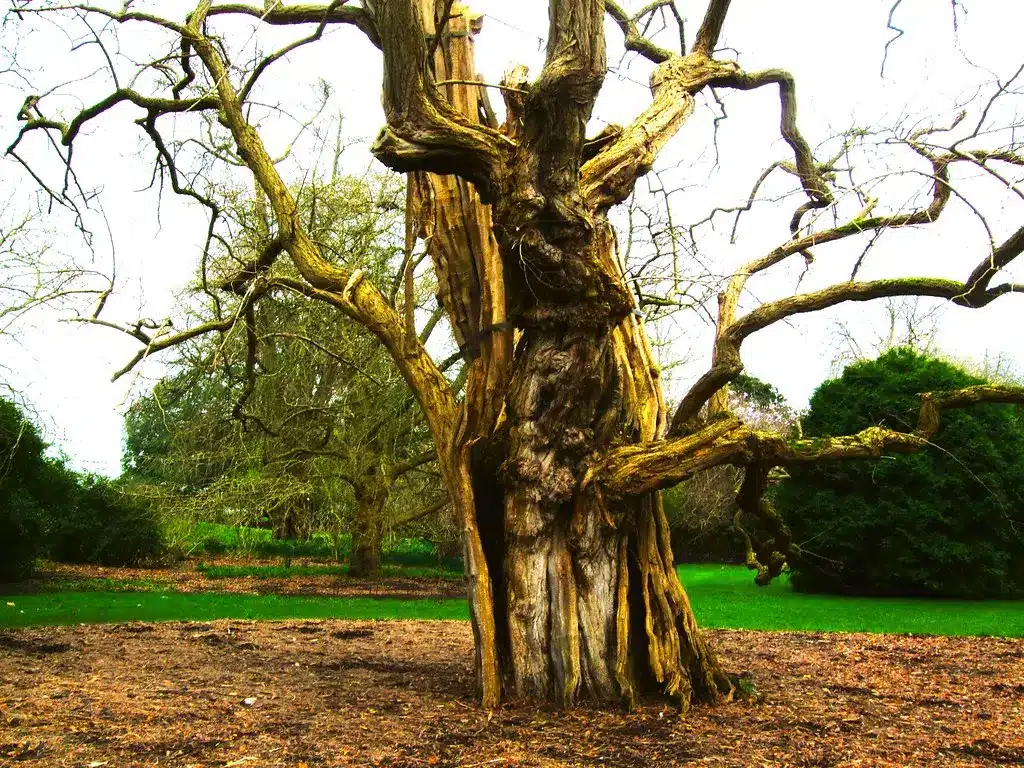
Black locust wood is the lumber cut from the black locust tree, a fast-growing deciduous hardwood in the legume family, Fabaceae. The scientific name is Robinia pseudoacacia, and the tree is native to parts of North America, with more detail covered in our guide to the black locust tree.
Robinia pseudoacacia Basics
Robinia pseudoacacia grows quickly, fixes nitrogen, and often reaches about 40 to 80 feet tall. The wood is valued because it combines high hardness, high strength, and natural decay resistance in a domestic hardwood rather than an imported tropical species.
Common names include black locust, false acacia, robinia, and yellow locust. Those names can cause confusion at lumberyards, so I always confirm the scientific name or ask whether the stock is true Robinia pseudoacacia before using it for outdoor work.
Black locust is not honey locust, true acacia, black limba, or ebony. Honey locust is Gleditsia triacanthos, and while it can be hard and dense, it isn’t the same wood sold for long-life posts and decking; see our full honey locust comparison.
Black Locust Appearance and Heartwood vs Sapwood

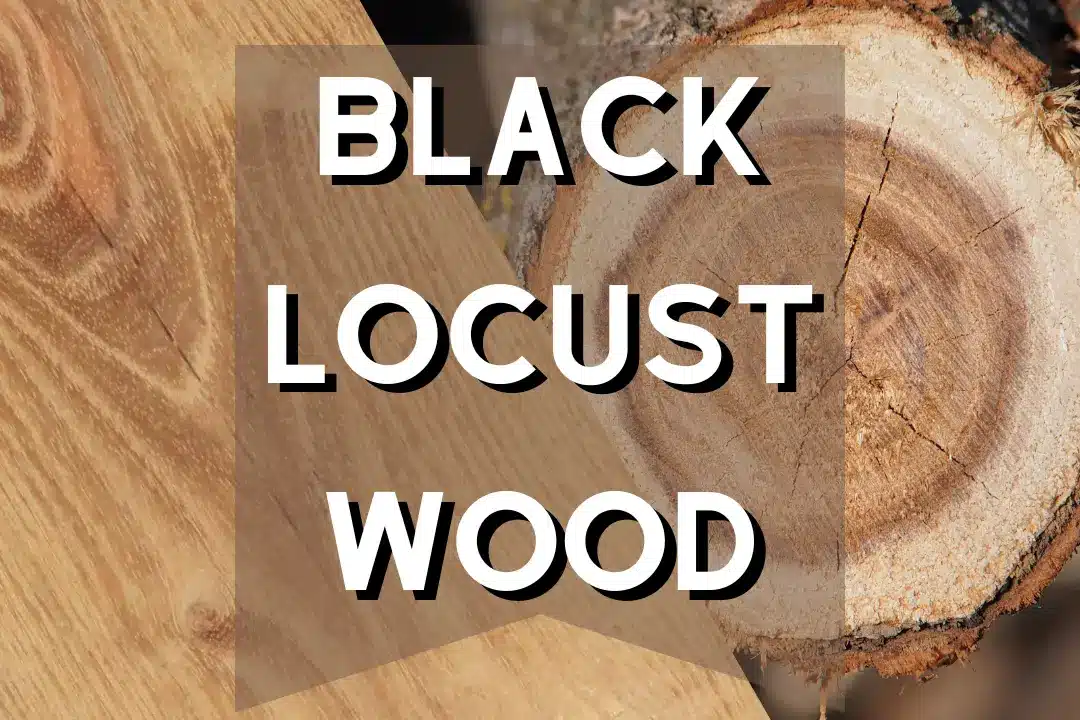
Black locust heartwood ranges from yellow-green to olive brown or golden brown, then darkens with age and outdoor exposure. Freshly planed boards can have a warm, almost honeyed look, and the surface feels slick under sharp tooling because the grain burnishes cleanly.
Black locust sapwood is pale yellow to nearly white, usually in a narrow band around the heartwood. For outdoor use, avoid boards with heavy sapwood because that pale edge can decay sooner, especially in ground contact or damp raised beds.
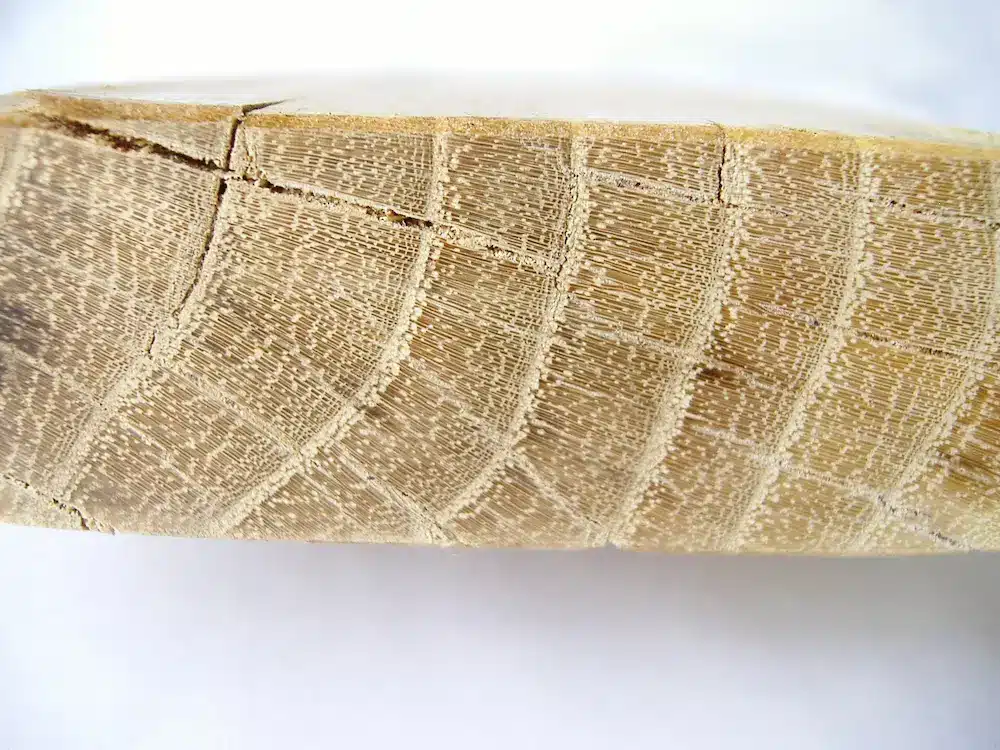
The grain is usually straight to slightly interlocked, with a medium texture and visible ring-porous lines. It can look like ash or oak at first glance, but black locust often carries a warmer yellow-green cast and feels heavier in the hand than many similar-looking domestic woods.
Black Locust Hardness and Properties
Black locust hardness is about 1,700 lbf on the Janka scale, which makes it harder than red oak, white oak, and hard maple. That hardness is why black locust deck boards resist dents better than cedar, but it also explains why screws can split the wood if you skip predrilling.
Janka Hardness, Density, and Strength Data
The main black locust wood properties are high density, strong bending strength, and strong compression strength. The values below align with widely used wood-species references and the FPL Wood Handbook, though exact numbers vary with growing site, drying, and sample quality.
| Property | Approximate Value | What It Means in Use |
|---|---|---|
| Janka hardness | 1,700 lbf | Harder than white oak and red oak; good wear resistance |
| Average dried weight | 48 lb/ft³ | Heavy boards; higher shipping and handling effort |
| Specific gravity | 0.66 to 0.69 | Dense domestic hardwood with strong fastener holding |
| Modulus of rupture | 19,400 psi | High bending strength for demanding applications |
| Modulus of elasticity | 2.05 million psi | Stiff material compared with many common woods |
| Crushing strength | 10,200 psi | Good compression strength for posts and supports |
| Radial shrinkage | 4.6% | Moderate movement across growth rings |
| Tangential shrinkage | 7.2% | More movement along growth-ring tangent |
| Volumetric shrinkage | 10.2% | Can check or move if installed too wet |
| T/R ratio | 1.6 | Moderate stability when dried and installed well |
Density and weight matter on real jobs. A stack of black locust boards feels noticeably heavier than cedar or pine, and after carrying several 5/4 deck boards, the weight in your forearms makes it clear why freight and labor costs run higher.
Compared with the broader wood hardness scale, black locust sits near hickory/pecan and above many familiar hardwoods. That makes it useful for wear surfaces, but it punishes dull blades with heat, chatter, and faint burnt-sugar smells from the cut.
Shrinkage, Stability, and Ring-Porous Grain
Shrinkage and stability are manageable if the wood is dried for the job. Green black locust posts can work fine outdoors, but green boards installed tight as decking may shrink, open uneven gaps, cup, or twist as they lose moisture.
Ring-porous grain means the earlywood pores form visible bands, similar to oak and ash. This structure gives black locust a bold grain line, but it can also raise coarse fibers during sanding, so stepping through grits cleanly matters more than rushing to a finish coat.
Durability and Outdoor Performance

Black locust wood durability comes mainly from its heartwood, which is rated very durable to extremely durable against decay. It’s rot-resistant, not rot-proof, so poor drainage, constant wet soil, trapped debris, and exposed sapwood can still shorten service life.
Natural Rot Resistance and Heartwood Extractives
Heartwood extractives help black locust resist fungal decay. Compounds such as robinetin and dihydrorobinetin are often linked with this resistance, which is why black locust fence posts, vineyard stakes, and boardwalk parts have a long history of outdoor use.
Ground contact performance depends on the piece you buy. Split posts with mostly heartwood often outlast sawn boards with mixed sapwood, and posts in gravelly, well-drained soil can last far longer than the same stock set into wet clay.
Many builders cite 30+ years for heartwood-heavy black locust in exterior service, and some post claims reach 50 years or more. Treat those numbers as conditions-based estimates, because soil moisture, climate, installation depth, sapwood, and end checking all change the result.
Weathering to Gray, Checking, and Finish Maintenance
Black locust weathering starts with a richer golden-brown tone, then moves to silver-gray outdoors if left unfinished. The change can look uneven during the first season, with shaded boards staying warmer while sun-facing boards bleach faster.
Checking and cracking are common in exterior black locust, especially at board ends, post tops, and screw lines. Small surface checks usually don’t mean failure, but deep splits around fasteners can weaken decking and let water sit where it shouldn’t.
Finish maintenance is the trade-off for keeping color. Penetrating exterior oil can slow graying, and end-grain sealer can reduce end checks, but clear outdoor finishes need reapplication; no coating makes exterior wood maintenance-free.
This video is useful if you want a visual look at how black locust performs in outdoor lumber settings before choosing it for decking, posts, or landscape work.
Best Uses for Black Locust Wood
Black locust wood uses are strongest where hardness, strength, and decay resistance matter. It’s one of the better domestic choices for exterior projects that need untreated outdoor wood, especially where cedar feels too soft and tropical hardwood sourcing raises concerns.
Fence Posts, Decking, Raised Beds, and Landscape Timbers
Black locust fence posts are a classic use because heartwood-heavy posts handle soil contact well without chemical pressure treatment. Split posts are common on farms because they shed water well, expose durable heartwood, and tolerate checking better than perfectly milled boards.
Black locust decking works well for decks, boardwalks, docks above splash zones, and public walkways where wear resistance matters. It needs good airflow below the boards, corrosion-resistant fasteners, and predrilled holes, because dense boards installed wet and tight can move hard as they dry.
Black locust raised beds are popular because the heartwood lasts well without pressure-treatment chemicals near garden soil. For edible gardens, confirm the boards are untreated, avoid unknown reclaimed stock, and choose high-heartwood pieces for the best wood for raised garden bed longevity.
- Use heartwood-heavy boards for raised garden beds, landscape timbers, and ground-contact borders.
- Choose straight, dry boards for black locust deck boards and boardwalk surfaces.
- Pick split or sawn posts with limited sapwood for fences, orchards, and vineyards.
- Avoid pale sapwood edges where the board will stay damp or touch soil.
For outdoor furniture, black locust is a strong candidate among the best outdoor woods. It makes solid benches, tables, chairs, pergola parts, and patio furniture, but the finished piece feels much heavier than cedar and takes more effort to move across a patio.
Flooring, Interior Work, and Firewood
Black locust flooring can take wear well because the surface is hard and dense. The limiting factor is supply, since consistent flooring-grade black locust is less common than oak, maple, hickory, or the common oak boards sold through hardwood dealers.
Interior work includes stair treads, furniture accents, cabinet details, turned objects, mallets, pegs, and specialty parts. For high-shock tool handles, ash and hickory are still more common, but black locust works well where durability and compression strength matter more than springy flex.
Black locust firewood burns hot, coals well, and delivers strong heat after proper seasoning. Dense rounds can be stubborn to split when the grain twists, and the sharp cracking sound from a dry split is a good reminder to wear eye protection near the chopping block.
Workability and Installation Tips
Working with black locust takes sharper tools and more setup than working with cedar, pine, or poplar. The wood machines cleanly when cutters are sharp, but dull blades burn, chatter, and leave fuzzy torn grain where interlocked fibers reverse.
Practical Notes From Real-World Use
Cutting and machining black locust rewards steady feed pressure. When the blade is right, the cut smells faintly sweet and dusty; when it’s wrong, the edge darkens fast, the saw tone rises, and the board can kick tiny hot chips against your wrist.
Drilling and fastening require predrilled pilot holes, especially near board ends. Beginners often drive deck screws straight into black locust and split the board, so I use a countersink bit, keep fasteners back from the end, and switch to stainless steel outdoors.
Gluing black locust works best on freshly planed or freshly sanded surfaces. For exterior assemblies, use polyurethane glue, epoxy, Type I waterproof PVA, or resorcinol where the joint needs long-term weather resistance, and clamp firmly without starving the joint.
Sanding and finishing need patience because dense latewood bands can polish while softer earlywood keeps scratching. Don’t skip grits; move evenly through the sequence, wipe away dust, then test oil or finish on scrap because black locust color can shift from green-gold to amber-brown.
Decking, Post Installation, and Wood Dust Safety

Decking installation should include predrilled holes, stainless or high-quality coated fasteners, drainage gaps, and ventilation below the boards. A common mistake is installing wet boards tight together; as they dry, gaps open unevenly and fasteners can snap or loosen.
Post installation works best with heartwood-heavy posts and drainage around the base. Gravel backfill can help in some soils, but in loose sandy soil it may not add much; the professional move is matching the backfill to the drainage pattern rather than using one method everywhere.
Wood dust safety matters because black locust dust can irritate skin, eyes, nose, or lungs. Use dust collection, wear eye protection, and use a respirator during sanding or routing, especially when the fine yellow dust starts clinging to sweaty forearms.
Black Locust vs Other Woods
Black locust vs cedar, oak, ipe, treated pine, and honey locust comes down to hardness, decay resistance, availability, weight, and price. Black locust is harder than most domestic woods used outdoors, but it isn’t always the easiest or cheapest material to buy.
| Comparison | Black Locust Advantage | Other Wood Advantage |
|---|---|---|
| Black locust vs cedar | Much harder, denser, stronger, better for wear | Cedar is lighter, easier to cut, and often easier to source |
| Black locust vs white oak | Harder at about 1,700 lbf and often better in ground-contact heartwood uses | White oak is easier to find for flooring, furniture, barrels, and boat work |
| Black locust vs red oak | Far better outdoor rot resistance | Red oak is common and cost-friendly for interior projects |
| Black locust vs ipe | Domestic option with a simpler local sourcing story | Ipe is much harder at about 3,510 lbf and extremely durable |
| Black locust vs treated pine | Naturally durable heartwood without pressure treatment for many uses | Treated pine is widely available and has lower upfront cost |
| Black locust vs honey locust | Better known for rot-resistant posts and exterior lumber | Honey locust is hard and dense but less common as exterior rot-resistant lumber |
Janka comparisons help explain the feel: black locust is about 1,700 lbf, white oak about 1,360 lbf, red oak about 1,290 lbf, hard maple about 1,450 lbf, hickory/pecan about 1,820 lbf, Western red cedar about 350 lbf, and Southern yellow pine often about 690 to 870 lbf by species.
Against ipe, black locust is easier to defend as a domestic alternative when sourced locally, but ipe is harder, heavier, and highly durable. If you’re comparing tropical hardwood options, our ipe wood guide explains why sourcing and cost need close attention.
Against treated pine, black locust wins on natural durability and dent resistance, while pressure-treated pine wins on availability and low entry cost. For structural code-driven projects, confirm whether black locust lumber is graded for the application rather than assuming every hard wood qualifies as construction wood.
Against honey locust, the biggest difference is market use. Black locust is Robinia pseudoacacia and is famous for rot-resistant heartwood; honey locust is Gleditsia triacanthos and is harder to source as a dependable exterior lumber product.
Cost, Availability, and Buying Tips
Black locust wood price is usually higher than pressure-treated pine and often competes with cedar or premium hardwood decking, depending on region and grade. It may cost less than ipe in some markets, but shipping, milling, and limited supply can erase that gap.
Black Locust Lumber Cost Factors and Where to Buy
Black locust lumber cost changes with local supply, board size, heartwood percentage, drying method, surfacing, grade, and freight weight. Small craft boards sold online look expensive per board foot because you’re paying for milling, sanding, packaging, sorting, and shipping dense stock.
Where to buy depends on the project. Look for local sawmills, specialty hardwood dealers, decking suppliers, fence post sellers, vineyard suppliers, farm suppliers, online craft-lumber sellers, and hardwood marketplaces using terms like black locust lumber near me, black locust boards, black locust posts, black locust decking, and black locust slabs.
- Ask for heartwood content if the wood will touch soil or sit outdoors.
- Confirm moisture content: green, air-dried, kiln-dried, or partially dried.
- Check whether boards are rough-sawn, S2S, S3S, S4S, nominal, or actual size.
- Inspect for end checking, wane, knots, twist, and excessive pale sapwood.
- Match stock to the use: posts, decking, furniture, crafts, or garden beds.
Moisture content is one of the most overlooked buying details. Green stock can be acceptable for posts, but kiln-dried or well air-dried black locust is the safer choice for furniture, flooring, craft boards, serving boards, and tight joinery.
Grade and dimensions aren’t always standardized like commodity oak or pine. Black locust boards may come shorter, narrower, rougher, or with more character, so measure actual thickness and width before planning joinery, decking layouts, or raised bed hardware.
Craft Boards and Blanks
Craft boards are useful if you want to test black locust before buying larger lumber. They suit small woodworking, repairs, serving boards, boxes, garden markers, blanks, and finish tests, but they shouldn’t replace structural decking, ground-contact posts, or engineered outdoor framing.
These small black locust boards and serving pieces are best for craft projects, samples, and light woodworking rather than structural outdoor use.

Smooth Black Locust Wood Pack
- Thin sanded boards for clean finishing
- black locust hardwood for strength
- handy 24 inch by 6 inch size
- great for crafts and small builds
- set of 4 pieces for multiple projects
 Buy on Amazon

Black Locust Lumber Set
- Thin sanded boards ready to use
- durable black locust hardwood
- 12 inch by 3 inch size for versatility
- ideal for hobby builds and repairs
- 10 piece pack supports larger projects
Buy on Amazon

Ultra Thin Locust Boards
- Extra thin boards for delicate work
- smooth sanded finish saves prep time
- black locust offers lasting durability
- 12 inch by 3 inch pieces fit many uses
- 10 piece set is great for crafts
Buy on Amazon

Rustic Locust Serving Boards
- Rustic look adds natural charm
- perfect for cheese and charcuterie
- sturdy black locust wood for everyday use
- compact 2 piece set for serving or display
- easy to style for home entertaining
Buy on Amazon
Sustainability, Safety, and Pros and Cons
Black locust hardwood can be a sustainable lumber choice when responsibly sourced, because it grows quickly, can be used untreated outdoors, and may reduce demand for imported tropical decking woods. Planting it is a separate decision because the tree can spread aggressively outside parts of its native range.
Sustainable Hardwood Benefits and Invasive Species Concerns
Sustainable hardwood benefits include fast growth, coppicing ability, domestic supply potential, nitrogen fixation, and long service life without chemical pressure treatment in many outdoor uses. The USDA describes black locust as a nitrogen-fixing species with strong colonizing ability in its black locust species review.
Invasive species concerns are real in some regions. Black locust can spread by root suckers, form dense stands, alter soil nitrogen, and outcompete native plants, so buying responsibly harvested lumber can be sensible while planting new trees may need local guidance.
Tree identification clues include compound leaves with oval leaflets, fragrant white flower clusters, paired thorns on young stems, flat seed pods, and deeply furrowed bark on mature trees. Wood identification from photos alone is unreliable, so use end grain, density, color, and source context together.
Black locust bark, leaves, and seeds are toxic if ingested by humans or livestock, especially horses. Finished lumber use isn’t the same as eating plant parts, but shop dust can still irritate people, so treat sanding and machining dust with care.
Main Advantages and Disadvantages
Main advantages of black locust wood include naturally rot-resistant heartwood, excellent outdoor durability, about 1,700 lbf Janka hardness, strong domestic hardwood performance, good wear resistance, attractive golden-brown color, and strong use in posts, decking, boardwalks, garden beds, furniture, and firewood.
Main disadvantages include limited commercial availability, inconsistent board widths, heavy weight, harder machining, frequent predrilling needs, checking risk, sapwood decay risk, invasive tree concerns, plant-part toxicity, and possible wood dust irritation.
Beginner mistakes usually come from treating every “locust” board as equal, skipping pilot holes, buying sapwood-heavy material for soil contact, installing wet deck boards tightly, and expecting a clear outdoor finish to last without upkeep. The workaround is simple: buy for heartwood, dry for the use, predrill, ventilate, and accept gray weathering if low maintenance matters most.
FAQs
Is Black Locust Wood Good For Outdoor Projects?
Yes, black locust wood is excellent for outdoor projects. It is naturally rot-resistant, very durable, and holds up well in wet or ground-contact conditions.
It’s a strong choice for fences, raised beds, posts, and decking when you want a long-lasting natural wood option.
How Hard Is Black Locust Wood?
Black locust wood is very hard. It is one of the hardest and toughest North American woods commonly used for outdoor work.
That hardness makes it extremely durable, but it can also be harder to cut, drill, and fasten than softer woods.
How Long Does Black Locust Wood Last Outside?
Black locust wood can last for decades outside, especially when it is used above ground and kept in decent condition. In some applications, it may last 30 years or more.
Its natural rot resistance makes it a top choice for long-term outdoor use without chemical treatment.
Is Black Locust Better Than Cedar For Raised Beds?
Black locust is usually better than cedar for raised beds if you want maximum durability. It is harder and more rot-resistant than most cedar species.
Cedar is often easier to work with and still performs well, so the best choice depends on your budget, tools, and how long you want the bed to last.
Is Black Locust Wood Toxic To Work With?
Black locust wood is not highly toxic to work with, but it can cause irritation for some people. The dust may bother your skin, eyes, or lungs during cutting and sanding.
Wearing a mask, eye protection, and gloves is a smart idea, especially if you are working with it for long periods.
Affiliate Disclosure: Some links in this post are affiliate links. If you make a purchase through these links, we may earn a small commission at no extra cost to you. We only recommend products we genuinely believe in.