
Black Ash Tree Guide: Identification, Habitat, and Conservation

Black ash, or Fraxinus nigra, is a moisture-loving deciduous tree native to eastern North America, identified by opposite compound leaves, mostly stalkless leaflets, soft corky bark, and winged seeds. It grows mainly in forested wetlands, faces severe emerald ash borer pressure, and supplies uniquely separable wood for Indigenous basketry.
Suggested SEO title: Black Ash Tree Facts: Identification, Habitat, Wood, and EAB Risk
Suggested meta description: Identify a black ash tree by its leaves, bark, buds, and seeds. Compare similar trees and learn about habitat, wood, conservation, and emerald ash borer.
Table of Contents
Black Ash Tree Facts
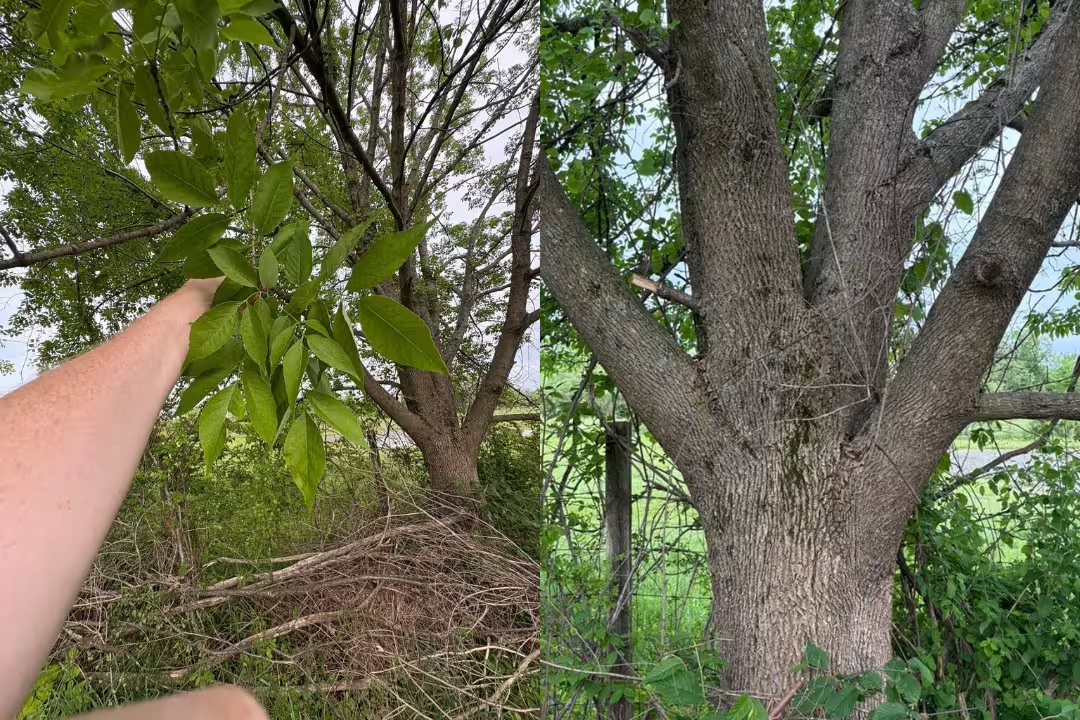
A black ash tree is a true native ash adapted to cold, wet ground. Most mature specimens stand 40–60 feet tall, carry a narrow or irregular crown, and produce dry samaras rather than berries.
Definition and Classification
The accepted scientific name is Fraxinus nigra. It belongs to the genus Fraxinus and Oleaceae, the olive family, alongside white ash, green ash, European ash, lilac, and privet.
This species is a deciduous, broadleaf ring-porous hardwood. “Black” refers to the tree’s traditional name, not consistently dark bark or lumber; fresh heartwood often appears light to medium brown beside pale sapwood.
It is one of several North American hardwood trees with opposite branching. According to the USDA Forest Service species account, black ash is most strongly linked with swamps, stream margins, and other low-lying sites.
Quick Facts Table
| Black ash fact | Typical description |
|---|---|
| Scientific name | Fraxinus nigra |
| Family | Oleaceae, the olive family |
| Native range | Northeastern and north-central North America |
| Typical height | 40–60 feet |
| Exceptional height | About 70–90 feet on favorable sites |
| Typical trunk diameter | About 1–2 feet |
| Leaf arrangement | Opposite and pinnately compound |
| Leaflet count | Usually 7–11 |
| Fruit | Single-winged samara |
| Preferred habitat | Swamps, floodplains, bog margins, and wet lowlands |
| Growth rate | Slow to moderate |
| Main threat | Emerald ash borer |
| Global conservation assessment | Critically Endangered on the IUCN Red List |
Height, Growth, and Lifespan
Most black ash trees reach 40–60 feet, yet productive wetland sites can support much taller specimens. Growth varies with water-table depth, soil oxygen, competition, browsing, climate, and emerald ash borer exposure.
Healthy trees may live 150–250 years under favorable conditions, but that is a potential biological range rather than a planting guarantee. In infested regions, insect damage can end a tree’s life decades or centuries early.
Young trees often grow slowly where shade and cold saturated soil limit root activity. A slightly raised hummock can make a visible difference: seedlings on raised ground may look firm and green while nearby plants sit in black, sour-smelling mud with yellowing leaves.
Crown and Growth Habit
Forest-grown black ash commonly has a narrow open crown and a long trunk below the main branches. An open-grown tree may spread more widely, though its outline often remains less even than a planted maple’s rounded canopy.
The crown can look sparse without being infested, especially in a crowded swamp. Compare upper-canopy density across several nearby trees before treating a naturally open growth habit as decline.
How to Identify a Black Ash Tree

Identify black ash by combining opposite branching, compound leaves with 7–11 leaflets, nearly stalkless lateral leaflets, corky bark, clustered samaras, and wet habitat. No single feature confirms the species at every age or season.
Field Identification Sequence
- Confirm that buds, twigs, or leaves occur in opposite pairs.
- Check whether each leaf is pinnately compound rather than one simple blade.
- Count the leaflets; black ash usually carries 7–11.
- Look for lateral leaflets with little or no individual stalk.
- Examine older bark for a soft, corky, flaky texture.
- Search for clusters of elongated winged samaras, not fleshy berries.
- Check the site: cold swamps and saturated lowlands support the identification.
This sequence prevents the common mistake of naming a tree from bark alone. Young black ash bark can be plain gray, while old bark varies with growth rate, injury, moss, and exposure.
Leaves and Leaflets
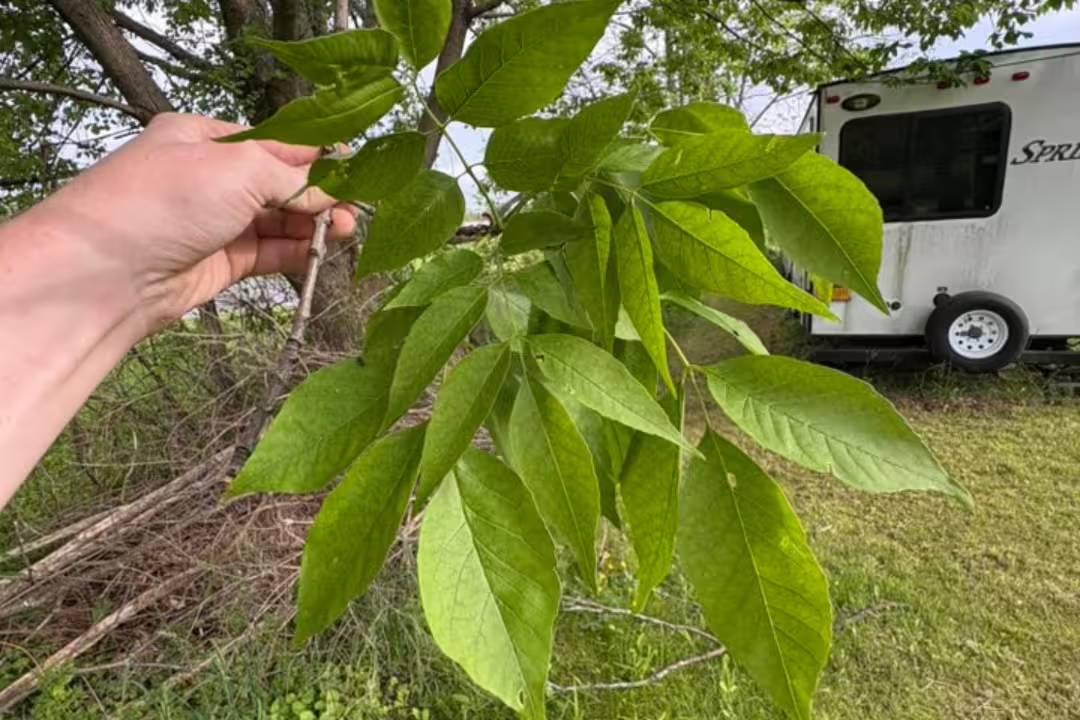
A complete black ash leaf is usually 9–16 inches long and contains 7–11 leaflets along a central stalk. The leaflets are elliptic to lance-shaped, finely toothed, and often narrower near their pointed tips.
The strongest summer clue is the nearly stalkless leaflets. Most lateral leaflets appear attached directly to the central rachis, while the terminal leaflet has a clearer stalk.
Fall color is usually yellow and may pass quickly after a cold night. A crushed fresh leaf has a green, slightly grassy smell, but scent varies too much to serve as a dependable identification test.
Bark by Tree Age
Saplings have relatively smooth gray bark. Middle-aged trunks develop shallow fissures and loose scales, while mature bark often feels soft or corky under a fingertip and may flake when rubbed.
Black ash seldom develops the strong, interlaced diamond ridges typical of mature white ash. Water, lichen, and age can hide texture, so examine more than one side of the trunk and avoid peeling living bark.
Twigs, Buds, and Scars
The stout gray-brown twigs carry opposite buds. Leaf scars are often rounded or oval, and the first lateral buds may sit a short distance below the terminal bud rather than pressing tightly against it.
Broken black ash twigs can feel pithy rather than dense. Twig thickness changes with shade and vigor, so compare several live shoots instead of relying on one damaged branch.
Flowers and Samaras
Small wind-pollinated flowers appear in spring before or near leaf emergence. They lack the conspicuous petals found on many ornamental trees and can pass unnoticed high in the crown.
The fruit is an elongated winged samara, commonly 1–1.5 inches long, hanging in clusters. Black ash does not produce berries; red or orange berry-like fruit points more strongly to a mountain ash in the genus Sorbus.
Winter Identification
In winter, start with opposite twigs and buds, then assess rounded leaf scars, stout shoot growth, retained samara clusters, mature bark, and wetland location. Snow or ice can hide low branches, making fallen twigs useful only when traced back to the correct crown.
A frequent beginner error is collecting a twig from the ground without checking its source. In mixed woods, that sample may have fallen from a maple, green ash, or shrub several yards away.
Identification Photo Guide
Useful black ash tree pictures should show the whole crown, opposite attachment points, both leaf surfaces, leaflet bases, bark at breast height, buds, and fruit. A close photograph without scale can make a samara, bud, or bark ridge appear misleadingly large.
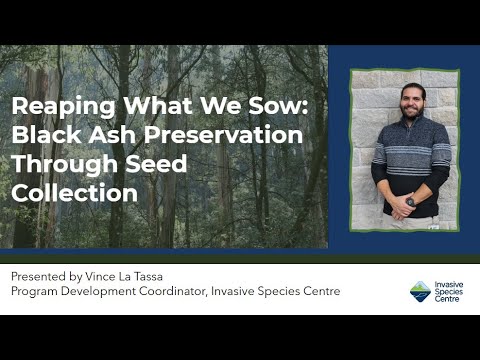
Use the video beside a physical sample rather than treating footage as a substitute for field checks. Screen color can shift gray bark toward brown, and wide-angle lenses can distort crown shape.
Black Ash Compared With Similar Trees
Black ash differs from similar trees through a combined pattern of stalkless lateral leaflets, soft corky bark, samaras, and saturated habitat. Mountain ash and prickly ash aren’t true ashes, despite their common names.
Species Comparison Table
| Species | Family | Leaflet stalks | Fruit | Bark and habitat |
|---|---|---|---|---|
| Black ash, Fraxinus nigra | Oleaceae | Most lateral leaflets nearly stalkless | Winged samaras | Soft, corky bark; cold saturated lowlands |
| White ash, Fraxinus americana | Oleaceae | Clearly stalked | Winged samaras | Diamond-ridged bark; well-drained uplands |
| Green ash, Fraxinus pennsylvanica | Oleaceae | Usually short-stalked | Winged samaras | Firm ridges; floodplains and disturbed ground |
| European mountain ash, Sorbus aucuparia | Rosaceae | Stalked leaflets | Red or orange pomes | Smoother bark; varied cool sites |
| European ash, Fraxinus excelsior | Oleaceae | Short-stalked to nearly sessile | Winged samaras | Gray ridged bark; native to Europe and western Asia |
| Prickly ash, Zanthoxylum species | Rutaceae | Variable | Small capsules | Prickled shrub or small tree |
Black Ash vs. White Ash
Black ash usually occupies wetter ground and has nearly stalkless lateral leaflets. White ash favors moist, well-drained uplands, commonly has clearly stalked leaflets, and develops diamond-patterned bark at maturity.
Wood provides another clue after legal harvest: black ash growth rings can separate into flexible layers when pounded correctly. White ash is denser and more strongly linked with tool handles, bats, and impact-resistant parts; see this broader ash wood guide.
Black Ash vs. Green Ash
Both species tolerate wet settings, but green ash occupies a wider mix of floodplains, roadsides, and disturbed urban ground. Its lateral leaflets usually have short stalks, while mature bark forms firmer ridges and furrows.
Emerald ash borer injury doesn’t separate them because both are highly susceptible. Habitat is supportive evidence, not proof: green ash can stand in wet soil, and black ash can occur on slightly raised ground within a swamp.
Black Ash vs. Mountain Ash
Mountain ash is usually a Sorbus species in the rose family. It bears clusters of red, orange, or yellow pomes, while black ash bears dry samaras and belongs to the olive family.
Nursery labels cause confusion because sellers may shorten “European mountain ash” to “ash.” Check the scientific name before buying: Fraxinus nigra is black ash, while Sorbus aucuparia is European rowan.
Black Ash vs. European Ash
European ash is Fraxinus excelsior, a true ash native to Europe and western Asia. Its dark buds, broader ecological range, and geographic origin help separate it from the North American black ash.
Seed listings deserve close attention. European ash seed won’t produce black ash, and importing or moving ash stock may be restricted because plant material can carry pests or pathogens.
Black Ash vs. Prickly Ash
Prickly ash belongs to Zanthoxylum in the citrus family and is usually a shrub or small tree. Paired prickles, aromatic tissues, and small capsules separate it from the taller, unarmed black ash.
Use gloves before handling an unknown prickly stem. The sharp projections can catch skin with a sudden pinching sensation, while crushed twigs may release a distinct citrus-spice odor.
Range, Habitat, and Wetland Ecology
Black ash grows naturally across northeastern North America, mainly in swamps, floodplains, stream margins, bog edges, fens, and poorly drained forests. It tolerates saturation better than many hardwoods but cannot live as an aquatic tree in permanent deep water.
Native Range
The native range extends from Newfoundland and other parts of eastern Canada west toward Manitoba, then south through the Great Lakes and into parts of the northeastern and mid-Atlantic United States. Major areas include Minnesota, Wisconsin, Michigan, Ontario, Quebec, New England, and the Canadian Maritimes.
The USDA PLANTS profile provides jurisdiction-level distribution records. A mapped state or province confirms native presence, not that every county or wetland contains the species.
Preferred Wetland Habitats
Common sites include forested swamps, lowland hardwood stands, streambanks, river margins, floodplains, peatlands, and poorly drained depressions. Soil may be mineral, mucky, peaty, acidic, or near neutral depending on local water chemistry.
A suitable site often feels springy underfoot; water may shine in a boot print seconds after pressure lifts. That sensory clue signals a high water table, yet species confirmation still requires leaves, twigs, bark, or fruit.
Roots and Saturated Soils
Black ash develops a relatively shallow root system in wet, oxygen-poor ground. Fine roots concentrate near aerated surface layers and around raised hummocks, which explains why rutting or soil compression can injure a stand far beyond the visible tire track.
Moisture tolerance has limits. Permanently stagnant water can starve roots of oxygen, while drainage can dry fine roots, oxidize organic soil, and change nutrient cycling.
Seasonal Water Levels
Many successful stands experience fluctuating water levels: wetter conditions during snowmelt or spring rain and lower levels during active summer growth. Seedlings often establish on logs, root mounds, and other raised microsites above prolonged surface flooding.
Roadbeds, undersized culverts, drainage ditches, and beaver activity can change that cycle. A difference of several inches in water depth may decide whether replacement seedlings survive their first growing seasons.
Associated Plants and Wildlife
Common tree and shrub associates include northern white cedar, red maple, tamarack, balsam fir, yellow birch, American elm, balsam poplar, speckled alder, and willow. Sedges and wetland shrubs often fill canopy gaps.
Birds and small mammals may eat samaras, while buds and twigs provide browse. Cavities, loose bark, standing deadwood, and fallen logs support nesting animals, insects, fungi, and decomposers.
Wetland Canopy Functions
A black ash canopy shades the soil, moderates summer temperature, intercepts rain, and moves water through transpiration. Roots help hold saturated soil and create physical structure around hummocks and pools.
These effects make black ash more than a timber species. In some northern wetlands, it helps maintain the conditions that allow a forested canopy to persist.
Canopy Loss Impacts
Large-scale mortality can reduce transpiration and produce a higher water table. Seedlings may then fail in prolonged saturation, leaving sedges, grasses, shrubs, or invasive plants to occupy the open site.
Forest conversion isn’t identical across every stand. Soil depth, water flow, surviving tree cover, climate, and advance regeneration control whether a site remains forested or shifts toward a more open wetland.
Emerald Ash Borer and Other Threats
Emerald ash borer is the main biological threat to black ash. Its larvae feed beneath the bark, interrupt transport tissues, thin the crown, kill branches, and often cause whole-tree death.
Emerald Ash Borer Basics
Emerald ash borer, Agrilus planipennis, is a metallic green beetle native to Asia. It was detected near Detroit, Michigan, and Windsor, Ontario, in 2002, though evidence indicates it had arrived earlier.
Adults are small and easy to miss. Looking only for a bright green beetle is a beginner mistake because most damaging activity happens out of sight beneath the bark.
How Infestation Kills Trees
Females lay eggs in bark crevices. Hatched larvae enter the inner bark and make winding galleries through phloem and the cambial region, disrupting the downward movement of sugars and damaging tissues tied to water transport.
Repeated feeding forms a transport-system failure. The upper crown receives less water, roots receive fewer stored carbohydrates, branches die, and the tree loses its ability to recover.
EAB Symptom Checklist
- Thinning foliage in the upper crown
- Dead upper branches and progressive canopy dieback
- Epicormic shoots on the trunk or major limbs
- Vertical bark splits
- Pale woodpecker flecking or “blonding”
- D-shaped adult exit holes about one-eighth inch wide
- S-shaped larval galleries beneath loose bark
- Brittle dead branches and structural decline
A D-shaped hole is useful evidence, but one symptom doesn’t establish active infestation or structural safety. Old holes can remain after adults leave, and crown thinning can result from drought, flooding, root injury, or disease.
Monitoring and Diagnosis
Inspect the upper crown in full leaf, photograph it from the same position each year, and record deadwood, sprouts, bark splits, and woodpecker activity. Binoculars reveal thinning and bark flecking earlier than a trunk-only inspection.
A certified arborist may use branch sampling, bark examination, or other regional diagnostic methods. Don’t strip broad sections of bark from a living tree; that wound can damage tissue and invite decay.
Treatment Decision Framework
Systemic treatment is most defensible for healthy, structurally sound trees with high ecological, cultural, shade, research, or seed value. Trees with extensive dieback, major defects, or poor access may offer little safe treatment benefit.
- Confirm the tree is a true ash and assess its health.
- Measure trunk diameter and inspect structural defects.
- Identify nearby water, wetland, and pesticide restrictions.
- Estimate the tree’s cultural, ecological, seed, and property value.
- Compare repeated treatment with monitored retention or removal.
- Create a removal contingency before severe brittleness develops.
Professional trunk injection with emamectin benzoate often provides multi-year protection, subject to the product label and local rules. Azadirachtin, dinotefuran, and imidacloprid may be options in some settings, but application method, tree size, soil, water proximity, and registration affect use.
Treatment Costs and Quotes
There is no responsible universal price for EAB treatment. Cost changes with trunk diameter, active ingredient, injection frequency, travel, access, local pest pressure, applicator fees, monitoring, and the number of planned treatment cycles.
Ask each quote to state the active ingredient, dose method, treatment interval, monitoring plan, number of cycles, and removal contingency. A low retail soil-drench estimate isn’t equivalent to a licensed trunk-injection proposal.
Wetland Treatment Precautions
Wetlands add pesticide, access, and non-target exposure concerns. Labels and local laws control where a product can be applied, and water proximity may rule out methods accepted on dry residential ground.
Trunk injection reduces soil exposure but still wounds the stem at injection points. Skilled applicators rotate sites, use correct pressure, and avoid unnecessary holes that can damage cambial tissue.
Removal and Firewood Safety
Dead ash can become dangerously brittle. Limbs may snap with a dry crack rather than bending, making delayed climbing, rigging, and felling less predictable than work on sound green wood.
Keep ash firewood local and follow all applicable movement rules. The USDA APHIS emerald ash borer guidance explains federal pest information, while state, provincial, tribal, and local authorities may apply separate requirements.
Other Diseases and Stressors
Other borers, ash bark beetles, leaf diseases, root rots, butt rots, and ash yellows can contribute to decline. Similar symptoms mean a spotted leaf or thinning crown should never carry the full diagnosis.
Drought, deep flooding, drainage, road salt, soil compression, construction wounds, and altered culverts also reduce vigor. Multiple stresses can overlap, allowing insects or decay fungi to exploit a tree already weakened by root loss.
Conservation, Planting, and Management
Black ash conservation focuses on retaining genetic diversity, protecting selected living trees, banking seed, supporting Indigenous-led work, preserving wetland hydrology, and establishing suitable replacement species before broad canopy loss.
Global Conservation Status
Black ash is assessed as Critically Endangered on the IUCN Red List, based mainly on severe projected losses from emerald ash borer. The assessment cites a decline projection exceeding 80% across its evaluation window.
An IUCN category describes global extinction risk; it doesn’t create automatic legal protection in every country, state, province, reservation, or First Nation territory. Regulatory status must be checked by jurisdiction.
Regional Legal Protections
Legal designations and harvest rules differ across the species’ range. Wetland permits, species-at-risk laws, pest rules, tribal codes, forest-management standards, and firewood restrictions may all apply to one project.
Check natural-heritage agencies, forestry departments, environmental regulators, tribal natural-resource offices, and provincial species registries before cutting, moving, treating, or planting ash. Permission from a landowner alone may not cover regulated wetland work.
Seed Banking and Resistance
Seed banking preserves genetic material from different parts of the native range. Broad collection matters because one convenient seed source cannot represent the cold tolerance, timing, soil response, and pest traits present across the species.
Researchers also monitor “lingering ash”—trees that remain alive after heavy local mortality. Survival doesn’t automatically prove inherited resistance, but such trees deserve documentation, testing, and protection from routine salvage.
Site and Planting Requirements
Black ash suits cool sites with moist to saturated soil and natural seasonal water movement. It performs poorly in hot, dry, compacted urban ground and shouldn’t be planted where predictable pest mortality would create a future hazard.
Young trees tolerate partial shade, yet sustained growth requires enough light. Plant on natural microsites rather than excavating a permanently flooded hole; wetland-adapted does not mean submerged.
Restoration Stock Verification
Buy stock labeled Fraxinus nigra from a reputable native nursery or conservation program. Confirm seed origin, genetic diversity, nursery inspection, transport permissions, and freedom from obvious pests.
Mountain ash, European ash, green ash, and Oregon ash aren’t substitutes for black ash’s exact wetland and cultural roles. Match species and seed source to the project’s region and goals.
Landowner Management Plan
Inventory each black ash by location, diameter, health, crown condition, structural risk, seed production, and cultural or ecological value. Photograph tagged trees from fixed points so subtle annual decline becomes easier to detect.
Retain non-ash canopy trees and existing regeneration. Phased work usually protects shade, root structure, and transpiration better than removing every ash in one operation.
Field Experience Insights
The best access day is often when the soil is frozen hard enough to carry people and light equipment without leaving deep ruts. A boot that sinks and releases with a wet sucking sound signals that heavy machinery should stay out.
Practical wetland management note
Mark trees, replacement seedlings, wet pockets, and equipment routes before leaves fall. Colored flagging looks obvious in summer but can disappear against autumn foliage or snow, so pair it with a mapped coordinate and durable tag.
Underplanting and Hydrology
Underplanting adds non-ash trees before mortality opens the canopy. Candidate species depend on local soil chemistry and water depth; choices may include tamarack, red maple, northern white cedar, elm, or other regionally suitable wetland trees.
No replacement perfectly duplicates black ash. Use several suitable native species and place them across different microsites, rather than betting the whole project on one species or elevation.
Salvage and Soil Risks
Salvage can recover usable timber and reduce certain hazards, but wet-soil damage may outweigh that gain. Rutting redirects water, crushes shallow roots, exposes soil, and creates channels that remain visible long after the wood leaves.
Frozen-ground operations, low-ground-pressure equipment, designated routes, partial retention, and small removal phases reduce damage. Salvaged wood isn’t automatically sustainable if the harvest removes rare surviving trees or degrades wetland hydrology.
Cultural Importance and Black Ash Wood
Black ash has exceptional cultural value because its annual growth rings can separate into long, flexible splints for Indigenous basketry. Its straight-grained wood also serves furniture, cabinetry, paneling, flooring, veneer, boxes, and interior millwork.
Indigenous Basketry Traditions
Black ash basketry carries artistic, family, linguistic, economic, and ecological knowledge among Indigenous peoples across the Great Lakes, Northeast, and eastern Canada, including Anishinaabe and Wabanaki communities. Harvest protocols and teachings vary among nations and families.
Suitable logs are selected with care, then worked so repeated impact separates annual layers. The University of Maine black ash resource describes the material’s close connection with basketmaking and regional cultural work.
Basket Splint Properties
Correctly worked black ash separates along its annual growth rings. A repeated strike produces a dull, springy thud; as a ring releases, the strip flexes rather than breaking like a short brittle chip.
The resulting splints can be cleaned, divided, smoothed, dyed, and woven. Ring width, knots, spiral grain, decay, frost cracks, and insect galleries affect quality, so a visually straight log may still yield poor material.
Cultural Keystone Importance
Black ash supports intergenerational teaching, language, art, household use, livelihoods, and relationships with wetlands. Measuring its loss only in board feet misses cultural effects that cannot be replaced by another commercial hardwood.
Wild harvest should never be presented as open access. Obtain land permission, follow cultural protocols and local law, and avoid publishing sensitive tree locations.
Wood Properties
Black ash is a relatively light ring-porous hardwood, averaging about 34 pounds per cubic foot when dried. Published Janka hardness is close to 850 pounds-force, though moisture, growth rate, and test method cause variation.
Its grain is often straight and visibly open, with light sapwood and light-to-medium brown heartwood. Compare its hardness with other species through the wood hardness scale and account for density, grain direction, and moisture during tool setup.
Sharp tools leave a clean, slightly fibrous surface, while dull cutters can pull earlywood from the grain. Test cuts help set feed direction before machining a valuable board.
Traditional and Commercial Uses
- Indigenous basket splints
- Furniture and cabinetry
- Interior millwork and paneling
- Flooring and veneer
- Boxes, crates, and utility products
- Turned or decorative indoor pieces
Black ash has limited natural decay resistance, so untreated wood is a poor choice for exposed outdoor furniture or ground contact. White oak, cedar, or another naturally durable species usually lasts longer outdoors.
These wood references may help readers compare identification and workshop materials before purchase.
A compact reference can also help with workshop species checks and grain comparison.
Sustainable Lumber Sourcing
Ask sellers for the scientific species, geographic origin, legal harvest documentation, drying method, grade, and salvage context. “Ash” alone may mean white ash, green ash, European ash, or a mixed commercial lot.
Basket-quality material and ordinary lumber aren’t interchangeable. A board can make good cabinetry while lacking the straight ring structure, log length, and absence of defects needed for splints.
Responsible purchasing favors documented legal wood, avoids living “lingering” ash taken without a conservation review, and accounts for wetland soil damage. For more detail on appearance and use, see the full black ash wood profile.
FAQs
How Can I Identify A Black Ash Tree?
You can identify a black ash tree by its opposite compound leaves, corky gray bark, and dark buds. Its leaves usually have 7 to 11 leaflets with little or no stalks, and mature trees often develop scaly, ridged bark. Black ash also grows best in consistently wet ground.
Where Do Black Ash Trees Grow?
Black ash trees grow naturally in cool, wet areas of eastern and northern North America. They are commonly found in swamps, bogs, floodplains, and low woodland areas from the northeastern United States through the Great Lakes region and into Canada. They tolerate wet soil better than many other ash species.
What Is The Difference Between Black Ash And White Ash?
Black ash usually grows in wet soil and has leaflets that attach almost directly to the central leaf stem. White ash prefers better-drained sites, has leaflet stalks, and commonly shows pale or whitish undersides on its leaves. Black ash bark is often more corky, while white ash develops distinct diamond-shaped ridges.
Is Black Ash Endangered?
Black ash is considered critically endangered because emerald ash borer has caused severe population declines. The species is especially vulnerable because the insect kills most untreated ash trees after infestation. Its legal protection status can vary by country, state, province, or local conservation program.
Can A Black Ash Tree Survive Emerald Ash Borer?
A black ash tree can survive emerald ash borer if it is treated early and repeatedly with an effective insecticide. Untreated trees usually die within a few years after infestation because larvae damage the tissue that moves water and nutrients. Some trees may show natural tolerance, but it is not reliable protection.
Affiliate Disclosure: Some links in this post are affiliate links. If you make a purchase through these links, we may earn a small commission at no extra cost to you. We only recommend products we genuinely believe in.