

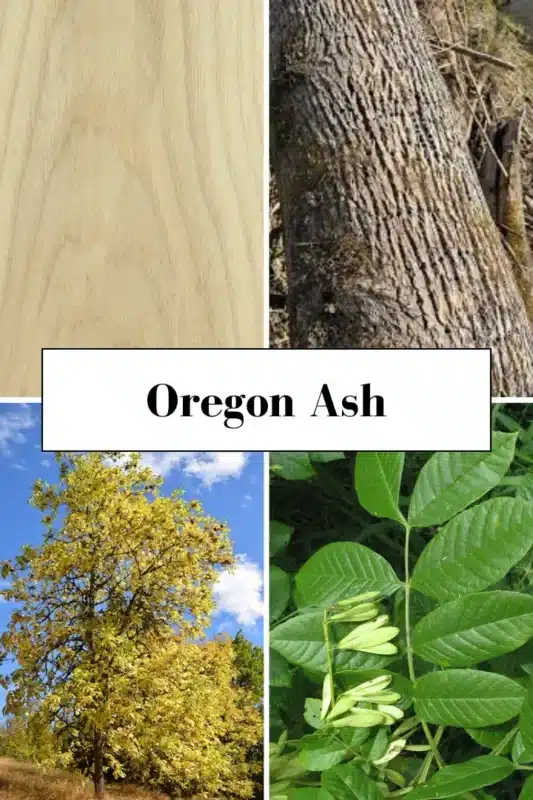
Oregon ash, Fraxinus latifolia, is a deciduous tree native to western North America, identified by opposite branching, compound leaves with usually five to seven leaflets, and single-winged samaras. It thrives in floodplains and wetlands, but Oregon populations now face severe pressure from emerald ash borer.
Table of Contents
Oregon Ash Quick Facts
Oregon ash trees commonly reach 50–80 feet and grow best in moist lowlands west of the Cascade Range. Their tolerance of seasonal flooding makes them prominent in western Oregon sloughs, stream corridors, and bottomland forests.
Taxonomy and Names
The accepted scientific name is Fraxinus latifolia Benth. It belongs to Oleaceae, the olive family, and is also called broadleaf ash. The Oregon State University profile describes its regional form, foliage, fruit, and growing habits.
Despite its common name, Oregon ash isn’t related to volcanic ash, fireplace ash, or mountain ash in the genus Sorbus. It is a true ash in the genus Fraxinus, alongside white, green, black, and velvet ash.
Size, Growth, and Lifespan
A mature tree usually stands 50–80 feet tall, though exceptional floodplain specimens can grow larger. Trees in open fields often develop broad, rounded crowns, while crowded forest trees produce narrower crowns and straighter trunks as they compete for light.
Young Oregon ash can grow at a useful pace in deep, moist soil. Lifespan can’t be reduced to one dependable number because groundwater changes, root damage, drought, decay, and insect exposure create wide site variation.
Leaves, Flowers, and Samaras. Leaves grow in opposite pairs and are pinnately compound, usually with five to seven toothed leaflets. Small wind-pollinated flowers emerge in spring, followed on seed-bearing trees by hanging clusters of one-seeded, paddle-shaped samaras.
Fall foliage is commonly yellow or yellow-brown, not the dependable scarlet associated with some maples. One useful ash-tree fact is that the apparent “leaves” within a compound leaf are leaflets; the full central stalk separates from the twig at a single base.
Quick-Facts Table. Dimensions and leaflet counts can vary, so use the values below as field ranges rather than rigid limits.
| Feature | Oregon ash fact |
|---|---|
| Scientific name | Fraxinus latifolia Benth. |
| Family | Oleaceae |
| Plant type | Deciduous broadleaf tree |
| Native range | Southwestern British Columbia through western Washington and Oregon into California |
| Typical mature height | 50–80 feet |
| Leaf arrangement | Opposite |
| Leaf type | Pinnately compound, commonly five to seven leaflets |
| Fruit | Single-winged samara |
| Preferred habitat | Floodplains, wetlands, sloughs, and riparian lowlands |
| Major invasive threat | Emerald ash borer |
How to Identify Oregon Ash

To identify Oregon ash, confirm opposite branching, pinnately compound leaves, usually five to seven toothed leaflets, and single-winged fruits. Don’t rely on wet habitat or bark alone because several unrelated trees share those traits.
Opposite Branching
Leaves, buds, and lateral twigs arise in paired positions across from each other. Broken branches can hide the pattern, so inspect several healthy twig tips from different parts of the crown before making a field identification.
Young twigs feel fairly stout between the fingers rather than wiry. Viewed from below, the paired branches create a more balanced pattern than the staggered, alternate branching seen on mountain ash or tree-of-heaven.
Compound Leaves
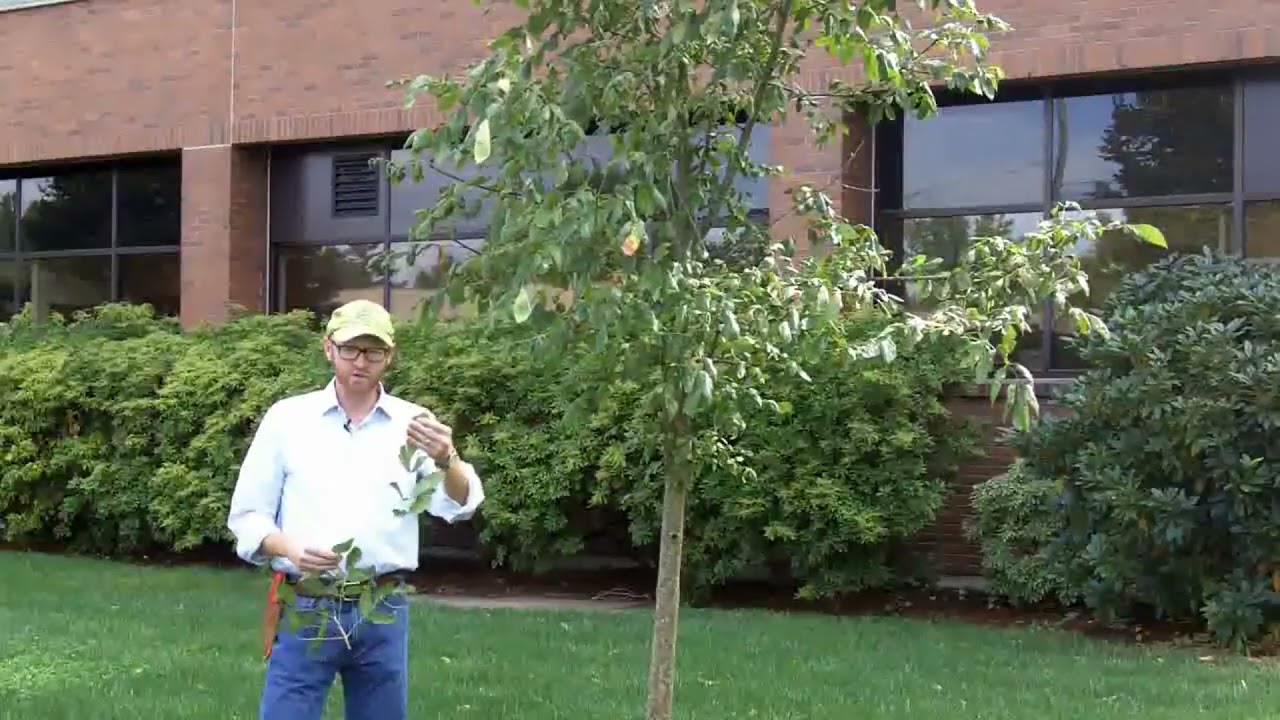
Follow the central leaf stalk back to its attachment point. If several blades connect to that stalk and the whole structure meets the twig at one bud, you’re holding one compound leaf, not a small branch with many leaves.
Oregon ash commonly carries five to seven oval or lance-shaped leaflets with toothed edges and a terminal leaflet. Leaflet number can vary, making arrangement more reliable than count by itself.
Buds and Twigs. Winter identification depends on opposite lateral buds, terminal buds, and leaf scars. Photograph a twig close-up with a ruler or fingertip for scale; blurry crown photographs rarely show enough detail for dependable species confirmation.
Bark and Samaras. Young bark is gray and relatively smooth. Mature bark becomes gray-brown with intersecting ridges and furrows that feel rough enough to catch a dry fingertip, but moisture, age, and growing conditions cause substantial variation.
Seed-bearing trees produce clusters of single-winged samaras. Each fruit has one seed body extending into one flattened wing, unlike the paired, helicopter-shaped fruits of maples. Trees that bear only male flowers won’t provide this clue.
Field Identification Checklist. Check several independent traits before recording a tree as Fraxinus latifolia:
- Leaves, buds, and healthy branches grow in opposite pairs.
- Each leaf is pinnately compound rather than a single blade.
- Most leaves carry five to seven toothed leaflets.
- Fruit consists of single-winged samaras in hanging clusters.
- Mature bark has gray-brown ridges and furrows.
- The tree grows naturally in a western lowland, wetland, slough, or stream corridor.
- Planted trees receive extra scrutiny because other ash species occur in Oregon yards and streets.
Identification Image Guide. A useful image set includes the full crown, opposite twigs, one complete summer leaf, winter buds, mature bark, and a samara cluster. Capture each feature separately rather than expecting one distant photograph to settle the identification.
A field guide, hand lens, and measuring scale can make close inspection easier, especially when buds or exit holes are only a few millimeters wide.
Oregon Ash Look-Alikes
Oregon ash is most often confused with boxelder, tree-of-heaven, mountain ash, and planted true ashes. Branch arrangement and fruit usually separate these trees faster than bark color or leaflet count.
Oregon Ash vs Boxelder
Both trees have opposite, compound leaves. Boxelder, Acer negundo, often has three to seven irregularly lobed or coarsely toothed leaflets, while Oregon ash usually has more evenly shaped leaflets with finer serrations.
Fruit supplies the cleanest distinction: boxelder produces paired maple samaras, while Oregon ash produces a single wing per fruit. See the boxelder guide for its twig, foliage, and wood features.
Oregon Ash vs Tree-of-Heaven
Tree-of-heaven, Ailanthus altissima, has alternate leaves, often with far more leaflets. Small glandular teeth occur near each leaflet base, rather than a finely toothed margin running along most of the edge.
Crushing a tree-of-heaven leaflet can release a sharp odor often compared with rancid peanut butter. That sensory clue helps, but sap sensitivity and individual odor perception make visual confirmation safer.
Oregon Ash vs Mountain Ash. Mountain ashes are Sorbus species, not true ashes. They have alternate compound leaves and clusters of red, orange, or yellow berry-like pomes; Oregon ash has opposite leaves and dry winged fruits. The same distinction applies to American mountain ash, Sorbus americana.
Other True Ashes. Green, white, black, and velvet ash may occur in planted collections. Compare bud color, leaflet stalks, leaf scars, samara proportions, and planting history. For conservation or pest work, ask an extension office or herbarium to verify uncertain specimens.
Look-Alike Comparison Table. Use at least two columns of evidence; damaged leaves or missing fruit can make any single trait misleading.
| Tree | Leaf arrangement | Leaf clues | Fruit | Best distinction |
|---|---|---|---|---|
| Oregon ash | Opposite | Usually 5–7 toothed leaflets | Single-winged samara | Opposite compound leaves plus single samaras |
| Boxelder | Opposite | Usually 3–7, often lobed | Paired maple samaras | Paired fruit |
| Tree-of-heaven | Alternate | Many leaflets with basal glandular teeth | Twisted samaras in clusters | Alternate arrangement and leaflet glands |
| Mountain ash | Alternate | Numerous serrated leaflets | Berry-like pomes | Colorful fruit clusters |
| Other true ashes | Opposite | Varies by species | Single-winged samara | Buds, leaf scars, samara form, and origin |
Native Range and Growing Conditions
Oregon ash is native from southwestern British Columbia through western Washington and Oregon into California. It favors moist lowland habitat, yet established trees can tolerate a period of summer dryness when roots retain access to deep soil moisture.
Western North American Range
The range is centered west of the Cascade–Sierra axis, but the species doesn’t occupy every wet place within that area. The U.S. Forest Service species account links its occurrence to climate, soils, disturbance, and associated vegetation.
Records become patchier near range margins, where local hydrology can matter more than a county boundary. A mapped occurrence also doesn’t prove that every nearby ash is native; city plantings may include other Fraxinus species.
Western Oregon Distribution
In Oregon, the species is closely associated with Willamette Valley floodplains, lower river valleys, wetlands, slough margins, and seasonally flooded bottomlands. It is far less characteristic of the dry eastern interior without dependable water.
Floodplains and Wetlands. Seasonal flooding gives Oregon ash an advantage over many upland trees. Its roots still need oxygen, so permanently deep water can kill seedlings, while channel incision and lowered groundwater can stress trees that once occupied a wet bench.
Soil and Moisture. Deep, moist soils support the strongest growth, and the species tolerates clay and imperfect drainage. A wet-looking site can still fail if compacted fill blocks root growth or if the surface turns hard and dusty by midsummer.
Light and Climate. Seedlings can persist under partial cover, but vigorous crown development usually needs ample sunlight. Oregon ash is adapted to wet winters and dry summers; local seed sources may carry traits associated with the temperature and water patterns of their home watershed.
Ecology, Culture, and Uses
Oregon ash supplies canopy, roots, leaf litter, seeds, cavities, and wood. Its ecological value is strongest where wet soils limit the upland trees that could otherwise occupy the site.
Floodplain Functions
Roots hold wet soil and help maintain floodplain surfaces, while crowns shade understory plants and narrow waterways. Fallen leaves contribute carbon and nutrients, though stream-temperature effects depend on channel width, canopy continuity, flow, and sun exposure.
Walking through a mature ash bottomland often means soft mud pressing around the boot sole and cool air lingering beneath the canopy. After canopy loss, direct sun dries exposed soil faster and can favor reed canarygrass, blackberry, and other aggressive plants.
Wildlife and Plant Communities
Samaras feed some birds and small mammals, while foliage supports insects eaten by birds and other wildlife. Older trees can form cavities, dead limbs, loose bark, and perch sites that create layered habitat.
Common associates include black cottonwood, red alder, willows, bigleaf maple, Pacific ninebark, red-osier dogwood, and wetland sedges. Compare related regional species in the guides to black cottonwood, red alder, and Oregon oak.
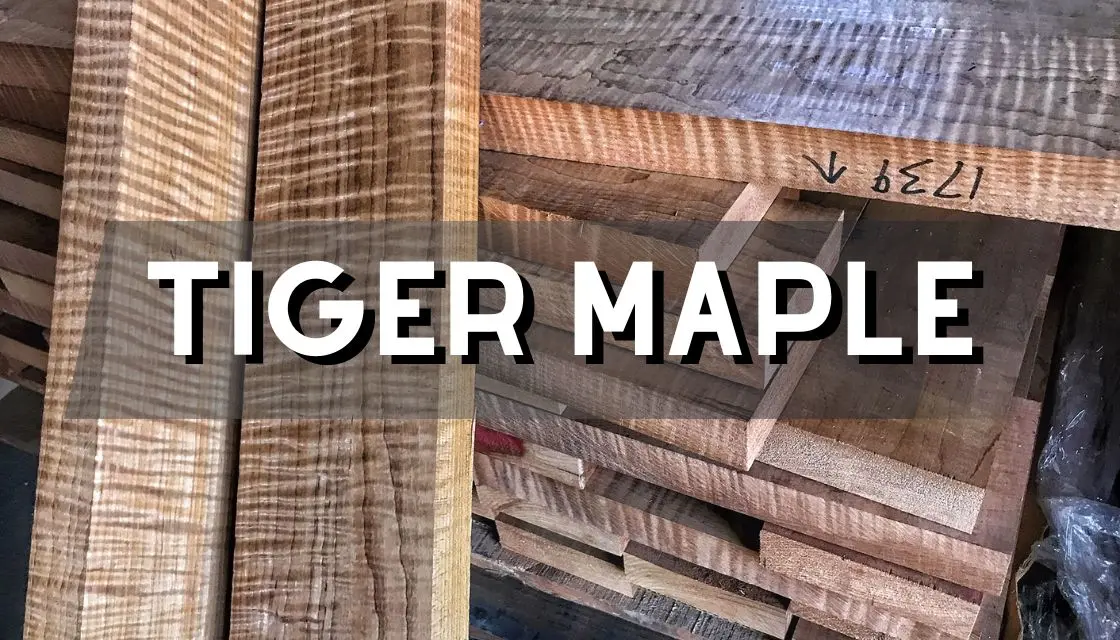
Wood and Urban Uses. Oregon ash has been used for handles, furniture, turned pieces, interior work, fuel, and shade planting. The wood feels hard and substantial in hand, with visible open pores and a straight to mildly varied grain, but it shouldn’t be treated as mechanically identical to eastern white ash.
Read the broader ash wood guide for working properties and the wood grain guide for surface terminology. Never move ash logs or firewood before checking pest restrictions.
Indigenous Relationships. Native peoples of the Pacific Northwest maintain distinct relationships with riparian plants, including ash. Cultural uses should be attributed to a named Tribal or ethnobotanical source rather than presented as one shared practice, and sensitive harvesting knowledge shouldn’t be copied without permission.
Emerald Ash Borer Threat
Emerald ash borer, Agrilus planipennis, is a metallic-green invasive beetle whose larvae feed beneath ash bark and interrupt phloem and cambial function. Oregon confirmed it in Forest Grove in June 2022, creating a major threat to native Oregon ash.
Oregon Detection and Risk
North American ash species lack enough resistance to prevent severe population-level losses where the beetle becomes established. Detection areas and quarantine lines can change, so consult the Oregon Department of Forestry before moving material or making management decisions.
Forest-wide chemical treatment isn’t practical. Repeated professional treatment may preserve selected healthy yard trees, seed sources, or culturally valued specimens, while conservation programs also need seed banking, survivor monitoring, and diverse replacement planting.
Signs and Early Detection
Possible signs include upper-crown thinning, branch dieback, trunk sprouts, vertical bark splits, woodpecker feeding, S-shaped galleries, and D-shaped adult exit holes about one-eighth inch, or 3 millimeters, wide.
Symptoms can remain hidden for years, and small exit holes may occur high in the crown. Drought, root injury, cankers, and native borers can produce similar decline, so a symptom alone doesn’t confirm emerald ash borer.
Reporting and Firewood Rules. Confirm that the host is a true ash, photograph leaves and opposite twigs, then document bark symptoms, galleries, holes, and location. Report a suspected find through Oregon’s invasive-species channels rather than transporting a sample from the site.
Moving firewood, logs, branches, chips, or nursery stock can carry hidden beetles. A common beginner mistake is taking ash wood home before checking the quarantine; the safer workaround is to leave it in place and request official disposal instructions.
Treatment Versus Removal. Treatment is most defensible for healthy, structurally sound trees with high ecological, cultural, or property value. It requires recurring applications on a product-dependent schedule; it isn’t a one-time cure.
Removal may suit trees with extensive crown loss, major decay, poor structure, or unacceptable failure risk. Dead ash becomes brittle, so delaying work near roads, paths, buildings, or utilities can make access harder and expose climbers and bystanders to sudden branch failure.
An ISA Certified Arborist should compare inspection findings, repeat-treatment costs, eventual removal, stump work, disposal limits, replacement planting, and watering. Trunk size, access, tree condition, local labor, and treatment method make one universal price misleading.
Official Maps and Guidance. Use live Oregon forestry and agriculture pages for mapped detections, quarantine boundaries, reporting methods, and material-handling rules. A copied map can become obsolete after a new detection, while agency pages can reflect revised boundaries and disposal directions.
Conservation and Restoration

Oregon ash conservation requires genetic storage, survivor monitoring, mixed-species planting, and advance planning for hazardous trees. Replacing an ash stand with one other tree species would recreate the same single-species vulnerability.
Genetic Conservation
Seed collections should represent many parent trees across watersheds, elevations, and climate zones. Collecting from two or three convenient trees preserves little of the species’ variation and may overrepresent closely related parents.
Record parent-tree coordinates, collection date, habitat, elevation, health, and seed handling. Provenance records let future researchers compare local adaptation, beetle survival, and restoration performance rather than working with anonymous seed lots.
Species-Diverse Replanting
Use trees and shrubs matched to each site’s flood duration, summer water table, soil texture, and rooting space. Possible western Oregon choices include black cottonwood, red alder, native willows, bigleaf maple on raised microsites, Oregon white oak on suitable seasonal margins, Pacific ninebark, and red-osier dogwood.
No replacement list works across every wetland. Cottonwood may outgrow a confined site, oak can fail under long inundation, and alder may decline where soil dries deeply each summer. Planting by microsite elevation produces better results than spreading every species evenly.
Landscaping and Site Fit. Oregon ash offers shade, native habitat value, and flood tolerance, but it also reaches a large size and carries severe beetle risk. New plantings should reserve enough root and crown space while avoiding dependence on ash as the dominant canopy tree.
A common planting error is reading “wet-soil tolerant” as “suited to standing water all year.” Check winter flood depth and midsummer moisture. On restoration sites, protect young trees from vole damage and suppress blackberry or reed canarygrass near the stem without scraping thin young bark.
Monitoring and Tree Inventories. Record location, trunk diameter at 4.5 feet, crown health, structural defects, nearby targets, ecological role, and management priority before widespread decline begins. Repeat photographs from the same direction can reveal gradual crown thinning that memory misses.
Track replacement survival for several years, including summer soil moisture and invasive-plant cover. Counting seedlings on planting day says little about success; the useful measure is living, vigorous trees after heat, drought, browsing, and flood exposure.
Public Safety Planning. Prioritize ash near homes, roads, campsites, playgrounds, paths, and utilities for professional risk assessment. Dead trees may remain as wildlife snags only where the likelihood and impact of failure fall within an accepted management threshold.
Field Experience Insights. Inventory crews often miss suppressed ash beneath taller canopies because they look only for full crowns. Scanning paired saplings at eye level, checking several twig tips, and mapping young cohorts reveals future hazard and conservation needs that a large-tree survey can miss.
Is Ash Creek in Oregon Polluted?
There is no reliable statewide yes-or-no answer because Oregon has multiple places called Ash Creek. Water-quality status depends on the exact stream segment, pollutant, monitoring station, sample period, and regulatory assessment.
Why Location Matters
A defensible search needs the county, watershed, nearby city or road, waterbody ID, and station. One sample can describe conditions at one place and time, but it can’t label every reach permanently clean or polluted.
A creek may fail a temperature standard for cold-water fish while meeting a bacteria standard for recreation. Reports should name the parameter, date range, assessed use, criterion, and data source rather than treating “pollution” as one condition.
Monmouth–Independence Watershed
One prominent Ash Creek flows through the Monmouth–Independence area in Polk County within the Willamette Basin. Parameters often examined in developed agricultural watersheds include temperature, E. coli, dissolved oxygen, nutrients, sediment, turbidity, stormwater contaminants, and altered stream flow.
That list identifies what to investigate; it doesn’t prove impairment in every reach. Conditions can change above and below tributaries, drains, shade gaps, treatment facilities, livestock access points, and urban runoff outlets.
Checking Current Water Quality. Start with the exact map location, then search the Oregon Integrated Report by waterbody and assessment unit. Record whether the segment meets standards, lacks enough data, is a concern, or is listed as impaired for a named use and parameter.
Cross-check station dates and sampling frequency. A result measured after a storm may differ sharply from dry-season base flow, and a monthly average can hide short peaks that matter for swimming, fish, or aquatic insects.
Oregon DEQ Verification. Use the Oregon DEQ water-quality assessment to locate the applicable segment and reporting cycle. EPA, USGS, watershed council, and municipal records can add monitoring detail, but the state assessment supplies the formal classification context.
The most accurate direct answer is: Ash Creek’s status varies by location, parameter, and monitoring period. For the creek near Monmouth and Independence, check the latest DEQ record and name the measured pollutant before calling the waterbody polluted.
Oregon Ash Connection. Ash Creek and Oregon ash are separate entities. Oregon ash may grow beside a creek because it tolerates wet floodplain soil; its presence doesn’t demonstrate either clean water or contamination.
Riparian ash can shade narrow channels, stabilize banks, intercept some sediment, and supply organic matter. Trees can’t offset every source of bacteria, nutrients, toxic contaminants, warm runoff, or altered flow, so vegetation observations must remain separate from water-quality measurements.
FAQs
What Does An Oregon Ash Tree Look Like?
An Oregon ash is a medium to large deciduous tree with gray, furrowed bark and compound leaves. Its leaves usually have five to nine leaflets, and it produces small winged seeds called samaras. In autumn, the foliage often turns yellow. It commonly grows in wet bottomlands, stream banks, and floodplains.
Is Oregon Ash Native To Oregon?
Oregon ash is native to Oregon and much of the Pacific Northwest. It naturally occurs west of the Cascade Range, especially in moist valleys, wetlands, and along rivers. The tree supports local wildlife and is an important part of riparian forests. Plant locally sourced stock when possible to preserve regional adaptation.
How Tall Does Oregon Ash Grow?
Oregon ash typically grows 60 to 80 feet tall at maturity. In favorable, moist sites, some trees can reach about 90 feet, while dry or restricted locations produce smaller trees. It develops a broad, rounded crown and may spread 40 to 60 feet wide. Allow adequate space when planting near buildings or power lines.
Can Oregon Ash Survive Emerald Ash Borer?
Oregon ash is highly susceptible to emerald ash borer and cannot reliably survive an untreated infestation. The beetle’s larvae tunnel beneath the bark, disrupting the tree’s ability to move water and nutrients. Early, repeated treatment by a qualified professional may protect valuable trees, but it does not eliminate the regional threat. Monitor trees and follow Oregon pest-management guidance.
How Can I Check Whether Ash Creek In Oregon Is Polluted?
You can check Ash Creek’s water quality by reviewing Oregon DEQ monitoring data and local watershed reports. Search the DEQ water-quality map or database using the specific Ash Creek location, because Oregon has several streams with that name. Look for bacteria, temperature, dissolved oxygen, and listed impairments. For current conditions, contact the relevant county environmental health office or watershed council, and report suspected spills to DEQ.
Affiliate Disclosure: Some links in this post are affiliate links. If you make a purchase through these links, we may earn a small commission at no extra cost to you. We only recommend products we genuinely believe in.