
Black cottonwood (Populus trichocarpa) is a fast-growing deciduous poplar native to western North America, where it dominates many sunny riverbanks, floodplains, and moist valleys. You can identify it by its large pointed leaves, pale leaf undersides, sticky aromatic buds, deeply furrowed mature bark, and cottony seeds on female trees.
This guide covers identification, habitat, lifespan, reproduction, wood uses, firewood performance, propagation, planting risks, and differences from related cottonwoods, poplars, and aspens.
Table of Contents
Black Cottonwood at a Glance
Black cottonwood is one of western North America’s largest native broadleaf trees. On a productive alluvial site, its fast juvenile growth, straight trunk, and broad crown make it conspicuous beside rivers and lakes.
Key Facts Table
| Feature | Black cottonwood facts |
|---|---|
| Scientific name | Populus trichocarpa Torr. & A. Gray ex Hook. |
| Family | Salicaceae, the willow family |
| Plant type | Deciduous broadleaf tree |
| Native region | Western North America |
| Typical habitat | Riverbanks, floodplains, lake margins, wet valleys, and moist alluvial deposits |
| Typical mature height | About 30–50 m, or 100–165 ft, on favorable sites |
| Exceptional height | Close to 60 m, or roughly 200 ft, has been reported |
| Leaf arrangement | Alternate, simple leaves |
| Light | Full sun; strongly shade-intolerant |
| Reproduction | Wind-pollinated catkins, cottony seeds, sprouts, and rooted stem material |
| Common lifespan | Often 100 years or more; some trees approach 200 years on favorable sites |
| Frequent uses | Pulp, veneer, plywood cores, crates, pallets, restoration, and research |
Measurements describe a species-wide range rather than a promise for one tree. Deep soil and dependable summer moisture can produce a giant, while compacted ground, drought, shade, browsing, and crown damage may leave the same species short and distorted.
Taxonomy and Common Names
The accepted botanical name is Populus trichocarpa. Populus identifies the poplar genus, which also contains cottonwoods and aspens; trichocarpa refers to hairy fruit, an apt reference to the silky hairs that carry its seeds.
Western balsam poplar, California poplar, western cottonwood, and balsam cottonwood appear in regional writing. Those names aren’t dependable identification tools because people also apply them to related species, particularly Populus balsamifera. The broader guide to poplar wood explains how botanical poplars relate to commercial wood terminology.
How to Identify Black Cottonwood

To identify black cottonwood, combine habitat, leaves, buds, bark, and reproductive material. One feature alone can mislead you because juvenile growth varies and cottonwoods readily hybridize.
Form, Leaves, Buds, and Bark
Form and mature size: A mature tree commonly has a tall, straight trunk beneath an open or irregular crown. Closely spaced forest trees carry narrower crowns and fewer low limbs than open-grown trees, which can become broad and heavy-branched.
Black cottonwood leaves are alternate and simple, commonly 7–20 cm or about 3–8 in long. Their outline ranges from broadly ovate and heart-like to somewhat triangular, with a pointed tip, fine marginal teeth, a glossy green upper face, and a noticeably paler underside.
Leaves on vigorous stump sprouts and young shoots may exceed the usual range. Rusty or resin-colored marks sometimes appear beneath the leaf, but their absence doesn’t rule out the species. Leaf shape also shifts across a crown, so compare several fully developed leaves.
Buds and twigs supply one of the better winter clues. The reddish-brown buds are long, sharply pointed, and coated in sticky resin; warming or lightly bruising one releases a sweet balsamic smell that clings to the fingertips and can leave them tacky.
Don’t strip buds merely to confirm a tree. Examine fallen twigs first, and use bark, position, and habitat with the scent. Young bark can look smooth and gray, yellow-gray, or greenish-gray, while old bark becomes thick and deeply furrowed.
Bark color changes with rain, lichen, dust, shade, and age. A wet trunk may appear almost charcoal brown, while sunlit ridges look much lighter; bark by itself can resemble willow, alder, and other mature poplars.
Catkins, Seeds, and Seasonal Identification
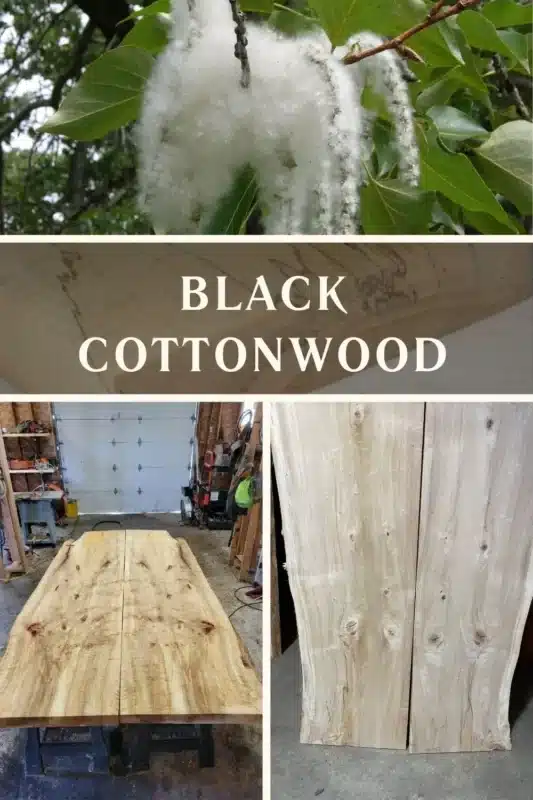
Male and female flowers hang in separate catkins, usually on separate trees. Male trees release windborne pollen; female trees later form capsules that split and release tiny seeds attached to silky white hairs.
The visible cotton isn’t pollen. It is seed-bearing fluff released later in the reproductive cycle, though it can collect unrelated airborne allergens and make seasonal symptoms seem connected.
| Season | Features to inspect | Common source of confusion |
|---|---|---|
| Winter | Tall form, deeply furrowed bark, long sticky buds, moist habitat | Other balsam-scented poplars |
| Spring | Hanging catkins, expanding leaves, resinous twig scent | Male pollen mistaken for later cotton |
| Early summer | Female capsules and drifting white seed hairs | Willow seed or airborne debris |
| Summer | Large pointed leaves with pale undersides | Eastern or Fremont cottonwood leaves |
| Autumn | Yellow foliage, alternate branching, mature bark | Aspens and planted hybrid poplars |
Use this field identification checklist before assigning a name:
- Confirm that the tree grows in or near a moist valley, floodplain, stream corridor, lake margin, or alluvial deposit.
- Check for alternate, simple leaves with pointed tips and finely toothed edges.
- Compare the dark upper leaf surface with the paler underside.
- Inspect fallen twigs for long, pointed, resinous buds with a balsamic fragrance.
- Separate smooth young bark from the deeply ridged bark of an old trunk.
- Look for catkins in spring or capsules and cottony seed hairs on a female tree.
- Consult a regional flora if related cottonwoods occur nearby or planted hybrids are common.
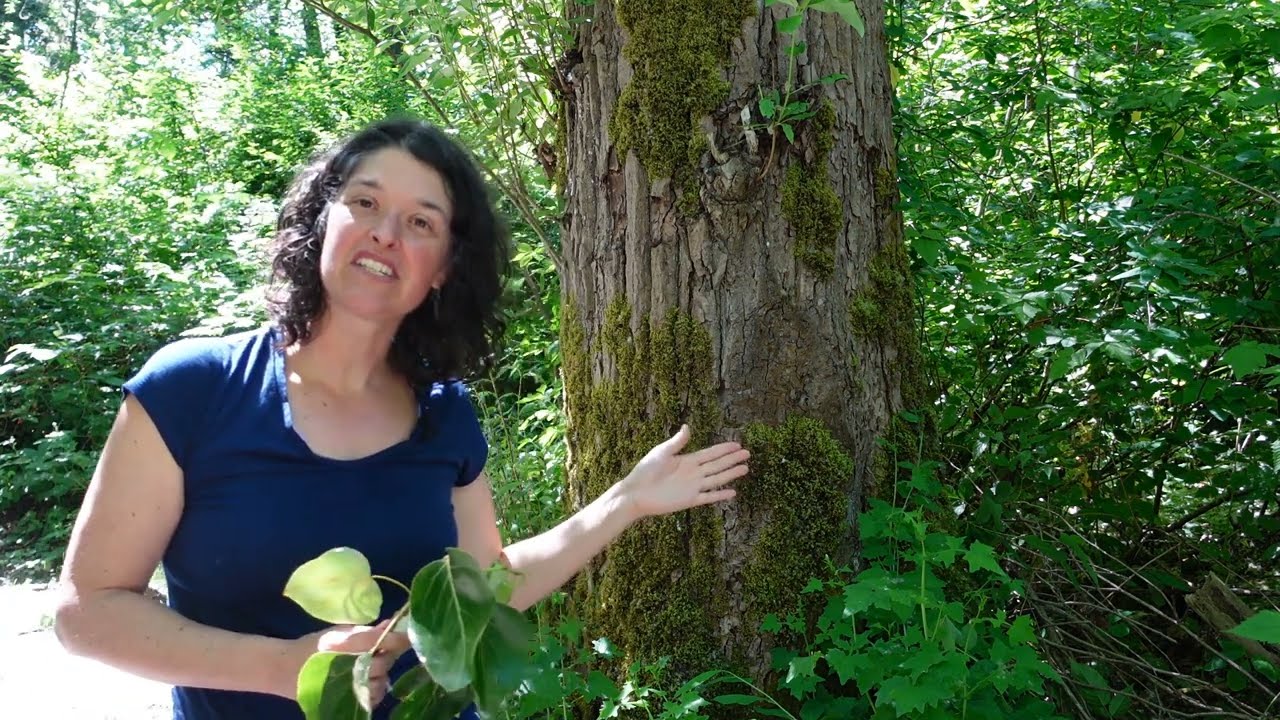
A video can help establish scale and overall form, but confirm any visual identification against several physical traits. Bud texture and fragrance, the exact leaf underside, and local range often settle cases that photographs leave uncertain.
Black Cottonwood Range and Habitat

Black cottonwood grows naturally across much of western North America, from southern and coastal Alaska through British Columbia, Washington, Oregon, and California, with inland populations in Idaho, Montana, and nearby regions. Some botanical treatments extend its southern range into northern Baja California.
Native Range Map and Preferred Riparian Habitat
The USDA PLANTS profile supplies a regional distribution reference. Map boundaries can differ because botanical treatments handle close relatives, hybrids, planted trees, and peripheral populations in different ways.
Typical habitat includes river floodplains, streambanks, pond margins, lake edges, wet valley bottoms, moist terraces, and recently disturbed ground. Fresh sand, silt, gravel, and loam deposited by moving water create the open mineral surface its seedlings need.
Riparian placement doesn’t mean the tree wants stagnant water around its roots all year. Young plants need steady moisture plus oxygen in the root zone; permanent deep inundation can suffocate roots, while a falling water table can leave shallow seedlings dry.
Sun, Moisture, Soils, Flooding, and Elevation
Black cottonwood performs best in full sunlight. Seedlings shaded by dense grass, blackberry, shrubs, or a closed forest canopy usually lose vigor because the species competes through quick height growth rather than shade tolerance.
Deep, moist alluvium supports the largest specimens, but texture can range from gravelly deposits to fine silt and loam. A loose, oxygenated rooting layer matters more than a single soil label. Mature roots can reach deeper moisture, while a new seedling may die after one hot afternoon dries its top few millimeters of soil.
The species tolerates periodic flooding and sediment burial once established, yet flood duration and timing change the outcome. A modest deposit may encourage new roots along a buried stem; forceful scour can pull out the entire plant. Elevation limits vary by latitude and local climate, so a regional flora gives better guidance than one species-wide ceiling.
Growth, Reproduction, and Ecological Role
Black cottonwood grows very quickly when young, reproduces through seeds and vegetative material, and acts as a pioneer floodplain tree. Its successful regeneration depends on the timing of seed release, bare sediment, receding water, sunlight, and root access to continuing moisture.
Growth Rate, Lifespan, and Reproduction
A young tree on deep, sunny, well-watered soil may add several feet of height during a favorable growing season. That isn’t a dependable annual rate: drought, browsing, compacted soil, competition, low fertility, or a damaged leader can sharply reduce black cottonwood growth.
The black cottonwood lifespan often reaches 100 years or more, and trees on favorable sites can approach roughly 200 years. Rapid growth creates large trunks quickly, but broken tops, heart rot, repeated floods, drought stress, and root injury can shorten the useful life of a landscape specimen.
Catkins emerge before or alongside new leaves, exposing their flowers to moving air. Male catkins produce pollen first; female catkins develop capsules after pollination. Keeping those stages separate explains why cottonwood cotton and pollen aren’t the same material.
Fresh seed germinates quickly on moist sand or fine sediment, but natural viability is brief—often measured in days to a few weeks under field conditions. Seeds barely need covering. The harder task is holding continuous surface moisture while the first roots extend after germination.
Vegetative reproduction occurs through lodged branch sections, broken stems, stump sprouts, and planted cuttings. Moist stem tissue can form adventitious roots, a trait widely used in live-stake work, though rooting ability can’t compensate for poor hydrology.
Floodplain, Wildlife, and Conservation Value
Roots bind soil, crowns cast stream shade, and falling leaves feed riparian food webs. Large trunks entering water can form pools, collect sediment, redirect current, and create cover for fish and amphibians. Black cottonwood isn’t a universal erosion fix; an exposed cutting may vanish during the first high-flow event.
Wildlife value grows as the tree ages. Beavers eat bark and shoots and use branches in dams; deer and elk browse young growth; birds nest in mature crowns; cavities and hollow trunks shelter birds and small mammals.
Decay may reduce structural safety beside a road or building while improving habitat in a low-use natural area. Site managers should compare the likely fall zone with the value of retaining a hollow trunk before removing it.
As a pioneer, black cottonwood captures bare sediment after floods. Shade-tolerant conifers and other later-stage trees may replace it where floods stop creating open ground. Dams, channelization, groundwater withdrawal, bank armoring, and floodplain construction can break the link between seed release and moisture.
The species remains widespread, but local cottonwood forests can decline. Global status doesn’t describe the health of one river corridor, where altered flow, grazing, invasive plants, and lost channel movement may prevent replacement of old trees.
Black Cottonwood Uses and Wood Properties
Black cottonwood wood is pale, lightweight, soft, and relatively low in strength compared with dense hardwoods. Its main value lies in pulp, veneer, panel cores, packaging, utility products, restoration plantings, and scientific research rather than premium furniture or high-wear flooring.
Lumber, Pulp, Industrial, and Firewood Uses
Freshly cut wood often feels surprisingly heavy because it contains so much water. After drying, its low density becomes clear: a comparable cottonwood board weighs less than many oak or maple boards, though actual cotton wood weight changes with moisture, growth conditions, and the amount of sapwood.
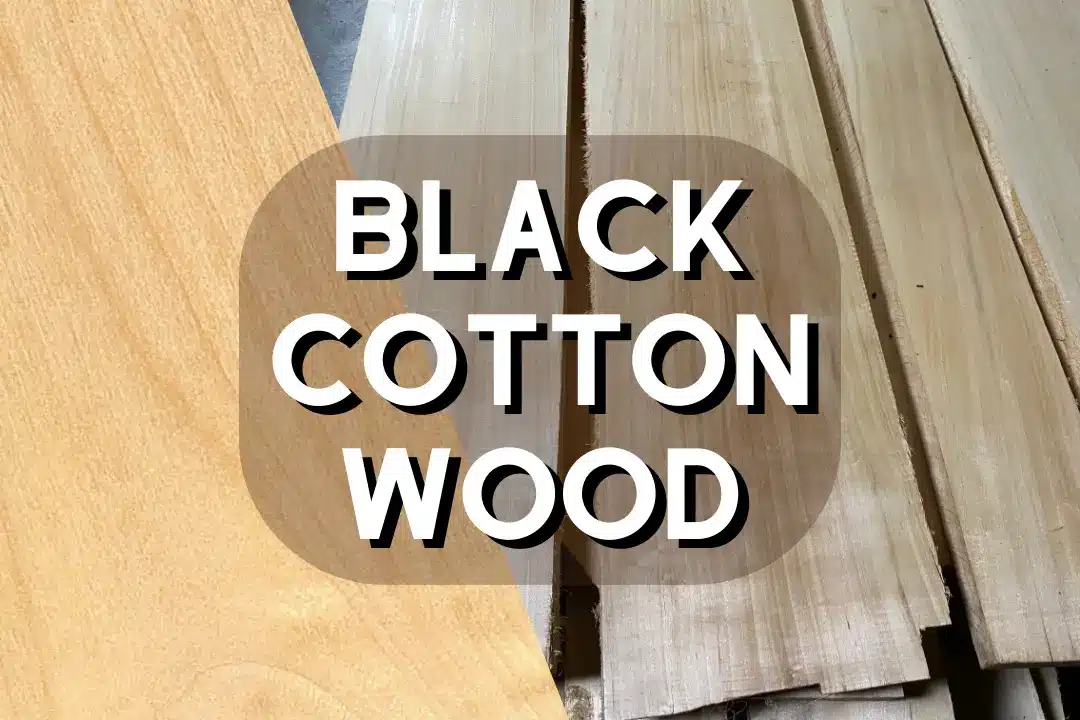
The wood is commonly pale cream to light brown. Interlocked fibers, tension wood, and a soft surface can leave a fuzzy texture after machining. Sharp cutters and light finishing passes reduce torn fibers; sanding dull, compressed fuzz without cutting it cleanly can create a smooth-looking surface that rises again after the first finish coat.
Common products include pulp and paper, veneer, plywood cores, boxes, crates, pallets, composite panels, and utility lumber. Readers comparing weight and strength can use the site’s guides to wood density and the wood hardness scale.
A large tree doesn’t automatically contain valuable logs. Sweep, knots, metal, staining, internal decay, tension wood, short usable lengths, haul distance, and the absence of a nearby cottonwood buyer can make removal and transport cost more than the timber returns. A local mill must inspect the log before anyone assigns realistic lumber value.
Can you burn cottonwood? Yes. Properly dried black cottonwood is usable firewood, but its low density delivers less heat per stacked volume than dense hardwoods, so a stove needs more frequent loading.
Split pieces where practical, stack them off the ground with open sides, cover the top, and test a freshly split interior face with a moisture meter. A common target is below about 20% moisture, subject to appliance instructions and local rules; the EPA Burn Wise practices explain why dry fuel and proper airflow reduce smoke.
Poorly seasoned cottonwood can hiss, feel cool and damp on a new split face, darken the firebox, and smolder behind cloudy glass. Species reputation isn’t the main issue in that case: excess wood moisture and restricted combustion air are.
Restoration, Traditional Uses, and Genomic Research
Riparian projects use black cottonwood to establish native canopy, shade streams, rebuild structural diversity, and supply future large woody material. Local genetic stock is often preferred because bud timing, cold tolerance, drought response, and disease resistance may differ between source populations.
Attributed traditional uses recorded for named Indigenous peoples in western North America include practical wooden objects, fibers and household material, inner bark or cambium in particular food traditions, and resinous buds in topical preparations. These records vary by people and region and shouldn’t be compressed into one shared practice.
Historical use isn’t medical advice or permission to harvest. Don’t girdle a living tree by stripping bark around its trunk, and obtain approval before gathering material on tribal, public, or private land.
Black cottonwood also became a leading model for tree genetics. The landmark Populus trichocarpa genome report described an assembly of about 485 million base pairs across 19 chromosomes, with more than 45,000 predicted protein-coding genes in the initial annotation.
Researchers favor the species because it grows quickly, propagates from cuttings, and has a manageable genome for a tree. The resulting work supports studies of wood formation, disease response, carbon cycling, forest genetics, and bioenergy crops.
Planting, Propagation, and Management Risks
Plant black cottonwood only where it has full sun, deep soil, dependable establishment moisture, and ample space above and below ground. Its mature height, spreading roots, brittle decayed limbs, sprouts, and female seed litter make it a poor fit for many small residential lots.
Site Suitability, Seed, Cuttings, and Live Stakes
A suitable planting area sits away from overhead wires, compact pavement, small drains, septic components, foundations, and confined courtyards. No universal setback works for every property because soil, pipe condition, tree form, local rules, and available rooting volume differ.
| Propagation method | Main advantage | Main constraint |
|---|---|---|
| Fresh seed | Maintains genetic diversity | Brief viability and high sensitivity to surface drying |
| Dormant cutting | Predictable clone that roots readily on suitable sites | Can desiccate before roots reach dependable moisture |
| Live stake | Fast field installation in riparian projects | Planting depth must match local hydrology |
| Container plant | Established root mass and easier handling | Roots may remain shallow if irrigation wets only the surface |
Growing from seed requires fresh material. Sow the tiny seeds on a moist, fine-textured surface, press them into contact, and apply little or no covering; deep burial blocks light and can exhaust the small seed before emergence.
Use mist or gentle bottom watering so droplets don’t wash seeds into corners. The surface must remain consistently damp during early rooting, yet trays still need drainage and air. A sealed, hot container can turn green with algae and lose seedlings to damping-off.
Dormant cuttings and live stakes root when healthy tissue remains in firm contact with moist, oxygenated soil. Mark the top before cutting several stems because an upside-down stake may leaf weakly or fail; buds should point upward, with part of the stem remaining above ground.
Live-stake depth can’t be copied blindly from another river. The buried end must reach effective moisture during establishment without sitting so low that prolonged flooding deprives it of oxygen. Project permits may also control collection, access, bank disturbance, and planting methods.
Practical Management Risks and Field Lessons
In field plantings, an apparently healthy stake can open glossy leaves using water stored in its stem before it has functional roots. That early flush looks successful, then wilts suddenly when warm weather arrives. Check for new root resistance and continuing soil moisture rather than treating leaf emergence as proof of establishment.
Restoration failure risks include planting above the seasonal moisture zone, flood scour, prolonged inundation, falling groundwater, and thick competition from reed canary grass or Himalayan blackberry. Beaver, deer, elk, livestock, voles, and other rodents can remove new stems faster than they regrow.
Tree shelters, wire cages, browse guards, weed control, and establishment irrigation can improve survival. Guards need room for trunk growth and periodic inspection; neglected wire can cut into bark, while solid tubes may trap heat or hide rodent damage.
Apply mulch over the root area but keep it away from direct trunk contact. Repeated shallow watering encourages surface roots, while infrequent establishment watering that penetrates the active root zone supports deeper growth. Irrigation still needs adjustment for soil drainage and weather.
Insects and diseases include poplar borers, aphids, leaf beetles, defoliating caterpillars, Melampsora rusts, cankers, Cytospora-associated dieback, heart rot, and other decay fungi. Visible insects don’t always call for treatment; first separate cosmetic leaf feeding from damage that threatens roots, trunk function, or major branches.
Inspect mature trees for dead limbs, cracks, cavities, fungal fruiting bodies, weak branch unions, disturbed roots, and sudden changes in lean. Large aerial work and defect assessment belong to a qualified arborist, particularly where a tree can strike a house, road, or play area.
Roots follow moisture and commonly exploit leaks, failed joints, and existing pipe cracks rather than breaking sound pipe from a distance. Surface roots can still lift thin paving or disrupt lawns where growing space is too small.
Female trees may shed abundant white fluff for a short period. It gathers in window screens, gutters, filters, and air intakes and drifts well beyond the property line. Dry accumulations ignite easily near flame, so clear them from ignition sources rather than burning piles in place.
Black Cottonwood vs. Similar Trees
Black cottonwood differs from eastern and Fremont cottonwoods, balsam poplar, and quaking aspen in its combined range, leaf form, pale undersides, large stature, and strongly resinous buds. Hybrids blur these distinctions, so geography alone can’t settle every identification.
Eastern Cottonwood, Fremont Cottonwood, and Balsam Poplar
| Tree | Scientific name | Helpful distinction | Main identification limit |
|---|---|---|---|
| Black cottonwood | Populus trichocarpa | Western range, pale leaf undersides, long aromatic resinous buds | Variable leaves and frequent hybridization |
| Eastern cottonwood | Populus deltoides | More strongly triangular leaves; central and eastern range | Planted trees and hybrids occur in the West |
| Fremont cottonwood | Populus fremontii | Warm southwestern and desert riparian association | Broad triangular leaves can resemble other cottonwoods |
| Balsam poplar | Populus balsamifera | More boreal and continental distribution | Also carries fragrant, sticky buds |
| Quaking aspen | Populus tremuloides | Smaller round leaves on strongly flattened petioles | Both belong to Populus and can share a site |
Eastern cottonwood usually has a more distinctly deltoid leaf and is native mainly to central and eastern North America. Black cottonwood’s paler leaf underside and balsamic buds are useful western clues, but the two species can produce hybrids.
Fremont cottonwood is linked more strongly with warm southwestern rivers and desert riparian systems. Its broad triangular leaves overlap visually with other cottonwoods, so inspect bud character, reproductive structures, and a regional key.
Balsam poplar also has sticky fragrant buds and occupies boreal or continental country. Taxonomic boundaries and common names vary across references; the site’s balsam poplar guide provides a closer comparison.
Quaking Aspen and Natural or Managed Hybrids
Quaking aspen has smaller, rounder leaves carried on laterally flattened petioles. A light breeze twists those petioles, making the leaves flicker and tremble with a soft, dry rustle; black cottonwood leaves are larger, more pointed, and paired with prominent resinous buds.
Black cottonwood usually grows taller than aspen on a productive floodplain. Aspen commonly forms broad clonal stands through root suckers, while black cottonwood is strongly associated with exposed alluvium and stem-rooting. See the full quaking aspen comparison for wood and tree traits.
Natural and managed hybrids complicate field identification. The cross Populus trichocarpa × Populus deltoides is often associated with Populus × generosa and appears in biomass, pulp, wood-product, shelterbelt, and research plantings.
A hybrid may combine triangular leaves with fragrant buds or display growth that exceeds a nearby wild population. Traits advertised for a selected plantation clone shouldn’t be assigned automatically to native black cottonwood, since disease response, crown form, cold hardiness, and rooting behavior can differ.
Specialist Black Cottonwood Reading
Readers planning forestry work, restoration, or species research may need a dedicated silviculture reference beside regional floras and current agency guidance. A specialist text provides more detail on stand development and management than a general identification guide can hold.
Forestry and Silviculture Reference
This reference focuses on black cottonwood ecology, growth, habitat, and silviculture. Treat reprint material as a foundation, then check recent regional guidance for changed taxonomy, restoration permits, pests, and management practices.

Black Cottonwood Silvics Guide
- Focused reference on black cottonwood
- Covers the species ecology and growth
- Useful for forestry and land management research
- Classic reprint edition for reference libraries
- Helps readers understand habitat and silviculture
 Buy on Amazon
FAQs
How Can You Identify A Black Cottonwood Tree?
You can identify a black cottonwood by its broad, triangular leaves, sticky fragrant buds, and deeply furrowed gray bark. Mature trees often grow very tall, with a wide crown and thick trunk, especially near rivers. In spring, look for dangling catkins before leaves fully open.
Where Does Black Cottonwood Grow Naturally?
Black cottonwood grows naturally across western North America, especially in moist valleys, floodplains, streambanks, and lake edges. Its native range extends from Alaska and Yukon south through British Columbia, the Pacific Northwest, and parts of California. It thrives where soils stay consistently damp but drain reasonably well.
Is Black Cottonwood The Same As Poplar?
Black cottonwood is a true poplar species, scientifically known as Populus trichocarpa. It belongs to the same genus as other poplars, cottonwoods, and aspens, which can look similar. The name cottonwood refers to its fluffy, cotton-like seeds, while poplar is the broader common group name.
Can You Burn Black Cottonwood As Firewood?
You can burn black cottonwood as firewood, but it is best used when fully seasoned. The wood is relatively soft and low in heat output, so it burns faster than denser hardwoods. Split it early and dry it for at least a year to reduce smoke, popping, and creosote buildup.
Can Black Cottonwood Be Grown From A Branch?
Black cottonwood can sometimes be grown from a branch cutting, especially when the cutting is fresh and dormant. Take a healthy hardwood cutting in late winter, place it in moist soil or water, and keep it consistently hydrated. Rooting is often successful, but young plants need plenty of space, sun, and moisture.
Affiliate Disclosure: Some links in this post are affiliate links. If you make a purchase through these links, we may earn a small commission at no extra cost to you. We only recommend products we genuinely believe in.