Apple Wood Guide: Hardwood Properties, Uses, and Smoking Tips

Table of Contents
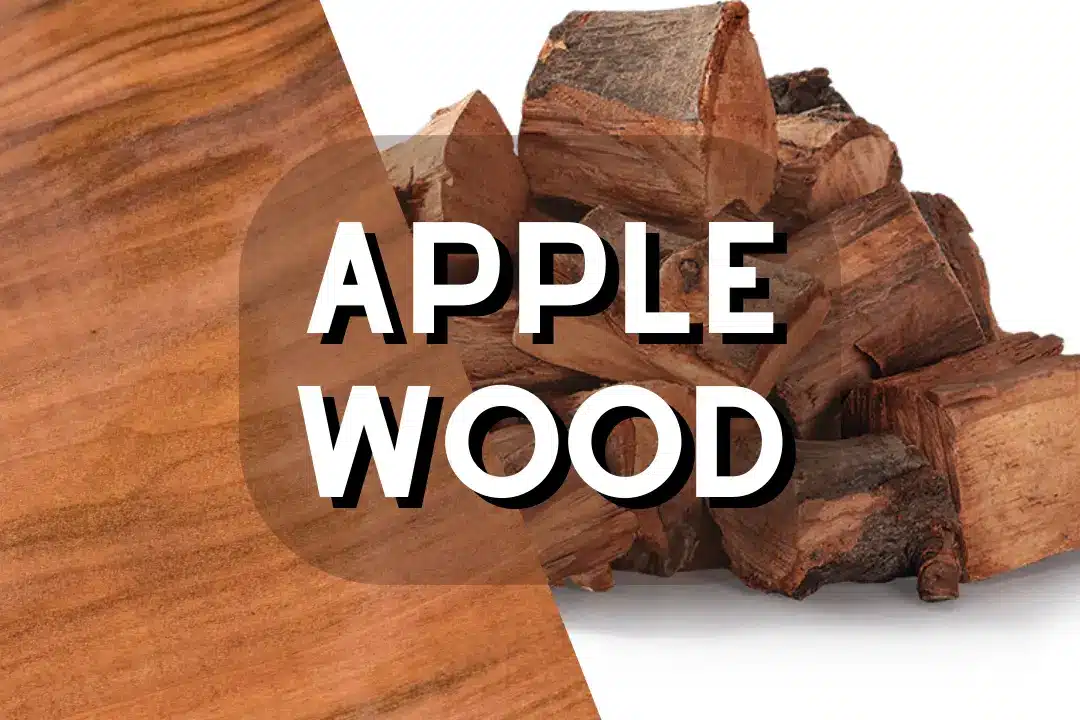
Apple wood is a dense hardwood fruitwood from apple trees, usually Malus domestica, used for smoking, firewood, turning, carving, and small woodworking projects. It gives food a mild, sweet, fruity smoke and answers the common question “is apple wood a hardwood” with a clear yes.
What Is Apple Wood?
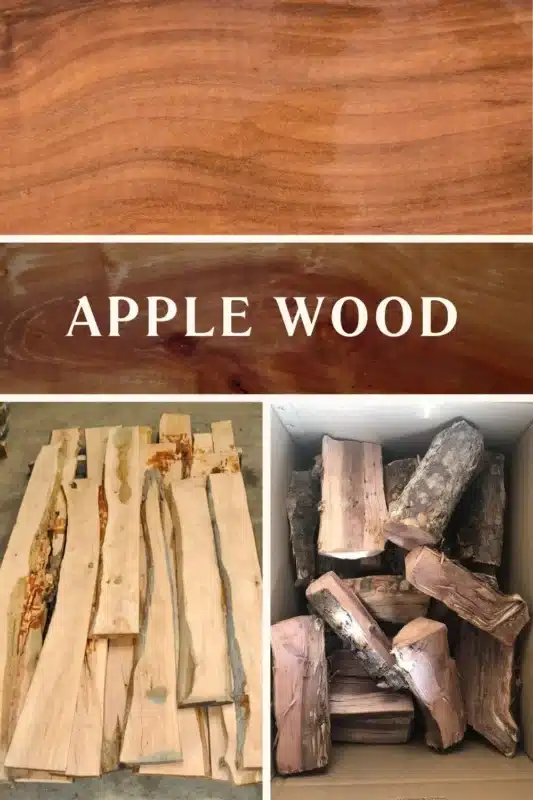
Apple wood is the wood cut from apple trees, most often orchard or yard trees that no longer produce well. It’s classed as a fruitwood because it comes from a fruit-bearing tree, and it’s valued for its dense feel, close grain, warm color, and gentle smoke aroma.
Apple tree source and fruitwood classification
Apple tree wood usually comes from pruned branches, removed orchard trees, storm-damaged trunks, or small salvage logs rather than large timber operations. Fresh-cut apple has a damp, sweet smell that can remind you of cider skins and wet leaves, while dry smoking chunks feel surprisingly heavy and cool in the hand for their size.
Fruitwood classification describes its practical group, not a separate botanical category. Apple sits with pear, cherry, peach, and plum as close-grained fruitwoods; if you compare it with pear wood, both share tight texture, small-board limits, and strong appeal for turning blanks.
Quick fact table and common availability
Apple availability is strongest in chips, chunks, small splits, branch sections, slabs, bowl blanks, and short boards. The technical figures below match commonly cited apple species data from The Wood Database, but real boards vary because orchard trees grow crooked, branch low, and contain many knots.
| Property | Typical Apple Wood Value |
|---|---|
| Botanical source | Malus domestica |
| Wood type | Hardwood / fruitwood |
| Average dried weight | About 52 lb/ft³ / 830 kg/m³ |
| Janka hardness | About 1,730 lbf / 7,700 N |
| Specific gravity | About 0.65 basic / 0.83 at 12% moisture |
| Color | Cream sapwood with reddish-brown to brown heartwood |
| Grain | Fine, close, often irregular or knotty |
| Common uses | Smoking wood, firewood, turning, carving, handles, small decorative work |
Common availability creates the first buyer surprise: apple lumber rarely looks like long cabinet boards. Expect short pieces, end checks, pith, crotch figure, bark inclusions, and slabs that need patient drying before any serious woodworking use.
Is Apple Wood a Hardwood?

Yes, apple wood is a hardwood because apple trees are deciduous broadleaf angiosperms, not cone-bearing softwood trees. If you’re asking “is apple tree hardwood,” the answer is also yes, and apple is physically hard by Janka rating too.
Direct answer and botanical classification
Hardwood status comes from tree biology, not board hardness alone. The USDA Wood Handbook explains wood groups through botanical source, which is why balsa is a hardwood despite being soft, while some softwoods can be firm and durable.
Apple hardwood behaves like a dense domestic hardwood in the shop. It resists a fingernail dent more than cherry, dulls small carving edges faster than basswood, and can burnish smooth under a sharp scraper when the grain cooperates.
Janka hardness, comparisons, and small-board limits
Apple Janka hardness is about 1,730 lbf, which places it above black cherry at about 950 lbf, black walnut at about 1,010 lbf, white oak at about 1,360 lbf, and hard maple at about 1,450 lbf. For a broader scale, compare these ratings with the site’s wood hardness scale.
Small-board limits keep apple from being a common flooring or cabinet lumber, despite its hardness. Apple trunks are usually short, twisted, and branchy, so sawyers often cut it into knife scales, pen blanks, bowl blanks, spoon stock, small slabs, and smoking chunks instead of wide boards.
Apple Wood Properties
Apple wood properties center on high density, strong compression, fine texture, and noticeable movement during drying. These traits make it excellent for small tough objects and clean cooking coals, but they also punish rushed drying and dull tools.
Density, strength, and movement
Apple density averages about 52 lb/ft³, so a small apple blank can feel heavier than its size suggests. That density helps apple burn hot and turn cleanly, but it also means thin bandsaw blades can wander if the blank contains knots, tension wood, or angled grain.
Strength values often listed for apple include roughly 15,980 lbf/in² modulus of rupture, 1,740,000 lbf/in² elastic modulus, and 8,050 lbf/in² crushing strength. In plain shop terms, it makes tough handles and mallet heads, but pre-drilling screws matters because the wood can split with a sharp crack if you force hardware near an end.
Shrinkage movement is a real concern: radial shrinkage runs about 5.6%, tangential shrinkage about 10.1%, and volumetric shrinkage about 17.6%. Seal end grain with wax or sealer soon after cutting, stack blanks with airflow, and avoid direct sun because apple can check overnight with a dry, ticking sound at the ends.
Color, grain, heartwood, and sapwood
Apple heartwood ranges from reddish brown to warm brown or orange-brown, while sapwood is pale cream, yellowish, or light tan. The contrast can look rich under oil, especially where a small board shows both pale edgewood and darker corewood in one face.
Apple grain is usually fine and close, but orchard wood often contains wavy grain, knots, bark pockets, and limb scars. If you want a deeper look at how these visual lines affect boards, see this guide to wood grain pattern.
Beginner mistake: treating apple like a stable, straight-grained furniture hardwood. The workaround is to rough-size pieces oversize, let them rest, then take final cuts after movement slows; for turning, rough-turn bowls thick, dry them slowly, then finish-turn later.
Apple Wood Uses
Apple wood uses include smoking and BBQ, firewood, cooking fires, turning, carving, tool handles, spoons, boxes, small furniture accents, and decorative pieces. It shines where small size, density, aroma, and fine texture matter more than long, clear boards.
Smoking, cooking, and firewood
Smoking apple wood is the most common use many cooks know. It gives pork ribs, chicken, turkey, ham, bacon, fish, cheese, and vegetables a soft fruit smoke that smells sweet and clean when the fire has good airflow.
Apple firewood burns hot and aromatic when dry, so many people save it for cooking instead of tossing it into a general heating pile. In a fire pit, dry apple gives a pleasant orchard smell; green apple smells sour and steamy, then coats food with dull, bitter smoke.
- Use chips for gas grills, charcoal grills, smoker boxes, fish, vegetables, and short cooks.
- Use chunks for charcoal smokers, kamados, kettle grills, ribs, poultry, and pork shoulder.
- Use splits for offset smokers, stick burners, wood-fired grilling, and longer live-fire cooking.
- Use logs for pizza ovens, larger smokers, fire pits, and wood-fired ovens.
- Save clean, dry branch wood for cooking only if you know it wasn’t treated or sprayed.
Woodworking, turning, carving, and lumber limits
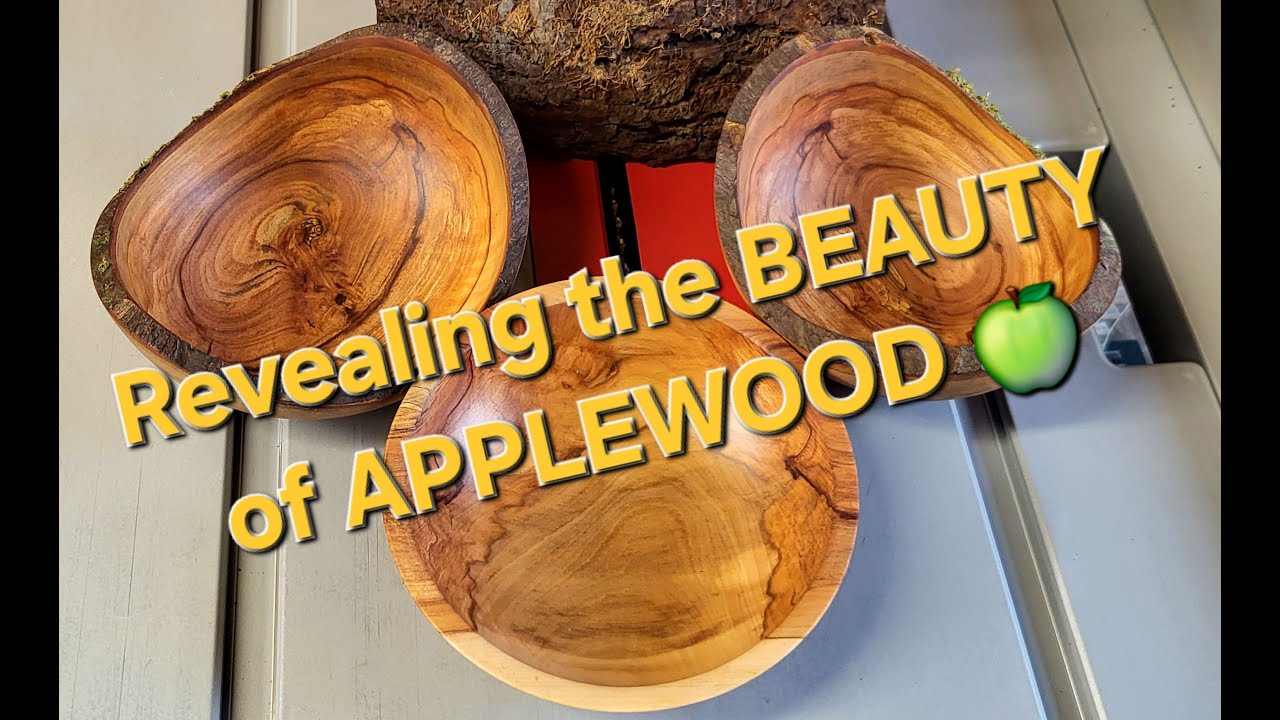
Apple woodworking suits small, high-touch projects: knife handles, tool handles, pens, bowls, spoons, buttons, small boxes, inlay, turned ornaments, and decorative panels. It can polish to a smooth, almost waxy feel, especially after careful sanding through fine grits.
Turning apple rewards sharp tools and light cuts. The shavings can come off as tight pale ribbons when the grain is straight, but crotch and limb sections can grab a gouge, so reduce tool pressure and keep the bevel supported.
Apple lumber has limits because usable boards are often short, narrow, knotty, and checked. If your project needs wider panels, use apple as an accent beside more available hardwoods like maple wood rather than trying to build a full case piece from scarce apple boards.
Apple Wood for Smoking
Apple wood for smoking is beginner-friendly because its smoke is mild, sweet, fruity, and mellow. It’s easier to control than hickory or mesquite, yet it still adds clear flavor to pork, poultry, fish, cheese, and vegetables.
Smoke flavor and best pairings
Apple smoke flavor tastes light, sweet, slightly tangy, and fruity rather than sharp or heavy. The best smoke looks thin and blue, smells clean, and lightly perfumes the meat; thick white smoke smells acrid in the nose and can make poultry skin taste bitter.
Best pairings include pork ribs, pork shoulder, pulled pork, ham, bacon, chicken, turkey, salmon, trout, sausage, cheddar, gouda, mushrooms, peppers, onions, and squash. For a related fruitwood comparison, see cherry wood, which adds a little more color and a richer fruit note.
| Food | Best Apple Wood Format | Smoke Level | Good Blend |
|---|---|---|---|
| Pork ribs | Chunks | Medium-light | Hickory or cherry |
| Pork shoulder | Chunks or splits | Medium | Oak or hickory |
| Chicken | Chips or chunks | Light | Cherry or pecan |
| Turkey | Chunks | Light to medium | Cherry or oak |
| Fish | Small chips | Very light | Alder |
| Cheese | Small chips or dust in a cold-smoke setup | Very light | Cherry |
| Vegetables | Chips | Light | Pecan |
| Beef | Chunks or splits | Light for beef | Oak, hickory, or pecan |
Pork, poultry, fish, cheese, beef, and blends
Apple and pork work well because sweet smoke balances fat, salt, sugar, and paprika-heavy rubs. Ribs usually need only a few chunks; pork shoulder can take more because the bark forms slowly and the meat has enough mass to absorb smoke without tasting perfumed.
Poultry needs restraint because chicken and turkey skin pick up smoke fast. Use one or two chunks in a charcoal cooker, keep the fire clean, and stop adding wood once the surface color looks golden because extra smoke can turn the skin leathery and dull.
Fish and cheese need the lightest touch. Fish absorbs smoke quickly, and cheese can turn harsh if it warms and sweats, so use short smoke sessions, low heat, and a clean dry fuel source.
Beef and brisket can use apple, but apple alone may taste too subtle under peppery bark and long cook times. Blend apple with oak for steady base smoke, hickory for savory bite, or pecan for a rounder nutty profile.
Using and Buying Apple Smoking Wood

Buying apple smoking wood starts with matching the wood size to your cooker, not chasing the biggest bag. Chips, chunks, splits, and logs burn differently, and the wrong format can smolder, flame up, or run out before the food takes on flavor.
Chips, chunks, splits, and logs
Apple wood chips ignite fast and suit gas grills, charcoal grills, smoker boxes, foil pouches, burgers, fish, chicken pieces, and vegetables. Don’t dump chips directly onto a roaring fire; place them near heat or in a box so they smoke instead of flashing into flames.
Apple wood chunks burn longer and fit charcoal smokers, kamados, kettle grills, ribs, pork shoulder, whole chicken, and turkey breast. For many backyard cooks, 2–4 fist-sized chunks is enough; if the exhaust smells sharp, open airflow before adding more wood.
Apple splits feed offset smokers and live-fire cooking rigs where wood provides both heat and smoke. Smaller splits are easier to manage than oversized logs because they ignite cleaner, let you adjust heat faster, and reduce the stale campfire smell that comes from a choked fire.
Apple logs belong in pizza ovens, larger smokers, fire pits, and wood-fired ovens. Chips don’t belong in a pizza oven as a main fuel because they burn too fast; dry splits or logs create a steadier coal bed and cleaner flame.
Soaking chips is usually unnecessary. Wet chips mostly steam first, then smoke later; a smoker box, foil pouch with a few holes, or careful coal placement controls burn rate better than waterlogged wood.
Product examples and practical notes from real-world use
Practical buying means checking wood type, moisture, piece size, bark cleanliness, and shipping weight. Small chip bags are convenient but often cost more per pound, while splits and logs may be cheaper from a trusted local orchard, sawyer, or firewood seller if the wood is safe for cooking.
Real-world note: a bag of dry apple chunks should smell faintly sweet and woody, not sour, musty, or like chemicals. When two dry chunks knock together, they make a sharper clack than green wood; green pieces sound dull and feel cool-wet under the bark.
Product examples below cover chips, chunks, splits, and cooking logs for different grill and smoker setups.

Sweet Apple Smoke Chunks
- Delivers a mild sweet apple smoke flavor
- ideal for beef, pork, poultry, lamb, and fish
- chunk size burns longer for steady smoke
- kiln dried for cleaner, more reliable burning
- great for backyard smoking and grilling
 Buy on Amazon

Apple Smoke Chips
- Adds a light sweet apple aroma to food
- works well with beef, pork, poultry, lamb, and fish
- small chips ignite quickly for fast smoke
- natural wood for a clean grilling experience
- perfect for smokers and gas or charcoal grills
Buy on Amazon

Camerons Apple Chunks
- All natural apple wood for a sweet, mellow smoke
- large kiln dried chunks burn longer and steadier
- great for beef, pork, poultry, and more
- boxed format is easy to store and use
- ideal for smokers and barbecue setups
Buy on Amazon

Apple Oven Wood Logs
- Kiln dried apple hardwood for hot, clean fires
- low smoke output keeps cooking comfortable
- designed for pizza ovens, grills, and smokers
- includes fire starter for easier lighting
- competition-grade fuel for consistent heat
Buy on Amazon

Tiny Timbers Apple Splits
- Short apple wood splits fit smaller smokers and grills
- USDA grade hardwood supports dependable performance
- kiln dried for easier ignition and cleaner smoke
- USA sourced for quality you can trust
- ideal for BBQ cooks who want steady flavor
Buy on Amazon
Common mistake: buying large logs for a small kettle grill, then fighting flame and temperature swings. The workaround is simple: chips for short grill sessions, chunks for charcoal smoking, compact splits for offsets, and full logs only where the cooker is built for them.
Firewood, Seasoning, and Storage
Apple firewood is good firewood because it is dense, aromatic, and capable of strong heat when seasoned. It is commonly estimated around 27 million BTUs per cord, but moisture content, split size, bark, and rot change the real output.
BTU, heat output, and seasoning time
Heat output from apple compares well with many dense hardwoods, making it useful for fireplaces, stoves, fire pits, BBQ pits, and wood-fired cooking. Extension firewood charts such as Utah State University Extension show why dense hardwoods are preferred when long heat and coals matter.
Seasoning time usually runs about 6–12+ months for split apple wood, depending on climate, split thickness, airflow, and stack cover. Whole rounds season slowly because bark holds moisture, so split them soon after cutting if you want clean cooking wood.
Green apple wood is frustrating in a cooker because it hisses, steams, smolders, and drops fire temperature. The smoke feels damp on the face and smells sour rather than sweet, which is a warning sign to stop using it for food.
Moisture targets, storage tips, and ready-to-burn signs
Moisture targets for cooking splits and firewood should be near or below about 20% for cleaner burning. Very dry chips ignite fast, so manage them with a smoker box or pouch rather than soaking them into a soggy pile.
- Stack apple wood off the ground on rails, pallets, or blocks.
- Cover the top of the stack but leave the sides open for airflow.
- Store chips and chunks in a dry bin after opening the bag.
- Avoid sealed plastic for damp wood because trapped moisture encourages mold.
- Discard pieces with fuzzy mold, sour odor, soft punky spots, or unknown chemical residue.
Ready-to-burn signs include lighter weight, end cracks, a sharper clack when two splits hit, no sour smell, no visible mold, and a moisture meter reading near or below 20% on a freshly split face. Beginners often check only the outside; split one piece open and test the inner face for a more honest reading.
Safety, Comparisons, and Myths
Safe apple wood for smoking must be clean, untreated, mold-free, chemical-free, and properly dried. Never smoke food with painted, stained, pressure-treated, glued, rotten, moldy, or unknown pesticide-exposed wood.
Food-safe wood, green wood, orchard cautions, and bark
Food-safe smoking starts with source control. Orchard wood can be excellent, but you need to know its spray history; if you can’t verify it, don’t put it in a smoker, because cooking smoke carries surface contaminants into food.
Unsafe sources include construction scraps, pallets, painted trim, plywood, glued boards, fence offcuts, chemically treated logs, and wood with fungus or rot. The USDA FSIS grilling guidance is a useful reminder that outdoor cooking safety depends on both heat control and clean materials.
Bark concerns depend on cleanliness. Clean bark on kiln-dried chunks isn’t automatically a problem, but dirty bark can hold soil, insects, lichen, mold, and spray residue, so many cooks choose debarked or very clean pieces for long smoking sessions.
Green wood risk is both flavor and fire control. It produces steam, dirty smoke, creosote-like deposits, unstable heat, and bitterness; the workaround is to season splits, buy kiln-dried cooking wood, and run enough airflow to keep smoke thin.
Apple wood vs other woods and common myths
Apple vs cherry: apple is milder and lighter, while cherry gives a slightly richer fruit smoke and deeper meat color. Neither is always better; use apple for a softer profile and cherry when you want more color on poultry or pork.
Apple vs hickory: apple is sweet and gentle, while hickory is stronger, savory, and bacon-like. A blend of apple and hickory works well for ribs and pork shoulder because apple softens hickory’s edge without hiding it.
Apple vs oak: apple is light and fruity, while oak gives a steadier medium smoke that suits beef and long cooks. For brisket, blend apple with oak or pecan so the smoke doesn’t disappear under heavy bark and rendered fat.
Apple vs mesquite: apple is forgiving, while mesquite is intense and can turn bitter fast in a long cook. Beginners usually get cleaner results with apple because small mistakes don’t overpower the food as quickly.
| Myth | Clear Answer |
|---|---|
| Apple wood is a softwood because fruit trees are small. | False. Apple is a hardwood because it comes from a deciduous angiosperm tree. |
| Apple wood is only for smoking. | False. It is also used for firewood, turning, carving, handles, spoons, and small decorative work. |
| Apple wood is too mild to matter. | False. It is mild, but it shows clearly on pork, poultry, fish, cheese, and vegetables. |
| Soaking apple chips always improves smoke. | False. Soaking delays ignition and makes steam first; airflow and wood quality matter more. |
| Any apple branch is safe for smoking. | False. Use only clean, untreated, mold-free, chemical-free, properly dried apple wood. |
Final answer: apple wood is a dense hardwood fruitwood with strong value for smoking, cooking fires, firewood, turning, carving, and small woodworking. Use dry, clean pieces, match the size to your cooker or project, and treat orchard salvage with caution until you know its history.
FAQs
Is Apple Wood A Hardwood Or Softwood?
Apple wood is a hardwood. It comes from deciduous fruit trees, which are classified as hardwoods rather than softwoods. Even though it is a hardwood, it is still relatively easy to work with and carve.
Is Apple Wood Good For Smoking Meat?
Yes, apple wood is excellent for smoking meat. It gives food a mild, slightly sweet flavor that works well with pork, chicken, turkey, and fish. It is a great choice for beginners because it is not overpowering.
What Are The Best Uses For Apple Wood?
Apple wood is best used for smoking food, woodworking, and small craft projects. It is also popular for making furniture accents, turning projects, and decorative pieces. Because it burns well and smells pleasant, many people also use it in firewood blends.
How Long Should Apple Wood Season?
Apple wood should season for about 6 to 12 months before use. Proper seasoning helps it burn cleaner and smoke better. For the best results, store it in a dry, airy place with good airflow.
Can You Smoke With Apple Tree Branches?
Yes, you can smoke with apple tree branches if they are clean and untreated. Make sure the branches are from a healthy tree and have been dried properly. Avoid using branches from trees that were sprayed with chemicals or damaged by disease.
Affiliate Disclosure: Some links in this post are affiliate links. If you make a purchase through these links, we may earn a small commission at no extra cost to you. We only recommend products we genuinely believe in.