

Black maple (Acer nigrum) is a native North American hardwood closely related to sugar maple, with dark bark, broad drooping leaves, dense wood, and sweet sap. This guide covers black maple tree pros and cons, range, growth rate, identification, lumber, and firewood value.
The species works well as a long-lived shade tree and timber tree, but it needs adequate rooting space and doesn’t tolerate salt, compacted soil, or prolonged drought well. Its close resemblance to sugar maple also causes frequent identification mistakes.
Table of Contents
What Is a Black Maple Tree?
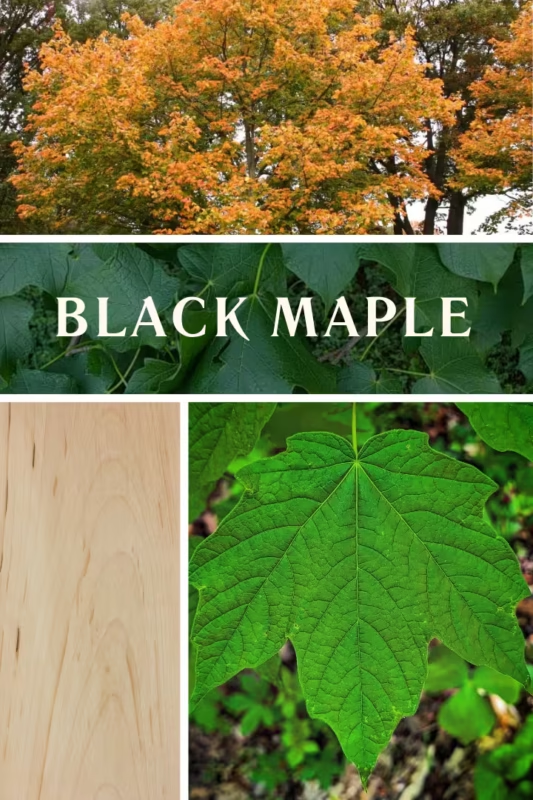
A black maple tree is a deciduous hardwood in the soapberry family, Sapindaceae. Botanists recognize it as Acer nigrum, while some classifications place it under sugar maple as Acer saccharum subsp. nigrum, reflecting the trees’ very close relationship.
Tree Overview
Black maple commonly reaches 60 to 80 feet tall, with larger forest specimens approaching 100 feet on productive sites. The crown becomes dense and rounded in open areas, while woodland trees develop a longer trunk as they compete for overhead light.
Mature bark is dark gray to nearly black and breaks into deep, irregular furrows. Running a hand across an older trunk reveals hard ridges with coarse edges, unlike the smoother gray bark found on young maple stems.
The leaves often have three broad main lobes, shallow sinuses, drooping outer margins, and a softly hairy underside. Fall color ranges from yellow to orange, though site conditions and genetics can produce muted brown or red tones. See the broader guide to types of maple trees for related species.
Black maple produces paired winged seeds called samaras, and its spring flowers appear before or during leaf emergence. The USDA PLANTS profile identifies it as a native perennial tree rather than an introduced ornamental.
Tree vs. Strain
The black maple tree isn’t a botanical “strain.” In forestry and plant taxonomy, it is treated as a species or sugar maple subspecies, depending on the classification system being used.
Searches for “black maple strain” may refer to an unrelated cannabis cultivar sold under a similar name. That product has no taxonomic connection to Acer nigrum; shared naming doesn’t indicate shared chemistry, ancestry, or plant characteristics.
Black Maple Tree Pros and Cons
The main black maple tree pros are dense shade, strong wood, wildlife value, attractive fall foliage, and usable sap. Its drawbacks include slow establishment, shallow surface roots, sensitivity to harsh sites, and a mature size that can overwhelm small properties.
Key Advantages
A healthy black maple can remain useful for generations because it forms a broad crown and durable trunk. It also supports birds and small mammals through shelter, buds, and seeds, making it more ecologically useful than many short-lived ornamental trees.
- Dense summer shade: The broad crown can cool patios, buildings, and open ground.
- Long service life: Trees on favorable sites can survive for well over a century.
- Useful sap: Sap can be boiled into syrup much like sugar maple sap.
- Valuable hardwood: Logs may enter the commercial hard maple lumber stream.
- Native habitat value: The tree supplies cover and seasonal food for wildlife.
- Autumn interest: Leaves often develop warm yellow or orange color.
The dense canopy feels several degrees cooler on exposed skin during a hot afternoon, especially where the crown shades pavement. Unlike brittle, fast-growing maples, sound black maple limbs usually feel rigid under moderate wind, though weak forks and internal decay can still fail.
Main Drawbacks
Black maple performs poorly beside salted roads, in compacted construction soil, or in sites that stay hot and dry. The Morton Arboretum’s black maple guide recommends moist, well-drained soil and notes its limited tolerance for difficult urban conditions.
Surface roots may lift thin paving or compete with lawn beneath the canopy. Beginners often plant the tree within a few feet of a driveway, foundation, or overhead utility line; the better approach is to allow room for a crown that may spread 40 to 60 feet.
Deep mulch piled against the trunk creates another common problem. Keep mulch about 3 inches deep over the root zone, then pull it several inches away from the bark so the root flare remains visible and dry.
Leaf scorch, tar spot, verticillium wilt, girdling roots, and trunk injuries can reduce tree quality. Tar spot looks dramatic but often causes more cosmetic damage than structural harm; repeated crown thinning, dead branches, or one-sided dieback calls for a qualified arborist rather than routine spraying.
Black Maple Range
The native black maple range lies mainly in the central and eastern portions of North America. Its strongest populations occur around the Great Lakes and in parts of the Midwest, where fertile, moisture-retentive soils support steady tree growth.
Geographic Distribution
Black maple occurs from southern Ontario and parts of the northeastern United States west through the Great Lakes region, then south into sections of the central Mississippi and Ohio River systems. Its distribution is more restricted and west-centered than that of sugar maple.
Typical habitat includes rich bottomlands, moist woodland slopes, ravines, and deep loam soils with good drainage. It may grow with sugar maple, basswood, white ash, elm, and other hardwood trees, which can make field identification harder.
A map showing a tree outside its documented native range doesn’t prove misidentification. Planted specimens can survive beyond that boundary, and natural hybrids or intermediate forms appear where black maple and sugar maple overlap. County-level records from the Biota of North America Program help separate documented occurrence from broad range claims.
Before planting, match the site rather than relying only on a hardiness-zone number. Deep soil, summer moisture, winter dormancy, and protection from road salt matter more than a single zone label.
Black Maple Growth Rate
Black maple has a slow-to-moderate growth rate. A young, established tree may add roughly 12 to 18 inches of height in a favorable year, while drought, transplant stress, shade, or compacted soil can reduce growth to only a few inches.
Growth Expectations
Annual height alone doesn’t describe development well. During the first two or three seasons after planting, much of the tree’s energy goes into replacing roots lost during nursery digging, so the crown may appear almost unchanged before growth begins to accelerate.
| Tree stage | Reasonable field expectation | Main limiting factor |
|---|---|---|
| First 1–3 years after planting | About 4–12 inches per year | Transplant shock and root establishment |
| Established young tree | About 12–18 inches per year on a good site | Water, soil volume, and light |
| Mature tree | Shorter shoots and more trunk thickening | Age, crown competition, and moisture |
| Compacted or drought-prone site | Often below 6 inches per year | Restricted roots and dry soil |
These figures are practical ranges, not fixed promises. Measure several healthy terminal shoots after leaf drop rather than judging one shaded branch, then compare results across three seasons to account for weather.
Water deeply during dry periods, covering the root zone instead of soaking only the trunk base. Frequent shallow watering encourages roots near the surface; slower watering that moistens 8 to 12 inches of soil gives a young tree a better buffer against summer heat.
Don’t add high-nitrogen fertilizer merely to force fast extension. Long, soft shoots can be more prone to stress and may hide a soil, drainage, or root problem. A soil test offers a safer basis for correcting nutrient shortages.
A diameter tape can help track trunk growth more consistently than visual estimates.
Black Maple vs. Sugar Maple

Black maple and sugar maple differ most clearly in leaf shape, leaf texture, bark tendency, and native distribution. Black maple usually has broader, drooping, three-lobed leaves with hairy undersides, while sugar maple more often carries five distinct lobes and cleaner-cut sinuses.
Key Differences
The distinction isn’t absolute because the species intergrade where their ranges meet. One leaf can mislead you, especially on a vigorous sucker or shaded branch, so compare several mature sun leaves and check the bark, petioles, and crown.
| Feature | Black maple | Sugar maple |
|---|---|---|
| Scientific name | Acer nigrum | Acer saccharum |
| Typical leaf lobes | Three broad main lobes | Five more distinct lobes |
| Leaf margin | Outer edges often droop | Usually flatter and more sharply defined |
| Leaf underside | Often softly hairy | Usually smoother, with less hair |
| Petiole | May have small stipule-like structures at the base | Usually lacks those structures |
| Native range | More concentrated around the Midwest and Great Lakes | Broader eastern range |
| Commercial wood class | Hard maple | Hard maple |
Woodworkers rarely receive lumber labeled by either species after milling. Both commonly enter the hard maple trade, where boards are sorted by grade, color, figure, and defects rather than leaf traits. The main maple wood guide explains those commercial categories.
Identification Clues
Start by checking several full-size leaves from an outer branch. A typical black maple leaf feels slightly leathery, with a soft or faintly fuzzy underside, while the side edges hang downward enough to give the blade a wilted appearance despite healthy color.
Next, inspect mature bark and petiole bases. Dark, deeply furrowed bark supports a black maple identification, while small leafy appendages near the petiole base can provide another clue. Young bark offers less help because both species start relatively smooth.
The Flora of North America account documents the overlapping traits that lead some taxonomists to classify black maple below species rank. Treat uncertain trees as an Acer saccharum complex specimen until leaves, twigs, fruit, and location agree.

A frequent beginner mistake is identifying the tree from dark bark alone. Norway maple, mature sugar maple, and several stressed maples can also develop dark trunks; sap color is unreliable too. Compare leaf arrangement, lobes, underside hair, samaras, and buds before assigning a name. The Norway maple guide shows traits that separate that introduced species.
Black Maple Wood Uses

Black maple wood is used for flooring, cabinets, furniture, millwork, tool handles, turned objects, veneer, and firewood. Mills usually sell it as hard maple because its working properties and pale appearance closely resemble sugar maple.
Black Maple Lumber
Black maple lumber has pale cream sapwood and darker tan-to-brown heartwood. The grain is commonly straight and fine, though occasional boards show curls, waves, or bird’s-eye-like figure; those patterns concern grain development rather than a separate black maple species.
Freshly planed hard maple feels smooth and almost waxy under the fingertips, while a dull cutter leaves fuzzy patches or dark burn marks. Sharp carbide tooling, light passes, and a steady feed rate reduce scorching on dense stock.
The wood’s density gives flooring and work surfaces good dent resistance, but it also raises the chance of splitting near board ends. Predrill screws, especially within 2 inches of an edge, and ease the bit out periodically so packed chips don’t heat the hole.
Maple can blotch under penetrating stain because end grain and locally figured fibers absorb color at different rates. Sand consistently, test on an offcut from the same board, and apply a washcoat or dye system when a uniform dark finish matters. Compare hardness data through the wood hardness scale.
Kiln drying needs controlled airflow because thick maple stock can check, cup, or develop internal honeycombing if dried too aggressively. For shop use, let lumber acclimate to the room, then confirm moisture at the board’s core rather than trusting the dry feel of its surface.
Practical notes from use: Select boards by moisture, grain direction, color, and defects rather than relying on a “black maple” label. In mixed hard-maple stacks, two neighboring boards can machine differently; one may cut cleanly while another chatters where grain reverses around a subtle curl.
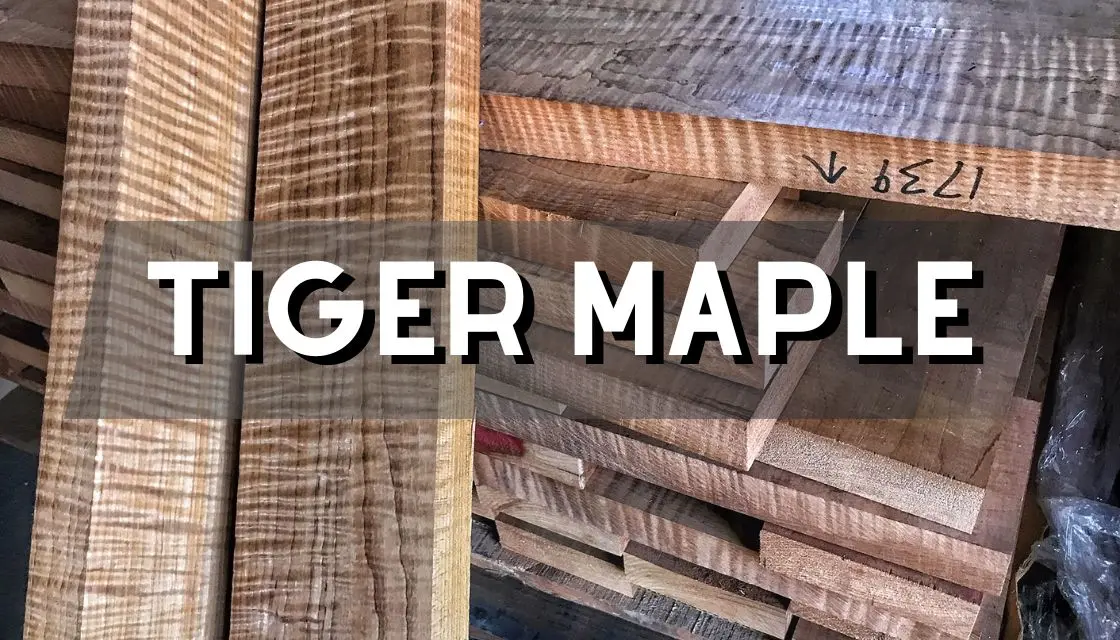
Decorative figure raises visual value but can complicate planing. A card scraper or finely set cabinet scraper often leaves a cleaner sheen than another pass through a thickness planer. Related examples appear in the guides to curly maple and birdseye maple.
Firewood Quality
Yes, black maple is good firewood. Its dense wood produces steady heat, useful coals, and a longer burn than softer maples such as silver maple, placing it near other premium hardwood fuels when properly seasoned.
A full cord of dry hard maple is commonly estimated near 24 million BTU, but actual output changes with wood density, cord stacking, moisture, and stove efficiency. The USDA Wood Handbook explains why moisture and density strongly affect wood performance.
Fresh splits feel noticeably heavy and cool, and they may release a faint sweet-green odor. Seasoned pieces become lighter, develop small end checks, and make a sharper ringing sound when struck together, though sound alone can’t verify safe burning moisture.
- Split rounds soon after cutting, especially pieces over 6 inches across.
- Stack wood off the ground with the split faces exposed to moving air.
- Cover the top while leaving the sides open.
- Allow roughly 12 to 18 months in a well-ventilated stack.
- Test a freshly exposed split face and burn at about 20% moisture or lower.
Beginners often test only the dry outer face, then load a stove with wood that remains wet inside. Split one representative piece immediately before using a moisture meter; checking the newly opened center gives a far more useful reading.
Wet maple hisses, darkens the firebox glass, and sends more water vapor and unburned compounds into the flue. Dry black maple lights with a cleaner flame and settles into a dense bed of glowing orange coals, making it suitable for overnight heating when mixed with smaller kindling.
These products can help with safe splitting, stacking, and moisture testing.
Never burn painted, pressure-treated, glued, or chemically contaminated maple. Wear eye protection while splitting, keep hands clear of unstable rounds, and have a chimney inspected on a schedule suited to the stove and burning habits.
FAQs
What Are The Pros And Cons Of Black Maple Trees?
Black maple trees provide dense shade, attractive fall color, and valuable hardwood, but they need space and consistent moisture. Their broad canopy can shade lawns heavily, and young trees may struggle in drought, compacted soil, or hot exposed locations. They are best suited to larger yards with deep, fertile soil.
How Fast Does A Black Maple Tree Grow?
Black maple grows at a slow to medium rate, usually about 1 to 2 feet per year in good conditions. Growth is fastest when the tree is young and planted in moist, well-drained, fertile soil. Drought, poor drainage, and heavy shade can reduce its yearly growth.
What Is The Difference Between Black Maple And Sugar Maple?
Black maple and sugar maple are closely related native maples, but black maple usually has darker, more drooping leaves and less deeply cut lobes. Black maple often tolerates slightly wetter, richer soils, while sugar maple is more widely planted. Both produce hard wood, bright fall color, and sap that can be made into syrup.
Is Black Maple Good Firewood?
Black maple is excellent firewood because its dense wood burns hot and for a long time. Like sugar maple, it should be split and seasoned for at least one year, preferably until moisture is below 20 percent. Dry wood lights more easily, produces less smoke, and gives better heat.
Where Do Black Maple Trees Grow?
Black maple grows naturally in the central and eastern United States, especially the Midwest and Great Lakes region. It is commonly found in rich, moist woods, stream valleys, and fertile lowlands from Ontario south into parts of the central states. It performs best in cool to moderate climates with well-drained soil.
Affiliate Disclosure: Some links in this post are affiliate links. If you make a purchase through these links, we may earn a small commission at no extra cost to you. We only recommend products we genuinely believe in.