
Laurel Oak: Identification, Growth, Lifespan, Care and Wood Uses

Laurel oak (Quercus laurifolia) is a fast-growing southeastern U.S. oak with variable narrow leaves, small acorns, a broad crown, and a typical landscape lifespan of about 50–70 years. It supplies quick shade and wildlife food, but mature trees need space, structural pruning, and periodic checks for internal decay.
Table of Contents
What Is a Laurel Oak?
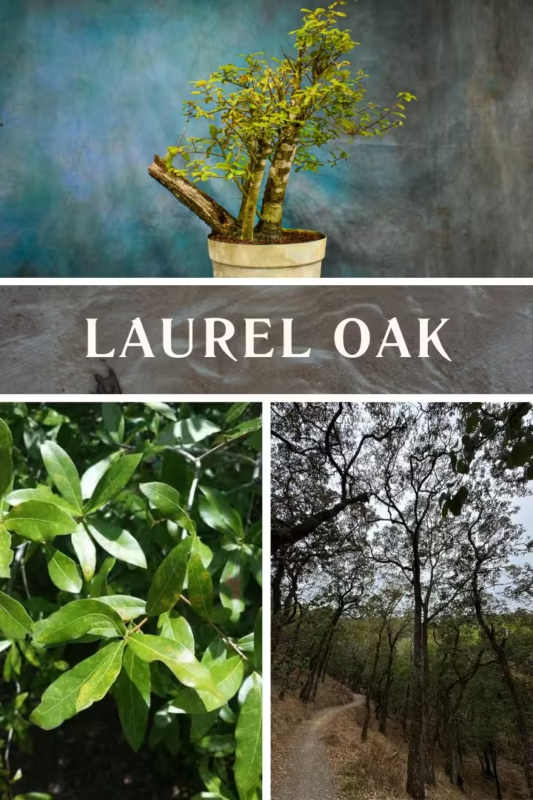
A laurel oak is a large red-group oak native to warm, moist parts of the southeastern United States. Its common name comes from its laurel-like foliage; it isn’t a true laurel and doesn’t belong to the Lauraceae family.
| Feature | Laurel oak facts |
|---|---|
| Botanical name | Quercus laurifolia |
| Family | Fagaceae |
| Oak group | Red oak group |
| Native range | Southeastern U.S. Coastal Plain |
| Typical height | 40–70 feet |
| Typical spread | 35–45 feet, sometimes wider |
| Growth rate | Fast for an oak |
| Leaf habit | Semi-evergreen to tardily deciduous |
| Common hardiness range | USDA zones 7–10, subject to local conditions |
| Acorn maturation | Two growing seasons |
| Landscape lifespan | Often about 50–70 years |
| Main concern | Decay and weak mature branch unions |
Quercus laurifolia Taxonomy
Quercus laurifolia belongs to the Fagaceae family, genus Quercus, and red oak group, often placed in section Lobatae. Red-group traits include bristle-tipped leaf features and acorns that usually mature during their second growing season.
Native Range and Habitat
The species occurs across the southeastern Coastal Plain, including Florida and Gulf Coast areas. Natural sites include floodplains, swamp margins, low woods, and stream edges; the USDA PLANTS profile provides mapped distribution records.
Size, form, and growth rate: Mature trees commonly stand 40–70 feet tall with a 35–45-foot crown. Young trees can put on conspicuous extension growth in moist, sunny sites, producing long, flexible shoots and an upright crown that becomes rounded with age.
Climate-dependent leaf habit: Laurel oak is semi-evergreen or tardily deciduous. Warm-climate trees may remain green through most of winter, while northern specimens shed more leaves; fresh spring foliage can emerge as the final old leaves drop.
50–70-year landscape lifespan: The commonly cited laurel oak lifespan is a service-life estimate, not a fixed biological limit. Root cutting, compacted soil, storm wounds, narrow unions, and trunk decay can shorten it, while trees in undisturbed sites may survive longer.
How to Identify Laurel Oak

Identify laurel oak by combining its variable leaves, bark, buds, habitat, acorns, and crown form. One leaf isn’t reliable because foliage on the same tree can range from narrow and smooth-edged to broad or shallowly lobed.
Leaves and Variations
Alternate, simple leaves usually measure about 2–5 inches. Many are narrow, glossy, and lance-shaped, but sun shoots and vigorous sprouts may carry broader, irregular leaves with shallow lobes or bristle-tipped points.
Fresh foliage feels smooth and slightly firm between the fingers rather than thick and leathery like southern live oak. Crushed leaves have a faint green, tannic smell, while dry leaves turn papery and make a crisp scrape underfoot.
Bark and Trunk
Young bark is relatively smooth and gray. Older trunks darken and develop shallow ridges and furrows; broad trunks can look sound from outside while concealing columns of decay behind old wounds.
Twigs and buds: Slender twigs and clustered terminal buds help when foliage is atypical. Compare several branches because shaded growth, water sprouts, and juvenile shoots often differ from mature sun-exposed twigs.
Flowers and catkins: The tree is monoecious, carrying male and female flowers on one plant. Male flowers hang in soft, yellow-green spring catkins that release windborne pollen; female flowers are small and easy to miss.
Acorns and wildlife: Acorns are commonly ½–¾ inch long in shallow cups and mature over two seasons. Squirrels, deer, turkeys, jays, and small mammals eat them, making laurel oak a large acorn-producing tree with substantial habitat value.
Laurel Oak vs. Similar Trees

The difference between live oak and laurel oak is clearest in crown form, leaves, habitat, and longevity. Water oak and Darlington oak require closer inspection because leaf variation creates considerable overlap.
| Tree | Leaves and habit | Site and form | Useful distinction |
|---|---|---|---|
| Laurel oak Q. laurifolia | Narrow to broad; semi-evergreen | Moist lowlands; upright to rounded | Fast growth and 50–70-year landscape lifespan |
| Southern live oak Q. virginiana | Thick, leathery, usually persistent | Broad crown with heavy horizontal limbs | Often much longer lived |
| Water oak Q. nigra | Variable; often spatula-shaped or three-lobed near tip | Moist southeastern sites | Leaf tip and base may help, but acorns and buds matter |
| Darlington oak Q. hemisphaerica | Often more consistently persistent | Sandy or better-drained uplands | Habitat and botanical label are strong clues |
Laurel Oak vs. Live Oak
Laurel oak usually grows more upright and has thinner, narrower leaves than southern live oak. Live oak develops massive spreading limbs, thicker evergreen foliage, and a much longer potential life on a suitable site.
Laurel Oak vs. Water Oak
Both species grow quickly in southeastern wet sites and can decline after internal decay develops. Water oak leaves frequently widen near the tip, but this isn’t conclusive; compare the tree with this detailed water oak guide.
Laurel oak vs. Darlington oak: Darlington oak, or sand laurel oak, favors sandy uplands and tends to retain foliage more consistently. Laurel oak has stronger ties to floodplains and seasonally wet low ground.
Why botanical names matter: Regional names such as swamp laurel oak, sand laurel oak, and water oak overlap. Confirm Quercus laurifolia on nursery labels, herbarium records, and wood descriptions rather than trusting “laura oak” or another shortened trade name.
Growing and Planting Laurel Oak
Plant laurel oak in full sun with space for a 35–45-foot crown and a wide root zone. Moist soil suits the species, but a stagnant, oxygen-starved planting hole can kill roots despite its floodplain origin.
Hardiness, Sun, and Soil
Published recommendations often place laurel oak in USDA zones 7–10. It handles sand, loam, clay, heat, and seasonal wetness, yet local climate limits matter near the northern edge of its range.
Water and drainage: Irrigate new trees deeply across the root ball and nearby soil, then allow oxygen to return between waterings. Frequent light sprinkling leaves the lower root ball dry and encourages shallow surface roots.
Space and Root System
The laurel oak root system spreads where moisture, oxygen, and loose soil are available. Roots aren’t intentionally destructive, but restricted soil volume pushes them beneath pavement or into leaking drains where conditions are favorable.
Roots and infrastructure: Don’t place this oak beneath utility lines or beside pools, narrow sidewalks, septic fields, or house walls. Trenching through major roots can reduce anchorage years before canopy decline becomes visible.
Planting depth and root flare: Expose the first major roots and set the flare at or slightly above finished grade. A trunk that enters soil like a straight fence post is usually too deep.
Mulching and establishment care: Spread 2–3 inches of organic mulch over the root zone while leaving several inches bare around the trunk. Water according to rainfall, soil texture, heat, and root-ball moisture rather than a rigid calendar.
- Choose a site with full sun, broad soil volume, and clear overhead space.
- Remove excess soil from the nursery root ball until the root flare is visible.
- Dig a wide hole no deeper than the measured root ball.
- Backfill mainly with native soil and water slowly to settle air pockets.
- Mulch the surface without piling material against the bark.
- Inspect moisture below the mulch and irrigate deeply during establishment.
Planting mistakes to avoid: Common failures include buried flares, mulch volcanoes, circling container roots, permanent staking, automatic fertilizing, and placement based on the sapling’s present size. Correct circling roots before planting and remove stakes once the trunk can stand independently.
Practical notes from real-world use: A newly planted root ball can feel wet at the surface yet come out dusty and warm when probed two inches down. Check both the original root ball and surrounding soil; their different textures often absorb water at different rates.
Pruning, Problems, and Structural Safety
Laurel oak isn’t automatically hazardous, but fast growth can produce long heavy limbs, competing leaders, and narrow unions with included bark. Early structural pruning reduces the need for large decay-prone cuts later.
Young-Tree Structural Pruning
Favor one dominant leader where the tree’s form permits it, then space permanent scaffold branches vertically around the trunk. Reduce competing stems gradually; removing a large share of live foliage in one visit can trigger weak upright sprouts.
Mature-Tree Pruning
Never top a mature laurel oak. Large stubs decay, and the dense regrowth that follows is weakly attached; pruning near homes, roads, utilities, or parking areas belongs with a qualified arborist.
Decay and branch failure: Storm wounds, root cuts, trunk impacts, included bark, and oversized pruning wounds provide routes for wood-decay organisms. A full green canopy doesn’t prove that the trunk base or scaffold unions remain sound.
Arborist warning signs: Request an assessment after new leaning, soil lifting, major cracks, repeated limb loss, cavities, dead scaffold branches, or fungal conks appear. The ISA arborist search can help locate trained tree-care providers.
- Keep people and vehicles away after roots lift or a major crack opens.
- Photograph changes from the same angle to track movement.
- Report recent trenching, lightning, flooding, and branch loss.
- Don’t fill cavities with concrete or seal them with household coatings.
- Assess the tree’s defects together with nearby targets and storm exposure.
Pests and oak diseases: Possible issues include leaf spots, bacterial leaf scorch, powdery mildew, cankers, scale, caterpillars, galls, mistletoe, and decay fungi. Cosmetic spotting seldom justifies spraying without a diagnosis.
Oak wilt risk: Red-group oaks can be highly vulnerable where oak wilt occurs. Follow state guidance for pruning seasons, avoid moving suspect firewood, and confirm regional disease presence before treating symptoms.
Laurel wilt confusion: Laurel wilt mainly attacks members of Lauraceae, including redbay and avocado. Laurel oak belongs to Fagaceae, so its laurel-like name doesn’t make it a primary laurel-wilt host.
Landscape Benefits and Suitability
Laurel oak suits a large southeastern property where quick dense shade matters and mature branches won’t hang over high-value targets. Its shorter service life makes it a weaker choice for confined sites intended to support one tree for generations.
Wildlife and Acorn Value
Small acorns feed birds and mammals, while foliage supports insects eaten by nesting birds. The crown supplies cover and nesting space, making laurel oak more ecologically useful than many nonnative ornamental shade trees.
Shade and Stormwater Benefits
A mature crown shades roofs and pavement, intercepts rainfall, and slows water reaching compacted ground. These benefits depend on healthy crown retention; repeated severe pruning removes the leaf area that provides cooling and rainfall interception.
Landscape drawbacks: Expect acorn and leaf litter, broad roots, pruning needs, and possible age-related decay. Fallen acorns can feel like hard marbles on smooth paths, while dry foliage collects quickly around drains and pool screens.
When laurel oak fits: Good settings include parks, campuses, large lawns, naturalized margins, and broad stormwater areas with seasonal wetness. Owners should budget for formative pruning and later inspections.
When alternatives are better: Choose another tree for narrow yards, overhead wires, intensive construction zones, or sites where long service life is the main goal. Depending on local soil, options may include live oak, overcup oak, or the species covered in our chestnut oak guide.
Laurel Oak Wood and Uses
Laurel oak wood is a dense red oak hardwood with open pores and visible growth-ring grain. Mills often combine it with other southern red oaks rather than selling species-verified laurel oak lumber.
Red Oak Classification
Botanically and commercially, laurel oak sits within the red oak group. Its open vessel structure differs from white oak’s plugged pores, a distinction explained further in our red oak vs. white oak comparison.
Wood appearance and grain: Heartwood tends to be light or medium brown, with paler sapwood and prominent coarse grain. Planed surfaces show open pores that catch sanding dust and require filler for a glass-smooth finish.
Density, Strength, and Hardness
Representative dried values include about 46 lb/ft³ (735 kg/m³), 1,210 lbf Janka hardness, 14,770 psi bending strength, 1.87 million psi stiffness, and 7,130 psi crushing strength. The Laurel Oak wood data reports species-level reference figures, not guarantees for an individual board.
| Wood property | Representative value | Practical meaning |
|---|---|---|
| Dried weight | 46 lb/ft³ | Heavy boards and useful firewood mass |
| Janka hardness | 1,210 lbf | Moderate resistance to denting |
| Modulus of rupture | 14,770 psi | Reference bending strength |
| Modulus of elasticity | 1.87 million psi | Reference stiffness |
| Crushing strength | 7,130 psi | Compression parallel to grain |
| Radial shrinkage | About 4% | Movement across quartersawn width |
| Tangential shrinkage | About 9.9% | Greater movement across flatsawn width |
Shrinkage and drying: A tangential-to-radial ratio near 2.5 indicates meaningful distortion risk. Thick flatsawn boards can cup or check if dried too aggressively, so controlled airflow, sealed end grain, stickers, and even stacking pressure improve recovery.
Workability and wood uses: Sharp tools leave clean surfaces, but end grain may split near fasteners, so pre-drill close to board ends. Uses include utility lumber, pallets, crates, pulpwood, interior projects, and graded construction material.
Oak tannins react with iron and moisture, leaving blue-black stains around contaminated clamps, screws, or steel-wool fragments. Use clean tools and compatible fasteners, then remove metal dust before applying a water-based finish.
Laurel oak firewood: Split logs burn well after drying to a moisture level accepted by the stove or fireplace manufacturer. Stack pieces off the soil beneath a rain cover with open sides, and don’t transport firewood long distances.
What laurel wood means: Laurel wood may describe Quercus laurifolia, true laurels, California laurel, Indian laurel, or unrelated trade woods. Check the scientific name before comparing hardness, odor, toxicity, or finishing behavior; our Indian laurel reference covers one separate commercial species.
“Laurel Oak” furniture finish: This phrase often identifies a printed color, laminate, veneer, or product collection. It doesn’t prove the item contains genuine laurel oak hardwood, so inspect the material specification rather than the color name.
Buying Live Laurel Oak Trees
Before buying a laurel oak tree for sale, verify the label says Quercus laurifolia and confirm mature space, hardiness, shipping format, and seasonal care. A low-cost seedling can require more protection and establishment time than local container stock.
Botanical Label Checks
Common names are unreliable, particularly where Darlington oak is called sand laurel oak. Confirm the botanical name, source region, live-arrival terms, shipping restrictions, and whether the seller supplies a bare-root plant, plug, or container tree.
Stock Types and Sourcing
Small plugs ship cheaply and establish with less root loss, but they need weed control and protection from browsing. Larger container trees provide faster visual impact yet may carry circling or buried roots; inspect the flare before purchase.
Price and installation factors: Compare trees by container size, height, trunk caliper, root quality, delivery, guarantee, and origin. Irrigation, planting labor, staking, freight, and future pruning can cost more than the plant, so a single undated average price has little value.
Live laurel oak options: These shipped plant bundles may suit buyers who have verified climate, mature space, and immediate planting care.

Laurel Oak Live Tree Pack
- Includes three live Laurel Oak plants
- Quercus laurifolia is valued as a shade tree
- Semi-evergreen to deciduous foliage offers seasonal interest
- Suitable for landscape planting in appropriate climates
- Live plants need prompt planting and regular care
 Buy on Amazon
Laurel Oak 10-Plant Bundle
- Includes ten live Laurel Oak plants
- Quercus laurifolia can provide welcome shade
- Semi-evergreen to deciduous foliage adds landscape interest
- Ideal for larger planting projects in suitable climates
- Plant promptly and provide ongoing care
Buy on Amazon
FAQs
How Fast Does A Laurel Oak Tree Grow?
Laurel oak trees typically grow 2 to 3 feet per year when they are young and healthy. They grow fastest in full sun, moist well-drained soil, and warm climates. Growth naturally slows as the tree matures, while drought, poor drainage, and compacted soil can reduce annual growth.
How Long Does A Laurel Oak Live?
A laurel oak usually lives about 50 to 70 years. Some trees may live longer with excellent growing conditions and proper care, but they are generally shorter-lived than many other oak species. Regular pruning, adequate water during drought, and protection from disease can help support a longer lifespan.
Are Laurel Oak Roots Invasive?
Laurel oak roots are not usually considered invasive, but they can spread widely and become strong near the surface. Plant the tree at least 15 to 20 feet from buildings, driveways, patios, and underground pipes. Like other large oaks, its roots need plenty of open soil space to grow safely.
What Is The Difference Between Live Oak And Laurel Oak?
Live oaks are generally longer-lived, broader, and more durable than laurel oaks. Laurel oaks usually grow faster and have narrower leaves, while live oaks have thicker, leathery leaves and a more spreading form. In warm climates, both can stay evergreen, but laurel oaks may drop more leaves during cold weather.
Is Laurel Oak Wood Good For Firewood?
Laurel oak wood can be used for firewood, but it is not considered the best oak firewood. It provides moderate heat and should be fully seasoned for at least a year before burning. The wood can be harder to split and usually produces less heat than denser red or white oak firewood.
Affiliate Disclosure: Some links in this post are affiliate links. If you make a purchase through these links, we may earn a small commission at no extra cost to you. We only recommend products we genuinely believe in.