

Scotch pine, also called Scots pine, is the Eurasian evergreen species Pinus sylvestris, recognized by paired twisted needles and orange upper bark. This guide covers its names, identification, ecology, cultivation, seed propagation, health problems, Christmas-tree value, and wood uses.
Table of Contents
Scotch Pine Facts and Naming
Scotch and Scots pine refer to the same species, Pinus sylvestris, in the pine family Pinaceae. The tree is native across Eurasia and commonly grows 100–115 feet (30–35 metres) tall on favorable forest sites.
Botanical Identity
Pinus sylvestris is an evergreen, wind-pollinated gymnosperm. Each tree carries separate male pollen cones and female seed cones, making it monoecious rather than dependent on a male and female tree pair.
| Trait | Scotch pine fact |
|---|---|
| Scientific name | Pinus sylvestris |
| Family | Pinaceae |
| Plant type | Evergreen conifer |
| Needle arrangement | Two needles per fascicle |
| Native range | Europe through northern Asia and Siberia |
| Typical forest height | 100–115 feet (30–35 metres) |
| Common lifespan | 150–300 years |
The species has an exceptionally broad natural distribution. Its accepted botanical record and native-range details appear in Kew Plants of the World Online. That wide distribution has produced regional populations with different growth habits, cold responses, and disease tolerance.
Scots vs. Scotch Pine
Scots pine is the standard name in British, European, botanical, and much forestry literature. Scotch pine is a long-established North American term for the same tree, especially in nursery catalogs and Christmas-tree production.
Misspellings such as scot pine, “scotish pine,” and “Scott pine tree” usually point to Pinus sylvestris. Common-name spelling isn’t reliable enough for plant purchases, seed orders, or invasive-species checks, so read the scientific label.
Norwegian and Norway Pine. Norwegian pine isn’t a standardized synonym for Scotch pine. In North America, Norway pine commonly means red pine, Pinus resinosa, including the state tree of Minnesota.
Check for two different names: Scots or Scotch pine should carry Pinus sylvestris, while red or Norway pine should carry Pinus resinosa. Mixing these names can result in the wrong mature size, native status, needle character, or timber expectations.
Size, Growth, and Lifespan. Young trees often add 12–24 inches (30–60 centimetres) of height per year in full sun with open soil and steady moisture. Growth slows sharply in shade, compacted ground, drought, or warm humid climates.
Forest-grown trees commonly reach 100–115 feet (30–35 metres), while exceptional specimens may exceed 130 feet (40 metres). Open-grown garden trees are often shorter and broader, with trunks that can approach 3 feet (1 metre) in diameter.
A normal lifespan is roughly 150–300 years, and a few native-range trees survive beyond 500 years. Street trees and plantation trees tend to die younger because restricted roots, unsuitable seed origin, wounds, disease, and soil disturbance compound over time.
How to Identify Scotch Pine

Identify Scotch pine by checking for two short, slightly twisted needles per bundle, copper-orange bark high in the crown, and small brown cones. Mature trees often have open, irregular crowns rather than the dense outline seen on sheared Christmas trees.
Paired Twisted Needles
Each papery sheath holds two needles, usually 1–3 inches (2.5–7.5 centimetres) long. Their blue-green or gray-green color and slight twist create alternating light and dark surfaces when a twig is rolled between the fingers.
The needles feel stiff and prickly, particularly near their pointed tips. They’re shorter than typical red pine or Austrian pine needles and much firmer than the soft five-needle tufts of eastern white pine.
Orange Upper Bark
Orange upper bark is the best long-distance clue on an older Scots pine. Sunlit bark on the upper trunk and large branches can look coppery, salmon-orange, or rusty red, then peel away in thin flakes.
At ground level, the bark becomes gray-brown and plated with age. Looking only at the trunk base can hide the orange color, so step back and inspect the trunk where it enters the crown.
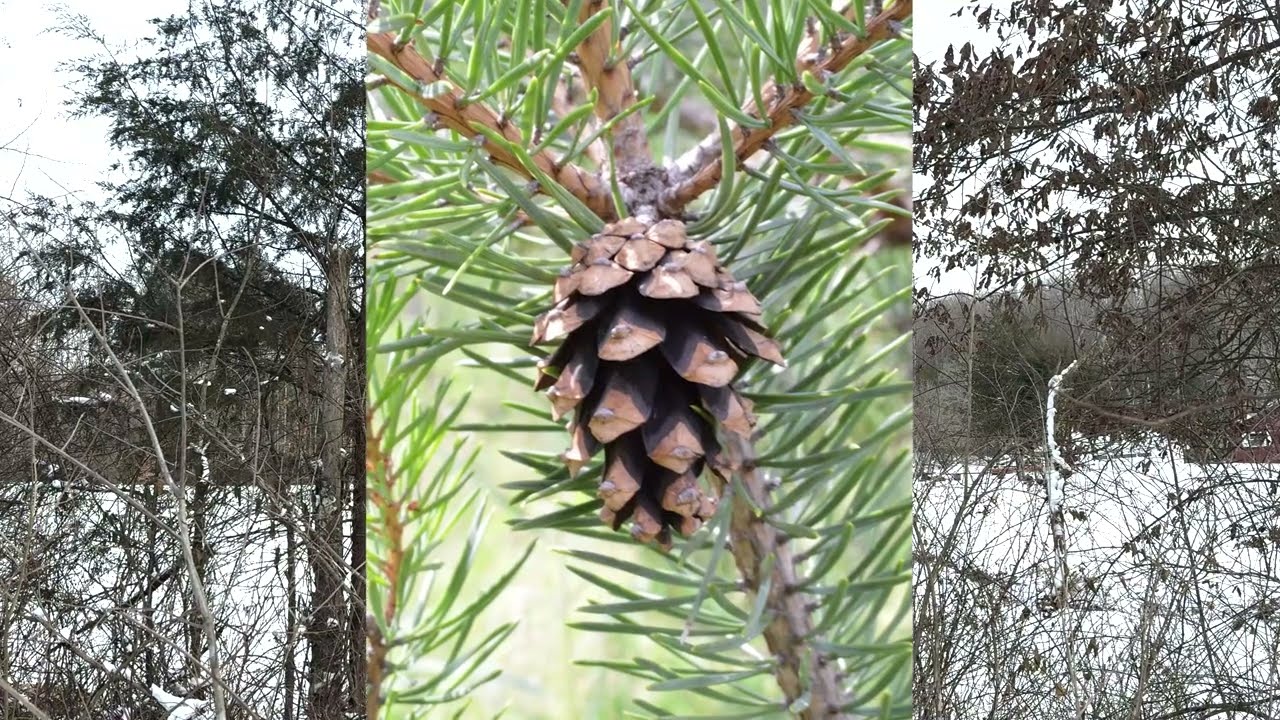
Cones and Reproduction. Seed cones are usually 1.2–3 inches (3–7.5 centimetres) long, broadly conical, and green before maturing to gray-brown. The scales have raised central knobs but lack the long, sharp prickles found on some other pines.
Male cones release clouds of yellow windborne pollen in spring. Fertilized female cones take roughly two growing seasons to mature, after which dry scales open and release winged seeds.
Crown and Mature Form. Saplings usually have straight leaders and dense conical crowns. Older Scots pine trees shed shaded lower limbs and develop flattened, windswept, or uneven crowns with thick twisting branches.
This change explains a common identification mistake: a sheared plantation tree can look unrelated to an old roadside specimen. Repeated trimming forces dense branching, while an untouched tree becomes open and sculptural.
Similar Pine Species. Red pine has longer, straighter paired needles and a more uniform crown. Austrian pine carries longer, darker, heavier needles, while eastern white pine has five soft needles in each bundle.
- Scotch pine: two twisted 1–3-inch needles and orange upper bark.
- Red pine: two longer, straighter needles; also called Norway pine.
- Austrian pine: two dark, stiff needles commonly 3–6 inches long.
- Eastern white pine: five soft needles and long, narrow cones.
- Virginia pine: two short twisted needles but smaller stature and darker bark; see this Virginia pine guide.
Native Range, Habitat, and Ecology
Scots pine is native from western Europe and the British Isles through Scandinavia, eastern Europe, northern Asia, and Siberia. Outside Eurasia, planted trees have naturalized in parts of Canada and the northern United States.
Eurasian Native Range
The tree occupies one of the widest pine ranges on Earth. Southern populations often grow on cool mountains in Spain, the Balkans, Anatolia, and the Caucasus, while northern populations reach boreal forests near the Arctic Circle.
Such distance creates strong provenance differences. Seed collected from a mild coastal population may break bud too early or suffer winter damage when planted far inland, while a far-northern source may stop growing early and remain unusually compact.
Preferred Habitats
Open, sunny ground with free drainage suits Scotch pine best. Native stands occupy sandy plains, dunes, heathland, rocky slopes, peat margins, and nutrient-poor boreal soils where competing broadleaf trees may grow poorly.
Low fertility is less damaging than stagnant water. In saturated clay, roots lose oxygen, fine roots die, and needles fade from green to dull yellow before branch tips begin to decline.
Wildlife and Mycorrhizae. Seeds feed finches, crossbills, squirrels, and other small animals, while dense young crowns offer nesting cover. Old bark, cavities, dead branches, and foliage support insects, fungi, lichens, and woodland birds.
The roots form mycorrhizal partnerships with soil fungi. Fine fungal threads extend beyond the root surface, helping the tree collect water and mineral nutrients in exchange for sugars produced by photosynthesis.
Naturalization and Invasiveness. Scotch pine is invasive or ecologically troublesome in some North American jurisdictions, but that status isn’t universal. Windblown seed can colonize roadsides, old fields, dunes, barrens, and open woodland edges.
Abandoned Christmas-tree fields may become long-term seed sources. Seedlings establish readily where exposed mineral soil, sparse vegetation, and abundant sunlight occur, then begin producing cones before nearby landowners notice the spread.
Regional Planting Guidance. Check state, provincial, or local invasive-plant lists before planting. Avoid introducing the tree beside sensitive prairies, dunes, barrens, and dry open woods where scattered seedlings would be difficult to find and remove.
Cold hardiness alone doesn’t predict regional success. Local summer humidity, pine wilt activity, needle-blight pressure, soil drainage, and seed origin may matter more than the lowest winter temperature.
How to Grow Scotch Pine
Grow Scotch pine in full sun, well-drained soil, and a cool or cold climate. Give it enough space for a large, irregular crown, and avoid wet clay, deep shade, humid disease-prone locations, and regions where it is regulated.
Climate and Hardiness
Scots pine is commonly listed for USDA Zones 3–7. Use the USDA Plant Hardiness Zone Map as a winter-temperature reference, then compare that result with local disease and invasive-plant advice.
A tree may survive a Zone 7 winter yet decline through hot, humid summers. Warm nights, wet needles, compact soil, and poor air movement favor stress and fungal infection, so a hardiness-zone match isn’t a performance guarantee.
Sun and Soil
Provide at least six hours of sun each day. Shaded trees lean toward light, lose lower branches, and develop thin crowns that never regain the dense appearance buyers associate with a Scotch pine Christmas tree.
Sandy or loamy soil with fast internal drainage is preferable. Digging a deep planting hole in heavy clay can create a water-holding basin, so set the root flare at grade and widen the hole rather than burying the root ball.
Water and Mulch. Water newly planted trees deeply through the root ball and surrounding soil, then let the upper layer begin to dry. Frequent light sprinkling wets needles and promotes shallow rooting without supplying enough water to deeper roots.
Spread 2–3 inches (5–8 centimetres) of coarse organic mulch over the root zone. Leave several inches of bare space around the trunk because damp mulch against bark hides decay, rodents, and girdling roots.
Fertilizing and Pruning. Don’t fertilize by habit. A soil test or visible deficiency should guide nutrient use, since excess nitrogen can produce soft shoots, loose form, and growth that is more attractive to certain pests.
Remove dead, broken, rubbing, or infected branches, but avoid cutting into old bare wood without live buds. Pines don’t reliably produce replacement shoots from leafless older stems, leaving permanent holes in the crown.
Landscape Benefits. The tree offers year-round foliage, cold tolerance, wind screening, wildlife cover, and attractive orange bark. Its ability to occupy dry, sandy ground can be useful where moisture-loving trees repeatedly fail.
Site Limitations. Mature height rules out planting below utility lines or close to buildings. Root compaction, prolonged shade, road salt, saturated soil, warm humid weather, and regional invasive behavior may make another species a safer choice.
Suitable Native Alternatives. Regional options include red pine, eastern white pine, jack pine, ponderosa pine, white spruce, and balsam fir. In parts of the eastern and southeastern United States, loblolly pine or Virginia pine may fit local soils better.
- Dry northern sand: red pine or jack pine within their native ranges.
- Cool moist soil: eastern white pine, white spruce, or balsam fir.
- Western open site: ponderosa pine where locally native and space permits.
- Southeastern site: Virginia pine or loblolly pine after checking drainage.
- Christmas-tree use: balsam fir, regionally adapted spruce, or a locally recommended pine.
Practical Notes From Real-World Use. The most frequent failures begin below ground, not in the crown. A root flare buried beneath several inches of soil often feels damp and soft when exposed, while the needles above look faded and sparse.
After heavy rain, check whether water remains in the planting area for more than one day. Redirecting runoff before planting works better than repeatedly treating a declining tree for fungi while its roots remain oxygen-starved.
Leave a wide grass-free ring around saplings. Mower and string-trimmer wounds may look like minor bark scrapes, yet repeated damage can girdle the lower trunk and provide entry points for decay or boring insects.
Growing Scotch Pine From Seed
Scotch pine can be grown from seed after a period of cold, moist stratification, commonly four to eight weeks. Germination success depends more on viable seed, suitable provenance, drainage, sanitation, and moisture control than on the number of seeds in a packet.
Seed Quality and Provenance
Buy seed labeled Pinus sylvestris and ask for its geographic source, harvest date, germination-test date, and storage history. Unidentified seed may produce trees with unsuitable cold hardiness, poorly timed budbreak, or crooked plantation form.
A packet marked “300 seeds” doesn’t promise 300 seedlings. Empty seed, age, warm storage, mold, dormancy, sowing depth, and damping-off can reduce the final count at every stage.
Cold Moist Stratification
Mix seeds with lightly damp peat, coir, or clean sand and refrigerate them at roughly 34–41°F (1–5°C). The medium should feel like a wrung-out sponge, not release water when squeezed.
Use four to eight weeks as a starting range, then follow instructions supplied for that seed lot. Check the bag weekly for mold, excess water, or roots emerging earlier than expected.
Sowing and Germination. Sow in clean containers with drainage holes and a loose propagation medium. Cover seeds only to the supplier’s recommended depth; deep burial delays or prevents a small seedling from reaching light.
Keep the medium evenly moist without leaving it saturated. Germinating pine roots are thin and cream-colored; waterlogging turns them translucent or brown before the shoot visibly collapses.
Seedling Care. Move emerged seedlings into strong light and maintain gentle air movement. Crowded trays, wet foliage, reused dirty pots, and constant moisture create ideal conditions for damping-off fungi.
Harden seedlings gradually by increasing outdoor exposure over seven to fourteen days. Sudden transfer from sheltered indoor light to wind and full midday sun can bleach needles and dry small root plugs within hours.
Label every batch with its source and sowing date. This small step helps separate genetic differences from care problems when one seed lot breaks bud, hardens, or grows at a different rate.

Scotch Pine Tree Seeds
- Includes 300 Scotch pine seeds
- Features Pinus sylvestris species seeds
- Suitable for growing classic Scots pine trees
- Non-GMO seed selection
- Great for gardens, landscapes, and bonsai projects
 Buy on Amazon
Scotch Pine Pests and Diseases
Pine wilt, Dothistroma needle blight, Diplodia tip blight, insects, and damaged roots can all brown a Scotch pine. Symptom speed, distribution, needle markings, resin flow, weather, and root conditions help separate these causes.
Pine Wilt Disease
Pine wilt is caused by the pinewood nematode, Bursaphelenchus xylophilus, and spread mainly by Monochamus pine sawyer beetles. Scotch pine is highly susceptible, especially where hot summer conditions favor fast disease development.
Needles may turn dull gray-green, yellow, then reddish brown across much of the crown within weeks. Resin flow often falls, and a severely affected tree may die during the same growing season.
Visual symptoms aren’t enough for a final diagnosis because drought and root failure can look similar. Submit samples to a plant diagnostic laboratory and follow local removal guidance; Nebraska Extension’s pine wilt guide explains the disease cycle and sanitation approach.
There is no practical curative treatment for a severely wilted tree. Prompt removal and correct disposal reduce the period in which beetles can emerge from infested wood and move nematodes to nearby pines.
Dothistroma Needle Blight
Dothistroma needle blight, often associated with Dothistroma septosporum, produces red-brown bands, dead needle tips, dark fruiting structures, and early needle drop. Older foliage may show stronger injury than new needles.
Dense spacing and long periods of needle wetness raise infection risk. Improve airflow, avoid overhead watering, remove heavily infected debris where practical, and obtain local advice before applying any fungicide.
Diplodia Tip Blight. Diplodia sapinea attacks expanding shoots and developing cones, leaving short brown needles packed around stunted candles. Sticky resin and tiny black fungal structures may appear on damaged tissue.
Reduce drought and root stress, avoid needless wounds, and prune infected shoots during dry weather. Fungicides work only with correct spring timing, usually while shoots expand, so late spraying after tips turn brown offers little benefit.
Insects and Root Damage. Pine sawfly larvae may strip foliage in groups, while Zimmerman pine moth larvae leave resinous masses near branch whorls. Bark beetles often attack trees already weakened by drought, construction, disease, or root injury.
Trenching, grade changes, parked machinery, and repeated foot traffic crush roots and close soil pores. Crown decline may appear months or years later, which can hide the link between construction work and browning branches.
Browning and Diagnosis. Rapid whole-crown browning during warm weather raises concern for pine wilt. Banding on individual needles suggests Dothistroma, dead new shoots suggest Diplodia, and yellowing above wet soil points more strongly to root failure.
- Check whether browning affects new growth, old needles, one branch, or the whole tree.
- Inspect needles for bands, spots, fruiting bodies, chewing, and webbing.
- Look for resin masses, exit holes, trunk wounds, and damaged root flares.
- Review rainfall, irrigation, drought, construction, herbicide use, and recent pruning.
- Send fresh samples to a diagnostic laboratory before using pesticides.
Scotch Pine Christmas Trees
A fresh Scotch pine Christmas tree offers stiff ornament-supporting branches, dense sheared foliage, and good needle retention when watered. Its main drawbacks are sharp-feeling needles, sticky resin, variable form, and quality loss after dry storage.
Christmas-Tree Benefits
Young trees accept repeated shearing and develop a classic conical outline. Their rigid branches hold medium and heavier ornaments better than many soft-foliaged species, while blue-green needles give the crown a cool, dense color.
Fresh needles usually remain attached well during normal indoor display. A healthy branch feels springy and resinous when bent, and rubbing the foliage releases a clean pine scent that lingers on the fingertips.
Potential Drawbacks
The short needles feel sharp against bare skin, making deep decorating less comfortable than with fir. Resin can transfer to hands, floors, fabric tree skirts, and ornament hooks.
Plantation shape depends on repeated skilled shearing. An untrimmed tree naturally becomes open and irregular, so buyers should judge the individual specimen rather than expecting every Scotch pine to have identical density.
Freshness and Quality. Stroke an outer branch gently toward its tip. Green needles should stay attached and bend without snapping; heavy needle fall, brittle foliage, wrinkled bark, or a sour dry odor signals poor storage or an old harvest.
Measure the room, stand, and doorway before buying. A tree that looks modest outdoors can feel surprisingly broad indoors, where sheared branch ends press against walls and restrict access to the water reservoir.
Pricing Variables. Price depends on height, symmetry, shearing quality, region, farm labor, transport, harvest timing, and whether the tree is choose-and-cut or pre-cut. A single national price would misrepresent local farm and retail-lot conditions.
Plantation costs include seedlings, mowing, shaping, pest control, land, losses, harvesting, and several growing years. A cheaper tree may still be poor value if dry storage shortens its usable indoor life.
Safe Indoor Care. Make a fresh straight cut from the trunk base if the cut surface has dried, then place the tree in water without delay. Check the stand daily and never let the cut end rise above the water line.
Keep the tree away from fireplaces, radiators, heaters, candles, and strong sun. Use listed low-heat lights, inspect cords, and follow NFPA Christmas fire safety guidance.
Remove the tree when needles become dry and brittle. Water helps a fresh cut tree retain moisture, but it can’t restore foliage already dehydrated during harvest, transport, or retail storage.
Scotch Pine Wood and Uses

Scotch pine wood is a medium-density softwood used for framing, joinery, furniture, flooring, packaging, poles, and treated exterior products. It machines easily, yet knots, resin, moisture movement, sapwood decay risk, and grade affect how any board performs.
Appearance and Grain
Sapwood is usually pale yellow-white, while heartwood ranges from yellow-brown to reddish brown. The color boundary becomes easier to see on freshly planed boards, especially after a clear finish warms the heartwood.
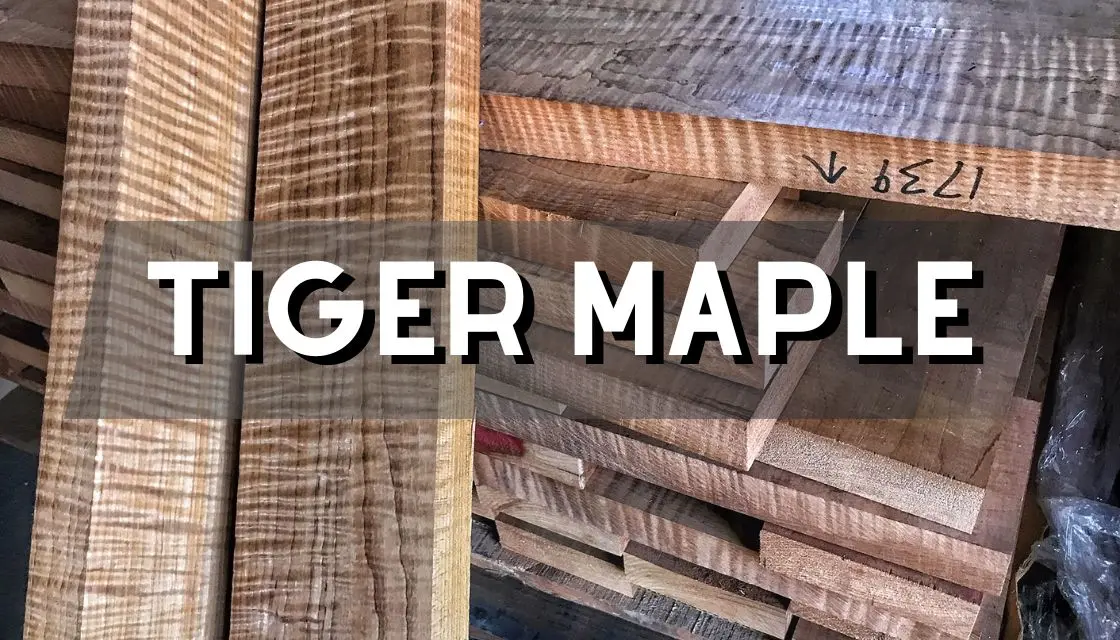
Grain is commonly straight, with a medium, visible texture. Open-grown and plantation trees may contain frequent knots that interrupt the grain, produce dark outlines, and cause tear-out during planing; compare these effects with common wood grain patterns.
Density and Hardness
Representative air-dried density is about 500–550 kg/m³, or 31–34 pounds per cubic foot. Growth rate, seed source, ring width, latewood proportion, moisture content, and grade can move an individual board outside that range.
A representative Janka value is roughly 540 pounds-force, or 2,400 newtons. This places the wood well below hard flooring species such as oak, so chair legs, grit, and pet claws can leave visible dents; the wood hardness scale gives useful comparison points.
| Wood property | Representative value or behavior | Practical meaning |
|---|---|---|
| Air-dried density | 500–550 kg/m³ | Moderate weight with a useful strength-to-weight ratio |
| Janka hardness | About 540 lbf (2,400 N) | Easy to work but prone to dents |
| Grain | Usually straight | Machines cleanly away from knots |
| Sapwood durability | Low when untreated | Needs protection from wet service and ground contact |
| Treatment response | Sapwood accepts preservatives relatively well | Useful for treated exterior products |
| Structural use | Grade-dependent | Use local code values, not species averages |
Wood figures are representative rather than guaranteed. Structural design must use locally graded lumber and applicable code values, since a clear test specimen can’t predict the strength of a full board containing knots, slope of grain, or checks.
Common Wood Uses. Scots pine timber appears in framing, roof components, interior joinery, doors, windows, furniture, flooring, shelving, pallets, crates, plywood, veneer, pulp, utility poles, fencing, and preservative-treated outdoor work.
For furniture, select dry boards with stable knots and straight grain. Soft earlywood can sand lower than dense latewood bands, creating a subtle rippled surface that becomes obvious under side lighting or glossy finish.
Heartwood and Sapwood. Reddish heartwood is usually more decay-resistant than pale sapwood, but it isn’t decay-proof. Sapwood absorbs liquid preservatives more readily, while heartwood penetration can be shallow and inconsistent.
Outdoor Durability. Untreated sapwood shouldn’t be used in ground contact or places that remain wet. Exterior performance depends on treatment class, heartwood proportion, ventilation, drainage, end-grain sealing, joint design, and corrosion-resistant fasteners.
End grain absorbs water much faster than a board’s face. Sealing cut ends and keeping joints from trapping water prevents the dark swelling and checking often seen around fence rails, deck details, and exposed fastener holes.
Machining and Finishing. The wood saws, drills, nails, and planes easily when dry and supported. Pre-drilling near board ends reduces splitting, while sharp cutters limit crushed fibers and torn grain around knots.
Resin can leave a sweet, sticky film on blades, sandpaper, and fingers. Clean tools before the buildup burns onto cutting edges, isolate active resin pockets, and test stains because earlywood and latewood can absorb color unevenly.
A thin sealing coat can reduce blotching and resin bleed beneath some finishes. Let lumber acclimate before assembly; fitting wet boards into tight furniture joints often leads to shrinkage gaps or distortion after indoor drying.
Trade Names and Grades. Scots pine may be sold as European redwood, red deal, Baltic pine, or regional pine lumber. In this trade context, “European redwood” doesn’t mean coast redwood, Sequoia sempervirens.
Trade names don’t replace grade and moisture data. Before buying, confirm species, structural or appearance grade, moisture content, dimensions, treatment class, intended exposure, and whether knots are sound or loose.
Pine resin has historic industrial and folk uses, but pine sap isn’t automatically edible. Don’t ingest resin, bark preparations, or products marketed for medicinal use based only on a common name, since species identity, contamination, dosage, and personal reactions matter.
For broader comparisons between Scots pine and other building species, review the site’s guide to construction wood. Match the board to its load, moisture exposure, finish, and wear level rather than choosing by color or trade name alone.
FAQs
Is Scotch Pine The Same As Scots Pine?
Scotch pine and Scots pine are the same tree species, Pinus sylvestris. “Scots pine” is the more widely accepted common name, especially in the United Kingdom and Europe. “Scotch pine” is commonly used in North America, particularly by nurseries and Christmas tree growers.
Is Norwegian Pine The Same As Scotch Pine?
Norwegian pine is usually the same tree as Scotch pine, or Scots pine. The name “Norwegian pine” is a regional common name used in some parts of North America. All three names generally refer to Pinus sylvestris, although local plant labels can vary.
How Fast And Tall Does A Scotch Pine Grow?
Scotch pine typically grows 1 to 2 feet per year when young and healthy. In gardens, it commonly reaches 30 to 60 feet tall with a spread of 20 to 40 feet. Mature trees can grow much taller in ideal conditions, especially in their native range.
Is Scotch Pine Invasive In North America?
Scotch pine can be invasive in some parts of North America, especially around the Great Lakes and northeastern states. It can spread from planted areas into open land and compete with native vegetation. Check local extension guidance before planting, as its status differs by region.
Is Scotch Pine A Good Christmas Tree?
Scotch pine is a popular Christmas tree because it has strong branches and holds its needles well. Its stiff needles support heavier ornaments, and the tree usually stays fresh indoors when watered properly. It also has a classic pine scent and is widely available at tree farms.
Affiliate Disclosure: Some links in this post are affiliate links. If you make a purchase through these links, we may earn a small commission at no extra cost to you. We only recommend products we genuinely believe in.