

Virginia pine (Pinus virginiana) is a native eastern U.S. evergreen recognized by short, twisted needles in pairs and small cones armed with sharp prickles. This medium-sized pine grows best in full sun on dry, acidic, well-drained ground, where it serves as a pioneer tree, wildlife cover, reclamation plant, and regional Christmas tree.
Suggested SEO title: Virginia Pine Tree Guide: Identification, Growth, Uses and Problems
Suggested meta description: Identify Virginia pine by its paired twisted needles, prickly cones, bark, and irregular crown. Learn its size, native range, planting needs, uses, diseases, and differences from similar pines.
Table of Contents
Virginia Pine Quick Facts
Virginia pine trees are short-lived, shade-intolerant pines that colonize abandoned fields, dry ridges, cutover woods, and other open ground. They commonly reach 30–60 feet, yet soil depth, crowding, weather damage, and moisture can produce mature trees anywhere from about 20 to nearly 100 feet.
What Is Virginia Pine?
Pinus virginiana belongs to the hard-pine group in the Pinaceae family. People also call it scrub pine, Jersey pine, or poverty pine, names linked to its habit of occupying worn-out farmland and thin soils where competing trees struggle.
The tree tolerates low fertility, but poor soil tolerance doesn’t mean it likes standing water. Its roots still need air, drainage, and enough soil volume to anchor the irregular crown.
Quick-Facts Table
| Feature | Virginia pine facts |
|---|---|
| Scientific name | Pinus virginiana Mill. |
| Family | Pinaceae |
| Plant type | Evergreen conifer; hard pine |
| Typical height | 30–60 feet |
| Possible height range | About 20–100 feet, depending on site |
| Typical spread | 20–35 feet |
| Growth rate | Slow to medium; young trees may gain 1–2 feet yearly on favorable sites |
| Lifespan | Often 60–90 years; some exceed 100 years |
| Needles | Two per fascicle, 1.5–3 inches long, stiff and often twisted |
| Seed cones | About 1.5–3 inches, prickly and persistent |
| Light | Full sun |
| Soil | Acidic, well-drained sand, loam, clay, gravel, or rocky soil |
| Hardiness | Commonly USDA zones 4–8 |
| Native range | Central and southern portions of the eastern United States |
| Main uses | Wildlife cover, reclamation, pulpwood, bulk plantings, and Christmas trees |
Botanical Names
The accepted scientific name is Pinus virginiana Mill. “Virginia pine” is the standard common name, while scrub pine, Jersey pine, and poverty pine remain common in local forestry and land-management use.
Misspellings such as “Virgina pine,” “Virgina pines,” and search phrases such as “VA pine” or “pine VA” usually refer to this species. Virginia also supports several other native pines, so a location alone can’t confirm the identification.
Size and Growth Rate
A typical open-grown Virginia pine reaches 30–60 feet tall and 20–35 feet wide. Trees on eroded or shallow sites may stop near 20–40 feet, while protected forest trees with deeper soil can pass 70 feet.
Young trees can add 1–2 feet yearly in open light with usable moisture. Growth slows sharply on rocky ridges, beneath overtopping hardwoods, or where dense grass competes with seedlings for water.
Lifespan and Hardiness
Virginia pine commonly lives 60–90 years, making it shorter lived than many large forest pines. A few trees exceed 100 years where storms, fire, root disease, and canopy competition remain limited.
References often place it in USDA zones 4–8. Seed origin matters near climatic limits because populations from Alabama pines may respond differently to severe cold than stock collected in Pennsylvania or New Jersey.
Virginia Pine Identification

Identify Virginia pine by combining paired twisted needles, prickly persistent cones, small scaly bark plates, and an open irregular crown. No single feature is reliable in every season, so inspect both foliage and cones whenever possible.
Overall Form
Young trees can look compact and pyramidal. Older specimens develop an uneven open crown, crooked leaders, long horizontal branches, and dead lower limbs that may stay attached.
Stand conditions alter the silhouette. Crowded forest trees tend to have narrow crowns and straighter trunks, while an open-grown tree often divides into multiple leaders and leans away from nearby competition.
Needles and Fascicles
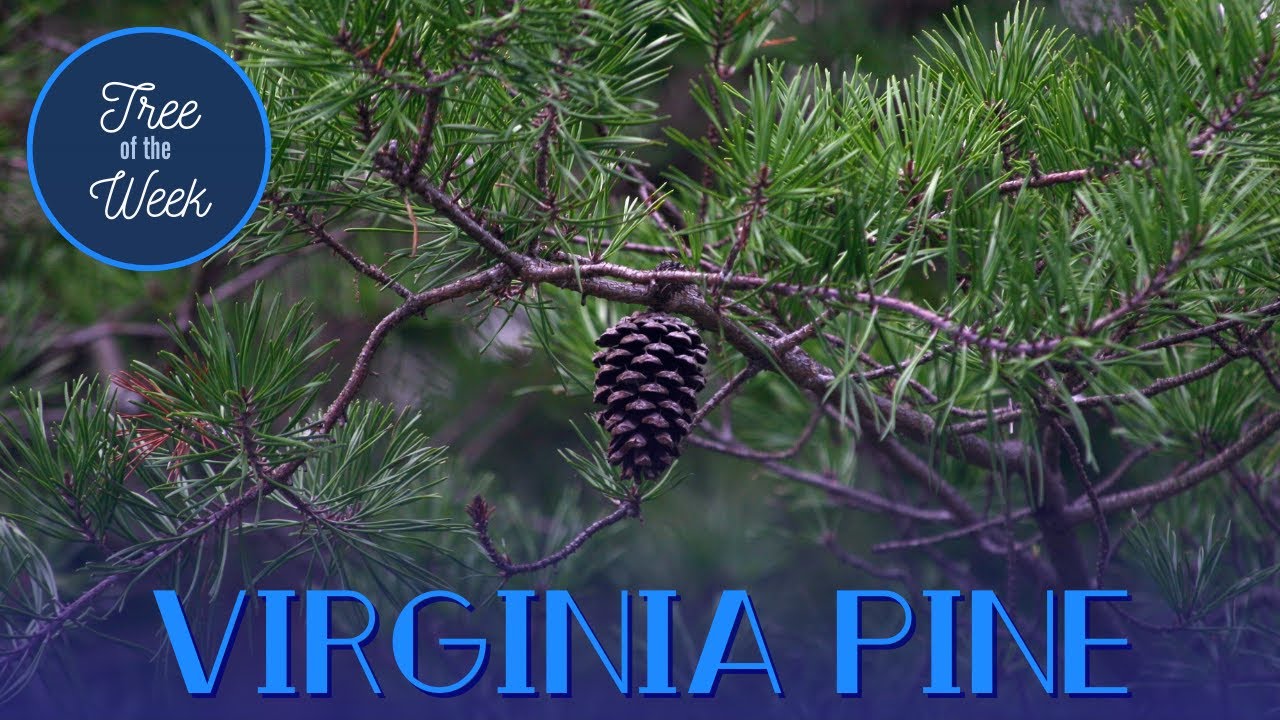
Virginia pine carries two needles per fascicle. Each needle usually measures 1.5–3 inches, appears yellow-green to dark green, and twists slightly along its length.
Fresh needles feel stiff and lightly scratch the fingertips when rolled between thumb and forefinger. Check the papery fascicle sheath at the base, since loose needles on the ground no longer show their original bundle count.
Prickly Persistent Cones
Mature seed cones are usually 1.5–3 inches long, oval to conical, and brown. Every cone scale bears a sharp prickle, and old cones often remain fixed to branches for several years.
Those prickles catch thin gloves and feel needle-sharp in the palm, so don’t squeeze a cone during identification. Look from the side instead: persistent clusters containing faded gray cones and newer brown cones strongly support Virginia pine.
Bark, Twigs, and Buds
Young bark is comparatively smooth and reddish brown. Mature trunks develop small irregular plates colored gray-brown to reddish brown, rather than the large orange plates seen on some western and Eurasian pines.
Slender twigs often appear reddish or purplish brown. The winter buds are small, pointed, and sometimes resinous, leaving a faint sticky drag on a fingertip during close inspection.
Pollen and Seed Cones
Virginia pine is monoecious, meaning one tree carries separate pollen and seed cones. Small pollen cones form in clusters near the lower part of new shoots, while young seed cones tend to develop higher in the crown.
Wind moves the pollen between trees. Seed cones mature during the second growing season after pollination, then release small winged seeds that can reach exposed soil beyond the parent crown.
Field Identification Checklist
Use this field checklist rather than relying on crown shape alone:
- Count two needles in several intact fascicles.
- Measure mature needles; most should fall between 1.5 and 3 inches.
- Look for stiff, visibly twisted needle pairs.
- Check cone scales for sharp outward prickles.
- Look for old cones that remain attached to branches.
- Inspect mature bark for small, scaly, irregular plates.
- Confirm an irregular crown on older open-grown trees.
- Compare the habitat with dry ridges, old fields, roadsides, or cutover uplands.
Identification Image Guide
A useful photo set should show the whole identification combination: mature crown, paired needles, fascicle sheath, cone prickles, persistent cones, twig buds, and mature bark. Photograph needles beside a ruler and take cone images from both the side and scale tip.
A wide crown photograph can mislead because storms and competition change tree form. Close images captured in soft daylight preserve needle color and prevent glossy resin from hiding bud or cone details.
Native Range, Habitat, and Ecology
Virginia pine is native across parts of the eastern United States, with its strongest presence in the Mid-Atlantic, Appalachians, Piedmont, and nearby southeastern uplands. It favors open, disturbed ground rather than mature shaded forest.
Eastern U.S. Range
The natural range includes parts of New York, New Jersey, Pennsylvania, Ohio, Indiana, Virginia, West Virginia, Kentucky, Tennessee, the Carolinas, Georgia, Alabama, and Mississippi. The USDA Forest Service species account provides detailed distribution and forest-growth information.
Virginia populations occur alongside loblolly, shortleaf, pitch, and other pines. This overlap explains why searches for “pines in Virginia” or “VA pine” need needle and cone evidence rather than a state-based assumption.
Elevation and Landforms
Common sites include dry ridges, rocky slopes, Piedmont uplands, abandoned farms, road cuts, utility corridors, and cutover forests. It occurs from low elevations to roughly 2,500–3,000 feet in parts of the Appalachian region.
Cold-air pockets and exposed ridge crests create different stresses. Frost injury is rarely the main concern within the native range, while shallow rooting and ice-loaded branches can shorten a tree’s life on exposed ground.
Soils and Drainage
Virginia pine grows in acidic sand, clay, gravel, eroded soil, and shallow rocky ground. Drainage matters more than high fertility because saturated pores deprive roots of oxygen and favor root decline.
Its presence on poor ground can create a false impression that stress improves growth. Deeper, aerated soil with moderate moisture produces taller trees than hard subsoil, wet clay, or a restricted urban planting pit.
Pioneer Succession
Virginia pine is an early-successional pioneer. Windborne seeds colonize open mineral soil, abandoned fields, and disturbed road banks when mature seed trees stand nearby.
Young stands alter the site by casting shade, trapping leaves, and adding pine litter. Oaks, hickories, red maple, and black gum may later overtop the pines, after which Virginia pine regeneration falls because seedlings need strong light.
Wildlife Benefits
Winged seeds feed songbirds, woodpeckers, and small mammals. Dense sapling stands offer winter and escape cover, while tangled lower limbs create protected nesting space.
Deer may browse shoots or rub young stems, especially where better forage is scarce. Tree shelters can protect isolated seedlings, but tightly sealed guards can trap heat and invite rodents, so ventilation and seasonal inspection matter.
Restoration Uses
Land managers use Virginia pine on depleted fields, eroded slopes, mine reclamation sites, and cutover ground. It provides fast early cover where compact crowns and premium timber form aren’t the primary goals.
It shouldn’t be planted automatically on every damaged site. Wet mine spoils, alkaline fill, compacted haul roads, and areas lacking rootable soil may require drainage work, ripping, amendments, or a different species before planting.
Fire Ecology
Fire can expose mineral soil and reopen sunny sites favorable to seedling establishment, yet an individual Virginia pine has limited fire resistance. Thin bark, low branches, and shallow roots leave young and medium-sized trees vulnerable.
The USDA Fire Effects Information System separates post-disturbance regeneration from direct fire tolerance. Calling the species fireproof or dependent on frequent burning would misrepresent that distinction.
Cultivation, Planting, and Propagation

Plant Virginia pine in full sun, freely drained acidic soil, and enough open space for an irregular 20-foot-plus crown. Most failures stem from wet roots, deep planting, dried seedlings, shade, or unmanaged grass competition.
Site Requirements
Choose a location receiving at least six hours of sun each day. Avoid canopy gaps likely to close within a few years because suppressed Virginia pine develops sparse foliage, weak growth, and a crooked leader.
A simple drainage check helps: fill a test hole with water after saturating the surrounding soil. Water that remains into the next day points to a risky root zone, particularly in fine-textured ground associated with littleleaf decline.
Water and Drought Tolerance
Newly planted seedlings need steady moisture through their first growing seasons. Apply water deeply, then allow the upper soil to lose some moisture; constant shallow irrigation keeps roots near the surface and may prolong saturation.
Established trees tolerate seasonal drought better than waterlogging. Drought still slows growth and can predispose crowded or root-injured trees to bark beetles, so drought tolerance shouldn’t be read as freedom from stress.
Spacing and Exposure
Landscape specimens need room for a crown potentially exceeding 20 feet. Keep them away from buildings, overhead lines, pavement, and play areas where sharp cone litter or falling dead limbs can become a nuisance.
Spacing for bulk pine trees depends on the goal. Dense forestry rows encourage straighter stems but need later thinning; Christmas-tree blocks use closer managed spacing, while wildlife and reclamation plantings benefit from varied gaps and clusters.
Seed Stratification and Sowing
Collect cones as they turn from green to brown, then dry them in a warm, ventilated place until the scales open. Remove the winged seeds and store them cool and dry before pretreatment.
Many seed lots respond to 30–60 days of cold, moist stratification. Dormancy varies by source, so split valuable seed into treated and untreated batches rather than applying one fixed schedule to the entire lot.
Sow seeds in a clean, freely draining medium and keep it damp rather than glossy-wet. Bright light after germination reduces thin, stretched stems; gentle air movement and clean containers lower damping-off risk.

Virginia Pine Tree Seeds
- Pinus virginiana seed for growing Virginia pine
- Also known as scrub pine or Jersey pine
- Produces short yellow-green needles
- Develops light brown pine cones
- Choose the pack quantity that suits your project
 Buy on Amazon
Purchased seed can support a small propagation trial, but germination isn’t guaranteed. Ask about collection origin, seed age, and storage because unknown provenance may perform poorly at cold, hot, or dry edges of the species’ range.
Planting Seedlings
Plant dormant seedlings from late fall through early spring when soil is workable. Keep the roots shaded and moist during transport; fine roots can become papery and brittle within minutes in dry wind.
- Remove grass and weeds from a 2- to 3-foot planting area.
- Open a hole or slit deep enough to hold the roots vertically.
- Trim only broken roots rather than folding long roots upward.
- Set the root collar at the original soil line.
- Firm soil around the roots without compacting it into a hard plug.
- Water thoroughly and inspect for settling.
- Check moisture, weeds, browsing, and stem damage through two growing seasons.
Avoid J-shaped roots at planting. Folded taproots and laterals restrict early growth, reduce anchorage, and can create failures years after the seedling appears established.
Establishment Failures
Common causes of death include dried roots, deep planting, saturated soil, heavy grass competition, deer browsing, rodent girdling, and placement beneath an existing canopy. Seedlings that remain alive but show little leader growth often face root-zone or light stress.
Don’t correct slow growth with heavy fertilizer before checking drainage and competition. Nitrogen can stimulate soft shoots while the root problem remains, leaving the seedling more exposed to drought, tip moth damage, and winter injury.
Practical Notes From Real-World Use
Small site differences produce large results. Seedlings placed just above a wet swale often remain greener and add longer leaders than trees planted a few feet downslope where rainwater collects around fine roots.
Grass control also has a visible effect. A weed-free ring reduces hidden competition, but mulch piled against the stem stays cool and damp, giving rodents cover and leaving bark soft enough to scrape with a fingernail.
In plantations, removing every competing tree at once can expose previously sheltered stems to wind. Thin in stages where crowns have grown together, especially on ridge sites with shallow rooting and a history of ice storms.
Local Seed Sources
Choose local or regional stock when possible. Seed collected near the planting latitude and elevation is more likely to match local winter temperatures, rainfall patterns, growing-season length, and pest pressure.
State forestry nurseries and native-plant growers may provide seedlings with known origin. Nursery stock often establishes faster than home-raised seed, while seed propagation gives greater numbers at lower unit cost and permits direct provenance trials.
Virginia Pine Uses and Landscape Fit
Virginia pine fits large informal sites, wildlife plantings, reclamation projects, and managed Christmas-tree fields better than small formal yards. Its irregular crown, persistent branches, and prickly cones create maintenance trade-offs near buildings and paths.
Christmas Tree Production
Virginia pine is grown as a regional Christmas tree, particularly in the southern United States. Its short needles, pine fragrance, local climate adaptation, and reduced transport distance suit choose-and-cut farms.
The natural crown rarely develops the dense retail cone buyers expect. Producers must shear regularly, select one leader, remove competing tops, and monitor tip moth injury that can fork the terminal shoot.
Tree value changes with height, symmetry, labor, local demand, and harvest experience, so a universal retail price would mislead buyers. Poor shearing timing can expose blunt brown needle ends, while light annual cuts produce softer visual lines.
Forestry and Bulk Plantings
The wood has served as pulpwood, fuelwood, pallets, crates, rough lumber, and mine timbers. Stem crookedness and knots usually make it less valuable for high-grade construction wood than larger southern pines.
Bulk pine trees can establish inexpensive cover on broad, marginal acreage. Dense spacing promotes straighter stems early, but delayed thinning increases competition, crown loss, and drought stress across the stand.
Wildlife and Reclamation
Virginia pine provides year-round screening and cover on dry disturbed land. Mixed plantings with native hardwoods and shrubs produce more varied food and habitat than a uniform pine block.
On reclamation sites, use it as an early cover species rather than assuming it will form the final forest. Shade-tolerant hardwoods may replace it naturally, while planned thinning can retain sunny openings and uneven-aged wildlife structure.
Landscape Uses
Good applications include naturalized acreage, dry slopes, informal screens, woodland edges, and native habitat projects. Virginia pine works best where irregular character looks intentional rather than neglected.
It performs poorly in wet rain-garden basins, narrow parking strips, shaded courtyards, and highly formal lawns. Lower dead limbs and sharp cones also make it a poor choice beside patios, barefoot paths, and play equipment.
Yard Suitability Checklist
- The planting area receives full sun.
- Water drains freely after heavy rain.
- The soil is acidic or mildly acidic.
- The crown has at least 20–35 feet of usable space.
- No power lines or buildings sit directly above or beside the tree.
- An informal, open crown suits the property.
- Prickly cones and dead branch litter won’t create a hazard.
- Wildlife cover or native restoration is a main goal.
If several items fail, choose another tree. Survival on a difficult site doesn’t guarantee good form, safe structure, or low maintenance.
When to Choose Alternatives
Select another species for wet soil, deep shade, small yards, symmetrical specimen planting, or locations with frequent heavy ice. A shortleaf pine may suit some dry southern uplands, while other native conifers can provide denser or more regular crowns.
Virginia pine also isn’t the default choice for maximum timber output. Where soil and climate permit, loblolly or slash pine may offer straighter stems and stronger commercial markets, though both have different moisture and regional requirements.
Pests, Diseases, and Structural Problems
Virginia pine problems often begin with site or structural stress. Poor drainage, root injury, drought, crowding, and multiple leaders weaken trees before disease, insects, ice, or wind cause visible decline.
Littleleaf Disease
Littleleaf disease is a decline complex strongly associated with damaged roots, poorly aerated fine-textured soils, and Phytophthora cinnamomi. Symptoms include short yellow-green needles, reduced shoot growth, sparse tufted foliage, dieback, and gradual crown thinning.
The NC State Extension guidance explains how Phytophthora root problems relate to moisture and drainage. Prevention through site choice and root protection is more dependable than trying to restore a severely declining mature tree.
Pine-Oak and Gall Rusts
Rust fungi can form swollen branches or galls, and some species use oaks as alternate hosts. A branch gall may be pruned below the infection, but a stem gall can girdle, deform, or kill a young tree.
Don’t remove every nearby oak based only on a suspected rust. Confirm the pathogen first because rust life cycles differ, spores travel beyond one property, and unnecessary clearing won’t repair an established trunk infection.
Nantucket Pine Tip Moth
The Nantucket pine tip moth, Rhyacionia frustrana, attacks young shoots and leaders. Look for dead shoot tips, resin, webbing, hollowed buds, forked leaders, and reduced Christmas-tree quality.
Cut open a damaged tip before treatment; a hollow brown shoot with larval material supports the diagnosis. Timing controls against the moth’s life stage works better than spraying after the leader has died and the insect has moved.
Sawflies and Needle Feeders
Pine sawfly larvae feed together and may strip needles from branches. They resemble caterpillars, but sawflies have more abdominal prolegs and don’t respond equally to every caterpillar product.
Small colonies can be removed by hand or a firm water spray on reachable young trees. Repeated defoliation deserves closer attention because drought-stressed seedlings have fewer stored reserves for replacing needles.
Bark Beetles
Bark beetles often attack trees already weakened by drought, root disturbance, fire, storms, or crowding. Watch for pitch tubes, boring dust, fading needles, galleries beneath loose bark, and woodpecker activity.
Routine preventive spraying rarely fixes the original stress. Reduce competition before drought becomes severe, protect roots from trenching and vehicle traffic, and dispose of heavily infested material according to local forestry guidance.
Ice and Wind Damage
Multiple leaders and uneven branches collect ice at different loads, producing splits and bent tops. Trees rooted in shallow, saturated, or disturbed soil face greater windthrow risk.
Train one leader while trees are young and remove structurally poor competing tops with small cuts. Never top a mature pine to reduce height; topping creates large wounds, weak replacement shoots, and a permanently distorted crown.
Symptom-Based Diagnosis
| Visible symptom | Likely causes | Useful next check |
|---|---|---|
| Short yellow needles and sparse crown | Littleleaf complex, wet roots, nutrient stress | Check drainage, root injury, soil texture, and pH |
| One dead or resinous shoot tip | Tip moth, shoot injury | Cut the tip open and inspect for feeding |
| Groups of missing needles | Sawflies or other needle feeders | Inspect nearby shoots for clustered larvae |
| Pitch tubes and boring dust | Bark beetles | Check drought, storm, fire, and root stress |
| Swollen branch or stem | Rust gall | Check whether swelling reaches the trunk |
| Split fork or bent crown | Ice, snow, wind, multiple leaders | Assess remaining attachment and targets below |
| Whole tree leaning after rain | Root failure or saturated soil | Keep clear and obtain a qualified risk assessment |
Symptoms can overlap, so diagnose before treating. A yellow crown may arise from saturated roots, drought, pH stress, or root loss rather than an insect that needs pesticide treatment.
Virginia Pine Compared With Similar Pines
Virginia pine differs from similar species through a combined pattern of two short twisted needles, small sharply prickled cones, eastern upland habitat, and modest mature size. Needle bundle count offers the fastest first separation.
Pine Comparison Table
| Species | Needles per bundle | Needle length | Cones | Typical height | Best identification clue |
|---|---|---|---|---|---|
| Virginia pine Pinus virginiana | 2 | 1.5–3 in. | 1.5–3 in.; sharp prickles; persistent | 30–60 ft | Short twisted pairs plus prickly cones |
| Jeffrey pine Pinus jeffreyi | 3 | 5–10 in. | Large; inward-pointing prickles | 80–130 ft | Three long needles and “gentle” cone |
| Western white pine Pinus monticola | 5 | 2–4 in. | Long and narrow, often 5–12 in. | 100–150 ft | Five flexible needles |
| Loblolly pine Pinus taeda | Usually 3; sometimes 2 | 6–9 in. | 3–6 in.; prickly | 60–100+ ft | Much longer needles |
| Sand pine Pinus clausa | 2 | 2–3.5 in. | Small; some remain closed | 20–50 ft | Florida scrub habitat and cone behavior |
| Scotch pine Pinus sylvestris | 2 | 1–3 in. | Small; less sharply armed | 30–60 ft | Orange upper bark |
| Monterey pine Pinus radiata | Usually 3 | 3–6 in. | Persistent and often asymmetrical | 50–100+ ft | Three longer needles and lopsided cones |
Jeffrey Pine
Jeffrey pine (Pinus jeffreyi) is a large western species with three needles per bundle, commonly 5–10 inches long. Its cones are far larger than Virginia pine cones and carry inward-pointing prickles that feel less hostile in the hand.
Mature bark may release a vanilla, pineapple, or butterscotch scent when warmed by sun, though smell varies and shouldn’t serve as the sole test. Range and size also separate this western mountain pine from eastern Virginia pine.
Western White Pine
Western white pine (Pinus monticola) carries five soft, flexible needles per fascicle and long narrow cones. It can exceed 100 feet and belongs to western North American forests.
Bundle count provides an immediate separation: five needles indicate a white pine, while Virginia pine has two stiff needles. Western white pine also faces serious white pine blister rust pressure, a disease pattern unlike Virginia pine’s littleleaf risk.
Loblolly Pine Tree
A loblolly pine tree (Pinus taeda) usually carries three needles per fascicle, though some bundles contain two. Its 6–9-inch needles and 3–6-inch cones are much longer than those of Virginia pine.
Loblolly commonly grows faster and taller on suitable southeastern sites, with major value in timber production. Read the full loblolly pine guide for its wood traits, range, and identification details.
Habitat gives a supporting clue: loblolly often occupies moist acidic lowlands and broad uplands, while Virginia pine is closely linked to dry ridges and abandoned fields. Needle length remains the safer distinction where their ranges overlap.

Loblolly Pine Seedlings
- Includes ten live Pinus taeda seedlings
- Fast-growing evergreen for spacious sites
- Useful for comparing southern pine species
- Creates year-round green landscape structure
- Best suited to large planting areas
Buy on Amazon
Sand Pine
Sand pine (Pinus clausa) also bears two short needles per bundle, making it one of the closer foliage matches. Its natural association with Florida scrub, deep sand, and nearby Gulf Coast habitats supplies a strong geographic clue.
Some sand pine populations produce serotinous cones that remain closed until heat triggers opening. Compare its habitat and cone behavior with the detailed sand pine profile.
Scotch Pine Tree
A Scotch pine tree, also called Scots pine, is Pinus sylvestris. Like Virginia pine, it has two short needles, but they often look blue-green and accompany distinctive orange or reddish bark high on the trunk.
Scotch pine is native to Eurasia and has been planted widely for Christmas trees. It can naturalize outside cultivation in parts of North America; the Scotch pine guide covers its growth and wood characteristics.
Upper bark color, cone structure, and planting history separate the two better than needle length alone. Virginia pine cones also tend to remain conspicuously attached and carry sharper prickles.
Pinus Radiata
Pinus radiata, or Monterey pine, usually bears three needles per bundle and persistent, often asymmetrical cones. Its needles are longer than Virginia pine needles, and it grows quickly in mild maritime climates.
The species has a very restricted native range in coastal California and Mexican islands but supports major plantation industries elsewhere. Pitch canker creates a serious health concern, while Virginia pine is better adapted to colder eastern uplands.
Persistent cones can make the species look superficially similar from a distance. Needle bundle count and cone shape settle most cases; see the full Pinus radiata profile for further comparison.
FAQs
What Does A Virginia Pine Tree Look Like?
Virginia pine is an evergreen conifer with short, twisted needles and an irregular, often rounded crown. Its needles grow in pairs and are usually yellow-green to dark green. Mature trees develop rough, reddish-brown bark and produce small, prickly cones that can remain on branches for years.
How Fast And Tall Does Virginia Pine Grow?
Virginia pine grows quickly when young and typically reaches 40 to 70 feet tall. It commonly spreads 20 to 40 feet wide, although size depends on soil, moisture, and available sunlight. Growth is strongest in full sun, but the tree usually has a shorter life span than many larger pine species.
Is Virginia Pine A Good Tree For A Yard?
Virginia pine can be a good yard tree for large, sunny, well-drained properties. It is hardy, drought tolerant once established, and useful for privacy or naturalized landscapes. However, it drops needles and cones, has an uneven shape, and may not suit small lawns or formal garden designs.
How Is Virginia Pine Different From Loblolly Pine?
Virginia pine is usually smaller and has shorter, twisted needles than loblolly pine. Virginia pine needles grow in pairs, while loblolly pine often has longer needles growing in groups of three. Loblolly pine also grows taller, prefers moister sites, and generally develops a straighter, more uniform trunk.
Is Virginia Pine Good For Christmas Trees?
Virginia pine is a popular Christmas tree because it has dense branches, a pleasant pine scent, and good needle retention. Its compact size makes it especially practical for homes with limited space. The needles can feel sharp, so wear gloves when decorating, and keep the tree watered to help it stay fresh.
Affiliate Disclosure: Some links in this post are affiliate links. If you make a purchase through these links, we may earn a small commission at no extra cost to you. We only recommend products we genuinely believe in.