
Claro Walnut Wood: Properties, Uses, Comparisons and Buying Advice

Claro walnut is the hardwood of Juglans hindsii, a true walnut associated with northern and central California. Woodworkers value it for chocolate-brown color, wide slabs, dramatic figure, easy machining, and strong results in furniture, veneer, turning, and small decorative projects.
Table of Contents
What Is Claro Walnut?
Claro walnut wood comes primarily from Juglans hindsii, also called Hinds’ black walnut or Northern California black walnut. It belongs to the same botanical family as black and English walnut, yet its orchard history and strong color variation give the lumber a distinct commercial identity.
Botanical Identity
The accepted species name is Juglans hindsii, in the Juglandaceae family. The Kew Plants of the World Online botanical record helps separate it from similarly named California walnuts and unrelated woods sold under walnut trade names.
Color alone can’t prove species. Claro, black walnut, English walnut, and hybrid orchard material overlap visually, so documented provenance carries more weight than a seller’s color description.
Range and Tree Size
Claro walnut is closely associated with northern and central California, including the Sacramento and San Joaquin Valley regions. Historic planting makes its original wild range harder to separate from orchard, roadside, and homestead trees.
Mature trees commonly reach about 30–60 feet tall, with trunks around 3–5 feet in diameter. Old cultivated specimens can exceed those figures, producing the wide crotch sections and single-piece slabs that attract furniture makers.
Orchard Roots and Grafts. Growers widely used claro walnut as rootstock for English walnut trees. A salvaged trunk may contain claro below the graft, English walnut above it, or irregular hybrid material sold as Bastogne or Paradox walnut.
A graft-line slab can show a striking switch from dark brown to gray-tan wood, surrounded by rippled fibers that flash as the viewing angle changes. That beauty carries a cost: reversing grain, bark pockets, drying stress, and hidden voids often cluster near the union.
Color, Grain, and Wood Properties
Claro walnut combines moderate hardness with unusually varied color and figure. It’s firm enough for furniture and handles, yet much easier to saw, shape, and carry than dense tropical woods such as ipe.
Heartwood and Sapwood
The heartwood ranges from tan-brown through chocolate, with possible red, gray, olive, purple, or near-black streaks. Pale sapwood may appear cream or light tan, creating a sharp edge around live-edge slabs and natural-edged boards.
Steaming can blend sapwood into the darker heartwood, but it may flatten the vivid color differences that make claro attractive. Ask whether stock was steamed before buying if natural contrast matters to the design.
Grain and Figure Gallery
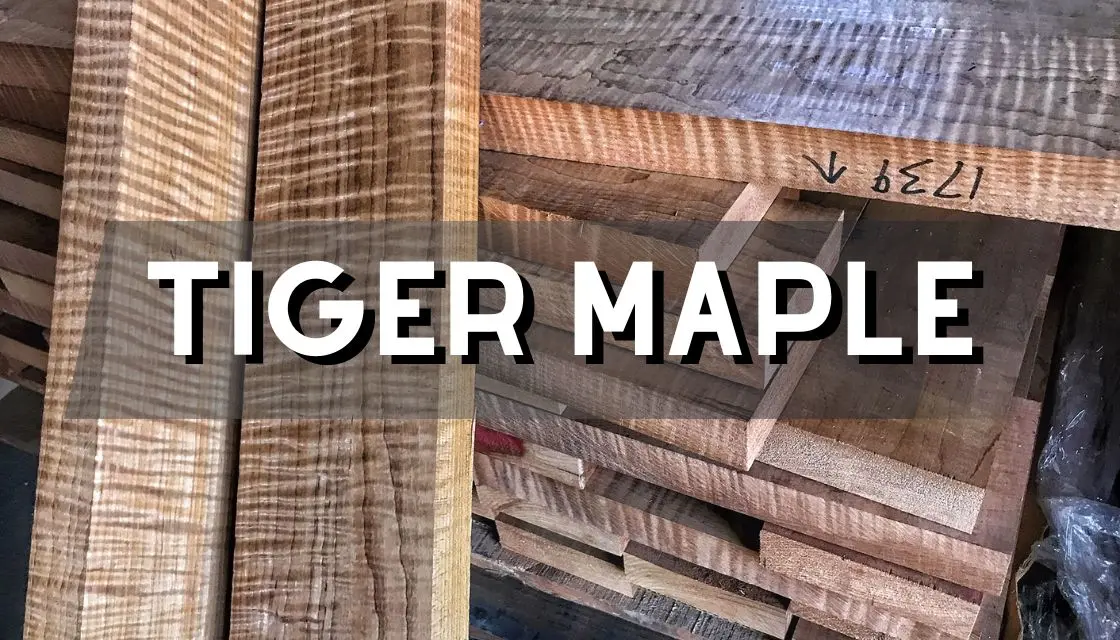
Straight-grained boards have calm lines suited to rails, legs, and cabinet interiors. Curly, fiddleback, feather, quilted, crotch, burl, and graft-line figure create moving bands of light across doors, tabletops, bowls, and instrument parts.
- Plain-sawn grain: broad cathedral patterns across the face.
- Quarter-sawn grain: straighter lines with lower width movement.
- Crotch or feather: branching figure formed where large limbs divide.
- Curl or fiddleback: repeated stripes running across the grain.
- Burl: swirling eyes and short fibers, often mixed with checks or bark.
- Graft figure: irregular color and fiber transition around an orchard union.
Figure describes appearance, not structural grade or species. Wet photographs can make grain look deeper than it appears dry, so request dry, unwetted images of both faces and both ends before paying a premium. Our guides to wood grain patterns and burl wood explain how these structures form.
Density and Hardness. Claro walnut averages about 40 lb/ft³, or 640 kg/m³, when dried. Its Janka hardness is about 1,130 lbf, slightly above typical black walnut and far below Brazilian walnut, meaning ipe.
The Wood Database claro walnut profile reports species-level physical values, but a figured board with short grain may behave very differently from a clear test sample. See the wood hardness scale for a broader comparison.
Strength and Stability. Reference values include bending strength near 14,600 psi, stiffness near 1.68 million psi, and crushing strength near 7,500 psi. Reported shrinkage is about 4.4% radial, 7.1% tangential, and 11.9% volumetric.
A tangential-to-radial ratio near 1.6 suggests manageable movement in clear lumber. Wide slabs still move across their width, while crotches, roots, and grafts may distort unpredictably; use elongated fastener slots, tabletop clips, or sliding dovetails rather than locking a slab rigidly.
Claro Walnut Species Comparison

Claro walnut differs from black, English, Bastogne, and Brazilian walnut in botany, hardness, weight, and typical use. Brazilian walnut is the largest naming trap because it usually means ipe, which isn’t a true walnut.
Black Walnut
Black walnut is Juglans nigra, while claro walnut is Juglans hindsii. At about 1,010 lbf Janka, black walnut is slightly softer and is easier to source as standardized, graded lumber; claro is often chosen for wider, showier stock.
Their colors overlap enough that identification from a photograph remains unreliable. Read our black walnut guide before substituting one species for the other in a matched furniture set.
English Walnut
English or Persian walnut is Juglans regia, the familiar nut-producing orchard tree. Its lumber often looks lighter, grayer, or more variegated, but appearance can overlap with claro and hybrid stock.
In grafted orchard logs, the English walnut upper trunk may sit above claro rootstock. Buyers should ask where the graft falls and whether the dimensions cross it, since the two sections can differ in grain direction, density, and drying behavior.
Bastogne Walnut. Bastogne commonly describes hybrid walnut involving claro and English walnut ancestry. Sellers also use “Paradox,” “hybrid,” and “grafted walnut” inconsistently, so grain or darkness can’t authenticate it without planting or salvage records.
Brazilian Walnut. Brazilian walnut usually refers to ipe from Handroanthus species. Ipe averages about 3,510 lbf Janka and 69 lb/ft³, making it more than three times as hard and roughly 70% heavier than claro.
| Trade name | Botanical identity | Approximate Janka hardness | Typical character and use |
|---|---|---|---|
| Claro walnut | Juglans hindsii | 1,130 lbf | Figured slabs, furniture, turning, veneer |
| Black walnut | Juglans nigra | 1,010 lbf | Graded furniture lumber, cabinetry, millwork |
| English walnut | Juglans regia | About 1,220 lbf | Orchard wood, furniture, veneer, gunstocks |
| Bastogne walnut | Walnut hybrid trade name | Variable | Figured specialty lumber and slabs |
| Brazilian walnut or ipe | Handroanthus species | About 3,510 lbf | Decking and high-wear exterior work |
Choose claro for workability, visual figure, and indoor furniture. Choose ipe where extreme abrasion and exterior durability justify heavy stock, greater tool wear, stubborn splinters, and more difficult gluing; the two woods aren’t direct substitutes.
Drying, Working, and Finishing Claro Walnut
Claro walnut works cleanly after controlled drying, but thick slabs can hide wet cores and internal checks. Successful preparation combines several moisture readings, staged milling, sharp cutters, and a finish sample made from the actual board.
Drying Risks
Fresh claro can develop end checking, surface checking, honeycombing, cup, twist, sticker stain, and case-hardening. Seal fresh end grain, stack boards on dry stickers of equal thickness, align each sticker vertically, and weight or restrain the stack without blocking airflow.
The familiar “one year per inch” saying isn’t a drying schedule. Climate, thickness, air speed, initial moisture, grain, and slab width all change the result, while a dry-feeling surface may conceal a damp interior.
Moisture Targets
Indoor furniture commonly performs well around 6–8% moisture content in climate-controlled buildings. Humid regions may settle closer to 8–12%, so the right target matches the project’s final room rather than a universal workshop number.
Acclimate lumber before final sizing. Rough-flatten it, leave it slightly thick, let it rest for several days, check for movement, then complete the final passes; this staged method sacrifices less thickness when released stress causes a board to bow.
Moisture Testing. Adjust a pin or pinless meter for the wood’s approximate specific gravity, then test both ends, the center, and suspicious figured areas. For a thick slab, deep-pin or professional oven-dry testing gives more confidence than one surface reading.
The USDA Wood Handbook explains moisture movement, shrinkage, and equilibrium moisture content in greater depth. Meter readings also shift with temperature, mineral streaks, surface moisture, and electrode direction.
Milling and Machining. Straight-grained claro saws and planes easily, giving off a mild woody scent and warm brown shavings. Reversing figure produces a harsher hiss under a planer and leaves fuzzy craters where dull straight knives lift fibers.
Use sharp carbide tooling, shallow passes, and a helical cutterhead on difficult stock. A card scraper often leaves a cleaner, glassy surface than repeated sanding; support uneven slabs securely before using a router sled, and scan orchard wood for metal first.
Gluing and Sanding. Fresh, flat claro surfaces bond well with common woodworking adhesives. Remove fine dust, avoid polished or burnished glue faces, and don’t assemble pieces carrying different moisture levels.
A useful sanding sequence is 80 or 100, 120, 150, 180, then 220 grit where the finish calls for it. Stop as soon as the previous scratches disappear; excessive sanding can smear pores and create uneven finish absorption.
Finish Options. Oil, wiping varnish, and oil-modified polyurethane deepen chocolate and red tones, leaving the surface warm and visually rich. Waterborne coatings keep gray, purple, and pale areas cooler but may raise fibers after the first coat.
Walnut has visible open pores. Use pore filler beneath a level, high-gloss film, while leaving pores open for a more natural satin surface; shellac can act as a barrier coat after a compatibility test.
Color Preservation. Claro often mellows or lightens under prolonged light. UV-resistant coatings slow the change but can’t stop it, so store matched parts together and test the finish on an offcut containing both sapwood and heartwood.
Keep steel wool, wet iron filings, and rusty clamps away from unfinished walnut. Iron reacts with walnut tannins and can leave blue-black stains that penetrate farther than a quick sanding pass.
Practical Notes From Real-World Use. On figured claro, the final planer pass often causes the most damage because the board looks almost finished and tempts a thinner cut against reversing grain. Leaving about 1/32 inch for scraping and sanding costs little thickness and avoids a deep tear-out patch in the show face.
Best Uses for Claro Walnut
Claro walnut is best suited to indoor furniture, turning, veneer, instruments, handles, and decorative work. Its figure rewards prominent placement, while moderate hardness keeps shaping and carving practical.
Furniture and Cabinetry
Tables, desks, headboards, drawer fronts, doors, shelves, and live-edge furniture make good use of claro. Reserve expensive figure for visible panels, then use calm-grained claro or compatible walnut wood for frames and hidden parts.
Wide solid doors need joinery that permits seasonal movement. Beginners often glue battens across the grain or screw tabletops through fixed round holes; use frame-and-panel construction, tabletop clips, or slotted holes to prevent splits and warped bases.
Turning and Carving
Claro turns into bowls, platters, hollow vessels, pens, spindles, and sculpture. A sharp gouge produces soft, curled ribbons, while dull edges leave rough patches that feel woolly under a fingertip, especially across curl or end grain.
Check blanks for pith, wax-hidden checks, bark, and uneven moisture. Green bowls should be rough-turned with an even wall, dried slowly, then returned to the lathe; an uneven base or thick rim raises the chance of drying cracks.
Veneer and Instruments. Figured claro suits cabinet faces, boxes, marquetry, guitar backs, headstock overlays, speaker cabinets, and feature panels. Raw veneer needs a flat substrate, even adhesive spread, balanced pressure, and matching veneer on the reverse of broad panels to control bowing.
Paper-backed veneer is easier around gentle curves, while raw unbacked sheets offer more freedom for bookmatching. Veneered MDF stays flat but has weaker edges and poorer water resistance than solid stock; learn more in our walnut veneer guide.
Handles and Small Projects. Knife scales, tool handles, boxes, jewelry, and inlay let makers use premium figure without buying a full slab. Stabilize thin, porous, checked, or short-grained pieces before drilling pin holes, and use a backer to reduce breakout.
Cutting and Serving Boards. Clear walnut can serve in cutting boards, but avoid bark inclusions, loose knots, open checks, unknown treatments, and unstable graft material. Use a food-contact-appropriate finish and keep epoxy-filled voids away from heavy knife paths.
Edge-grain and end-grain construction distribute wear better than a thin, wide face-grain board. Don’t put claro boards in a dishwasher or leave them soaking; repeated wetting raises the grain, opens joints, and can produce a sharp ridge along glue lines.
Outdoor Use. Claro has moderate-to-good decay resistance, but premium stock rarely makes economic sense for decks or exposed garden structures. Exterior projects still need drainage, protected end grain, water-shedding joints, corrosion-resistant hardware, and routine finish maintenance.
Claro shouldn’t be treated as a replacement for Brazilian walnut decking. For outdoor furniture, place feet above standing water and avoid flat surfaces that trap rain; good construction matters more than a thick surface coating.
Buying Claro Walnut Wood Boards and Slabs
Buy claro walnut by usable yield, not attractive gross dimensions alone. Moisture, surfacing loss, checks, twist, sapwood, grafts, freight, and figure premiums can make a cheap slab cost more per finished board foot than clean lumber.
Board-Foot Calculations
Calculate board feet as thickness in inches × width in inches × length in feet ÷ 12. A 2-inch-thick, 10-inch-wide, 8-foot board contains about 13.3 board feet.
Ask whether the seller calculates from nominal rough size, average width, or exact measurements. Live-edge slabs often taper, so a price based on maximum width can overstate the useful area available for rectangular parts.
Thickness and Surfacing Terms
Rough 4/4 stock starts near 1 inch, 5/4 near 1.25 inches, 6/4 near 1.5 inches, and 8/4 near 2 inches. Drying and flattening reduce those dimensions, with rough 4/4 often finishing around 3/4–13/16 inch.
- Rough: no faces have been surfaced.
- S2S: two broad faces have been surfaced.
- S3S: two faces and one edge have been surfaced.
- S4S: all four sides have been surfaced.
- Flitch: sequential boards sawn from one log.
- Bookmatched: adjacent faces opened into mirrored grain.
Grades and Figure Premiums. Specialty claro is often sold by appearance rather than a shared commodity grade. Labels such as “master,” “museum,” and “exhibition” are seller-defined, so judge the actual board instead of relying on the label.
Ordinary boards may sell around $15–$30 per board foot, with figured stock near $25–$60 or more. Exceptional burl, crotch, graft-line, and wide exhibition slabs can exceed those estimates; drying quality and usable dimensions matter more than figure intensity alone.
Moisture and Defect Checks. Request readings from several locations and ask how deeply the seller measured. Inspect both faces and ends for checks, pith, cup, twist, sticker stain, insect holes, bark pockets, and suspicious dark marks around embedded metal.
Waxed ends can hide checks extending several inches into a blank. Add cutback allowance rather than planning a finished part from the full listed length, and ask whether a slab was flattened before or after its last moisture reading.
Finished Yield. Add roughly 10–20% to ordinary furniture requirements and more for defect-rich figured stock. A twisted 8/4 slab may lose far more thickness than expected, while curved grain around a crotch can make attractive sections unsuitable for narrow structural parts.
Map project components on photographs before ordering expensive walnut wood boards. This exposes conflicts between checks and joinery, shows where sapwood will land, and prevents a beautiful feather from disappearing under a cabinet base.
Pricing and Freight. Compare the delivered cost per usable board foot, including crating, oversize charges, lift-gate service, residential delivery, and waste. Small walnut timber boards or blanks may look inexpensive while carrying a very high board-foot equivalent.
Long walnut timber planks often ship by pallet freight. Ask whether plastic wrapping will be removed after delivery, since airtight storage can trap moisture against lumber that wasn’t fully dry.
Seller Questions. A credible listing should identify the species, drying method, moisture readings, defects, dimensions, and price basis. Before paying, ask:
- Is this pure Juglans hindsii, grafted orchard wood, or hybrid walnut?
- Are dimensions maximum, average, or minimum usable measurements?
- Does the price cover one piece, one board foot, or the complete slab?
- Was it air-dried, kiln-dried, vacuum-dried, or sold green?
- Are clear photographs available of both faces and both ends?
- Were metal, internal checks, bark pockets, and insect holes checked?
- What remedy applies if milling exposes severe internal checking?
- Does the delivered quote include freight and unloading charges?
Responsible Sourcing and Safe Handling
Responsibly sourced claro usually comes from documented orchard or urban salvage, while safe workshop use requires dust collection, respiratory protection, fire control, and metal detection. A salvage label alone doesn’t prove legal origin or efficient log use.
Conservation Status
Juglans hindsii has a limited, fragmented natural distribution mixed with planted trees. It isn’t listed in the CITES Appendices, but buyers should still distinguish wild populations from orchard rootstock, urban trees, and planted specimens.
Salvage and Traceability
Lower-impact sources include retired orchards, storm damage, urban removals, and logs recovered from construction sites. Ask where the tree grew, why it was removed, who milled it, and whether records connect the boards to the original log.
Local salvage can reduce transport compared with tropical Brazilian walnut, but distance isn’t the only measure. Drying energy, low finished yield, waste handling, and full-log use also affect the material’s total resource cost.
Dust and Allergies. Walnut dust may irritate skin, eyes, and airways, while repeated exposure can sensitize some people. Use effective extraction, a well-fitting particulate respirator, eye protection, and vacuum cleanup rather than blasting fine dust around the shop with compressed air.
Stop work if itching, wheezing, rash, or persistent eye irritation develops. Gloves help during dusty handling and finishing, but loose gloves shouldn’t be worn near rotating machinery where they can catch.
Animal Exposure. Black walnut shavings are linked with laminitis risk in horses. Don’t use claro or mixed walnut waste as livestock bedding without veterinary confirmation that the material and exposure are safe.
Fire and Metal Hazards. Fine sanding dust burns quickly and can collect inside ducts, filters, motors, and corners. Empty collection systems safely, keep ignition sources away, and avoid leaving oily finishing rags folded in a pile.
Orchard logs may hide nails, fencing wire, screws, bullets, or old hardware. Scan suspicious walnut timber planks and slabs with a metal detector before sawing; a hidden nail can chip carbide, throw fragments, and leave a painful kick through the machine.
Claro Walnut Products by Project
Choose a claro walnut product by project size, moisture, grain, and construction type. Solid turning stock, raw veneer, knife scales, and veneered MDF behave differently despite sharing a similar finished appearance.
Turning Blanks
Six-inch and eight-inch blanks suit bowls, platters, vessels, and decorative turning. Check wax coverage, pith position, grain direction, moisture condition, and visible checks before choosing a blank; the following turning sizes suit different project diameters.

Claro Walnut Turning Blank 6 Inch
- Generous six inch square blank for turning projects
- Claro walnut offers striking natural grain
- Suitable for bowls, vessels, and decorative work
- Solid hardwood gives each project unique character
- Ready to shape, sand, and finish
 Buy on Amazon
Claro Walnut Turning Blank 8 Inch
- Large eight inch square blank for bold creations
- Claro walnut features distinctive natural figuring
- Great for bowls, platters, and statement pieces
- Solid hardwood is ready for turning and carving
- Takes sanding and finish beautifully
Buy on Amazon
Figured Veneer
Raw figured veneer works well on boxes, cabinetry, instruments, and furniture accents. Prepare a flat substrate, test the adhesive on scrap, align the grain before spreading glue, and apply even pressure; these three sheet sizes cover small through medium projects.

Figured Claro Walnut Veneer Sheet
- Figured claro walnut adds premium visual depth
- Raw unbacked veneer for flexible applications
- Six inch by twelve inch sheet size
- Ideal for cabinetry, crafts, and refinishing
- Thin profile conforms to smooth surfaces
Buy on Amazon

Figured Claro Walnut Veneer Sheet
- Beautiful figured walnut elevates furniture accents
- Raw unbacked format allows custom application
- Seven inch by fourteen inch sheet size
- Ideal for small panels, boxes, and crafts
- Thin veneer creates a refined wood finish
Buy on Amazon

Figured Claro Walnut Veneer Sheet
- Large figured walnut sheet for detailed projects
- Raw unbacked veneer offers application flexibility
- Ten inch by twenty one inch format
- Great for furniture, instruments, and decor
- Natural grain makes every piece distinctive
Buy on Amazon
Knife-Handle Stock. Scales provide strong visual impact from a small amount of premium wood. Confirm that both pieces are dry, flat, thick enough for shaping, and free of checks near pin locations; porous or fragile figure may benefit from stabilization.

Claro Walnut Knife Scales
- Rich claro walnut grain for a one of a kind look
- Ideal material for custom knife handles
- Natural hardwood brings warmth and character
- Easy to shape and finish for makers
- Great choice for restoration or new builds
Buy on Amazon
Veneered MDF Panel. A prefinished MDF panel offers a flat, stable surface for displays, box panels, and small cabinet parts. It isn’t solid claro walnut: exposed MDF edges need treatment, screws hold differently, and water can swell the core.

Prefinished Claro Walnut MDF Panel
- Prefinished claro walnut veneer saves finishing time
- Mounted on MDF for stable, flat support
- Eight inch by twelve inch panel size
- Five eighth inch thickness feels substantial
- Ideal for crafts, displays, and small projects
Buy on Amazon
FAQs
What Is Claro Walnut And Where Does It Grow?
Claro walnut is a richly colored hardwood commonly harvested from California black walnut trees and walnut hybrids. It grows mainly in Northern California and Oregon, often in orchards, river valleys, and urban landscapes. The wood is prized for dramatic figure, burl patterns, and warm brown-to-purple tones.
Is Claro Walnut The Same As Black Walnut?
Claro walnut is not the same species as black walnut, although the names are often used loosely. Claro usually refers to California black walnut, Juglans hindsii, or hybrids grown with English walnut. Black walnut typically means Juglans nigra, an eastern North American species with different color, grain, and growing range.
How Hard Is Claro Walnut Wood?
Claro walnut is moderately hard, with a Janka rating commonly reported around 1,100 pounds-force. It resists everyday wear better than many softwoods but machines and sands more easily than very dense exotic hardwoods. Its strength, stability, and workability make it popular for furniture, gunstocks, veneer, and turned pieces.
Why Is Claro Walnut So Expensive?
Claro walnut is expensive because highly figured boards, burls, and slabs are rare and visually distinctive. Large defect-free logs take decades to grow and yield limited usable material. Demand from furniture makers, luthiers, and custom woodworkers also raises prices, especially for kiln-dried pieces with exceptional color or grain.
What Is The Difference Between Claro Walnut And Brazilian Walnut?
Claro walnut is a true walnut hardwood with warm color, moderate density, and often dramatic figured grain. Brazilian walnut usually refers to ipe, a tropical hardwood that is not botanically a walnut. Ipe is far harder, heavier, and more weather-resistant, while claro walnut is generally easier to machine and better suited to fine indoor furniture and decorative work.
Affiliate Disclosure: Some links in this post are affiliate links. If you make a purchase through these links, we may earn a small commission at no extra cost to you. We only recommend products we genuinely believe in.