
Pecky Cypress Wood: Characteristics, Uses, Prices, and Buying Guide

Pecky cypress wood is bald or pond cypress heartwood with irregular pockets created by fungal activity while the tree was alive. This guide explains its appearance, limits, uses, pricing, sourcing, machining, finishing, and differences from reclaimed, sinker, veneer, and faux products.
Table of Contents
Understanding Pecky Cypress Wood
Pecky describes figure, not a separate tree species or standardized lumber grade. The cavities can make each board visually striking, but they also reduce predictable yield and may limit where fasteners, joints, or structural loads can be placed.
What Is Pecky Cypress?
Pecky cypress is cypress lumber containing elongated pockets, channels, and irregular cavities formed inside the heartwood before harvest. It appears as rough boards, surfaced lumber, slabs, veneer, mantels, and tongue-and-groove paneling; our broader cypress wood guide covers the species without focusing on this pocketed character.
Bald and Pond Cypress
Most genuine material comes from bald cypress, Taxodium distichum, a deciduous conifer native to southeastern wetlands and floodplains. Pond cypress may be listed as Taxodium ascendens or a variety of bald cypress, so buyers should request the species rather than accept “cypress” as a complete identification; the USDA Forest Service species profile describes bald cypress range and biology.
What Causes the Pockets?
The pattern is associated with a heartwood pocket-rot fungus commonly cited as Stereum taxodii, though fungal names vary between references. The organism selectively degraded heartwood in the living tree, leaving cavities rather than the round galleries typical of many wood-boring insects.
Hidden and Variable Figure
Figure stays concealed inside a standing tree and often inside an intact log. A plain exterior can open into dense honeycomb-like channels at the saw, while the next board may contain only scattered pockets; planing can expose further voids that weren’t visible on a rough face.
Post-Harvest Fungus Behavior
Proper sawing and drying stop the conditions that produced the original pecky pocket formation. Dry indoor lumber shouldn’t develop new pecky holes, but water leaks can still cause new mold, staining, insect activity, or decay unrelated to the historic figure.
Rarity and Availability
Pecky stock is less predictable than ordinary cypress because mills can’t reliably identify or grade the hidden figure before sawing. Wide, long, heavily pocketed, matched, old-growth, and documented river-recovered boards are harder to replace than shorter character-grade material.
Appearance, Durability, and Structural Limits
Pecky cypress combines warm cypress color with cavities ranging from pinched channels to deep, connected voids. Its base species properties remain useful references, but cavities change performance and prevent broad structural assumptions.
Color, Grain, and Pockets
Heartwood ranges from pale yellow-brown and honey to reddish or dark brown, while sapwood stays lighter. Freshly surfaced cypress can feel smooth and faintly waxy under a fingertip, yet a pocket edge may feel dry, sharp, and crumbly; finish deepens the color contrast around those recesses.
Baseline Cypress Properties
Ordinary bald cypress averages about 32 pounds per cubic foot when dry and roughly 510 pounds-force on the Janka scale. Published shrinkage figures commonly run near 6.2% tangential, 3.8% radial, and 10.5% volumetric, but pockets, moisture, growth rate, and grain make an individual board behave differently; see the USDA Wood Handbook for wood engineering and moisture principles.
Durability and Decay Resistance
Cypress heartwood can provide useful natural durability, especially in older material, but it isn’t waterproof, rot-proof, or termite-proof. Sapwood and some younger-growth stock may resist decay less effectively, while deep horizontal pockets collect water and shorten coating life outdoors.
Structural Versus Decorative Use
“Pecky” isn’t a structural grade. A cavity reduces the sound cross-section, creates a stress concentration, and can leave a bolt or screw crossing empty space; treat heavily figured pieces as decorative until the actual member receives suitable grading and engineering review for its load.
Structural Inspection Checklist
Inspect the whole board, not its best photographed face. Follow these checks before assigning any structural or connection duty:
- Examine both faces, both edges, and both ends for through-pockets.
- Probe questionable fibers gently; sound wood shouldn’t crush into powder.
- Mark void-free fastening and joinery zones.
- Check twist, cup, end checks, splits, and measured moisture content.
- Look for damp staining, frass, insects, fresh growth, or a musty odor.
- Refer load-bearing members to a qualified lumber grader or engineer.
Application Suitability Table
This table treats heavily pocketed stock conservatively. Lightly pecked boards may offer more sound material, but the position and depth of each cavity still matter.
| Application | Suitability | Main condition |
|---|---|---|
| Wall paneling | Recommended | Fasten through sound zones into a substrate |
| Ceiling paneling | Recommended | Remove and seal loose cavity debris |
| Cabinet doors | Conditional | Keep hinges and joints away from voids |
| Mantels | Conditional | Use independent sound mounting support |
| Tables | Conditional | Fill pockets where hygiene or spills matter |
| Flooring | Usually unsuitable when deeply open | Edges can break and cavities trap grit |
| Protected exterior siding | Conditional | Provide drainage, ventilation, and maintenance |
| Structural beams | Professional evaluation required | Grade and assess the actual member |
Comparing Cypress Material Types
Pecky, antique, reclaimed, sinker, and old-growth describe different attributes. A board may carry several labels at once, but one term never proves the others.
Ordinary Versus Pecky Cypress
Ordinary and pecky boards may come from the same species. Ordinary cypress offers a more predictable cross-section and yield, while pecky cypress carries a visual premium, creates more waste, and requires selective fastening and cutting.
Antique Pecky Cypress
“Antique” should describe age or history, not dark color or heavy pockets. Ask for an approximate date, recovery source, prior use, and any record linking the lumber to an old structure or recovered log.
Reclaimed Pecky Cypress
Reclaimed stock came from a prior structure or use. It may contain hidden nails, screws, grit, adhesive, oil, insect damage, or old paint; scan every piece with a metal detector and test suspect coatings before sawing or sanding.
Sinker and River-Recovered Cypress
Sinker cypress usually refers to logs submerged during historic transport, while river-recovered stock describes underwater recovery. Neither label proves pecky figure, old-growth status, legal recovery, or age without records.
Old-Growth Versus Second-Growth
Old-growth lumber often has tighter rings and a higher proportion of mature heartwood, yet age doesn’t make every piece stronger or more durable. Second-growth stock can work well for decorative projects when it’s dry, stable, and selected for usable sound wood.
Genuine, Veneer, and Faux
Genuine lumber contains solid Taxodium wood; veneer uses a thin wood face over a substrate; faux products mould a pecky texture into polyurethane or another composite. These options differ in weight, repairability, fire behavior, weathering, finishing choices, and structural capacity.
Terminology Comparison Table
| Term | What it describes | Can it be pecky? | What to verify |
|---|---|---|---|
| Ordinary cypress | Cypress without prominent pockets | No, by the listing description | Species, grade, moisture |
| Pecky cypress | Pocketed character | Yes | Depth, density, sound area |
| Antique cypress | Claimed age or historic origin | Yes | Date and source records |
| Reclaimed cypress | Previous structural or product use | Yes | Prior use, metal, coatings |
| Sinker cypress | Submerged-log provenance | Yes | Recovery source and permits |
| River-recovered cypress | Underwater recovery | Yes | Chain of custody |
| Veneer | Thin genuine wood face | Yes | Face thickness and substrate |
| Faux pecky cypress | Moulded visual imitation | No genuine cypress | Material, fire rating, exposure limits |
Pecky Cypress Uses
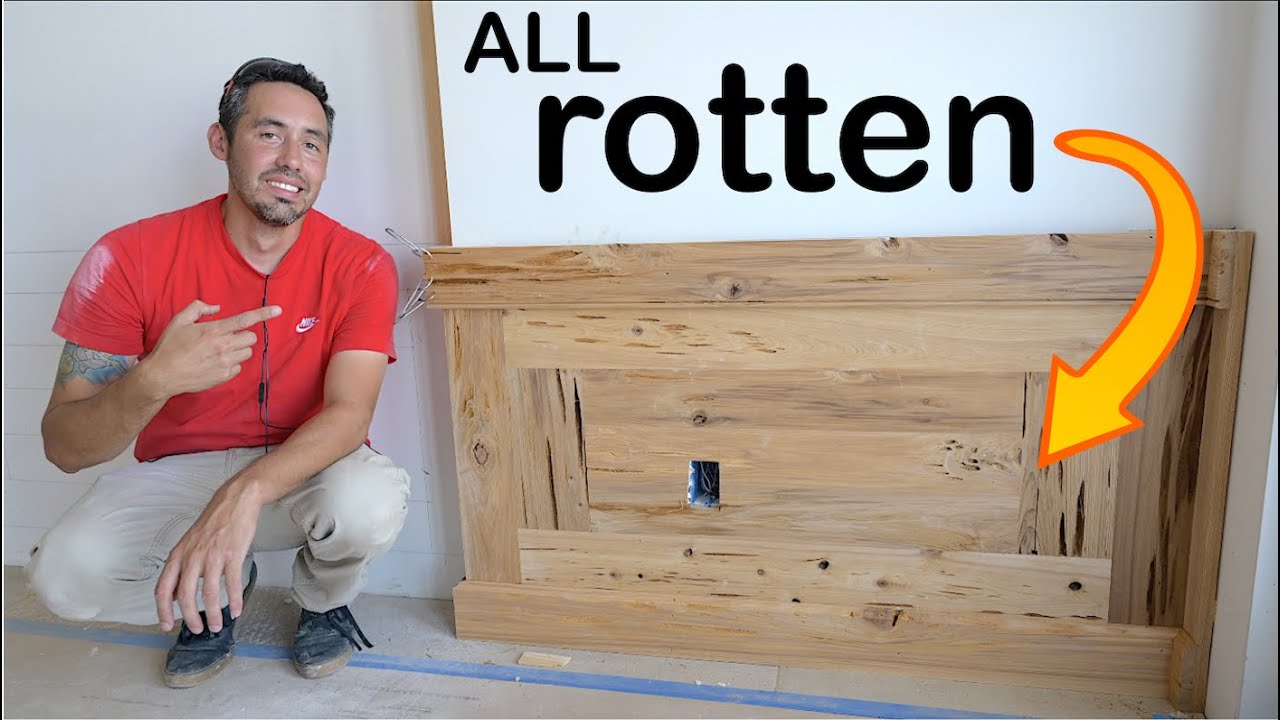
The strongest uses are decorative applications that display the cavities without relying on them for load capacity. Paneling, cabinet faces, mantels, shelves, and box beams make good use of the irregular figure.
Wall and Ceiling Paneling
Paneling spreads the figure across a broad area while a substrate carries the attachment. Order matching stock together, acclimate it before installation, vacuum every cavity, and expect overhead pockets to release a faint rain of dry sawdust if loose fibers remain.
Cabinetry, Doors, and Furniture
Cabinet faces and furniture work when rails, stiles, hinges, and joints land in sound wood. Veneer over a stable substrate can deliver pecky character with flatter panels and fewer hidden joint failures; review other suitable furniture woods before choosing solid stock for moving parts.
Mantels, Shelves, and Slabs
Inspect slabs for checks, cup, twist, loose bark, and voids near mounting points. A concealed bracket should enter a continuous sound wood zone or separate support rather than depend on a decorative pocketed edge.
Decorative and Box Beams
A wood box beam creates the mass of a large timber with lower weight and greater control over cavity placement. Keep the distinction clear between a structural timber, a nonstructural wood box, and a moulded polyurethane U-beam.
Protected Exterior Applications
Covered porches, soffits, and sheltered vertical details can suit pecky cypress when they drain and dry. Seal end grain, ventilate the back, use corrosion-resistant fasteners, maintain the coating, and keep deep pockets away from horizontal water-catching faces; compare these needs with woods covered in our outdoor wood guide.
Applications Requiring Caution
Avoid casual use in structural columns, ungraded beams, stair treads, cutting boards, wet counters, deeply open flooring, children’s furniture, and exposed horizontal surfaces. Sharp cavity lips can catch skin or fabric, while open voids collect food, grit, and water.
Pecky Cypress Wood Prices
Pecky cypress wood prices often range from about $8–$15 per board foot for standard character lumber and $15–$30 or more for select, wide, long, antique, heavily figured, or documented river-recovered stock. These are editorial budgeting ranges, not supplier quotes; milling, freight, tax, and waste can double the usable-unit cost.
Common Pricing Units
Rough boards and slabs are commonly priced per board foot, paneling per square or linear foot, veneer per square foot or sheet, and mantels per piece. Compare products only after converting them to the same usable unit and confirming actual dimensions.
Price Per Board Foot
A board-foot quote may use nominal rough dimensions before surfacing, leaving less physical volume after planing. Ask whether the tally uses rough or finished measurements, random widths, minimum lengths, and seller-measured footage.
Editorial Budgeting Ranges
Budget $8–$15 per board foot for many standard character boards and $15–$30-plus for scarce premium material. Finished paneling, sequenced boards, slab flattening, epoxy work, and custom profiles can produce a much higher effective project rate.
Board-Foot Formula and Example
Use thickness × width × length ÷ 12, with thickness and width in inches and length in feet. A 1-inch × 8-inch × 10-foot board contains 6.67 board feet; at $12 per board foot, it costs about $80.04 before milling, freight, tax, and cut loss.
Major Price Drivers
- Pocket density, distribution, and visual consistency.
- Board width, thickness, length, and straightness.
- Kiln drying and measured moisture content.
- Old-growth, antique, reclaimed, or river-recovered documentation.
- S2S, S3S, S4S, straight-line ripping, shiplap, or tongue-and-groove milling.
- Matching, sequencing, flattening, epoxy filling, crating, and delivery.
Waste and Overage
Allow roughly 15%–30% overage for variable material, then adjust for the design. Cabinet doors, continuous ceiling runs, matched panels, and clear fastening zones can require more because a visually attractive board may still put a cavity directly through a joint.
Delivered Usable Cost Formula
Delivered cost per usable board foot equals material, milling, packing, freight, and tax divided by usable board feet after defects and cutting. For example, 100 board feet at $11 costs $1,100; adding $175 milling and $350 freight produces $1,625, or $20.31 per usable board foot if only 80 board feet remain.
2026 Price Comparison Table
Use this table to normalize 2026 supplier quotes. Enter written quote data rather than comparing gallery captions or marketplace titles.
| Product form | Typical pricing unit | Planning range | Costs often omitted |
|---|---|---|---|
| Character lumber | Board foot | $8–$15 | Surfacing, waste, freight |
| Select or documented premium stock | Board foot | $15–$30+ | Crating, selection, provenance premium |
| Paneling | Square or linear foot | Quote by profile and coverage | Trim, finish, matching, installation waste |
| Slab or mantel | Board foot or piece | Quote by exact item | Flattening, filling, mounting, freight |
| Veneer | Square foot or sheet | Quote by face and backing | Substrate, pressing, edge treatment |
| Faux architectural product | Piece | Product-specific | Seams, finishing, blocking, installation |
Finding Pecky Cypress Wood for Sale
Look for pecky cypress wood for sale through cypress mills, specialty lumber dealers, reclaimed yards, architectural salvage companies, and river-recovery specialists. The safest listing provides actual-board photographs, measured moisture, full dimensions, pocket depth, total quantity, and delivered charges.
Supplier Types
Local sawmills across Florida, Louisiana, Mississippi, Alabama, and Georgia can offer inspectable stock without freight. Specialty online dealers provide wider access to slabs, antique material, and custom milling, while marketplaces work best for small pieces whose exact faces are photographed.
Listing Details and Photos
Require the species, drying method, moisture reading, rough and actual dimensions, surface grade, board-foot tally, sapwood percentage, and quantity. Photos should show each face and edge with a scale reference, not one representative showroom board.
Local Versus Online Buying
Local inspection lets you feel soft fibers, smell damp or musty areas, meter the wood, and sight down each edge. Online buying offers broader inventory but needs written freight, damage, return, selection, and concealed-defect terms before payment.
Moisture Content and Acclimation
Many climate-controlled interiors call for wood near 6%–8% moisture; region-dependent or protected exterior work may use material around 9%–14%. Match the target to the installation site’s equilibrium moisture, then acclimate boards flat, stickered, and supported rather than leaning them against a wall.
Pocket Density Framework
A practical, nonstandard framework calls scattered isolated cavities light, repeated pockets with substantial sound wood medium, and connected cavities heavy. This isn’t an official grade; use it to communicate visual density and available fastening area with a seller.
Dimensions and Milling
Rough lumber retains saw texture; S2S has two surfaced faces, S3S adds one straight edge, and S4S surfaces all four sides. Tongue-and-groove, shiplap, and straight-line ripping add cost, and every planer pass can expose new hidden cavities.
Provenance Documentation
Ask for the recovery site, species identification, historic-building source, approximate age record, and permit or chain-of-custody information for river recovery. Treat undocumented “ancient,” “historic,” and “old-growth” descriptions as unverified sales claims.
Supplier Questions
- Is this genuine bald or pond cypress rather than a faux product?
- Do the photographs show the exact boards?
- What moisture content was measured, and with which meter?
- Are dimensions and tallies nominal, rough, or actual?
- Do pockets cross the full thickness?
- Can stock be selected by pocket density and sound fastening area?
- What do milling, crating, freight, liftgate service, and tax add?
- What documentation supports antique or river-recovered claims?
- What remedy applies to freight damage or concealed defects?
- Can I buy a sample or one board before placing a large order?
Working With Pecky Cypress

Pecky cypress machines much like cypress until a cutter reaches a cavity, where the cut becomes interrupted and fragile fibers can tear away. Sharp cutters, light passes, thorough cleaning, test finishes, and fasteners placed in verified sound wood reduce failures.
Cutting and Machining
Use sharp carbide blades, support weak edges, and take shallow router or planer passes. Avoid detailed joinery across major voids; a cutter entering a pocket can produce a sudden hollow chatter, then pull a brittle edge away with a dry snapping sound.
Dust and Metal Safety
Wear eye and hearing protection, collect dust at the tool, and use suitable respiratory protection. Scan reclaimed stock for metal before machining; an embedded nail can damage a carbide blade and throw fragments, while compressed air can drive fine cavity dust back into your face.
Cleaning Deep Cavities
Loosen debris with a stiff nylon brush, lift fragments with detailing picks, and vacuum through a narrow nozzle. Use controlled compressed air only with dust containment and protection, then repeat the cleaning after sanding so loose fibers don’t fall from ceilings later.
Open Versus Filled Pockets
Leave pockets open on protected vertical surfaces where texture matters and hygiene doesn’t. Fill them on tabletops, counters, and high-contact surfaces where cavities would trap liquid, crumbs, or clothing; open edges should feel firm rather than splintery.
Epoxy Filling Considerations
Seal porous cavity walls before a deep pour to limit bubbles, and follow the resin maker’s depth and temperature limits. Large pockets consume surprising volumes of epoxy, generate heat, and may need staged pours; test clear and tinted resin because wet wood darkening changes the final color.
Finishing Options
Penetrating oil gives warmth and easy repair, hardwax oil leaves a low-build surface, and shellac can seal friable cavity walls before a compatible topcoat. Waterborne polyurethane limits ambering, while oil-based finishes deepen honey tones; make an offcut sample because finish pools can stay sticky or create glossy dark spots.
Fastening Into Sound Wood
Inspect both faces and edges, mark safe fastening lanes, and pre-drill near cavities. Paneling benefits from continuous sheathing or planned furring, while mantels need independent support; never let a screw that appears secure on the face terminate inside a hidden void.
Practical Notes From Real-World Use
The most common failures involve debris, finish, and fasteners, not dramatic board breakage. Overhead cavities shed dust after installation, thick coatings collect in recesses, and blind screws miss sound wood; brush and vacuum twice, coat test pieces face-up and vertical, then mark fastening lanes before installation.
A lower board-foot price loses its value when hidden pockets force extra cuts, matching requires another shipment, or freight-damaged boards can’t be returned.
Practical purchasing rule
Buy all visible material from one lot and keep several long offcuts for finish tests and repairs. Pecky figure varies enough that a later order may arrive lighter, darker, or far more open, making a small patch look like a different wood species.
Faux Pecky Cypress Alternatives
Faux pecky cypress products reproduce the pocketed appearance but contain no genuine cypress wood. They suit lightweight decorative covers where predictable dimensions matter more than natural grain, repair options, or solid-wood aging.
Faux Product Tradeoffs
Polyurethane beams and wraps weigh less, hide framing, and contain no concealed cavities, yet they remain nonstructural and may show repeated mould patterns. Check fire classification, temperature limits, exterior exposure rating, seam treatment, coating compatibility, and mounting instructions before purchase.
Beams, Wraps, and Samples
These faux architectural products include a column wrap, decorative U-beam, and finish sample for checking texture and color before ordering larger pieces.

Pecky Cypress Column Wrap
- Realistic pecky cypress texture
- Durable Endurathane faux wood construction
- Non-tapered square column design
- Includes standard capital and base
- Eight inch width with eight foot height
 Buy on Amazon

Redwood Faux Wood U Beam
- Three-sided U-beam design
- Detailed pecky cypress wood appearance
- Warm redwood finish
- Covers beams for a rustic upgrade
- Eight inch square by ninety-six inch length
Buy on Amazon

Pecky Cypress Material Sample
- Shows realistic faux wood texture
- Primed tan finish for easy evaluation
- Compact six inch sample size
- Helps coordinate colors and finishes
- Useful before ordering larger pieces
Buy on Amazon
FAQs
What Causes The Holes In Pecky Cypress Wood?
The holes and channels in pecky cypress are caused by a natural fungus that affects the heartwood of older cypress trees. The fungus creates distinctive pockets without usually damaging the surrounding wood. After the tree is harvested and dried, the fungal activity stops, leaving behind its signature textured appearance.
Is Pecky Cypress Structurally Sound?
Pecky cypress is structurally sound when the board has enough solid wood for its intended use. Its natural voids make it less suitable for heavy structural framing or thin, highly stressed parts. It works especially well for decorative walls, ceilings, paneling, cabinetry, and furniture where its character is the main feature.
How Much Does Pecky Cypress Cost Per Board Foot?
Pecky cypress commonly costs about $8 to $20 or more per board foot, depending on grade, thickness, pattern, and availability. Clear boards with attractive pecky pockets usually command higher prices. Local sourcing, milling, shipping costs, and whether the lumber is reclaimed or kiln-dried can also affect the final price.
Can Pecky Cypress Wood Be Used Outdoors?
Pecky cypress can be used outdoors, but it should be properly sealed and maintained to protect its textured surface. Cypress naturally resists decay better than many common woods, although the open pockets can hold moisture and debris. Use a quality exterior finish and avoid applications that require a completely smooth, watertight surface.
Where Can I Find Genuine Pecky Cypress Wood For Sale?
Genuine pecky cypress is most often sold by specialty hardwood dealers, reclaimed lumber suppliers, and sawmills in the southeastern United States. Ask the seller whether the wood is authentic cypress with natural pecky pockets rather than a manufactured look-alike. Request photos, board dimensions, moisture content, and grading details before ordering.
Affiliate Disclosure: Some links in this post are affiliate links. If you make a purchase through these links, we may earn a small commission at no extra cost to you. We only recommend products we genuinely believe in.