

Leopard wood, usually sold as leopardwood lumber, is a dense tropical hardwood commonly identified as Roupala montana. Its broad medullary rays cross the cut face and create the dramatic spots, flecks, and lace-like marks prized in furniture accents, boxes, veneer, handles, and turned work.
Table of Contents
What Is Leopard Wood?
Leopardwood is real wood, not a printed pattern or composite product. The commercial name most often refers to a tropical American broadleaf hardwood in the Proteaceae family.
Roupala Montana Explained
Roupala montana is the botanical identity commonly attached to leopardwood lumber, though taxonomy and seller labels aren’t always consistent. The Kew Plants of the World Online database is a useful place to verify accepted names before buying material for documented commercial work.
Origin and Tree Size
Native distribution spans tropical parts of Central America, the Caribbean, and South America. Mature trees are often reported at roughly 100–130 feet tall with trunks about 2–3 feet in diameter, but retail boards are far narrower after defects, sapwood, and sawing losses are removed.
Common-Name Ambiguity: “Leopardwood” can identify unrelated trees in different regions. Australia’s Flindersia maculosa also carries that common name, so ask for the scientific name and harvest country rather than trusting a product title.
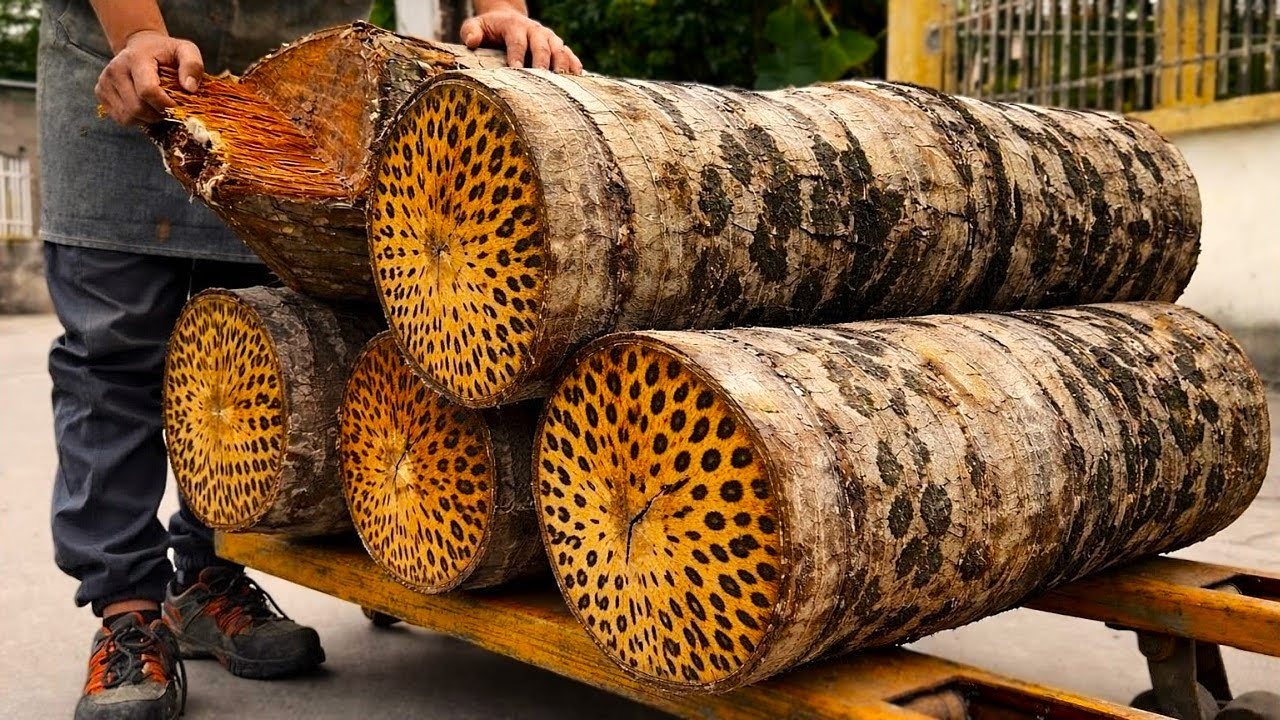
Lumber Versus Printed Crafts: Leopard-print signs, beads, plywood, and laser-cut ornaments may appear in searches for leopard wood. Genuine leopardwood has figure running into the wood; a printed craft shows a surface image that disappears when cut or sanded.
Appearance and Physical Properties
Leopardwood is heavy, hard, reddish brown, and marked by unusually wide rays. Representative values include a 2,150 lbf Janka rating and an average dried weight near 55 lb/ft³, though moisture, growth site, and individual trees cause variation.
Heartwood and Sapwood
Heartwood color ranges from orange-brown through medium reddish brown to dark brown. The paler sapwood may look gray, tan, or light brown, and clear finishes usually make the heartwood feel warmer and deeper.
Medullary Ray Figure
Broad medullary rays produce the signature pattern; they aren’t pigment spots. Where a quartersawn face intersects these radial tissues, the rays appear as broad, reflective flecks that can flash from copper to dark brown as the board moves under light.
Grain and Texture: Grain may be straight, interlocked, or locally reversed, while texture feels moderately coarse. Freshly planed wood can feel glassy across one patch and faintly ridged around another because rays and surrounding fibers cut differently; see this guide to wood grain patterns for wider context.
End-Grain Identification: Look for diffuse pores and exceptionally wide rays crossing the growth-ring direction. End grain offers stronger clues than color, yet microscopic examination may still be needed when a contract, customs declaration, or restoration record requires firm species identification.
Quartersawn Versus Flatsawn: Quartersawn stock carries the boldest, most regular fleck. Flatsawn faces show longer, less orderly ray marks; resawing can also reveal a weaker figure than the seller’s photographed face, so inspect both sides and both ends.
Leopardwood Specifications Table: These are representative reference values rather than structural design ratings. Figures align with commonly published data from The Wood Database leopardwood profile.
| Property | Representative value | Workshop meaning |
|---|---|---|
| Botanical name | Roupala montana | Confirm this name with the seller |
| Average dried weight | 55 lb/ft³ or 885 kg/m³ | Heavy parts and higher shipping weight |
| Janka hardness | 2,150 lbf or 9,560 N | Good dent resistance; high cutting load |
| Modulus of rupture | 17,510 psi | Reference value, not a certified design rating |
| Modulus of elasticity | 2.98 million psi | Relatively stiff material |
| Crushing strength | 9,750 psi | High compression resistance |
| Radial shrinkage | 3.5% | Lower movement through quartersawn thickness |
| Tangential shrinkage | 8.8% | Greater movement across flatsawn width |
| Volumetric shrinkage | 12.3% | Drying and humidity changes need planning |
Hardness Comparisons: Leopardwood at about 2,150 lbf is harder than black walnut at 1,010 lbf, red oak at 1,290 lbf, and hard maple at 1,450 lbf. Ipe, near 3,510 lbf, remains much harder; hardness alone doesn’t predict decay resistance, stability, or finish performance.
Shrinkage and Movement: The tangential-to-radial shrinkage ratio is about 2.5, which helps explain why wide flatsawn parts can cup. Floating panels, elongated screw holes, and balanced material removal let solid parts respond to seasonal humidity without splitting joints.
Working and Finishing Leopardwood
Sharp carbide tooling, shallow cuts, and steady feed rates make leopardwood manageable. Its hardness creates heat, while reversing fibers around the rays raise the chance of tearout, chipped edges, and a rippled surface.
Sawing and Milling
Use a clean blade with enough tooth count for the cut and support narrow strips beside the blade. A bandsaw handles resawing well, but dense stock exposes a wandering or dull blade quickly through bowed cuts, heat, and a sharp toasted-wood smell.
Preventing Tearout and Burning
Read both faces before planing because surface grain may reverse within inches. A helical head, light final pass, high-angle hand plane, or card scraper reduces torn pits; remove burn marks rather than hiding them under finish.
- Keep blades and bits sharp, clean, and free from pitch.
- Use several shallow router passes instead of one deep cut.
- Back up cross-grain cuts with sacrificial scrap.
- Climb-cut only small problem areas with firm tool control.
- Pause between passes if the cutter or wood becomes hot.
Drilling and Routing: Predrill screws, add a countersink, and keep holes away from thin ends. Back the exit face during drilling; without support, the final fibers can break away as a hard, crescent-shaped chip.
Gluing Leopardwood: Standard interior woodworking glues can bond clean, close-fitting surfaces. Vacuum away dust, lightly refresh burnished faces, and clamp with enough pressure to close the joint without starving it; glue won’t repair gaps left by planer tearout.
Turning and Carving: Density supports crisp beads, coves, and handle details. Check blanks for end checks before mounting, start at a sensible speed, and sharpen early; a dull gouge leaves pale torn patches that need heavy sanding.
Drying and Acclimation: Ask whether stock is green, air-dried, or kiln-dried, then check it with a meter suitable for dense hardwood. Let shipped boards settle in the workshop before final sizing, with stickers between pieces so both faces receive similar airflow.
Staged Milling Strategy: In practical shop use, the safest routine is to cut parts oversize, remove similar amounts from both faces, then let them rest overnight. A board that looked flat may develop a slight rocking corner after stress is released; final milling corrects that movement with less waste.
Surface Preparation: Scrape torn areas before sanding through a sensible grit sequence, such as 120, 150, and 180. Shine a low raking light across the face; scratches often disappear inside the busy figure when viewed straight on, then reappear under finish.
Choosing a Finish: Oil-rich finishes deepen red-brown color and increase ray contrast, while waterborne products retain a lighter tone. Shellac can add warmth beneath a compatible topcoat, and grain filler helps create a flat polished surface on coarse-textured boards.
Test-Board Checklist: Use an offcut from the same board, not another piece of the same species. Check color shift, ray contrast, pore filling, adhesion, scratch visibility, and sheen under the room’s actual lighting before finishing the project.
Dust and Allergy Safety: Leopardwood dust may irritate skin, eyes, or airways, and repeated exposure can trigger sensitization. Use extraction, eye protection, and a fitted particulate respirator; OSHA wood-dust guidance also warns against clearing settled dust with compressed air.
Leopardwood Uses and Project Suitability
Best uses place leopardwood’s figure where it remains visible without requiring large amounts of heavy, costly stock. Furniture accents, boxes, handles, turnings, and veneer gain more visual value per board foot than hidden frames or broad structural parts.
Furniture and Cabinetry
Furniture applications include drawer fronts, door panels, pulls, edge details, and small tabletops. Orient adjacent faces from the same board so their reflective flecks move together; mixed grain directions can make matched parts look like different colors.
Boxes and Decorative Projects
Small projects make good use of short, narrow stock, but thin box sides chip easily during cross-grain routing. Leave parts slightly wide, cut miters with zero-clearance support, and trim to final width after damaged edges are removed.
Knife Handles and Grips: Dry, crack-free leopardwood makes striking knife scales and tool handles. Flatten bonding surfaces, predrill pins, and seal exposed end grain; wood handles aren’t waterproof, so adhesive, finish, fasteners, and maintenance all affect service life.
Turning Projects: Pens, bottle stoppers, handles, finials, and small vessels suit this dense wood. Hidden end checks can open at speed, so trim and inspect both ends before mounting rather than assuming a waxed blank is sound.
Veneer and Instrument Accents: Veneer places dramatic figure on cabinet panels, headstocks, rosettes, and trim while reducing weight and waste. Don’t assign a universal tonal effect to leopardwood; instrument response depends on dimensions, construction, stiffness, and the individual piece.
Project Decision Table: Compare the part’s size, exposure, and tooling needs before selecting stock. Readers planning a larger build can also compare other furniture woods with lower weight or easier machining.
| Project | Suitability | Main workaround |
|---|---|---|
| Drawer fronts and accents | Excellent | Match cut orientation and allow movement |
| Keepsake boxes | Excellent | Support thin edges and predrill hardware |
| Knife scales | Good | Use dry, check-free, flat stock |
| Pens and handles | Good | Inspect blank ends and keep tools sharp |
| Wide solid panels | Fair | Use quartersawn stock or veneer |
| Exterior structures | Poorly documented | Select a species with verified durability data |
Uses Requiring Caution: Avoid relying on leopardwood for certified structural work, untested exterior exposure, or food-contact items without a suitable finish and cleaning plan. Children’s products also need careful edge treatment, splinter control, and compliance with applicable finish rules.
Leopardwood vs Lacewood

They aren’t identical. Both names cover ray-flecked woods, but leopardwood usually refers to Roupala montana and tends to be darker, heavier, and harder than lumber commonly sold as lacewood.
Botanical Differences
Different botanical groups may reach the market under similar trade names. Lacewood can refer to species associated with Panopsis or Australia’s Cardwellia sublimis, which makes a scientific name more useful than the label “ray fleck wood.”
Color and Figure
Leopardwood usually appears reddish brown with bold, irregular spots. Lacewood is often lighter pink, tan, or pale red with a more uniform lace-like pattern, but lighting, finish, oxidation, and cut angle can blur the distinction.
Density and Hardness: Leopardwood’s commonly cited 2,150 lbf Janka rating sits far above many lacewoods and familiar domestic hardwoods. If weight or dent resistance affects the design, request the botanical identity rather than estimating properties from photographs.
Workability and Price: Dense leopardwood puts more load on cutters and shipping cartons, while softer lacewood may machine more easily. Price comparisons need equal dimensions, figure grade, surface condition, usable yield, and freight; trade names alone don’t create equivalent products.
Confirming Species Identity: Ask for the scientific name, origin, end-grain photograph, and actual weight. Surface color isn’t proof, and microscopic wood identification is the safer route for valuable restoration, legal records, or a disputed shipment.
Buying Leopardwood Lumber
Buy by usable yield, not piece price alone. Verify identity, actual measurements, moisture condition, cut orientation, checks, surfacing, and delivered cost before comparing a full board with small project stock.
Seller Verification Checklist
- Scientific name and country of origin
- Photographs of the exact board, including both faces and ends
- Actual thickness, width, and length
- Rough, skip-planed, or fully surfaced condition
- Kiln-dried, air-dried, or green status
- Measured moisture content and meter method
- End-check, sapwood, and defect allowance
- Return policy for cracks or incorrect dimensions
Dimensions and Moisture
Actual dimensions matter because a nominal 4/4 board may finish well below one inch after drying and surfacing. Confirm that enough thickness remains for flattening, then acclimate the wood and measure moisture before cutting final joinery.
Cut Orientation and Figure: Pay for the face your project will display. Quartersawn boards usually carry stronger fleck, while flatsawn stock can show elongated patterns; photographs of one wet or planed face don’t reveal what resawn inner faces will look like.
Defects and Usable Yield: Mark end checks, sapwood, twist, and figure changes on a photo or paper layout before ordering. A striking board can lose 20% or more of its volume after end trimming, jointing, flattening, and rejecting mismatched areas.
Board-Foot Formula and Example: Using inches, multiply thickness × width × length, then divide by 144. One ¾ × 2 × 24-inch board contains 0.25 board foot; four such boards contain about 1 board foot before waste.
Delivered Price Comparison: Add product cost and shipping, then divide by total board feet. Repeat the calculation using estimated usable board feet; this reveals why a defect-free craft board may beat a cheaper rough board for a small project, despite its higher listed rate.
Price and Value Factors: Figure intensity, quartersawn orientation, width, thickness, clear length, moisture, surfacing, exact-board photography, traceability, and freight shape the final value. Small blanks carry processing premiums because sellers mill, sort, photograph, package, and fulfill each piece.
Representative Project Stock: Four boards measuring ¾ × 2 × 24 inches provide roughly 1 board foot in total. Confirm that the measurements are actual, ask about moisture and defects, and allow for trimming before assigning parts.
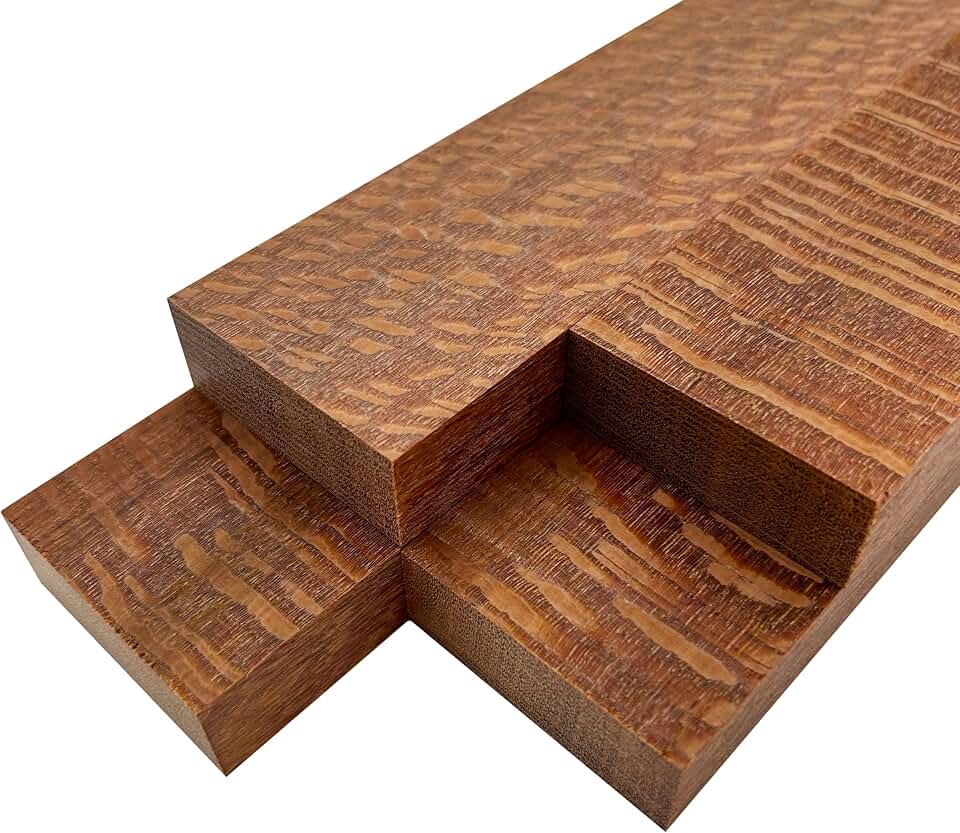
Leopardwood Craft Boards
- Set of four hardwood boards
- Rich leopardwood grain adds natural character
- Three-quarter inch thick stock for sturdy projects
- Compact 2 by 24 inch size for detailed work
- Great for woodworking, turning, and crafts
 Buy on Amazon
Sustainability and Responsible Sourcing
A trade-status check doesn’t prove that a particular leopardwood board was harvested legally or responsibly. Good sourcing starts with a verified botanical name, harvest country, traceable supplier records, and documentation tied to the shipment.
Conservation Database Checks
Check by species name, not common name, and record the access date. Review botanical and conservation records close to purchase because taxonomic treatment, national controls, and assessed status may differ across regions.
CITES Status Limitations
CITES absence isn’t approval. Search the accepted species name in the CITES Appendices, then check national import and export rules; a species outside the appendices can still come from poorly documented or illegal harvest.
Origin and Traceability: Request the country of harvest, exporter or importer information, and invoice language naming the species. “South American hardwood” is too broad to connect a board with forest rules, transport permits, or a responsible supply chain.
Certification and Documentation: FSC or comparable claims carry value only when the certificate number, scope, and chain of custody can be checked. Keep invoices and species declarations for commercial projects, especially where finished goods may cross borders.
Material-Saving Alternatives: Use veneer, reclaimed offcuts, matched accents, or narrow project parts instead of building hidden components from figured stock. A cutting diagram made before milling preserves the strongest ray figure, raises usable yield, and reduces demand for replacement boards.
FAQs
What Is Leopard Wood And Where Does It Come From?
Leopardwood is a decorative hardwood known for its bold, speckled grain pattern. It usually comes from tropical South American trees, especially Roupala brasiliensis, and is commonly imported from Brazil. Woodworkers use it for furniture, veneers, turned objects, and other projects where its distinctive appearance can stand out.
Is Leopardwood The Same As Lacewood?
Leopardwood and lacewood are sometimes used interchangeably, but they are not always the same wood. Leopardwood commonly refers to Roupala brasiliensis, while lacewood can describe several species with a similar lacy figure. Check the botanical name or supplier details when matching lumber for a project.
How Hard Is Leopardwood To Work With?
Leopardwood is moderately difficult to work with because its dense, interlocked grain can cause tear-out. Sharp tools, light passes, and careful sanding produce the best results. It machines well with patience, but pre-drilling is recommended for screws and nails to reduce the chance of splitting.
Is Leopardwood Good For Knife Handles?
Leopardwood can make attractive and durable knife handles when it is properly sealed and stabilized. Its dense structure and dramatic grain give handles a premium appearance, but the wood may move if exposed to repeated moisture changes. Use a strong finish and avoid leaving the handle submerged in water.
How Much Does Leopardwood Lumber Cost?
Leopardwood lumber typically costs more than common domestic hardwoods because it is imported and visually distinctive. Prices vary by board size, grade, thickness, and location, with figured pieces often commanding a premium. Compare prices by board foot and account for extra material needed to work around grain defects.
Affiliate Disclosure: Some links in this post are affiliate links. If you make a purchase through these links, we may earn a small commission at no extra cost to you. We only recommend products we genuinely believe in.