

Pink ivory wood is an exceptionally hard southern African hardwood from Berchemia zeyheri, valued for heartwood that ranges from pale blush to vivid reddish pink. Its modest tree size, limited colorful heartwood, demanding machining behavior, and documented supply make it best suited to turnings, handles, jewelry, and small decorative accents.
Table of Contents
What Is Pink Ivory Wood?
Pink ivory is a naturally pink hardwood, not dyed timber or a rosewood species. The dense, fine-textured material comes from a relatively small African tree, so wide boards with uniform color are far less common than pen blanks and short spindle stock.
Botanical Identity
The accepted botanical name is Berchemia zeyheri, a member of Rhamnaceae, the buckthorn family. It isn’t related to true Dalbergia rosewoods, and labels such as “pink wood,” “ivorywood,” or “rose wood” don’t prove botanical identity.
Kew Plants of the World Online provides accepted taxonomy and distribution records that buyers can compare with merchant claims. For costly stock, an invoice stating species and origin carries more weight than color alone.
Native Range and Habitat
The tree is native to southern Africa, with records associated with South Africa, Eswatini, Zimbabwe, Mozambique, Botswana, and nearby areas. It grows in woodland, bushveld, wooded grassland, rocky ground, forest margins, and some river-associated habitats.
Local conditions affect trunk form, growth rate, and heartwood development. A tree growing on exposed, stony ground may produce a smaller or less regular log than one growing where soil moisture is more consistent.
Tree Size and Heartwood Yield
Mature trees are commonly described as roughly 6–12 meters tall, though habitat and age create variation. These dimensions are modest beside major commercial lumber trees, which helps explain why furniture-width pink ivory boards are scarce.
The pink heartwood occupies only part of the trunk. Sawing, sapwood removal, knots, checks, and irregular growth reduce the final yield further, so a log’s total diameter can greatly overstate its volume of usable pink material.
Fruit and Ecology
Berchemia zeyheri produces small, fleshy drupes that ripen through yellow, orange, or reddish shades. The edible fruit is reported as local food for people and wildlife, while birds and mammals aid seed dispersal.
Timber value represents only one part of the living tree’s role. Removing fruit-bearing trees can affect regeneration and animal feeding patterns, which is why legal harvest records matter beyond a simple claim that a shipment is CITES-free.
Zulu Royalty Claims
Popular accounts connect pink ivory with Zulu royalty and chiefly status. Stories sometimes add that common possession once carried a death penalty, but that dramatic detail is often repeated without a traceable academic or primary source.
The safe historical description is that pink ivory has a long cultural association with Zulu leaders in popular and regional accounts. Treat stronger punishment claims as tradition or legend, not settled fact, until supported by credible archival evidence.
Color, Grain, and Properties
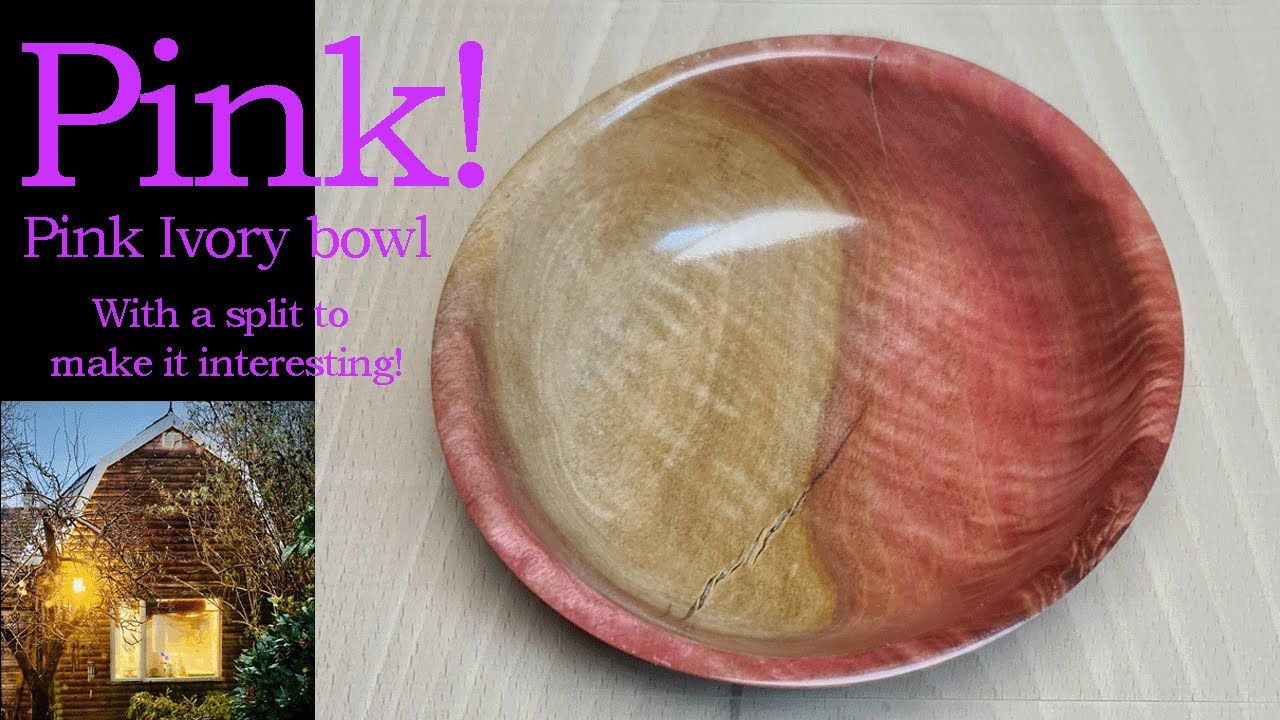
Pink ivory combines exceptional hardness with a fine texture and heartwood ranging from pale salmon to intense red-pink. Color varies within individual blanks, and hardness doesn’t prevent brittle edge damage, heat marks, or end checking.
Heartwood and Sapwood
Heartwood can appear blush pink, coral, rose, magenta-red, or brownish red. The sapwood is usually cream, pale yellow, or light brown, producing a sharp transition that may be attractive in jewelry but reduces value when a buyer expects solid pink heartwood.
Freshly surfaced stock often looks drier and quieter than merchant photographs. Wiping an offcut with mineral spirits temporarily reveals a finish-like color, including hidden brown zones, without committing the project to an ambering oil.
Grain and Texture
The grain may be straight, irregular, or interlocked, while the texture tends to be fine and even. On a polished handle, the surface feels cool and glassy at first touch, then warms slowly in the hand because the wood is so dense.
Interlocked areas can lift under a planer even when the neighboring surface cuts cleanly. Reading both long edges before machining helps locate grain reversals; a sharp card scraper often leaves a better surface than repeated passes against changing grain.
Finish and Color Change
Clear finish deepens the pink and raises contrast. Oil-rich or amber finishes can move pale stock toward salmon or reddish brown, while a water-clear acrylic or low-amber film keeps the initial appearance more visually neutral.
Light, oxygen, heat, and finish chemistry change the color over time. A UV-filtering coating can slow the shift but can’t freeze neon-pink tones permanently, so test an offcut and keep display pieces away from direct sunlight.
Physical Properties Table
The figures below are approximate species-reference values, not promises for every board. Moisture, grain direction, growing conditions, and test methods can produce meaningful variation.
| Property | Approximate value | Practical meaning |
|---|---|---|
| Average dried weight | 65 lb/ft³ or 1,035 kg/m³ | Very heavy for its dimensions |
| Basic specific gravity | About 0.90 | High wood substance per unit volume |
| Specific gravity at 12% MC | About 1.04 | Some dry pieces may sink in water |
| Janka hardness | 3,230 lbf or 14,370 N | High dent resistance and tool wear |
| Modulus of rupture | 16,370 psi or 112.9 MPa | Strong in static bending |
| Modulus of elasticity | 1.88 million psi or 12.98 GPa | Stiff under load |
| Crushing strength | 9,110 psi or 62.8 MPa | High compression resistance |
| Radial shrinkage | 4.8% | Movement across growth rings remains relevant |
| Tangential shrinkage | 7.2% | Flat-sawn pieces move more across their width |
| Volumetric shrinkage | 12.1% | Drying still needs controlled moisture loss |
| T/R ratio | About 1.5 | Fairly balanced reference ratio |
The numerical profile aligns with published reference data from The Wood Database. Pink ivory also belongs beside species covered in guides to the hardest wood, though ranking changes with the test value and species sample used.
Hardness in Practice
The 3,230-lbf Janka figure means pink ivory resists dents far better than walnut, cherry, or hard maple. In real shop use, that translates into shorter sharp-edge life, slow sanding, fast heat buildup, and little tolerance for a wandering drill bit.
A common beginner mistake is treating hardness as immunity from breakage. Thin corners still chip, narrow blanks split along checks, and a hard catch can snap a pen section; lighter cuts and close tool support provide a safer working margin.
Workability, Drying, and Safety
Pink ivory machines cleanly with sharp tools, controlled feed rates, and frequent heat checks. Most failures come from dull edges, excess pressure, trapped drilling chips, hidden cracks, or machining stock before its moisture has settled.
Cutting and Planing
Use sharp carbide or freshly honed high-speed steel and take shallow passes. A dull blade makes the cut feel hard and squeaky, while the surface may emerge glazed rather than clean; forcing the feed increases tear-out at grain reversals.
Support small stock close to the cutter and use a zero-clearance insert where practical. For short flat parts, a finely set scraper can remove raised grain with less loss than sanding through a torn patch.
Woodturning Techniques
Mount the blank securely, keep the tool rest close, and begin at a conservative speed until the corners become round. Freshly sharpened tools produce small, crisp shavings; dull tools create powdery dust and heat while inviting a catch.
A shear-cutting approach works well on straight grain, while light carbide cuts can help on irregular sections. Stop the lathe if a waxed end check starts opening, since centrifugal force can turn a hairline defect into a project-ending split.
Drilling Without Blowout
Center the hole accurately, use a sharp bit, and withdraw it often to clear chips. Deep drilling packs hot dust around the flutes, causing a faint burnt smell and enough thermal stress to crack a small pen blank.
Reduce feed pressure near the exit and place sacrificial backing behind the work. For deep handles, drill in short stages and let the bit and wood cool; drilling from both ends works only when alignment can be held accurately.
Sanding and Polishing
Start with the finest grit that removes tool marks, then progress without large jumps. Fresh abrasive cuts cleanly, while worn paper needs more pressure and can leave dark glazed bands that remain visible after finish.
Clear dust between grits and sand at moderate speed. On lathe work, briefly sanding with the grain after stopping the machine removes circular scratches; the final grit should match the finish rather than chasing an unnecessary mirror polish.
Gluing and Fastening
Remove wax, polishing residue, and compacted dust before bonding. A freshly cut or lightly abraded joint gives adhesive more mechanical grip than a burnished surface; epoxy and cyanoacrylate work well for many small assemblies.
Predrill every screw hole and keep fasteners away from thin edges. Driving a screw directly into this dense stock can wedge the grain apart, particularly where a handle scale contains short grain or an unnoticed check.
Moisture and Acclimation
Ask whether the stock is kiln dried, air dried, green, partly seasoned, or heavily wax sealed. The word “dry” lacks a measured threshold, while a moisture reading gives a better starting point despite species correction limits on dense exotic wood.
Store blanks with airflow in the workshop before final sizing. Weighing a small blank every few days can reveal moisture loss when a meter gives uncertain readings; a stable weight suggests the piece has reached a local balance.
Checks and Movement
Inspect every face and both ends under raking light. Thick wax can hide fine cracks, and a check visible for 3 mm at the end may run much farther inside; shorten the blank beyond the defect before turning it at speed.
Density doesn’t equal dimensional stability. Radial and tangential shrinkage differ, so mixed-material inlays and laminated parts need conditioned components, compatible grain direction, and enough design tolerance for seasonal movement.
Dust Safety
Treat pink ivory dust as a respiratory, eye, and possible skin irritant. Use source extraction, safety glasses or a face shield, and a well-fitted particulate respirator; avoid calling any wood dust non-toxic simply because severe reactions are uncommon.
The NIOSH woodworking guidance explains dust-control principles for machine use. Fine pink dust can cling to sweaty forearms and feel slightly gritty, so wash exposed skin rather than blowing it clean with compressed air.
Pink Ivory Wood Uses

Pink ivory works best where color and polish matter more than board width or economy. Small objects use the scarce heartwood efficiently and reduce the financial loss if a hidden check appears during machining.
Small Turned Objects
Pens, finials, lace bobbins, bottle stoppers, cue details, and decorative spindles suit the material. Choose straight, check-free grain for thin shapes and leave extra diameter for truing, drilling drift, and removal of pale sapwood.
Handles and Scales
Knife scales, razor handles, tool handles, and presentation grips benefit from the dense, smooth surface. Pins need enough edge distance, and impact tools require a design that carries load mechanically rather than relying entirely on adhesive strength.
Inlay and Jewelry
Thin strips contrast strongly with ebony wood, walnut, and pale maple. Test the finish before assembly because tiny pink pieces can darken more than expected beside black wood, metal, resin, or shell.
Furniture Accents
Full furniture pieces are uncommon, but drawer pulls, stringing, plugs, banding, small panels, and box details are practical. These applications display vivid heartwood while avoiding the cost and defect risk of assembling wide solid panels.
Outdoor Limitations
Natural decay resistance doesn’t make pink ivory an ideal exterior wood. Sunlight alters its color, while repeated wetting and drying can open checks; protected interior accents provide a better return than exposed trim or garden furniture.
Buying Genuine Pink Ivory Wood

Buy genuine pink ivory by confirming Berchemia zeyheri, inspecting the actual piece, measuring usable heartwood, and comparing cost by volume. Bright photographs, vague rarity claims, and a pink retail label aren’t reliable authentication.
Botanical Verification
Ask the seller to place the botanical name, country of origin, and stock description on the invoice. If a high-value board has disputed identity, wood-anatomy examination or laboratory testing provides stronger evidence than grain and surface color.
Be wary of uniformly neon pieces offered far below comparable stock. Dye, wet surfaces, warm lighting, altered white balance, and image saturation can all produce a convincing pink appearance that changes once the blank reaches the bench.
Stock Inspection Checklist
Request photographs of the exact piece, including both ends and all faces, before buying expensive stock. Use this checklist to separate total dimensions from usable project volume:
- Confirm exact length, width, and thickness.
- Ask whether measurements are nominal, minimum, or actual.
- Estimate the percentage of pink heartwood and pale sapwood.
- Inspect end grain for wax-hidden checks.
- Look for knots, bark inclusions, cross-grain, and surface cracks.
- Ask for moisture readings and the drying method.
- Confirm whether defects fall inside the listed dimensions.
- Read the return policy before cutting or drilling.
- Request botanical name and country-of-origin records.
Pricing by Volume
Pink ivory lacks one universal commodity rate because small pieces are often sold individually. Compare stock by dimensions, usable heartwood, moisture, defects, color saturation, figure, and provenance rather than accepting “rare” as a complete price explanation.
For inch measurements, calculate board feet as thickness × width × length ÷ 144. For pen and spindle blanks, divide the listed cost by cubic inches; this exposes how a cheap-looking miniature blank may carry a high volume-adjusted rate.
A 12 × 2 × 2-inch blank contains 48 cubic inches, a 6 × 1.5 × 1.5-inch blank contains 13.5, and a 6 × 0.75 × 0.75-inch blank contains 3.375. Subtract sapwood and checked ends before judging usable value.
Large Turning Blank
A 12-inch blank with a two-inch square profile can suit long handles, wands, presentation spindles, or segmented components. Check whether the full section remains usable after corner damage, end-check removal, and rounding; large stock carries a larger defect penalty.

Pink Ivory Turning Blank 12 Inch
- Genuine pink ivory hardwood blank
- Generous 12-inch length for larger turnings
- Two-inch square profile offers versatile stock
- Ideal for spindle turning and custom handles
- Rich natural color suits statement projects
 Buy on Amazon
Compact Spindle Blank
A six-inch blank with a 1.5-inch square profile can serve bottle stoppers, ornaments, compact handles, and short spindles. Mark the finished diameter before drilling because truing and defect removal consume more width than many beginners expect.

Pink Ivory Spindle Blank 6 Inch
- Genuine pink ivory hardwood blank
- Compact six-inch size for small turnings
- One and a half inch square stock
- Great for pen, tool, and handle projects
- Distinctive color elevates finished work
Buy on Amazon
Pen Turning Stock
A six-inch blank with a three-quarter-inch square profile suits pens, miniature handles, jewelry, and inlay billets. Compare the required drill diameter with the blank’s true minimum width, leaving room for off-center holes and final truing.

Slim Pink Ivory Turning Blank
- Genuine pink ivory hardwood blank
- Slim six-inch spindle format
- Three-quarter inch square profile
- Well suited to pens and fine detail work
- Natural pink tones create a premium look
Buy on Amazon
Sustainability and Legal Trade
Pink ivory’s high price doesn’t automatically mean it is formally endangered or illegal. Conservation status, national harvest law, export permission, customs rules, pest controls, and the legality of a particular shipment are separate questions.
Conservation Status
Check species assessments and trade controls near the purchase date rather than relying on an old merchant description. Pink ivory is commonly reported as absent from the CITES Appendices, but the official CITES Appendices should be reviewed because listings can change.
Absence from CITES doesn’t prove sustainable harvest. A shipment can still breach national forestry law, export controls, customs declarations, land-use rules, or phytosanitary requirements.
Responsible Sourcing
Prefer sellers who provide the botanical name, source country, supplier records, and evidence of legal acquisition. Terms such as “old stock,” “salvaged,” and “sustainable” need supporting detail; repeated resale can weaken the documentation trail.
Small-project use improves material efficiency because colorful offcuts can become plugs, finials, or inlay. Pairing pink ivory with responsibly sourced African blackwood creates striking contrast, but both materials still need credible origin records.
Import Requirements
Import rules depend on the source country, destination, treatment, and condition of the wood. Bark, soil, insect holes, and untreated raw stock may trigger inspection or phytosanitary requirements, while false species or value declarations can lead to seizure.
Trade Documentation
Keep invoices, botanical names, country-of-origin statements, permits where required, and shipping records with valuable stock. These documents help establish lawful possession if the wood is resold, carried across a border, or incorporated into a commissioned piece.
Rarity Claims
“The rarest wood” is a marketing claim without a defined measurement. Pink ivory is better described as a scarce specialty hardwood, particularly in large, clear pieces with uniform, saturated heartwood.
Rarity can refer to restricted distribution, modest merchant inventory, low heartwood yield, limited legal supply, or formal conservation status. These measures aren’t interchangeable, a distinction also useful when reviewing lists of the most expensive wood.
Pink Ivory vs Exotic Woods
Pink ivory differs from bloodwood, purpleheart, Bolivian rosewood, true rosewood, and leopardwood in both botany and visual effect. Choose it for pink color and polish; choose the alternatives for deeper red, purple oxidation, dark streaks, larger boards, or pronounced ray figure.
Exotic Wood Comparison Table
| Wood | Common botanical identity | Signature appearance | Typical project role |
|---|---|---|---|
| Pink ivory | Berchemia zeyheri | Pale pink to vivid reddish pink | Turnings, jewelry, handles, and accents |
| Bloodwood | Brosimum rubescens | Deep red to crimson | Decorative boards and turnings |
| Purpleheart | Peltogyne species | Brown when fresh, shifting toward violet | Furniture, flooring, and accents |
| Bolivian rosewood | Machaerium scleroxylon | Brown or violet-brown with dark streaks | Furniture, flooring, and turning |
| True rosewood | Dalbergia species | Brown, red-brown, or violet with dark lines | Instruments and luxury work |
| Leopardwood | Often Roupala montana | Large ray fleck and spotted figure | Panels, boxes, and decorative accents |
Pink Ivory vs Blood Wood
Blood wood, usually written bloodwood and commonly associated with Brosimum rubescens, is deep red or crimson rather than coral pink. Both woods are dense and hard, but bloodwood is often easier to find in longer or wider decorative boards.
Bloodwood can splinter along brittle grain and may bleed red dust onto nearby pale surfaces. Pink ivory offers a softer visual color but commands a premium for saturated heartwood; see the bloodwood guide for its machining traits.
Purple Heart Wood Tree
The phrase purple heart wood tree doesn’t identify one species. Purpleheart is a commercial name covering multiple trees in the genus Peltogyne, and freshly cut wood may look brown before oxidation develops a stronger violet tone.
Purpleheart usually offers larger furniture stock at a lower volume-adjusted cost than pink ivory. Heat can muddy its purple color during sanding, while light changes both woods over time; the full purpleheart wood profile explains that color cycle.
Pink Ivory vs Bolivian Rosewood
Bolivian rosewood, also sold as morado or Santos rosewood, is commonly linked with Machaerium scleroxylon. It usually shows chocolate, brown, or violet-brown color with dark streaks rather than pink heartwood.
Bolivian rosewood suits flooring, cabinetry, furniture, and larger turnings where dark linear figure matters. Some users react to its dust, and its market name can cause botanical confusion because it isn’t a true Dalbergia rosewood.
Pink Ivory vs Rose Wood
Rose wood is a spelling variation of rosewood, a broad market term often misapplied to unrelated timbers. True rosewoods belong to Dalbergia, while pink ivory belongs to Berchemia in a different botanical family.
Many Dalbergia products carry trade controls or documentation duties that don’t automatically apply to pink ivory. Never infer legal status from a shared retail label; match the scientific name to the actual piece and shipment documents.
Pink Ivory vs Leopard Wood
Leopard wood, usually written leopardwood and often associated with Roupala montana, gains its appeal from large ray flecks rather than unusual color. Quartersawn faces display the spotted or lace-like figure most clearly.
Choose leopardwood for dramatic surface pattern and pink ivory for saturated color with a quieter, finer texture. Leopardwood’s broad rays can tear during planing, while pink ivory’s greater density makes heat management and drilling accuracy the larger shop concerns.
FAQs
What Tree Does Pink Ivory Wood Come From?
Pink ivory wood comes from the pink ivory tree, scientifically known as Berchemia zeyheri. This slow-growing hardwood is native to southern Africa, especially parts of South Africa, Zimbabwe, Mozambique, and Eswatini. The tree is also sometimes called umNini or red ivory.
Is Pink Ivory Naturally Pink And Does The Color Last?
Pink ivory is naturally pink, with colors ranging from pale salmon to deep reddish purple. Its color usually remains attractive for many years when the wood is kept indoors and protected from strong sunlight. Like most woods, it can darken or mellow slightly as it ages.
Why Is Pink Ivory Wood So Expensive?
Pink ivory wood is expensive because it is rare, slow-growing, and available only in limited quantities. Only a small portion of each tree produces the vivid heartwood valued by turners, carvers, and instrument makers. Its dense grain, striking color, and harvesting restrictions also increase its price.
Is Pink Ivory Wood Endangered Or Illegal To Buy?
Pink ivory wood is not automatically illegal to buy, but its harvest and export may be regulated in its native regions. Reputable sellers should be able to explain where the wood came from and whether permits were required. Check local import rules and choose legally sourced material, especially when buying internationally.
How Can You Tell If Pink Ivory Wood Is Genuine?
Genuine pink ivory usually has a dense, fine texture and a natural pink to red-purple heartwood color. Color alone is not proof, because dyed woods and substitutes can look similar. Buy from a trusted wood dealer, inspect the grain closely, and ask for the botanical name Berchemia zeyheri when possible.
Affiliate Disclosure: Some links in this post are affiliate links. If you make a purchase through these links, we may earn a small commission at no extra cost to you. We only recommend products we genuinely believe in.