Bloodwood Guide: Tree, Lumber, Uses, and Cutting Board Safety

Table of Contents
Bloodwood is a dense, bright red exotic hardwood commonly linked to Brosimum rubescens, a South American species prized for inlays, turning blanks, knife scales, cue parts, and decorative woodworking. A bloodwood tree can also mean unrelated trees with red sap, so the name needs context before you buy lumber or plan a project.
What Is Bloodwood?
Bloodwood in Woodworking and Common Trade Names
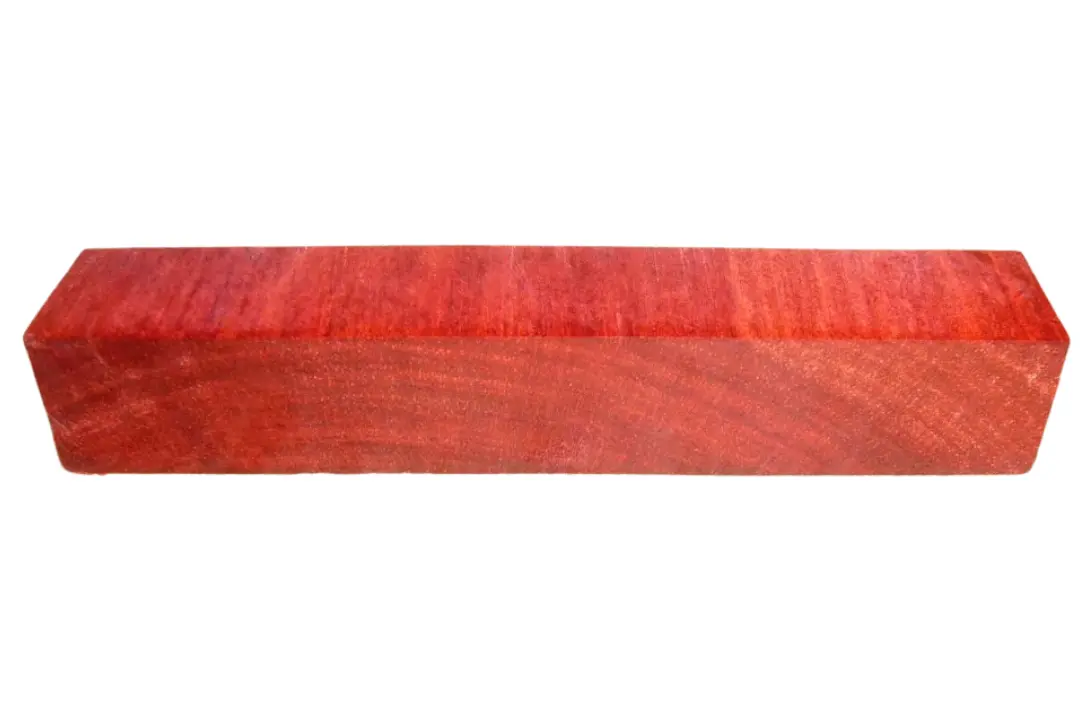
In woodworking, bloodwood lumber usually means a hard tropical red wood sold as bloodwood, satine, cardinal wood, muirapiranga, or conduru. It’s usually chosen for color first: the surface can look almost lacquer-red after planing, and fresh shavings often leave a dry, peppery wood smell around the saw.
The lumber trade most often connects this wood with Brosimum rubescens, a member of the Moraceae family. The Wood Database bloodwood profile lists the species with a bright red heartwood, high density, and a Janka hardness near 2,900 lbf, which matches how it behaves under a blade: it feels slick, heavy, and unforgiving.
Why It’s Called Bloodwood and Tree Confusion
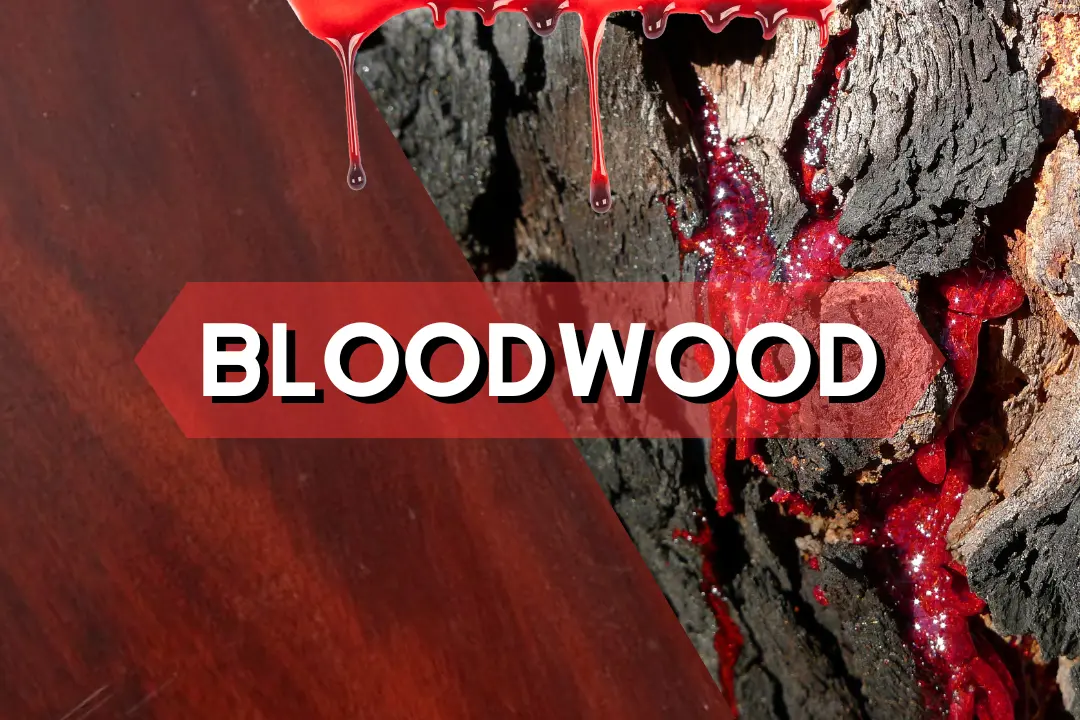
It’s called bloodwood because the wood can be a deep crimson red, and some trees called bloodwood bleed red sap, resin, or kino when cut. This is why searches like “what tree bleeds red when cut,” “bleeding tree,” “African blood wood,” and “bloodwood tree” can point to very different plants.
The mistake beginners make is assuming one common name equals one species. In lumber yards, bloodwood usually points to South American satine wood; in botanical articles, bushcraft discussions, or Australian plant guides, a bloodwood tree may refer to a Corymbia species with reddish kino instead of the lumber sold for knife scales or boxes.
Bloodwood Tree and Species

Brosimum Rubescens and South American Origin
The bloodwood used for most woodworking projects comes from tropical South America, often associated with the Amazon Basin. The heartwood is the valuable part: it carries the red color, while any sapwood is much paler and can look stark beside the red board face.
Species names matter because a listing marked only as red exotic wood gives you little protection against surprises in color, hardness, or safety. When buying bloodwood lumber, look for the trade name and scientific name together, then check whether the seller gives country of origin, drying details, and actual board photos.
Australian Bloodwood Trees, Red Sap, and Kino
Australian bloodwood trees are usually Corymbia species, close relatives of eucalypts, and they gained the name from red kino or resin rather than from the South American lumber market. The Australian Native Plants Society Corymbia profile helps show why the same common name can cover trees with different botany and different wood uses.
This distinction helps with odd search results like African bloodwood tree, blood tree in South Africa, blood rosewood, or even bacon wood. Those terms may refer to red-sapped trees, red-colored timber, local names, or unrelated plants, so don’t use them as a shortcut when ordering woodworking stock.
Bloodwood Appearance and Properties

Color and Aging
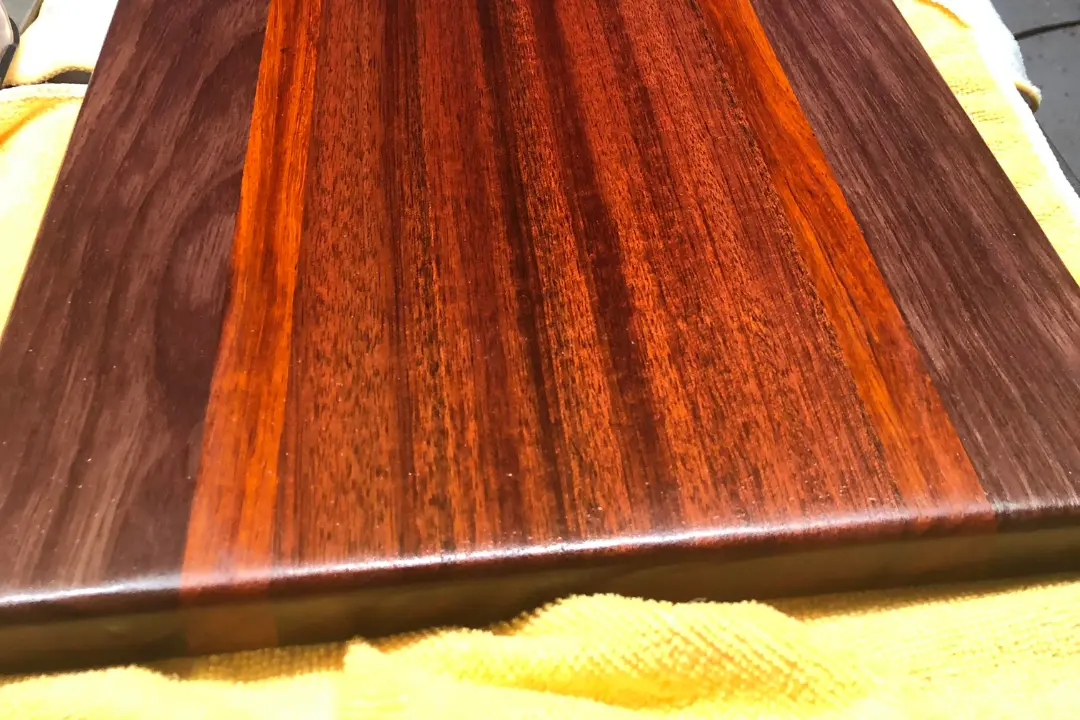
Bloodwood is famous for bright crimson color, often shifting from fresh red or reddish orange to deeper red-brown with age. UV light, oxidation, and finish choice all change the final tone, so a test offcut left near a sunny window for a week tells you more than a catalog photo.
The surface can look almost wet after fine sanding because the wood has natural luster. If you pair it with pale maple, yellowheart, or holly, vacuum the red dust often; the powder is fine enough to lodge in pale grain lines and leave a faint pink haze if you sand all parts together.
For broader color planning, compare bloodwood with other naturally colored species in our guide to colors of wood. That helps you decide whether you want true red, orange-red, purple, yellow, or dark brown contrast before buying small blanks at a premium.
Grain, Texture, Janka Hardness, Density, Weight, Strength, and Durability
Bloodwood usually has fine even texture with straight to slightly interlocked grain. It can hold crisp detail on small turned work, but the same density that makes a pen blank feel premium can make a large panel heavy, expensive, and less pleasant to machine.
The numbers explain the shop behavior: bloodwood is roughly 2,900 lbf Janka and about 66 lb/ft³, or 1,050 kg/m³, in average dried weight. The USDA Wood Handbook explains wood strength, density, moisture, and hardness concepts that help interpret those values across hardwood species.
| Wood | Approx. Janka Hardness | Practical Meaning |
|---|---|---|
| Bloodwood | 2,900 lbf | Very hard, dense, colorful, hard on cutters |
| Purpleheart | 2,520 lbf | Hard accent wood that darkens with age |
| Hard maple | 1,450 lbf | Standard cutting board wood with good durability |
| White oak | 1,360 lbf | Strong domestic hardwood for furniture and floors |
| Black walnut | 1,010 lbf | Easier to work, darker, kinder to tools |
| Cherry | 950 lbf | Stable, smooth, and friendly for boards and furniture |
Use the wood hardness scale and our guide to density of wood when comparing bloodwood to domestic hardwoods. Hardness predicts wear and knife-edge impact; density predicts weight, sanding time, glue behavior, and shipping cost.
Working With Bloodwood Safely
Cutting, Machining, Gluing, and Fastening
Bloodwood is not beginner-friendly because dull tools burn it fast. On a table saw, the first warning is usually a sharp hot smell and a dark brown line beside the cut; if you pause mid-cut, the blade can scorch the edge before you react.
- Use carbide blades and clean resin from teeth before cutting dense stock.
- Feed steadily instead of forcing the board or lingering in one place.
- Support exits with a backer board to reduce chip-out on crosscuts and routed edges.
- Take light passes on the router table, especially on small profiles and end grain.
- Pre-drill holes for screws, pins, handle bolts, and knife scale hardware.
- Freshen glue faces shortly before assembly and remove dust with vacuum or compressed air.
For gluing, fresh surfaces matter more than high clamp pressure. PVA works for many clean, flat joints, while epoxy can help on knife handles, mixed materials, oily-feeling surfaces, or tiny gaps; over-clamping thin strips can starve the joint and invite later failure.
Sanding, Finishing, Dust, and Shop Problems: Practical Notes From Real-World Use
Bloodwood sands to a glassy surface, but it takes patience because the surface resists abrasion. I stop often and touch the wood with the back of my fingers; if it feels warm or slick with packed dust, I clear the paper before it starts polishing scratches instead of cutting them.
Dust is the hidden problem. Bloodwood dust can cause skin, eye, or lung irritation, and the fine red powder clings to sweaty wrists, safety glasses, and the inside edge of a respirator. The OSHA wood dust guidance treats wood dust as a workplace hazard, so use dust collection, eye protection, and a respirator rated for fine particles.
Finishing bloodwood is rewarding because clear finishes make the red look deeper. Oil warms the color, shellac adds quick gloss, lacquer builds a crisp surface, and clear polyurethane adds wear protection; if you want the red to stay brighter, choose a finish with UV resistance and keep the finished piece away from direct sunlight.
The most common shop failures are burn marks, tear-out, split thin strips, and red dust staining pale woods. Workarounds are simple but easy to skip: score knife lines before crosscutting, sand red parts before pale parts, seal pale woods before final sanding, and leave thin inlay strips slightly proud until the surrounding surface supports them.
Is Bloodwood Good for Cutting Boards?

Short Answer: Is Bloodwood Good for Cutting Boards?
Bloodwood can work as a decorative accent in cutting boards, but it is not the most practical main cutting surface for daily food prep. Hard maple, walnut, cherry, and beech are easier to source, easier on knives, more familiar in food-contact use, and less troublesome to machine.
The reason is not one single flaw. Bloodwood is very hard, expensive, dense, sometimes brittle in thin strips, and irritating as dust during construction; those trade-offs matter more on a large cutting board than on a pen blank or knife handle.
Cutting Board Advantages, Drawbacks, Best Uses, and Better Daily-Use Woods
The advantage is visual: red accent strips beside hard maple can look sharp and clean, especially in end-grain layouts where small squares of color break up a pale board. Its 2,900 lbf hardness gives strong wear resistance, but that same hardness can be less friendly to knife edges than maple at about 1,450 lbf or walnut at about 1,010 lbf.
Use bloodwood sparingly for decorative borders, thin accent lines, corner blocks, or presentation boards where knife contact is limited. Avoid making the entire surface from bloodwood unless you’ve verified the species, tested the finish, controlled dust exposure during construction, and know the user has no sensitivity to the wood.
For a board that gets chopped on every day, choose hard maple, walnut, cherry, beech, or sustainably sourced teak. Finish with mineral oil, a beeswax and mineral oil blend, or a cutting board conditioner, then keep bloodwood as the color note rather than the main work surface.
Bloodwood can be used decoratively in cutting boards, but hard maple, walnut, cherry, and beech are more practical choices for daily food-prep boards.
Glamorwood practical shop recommendation
Common Bloodwood Uses
Decorative Woodworking, Turning, and Knife Handles
Bloodwood works best where visual impact matters more than easy machining. It’s popular for inlays, veneer, scroll saw accents, laser-cut details, small boxes, jewelry boxes, decorative panels, pen blanks, bottle stoppers, chess pieces, knobs, and tool handles.
On a lathe, bloodwood rewards sharp cutting edges. Scrapers can leave heat checks or fine torn fibers if pushed too hard, while clean slicing cuts create crisp beads and small details that polish well under fine abrasive and wax.
Knife scales are a natural fit because hard dense wood resists dents and carries a deep red finish. Seal the handle well, ease sharp corners so the grip doesn’t feel glassy and slippery, and pre-drill pin holes with backing support to reduce blowout on the exit side.
Pool Cues, Grips, and Predator Bloodwood Searches
The search term predator bloodwood often points to billiards interest, especially Predator cues, cue styling, cue blanks, or grip components with a bloodwood look. Bloodwood suits cue accents because it is dense, stable in small sections, and capable of a polished surface that feels cool and smooth in the hand.
Cue and grip blanks need straight grain, dry stock, and careful machining because any internal stress can show up as movement after turning. If the blank feels unusually heavy for its size, that’s normal for bloodwood, but it also means lathe speed, tool sharpness, and balance matter more.

Buying Bloodwood Lumber and Blanks
Forms Sold, Pricing Factors, and Quality Checklist
Bloodwood is sold as rough lumber, surfaced boards, turning blanks, pen blanks, knife scale pairs, craft boards, cue blanks, grip blanks, and thin stock for inlay. Small pieces feel affordable at checkout, but they often cost much more per board foot than rough lumber because cutting, surfacing, sorting, packaging, and waste are built into the price.
Price changes with board size, thickness, color consistency, drying quality, figure, surfacing, supplier, origin documentation, and shipping weight. Dense exotic hardwoods can make shipping feel out of proportion to the piece size, so check dimensions and weight before comparing one listing against another.
- Confirm the name: look for bloodwood, satine, and preferably Brosimum rubescens.
- Check dimensions: verify actual thickness, width, and length, not just nominal wording.
- Inspect color: choose consistent red stock if the project uses matched parts.
- Watch for checks: avoid severe end cracks, splits, and warped thin boards.
- Ask about moisture: kiln-dried stock is safer for indoor projects than mystery blanks.
- Request real photos: actual-board photos beat generic red hardwood images.
The beginner mistake is buying thin brittle stock for long unsupported accents. If you need cutting board stripes, inlay, or edging, buy a little thicker than the final size, let it acclimate in your shop, then mill it close to final thickness right before glue-up.
Responsible Sourcing, Craft Boards, Knife Scales, and Cue Blank
Responsible sourcing matters because bloodwood is tropical and trade names can hide origin details. Look for country of origin, legal harvest claims, chain-of-custody notes, and FSC certification where available; the Forest Stewardship Council explains certification systems used to track wood from forest to buyer.
Don’t assume every wood called bloodwood has the same legal status. Some exotic woods face CITES or import restrictions by species, origin, or trade name, so verify documentation before buying larger quantities, exporting finished goods, or using the wood in commercial production.
For small projects, pre-sized blanks save time and reduce waste, especially for knife scales, craft boards, pen blanks, and turning work.

Bloodwood Craft Stock
- Rich bloodwood color and grain
- ideal for small woodworking projects
- stable hardwood for precise shaping
- great for inlays, accents, and turnings
- ready for sanding and finishing
 Buy on Amazon

Bloodwood Satiné Blank
- Bold exotic wood tones with visual impact
- generous size for versatile shop use
- well suited for cutting and shaping
- excellent for decorative and functional builds
- smooth surface for finishing work
Buy on Amazon

Bloodwood Turning Block
- Compact blank for small custom builds
- dense wood for clean turning results
- great for knife scales and cue parts
- eye-catching grain for premium projects
- easy to shape into unique pieces
Buy on Amazon

Bloodwood Knife Scale Pair
- Matched pair for custom knife handles
- thin profile helps with precise fitting
- attractive bloodwood color adds character
- great for small-scale woodworking
- ready for shaping, sanding, and finishing
Buy on Amazon

Bloodwood Craft Board
- Unfinished hardwood for custom projects
- clean size for scroll saw and laser work
- rich color adds contrast to designs
- easy to cut, shape, and sand
- suitable for crafts, signs, and accents
Buy on Amazon
A larger cue and grip blank makes sense for pool cues, handles, and specialty parts where you need more mass and length than a knife scale pair provides.

Bloodwood Cue and Grip Blank
- Large blank for bigger custom builds
- strong hardwood for durable parts
- ideal for pool cues and handles
- works well for grips and specialty pieces
- rich finish brings out the natural grain
Buy on Amazon
Bloodwood vs Similar Woods
Bloodwood vs Padauk and Purpleheart
Bloodwood vs padauk comes down to red tone, hardness, and workability. Bloodwood is usually deeper crimson and harder, while padauk wood starts orange-red and often darkens toward reddish brown; both can stain pale woods with colored dust during sanding.
Bloodwood vs purpleheart is a choice between red and purple accent color. Purpleheart wood is also dense and tool-wearing at about 2,520 lbf Janka, but bloodwood is usually harder at about 2,900 lbf and keeps a red identity rather than shifting into purple-brown tones.
Bloodwood vs Redheart and Hard Maple
Bloodwood vs redheart is a strength and color-intensity comparison. Redheart can be easier to machine and lighter in feel, while bloodwood usually gives a richer crimson color, heavier blank, and sharper polished look on small decorative parts.
Bloodwood vs hard maple matters most for cutting boards. Bloodwood is more decorative and about twice as hard, but maple remains the safer daily-use choice because it has a long cutting board track record, closed grain, easier machining, and better knife friendliness.
If you’re choosing among exotic hardwoods, compare bloodwood with dense red and brown species like jatoba wood, cocobolo, pau ferro, and rosewood. Bloodwood earns its place when you need a clean red accent, not when you need the easiest, cheapest, or lightest hardwood.
FAQs
What Tree Does Bloodwood Come From?
Bloodwood comes from several tropical tree species, most commonly from the genus Brosimum or related hardwoods sold under the bloodwood name. The exact species can vary by supplier and region. It’s a dense exotic hardwood valued for its deep red color and fine grain.
Is Bloodwood Toxic To Work With?
Bloodwood can be irritating to work with for some people, especially when sanding or cutting it. The dust may cause skin, eye, or respiratory irritation, so basic protection is a good idea. Use good dust collection, wear a mask, and avoid direct skin contact if you’re sensitive.
How Hard Is Bloodwood Compared With Maple?
Bloodwood is harder and denser than most maple. It is extremely hard, which makes it very durable but also tougher on tools. Because of that density, sharp blades and careful machining are important when working with it.
Is Bloodwood Good For Cutting Boards?
Bloodwood can be used for cutting boards, but it is not the most common choice. It is hard, dense, and naturally attractive, but some makers prefer more proven food-safe woods like maple or walnut. If you use bloodwood, make sure it is fully cured and finished appropriately.
Why Is Bloodwood Called Bloodwood?
Bloodwood is called bloodwood because of its deep red color and, in some species, the reddish sap or heartwood. The name is a simple reference to its striking appearance. When freshly cut, the color can look especially vivid and dramatic.
Affiliate Disclosure: Some links in this post are affiliate links. If you make a purchase through these links, we may earn a small commission at no extra cost to you. We only recommend products we genuinely believe in.