
Lignum Vitae Tree: Species, Wood Properties, Uses and Growing Guide

Lignum vitae tree is the common name for slow-growing tropical trees in the genus Guaiacum, chiefly Guaiacum officinale and Guaiacum sanctum. These evergreen trees produce blue-violet flowers and exceptionally dense, resin-rich lignum vitae wood that may sink in water.
The common name can also appear on substitute timbers, so botanical identity matters when buying a plant, seed, or turning blank. This guide separates the species, explains their wood properties, and covers cultivation, conservation, legal trade, and safe woodworking.
Table of Contents
Lignum Vitae Tree at a Glance
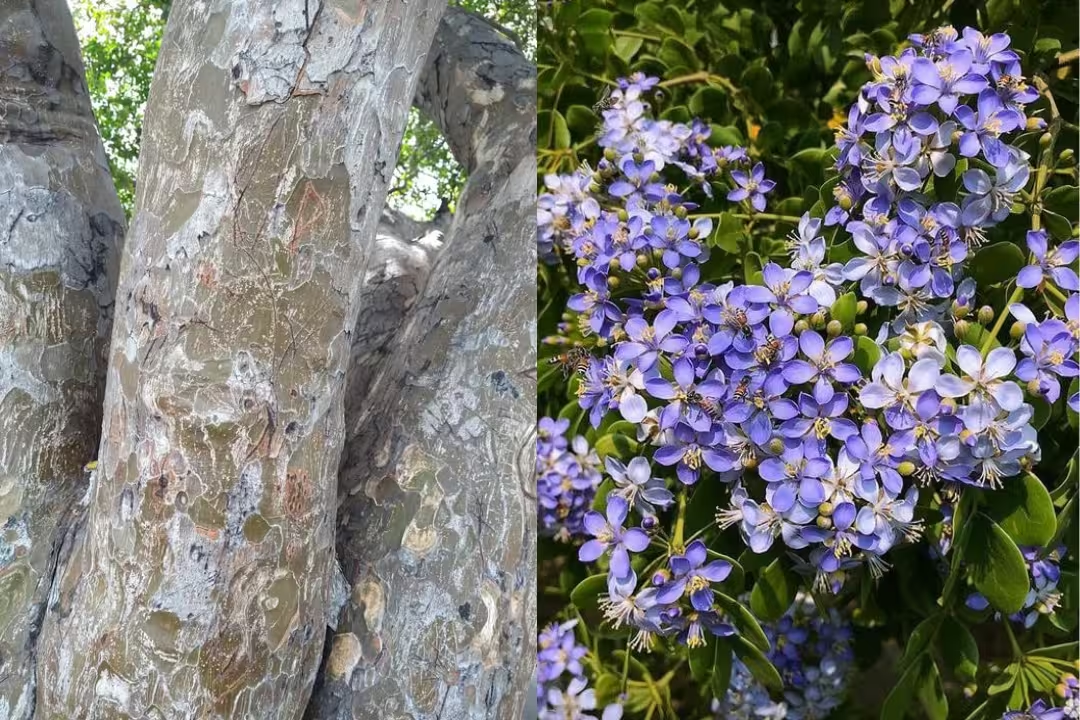
A lignum vitae is a compact tropical evergreen with paired leathery leaflets, a rounded crown, five-petaled blue flowers, and orange fruit containing red-covered seeds. Mature specimens commonly reach about 20–33 feet, though age, species, rainfall, and exposure produce wide variation.
Meaning and Taxonomy
To define vitae, the Latin word vitae means “of life,” while lignum means wood. Lignum vitae translates as “wood of life”, a name linked to historic medicinal claims rather than proven modern treatment.
True lignum vitae belongs to the genus Guaiacum in the Zygophyllaceae, or caltrop, family. The accepted names and native ranges can be checked through Kew Plants of the World Online.
Names and Cultural Symbols
Common names include tree of life, guaiac wood, holywood, roughbark lignum vitae, and ironwood. “Ironwood” is especially ambiguous because many unrelated dense wood species share it; our guide to the ironwood tree explains that naming problem.
Guaiacum officinale is widely associated with Jamaica’s national flower, while lignum vitae is recognized as the national tree of The Bahamas. Cultural references don’t always identify a species, so avoid assigning every national symbol to the same Guaiacum species.
Guaiacum officinale
Guaiacum officinale, or common lignum vitae, is native to parts of the Caribbean and northern South America. Its smooth-edged leaflets, rich blue flowers, and orange capsules create a striking contrast against the tree’s dark evergreen crown.
Guaiacum sanctum
Guaiacum sanctum is called holywood or roughbark lignum vitae. Its range includes southern Florida, the Caribbean, Mexico, Central America, and parts of northern South America, with local populations growing on dry coastal ground.
Species Comparison Table
| Feature | Guaiacum officinale | Guaiacum sanctum |
|---|---|---|
| Common names | Common lignum vitae, guaiac wood | Holywood, roughbark lignum vitae |
| Broad native association | Caribbean and northern South America | Southern Florida, Caribbean, Mexico, Central America, northern South America |
| Leaflets | Usually broader and fewer | Often smaller, narrower, and more numerous |
| Bark | Gray, becoming furrowed | Gray and commonly rougher with age |
| Typical form | Small tree with a rounded crown | Shrub or small tree with a dense crown |
| Trade status | Guaiacum is listed in CITES Appendix II | CITES Appendix II; federally protected in the United States |
| Young-plant identification | Seedlings can be difficult to separate without provenance or mature reproductive features | |
Leaflet counts overlap, and nursery photographs often show immature plants. For a defensible identification, use a regional botanical key, flower and fruit details, nursery records, and a verified scientific name.
Identification, Range, and Habitat
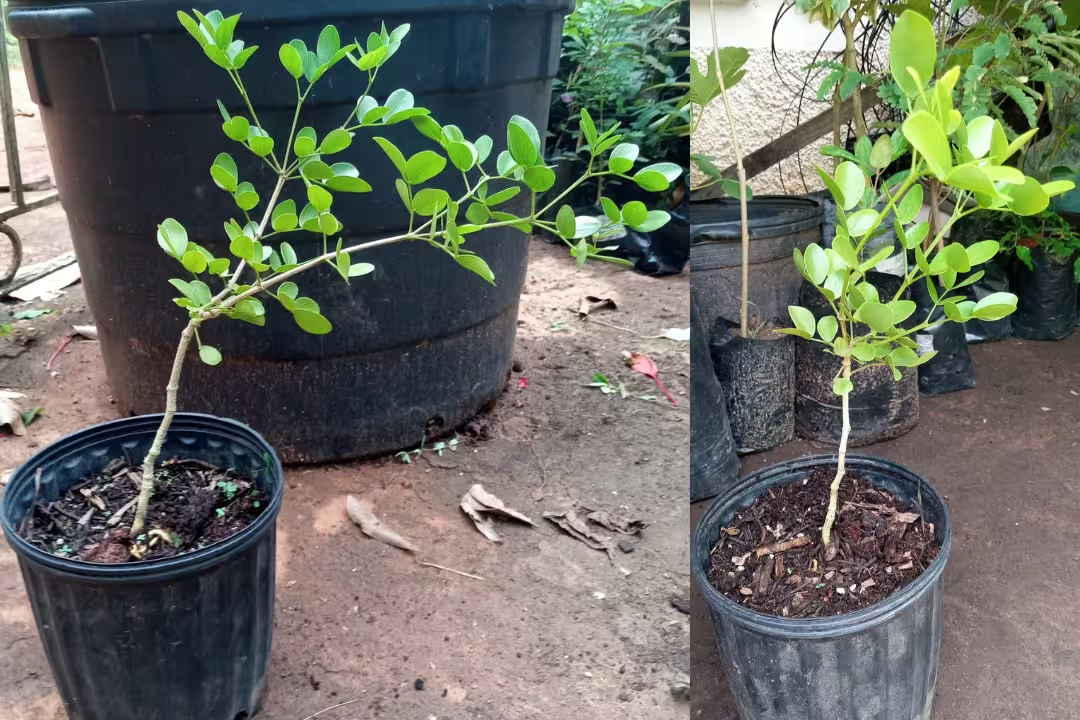
Identify a lignum vitae tree by combining its opposite compound leaves, blue-violet flowers, orange capsules, red seed coverings, and compact crown. A single trait can mislead because many tropical ornamentals have blue flowers or leathery evergreen leaves.
Leaves and Crown
Each leaf carries paired, smooth-edged leaflets with a firm, slightly waxy feel. In full sun, the closely packed foliage forms a rounded canopy that casts dense, patterned shade; exposed coastal trees often develop a lower, more irregular wind-shaped crown.
Blue and Violet Flowers
The five-petaled flowers open blue, violet-blue, or purple and may fade to pale blue or almost white. Blooming often occurs in flushes after warmth or rain, when the canopy can appear dusted with cool violet color.
Fruit and Seeds
Yellow-orange capsules split at maturity and expose seeds with vivid red coverings called arils. That orange-and-scarlet combination is a useful field mark, but sellers sometimes photograph unopened fruit and label it as lignum vitae seed.
Bark and Trunk
Young bark is gray and fairly restrained; old bark becomes rougher, furrowed, and visually heavier. Mature trunks may be multi-stemmed or gnarled, yet their modest diameter gives little indication of the remarkable wood weight inside.
Native Distribution
The combined range of true lignum vitae covers parts of the Caribbean, The Bahamas, Jamaica, Cuba, Hispaniola, Puerto Rico, southern Florida, Mexico, Central America, and northern South America. Each species occupies only part of that combined native range.
Dry Forest Habitats
Natural sites include tropical dry forest, coastal scrub, rocky limestone ground, and seasonally dry woodland exposed to wind and salt. Established roots handle drought well, but newly planted trees still need regular moisture while their root system develops.
Zones 10–11 and Frost
Landscape cultivation works best in roughly USDA Zones 10–11 and warm frost-free microclimates. A hard freeze can blacken tender foliage and kill seedlings; gardeners near the cold limit should use a south-facing site, wind shelter, and temporary frost protection.
Why Lignum Vitae Wood Is Unusual

Lignum vitae wood combines very high density, extreme indentation resistance, fine interlocked grain, and abundant natural resin. This rare mix lets the wood carry heavy loads in wet, high-friction settings where a less dense wood can wear or crush.
Density Versus Hardness
Density measures mass per unit volume, while hardness measures resistance to indentation. A heavy board isn’t automatically the hardest, strongest, or stiffest; see our guides to the density of wood and the wood hardness scale for the test differences.
Why the Wood Sinks
Air-dried genuine lignum vitae is often reported near 1,250–1,260 kg/m³, greater than water’s approximate density of 1,000 kg/m³. Dry heartwood can sink, but resin, moisture, sapwood, trapped air, and dimensions make a sink test inconclusive.
Densest Tree Claims
Lignum vitae is often called the densest tree or densest commercial wood, but no universal ranking covers every tree, specimen, and moisture condition. Australian buloke and several ironwoods also post exceptional figures; compare the measured values in our Australian buloke profile rather than relying on a superlative.
Janka Hardness
A widely reported Janka value for genuine lignum vitae is about 4,390 lbf, or 19,500 N. The test records the force needed to press a steel ball halfway into the sample; it doesn’t measure toughness, stiffness, stability, or resistance to splitting. The hardest wood comparison explains why rankings vary.
Color and Grain
Fresh heartwood can look olive or greenish brown before darkening to deep green-brown, brown, or nearly black. Pale sapwood creates a sharp border, while the fine interlocked grain polishes to a cool, waxy-feeling surface with subdued luster.
Resin and Self-Lubrication
Natural guaiac resin lowers friction and contributes water and wear resistance. It made the timber useful for wet bearings, but “self-lubricating” doesn’t mean every assembly ran forever without inspection, cooling water, correct grain orientation, or proper load alignment.
Mechanical Properties Table
The following are representative figures rather than guaranteed engineering values. The Lignum Vitae Wood Database profile reports values that can shift with species identity, moisture, grain, defects, and test method.
| Property | Representative value | Practical meaning |
|---|---|---|
| Average dried weight | About 78.5 lb/ft³ or 1,260 kg/m³ | Heavier than water by volume |
| Janka hardness | About 4,390 lbf | Very high resistance to indentation |
| Modulus of rupture | About 17,600 psi | Representative bending strength |
| Crushing strength | About 17,900 psi | Strong resistance to compression parallel to grain |
| Modulus of elasticity | About 2.29 million psi | Representative stiffness under bending load |
Uses, History, and Look-Alike Woods
Lignum vitae served in marine bearings, pulleys, impact tools, turned objects, and early medicinal products. Modern buyers must distinguish genuine Guaiacum wood from verawood and other heavy tropical timbers sold under the same loose name.
Marine and Engineering Uses
Historic uses included propeller-shaft bearings, hydro-turbine bearings, bushings, ship blocks, sheaves, and pulleys. Water cooled the bearing surface while resin reduced friction, and careful installers oriented the grain to expose durable, resin-rich bearing faces.
Tools and Impact Items
Mallets, mortars, pestles, handles, truncheons, bowls, and early bowling balls used the wood’s mass and wear resistance. A short lignum vitae mallet feels surprisingly nose-heavy in the hand, yet hidden checks and grain runout can still cause sudden impact failure.
Turning and Decorative Work
Current uses favor pens, handles, jewelry, inlay, small bowls, and carved details because large clear stock is scarce. The wood cuts with firm resistance and can leave a glassy surface, but an interrupted cut produces a sharp tapping sensation and quickly exposes a dull turning edge.
Guaiac Resin History
European and traditional medical systems once promoted guaiac resin and wood for syphilis, gout, and rheumatic complaints. These claims belong to medical history; they don’t establish that bark, resin, leaves, seeds, or wood are safe to consume.
Guaiac Medical Test
A guaiac-based fecal occult blood test uses a chemical color reaction to screen stool for hidden blood. This diagnostic use is separate from consuming Guaiacum products and doesn’t validate any historic cure claim.
Argentine Lignum Vitae
Argentine lignum vitae usually means Gonopterodendron sarmientoi, formerly Bulnesia sarmientoi, and is also sold as verawood. It belongs to the same plant family and shares green color, density, and fine texture, but it isn’t true Guaiacum lignum vitae.
Genuine Wood Identification
Color, weight, smell, and sinking can support an identification but can’t prove it. High-value authentication may require end-grain anatomy, microscopic examination, chemical analysis, DNA testing, and records linking the wood to a legal documented source.
- Ask for the full scientific name, not “lignum vitae” alone.
- Compare heartwood, sapwood, and clean end-grain photographs.
- Check every face for checks, wax-filled cracks, and grain runout.
- Request source country, harvest status, and chain-of-custody records.
- Treat “vintage,” “old stock,” and “reclaimed” as unverified until documented.
Conservation and Legal Trade
Guaiacum trade is controlled because slow growth, valuable heartwood, habitat loss, and historic cutting reduced many wild populations. Ownership isn’t automatically illegal, but lawful sale or movement depends on species, origin, product type, jurisdiction, and supporting documentation.
Causes of Decline
Timber and resin harvesting removed mature seed-producing trees faster than many populations could replace them. Forest clearing, fragmentation, small natural ranges, and slow heartwood formation make recovery far slower than for a plantation-grown fast rotation species.
CITES Appendix II
The genus Guaiacum appears in CITES Appendix II. Appendix II controls international trade rather than banning every transaction; official scope and annotations appear in the CITES Appendices.
Species-Specific Protections
Guaiacum sanctum has federal endangered-species protection in the United States. IUCN categories, CITES listings, federal law, state rules, and source-country laws serve different functions, so never apply one species’ legal status to every wood carrying the common name.
International Trade Rules
Import or export paperwork may vary for wild material, nursery-propagated plants, seeds, finished products, pre-Convention stock, and re-exports. Check with the destination and origin CITES authorities before shipping; a domestic marketplace listing doesn’t prove that cross-border movement is lawful.
Responsible Plant Buying
Choose nursery-propagated stock labeled with a scientific name and production location. Avoid wild-collected plants, and ask whether the nursery has maintained species records because a seedling photograph rarely separates G. officinale from G. sanctum with reliable accuracy.
Responsible Wood Buying
Favor documented reclaimed stock, traceable pre-existing inventory, or a verified substitute where Guaiacum isn’t required. Scarcity can raise cost, yet placement on a most expensive wood list doesn’t establish species identity or legal origin.
Provenance Documentation Checklist
- Accepted scientific name and common trade name
- Country of origin and supplier identity
- Wild, cultivated, reclaimed, or pre-Convention status
- Invoice dates and chain-of-custody records
- CITES export, import, or re-export documents where required
- Exact dimensions, sapwood percentage, and individual-piece photographs
- Written explanation for claims such as “ship salvage” or “old warehouse stock”
How to Grow Lignum Vitae

Grow lignum vitae in full sun, warmth, and freely draining soil, with regular establishment water and frost protection. Established trees tolerate seasonal drought, salt spray, and alkaline limestone ground better than young seedlings with small root systems.
Climate and Sunlight
Full sun promotes a compact crown and stronger flowering. Acclimate nursery plants gradually: leaves moved straight from filtered shade into fierce afternoon sun can become papery, bronze, and crisp along their scorched outer edges.
Soil and Drainage
Sandy, rocky, limestone-derived, and mildly alkaline soils can work if water drains freely. In containers, use several open drainage holes and a mineral-rich mix; wet, airless media can rot roots despite the tree’s reputation for tough coastal growth.
Water and Fertilizer
Water deeply during establishment, then let the upper medium begin drying before watering again. Feed modestly during active growth; pale leaves in alkaline soil may signal a micronutrient problem, which extra general fertilizer can worsen through salt accumulation.
Pruning and Bonsai
Remove damaged, crossing, or poorly placed young branches while cuts remain small. For bonsai, shape flexible shoots early because mature branches become dense and resistant; heavy bending can split a branch at the fork without much visible warning.
Growth Rate Expectations
Lignum vitae grows slowly, but no single annual rate fits every site. Species, genetics, root volume, temperature, soil, water, and light all affect growth, so treat it as a long-term specimen rather than a quick shade tree.
Seed Source and Identity
Buy seed labeled with its scientific name, harvest date, production location, and lot-specific viability information. A packet marked only “lignum vitae” might contain G. sanctum, G. officinale, verawood, or another so-called ironwood tree.
Germination and Seedling Care
Sow fresh seed shallowly in clean, freely draining medium kept warm and evenly moist rather than wet. Give emerged seedlings bright filtered light, increase sun exposure slowly, and use deep containers that reduce early root disturbance.
Common Propagation Failures
Old seed, cold medium, deep sowing, saturated compost, and abrupt sun exposure account for many failures. Another common mistake is digging through the pot to check progress, which snaps pale emerging roots before any green shoot appears.
- Remove standing water and improve airflow when the medium smells sour.
- Raise bottom warmth rather than soaking a cold seed tray.
- Label each lot with species, seller, and sowing date.
- Move seedlings into stronger light over seven to fourteen days.
- Transplant with the root ball intact and at the same planting depth.
Plant Shipping Restrictions
Live plants and seeds may face agricultural inspection, phytosanitary, soil, invasive-pest, and wildlife-trade controls. Check destination rules before ordering because sellers may accept payment for an item that customs or a state agriculture agency can refuse at entry.
Live Plants and Seeds
These listings provide options for live plants and seed lots, but product titles are seller claims and don’t independently verify taxonomy, freshness, provenance, or shipping legality. Confirm the species and destination rules before purchasing.

Rare Holywood Tree Starter
- Live Guaiacum sanctum hardwood plant
- Rare tropical tree for collectors
- Known as lignum vitae
- Arrives without a pot
- Small starter size for planting
 Buy on Amazon

Holywood Lignum Vitae Seeds
- Includes 25 Guaiacum sanctum seeds
- Rare tropical hardwood species
- Great choice for patient growers
- Ideal for bonsai and tree collections
- Grow your own lignum vitae tree
Buy on Amazon

Lignum Vitae Bonsai Seeds
- Includes 10 Guaiacum sanctum seeds
- Exotic hardwood tree variety
- Suitable for bonsai enthusiasts
- A unique addition to seed collections
- Grow a rare lignum vitae tree
Buy on Amazon

Fresh Lignum Vitae Seeds
- Includes 25 fresh tree seeds
- Lignum vitae variety for home growing
- Great for tropical plant collectors
- Start seedlings in a warm location
- A thoughtful gift for gardeners
Buy on Amazon

Ironwood Tree of Life
- Live tropical lignum vitae plant
- Rare tree with blue flowers
- Suitable for bonsai training
- Comes in a 4 inch starter pot
- A standout choice for plant collectors
Buy on Amazon
Working With Lignum Vitae Wood
Working lignum vitae requires sharp tools, light cuts, controlled heat, strong dust extraction, and careful surface preparation before bonding. Its density feels immediately different: a small blank lands on the bench with a low, hard knock rather than the hollow sound of ordinary dry lumber.
Blank Verification Checklist
- Confirm the scientific name and source country.
- Request photographs of every face and clean end grain.
- Measure usable dimensions after excluding checks and wax.
- Identify pale sapwood and irregular grain before laying out the project.
- Request trade records for protected or internationally shipped material.
- Reject blanks with deep radial checks near the intended chucking point.
Cutting and Turning
Use sharp carbide or high-quality steel edges and take light cuts. Interlocked grain can tear out, heavy blanks place greater stress on mounting points, and dull cutters create heat; reduce lathe speed after checking the blank’s balance and attachment.
Sanding and Heat Control
Use fresh abrasives, moderate speed, and short sanding intervals. A resinous surface can turn warm and slick under an exhausted abrasive, smearing dust into the pores; stop when the piece feels more than mildly warm and let it cool naturally.
Gluing and Finishing
Natural resin can reduce adhesive grip and interfere with some film finishes. Prepare joints shortly before assembly, test any solvent wipe and adhesive on an offcut, follow the product maker’s ventilation directions, and avoid handling the cleaned bonding surface with bare fingers.
Dust and Skin Safety
Use local dust extraction, sealed eye protection, and a suitable respirator. Wood dust and resin may irritate skin or airways and can sensitize some users, so wash exposed skin and never place tropical wood dust in food, cosmetics, or home remedies.
Specialty Wood Blanks
These specialty blanks suit small turning projects, but listing names don’t prove Guaiacum identity or legal provenance. Ask the seller for scientific name, individual photographs, usable dimensions, sapwood content, and source records before ordering.

Lignum Vitae Wood Blank
- One solid lignum vitae wood piece
- Measures 1.5 inch by 1.5 inch by 6 inch
- Dense hardwood for detailed projects
- Ideal for turning and small crafts
- Natural wood grain adds character
Buy on Amazon
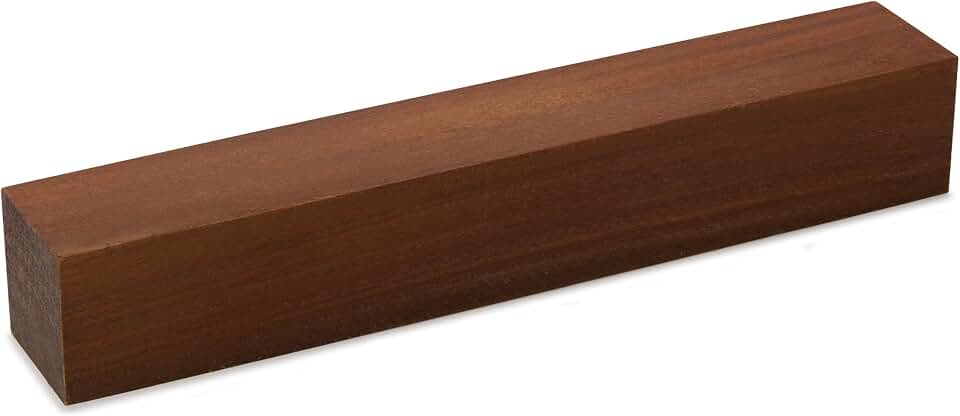
Lignum Vitae Turning Blank
- One solid lignum vitae wood piece
- Measures 2 inch by 2 inch by 12 inch
- Generous size for turning projects
- Dense hardwood with natural character
- Great for specialty woodworking
Buy on Amazon

Lignum Vitae Wood Stock
- Solid lignum vitae hardwood piece
- Measures 1.5 inch by 1.5 inch by 12 inch
- Long blank for custom projects
- Dense wood for specialty crafting
- Ideal for turning and woodworking
Buy on Amazon
Practical notes from real-world use: Lay out the project only after removing end wax and exposing clean grain. A bargain blank can lose half its working length to hidden checks, while heat from one dull pass can smear resin across a surface that looked ready for glue.
Workshop practice
Lignum Vitae Questions
These short answers address the most common questions about conservation, hardness, pots, growth, and legal purchase. Species identity and provenance remain the two key checks behind every answer.
Is Lignum Vitae Endangered?
True Guaiacum species have suffered from overharvesting and habitat loss, but conservation categories and laws vary by species and location. Guaiacum is listed in CITES Appendix II, while G. sanctum also has U.S. federal endangered-species protection.
Is It the Hardest Wood?
Lignum vitae is one of the hardest and densest commercial woods, with a commonly cited Janka hardness near 4,390 lbf. It isn’t defensible to call it the undisputed hardest because rankings vary with test data, moisture, species, and sample quality.
Can It Grow in Pots?
Young lignum vitae trees and bonsai specimens can grow in containers with strong light, warmth, open drainage, and measured watering. Long-term pot culture restricts root volume and makes plants more sensitive to drought, fertilizer salts, and root disturbance.
How Fast Does It Grow?
Lignum vitae is slow growing, and no dependable annual figure applies across all climates. Warmth, sunlight, irrigation, soil, genetics, and container size can change growth markedly, so promises of a fixed yearly increase should be treated as seller speculation.
Is the Wood Legal?
Lignum vitae wood can be legal to own or buy, but legality depends on species, origin, harvest date, documentation, jurisdiction, and whether it crosses a national border. Request provenance and any required CITES paperwork rather than treating a sales receipt as proof of lawful sourcing.
FAQs
What Is Special About The Lignum Vitae Tree?
The lignum vitae tree is special because it produces one of the hardest, heaviest, and most naturally oily woods available. Its dense wood resists wear, water, and decay, so it has long been used for bearings, mallets, and marine parts. The tree also grows slowly and produces attractive blue flowers.
Is Lignum Vitae The Densest Wood In The World?
Lignum vitae is among the densest commercially known woods, but it is not always considered the single densest wood in the world. Its density varies by species, moisture level, and individual tree. True lignum vitae is notably heavier than water and much denser than most common hardwoods.
Why Does Lignum Vitae Wood Sink In Water?
Lignum vitae wood sinks because its density is greater than the density of water. Its tightly packed fibers and high natural resin content make it unusually heavy. While many woods float because they contain more air spaces, lignum vitae has very little trapped air.
Is Lignum Vitae Endangered Or Illegal To Buy?
Lignum vitae is protected and internationally regulated, but buying it is not automatically illegal. True lignum vitae species are covered by CITES trade controls, so legally sold wood should have appropriate documentation. Check local laws and buy from reputable sellers, especially when purchasing imported wood or finished antiques.
Is Argentine Lignum Vitae The Same As True Lignum Vitae?
Argentine lignum vitae is not the same as true lignum vitae, although the woods share similar properties. True lignum vitae comes from Guaiacum species, while Argentine lignum vitae usually comes from Bulnesia sarmientoi. Argentine lignum vitae is also dense, oily, durable, and commonly used as a substitute.
Affiliate Disclosure: Some links in this post are affiliate links. If you make a purchase through these links, we may earn a small commission at no extra cost to you. We only recommend products we genuinely believe in.