
Ironwood Tree: Species, Identification, Uses, and Growing Guide

Ironwood Tree: Species, Identification, Uses, and Growing Guide
An ironwood tree isn’t one species; the name covers unrelated trees known for hard, dense wood, including desert ironwood (Olneya tesota), eastern hophornbeam (Ostrya virginiana), American hornbeam (Carpinus caroliniana), and Persian ironwood (Parrotia persica). Location, leaves, bark, flowers, fruit, and thorns reveal which ironwood you’ve found.
Species identification matters because these trees need different climates, irrigation, soil, and legal sourcing checks.
Table of Contents
What Is an Ironwood Tree?
Ironwood is a shared common name applied to woody plants whose timber is unusually dense, hard, wear-resistant, or difficult to cut. It doesn’t identify one genus, family, growth form, or climate group.
Common Name, Not Species
Common names develop through local use rather than botanical classification. Desert ironwood belongs to the pea family, while eastern hophornbeam belongs to the birch family and Persian ironwood belongs to the witch-hazel family. The accepted names can be checked through Kew Plants of the World Online.
Hard timber inspired the name in many regions. That repeated naming doesn’t mean the species are close relatives or share the same leaves, flowers, care, toxicity, or conservation status.
Ironwood Versus Iron Wood
Ironwood is the conventional spelling for the common name. “Iron wood” appears in older writing, informal searches, and descriptions of dense timber, but a botanical name is still needed before buying a plant or wood blank.
Regional name differences: In Arizona and Sonora, ironwood usually means Olneya tesota. Eastern North American usage often points to Ostrya virginiana or Carpinus caroliniana, while ornamental nursery use may indicate Parrotia persica. Florida, Caribbean, African, Australian, and Pacific usage can refer to still other ironwoods.
Major Ironwood Trees Compared
The major ironwood trees differ in family, climate, mature size, and visible features. The table gives a fast comparison, followed by species-level details.
Species Comparison Table
| Common name | Botanical name | Native region | Typical height | Key identification traits | Primary context |
|---|---|---|---|---|---|
| Desert ironwood | Olneya tesota | Sonoran Desert | 15–30 feet | Compound gray-green leaves, thorns, violet pea-like flowers, pods | Arid native planting, habitat, carving wood |
| Eastern ironwood | Ostrya virginiana | Eastern North America | 25–40 feet | Shreddy bark, serrated leaves, hop-like fruit clusters | Woodland planting, handles and levers |
| American hornbeam | Carpinus caroliniana | Eastern North America | 20–35 feet | Smooth fluted trunk, serrated leaves, leafy fruit bracts | Moist woodland sites |
| Persian ironwood | Parrotia persica | Iran and Azerbaijan | 20–40 feet | Mottled exfoliating bark, red stamens, multicolored fall leaves | Ornamental planting |
| Black ironwood | Krugiodendron ferreum | Southern Florida and Caribbean | 20–30 feet | Evergreen leaves, dark fruit, very dense wood | Tropical habitat and conservation |
| Brazilian ironwood | Libidibia ferrea | Tropical South America | 20–40 feet or more | Mottled bark and compound leaves | Tropical planting and timber |
| Australian or Pacific ironwoods | Casuarina, Allocasuarina, or Metrosideros species | Australia and Pacific islands | Varies by species | Need species-level identification | Local timber, shelter, habitat |
Typical heights vary with soil depth, rainfall, competition, pruning, and local climate. Nursery labels showing a four-foot shipping height say little about a tree’s mature spread.
Desert Ironwood: Olneya tesota
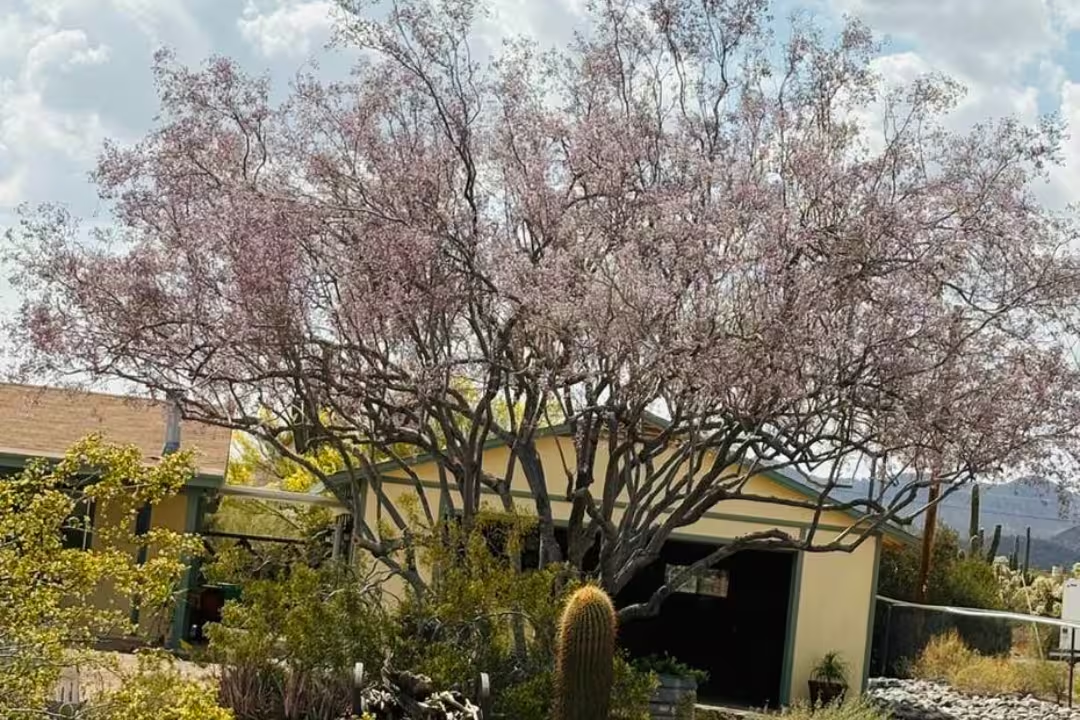
Desert ironwood is a thorny, slow-growing Sonoran Desert legume. Pale gray-green leaflets soften its outline, while spring flowers range from pale pink to saturated violet and produce flat brown pods.
Eastern ironwood: Ostrya virginiana, also called eastern or American hophornbeam, develops narrow shaggy bark plates and dangling fruits resembling hops. It grows in eastern woodland understories, rocky slopes, and well-drained uplands. The Morton Arboretum profile provides further identification and planting information.
American hornbeam: Carpinus caroliniana has smooth blue-gray bark shaped into sinewy ridges. Running a hand lightly across a mature trunk feels like tracing firm cords beneath taut skin. This moisture-loving species isn’t the same tree as hophornbeam, though both may be called ironwood.
Persian ironwood: Parrotia persica is prized for flaking bark and fall foliage that can mix yellow, orange, crimson, and purple on one crown. Its flowers lack showy petals; red stamens supply the color before leaves open.
Black ironwood: Krugiodendron ferreum is a small evergreen native to southern Florida, the Caribbean, and nearby tropical areas. Its heavy wood has historic value, but regional scarcity and habitat rules make living trees poor sources of woodworking stock.
Brazilian ironwood: Libidibia ferrea, listed in older references as Caesalpinia ferrea, has compound leaves and patchy bark. It isn’t Brazilian mahogany, and sellers shouldn’t use those names interchangeably.
Australian and Pacific ironwoods: The name may identify Allocasuarina, Casuarina, or Metrosideros. Australian buloke, Allocasuarina luehmannii, is covered separately in this guide to Australian buloke. Some Casuarina species become invasive outside their native range.
African ironwood: African ironwood, French bois de fer, and German Eisenholzbaum are broad trade or regional terms rather than dependable species names. Bois de fer may refer to different trees across Mauritius, Réunion, Madagascar, and mainland Africa, so a bois de fer prix quote is meaningless without species, dimensions, grade, moisture, and legal origin.
How to Identify Ironwood Trees

Ironwood tree identification starts with location, then compares leaves, bark, flowers, fruit, and thorns. Wood hardness alone can’t identify a standing tree or loose timber with confidence.
Start With Location
Location narrows the field: a thorny native tree in the Sonoran Desert points to Olneya tesota; an understory tree in eastern North America is more likely Ostrya or Carpinus. A planted specimen with exfoliating bark and rich fall color may be Parrotia persica.
Examine the Leaves
Leaf structure separates the leading candidates. Desert ironwood carries pinnately compound leaves made of small gray-green leaflets. Eastern hophornbeam, American hornbeam, and Persian ironwood have simple leaves.
- Olneya tesota: small, rounded leaflets arranged along a central stalk.
- Ostrya virginiana: alternate, oval leaves with sharp double serrations.
- Carpinus caroliniana: serrated leaves with straight, prominent side veins.
- Parrotia persica: broad oval leaves with wavy or toothed upper margins.
Compare the bark: Hophornbeam bark lifts into thin, narrow strips that feel dry and flaky. American hornbeam stays smooth and fluted, while Persian ironwood sheds patches that expose cream, gray, olive, and brown tones. Old desert ironwood bark becomes gray, rough, and fissured.
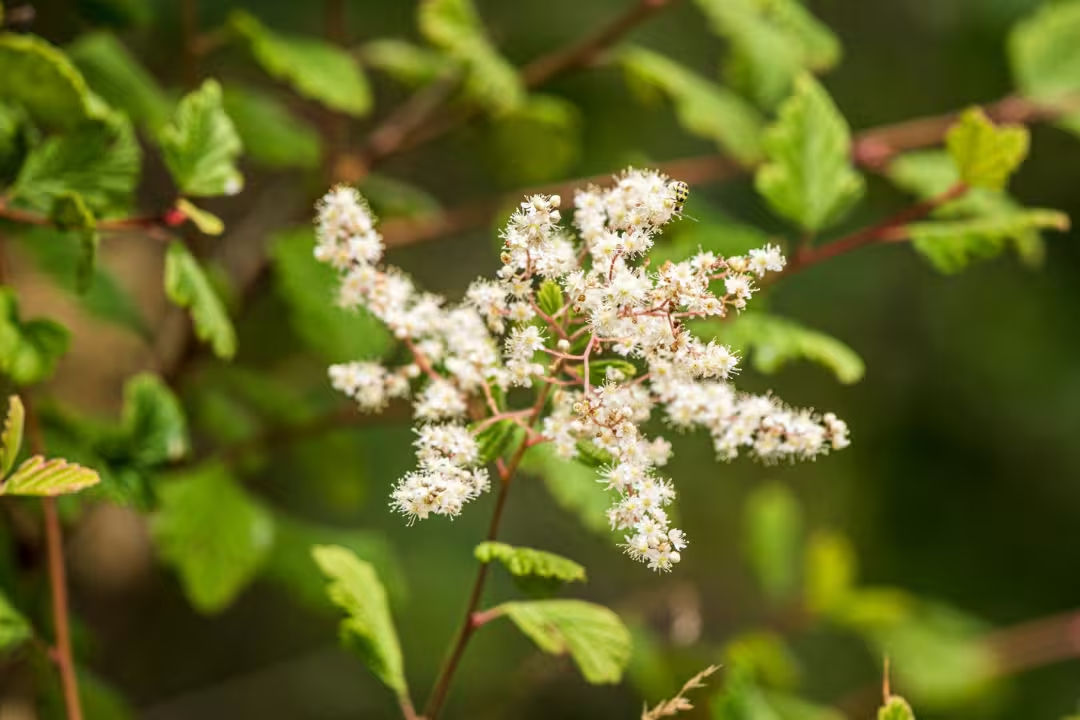
Check flowers and fruits: Purple pea-like blossoms and pods support a desert ironwood identification. Inflated hop-like sacs point to eastern hophornbeam; three-lobed leafy bracts indicate American hornbeam. Red petal-free flowers and woody capsules fit Persian ironwood.
Look for thorns: Desert ironwood branches end in sharp spines. Wearing thin gloves often isn’t enough; a hidden twig can catch skin with a quick needle-like prick. Eastern hophornbeam, American hornbeam, and Persian ironwood lack this desert-style thorn pattern.
Ironwood identification key: Use the sequence below when flowers or fruit are missing.
- Compound gray-green leaves plus thorns in an arid setting: check Olneya tesota.
- Simple leaves with shaggy bark and hop-like fruits: check Ostrya virginiana.
- Simple leaves with a smooth, muscle-like trunk: check Carpinus caroliniana.
- Mottled exfoliating bark with broad leaves and strong fall color: check Parrotia persica.
- Evergreen foliage in southern Florida or the Caribbean: compare Krugiodendron ferreum.
- Needle-like branchlets or a Pacific location: verify possible Casuarina, Allocasuarina, or Metrosideros.
Avoid hardness-only identification: Moisture, decay, grain direction, coatings, and heartwood percentage change how timber cuts and weighs. Several unrelated woods feel heavy in the hand, including lignum vitae, ebony, and quebracho.
Desert Ironwood Ecology and Biology
Desert ironwood is a long-lived Sonoran species that moderates heat beneath its canopy and supplies food, shelter, and nesting cover. Its biological role reaches far beyond the value of its dense heartwood.
Classification and Native Range
Olneya tesota belongs to Fabaceae, the pea family, and Olneya is usually treated as a single-species genus. Its native range includes Arizona, southeastern California, Sonora, Baja California, and Baja California Sur.
Size, Growth, and Lifespan
Mature trees commonly reach 15–30 feet, with some favorable specimens approaching 40–45 feet. Growth is slow, and many trees survive for centuries. Estimates near 800 years or more exist, but exact ages are difficult to verify because old trunks often become irregular or hollow.
Leaves, flowers, and pods: Small compound leaves reduce exposed surface area during dry weather. Flowering often occurs from spring into early summer, with timing shaped by rain and temperature. Foliage can remain evergreen, become semi-evergreen, or drop during drought or frost.
Nurse-plant ecology: A mature canopy creates cooler soil and filtered light, while fallen leaves add organic matter. Saguaro, organ pipe cactus, shrubs, and annual plants may establish in this sheltered microsite. That benefit doesn’t prove that every desert ironwood fixes atmospheric nitrogen.
Wildlife and habitat value: Birds nest among thorny branches, pollinators visit the flowers, and mammals use the shade. At midday, the difference beneath an old crown is physical: glaring heat gives way to dimmer light, cooler air, and dry litter crunching beneath each step.
Ironwood Forest National Monument: This Arizona monument covers about 129,000 acres and protects desert habitat, cultural sites, wildlife corridors, mountain ranges, and major stands of desert ironwood. The Bureau of Land Management explains its resources and visitor rules. Monument status doesn’t grant permission to collect wood, seeds, or plants.
What Is Ironwood Used For?
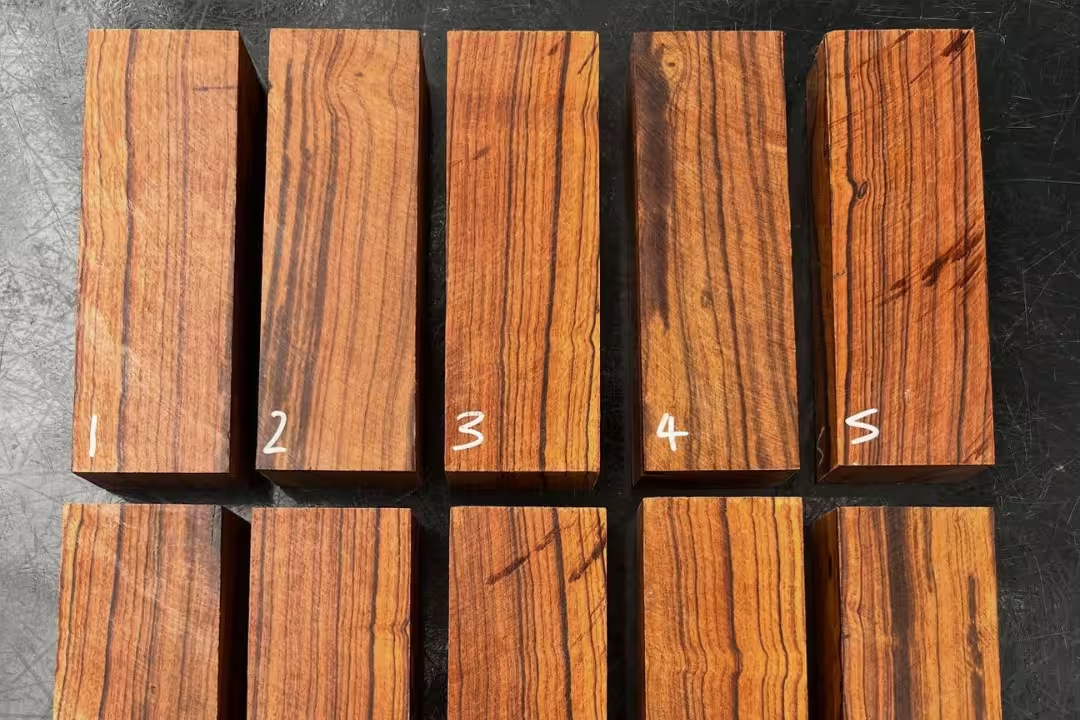
Ironwood is used for carvings, tool handles, wedges, mallets, knife scales, pen blanks, inlays, turned objects, durable implements, and fuel. The right use depends on species, legal origin, dimensions, defects, and how the wood behaves under cutting heat.
Traditional and Cultural Uses
Regional traditions differ. Indigenous communities of the Sonoran region, including Comcaac artisans, have strong cultural connections to desert ironwood carving. Buyers should favor work with clear maker attribution and documented material rather than treating the craft as an anonymous exotic-wood style.
Modern Woodworking Uses

Small components suit desert ironwood because the material is heavy, costly, and hard on tooling. A polished knife scale can feel cool and stone-like at first touch; fine sanding reveals dark brown, black, violet, and amber figure with a smooth waxy feel.
Firewood considerations: Dense wood burns slowly and releases substantial heat, but that doesn’t justify cutting living, regulated, rare, or ecologically useful trees. Transporting firewood can also spread insects and pathogens across county or state lines.
Density, hardness, specific gravity: Density measures mass per volume, Janka hardness measures resistance to indentation, and specific gravity compares wood density with water. These values describe different traits, so a dense wood won’t always have equal impact strength, stiffness, or decay resistance.
Desert ironwood measurements: Published figures commonly place average dried weight near 75 pounds per cubic foot and Janka hardness near 3,260 pound-force. Reported specific gravity can exceed 1.0. Values change with moisture, specimen quality, and testing method.
Eastern hophornbeam measurements: Ostrya virginiana is often reported near 51 pounds per cubic foot when dry and about 1,860 pound-force on the Janka scale. These values explain its historic use for handles, wedges, levers, and wear-prone parts.
Wood properties table: The figures below are approximate reference values, not grading guarantees for an individual board.
| Species | Approximate dried weight | Approximate Janka hardness | Sink potential | Common uses | Shop cautions |
|---|---|---|---|---|---|
| Desert ironwood, Olneya tesota | 75 lb/ft³ | 3,260 lbf | Sound heartwood may sink | Knife scales, pens, carving, inlay | Heat, burning, rapid edge wear, checking |
| Eastern hophornbeam, Ostrya virginiana | 51 lb/ft³ | 1,860 lbf | Usually less likely | Handles, wedges, levers, small turned parts | Hard cutting and difficult nailing |
| Persian ironwood, Parrotia persica | Variable; limited commercial data | Use supplier test data | Don’t assume | Mostly planted for ornamental value | Rarely sold as standardized lumber |
| Black ironwood, Krugiodendron ferreum | Exceptionally heavy | Varies by source | Possible | Historic durable objects | Conservation and provenance concerns |
Why some ironwood sinks: Fresh water weighs about 62.4 pounds per cubic foot. A sound piece denser than the water it displaces can sink, yet cracks, trapped air, sapwood, moisture, decay, and surface coatings alter buoyancy. The sink test isn’t a reliable species test.
Workability and tool safety: Sharp carbide edges, short drilling cycles, and steady feed rates limit heat. Pre-drill fastener holes, clear chips often, and test adhesives on freshly prepared scrap. A dull bit can produce a sharp toasted smell and leave a glossy black burn ring before the operator notices rising heat.
Practical notes from real-world use: Don’t force a cut when the tool begins squealing or the surface turns dark. Stop, let the blank cool, sharpen or replace the edge, and reduce contact time. Wear eye protection and suitable respiratory protection; fine dust from unfamiliar species can irritate skin and airways.
Compared with other extremely hard woods, ironwood can behave very differently at the tool. See the measured distinctions in this guide to the hardest wood species.
Growing and Choosing an Ironwood
Choose an ironwood by botanical name and site, not by the common name. Climate, drainage, winter lows, mature spread, thorns, irrigation zones, and invasive status determine whether a tree will thrive safely.
Climate and Site Matching
Match native conditions: Desert ironwood suits hot, arid sites with strong sun and fast drainage. Eastern hophornbeam tolerates woodland shade and drier uplands, American hornbeam favors moister ground, and Persian ironwood prefers temperate sites with drained soil and room to spread.
Desert Ironwood Care
Deep, spaced watering supports establishment better than frequent shallow irrigation. Wet the root zone, then let the soil drain and lose much of its moisture before watering again. Soil texture, season, tree size, temperature, and rainfall rule out a universal weekly schedule.
Keep desert ironwood out of lawn irrigation zones. Constant moisture and organic, poorly aerated soil raise the chance of root decline. Set the root flare at finished grade and keep mulch away from the trunk rather than burying it in a damp mound.
Desert seed propagation: The hard seed coat may need light mechanical scarification or controlled hot-water treatment. Nick the coat away from the embryo until a paler inner layer appears, then sow in sterile, free-draining medium. Saturated mix can turn seeds soft and sour-smelling within days.
Eastern woodland ironwoods: Plant Ostrya virginiana on drained woodland edges, rocky slopes, or dry partial shade. Smaller nursery stock often establishes with less transplant stress than a large specimen, and slow early growth shouldn’t be pushed with heavy fertilizer.
Hornbeam site differences: American hornbeam fits moist bottomlands, stream margins, and shaded gardens better than hophornbeam. Both need protection from mower decks and string trimmers because repeated bark strikes create entry points for decay.
Persian ironwood care: Give Parrotia persica full sun to partial shade, drained soil, and enough width for its selected form. Fall color changes with cultivar, sun, moisture, and autumn temperature, so a nursery photograph can’t promise the same color mix at home.
Common cultivation failures: Beginners often overwater desert ironwood, plant thorny branches beside paths, place broad Persian forms under utility lines, or confuse moisture-loving hornbeam with dry-site hophornbeam. Moving the tree before roots spread costs less than years of corrective pruning.
Pre-purchase checklist: Confirm these points before ordering seeds or a live tree.
- Botanical name and cultivar, if one is claimed.
- Native range, local hardiness, and invasive status.
- Mature height, canopy width, and distance from utilities.
- Drainage, sun exposure, and irrigation compatibility.
- Thorn clearance from paths, doors, patios, and play areas.
- Pot size, shipping height, trunk caliper, and root condition.
- Collection or propagation origin.
- Delivery charge, planting cost, warranty, and replacement terms.
- Seed collection date, storage method, and dated viability test.
2026 Price-Check Table: Compare the whole delivered purchase rather than the listing price alone.
| Purchase type | Check before comparing price | Often excluded | Main warning sign |
|---|---|---|---|
| Desert ironwood seeds | Botanical name, seed count, collection date, storage, viability test | Scarification tools, growing medium, losses | No source or collection date |
| One-gallon live tree | Actual pot volume, plant height, root condition, origin | Shipping and replacement freight | Common name only |
| Larger nursery tree | Container size, caliper, branch form, warranty | Lift-gate service, planting, stakes, removal | Price shown without delivery terms |
| Named Persian cultivar | Cultivar tag, mature width, single or multiple trunks | Pruning and establishment care | Stock photo without cultivar proof |
| Wood blank | Species, exact dimensions, dryness, defects, provenance | Saw loss and checking loss | “Exotic ironwood” with no origin |
Desert Ironwood Seed Source: This listing identifies desert ironwood and includes five seeds. Verify that the species is Olneya tesota, ask about collection date and origin, and expect variable germination rather than treating seed count as five future trees.

Desert Ironwood Tree Seeds
- Includes five desert ironwood seeds
- Distinctive pale green and violet blooms
- Great choice for arid landscape gardens
- Native-inspired tree for warm climates
- A unique gift for plant collectors
 Buy on Amazon
Persian Ironwood Nursery Example: An upright cultivar can fit a narrower planting area than a broad seed-grown form. Confirm the cultivar tag, mature spread, hardiness, arrival dimensions, shipping restrictions, and warranty before ordering.

Golden BellTower Persian Ironwood
- Upright form suits structured landscapes
- Brilliant fall color adds seasonal interest
- Arrives in a one gallon nursery pot
- Four to five foot tree height
- Ships to 48 states including California and Arizona
Buy on Amazon
Conservation and Responsible Sourcing
Responsible sourcing means verifying species, land ownership, harvest origin, permits, and invasive status before collecting or buying ironwood. “Protected” often regulates removal or transport rather than lawful nursery propagation or possession.
Desert Ironwood Regulations
Arizona regulates certain native plants through state native-plant rules. Requirements depend on species, land ownership, intended activity, and destination. The Arizona Department of Agriculture publishes regulatory and permit information.
Public-Land Collection Rules
Public access isn’t collection permission. National monuments, parks, refuges, tribal lands, forests, and other managed properties may ban collection or require written authorization. This can cover live plants, deadwood, fallen branches, pods, and seeds.
Responsible wood provenance: Ask for the botanical species, country or state of origin, salvage or harvest documents, moisture condition, blank dimensions, and disclosure of cracks, voids, sapwood, or resin fills. Avoid unexplained listings marked only “African ironwood,” “bois de fer,” or “exotic ironwood.”
Seed collection and viability: Nursery-produced seed usually creates a clearer paper trail than anonymous wild collection. Record source, collection date, storage, scarification treatment, sowing date, and germination count. A high price doesn’t prove fresh or viable seed.
Invasive ironwood checks: Some Casuarina species spread aggressively outside their native regions and may face local restrictions. Search state and county invasive-plant lists using the botanical name before planting any Australian or tropical ironwood.
Edibility and toxicity cautions: Never eat seeds, leaves, bark, powders, or herbal products based on the word ironwood. Unrelated ironwoods have different chemistry, and preparation traditions for one verified species don’t transfer to another. Allergies, contamination, medications, and incorrect identification add further risk.
The safest rule is simple: verify the species first. Once the botanical name is known, identification, planting care, woodworking behavior, conservation status, and legal sourcing become far easier to assess.
FAQs
What Is Special About An Ironwood Tree?
Ironwood trees are special because they produce exceptionally dense, hard wood and can thrive in demanding environments. The name applies to several tree species, including desert ironwood and hop-hornbeam. Many types are valued for their strength, long life, attractive grain, and importance as wildlife habitat.
What Is Ironwood Used For?
Ironwood is commonly used for durable tools, carvings, turning projects, flooring, and small furniture pieces. Its dense wood resists wear and can take a smooth polish. Desert ironwood is especially popular with woodworkers, although it can be difficult to cut and shape because of its hardness.
How Can You Identify An Ironwood Tree?
You can identify an ironwood tree by matching its leaves, bark, flowers, seed pods, and growing region to the local species. Desert ironwood has gray-green foliage, purple flowers, and woody seed pods. Because “ironwood” describes several different trees, a local field guide provides the most reliable identification.
Is Desert Ironwood Protected?
Desert ironwood may be protected or regulated in some areas, especially within parks, preserves, and parts of the Sonoran Desert. Rules can limit cutting, collecting, or removing living trees and wood. Check local, state, tribal, and federal regulations before pruning, harvesting, or buying material from a specific source.
Does Ironwood Really Sink In Water?
Yes, many ironwood species can sink in water because their wood is denser than water. Density varies by species, moisture level, and the individual piece of wood, so not every sample behaves exactly the same. Dry, dense ironwood is notably heavier than most common lumber.
Affiliate Disclosure: Some links in this post are affiliate links. If you make a purchase through these links, we may earn a small commission at no extra cost to you. We only recommend products we genuinely believe in.