


Indian laurel most often means Ficus microcarpa, an evergreen landscape tree, but woodworkers use the same name for Terminalia elliptica timber. Camphor laurel, laurel oak, and culinary bay laurel are separate plants with different uses and safety concerns.
Table of Contents
What Is Indian Laurel?
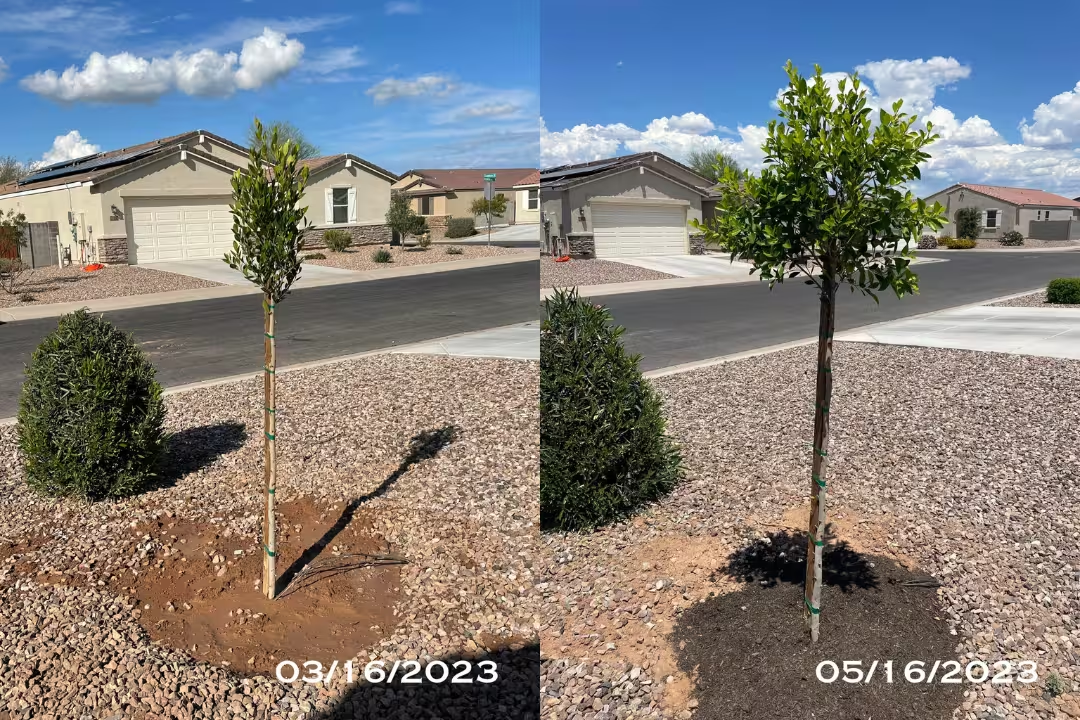
The name Indian laurel tree identifies two unrelated species. Garden centers usually mean Ficus microcarpa, while lumber dealers usually mean Terminalia elliptica; checking the scientific name prevents most plant-care, safety, and woodworking errors.
The Two Main Meanings
Ficus microcarpa belongs to the fig family, Moraceae. It grows as a broad shade tree, clipped Indian laurel hedge, houseplant, or bonsai and produces small figs rather than culinary leaves.
Terminalia elliptica belongs to Combretaceae and grows naturally across parts of South and Southeast Asia. Its heavy timber is sold as Indian laurel wood, saj, ain, asna, or crocodile bark wood; older references may call it Terminalia tomentosa.
Indian Laurel Comparison Table
| Name used by sellers | Scientific name | Family | Typical context | Quick identifier |
|---|---|---|---|---|
| Indian laurel fig | Ficus microcarpa | Moraceae | Hedges, shade, bonsai | Glossy leaves, small figs, milky latex |
| Ficus nitida | Ficus microcarpa | Moraceae | Nursery trade | Commercial synonym for Indian laurel fig |
| Indian laurel wood | Terminalia elliptica | Combretaceae | Furniture and construction | Dense brown hardwood |
| Camphor laurel | Cinnamomum camphora | Lauraceae | Ornamental and camphor source | Strong camphor scent when crushed |
| Laurel oak | Quercus laurifolia | Fagaceae | Shade tree | Narrow leaves and acorns |
| Bay laurel | Laurus nobilis | Lauraceae | Culinary and ornamental | Source of edible bay leaves |
Ficus nitida and other names can complicate shopping. Major taxonomic references accept Ficus microcarpa and treat Ficus nitida as a synonym; Chinese banyan, Malayan banyan, curtain fig, and Indian laurel fig also appear on labels. The Plants of the World Online database provides accepted-name and synonym checks.
Identifying Ficus Indian Laurel
A Ficus Indian laurel has glossy, leathery leaves, smooth gray bark, small rounded figs, and milky sap. Mature trees often reveal broad surface roots or aerial roots, features that separate them from true laurels and oaks.
Leaves, Bark, Fruit, Roots
The simple leaves are usually oval to elliptic with smooth edges and a short tip. Their upper surface feels firm and slick between the fingers, while a snapped petiole releases sticky white latex that can cling to skin and pruning blades.
Young bark looks pale gray and relatively smooth. Small figs form in the leaf axils, and older trees can develop multiple trunks, swollen root flares, buttress-like roots, and dangling aerial roots in humid air.
Native Range and Distribution
Ficus microcarpa is native across tropical and subtropical parts of Asia, Australia, and the western Pacific. People have planted it widely in warm cities, including locations far outside that native range.
Fig wasp pollination explains why the tree spreads freely in some places but remains mainly planted in others. Eupristina verticillata enters receptive figs and pollinates their internal flowers; viable seed becomes far more likely after this specialized wasp reaches a region.
Naturalization risk rises once birds distribute fertile seed. Seedlings can start in wall joints, drains, tree forks, and damp masonry cracks, then send roots into surrounding soil. Local invasive-plant and agriculture databases should be checked before planting.
Indian Laurel Growth and Landscape Uses
Indian laurel grows quickly after establishment in a warm climate with sufficient light, moisture, drainage, and root space. An unclipped tree commonly reaches 40 to 60 feet, while a hedge stays smaller only through recurring pruning.
How Fast Indian Laurel Grows
There’s no reliable universal annual rate. A newly planted root ball may show little top growth during its first season, then produce long, soft shoots once roots enter surrounding soil; heat, frost, irrigation, soil compaction, and pruning can change the Indian laurel growth rate sharply.
Nursery claims often describe ideal warm-season growth, not year-round performance. Repeated shearing can create the appearance of fast growth because every cut triggers clustered shoots, yet it doesn’t indicate equivalent trunk or root establishment.
Natural and Maintained Size
A natural specimen develops a broad crown that may equal or exceed its height. A six-foot hedge, narrow column, or patio bonsai reflects maintained size, not the tree’s genetic limit, so pruning can’t turn a large-rooted species into a naturally compact one.
Landscape pros and cons: dense evergreen foliage provides deep shade, wind filtering, and privacy, making the tree attractive for large warm-climate yards. The trade-offs include invasive surface roots, fig and leaf litter, frost injury, pest outbreaks, and continuous pruning costs.
Hedges, screens, and shade: an Indian laurel hedge responds well to light, regular clipping. Keep its base slightly wider than its top so sunlight reaches lower leaves, and use selective internal cuts from time to time; surface-only shearing creates a green shell around bare twigs.
Bonsai and indoor growth: Ficus microcarpa tolerates root pruning and branch reduction, but indoor plants need bright window light and free drainage. In weak light, new leaves become widely spaced and stems feel thin and flexible before leaf drop begins.
Practical notes from use: the most common failure starts with a narrow hedge planted beside paving. Several years of missed trimming let woody trunks and roots enlarge, after which hard reduction produces a burst of upright water sprouts rather than a neat, low-maintenance screen.

How to Grow Indian Laurel Fig
Grow Indian laurel fig in a warm site with sun, draining soil, and enough room for its mature roots and canopy. Most outdoor recommendations center on USDA Zones 9b–11, but local frost patterns matter more than a broad zone label.
Climate and Hardiness
Established trunks may survive cold that burns foliage and kills tender branch tips, while young plants can suffer much greater damage. Check your location with the USDA Plant Hardiness Zone Map, then account for exposed slopes, enclosed courtyards, wind, and local freeze duration.
Sunlight requirements range from full sun to partial shade outdoors. Greenhouse-raised plants can scorch if moved straight into intense afternoon sun; acclimate them across one or two weeks, starting with bright morning light.
Soil and Planting
Indian laurel accepts several soil textures, but chronically saturated or heavily compacted ground starves roots of oxygen. Dig a hole wider than the root ball, set the root flare at grade, and backfill mainly with native soil rather than creating a soft amended pocket.
- Confirm the label says Ficus microcarpa or its nursery synonym Ficus nitida.
- Check overhead wires, drains, paving, walls, pools, and available soil volume.
- Remove the container and loosen severe circling roots without stripping the root ball bare.
- Set the tree no deeper than it grew in the nursery.
- Water the whole root ball and adjacent soil slowly.
- Spread a shallow mulch layer while leaving the trunk and root flare exposed.
- Stake only where the root ball can’t remain stable, then remove supports after establishment.
New tree watering should wet both the root ball and nearby soil. Probe the medium before watering again: it should feel cool and slightly damp, not slick, sour-smelling, or waterlogged. Hot wind can dry a small nursery cube long before surrounding clay needs water.
Established tree watering works best as deeper, less frequent irrigation adjusted for season and soil. Repeated shallow sprinkling concentrates fine roots near the surface, while automatic schedules left unchanged through cool weather can keep heavy soil excessively wet.
Fertilizing Indian laurel should follow observed growth, foliage color, and preferably a soil test. Excess nitrogen creates soft shoots, higher water demand, more pest-prone foliage, and extra hedge trimming; container plants need smaller, more regular doses because nutrients wash from drainage holes.
Roots, Pruning, and Common Problems
Indian laurel roots can lift light paving and occupy leaks or existing openings in drainage systems, particularly where soil space is confined. Good placement prevents more damage than repeated root cutting, which can stress or destabilize a large tree.
Invasive Roots and Infrastructure

The Ficus nitida root system spreads widely and may become visible at the surface. Roots don’t hunt for intact pipes, but moisture escaping through cracked joints creates favorable soil, and roots can enlarge after entering those defects.
Unsafe planting locations include narrow sidewalk openings, enclosed courtyards, pool edges, septic areas, sites beside leaking drains, and spaces beneath utility lines. No single setback suits every foundation, soil, irrigation design, or maintained tree form.
Root barriers and arborists: barriers can redirect part of a young root system, but short or shallow panels often let roots travel around or below them. Major pruning near a mature trunk should be assessed by an ISA Certified Arborist before excavation begins.
Structural and Hedge Pruning
Train tree-form specimens while branches are small by retaining well-spaced primary limbs and removing competing stems gradually. Topping leaves large wounds and triggers weakly attached shoots; if a canopy repeatedly outgrows its site, replacement is safer than endless severe reduction.
Hedges respond best to frequent light trimming plus occasional selective thinning. Wipe sticky latex from tools, sharpen blades before they crush twigs, and disinfect equipment when moving between plants that show suspicious stem lesions or dieback.
Pests, disease, and leaf drop: inspect for scale, mealybugs, whiteflies, thrips, aphids, and spider mites. Sticky honeydew, black sooty mold, yellow stippling, or insects clustered under leaves provide better diagnostic evidence than leaf drop alone.
Sudden relocation, frost, dry roots, saturated soil, reduced light, and transplant shock can all shed leaves. Diagnose moisture, temperature, light, and pests before applying fertilizer; feeding a waterlogged root system often produces no improvement.
Latex and pet safety: broken Ficus tissue releases sap that may irritate skin, eyes, mouths, and digestive systems. Wear gloves for heavy pruning, keep debris away from children and pets, and contact a veterinarian, medical service, or poison-control center after a concerning exposure.
People asking are laurel leaves poisonous need a species-level answer. Ficus microcarpa isn’t culinary bay, camphor laurel isn’t a bay-leaf substitute, and unidentified “laurel” foliage should never go into food; edible dried bay leaves come from Laurus nobilis.
Regional invasive status varies because climate, pollinating wasps, and local rules differ. Check state agriculture agencies and invasive-plant councils before purchase, remove volunteer seedlings while small, and select a native screen where Ficus microcarpa is prohibited or discouraged.
Indian Laurel Wood Properties and Uses

Indian laurel wood usually comes from Terminalia elliptica, not the Ficus used for hedges. It is a heavy, hard timber commonly reported near 53 lb/ft³ in dried weight and 2,340 lbf on the Janka scale.
Botanical Source and Range
Terminalia elliptica grows across parts of South and Southeast Asia and can reach roughly 20–30 meters, with larger trees in favorable forests. Mature bark develops deep, blocky cracks that account for the name crocodile bark tree.
Density, weight, and hardness: published averages near 855 kg/m³ and 10,400 N describe timber that feels immediately substantial when a board is lifted. Values vary with growing region, moisture level, and specimen, as reflected in technical data from The Wood Database.
Grain, Color, and Workability

The heartwood ranges from light to medium brown, sometimes crossed by darker streaks, while sapwood is paler. Grain may be straight or interlocked; figured sections can show a rippling reflection under finish but may tear during planing.
Workshop handling calls for sharp edges, light passes, carbide cutters for repeated milling, and pre-drilled screw holes near ends. Dense boards make a harder, higher-pitched cutting sound, and dull tooling leaves fuzzy torn patches rather than clean ribbons.
Fine dust can feel dry and gritty around the nose and throat, so extraction and suitable respiratory protection matter. Test glue and finish on an offcut, especially where oily-looking streaks or polished surfaces could reduce adhesion.
Durability and common uses: reported applications include furniture, cabinetry, flooring, veneer, joinery, boat components, agricultural implements, and heavy construction. Suitability for structural or exposed outdoor work depends on verified grade, treatment, building rules, and service conditions rather than the word “laurel.”
Compared with teak wood or acacia wood, Indian laurel may be less familiar to retail buyers, making scientific-name and origin records especially useful.
Buying and sustainability checks: ask for Terminalia elliptica, country of origin, grade, moisture content, drying method, defect allowance, and chain-of-custody records. Wide boards should be checked for end checks, warp, internal drying stress, and filled insect damage before machining.
Certification and trade status can change, so verify the shipment through official records such as Species+. A seller’s use of “Indian laurel” alone can’t confirm species, legality, or responsible sourcing.
Indian Laurel and Similar Trees Compared
Indian laurel fig differs botanically from camphor laurel, laurel oak, and bay laurel. Fruit, sap, scent, leaf shape, and the scientific label offer more reliable identification than a shared common name.
Indian Laurel vs Camphor Laurel
Ficus microcarpa belongs to Moraceae and releases milky latex. Camphor laurel, Cinnamomum camphora, belongs to Lauraceae; crushing a leaf produces a sharp medicinal scent that lingers on fingertips, a quick field clue covered further in this camphor tree guide.
Camphor plant material isn’t culinary bay and can present toxicity concerns. It has also become invasive in several warm regions, so neither scent nor the word “laurel” makes its foliage suitable for cooking.
Indian Laurel vs Laurel Oak
Laurel oak, Quercus laurifolia, is a southeastern U.S. oak that produces acorns. Indian laurel fig produces figs and latex instead; both may reach roughly 40–60 feet, but their climate preferences, fruit, roots, and families differ. See the full laurel oak profile for its growth traits.
Indian laurel vs bay laurel: culinary bay comes from Laurus nobilis. Ficus microcarpa leaves aren’t edible bay leaves, and English laurel is another unrelated plant; use only properly identified culinary leaves from a reputable food source.
Ficus microcarpa vs Ficus benjamina: F. microcarpa usually carries thicker, rounder leaves with shorter tips. F. benjamina tends to have thinner leaves with long pointed tips and pendulous branchlets, though pruning and cultivars can blur these visual differences.
Ficus vs Terminalia elliptica: Ficus microcarpa is the evergreen ornamental with latex, figs, aerial roots, and hedge use. Terminalia elliptica is the South Asian forest tree behind most Indian laurel lumber, and its fruit isn’t a fig.
Choosing and Buying Indian Laurel Fig
Buy Indian laurel fig only after confirming Ficus microcarpa on the label, local climate fit, invasive status, and adequate root space. Plant size, trunk form, pest condition, shipping limits, and long-term pruning needs matter more than a glossy product photo.
Verify the Scientific Name
Ficus nitida on a nursery label usually refers to Ficus microcarpa, but ask the seller to confirm. Avoid buying any product identified only as Indian laurel, laurel, or Ficus retusa because those labels can conceal a different plant.
Evaluate Nursery Plant Quality
Look for evenly distributed foliage, a stable root ball, healthy branch unions, and media that smells earthy rather than sour. Reject plants with sticky honeydew, black sooty mold, scale clusters, severe leaf loss, trunk wounds, or roots forming a dense woody coil inside the pot.
Starter vs specimen trees: small plugs cost less to ship and adapt with less lifting equipment, but they need careful irrigation and years to form a full screen. Large boxed specimens provide immediate height yet add delivery, installation, staking, transplant-stress, and warranty costs.
Cost and shipping factors include pot volume, plant height, trunk caliper, single- or multi-stem form, order quantity, delivery distance, installation, and state agriculture rules. Ask for the final shipped dimensions rather than assuming a product image shows the plant you’ll receive.
Live Indian laurel plants sold in 2.5-inch nursery cubes are starters, not finished privacy hedges. Before ordering, verify freeze risk, local planting restrictions, delivery dates, carrier handling, seller guarantees, and the process for reporting a damaged or dried plant.
These small starter plants offer single, paired, and trio quantities for warm-climate planting.
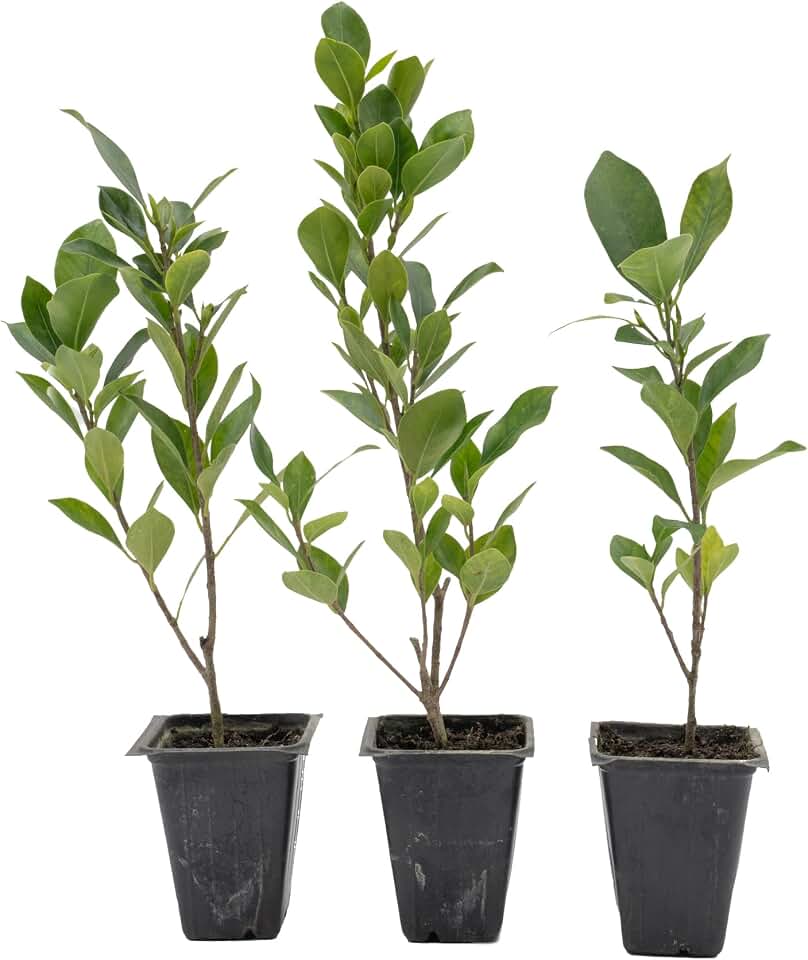
Indian Laurel Fig Trio
- Includes three live Ficus nitida plants
- Evergreen foliage adds year-round privacy
- Fast-growing choice for hedges and screens
- Adaptable tree for sun and warm climates
- Arrives in compact 2.5 inch nursery cubes
 Buy on Amazon

Indian Laurel Fig Pair
- Includes two live Ficus nitida plants
- Dense evergreen foliage creates natural screening
- Fast-growing for hedges and landscape borders
- Adaptable planting for sunny outdoor spaces
- Arrives in compact 2.5 inch nursery cubes
Buy on Amazon

Indian Laurel Fig Starter
- One live Ficus nitida plant for planting
- Evergreen foliage offers lasting landscape color
- Fast-growing habit suits hedges and shade
- Adaptable option for warm outdoor settings
- Arrives in a 2.5 inch nursery cube
Buy on Amazon
FAQs
Is Ficus Nitida The Same As Indian Laurel?
Yes, Ficus nitida is commonly used as a name for Indian laurel, although botanical labeling can vary by nursery and region. The tree is more accurately associated with Ficus microcarpa, an evergreen ficus also sold as Indian laurel fig or Cuban laurel. Check the botanical name when buying plants, especially for landscaping.
How Fast Do Indian Laurels Grow?
Indian laurels grow quickly in warm, frost-free climates, often adding 2 to 4 feet per year when young and well cared for. Growth slows in cooler areas, poor soil, or containers. Regular watering during establishment, sunlight, and occasional pruning help create a dense hedge or shade tree.
Are Indian Laurel Roots Invasive?
Yes, Indian laurel roots can be invasive, particularly on mature trees planted near paving, foundations, pipes, or swimming pools. Their broad, shallow root system seeks moisture and can lift hard surfaces over time. Plant large specimens well away from structures, or use a root barrier and adequate spacing for hedge plantings.
Are Indian Laurel Leaves Poisonous?
Indian laurel leaves are mildly toxic and can cause stomach upset if eaten by people, dogs, cats, or livestock. The milky sap may also irritate skin and eyes in sensitive individuals. Keep fallen leaves and prunings away from pets and children, and wear gloves when trimming the tree.
What Is Indian Laurel Wood Used For?
Indian laurel wood is mainly used for small woodworking projects, carving, turning, and firewood rather than high-grade construction. Its grain can be attractive, but the wood is not usually valued for durable outdoor use. Large landscape trees are more commonly grown for shade, screening, and ornamental foliage than timber.
Affiliate Disclosure: Some links in this post are affiliate links. If you make a purchase through these links, we may earn a small commission at no extra cost to you. We only recommend products we genuinely believe in.