
Soft Maple: Species, Wood Properties, Uses and Hard Maple Differences

Soft maple is a commercial lumber group containing maple species that are lighter and less hard than sugar or black maple. It remains a botanical hardwood and performs well in furniture, cabinets, millwork, carving, turning, and many indoor projects.
Table of Contents
What Is Soft Maple?
Soft maple isn’t one species. Lumber dealers use the name for several maples with lower density and dent resistance than hard maple, most often red and silver maple in eastern North America and bigleaf maple in western markets.
Commercial Wood Group
The commercial group commonly includes red maple, silver maple, bigleaf maple, and sometimes boxelder. Supplier definitions vary, so request the botanical species when weight, color, hardness, or machining behavior affects the project.
- Red maple: Acer rubrum
- Silver maple: Acer saccharinum
- Bigleaf maple: Acer macrophyllum
- Boxelder: Acer negundo
- Hard maple comparison species: sugar maple and black maple
Is Maple Wood Hard or Soft?
Maple is botanically a hardwood because Acer species are flowering broadleaf trees with enclosed seeds. The lumber trade separates maple into hard and soft groups based on comparative wood properties, not botanical class.
Hardwood Versus Hardness. “Hardwood” identifies tree anatomy, while Janka hardness measures resistance to indentation. A hardwood can be physically soft, and a conifer classified as softwood can be harder than some broadleaf woods.
The Janka test presses a 0.444-inch steel ball halfway into a sample and records the force required. It helps predict dents, but it doesn’t independently measure structural strength, screw holding, movement, rot resistance, or machining quality; see the broader wood hardness scale for context.
Common Soft Maple Misconceptions. Soft maple is genuine maple, isn’t a softwood, and isn’t comparable to balsa. Hard maple isn’t automatically the better choice: soft maple often costs less, weighs less, cuts more easily, and provides enough strength for well-designed indoor furniture.
Soft Maple Species and Properties
Soft maple wood ranges from roughly 700 to 950 lbf on the Janka scale, depending on species. Its pale color, fine texture, moderate weight, and workable grain make it useful for cabinets, furniture, turnings, and decorative figured stock.
Species Property Table
The figures below are representative averages for dry wood rather than guarantees for every board. Growing site, moisture, grain direction, defects, and testing method can change mechanical performance.
| Species | Scientific name | Primary region | Dry weight | Janka hardness | Modulus of rupture | Common uses |
|---|---|---|---|---|---|---|
| Red maple | Acer rubrum | Eastern North America | 38 lb/ft³ | 950 lbf | 13,400 psi | Furniture, cabinets, millwork |
| Silver maple | Acer saccharinum | Eastern and central North America | 33 lb/ft³ | 700 lbf | 8,900 psi | Furniture frames, boxes, turnings |
| Bigleaf maple | Acer macrophyllum | Western North America | 34 lb/ft³ | 850 lbf | 10,700 psi | Instruments, veneer, furniture |
| Boxelder | Acer negundo | North America | About 30 lb/ft³ | About 720 lbf | Variable | Turning, boxes, crafts |
Species-level figures can be checked against the USDA Wood Handbook. Never assign one universal density or Janka value to the entire soft-maple group.
Red Maple
Red maple is the harder and heavier of the two main eastern soft maples. At about 950 lbf Janka, it has representative dent resistance similar to black cherry and works well for cabinet doors, chairs, tables, drawers, and clear-finished millwork.
Silver Maple. Silver maple averages about 700 lbf and 33 pounds per cubic foot when dry. A sharp fingernail may leave a visible compression line on an unfinished surface, so it suits low-impact furniture, boxes, painted work, and turnings better than busy floors.
Storm-damaged silver maple logs can still yield useful lumber after checking for metal, decay, shake, and embedded bark. Weak branch unions in a standing silver leaf maple don’t prove that every sound, kiln-dried board is weak.
Bigleaf Maple. This western species averages about 850 lbf Janka and often carries curly or quilted figure. Its moderate weight, workable texture, and shimmering figure make it valuable for furniture, veneer, guitar components, drum shells, bowls, and decorative panels.
Boxelder. Boxelder is a true Acer species, despite its compound leaves. Its pale lumber may develop striking red or pink streaks near wounds, but buyers should reject soft, crumbly, checked, or decayed areas before using the wood in boxes, carvings, or turnings; learn more in the boxelder wood guide.
Density and Janka Hardness. Density affects weight, cutting resistance, and often fastener holding, while Janka hardness focuses on dent resistance. Red maple feels firm beneath a scraper; silver maple cuts with less resistance and produces a softer, almost silky shaving from a sharp hand plane.
Natural Maple Wood Color. Sapwood ranges from creamy white to pale tan. Heartwood can be gray, reddish brown, or light brown, and mineral streaks may appear greenish, gray, or nearly black. Freshly planed maple often looks cool and pale before oil gives it a honeyed cast.
Maple wood appearance can differ across adjacent boards from the same log. Color isn’t dependable species proof, so select all visible pieces under the same lighting and wipe them with mineral spirits to preview the likely finished contrast.
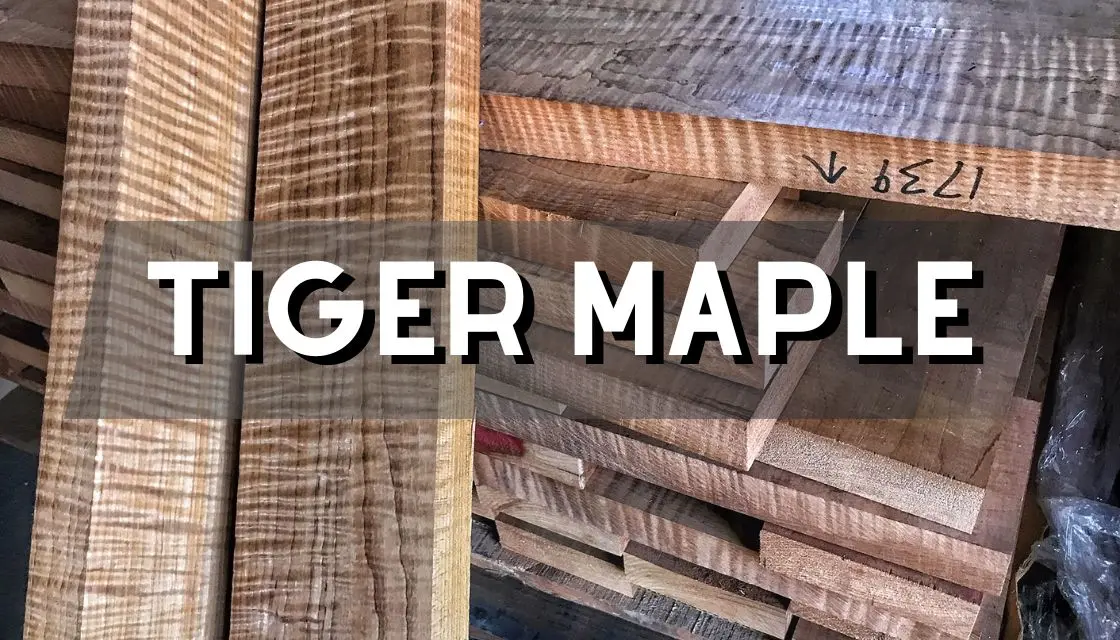
Types of Maple Wood Grain. Plain soft maple usually has straight, fine, even grain. Other maple wood grain types include curly, quilted, fiddleback, burl, spalted, ambrosia-streaked, flame-like, and occasional birdseye patterns; these describe appearance rather than separate species.
Curly grain forms narrow ripples, quilted grain creates broad pillowy shapes, and fiddleback shows tight, regular curl. Burl displays swirling buds and eyes, while spalting comes from fungal activity. Mineral or ambrosia maple streaking comes from a different process.
Shrinkage and Movement. Representative green-to-oven-dry shrinkage is 4.0% radial and 8.2% tangential for red maple, 3.0% and 7.2% for silver maple, and 3.7% and 7.1% for bigleaf maple. These aren’t normal seasonal movement percentages in finished furniture.
Tangential shrinkage is roughly double radial shrinkage, making wide flatsawn boards more likely to cup. Attach tabletops with buttons, figure-eight fasteners, or screws in elongated holes so the top can move across its width without splitting.
Decay and Outdoor Durability. Soft maple is commonly rated non-durable to perishable during prolonged exposure to soil and weather. Paint slows moisture entry but can’t give maple the natural decay resistance of white oak, cedar, cypress, or black locust.
Hard Maple vs Soft Maple
Hard maple vs soft maple comes down to wear, weight, machining, appearance, and cost. Hard maple resists dents better, while soft maple is lighter, cuts more easily, and is often the practical choice for painted cabinets and ordinary indoor furniture.
Comparison Table
| Property | Soft maple | Hard maple |
|---|---|---|
| Typical species | Red and silver maple | Sugar and black maple |
| Representative Janka hardness | 700–950 lbf | About 1,450 lbf for sugar maple |
| Dry weight | 33–38 lb/ft³ for silver and red maple | About 44 lb/ft³ for sugar maple |
| Dent resistance | Moderate | High |
| Machining | Easier, with tear-out in figure | Harder on edges and prone to burning |
| Color | Cream with gray or reddish variation | Often selected for bright, pale sapwood |
| Paint | Excellent | Excellent |
| Flooring | Low-traffic use | High-traffic use |
| Typical plain-stock cost | Often lower | Often higher |
Hardness and Strength
Sugar maple’s representative 1,450 lbf rating is about 53% higher than red maple’s 950 lbf and more than double silver maple’s 700 lbf. Put another way, red maple tests about 34% below sugar maple, while silver maple tests about 52% below it.
Those percentages describe indentation resistance, not furniture life. A soft maple cabinet with sound mortise-and-tenon joints can outlast a poorly joined hard maple cabinet, since design, glue surface, moisture, and load paths control much of the result.
Weight and Appearance. Sugar maple averages about 44 pounds per cubic foot dry, compared with 38 for red maple and 33 for silver maple. That difference becomes noticeable while lifting a wide door or turning a large bowl blank.
Hard maple is often sorted for clean white sapwood. Soft maple commonly displays more gray, red-brown, and mineral-streaked areas, though carefully selected boards can produce a bright clear finish. Neither color nor grain alone reliably proves species.
Grain and Machining. Both groups usually have fine texture and can carry figure. Soft maple requires less cutting force, while hard maple dulls edges sooner and can leave a brown burn mark if a router bit pauses or a table-saw feed rate falls.
Price Differences. Plain soft maple usually costs less than pale, select hard maple, but no fixed difference applies across regions. Width, thickness, grade, color sorting, surfacing, shipping, and figure can make a quilted soft maple board far more expensive than ordinary hard maple.
When Soft Maple Wins. Choose it for painted cabinetry, drawer parts, interior trim, carved work, lighter furniture, decorative figured panels, and projects where maximum dent resistance adds cost without a practical benefit.
When Hard Maple Wins. Choose hard maple for heavy-use cutting surfaces, high-traffic floors, stair treads, commercial fixtures, workbench tops, and tabletops exposed to concentrated impact. The maple wood guide covers the family more broadly.
Soft Maple Tree Identification
A soft maple tree can’t be identified from that trade name alone. Check opposite branching, leaves, buds, bark, samaras, habitat, and geographic range before deciding whether a tree is red maple, silver maple, bigleaf maple, or boxelder.
General Maple Features
Most maples have opposite buds and branches plus paired winged seeds called samaras. Opposite branching remains useful after leaves drop because many look-alike trees carry alternate branches.
Use several traits together. Leaf damage, juvenile growth, hybrids, cultivated forms, and variable bark can mislead beginners who rely on one photograph; the guide to types of maple trees provides a wider comparison.
Red Maple Identification
Red maple leaves usually have three to five serrated lobes with moderately shallow sinuses. Red tones may appear in the buds, flowers, petioles, young twigs, samaras, and autumn foliage, though no single red feature confirms the species.
Young bark appears smooth and gray; mature trunks develop darker ridges or plates. Trees often reach 40–60 feet and tolerate sites ranging from moist lowlands to comparatively dry uplands.
Silver Maple Identification. Silver maple normally has five deeply divided lobes and pale, silvery leaf undersides that flash in the wind. Mature bark becomes shaggy or separates into long loose strips, while the broad crown may carry brittle, storm-prone limbs.
Bigleaf Maple Identification. Bigleaf maple has five-lobed leaves commonly measuring 6–12 inches across. It occurs mainly in western North America, where mosses and lichens often cover trunks in humid forests and yellow-green flowers hang in clusters.
Boxelder Identification. Boxelder breaks the familiar maple-leaf pattern by carrying compound leaves with three to seven leaflets. Opposite buds, branches, and paired samaras confirm its Acer relationship; female trees produce the winged seeds.
Range and Habitat. Red maple occupies much of eastern North America. Silver maple favors floodplains and riverbanks, bigleaf maple grows in western forests, and boxelder appears along waterways, shelterbelts, urban lots, and disturbed ground.
Syrup Production. Red and silver maples can be tapped for syrup. Sugar maple remains the commercial favorite because sap commonly has a more favorable sugar concentration and the tree may hold a useful tapping window longer before bud break changes sap flavor.
Tree size, vigor, weather, site, and local guidance determine responsible tapping. Small, stressed, diseased, or recently damaged trees shouldn’t be treated like healthy mature trees; the U.S. Forest Service maple guidance explains production considerations.
Lumber Identification Limits. Once a log becomes pale, surfaced lumber, separating red maple from another Acer species by eye becomes unreliable. Supplier records, geographic origin, microscopic anatomy, density testing, and mechanical tests provide stronger evidence than grain photographs.

Soft Maple Project Suitability
Soft maple is strong enough for most indoor furniture, cabinets, trim, turnings, and decorative work when joints and dimensions match the load. Its main limitations are dent resistance, color variation, and poor natural outdoor durability.
Furniture and Cabinets
Soft maple performs well in face frames, doors, drawer fronts, drawer sides, chairs, tables, beds, and painted furniture. Its fine texture leaves a smooth painted surface, while moderate density supports reliable mortise-and-tenon, dowel, and loose-tenon joinery.
Clear-finished cabinets need deliberate board selection. Lay doors and drawer fronts together before cutting, then reject or relocate gray heartwood and dark mineral streaks if the design calls for uniform pale color.
Tables and Millwork
Dining tables, desks, painted bases, moldings, paneling, and interior doors are practical uses. A film finish resists stains and abrasion, but it won’t stop a dropped metal tool from compressing the softer wood beneath it.
Flooring. Soft maple suits bedrooms and low-traffic rooms where small dents and patina are acceptable. Busy entries, commercial corridors, large dogs, and hard footwear favor sugar maple, oak, or another wood with greater indentation resistance.
Turning and Carving. The wood cuts cleanly with sharp tools and suits bowls, pens, handles, boxes, ornaments, and carved details. Silver maple offers low cutting resistance; red maple holds crisp edges better, while reversing figure can pull a gouge into a deeper cut.
Musical Instruments. Figured bigleaf maple appears in guitar backs, sides, bodies, veneers, and drum shells. Attractive curl doesn’t prove superior tone; stiffness, thickness, moisture, construction, and the complete instrument design all influence acoustic behavior.
Cutting Boards. Sound, untreated soft maple can be used, but it dents and wears sooner than hard maple. Heavy-use butcher blocks normally favor sugar maple. Avoid spalted, punky, chemically treated, contaminated, or unidentified salvaged stock around food.
Outdoor Projects. Untreated soft maple is a poor choice for decking, posts, ground contact, and furniture left outside all year. For a temporary decorative item, keep it above ground, shed water, seal end grain, and maintain every coating break.
Project Suitability Matrix. These ratings assume dry, sound lumber and competent joinery. Figured or defective boards may require a different decision.
| Project | Suitability | Working note |
|---|---|---|
| Painted cabinets | Excellent | Fine texture creates a smooth paint surface |
| Clear furniture | Good | Sort boards for color and mineral streaks |
| Tables | Good | Allow top movement and accept moderate denting |
| Low-traffic flooring | Acceptable | Use a durable finish and stable indoor humidity |
| High-traffic flooring | Limited | Hard maple offers better dent resistance |
| Turning and carving | Good | Sharp tools reduce fuzz and tear-out |
| Musical instruments | Good | Figured bigleaf maple is widely used |
| Cutting boards | Possible | Hard maple is preferred for heavy wear |
| Exposed outdoor work | Poor | Choose a naturally durable or treated wood |
Working and Finishing Soft Maple
Soft maple machines and glues well, but sharp cutters matter because dull edges leave fuzzy fibers and figured grain tears in both directions. Consistent sanding and a tested coloring schedule prevent the most common finishing failures.
Sawing and Planing
Straight-grained boards usually saw and plane cleanly. Keep planer knives sharp, take light cuts, and maintain steady feed through routers; moving too slowly builds heat and leaves a bitter-smelling brown burn that can run deeper than it first appears.
Drilling and Fasteners. Predrill near edges and ends, in thin parts, and for large screws. Add a countersink for flush heads. Soft maple holds ordinary furniture fasteners well, but screws can’t repair weak grain direction or replace properly sized joints.
Gluing and Joinery. Freshly machined, close-fitting surfaces bond well with common woodworking adhesives. Heavy clamp pressure can squeeze out too much glue, while dried squeeze-out leaves pale islands beneath stain; scrape it off and inspect under raking light.
Sanding Soft Maple

A practical sequence is 120, 150, then 180 grit for many clear and stained finishes. Skipping grits leaves cross-grain scratches, while polishing far beyond the planned schedule may reduce stain absorption and create lighter patches.
Sand end grain one grit finer than adjacent face grain to limit dark absorption. Vacuum the surface rather than forcing dust into pores, then view it under a low side light that makes scratches cast thin shadows.
Preventing Figured Tear-Out. Curly and quilted fibers reverse repeatedly, so feeding from one direction doesn’t solve every patch. Use shallow cuts, a sharp high-angle plane, cabinet scraper, helical cutterhead, or controlled sanding before deep divots consume the final thickness.
Why Maple Blotches. Grain direction, density, end grain, sanding, and glue contamination change how pigment penetrates. The result may show dark clouds, lap marks, blackened figure, pale glue spots, or edge grain much darker than the adjoining face.
Staining Methods. Transparent dye usually colors maple more evenly than a heavy penetrating pigment stain. A compatible washcoat, gel stain, or sprayed toner can control absorption, but each layer must work with the planned topcoat.
- Prepare every visible part with the same sanding sequence.
- Test dye, washcoat, stain, and topcoat on a project offcut.
- Seal end grain or sand it one grit finer.
- Apply thin, even coats without crossing partly dried edges.
- Inspect color under the room’s final lighting.
- Allow the full stated drying time before adding another product.
Clear Finish Options. Waterborne polyurethane and lacquer preserve a paler maple wood natural color. Oil, oil-based polyurethane, and oil-and-wax blends add amber warmth, make curl flash more strongly, and may deepen the contrast around mineral streaks.
Food-Contact Finishes. Read the manufacturer’s full-cure and application directions before using any finish on bowls, serving pieces, or cutting surfaces. Dry to the touch doesn’t mean fully cured, and decorative trays face less wear than chopping blocks.
Dust Safety. Maple dust can irritate skin, eyes, and airways. Connect extraction at the tool, wear fitted respiratory protection, ventilate finish vapors, and use a vacuum instead of compressed air, which fills the room with fine suspended dust.
Optional Soft Maple Finish. An oil-and-wax finish brings out warm grain and feels smooth rather than plasticky beneath the fingertips. It offers less moisture and abrasion resistance than a thick film, so follow the maker’s cure directions and reserve it for suitable indoor pieces.

Tried and True Wood Finish
- Natural oil and wax finish
- Enhances wood grain warmth
- Food-safe finish when cured
- Easy wipe-on application
- Ideal for wood projects
 Buy on Amazon
Figured Soft Maple Stock
Figured soft maple contains irregular fiber patterns that reflect light differently as the viewing angle changes. Figure can raise visual value and price while making planing, routing, sanding, and species verification more difficult.
Curly Maple
Curly maple has undulating fibers that create repeating light and dark bands. Tilting a finished board makes those bands appear to move, a three-dimensional optical effect called chatoyance; see the full curly maple guide.
Quilted Maple. Quilted figure forms broad, rounded shapes resembling soft folds or pillows. It is strongly associated with bigleaf maple, yet appearance alone doesn’t verify species. Fine quilted stock is often sliced into veneer to gain more visible area from a scarce board.
Fiddleback and Burl
Fiddleback is tight, regular curl commonly selected for instrument work. Burl develops chaotic swirls, buds, eyes, bark inclusions, and grain that may change direction within a few millimeters, making hidden voids and catches common during turning.
Spalted Maple. Fungi create dark zone lines and color changes during early decay. Attractive lines don’t make weak wood sound; reject or stabilize areas that feel punky, crumble under a fingernail, release dusty fibers, or fail to hold a crisp edge.
Spalted material calls for careful extraction and respiratory protection because its dust contains wood particles and fungal material. The spalted maple guide covers selection and working limits.
Figure Versus Species. Curl, quilt, birdseye, flame, burl, and spalting describe visible patterns rather than botanical species. A seller should not label a curly board as bigleaf maple solely from its appearance, since curl can occur in both soft and hard maple.
Craft and Turning Stock. Small project boards and pen blanks let buyers use dramatic figure without purchasing wide lumber. Check exact dimensions, moisture, end checks, bark inclusions, species claims, and whether the listing photograph shows the exact piece being shipped.
These figured maple options suit compact craft and turning projects where visible grain matters more than long clear yield.

Curly Maple Craft Board
- Soft curly maple wood
- Eye-catching figured grain
- Three-quarter inch thick stock
- Ready for custom woodworking
- Great for small projects
Buy on Amazon
Curly Maple Project Board
- Soft curly maple wood
- Distinctive rippled grain pattern
- Half-inch thick board
- Easy to shape and finish
- Ideal for detailed projects
Buy on Amazon

Curly Maple Pen Blank Set
- Five figured maple blanks
- Unique curly grain detail
- Made for pen turning
- Takes finish beautifully
- Great for handmade gifts
Buy on Amazon
Buying Soft Maple Lumber
Buy soft maple by species, grade, dimensions, moisture, and usable yield rather than name alone. A cheaper board can cost more after surfacing and defect removal, while a higher-priced straight, dry board may produce every required part with little waste.
Species Verification
Ask whether “soft maple” means red maple, silver maple, bigleaf maple, boxelder, or a mixed commercial shipment. This check matters most for flooring, cutting surfaces, instrument stock, matched color work, and components with calculated mechanical loads.
Hardwood Lumber Grades. Common North American grades include FAS, FAS One Face, Selects, No. 1 Common, and No. 2A Common. Grade primarily predicts clear cutting yield, not color, flatness, beauty, species, strength, or absence of mineral streaks.
Short cabinet parts can make No. 1 Common economical because knots and defects fall between the cutting lengths. FAS may waste money when a project needs many small components rather than long, wide, clear pieces; consult the NHLA educational resources for grading principles.
Thickness and Surfacing
Hardwood thickness uses quarter-inch categories: 4/4 starts near 1 inch rough, 5/4 near 1¼ inches, 6/4 near 1½ inches, and 8/4 near 2 inches. Drying, flattening, and surfacing reduce the final thickness.
Confirm whether boards are rough, S2S, S3S, S4S, or straight-line ripped. A surfaced board may still contain bow, cup, twist, or an unsquared edge, while an exact-dimensional project board usually carries added milling and handling cost.
Board-Foot Calculation. Multiply thickness in inches by width in inches by length in feet, then divide by 12. A board measuring 1 inch × 8 inches × 8 feet contains about 5.33 board feet before waste.
Retailers may tally rough lumber using its stated quarter thickness rather than its later surfaced measurement. Dimensional boards sold by the piece can look costly per board foot because selection, drying, milling, packaging, and parcel shipping are built into the price.
Moisture and Acclimation. Interior furniture lumber often falls near 6–8% moisture in conditioned buildings, but the correct target follows local equilibrium moisture content. “Kiln-dried” describes a process and doesn’t prove the board’s moisture at purchase.
Measure several boards at multiple positions and depths with a calibrated meter. Stack lumber with stickers in conditions close to its final room; assembling wet stock can lead to cupping, open joints, cracked panels, twisted doors, and drawers that bind.
Color and Grain Selection. Arrange visible boards side by side in natural and indoor light. Wipe representative offcuts with mineral spirits to preview contrast, then mark the show face, grain direction, and part location before breaking down the stock.
Soft Maple Pricing. Plain stock is often cheaper than select hard maple, but species, region, grade, thickness, width, length, pale-color sorting, figure, drying, and freight set the real cost. Request local quotes rather than relying on a single evergreen average.
Figured Stock Checklist. Buy for usable figure rather than dramatic end grain alone. Strong curl on one face may fade after flattening, and quilted figure may cover only part of a board.
- Confirm the botanical species or accept that it is unverified.
- Ask for current moisture readings.
- Check rough and finished dimensions.
- Inspect both faces and every edge.
- Locate end checks, knots, voids, bark, and punky spalting.
- Confirm whether photographs show the exact board.
- Calculate usable yield after flattening and defect removal.
- Buy extra stock for grain matching and machining loss.
Common Selection Failures. Beginners often buy generic soft maple expecting red maple, choose flooring by color alone, ignore moisture, or pay for FAS while needing short parts. Others purchase dramatic figure without allowing enough thickness to remove tear-out.
A useful workaround is to mill one test component before processing the whole order. That sample reveals actual color, cutter behavior, movement, stain response, and finished thickness while replacement stock is still available.
Practical Notes From Real-World Use
Soft maple succeeds when the board is matched to actual service conditions, not chosen because it resembles hard maple. The most expensive failures come from hidden moisture, rigid tabletop attachment, blotchy color schedules, and figured stock planed too aggressively.
A freshly jointed straight-grain board should feel smooth and cool, with a faintly silky resistance beneath the palm. Raised fuzz, rippled planer marks, or tiny torn craters signal dull cutters, reversing grain, or moisture variation before finish magnifies each defect.
For painted cabinets, soft maple often gives the best balance of machining, weight, and surface quality. Keep hard maple for counters, stair parts, and wear zones, then use soft maple elsewhere; this mixed-species strategy controls cost without sacrificing performance where impact matters.
Finish every sample through the complete schedule, including topcoat. A stain that looks balanced while wet can dry muddy, while oil may turn gray mineral areas olive-brown. Label each sample with grit, conditioner ratio, color, coat count, and drying time.
Before assembly, leave a few offcuts from every visible board. They become color samples, setup blocks, and repair material with the same grain and aging response—a small habit that prevents mismatched patches years after the project is finished.
FAQs
Is Soft Maple Real Maple?
Soft maple is genuine maple wood from several maple species, most commonly red maple, silver maple, and boxelder. The name describes its lower hardness compared with hard maple, not a different type of tree. It still has attractive grain, a smooth texture, and many practical woodworking uses.
Is Soft Maple Strong Enough For Furniture?
Yes, soft maple is strong enough for most furniture, including tables, cabinets, chairs, and dressers. It is less dent-resistant than hard maple, so heavily used surfaces benefit from a durable finish and sensible care. Choose straight, properly dried boards and use sound joinery for reliable long-term results.
Is Red Maple Considered Hard Or Soft Maple?
Red maple is considered a soft maple species, even though its wood can be moderately hard. It is generally softer and less dense than sugar maple, which is classified as hard maple. Its hardness can vary by tree and growing conditions, making some boards noticeably firmer than others.
Does Soft Maple Stain Well?
Soft maple can stain well, but it may absorb pigment unevenly and develop blotchy areas. Use a pre-stain wood conditioner, gel stain, or a light dye to improve color consistency. Test the complete finishing process on an offcut before applying it to the furniture piece.
Can A Soft Maple Tree Be Tapped For Syrup?
Yes, a soft maple tree can be tapped for syrup, although it usually produces less sugar than sugar maple. Red maple and silver maple sap can be boiled into syrup using the same basic process. Tap healthy, mature trees during late-winter freeze-and-thaw weather, and expect more sap may be needed.
Affiliate Disclosure: Some links in this post are affiliate links. If you make a purchase through these links, we may earn a small commission at no extra cost to you. We only recommend products we genuinely believe in.