

Cypress wood is a coniferous softwood used for siding, trim, fences, outdoor furniture, paneling, cabinetry, and boats. In North American lumber sales, the name usually refers to bald cypress, valued for moderate weight, easy machining, stable grain, and the natural decay resistance found mainly in its heartwood.
Table of Contents
What Is Cypress Wood?
Commercial cypress lumber in the United States usually comes from bald cypress, or Taxodium distichum. It is a deciduous conifer native to wetlands and floodplains across the southeastern and south-central United States.
Bald Cypress Identity
Bald cypress produces cones like other conifers but sheds its soft, feathery foliage each year. The tree belongs to the Cupressaceae family, and its wetland habitat explains why people often assume the lumber is waterproof; the wood still absorbs moisture and needs sound construction details.
The USDA Plants profile identifies Taxodium distichum and its native distribution. Botanical identity matters because sellers may apply “cypress” to unrelated regional species whose hardness, scent, durability, and price differ.
Regional Cypress Species
Pond cypress may be listed as Taxodium ascendens or as a variety of bald cypress. Japanese hinoki, Monterey cypress, Leyland cypress, Bhutan cypress, and Australian white cypress pine are different materials, so claims about one shouldn’t be transferred to another.
Monterey cypress, for example, has a separate supply chain and use pattern. Leyland cypress is widely planted as a fast-growing screen, but landscape logs don’t automatically meet commercial cypress lumber grades or drying standards.
Hardwood or Softwood? Cypress is botanically a softwood because it comes from a conifer. Hardwood and softwood identify plant groups rather than actual hardness, which is why softwood cypress can feel firmer than some lightweight hardwoods.
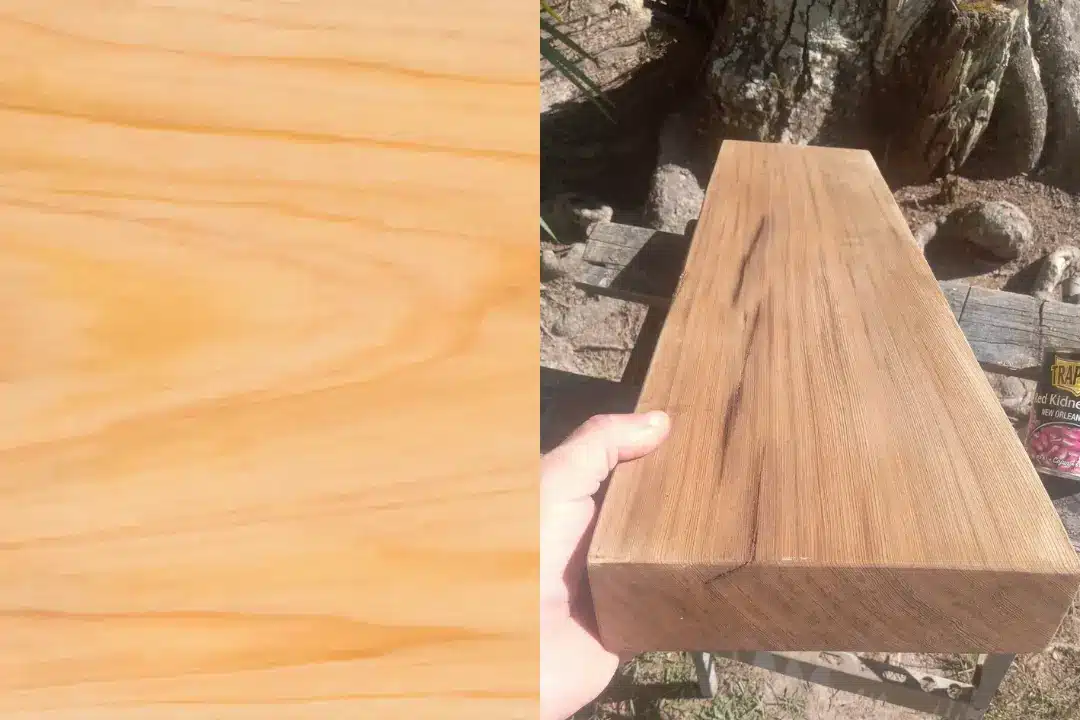
Heartwood and Sapwood: Pale cream or yellow sapwood surrounds heartwood ranging from light yellow-brown to reddish or deeper brown. Natural decay resistance is associated mainly with heartwood, while pale sapwood shouldn’t be treated as equally durable in wet exposure.
Color, Grain, and Texture: Grain commonly runs straight with a medium texture and clear bands of soft earlywood and denser latewood. A freshly planed surface feels smooth but slightly ridged under the fingertips, while newly cut stock may release a warm, resinous odor that varies from board to board.
Color matching takes more effort than the name “cypress” suggests. Lay boards face-up under the project’s final lighting before cutting, since sapwood contrast and reddish heartwood can become much stronger after oil or clear finish is applied.
Cypress Wood Uses and Suitability
Cypress wood uses include siding, porch ceilings, exterior trim, fences, gates, furniture, birdhouses, cabinets, paneling, flooring, and selected boat components. It performs best where a project sheds rain, receives airflow, and keeps cut ends away from damp soil or masonry.
Siding, Trim, and Porches
Cypress suits bevel siding, board-and-batten walls, soffits, fascia, shutters, porch ceilings, and decorative columns. Vertical boards drain better than flat surfaces, while a ventilated rain screen lets the back dry after wind-driven rain.
Porch ceilings reveal the wood’s straight grain without subjecting it to constant foot traffic. For exposed trim, leave a drip edge, coat cut ends, and avoid resting the board directly on concrete, shingles, or a deck surface that stays damp.
Fences and Outdoor Structures
Cypress works well for fence boards, gates, screens, pergolas, arbors, and above-ground landscape structures. Review wood fence types before choosing dimensions, since a thin picket and a buried structural post face very different moisture and load conditions.
Furniture and Birdhouses: Its light weight and workability make cypress useful for benches, porch swings, Adirondack-style chairs, tables, planters with liners, and birdhouses. For a birdhouse, use untreated dry stock, provide drainage and ventilation, leave the inside unpainted, and avoid pressure-sensitive glue squeeze-out where birds can reach it.
Cypress can be one of the best materials for birdhouses when heartwood is available, but species choice can’t fix a poor design. A removable cleanout panel, recessed floor, roof overhang, and correctly sized entrance hole provide more value than a thick glossy exterior coating.
Paneling and Cabinetry: Cypress makes warm-toned wall paneling, ceilings, cabinet doors, built-ins, mantels, and rustic furniture. Select and sequence boards before assembly, since alternating pale sapwood and dark heartwood can look patchy across a broad cabinet run.
Flooring Applications: Bald cypress has a representative Janka hardness near 510 lbf, so heels, chair legs, dog claws, and dropped tools can dent it. It fits bedrooms and low-traffic rooms better than busy commercial entrances, and owners should accept visible wear as part of the surface character.
Boats and Waterside Uses: Cypress has historical use in boats, tanks, docks, and waterside structures. That history doesn’t make ungraded modern boards suitable for safety-critical hull, dock, or load-bearing work; marine design, structural grading, connectors, and local codes still apply.
Decking and Ground Contact: Cypress can serve as above-ground decking if boards are properly dried, spaced, fastened, and sloped to drain. Ordinary cypress shouldn’t automatically replace lumber labeled for ground contact, especially for buried posts, freshwater edges, shaded stairs, or framing beneath a low deck.
For outdoor seating and tables, compare cypress with the materials in this guide to the best outdoor furniture wood. Horizontal surfaces collect pollen, leaves, drink spills, and rain, so they need closer inspection than vertical siding.
Cooking With Cypress: Don’t use bald cypress lumber as smoking wood, fuel for cooking, or a source of aromatic chips. Its resinous compounds can produce an unpleasant flavor, while shop scraps may contain finish, glue, metal residue, dirt, or treatments that shouldn’t contact food or smoke.
Hinoki cutting boards are a separate case: food touches a finished wooden surface rather than smoke from burning cypress. Use only products sold for culinary service, and never assume a fragrant offcut from a mill is food-safe wood.
Cypress Properties, Benefits, and Limitations
The main characteristics of cypress wood are moderate weight, low hardness, easy machining, useful dimensional stability, and variable decay resistance. These properties make it practical for exterior millwork and decorative interiors, but they don’t make every board suitable for soil contact, flooring, or structural spans.
Weight and Density
Representative bald cypress averages about 32 lb/ft³, or 515 kg/m³, when dried. Specific gravity is roughly 0.42 basic and 0.51 at 12% moisture content, though growth rate, moisture, species, and heartwood percentage change actual board weight.
A dry cypress board feels noticeably easier to lift than white oak of the same dimensions. Wet or partially dried stock tells a different story: it feels cool and heavy in the hands, and fresh cuts may reveal a damp core even when the faces seem dry.
Hardness and Strength
Bald cypress has a representative Janka rating of about 510 lbf, a modulus of rupture near 10,600 psi, a modulus of elasticity near 1.44 million psi, and crushing strength near 6,360 psi. The Bald Cypress profile publishes these species averages.
Clear-specimen laboratory values aren’t span-table values. Knots, checks, grain slope, moisture, grade, connection design, dimensions, and load duration control real structural performance, so beams and safety-related components need an accepted grade and suitable engineering.
Shrinkage and Stability: Representative green-to-oven-dry shrinkage is about 3.8% radial, 6.2% tangential, and 10.5% volumetric. The tangential-to-radial ratio near 1.6 is favorable, yet wide flatsawn boards can still cup when one face stays wetter than the other.
Rot and Weather Resistance: Heartwood contains extractives that slow some decay fungi, but cypress isn’t waterproof or decay-proof. Vertical heartwood siding that dries after rain may perform well, while sapwood trapped beneath a wet planter can fail much sooner.
Old-Growth Versus Second-Growth: Dense old-growth heartwood earned cypress much of its durability reputation. Younger second-growth boards often contain wider growth rings and more sapwood, making visual inspection and exposure-based selection more useful than relying on the species name alone.
Water and Ground Exposure: Wetland trees survive through living biological systems; sawn boards don’t retain those systems. Standing water, buried end grain, blocked gaps, damp concrete, and leaf buildup can keep moisture high enough for decay organisms to become active.
Insects and Termites: Cypress isn’t termite-proof. Heartwood may offer some resistance, but termites can consume sapwood and damp material, so maintain inspection access, fix water sources, follow local treatment rules, and keep wood-to-soil clearance where the design permits.
Application Suitability Table: Suitability depends on grade, heartwood content, moisture, finish, and construction details rather than species alone.
| Application | Suitability | Working condition |
|---|---|---|
| Siding and soffits | Well suited | Ventilate the back and seal cut ends |
| Exterior trim | Well suited | Use drainage gaps and corrosion-resistant fasteners |
| Fence boards | Well suited | Keep board ends above soil |
| Outdoor furniture | Well suited | Slope seats and tabletops to shed water |
| Birdhouses | Well suited | Use dry, untreated stock with drainage |
| Decking | Conditional | Check grade, moisture, spacing, and heartwood content |
| Ground-contact posts | Not automatically recommended | Use material approved for that exposure |
| Residential flooring | Conditional | Expect dents and surface wear |
| Cabinetry and paneling | Well suited | Acclimate and sort boards by color |
| Structural marine work | Conditional | Use graded stock and an approved design |
Cypress Woodworking and Finishing

Cypress woodworking is approachable with standard shop tools because the wood cuts easily, glues well, and places less strain on cutters than oak. Soft earlywood, variable grain, end splitting, moisture differences, and fine dust still call for sharp edges and controlled feed rates.
Cutting and Routing
Sharp carbide blades leave a clean edge, while dull teeth compress earlywood and pull fuzzy fibers from the surface. Use a backing board at crosscut exits, take light router passes, and make the final pass shallow enough that the cutter removes fibers rather than pressing them flat.
Feed direction matters around profiles and curved grain. If a router begins tearing chunks rather than producing dry, curled chips, stop and approach that short section with a cautious climb cut, firm work holding, and a very light depth of cut.
Sanding and Gluing
Start with the least aggressive grit that removes milling marks; 120, 150, and 180 is a useful sequence for many clear finishes. Heavy pressure sands soft earlywood faster than latewood, leaving a subtly corrugated surface that becomes obvious under side lighting.
Cypress usually bonds well when joints are dry, clean, and freshly machined. Use interior PVA for dry furniture, an adhesive rated for exterior wetting where needed, or epoxy for suitable gap-filling work; natural decay resistance can’t compensate for the wrong glue.
Turning and Carving: Cypress cuts cleanly with sharp turning and carving tools, but soft earlywood can crush under a dull bevel. Inspect pecky blanks for loose pockets before mounting them, keep the tool rest close, and wear a face shield during interrupted cuts.
Fasteners and End Grain: Predrill near board ends and edges, where screws can wedge the grain apart. Stainless steel or properly rated hot-dipped galvanized hardware reduces corrosion and black streaks; don’t overdrive heads into soft fibers because the resulting depression holds water.
End grain drinks liquid much faster than face grain. Coat fresh cuts before installation, place spacers beneath vertical trim, and avoid letting an exposed end sit flat on concrete where capillary moisture can keep it dark and damp.
Moisture and Acclimation: Interior stock often needs to approach 6–9% moisture content, depending on the conditioned building. Exterior material may settle near 9–14% or higher according to climate and season, so the correct target matches the service site rather than a universal number.
Check multiple boards and both faces with a calibrated meter. Thick lumber may show a dry shell and wetter core; cutting such a board can release stress, producing a narrow kerf that pinches the blade or opens into a curved gap.
Exterior Stains and Paint: Pigmented penetrating stains provide better ultraviolet protection than clear coatings and are easier to renew after weathering. Paint can perform well on dry, prepared cypress when the primer suits the coating and vulnerable backs, edges, joints, and cut ends aren’t ignored.
Clear and Interior Finishes: Polyurethane, lacquer, shellac systems, hardwax oil, and interior oils can all work. Test an offcut first because oil-based products deepen reddish heartwood and amber pale sapwood, sometimes making mixed-color panels look less consistent.
Failures and Prevention: Common problems include cupping from wet installation, peeling films over weathered fibers, black marks from ordinary steel, and decay at unventilated joints. Measure moisture, remove degraded surface fibers, seal ends, use compatible hardware, and solve the water source before recoating.
Practical Notes From Real-World Use: A board that feels dry on its face may still release a cool, damp smell when crosscut. Before building wide doors or panels, cut stock slightly oversize, let it rest with stickers between layers, then flatten it again after internal moisture and stress have equalized.
- Sort boards by color, grain, moisture, and intended exposure before making the cut list.
- Mill both faces in balanced passes instead of removing all material from one side.
- Leave tabletops, rails, and exterior caps sloped enough to drain.
- Use pilot holes near ends and stop screw heads flush with the surface.
- Keep iron filings, steel wool, and grinder sparks away from unfinished cypress.
- Coat test boards and expose exterior samples to sun before committing to a full project.
Dust and Workshop Safety: Cypress dust can irritate eyes, skin, and airways. Connect extraction at the saw, router, and sander; wear eye protection and a fitted particulate respirator; and vacuum clothing rather than blowing dust into the room with compressed air.
Specialty Cypress Lumber and Hinoki
Specialty cypress lumber includes pecky, sinker, reclaimed, and species-specific stock such as hinoki. These labels describe appearance, origin, or botanical identity, but none alone guarantees structural grade, dryness, durability, or clean usable yield.
Pecky Cypress
Pecky cypress contains irregular channels and elongated cavities produced by fungal activity in the living tree, commonly associated with Stereum taxodii. Milling exposes the pockets, creating a deeply shadowed surface used for ceilings, doors, bars, mantels, wall panels, and resin-filled furniture.
Void distribution can change within a single board, so dimensions don’t reveal usable yield. Inspect loose fibers, cavity depth, hidden debris, weak edges, and the amount of solid material needed for joinery; decorative pecky stock shouldn’t be assumed to have a structural grade.
Finishing pecky boards takes extra labor because pockets trap sanding dust and release it into wet coatings. Vacuum with a soft brush, use clean compressed air only with suitable dust control, and read the full guide to pecky cypress wood before estimating waste.
Sinker Cypress
Sinker cypress usually refers to logs recovered from rivers, lakes, or old transport waterways. The name doesn’t prove old-growth origin, high strength, perfect preservation, or a fixed color, so ask for provenance, species identification, drying records, moisture readings, and clear defect photographs.
Recovered logs may hold mineral staining, embedded grit, metal, checks, or internal stress. Run a metal detector over every face before sawing, then expect cutters to dull faster where submerged wood has carried fine sand into checks.
Reclaimed Cypress: Old beams and siding may offer dense grain, weathered color, nail holes, and broad dimensions that modern stock rarely provides. Test historic paint for lead before sanding, screen for metal, and reject wood with unknown chemical contamination if it will enter a living space.
Hinoki Versus Bald Cypress: Hinoki is Chamaecyparis obtusa, a Japanese species known for pale color, fine texture, and a strong citrus-like woody aroma. Bald cypress is Taxodium distichum; its lumber properties, outdoor reputation, availability, and price shouldn’t be inferred from hinoki kitchenware.
Hinoki Cutting Board: A single-piece hinoki board avoids glue joints and provides a light, fine-textured cutting surface. Hinoki is relatively soft, which can feel gentle beneath a knife edge, but repeated chopping will leave visible scores and dents.

Solid Hinoki Cypress Cutting Board
- Made from a single piece of hinoki cypress
- Reversible design adds prep space
- No joints or glue in the board
- Works for chopping, serving, or display
- Generous 17.3 inch by 9.5 inch size
 Buy on Amazon
Hinoki Serving Board: A compact hinoki board suits cheese, fruit, crackers, bread, or light preparation. Its pale surface shows colorful food clearly, while the low weight makes it easy to carry; wet cheeses and berries can stain an unprotected board if residue sits too long.

Hinoki Cypress Serving Board
- Crafted from hinoki cypress wood
- Compact square shape for small servings
- Use for cheese, fruit, crackers, or wine
- Doubles as a chopping board or trivet
- A thoughtful housewarming or wedding gift
Buy on Amazon
Hinoki Board Care: Hand-wash promptly with mild soap, avoid soaking or dishwashers, wipe away standing water, and dry the board upright with air reaching both faces. Follow the maker’s oil instructions, since unnecessary oiling can alter aroma, color, and surface feel.
Deep knife grooves can retain food residue. Scrub along the grain without saturating the board, retire pieces that develop unstable cracks, and keep raw-meat boards separate from ready-to-eat serving boards to reduce cross-contamination.
Buying and Pricing Cypress Lumber

Is cypress wood expensive? It usually costs more than construction-grade pine and may meet or exceed cedar prices, based on region, grade, drying, dimensions, and heartwood content. Wide clear boards, pecky stock, sinker logs, and documented old-growth or reclaimed material command larger premiums.
Lumber Grades
Market descriptions include Select, Select & Better, clear, No. 1 Common, No. 2 Common, character, pecky, and utility. Grade language varies by mill, so request the written grading standard, allowable sapwood, defect limits, minimum cuttings, and whether one or both faces control the grade.
A “clear face” board may still contain defects on the back that interfere with a two-sided door or shelf. Send the supplier a cut list and explain which faces and edges remain visible; this often prevents paying premium freight for stock that can’t yield the required parts.
Rough Versus Surfaced
Rough-sawn cypress keeps saw texture and extra thickness for flattening. S2S means two surfaced faces, S3S adds one straight edge, and S4S provides four surfaced sides, though the finished dimensions vary among mills.
Rough 4/4 stock may finish near 3/4 inch after jointing and planing, while 5/4 gives more room for a finished thickness near one inch. Twisted or deeply cupped boards lose much more material, so never order by nominal thickness without asking for actual measurements.
Dimensions and Moisture: Ask whether stock is green, air-dried, kiln-dried, or kiln-dried after air drying. Request the seller’s measured moisture range, then verify several boards on arrival; “air-dried” describes a process, not a guaranteed final percentage.
Long, wide, and thick boards require slower drying and may contain a wetter core. Sticker them on a flat base, weight the stack, keep airflow between layers, and avoid leaning valuable boards against a wall where they can take a permanent bow.
Board-Foot Calculation: Multiply thickness in inches by width in inches by length in feet, then divide by 12. A rough 5/4 board measuring 8 inches wide and 10 feet long contains about 8.33 board feet: 1.25 × 8 × 10 ÷ 12.
Ask whether the tally uses nominal rough size, actual rough size, or net surfaced size. Some mills calculate board feet before surfacing, so buyers pay for wood removed by the planer and straight-line rip saw.
Cypress Lumber Prices: A useful quote states the price per board foot or linear foot, species, grade, moisture condition, thickness, width range, length range, surfacing level, and heartwood requirement. A bare price without those terms can’t support a fair comparison.
Regional supply strongly affects cost. Cypress tends to be easier to source near southeastern mills, while long-distance buyers may face crating, freight, residential delivery, oversize-length fees, fuel surcharges, and minimum-order quantities that exceed the lumber’s base value.
Cost and Waste Factors: Plan roughly 10–15% extra for consistent clear stock and simple parts, 20–30% for common grades or color matching, and 30% or more for heavily pecky, reclaimed, irregular, or highly selective work.
A low rough-board price can become expensive after 20–35% waste, milling fees, cutter wear, defect removal, and shipping. Calculate the cost per usable finished part rather than comparing supplier invoices by raw board-foot price alone.
Supplier Questions: Ask these before placing a cypress lumber order:
- Which botanical species are you selling?
- What grade standard controls the boards?
- How much sapwood is allowed?
- What is the measured moisture-content range?
- Are board feet tallied before or after surfacing?
- What actual thickness should arrive?
- Are width and length premiums included?
- Is pecky or sinker stock structurally graded?
- What overage does the mill suggest for this cut list?
- What are the freight, damage, return, and minimum-order terms?
Sustainable Sourcing: Source quality depends on forest management, legal harvest, wetland protection, transport distance, and documentation. Ask for chain-of-custody records, avoid vague old-growth claims, and favor material that provides a traceable species and harvest source.
The Forest Stewardship Council explains its certification and chain-of-custody system. Reclaimed cypress can reduce demand for fresh timber, but contamination, metal, poor yield, and energy-intensive transport still belong in the purchasing decision.
Cypress Versus Alternative Woods
Cypress offers a useful balance of low weight and durability, but it isn’t the automatic choice for every outdoor project. Cedar weighs less, treated pine offers labeled ground-contact options, redwood has established appearance grades, and white oak handles dents and wear better.
Cypress Versus Cedar
Cypress and cedar are softwoods used for siding, fencing, trim, porches, and outdoor furniture. Bald cypress averages about 510 lbf on the Janka scale, while western red cedar is near 350 lbf, making cedar lighter and softer in typical use.
Cypress usually has straighter, less aromatic character, while cedar may offer wider retail availability in western and northern markets. Compare actual grade, heartwood percentage, dimensions, freight, and intended exposure rather than treating either species name as a durability guarantee.
The broader cedar wood guide explains differences among cedar species. Western red cedar, eastern red cedar, Port Orford cedar, and Alaska cedar aren’t interchangeable products, just as hinoki and bald cypress aren’t interchangeable.
Pressure-Treated Pine
Pressure-treated pine is widely available in structural dimensions and often costs less than appearance-grade cypress. Lumber carrying the correct treatment label may suit ground contact, while ordinary cypress shouldn’t be substituted for that exposure based only on its natural durability reputation.
Treated pine can arrive wet, heavy, and prone to movement as it dries. Check preservative-compatible fastener rules, allow the stock to stabilize before close-tolerance finish work, and include paint preparation, visible incising, knots, and checking in the appearance comparison.
Cypress Versus Redwood: Both woods serve exterior architectural work and can weather to gray. Redwood has established appearance grades and strong western availability, while cypress supply is centered farther southeast; freight and grade often decide the better buy more than small differences in species data.
Compare clear-face requirements, heartwood percentage, actual dimensions, drying, and long-length premiums. For related large conifer material, see the guide to sequoia wood, while keeping commercial redwood grading separate from giant sequoia characteristics.
Cypress Versus White Oak: White oak is much harder, heavier, and better suited to wear-intensive flooring, work surfaces, and furniture. Cypress is easier to carry, cut, fasten, and install overhead, which favors siding, ceilings, shutters, and lightweight outdoor pieces.
White oak can resist liquid movement through its vessels, but exterior success still depends on drying and finish design. Its extra hardness increases tool effort and weight, while cypress’s softer fibers dent sooner and can crush beneath small connector heads.
Wood Comparison Table: These values are representative rather than purchase specifications; species, grade, treatment, and moisture can alter performance.
| Wood | Representative Janka hardness | Approximate dried weight | Decay and ground-contact notes | Typical buying position |
|---|---|---|---|---|
| Bald cypress | 510 lbf | 32 lb/ft³ | Heartwood has useful resistance; ordinary boards aren’t automatically ground-contact rated | Above pine; regional pricing varies |
| Western red cedar | 350 lbf | 23 lb/ft³ | Heartwood offers natural resistance; sapwood and trapped moisture remain concerns | Competitive where regional supply is strong |
| Pressure-treated pine | Varies by pine species | Varies; wet stock is much heavier | Use-category label may approve ground contact | Often the lowest initial material cost |
| Redwood | About 450 lbf for common coast redwood data | About 28 lb/ft³ | Heartwood durability varies by grade and growth | Regional premiums and appearance grades affect cost |
| White oak | 1,350 lbf | 47 lb/ft³ | Useful moisture resistance, but installation details still matter | Higher weight and machining cost; strong wear performance |
The best choice depends on exposure rather than a single species ranking. Choose cypress for visible exterior millwork, light furniture, and warm interior paneling; choose treated pine for correctly labeled buried work; consider cedar for low weight and easy regional supply; use white oak where dent resistance matters most.
FAQs
What Is Cypress Wood Used For?
Cypress wood is commonly used for outdoor furniture, decking, siding, fencing, and garden projects because it naturally resists moisture and decay. Its attractive grain also makes it popular for interior trim, cabinetry, paneling, and decorative woodworking.
It is especially useful where humid conditions or occasional water exposure are a concern.
Is Cypress Wood Expensive?
Cypress wood is usually moderately priced, but costs vary by grade, location, and availability. Clear, knot-free boards and old-growth or specialty cypress can be significantly more expensive than common softwoods.
Although it may cost more upfront than pine, its natural durability can make it a good value for long-lasting outdoor projects.
Is Cypress A Hardwood Or A Softwood?
Cypress is a softwood because it comes from a coniferous tree rather than a broadleaf tree. Despite its classification, cypress can be fairly durable and strong for many building and woodworking applications.
Its natural oils and dense grain help it resist rot better than many other softwoods, especially when used outdoors.
Can Cypress Wood Be Used Outside Without Sealing?
Yes, cypress wood can be used outside without sealing because it naturally resists rot, insects, and moisture. However, applying a quality exterior sealer helps preserve its color and reduces weathering, checking, and surface staining.
Unsealed cypress usually ages to a soft gray color, which many people find attractive for decks, fences, and garden furniture.
Can You Cook With Cypress Wood?
No, cypress wood should not be used for cooking or smoking food. Cypress can contain aromatic oils and resins that may create unpleasant flavors and potentially irritating smoke when burned.
For grilling or smoking, choose food-safe hardwoods such as oak, hickory, maple, apple, cherry, or pecan instead.
Affiliate Disclosure: Some links in this post are affiliate links. If you make a purchase through these links, we may earn a small commission at no extra cost to you. We only recommend products we genuinely believe in.