Port Orford Cedar: Tree Identification, Wood Properties, Lumber, Decking, and Arrow Uses

Port Orford cedar is Chamaecyparis lawsoniana, a tall evergreen false cypress native to southwestern Oregon and northwestern California. Its pale, aromatic wood combines fine grain, moderate weight, natural heartwood durability, and unusual strength, making it useful for lumber, decking, boats, millwork, and traditional arrows.
It isn’t a true cedar in the genus Cedrus, and its limited range plus lethal root disease make species identity and responsible sourcing matter. This guide explains how to identify the tree, interpret its wood data, buy suitable material, install exterior boards, match arrow shafts, and grow plants without overlooking common risks.
Table of Contents
Port Orford Cedar Identity and Identification
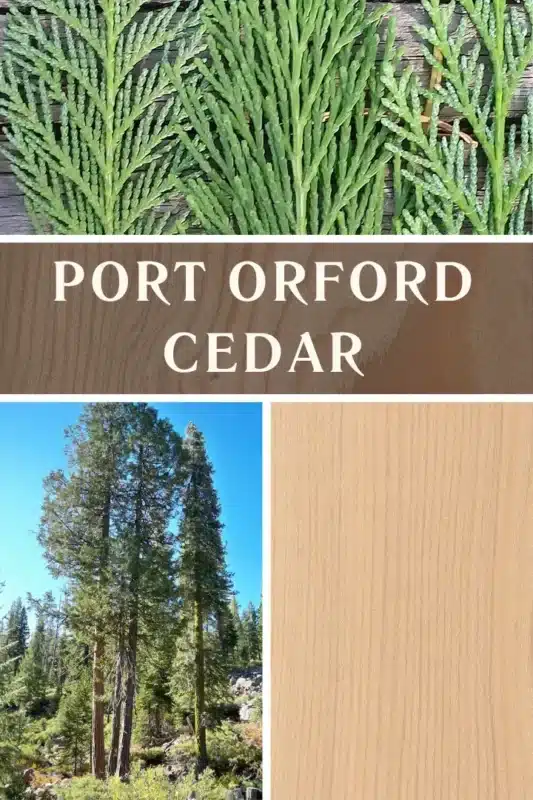
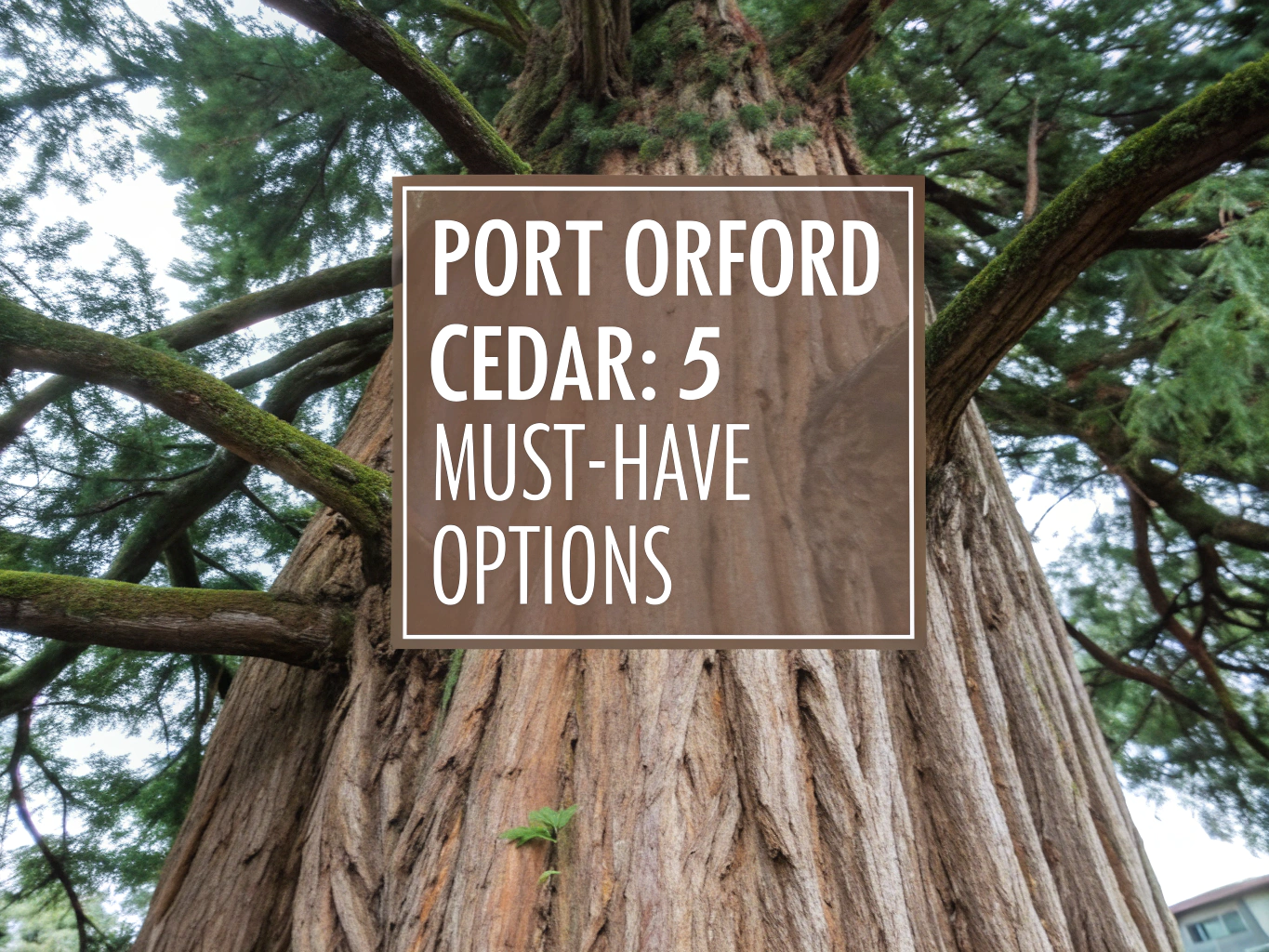
At a glance, Port Orford cedar is a large conifer with flattened sprays of scale-like foliage, small round cones, fibrous mature bark, and pale aromatic wood. Mature forest trees commonly reach 150–200 feet on favorable sites, yet cultivated varieties may stay far smaller.
Botanical Classification and Port Orford Origin
The accepted botanical name is Chamaecyparis lawsoniana. It belongs to Cupressaceae, the cypress family, alongside many plants sold under cedar or cypress common names. True cedars belong to Cedrus, so “cedar” here is an established common and timber-trade name rather than a strict botanical label.
Other names include Lawson cypress, Lawson’s cypress, Oregon cedar, white cedar, and Port Orford white cedar. The Port Orford name refers to the coastal Oregon community associated with the tree and its timber trade; “Orford meaning” in this name is geographic, not a description of the wood.
Similar names don’t make different woods interchangeable. Western red cedar is Thuja plicata, Alaskan cedar is commonly treated as Callitropsis nootkatensis, and eastern redcedar is Juniperus virginiana. A broader cedar wood guide explains why trade names often cross botanical lines.
Native Range, Foliage, Cones, Bark, Size, and Longevity
The native range occupies a narrow part of southwestern Oregon and northwestern California, including portions of the Coast, Siskiyou, and Klamath mountains. Trees occur from near sea level to roughly 5,000 feet, often beside streams, seeps, wetlands, and moist slopes. The USDA Fire Effects Information System provides detailed habitat and distribution records.
Among cedar trees in Oregon, this species favors cool, moist sites with aerated soil and ample winter rain. Moist habitat doesn’t mean stagnant soil is safe: saturated ground moves the root-disease pathogen through drainage channels and leaves garden roots short of oxygen.
- Foliage consists of overlapping scales arranged in flattened, fan-like sprays.
- Branchlet undersides may carry pale or whitish markings.
- Small rounded cones have shield-shaped scales and mature from green to brown.
- Older bark becomes reddish brown or gray-brown, fibrous, ridged, and vertically furrowed.
- Freshly crushed foliage gives off a sharp resinous scent that varies between individual trees.
Identification works best by checking several features together. Bark alone resembles other regional conifers, while aroma varies with season and moisture. The flat sprays, round cones, bark, location, and botanical provenance form a more dependable identification than smell by itself.
Large native specimens develop trunks about 4–6 feet wide, with exceptional trees exceeding ordinary dimensions. Some survive for several centuries where disease, fire, severe storms, and logging don’t intervene. Nursery cultivars need separate size checks because dwarf selections bear little resemblance to a 180-foot forest tree.

Port Orford Cedar Wood Properties
Port Orford cedar wood is pale, fine textured, usually straight grained, moderately light, and stronger than its soft surface might suggest. Its heartwood resists decay, but sapwood, wet end grain, trapped debris, and poor airflow can shorten outdoor service life.
Color, Grain, Density, Hardness, and Strength
Fresh boards range from creamy white to pale yellow or light golden brown. Heartwood and sapwood can show less contrast than they do in western red cedar, so color alone can’t confirm all-heart stock. Sun and rain gradually turn unfinished surfaces silver gray.
A newly planed board feels smooth and almost waxy under the palm after fine sanding. Cutting releases a sharp spicy, ginger-like aroma, while the fine dust hangs lightly around a poorly extracted saw. Grain is commonly straight and uniform, though knots or localized runout can disrupt it.
| Property | Representative value | Practical meaning |
|---|---|---|
| Average dried weight | 29 lb/ft³, about 465 kg/m³ | Heavier than western red cedar, lighter than many hardwoods |
| Janka hardness | 590 lbf | Moderate dent resistance for a cedar-named softwood |
| Modulus of rupture | 12,700 psi | Good average bending strength |
| Modulus of elasticity | 1.47 million psi | Relatively stiff for its weight |
| Crushing strength | 7,200 psi | Useful compression performance |
| Radial shrinkage | 4.6% | Movement across growth rings |
| Tangential shrinkage | 6.9% | Greater movement along growth-ring arcs |
| Volumetric shrinkage | 10.1% | Total green-to-oven-dry volume change |
These figures are reference averages, not design values for every board. Growth conditions, grade, defects, grain direction, and moisture alter performance. Structural work requires a valid grade stamp, the applicable species grouping, approved span data, and local code checks. The Wood Database profile provides comparable reference data.
The wood’s density sits in the low-to-mid 0.40 specific-gravity range, depending on the testing basis. Compare figures only when they use the same moisture basis; green density, oven-dry density, and weight at 12% moisture aren’t equivalent. See the site’s wood density guide for that distinction.
Movement, Workability, Heartwood Durability, and Finishing
A tangential-to-radial shrinkage ratio near 1.5 indicates fairly balanced movement, but the wood still shrinks enough to open joints or distort wet-installed boards. Flat-sawn faces may cup, especially when one side dries faster. Vertical-grain stock moves more evenly across its face, though it commands a premium.
Sharp cutters leave clean edges, and the even texture takes carving, turning, sanding, and detailed joinery well. Beginners often crush fibers with dull tools or split narrow ends with fasteners. Use fresh cutting edges, support crosscuts, and pre-drill close to board ends.
Aromatic dust may irritate eyes, skin, or airways, and repeated exposure can sensitize susceptible users. Connect machines to effective extraction, wear eye protection, and select a proper particulate respirator. Gloves help when direct contact causes redness, but they must stay away from rotating equipment.
Decay-resistance claims apply mainly to sound heartwood. Pale appearance makes sapwood harder to spot than buyers expect, so exposed-project orders should state heartwood percentage rather than relying on a “cedar” label. Neither portion is rot proof, particularly in soil contact or continuously wet joints.
Penetrating exterior finishes slow water uptake and preserve color longer than bare exposure. UV-resistant stains reduce graying, while paint can work on dry, stable assemblies with sound preparation. Coat vulnerable end grain and maintain drainage behind the wood; finish can’t compensate for a water trap.
Port Orford Cedar Lumber Guide
Buy Port Orford cedar lumber by grade, heartwood content, grain orientation, actual dimensions, and moisture condition—not by species name alone. Wide, long, clear vertical-grain boards cost more because a log yields much less defect-free material in those dimensions.
Common Lumber Forms, Grades, and Specifications
Available forms include rough boards, surfaced stock, clear and knotty grades, siding, trim, timbers, boat stock, turning blanks, knife scales, and arrow material. Some dealers carry random-width rough lumber, while others sell fixed profiles. Confirm whether dimensions are nominal or measured after surfacing.
- Ask whether “clear” permits small defects and whether it also means all heartwood.
- Confirm vertical grain, flat grain, or mixed grain rather than assuming from the grade name.
- Record green, air-dried, or kiln-dried condition and measured moisture content.
- Check whether S2S, S3S, or S4S surfacing is included.
- List required lengths, usable clear yield, overage, packaging, and delivery terms.
- Request harvest origin, certification, salvage documentation, or chain-of-custody records.
“Clear” doesn’t automatically mean vertical grain or all heartwood. Proprietary grades also differ between specialty mills. Ask which grading rule controls the order and obtain photos of representative faces, edges, and ends before approving valuable long stock.
Moisture, Board Feet, Pricing, Freight, and Small Blanks
Interior stock often settles near 6–10% moisture, depending on the building and region, while exterior wood reaches a higher seasonal equilibrium. Test multiple boards with a calibrated moisture meter. Stack them under cover with spacers between layers; sealed plastic and direct ground contact create uneven conditioning.
Calculate board feet as thickness in inches × width in inches × length in feet ÷ 12. A rough 1 × 8 × 12-foot board equals 8 board feet. Surfaced dimensions may be smaller, while decking quotes often use linear or square feet, so normalize competing quotes before comparing them.
Port Orford cedar lumber pricing changes with grade, width, thickness, length, drying, surfacing, and shipping distance. Long clear boards carry steep recovery and packaging premiums. On small orders, freight can exceed lumber, especially when oversize pieces require a crate or freight terminal.
Request a delivered quote that states quantity, actual dimensions, grade, moisture, surfacing, crating, minimum-order charges, and freight. Comparing a rough knotty board with clear S4S stock produces a misleading unit price. Replacement availability also belongs in the project budget.
Responsible stock may come from documented harvests, plantations, salvage operations, or reclaimed material. “Salvaged” isn’t automatically low impact if provenance is vague. Buyers should ask for traceable source records, especially when unusually wide old-growth-looking boards appear without documentation.

Port Orford Cedar Knife Scales
- Natural Port Orford cedar wood scales
- Made for custom knife handle projects
- Highlights the species fine woodworking appeal
- Adds warm grain to handmade builds
- A practical small-format wood blank
 Buy on Amazon
Knife scales illustrate the wood’s fine texture but don’t represent full-board pricing. Check size against the tang, leave enough thickness for shaping, and seal the completed handle. For a hard-use knife, softwood scales need support from sound fasteners, sensible geometry, or professional stabilization.
Port Orford Cedar Decking Guide
Port Orford cedar decking can perform well when boards contain durable heartwood, reach a suitable installation moisture level, and receive airflow beneath them. It is harder than western red cedar, but limited supply and higher delivered cost make it a specialty decking choice.
Decking Suitability, Boards, Spacing, and Fasteners
Specify cedar decking boards by heartwood content, knot allowance, grain orientation, thickness, and drying condition. Clear vertical-grain boards show more uniform face movement, while tight-knot material lowers material cost but can develop localized checks or loose knots. Buy extra matching boards for future repairs.
Board spacing must reflect installation moisture. Wet boards need room to shrink; very dry boards need space to swell during rainy weather. A universal gap can fail in either direction, so follow the mill’s profile guidance and use moisture readings from the delivered batch.
Provide open drainage and cross-ventilation below the deck. Keep joist cavities, gaps, and perimeter openings free of leaves. Boards that feel cool and clammy underneath long after the upper surface dries are signaling restricted airflow, a common precursor to staining and decay.
Stainless-steel screws are the safest broad recommendation, particularly near salt air or persistent moisture. Ordinary steel corrodes and leaves black streaks across pale cedar. Hot-dipped galvanized hardware may suit some inland assemblies, but confirm compatibility. Pre-drill vulnerable ends to reduce splitting.
End-Grain Protection, Cleaning, Maintenance, and Common Decking Failures
End grain drinks water much faster than a board face. Seal fresh cuts and detail steps, fascia, borders, and railing posts so ends don’t sit in puddles. A neat-looking miter can become a hidden moisture pocket when seasonal movement opens the joint.
Sweep board gaps and move planters, rubber-backed mats, and storage boxes that trap water. Clean with a wood-compatible product and low pressure. Aggressive pressure washing tears out soft earlywood, leaving a fuzzy ridged surface that holds grime and weathers unevenly.
Recoat when water absorption, fading, or surface wear shows the existing finish has weakened rather than following a rigid date. Sunny horizontal boards need attention sooner than sheltered siding. For more material options, see the guide to outdoor wood choices.
Frequent failures include cupping from wet installation, end splitting from unpiloted screws, staining from poor fasteners, premature sapwood decay, and damp framing caused by blocked ventilation. The professional workaround is to build a small test area, verify spacing after a wet-weather cycle, and adjust before completing the field.
Port Orford Cedar vs Western Red Cedar
In a Port Orford cedar vs western red cedar comparison, Port Orford cedar is usually harder, stronger, paler, and heavier. Western red cedar is lighter, moves less from green to dry, costs less in many markets, and is easier to obtain in standard siding and decking profiles.
Species, Appearance, Weight, Hardness, and Strength Comparison
Port Orford cedar is Chamaecyparis lawsoniana; western red cedar is Thuja plicata. Both belong to Cupressaceae, and neither is a true Cedrus. Port Orford wood is cream to pale gold, while western red cedar commonly shows tan-to-chocolate heartwood with stronger color variation.
| Factor | Port Orford cedar | Western red cedar |
|---|---|---|
| Botanical name | Chamaecyparis lawsoniana | Thuja plicata |
| Typical color | Cream to pale golden brown | Light tan to reddish or chocolate brown |
| Average dried weight | About 29 lb/ft³ | About 23 lb/ft³ |
| Janka hardness | About 590 lbf | About 350 lbf |
| Bending strength | About 12,700 psi | About 7,500 psi |
| Modulus of elasticity | About 1.47 million psi | About 1.11 million psi |
| Radial shrinkage | About 4.6% | About 2.4% |
| Tangential shrinkage | About 6.9% | About 5.0% |
| Availability | Regional and specialty supply | Broad construction supply |
| Traditional arrows | Established shaft wood | Uncommon for matched shafts |
Underfoot and in shop handling, Port Orford cedar feels more substantial and resists dents better. Western red cedar is easier to lift overhead and carry around scaffolding. These averages don’t replace grade-based design values for structural members.
Stability, Durability, Availability, Cost, and Application Choice
Western red cedar has lower total shrinkage, which helps in siding and broad exterior surfaces. Port Orford cedar’s movement is fairly balanced between directions, yet its higher total shrinkage demands sound drying and spacing. Both species offer decay-resistant heartwood, while their sapwood remains less durable.
Western red cedar has an established supply chain for standard boards, siding, shingles, and decking. Port Orford material often comes from specialty mills, making matching repairs harder. Compare delivered cost, waste, replacement stock, and lead time rather than advertised board price alone.
- Choose Port Orford cedar for greater hardness, pale color, fine detail, boat stock, or traditional arrow shafts.
- Choose western red cedar for low weight, wider availability, standard exterior profiles, and lower total shrinkage.
- Choose either species only after confirming grade, heartwood content, moisture, and exposure conditions.
The full western red cedar guide provides added species detail. For unfamiliar stock, compare freshly planed samples rather than weathered faces; UV exposure can make two originally different woods look similarly gray.
Port Orford Cedar Arrows
Port Orford cedar arrows work because straight-grained shafts offer a useful balance of weight, stiffness, smooth finishing, and hand-straightening. Safe selection still requires matching static spine, finished weight, length, point mass, bow geometry, and the archer’s release.
Shaft Diameters, Static Spine, and Dynamic Spine
Common wood-shaft diameters include 5/16, 11/32, and 23/64 inch. Diameter affects mass, stiffness, drag, and point or nock compatibility, but it doesn’t identify correct spine by itself. Two shafts of equal diameter may bend differently because wood varies naturally.
Static spine measures shaft deflection under a standardized span and load; less deflection means a stiffer shaft. Retail groups such as 40–45 pounds provide a starting range, not a complete setup. Confirm the seller’s spine-testing standard and tolerance within each dozen.
Dynamic spine describes how the completed arrow behaves during launch. A longer shaft or heavier point usually behaves weaker, while a shorter shaft or lighter point behaves stiffer. Draw length, measured bow weight, center-shot geometry, string material, release style, nock, and fletching also change arrow reaction.

Port Orford Cedar Arrow Shafts
- Twelve premium bare wood shafts
- Made from traditional Port Orford cedar
- Ready for custom arrow building
- Lets archers add their own components
- Relevant for wood arrow enthusiasts
Buy on Amazon

Cedar Shafts for 40-45 Spine
- Twelve premium bare cedar shafts
- Rated for 40-45-pound spine
- Made with Port Orford cedar wood
- Helps match shafts to bow draw weight
- Ready for personalized arrow assembly
Buy on Amazon
Grain, Weight Matching, Inspection, and Arrow Safety
Inspect grain from nock to point and reject severe runout, abrupt grain waves, cracks, splinters, or impact bruising. Match a set by both spine and finished arrow weight. Shafts with similar labels can strike different heights if their mass differs enough.
Bare shafts may need gentle straightening before sealing and again after finish cures. Roll each one on a flat surface and watch the midpoint. Heat and pressure must remain controlled; excessive bending can create invisible fiber damage before the shaft appears broken.
Before every shooting session, rotate the shaft under good light and flex it gently while listening for faint ticks. Raised fibers feel like a tiny snag against the fingertip. Never shoot a damaged wooden arrow, since a shaft can break during release and injure the bow hand.
Beginners often buy by bow-weight label, cut shafts immediately, and add heavy points afterward. Build one or two test arrows first, leaving them long, then tune in small steps with guidance from the bow maker or a qualified archery shop. This preserves adjustment room and prevents wasting a matched dozen.
Other Port Orford Cedar Uses
Beyond decking and arrows, Port Orford cedar serves in boats, exterior millwork, Japanese-style architectural work, carving, turning, boxes, and selected musical components. Fine texture and a good strength-to-weight ratio support these uses, but every wet assembly still needs drainage and maintenance.
Boatbuilding, Marine Work, Millwork, and Exterior Construction
Boatbuilders have used the wood for planking, small craft, spars, and specialty joinery. Its moderate weight, machining quality, strength, and durable heartwood are useful near water. Marine coatings and sound joints remain necessary because natural durability has limits under repeated wetting.
Exterior applications include siding, trim, doors, screens, furniture, and garden structures. Select all-heart stock for exposed details, isolate wood from masonry splashback, and leave drainage behind cladding. Ground-contact pieces need a suitable treatment or different material with a verified exposure rating.
Japanese Traditional, Musical, and Craft Uses
High-grade timber was historically exported to Japan for applications that valued pale color, fine grain, aroma, and stable machining. Port Orford cedar shouldn’t be sold as true hinoki: hinoki is Chamaecyparis obtusa, a different species with its own cultural and material identity.
Craft uses include turning, carving, boxes, patterns, handles, and instrument parts. A cutting tool moves through clear stock with a soft hiss and leaves crisp details, yet the same softness allows dents at exposed edges. Keep small parts over-thick until final fitting and protect corners during assembly.
Practical notes from real-world use: select the board for its weakest required detail, not its prettiest face. Straight grain means little if a wet end, sapwood strip, loose knot, or corroding fastener sits at the project’s highest-stress point.
Workshop and installation principle
Disease, Conservation, and Cultivation
The main biological threat is Phytophthora lateralis, an introduced water mold that attacks roots and root collars, disrupts water transport, and can kill mature trees. Contaminated soil, drainage water, machinery, footwear, and infected nursery plants can move it to new sites.
Phytophthora Symptoms, Spread, Management, and Conservation
Above-ground symptoms include fading green foliage, yellowing or bronzing, crown thinning, branch dieback, and death. Drought, construction damage, poor drainage, and other root disorders can look similar, so visual symptoms alone don’t prove infection. Laboratory testing or an experienced tree-health specialist may be needed for reliable diagnosis.
Mud on tires, boots, tools, animals, and logging equipment can carry infested soil. Water transports spores through ditches and drainage channels, while infected nursery stock can introduce the pathogen directly into a garden. Wet-season travel creates higher soil-transfer risk.
- Remove packed mud before leaving an affected site and clean tools used in soil.
- Follow seasonal road or trail closures intended to limit soil movement.
- Keep drainage from suspect ground out of uninfected planting areas.
- Buy plants from nurseries that document sanitation and disease screening.
- Use resistant stock when a regional forestry or conservation program supplies it.
- Never collect trees or move soil from wild populations without permission.
Fungicides don’t provide a practical forest-wide cure for infected trees. Management centers on sanitation, access control, clean plant material, resistant breeding, and protecting uninfected watersheds. The USDA Forest Service disease guide explains symptoms and management concerns.
The species has suffered major population losses, yet “endangered” shouldn’t be used without identifying the assessment or law. Global conservation status, federal protection, state rules, local rarity, and commercial scarcity are different classifications. Lumber availability doesn’t prove wild populations are secure.
Growing Sites, Seeds, Seedlings, and Disease-Aware Buying
Choose a cool site with reliable moisture, good drainage, and enough room for the plant’s mature form. Avoid low pockets where water stands after rain. Straight-species trees can become immense, while ornamental Lawson cypress cultivars may remain compact; confirm the exact cultivar name.
Seed propagation costs less per potential plant but requires suitable storage, pretreatment or cold stratification, controlled moisture, and patience. Seedlings provide a head start but carry soil with them. Ask about botanical identity, seed origin, sanitation, resistance claims, and shipping restrictions before buying.

Port Orford Cedar Seedling
- Live young Port Orford cedar tree
- A hands-on way to grow the species
- Suitable for patient home gardeners
- Lets readers observe its distinctive form
- Useful for landscape and collection planting
Buy on Amazon

Port Orford Cedar Tree Seeds
- Seeds for Chamaecyparis lawsoniana
- Grow the true Port Orford cedar species
- Trial packet suits small planting attempts
- Lets gardeners start trees from seed
- Known for an elegant ornamental form
Buy on Amazon
An online listing doesn’t prove disease resistance, lawful collection, or nursery sanitation. Check whether live plants can enter the destination state or country, and consult local plant-health guidance before planting near the native range. Keep new container plants isolated from valued trees until their health and source are clear.
During planting, don’t bury the root flare or amend a small hole with rich material that holds water like a basin. Set the tree at its original depth, spread mulch without touching the trunk, and irrigate the surrounding root zone. The most common beginner error is constant saturated soil, not slight surface drying.
FAQs
Is Port Orford Cedar A True Cedar?
No, Port Orford cedar is not a true cedar. It is a false cypress called Chamaecyparis lawsoniana, while true cedars belong to the Cedrus genus. Its common name comes from its aromatic, durable wood and cedar-like appearance.
Is Port Orford Cedar Rare Or Endangered?
Port Orford cedar is not generally listed as federally endangered, but it faces serious conservation threats. A root disease called Phytophthora lateralis has damaged many wild trees, and habitat loss adds pressure. Responsibly sourced lumber is important because healthy stands are more limited in some areas.
Is Port Orford Cedar Good For Decking?
Port Orford cedar can be a good decking material because it is naturally rot-resistant, stable, and lightweight. Its fine grain makes it comfortable to work with and attractive when finished. However, it can be costly and should be sealed or maintained to preserve its color outdoors.
Why Is Port Orford Cedar Used For Arrows?
Port Orford cedar is used for arrows because it combines light weight, straight grain, and good strength. These qualities help arrow shafts fly consistently while remaining easy to shape and tune. Traditional archers also value its smooth finish, pleasant aroma, and reliable spine characteristics.
What Is The Difference Between Port Orford Cedar And Western Red Cedar?
Port Orford cedar is a false cypress, while western red cedar is a Thuja species. Port Orford cedar is usually paler, denser, and prized for fine woodworking and arrow shafts. Western red cedar is more commonly available, often more reddish, and widely used for siding, fencing, and decking.
Affiliate Disclosure: Some links in this post are affiliate links. If you make a purchase through these links, we may earn a small commission at no extra cost to you. We only recommend products we genuinely believe in.